Virtual Designing, Prototyping and Testing
of Automotive Capacitive Sensors
V. N. Zagkanas1, D. A. Orlis1, C. G. Daskalou1, G. D. Bouzianas1, and C. Temming2
1 Fieldscale PC, Thessaloniki, Greece.
2 HMI-Technology and Concepts,
Volkswagen Group Innovation, Wolfsburg, Germany.
Introduction
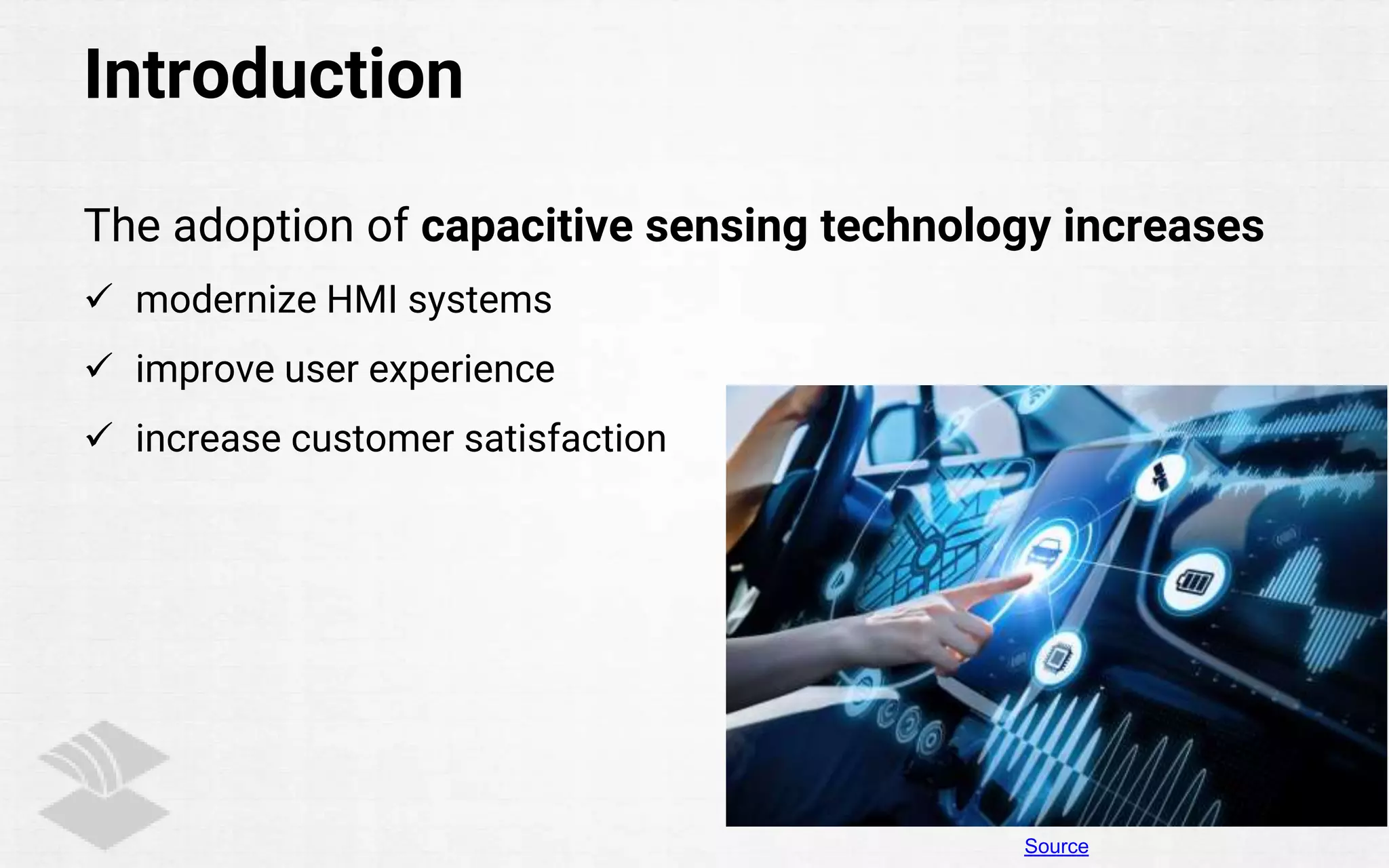
The adoption of capacitive sensing technology increases
 modernize HMI systems
 improve user experience
 increase customer satisfaction
Source
Introduction
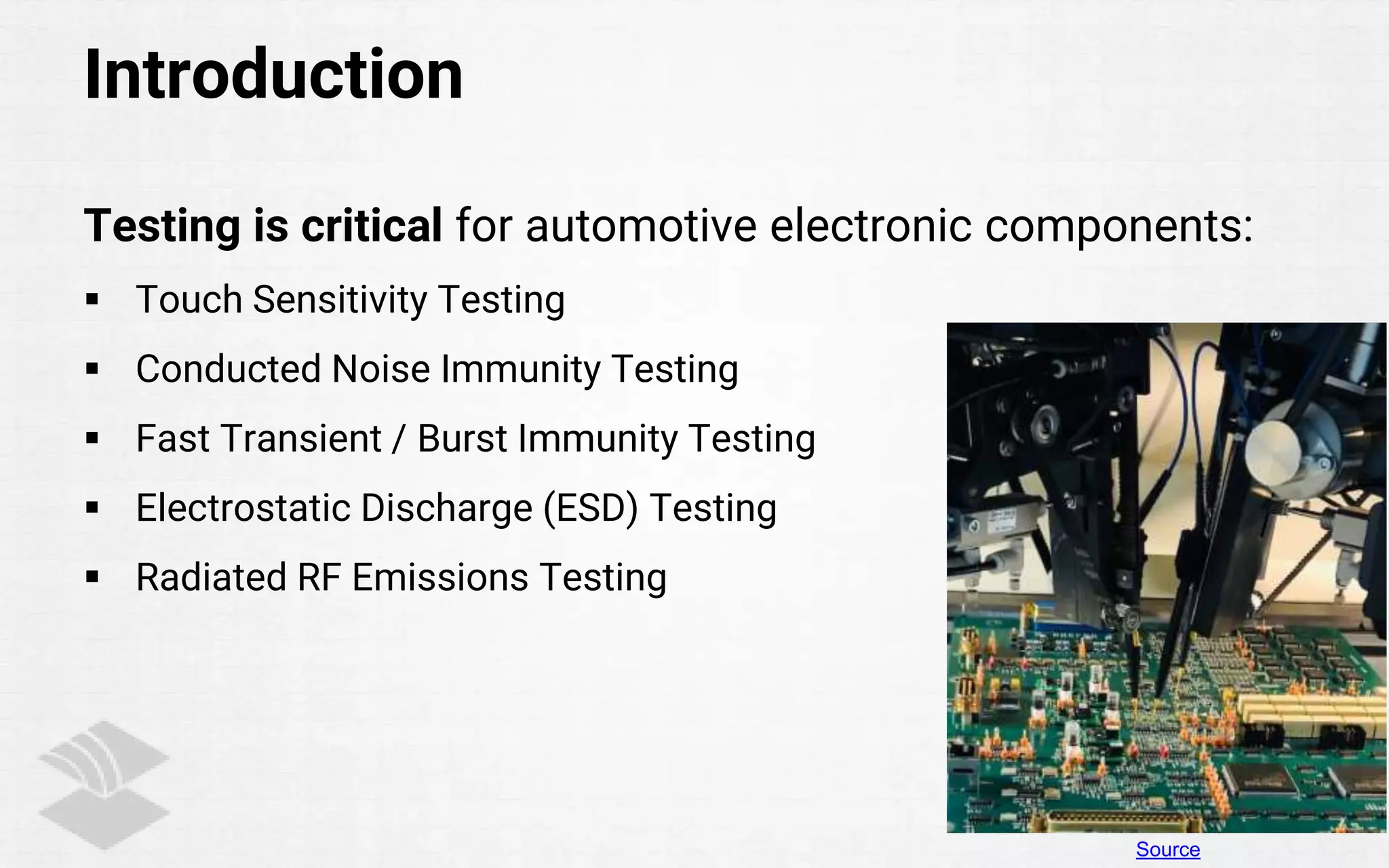
Testing is critical for automotive electronic components:
 Touch Sensitivity Testing
 Conducted Noise Immunity Testing
 Fast Transient / Burst Immunity Testing
 Electrostatic Discharge (ESD) Testing
 Radiated RF Emissions Testing
Source
Introduction
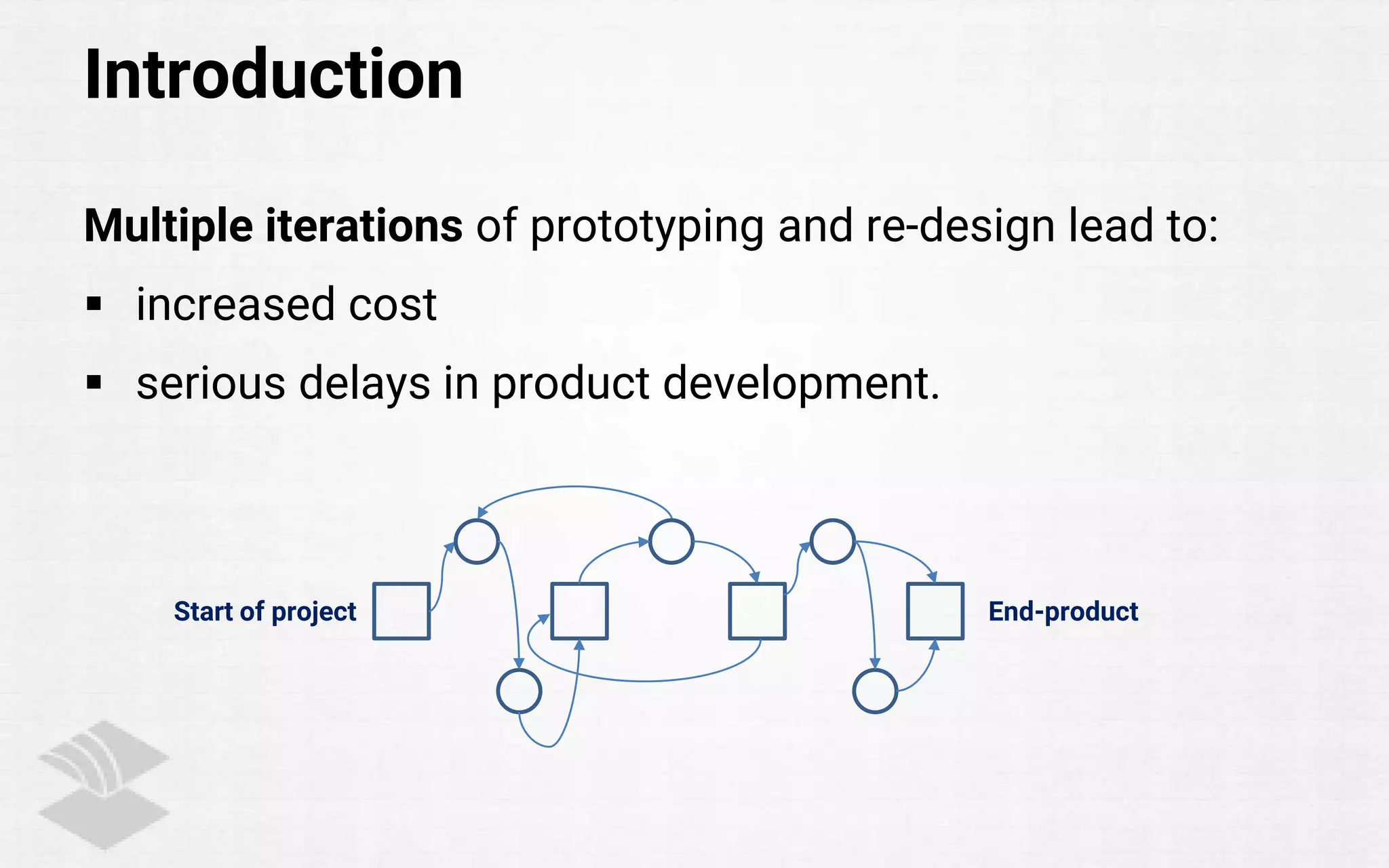
Multiple iterations of prototyping and re-design lead to:
 increased cost
 serious delays in product development.
Start of project End-product
Virtual Designing, Prototyping & Testing
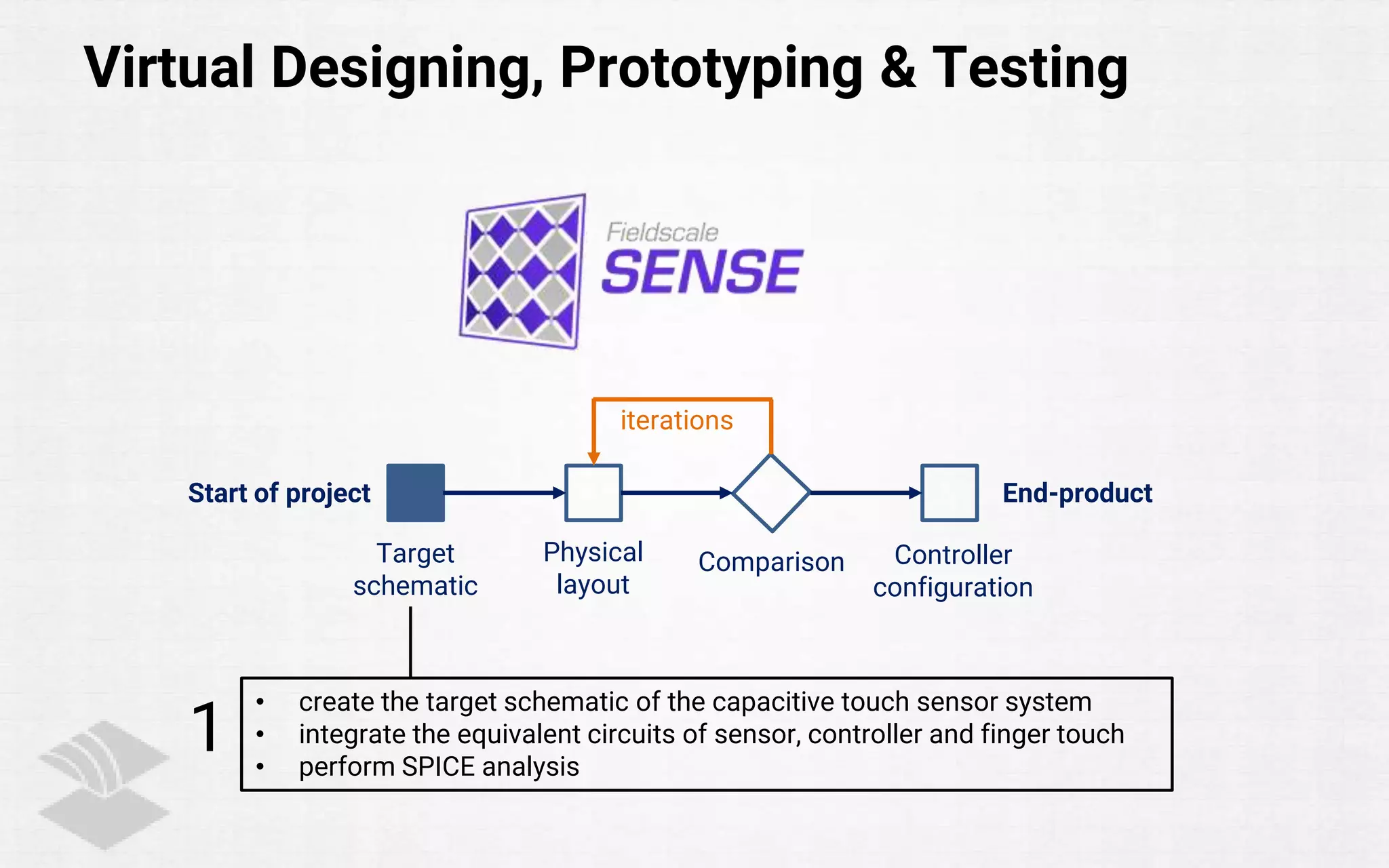
• create the target schematic of the capacitive touch sensor system
• integrate the equivalent circuits of sensor, controller and finger touch
• perform SPICE analysis
1
Target
schematic
Physical
layout
Controller
configuration
Start of project End-product
Comparison
iterations
Virtual Designing, Prototyping & Testing
• design the layout of the physical sensor model
• set up the stack-up
• automatically build the equivalent circuits of sensor, controller and finger touch
• perform SPICE analysis
2
Target
schematic
Physical
layout
Controller
configuration
Start of project End-product
Comparison
iterations
Virtual Designing, Prototyping & Testing
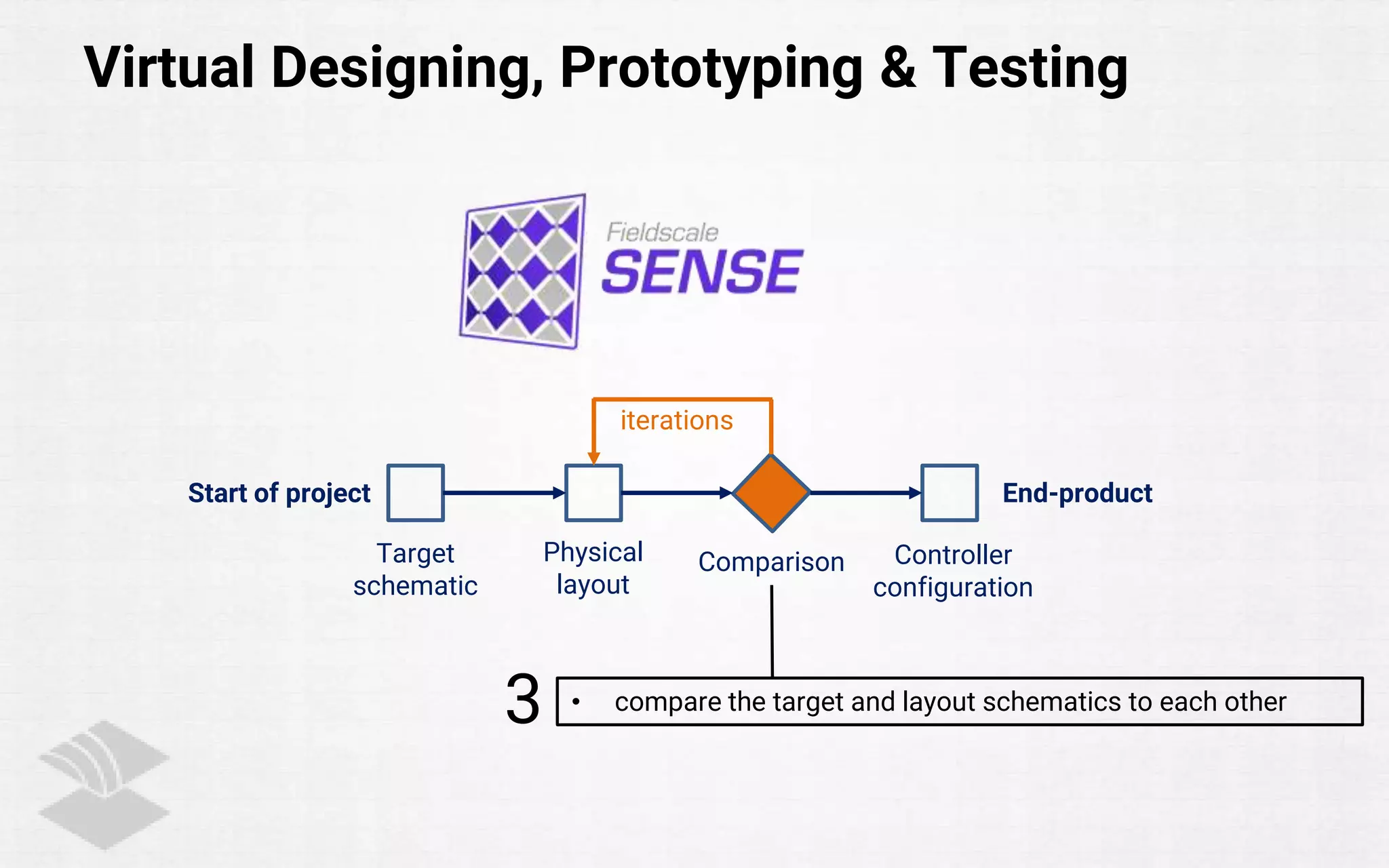
• compare the target and layout schematics to each other3
Target
schematic
Physical
layout
Controller
configuration
Start of project End-product
Comparison
iterations
Virtual Designing, Prototyping & Testing
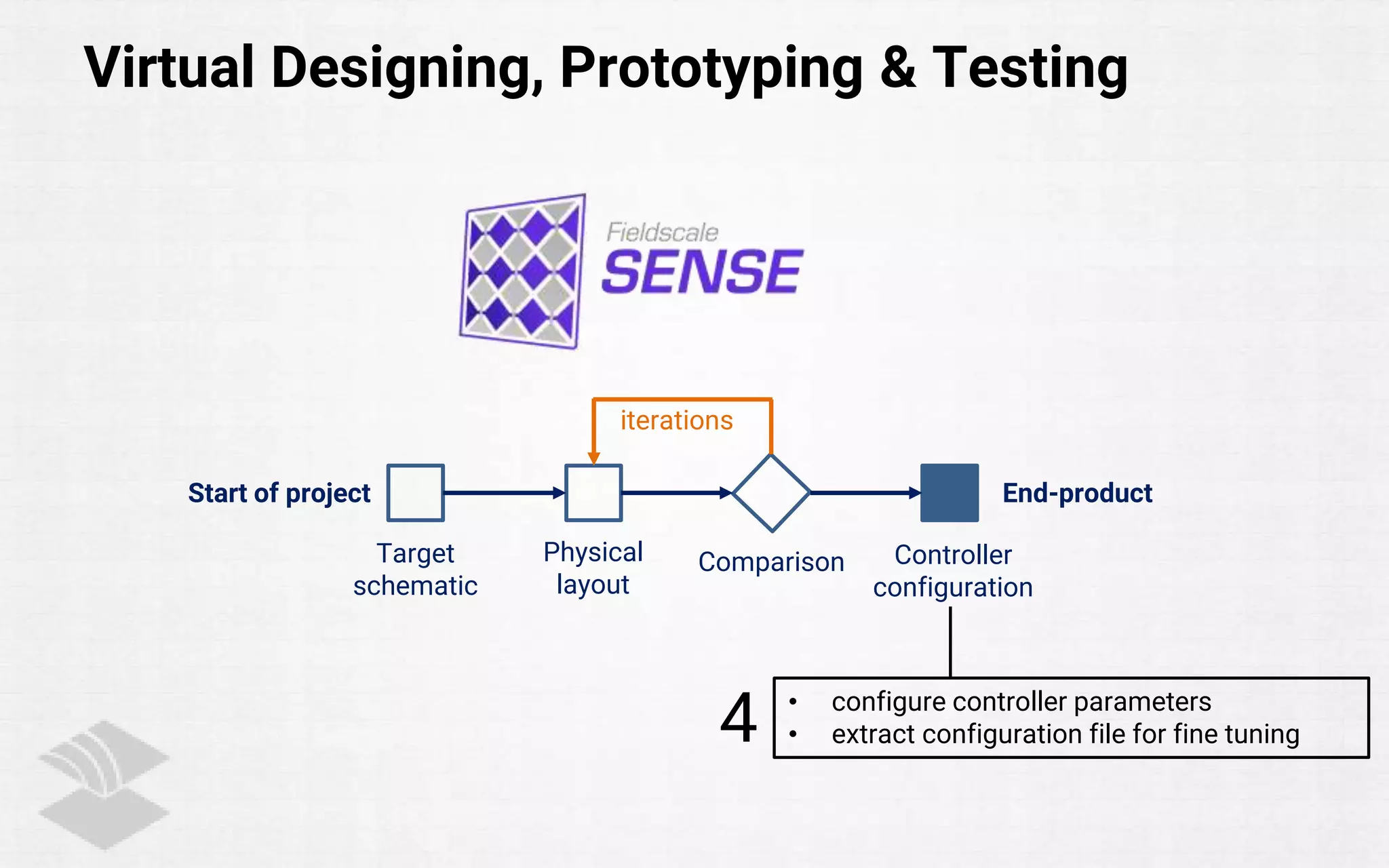
• configure controller parameters
• extract configuration file for fine tuning4
Target
schematic
Physical
layout
Controller
configuration
Start of project End-product
Comparison
iterations
Virtual Designing, Prototyping & Testing
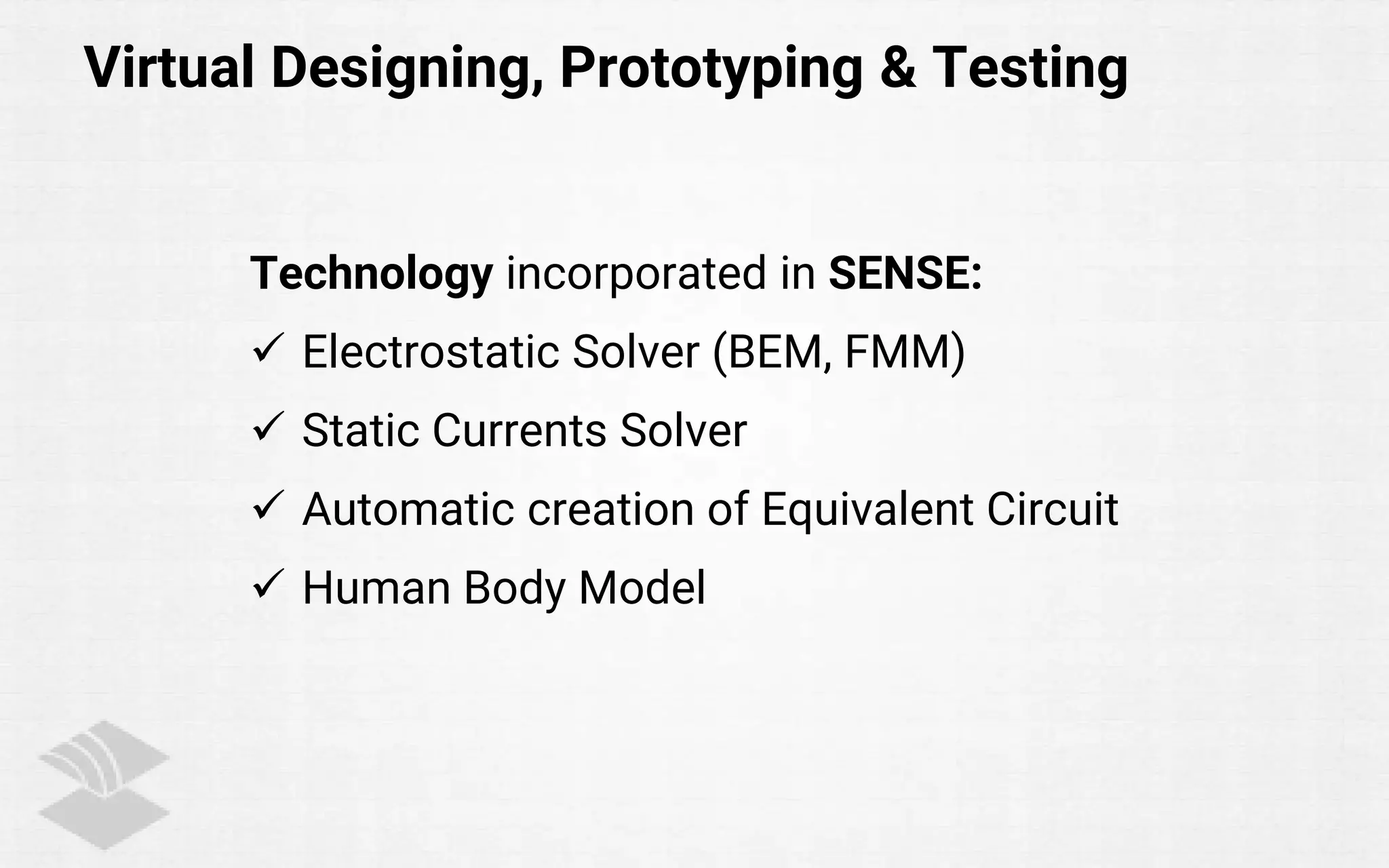
Technology incorporated in SENSE:
 Electrostatic Solver (BEM, FMM)
 Static Currents Solver
 Automatic creation of Equivalent Circuit
 Human Body Model
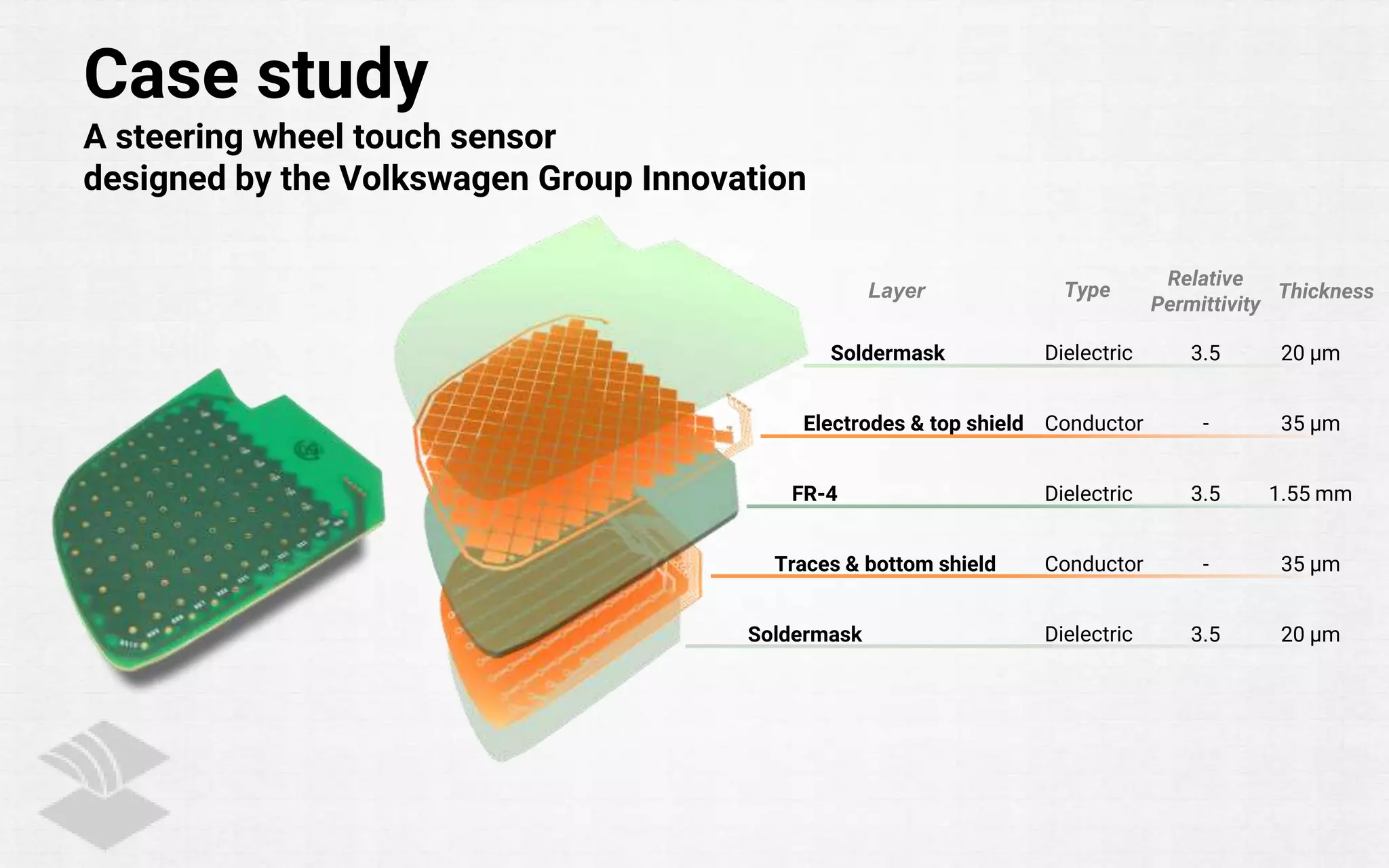
Case study
A steering wheel touch sensor
designed by the Volkswagen Group Innovation
Electrodes & top shield - 35 µmConductor
FR-4 3.5 1.55 mmDielectric
Soldermask 3.5 20 µmDielectric
Traces & bottom shield - 35 µmConductor
Soldermask 3.5 20 µmDielectric
Layer
Relative
Permittivity
ThicknessType
Case study
A steering wheel touch sensor
designed by the Volkswagen Group Innovation
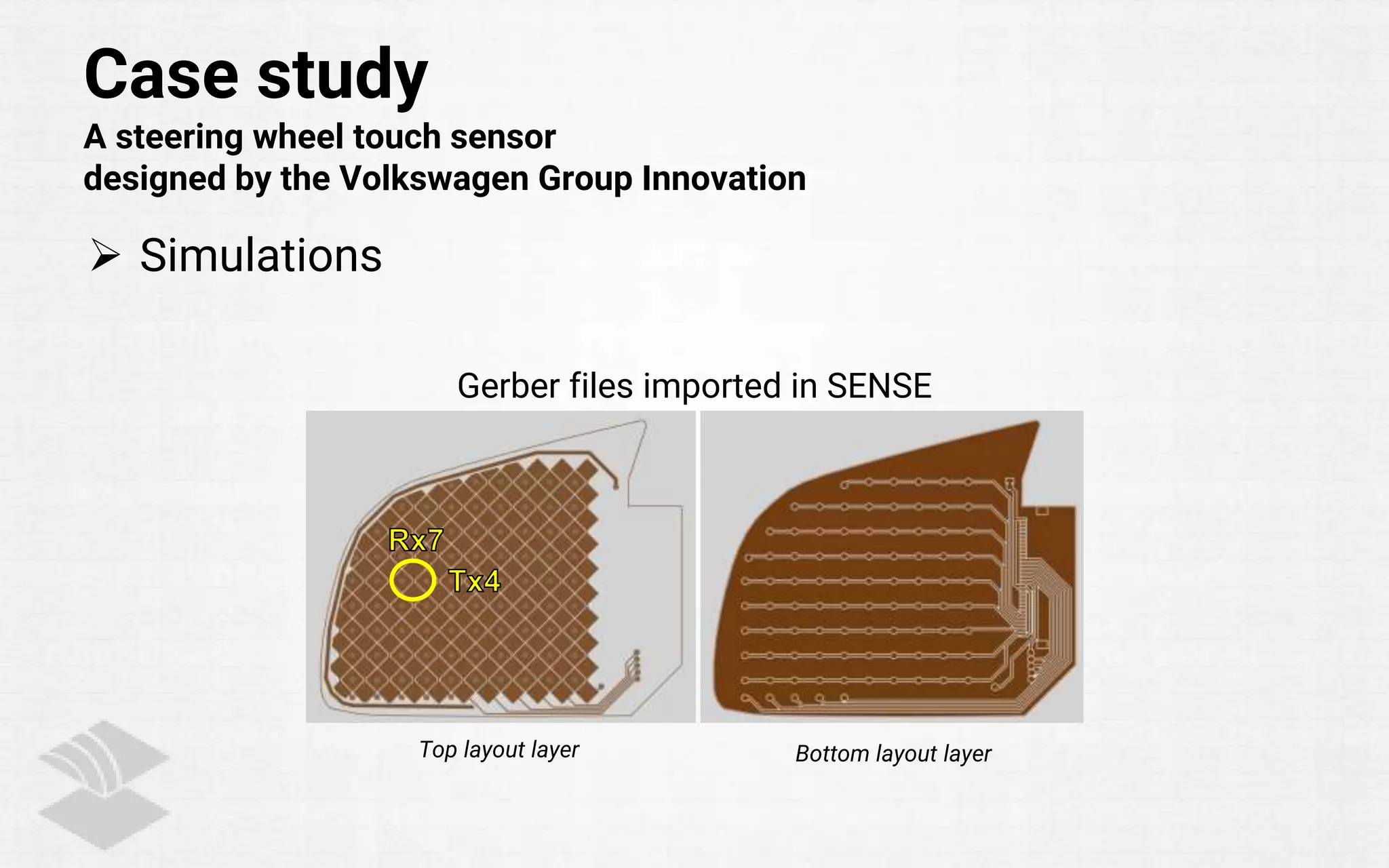
 Simulations
Top layout layer Bottom layout layer
Gerber files imported in SENSE
Case study
A steering wheel touch sensor
designed by the Volkswagen Group Innovation
 Simulations
• SENSE automatically builds the 3D model of the touch sensor which is then used in
the “Equivalent Circuit Analysis” for the extraction of the netlists for both touch and
no touch cases.
• Finger touch was simulated by placing above the Tx4-Rx7 electrode node a
conductive cylinder with 12 mm diameter and 10 mm height.
• Those two netlists extracted by SENSE were then used as input in NG SPICE.
• In SPICE analysis the input voltage signal was the same with that used in the
measurements and applied again at electrode node Tx4-Rx7, whereas all other
electrodes were grounded.
• For the actual replication of the measurement set up, the equivalent circuits of the
probe and the oscilloscope were also included.
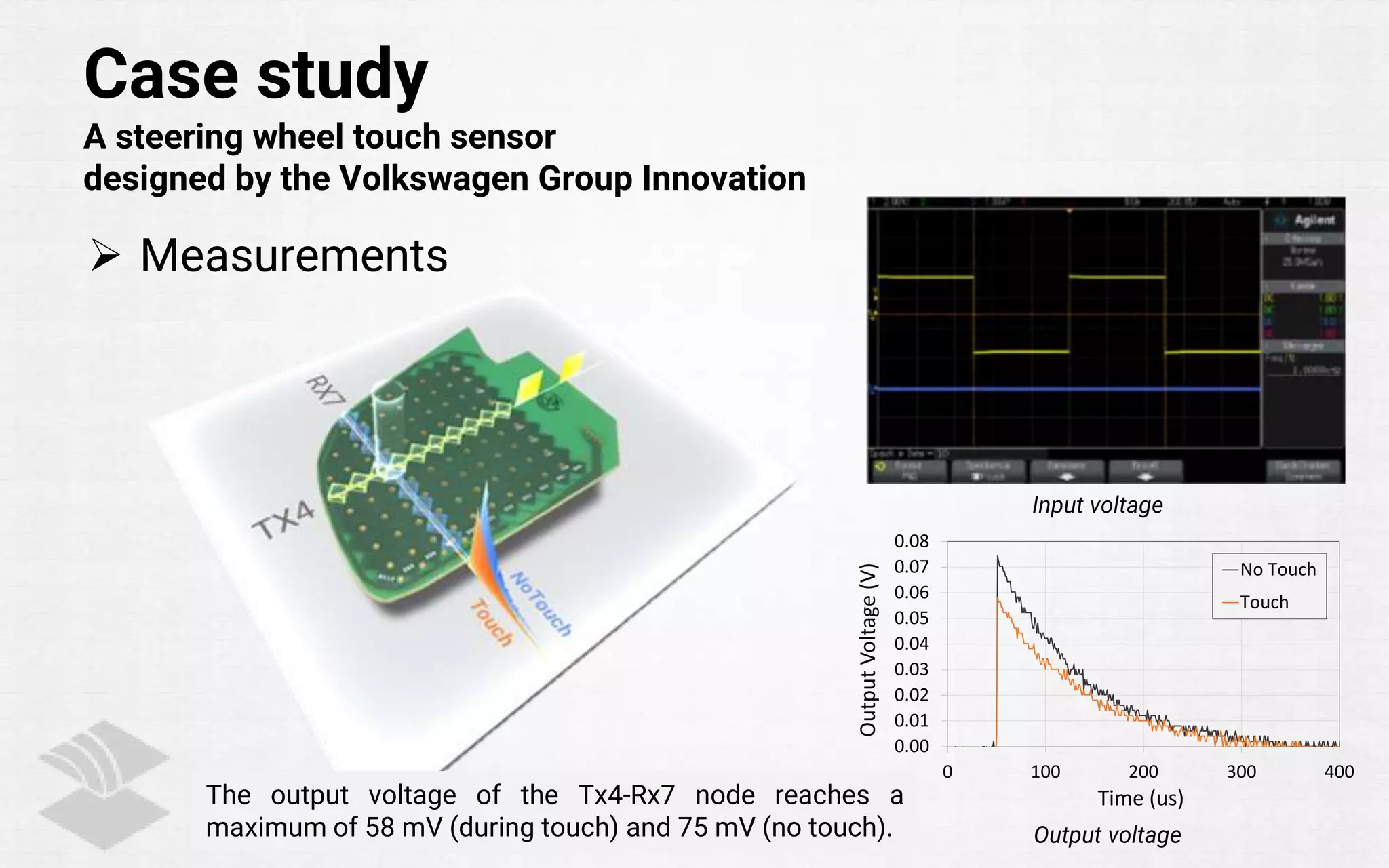
Input voltage
Case study
A steering wheel touch sensor
designed by the Volkswagen Group Innovation
 Measurements
Output voltage
The output voltage of the Tx4-Rx7 node reaches a
maximum of 58 mV (during touch) and 75 mV (no touch).
0.00
0.01
0.02
0.03
0.04
0.05
0.06
0.07
0.08
0 100 200 300 400
OutputVoltage(V)
Time (us)
No Touch
Touch
0%
10%
20%
30%
40%
50%
TouchSensitivity
Case study
A steering wheel touch sensor
designed by the Volkswagen Group Innovation
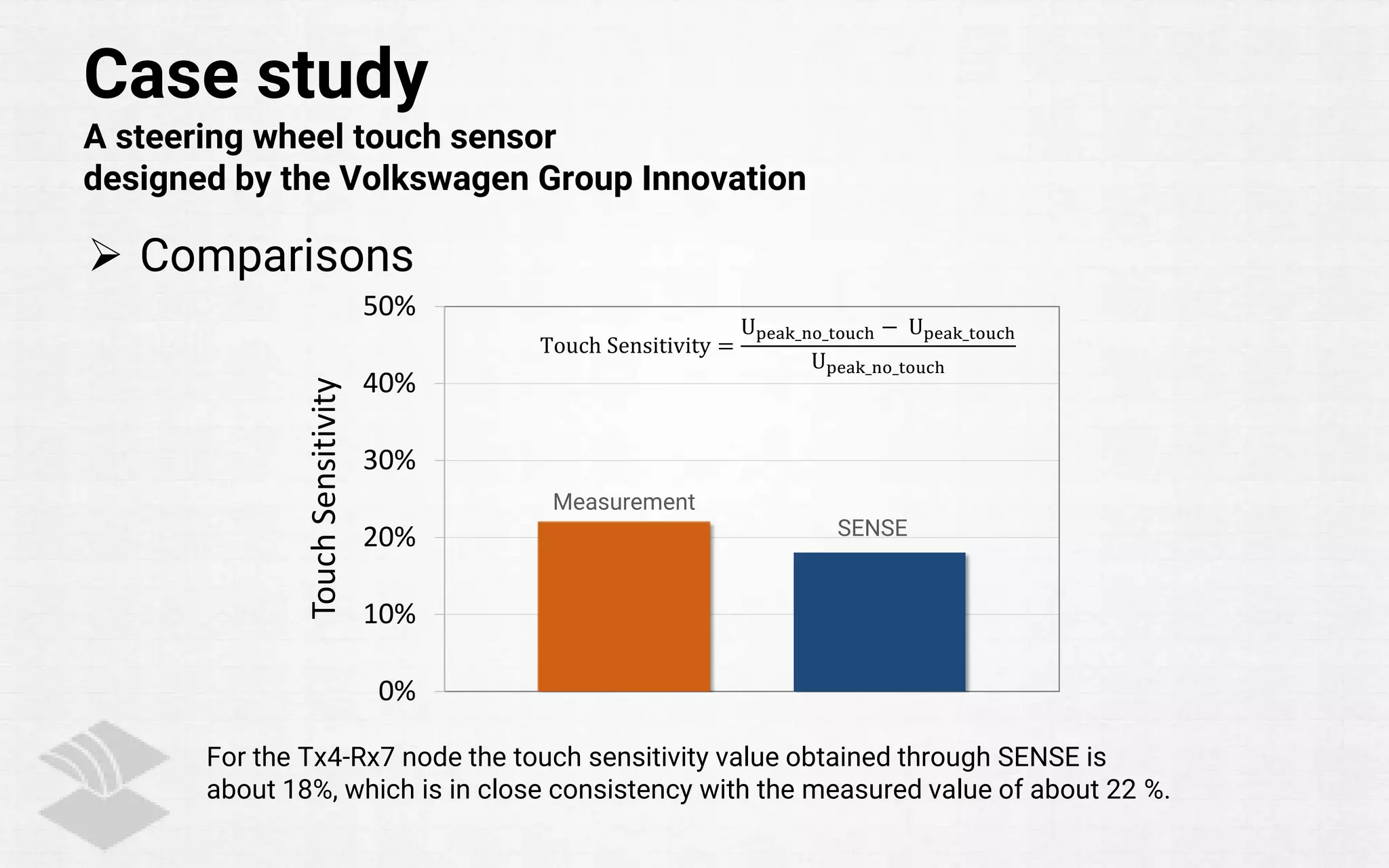
 Comparisons
Touch Sensitivity =
Upeak_no_touch − Upeak_touch
Upeak_no_touch
Measurement
SENSE
For the Tx4-Rx7 node the touch sensitivity value obtained through SENSE is
about 18%, which is in close consistency with the measured value of about 22 %.
Case study
A steering wheel touch sensor
designed by the Volkswagen Group Innovation
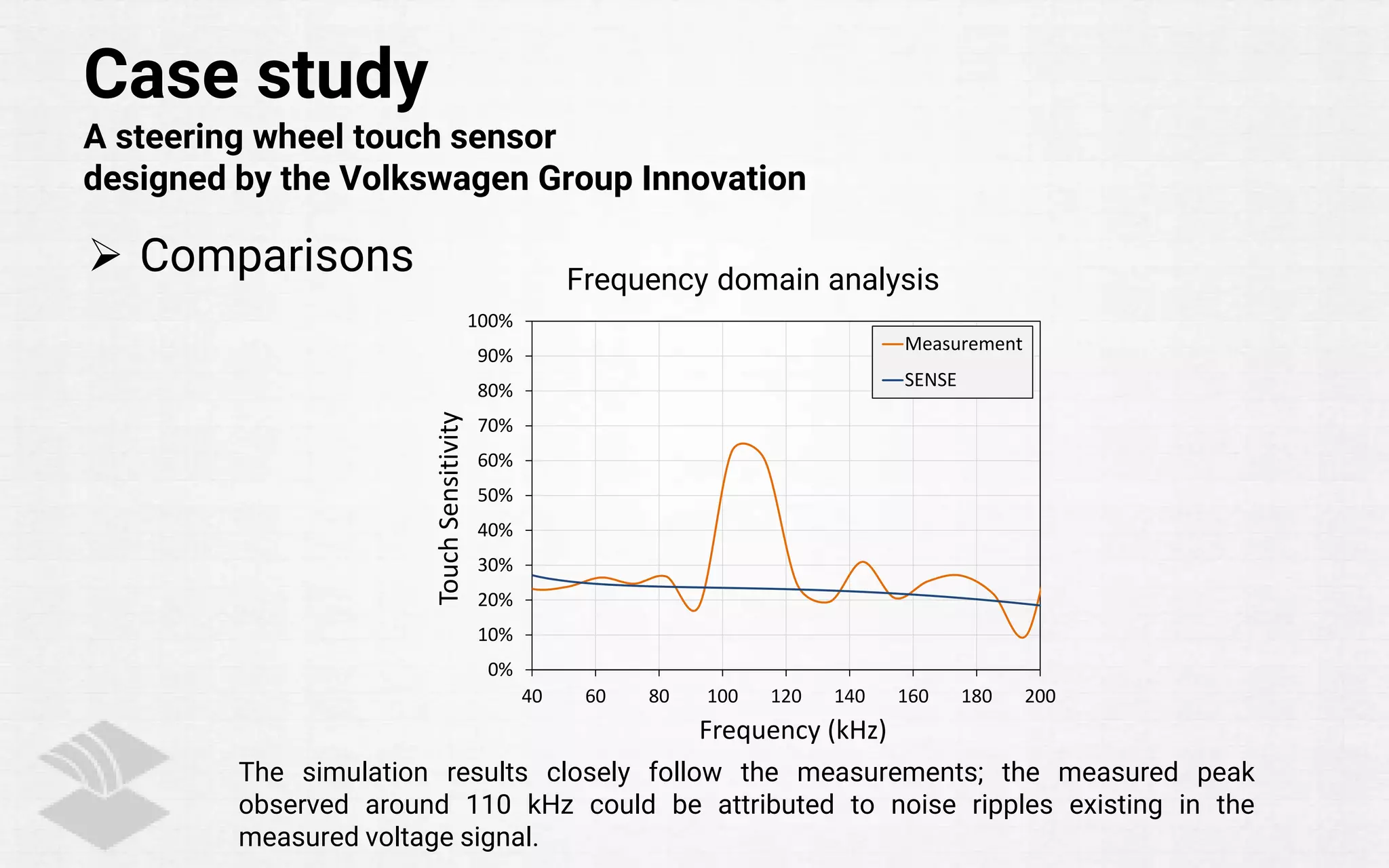
 Comparisons Frequency domain analysis
The simulation results closely follow the measurements; the measured peak
observed around 110 kHz could be attributed to noise ripples existing in the
measured voltage signal.
0%
10%
20%
30%
40%
50%
60%
70%
80%
90%
100%
40 60 80 100 120 140 160 180 200
TouchSensitivity
Frequency (kHz)
Measurement
SENSE
Conclusions
 Virtual designing, prototyping and testing
minimizes the iterations in the product
development cycle of automotive capacitive touch
sensor systems.
 In R&D projects virtual prototyping and testing
speeds up the evaluation of new approaches and
accelerates innovation.
Conclusions
 Fieldscale SENSE supports virtual prototyping and
testing of any capacitive touch sensor through the
automatic extraction of its equivalent circuit.
 The netlists provided by Equivalent Circuit Analysis
can be used in SPICE simulations.
Conclusions
 A PCB-based capacitive sensor designed for a
research project of the Volkswagen Group
Innovation was used as a case study. The
simulation results on touch sensitivity are in very
good agreement with the measurements.
 The netlists provided by SENSE can accurately
represent the real system, so they can be used in
SPICE simulations to replicate automotive
electronics testing.
www.fieldscale.com
info@fieldscale.com
+30 2310 94 74 84

Virtual Prototyping and Testing of Automotive-Capacitive Sensors

  • 1.
    Virtual Designing, Prototypingand Testing of Automotive Capacitive Sensors V. N. Zagkanas1, D. A. Orlis1, C. G. Daskalou1, G. D. Bouzianas1, and C. Temming2 1 Fieldscale PC, Thessaloniki, Greece. 2 HMI-Technology and Concepts, Volkswagen Group Innovation, Wolfsburg, Germany.
  • 2.
    Introduction The adoption ofcapacitive sensing technology increases  modernize HMI systems  improve user experience  increase customer satisfaction Source
  • 3.
    Introduction Testing is criticalfor automotive electronic components:  Touch Sensitivity Testing  Conducted Noise Immunity Testing  Fast Transient / Burst Immunity Testing  Electrostatic Discharge (ESD) Testing  Radiated RF Emissions Testing Source
  • 4.
    Introduction Multiple iterations ofprototyping and re-design lead to:  increased cost  serious delays in product development. Start of project End-product
  • 5.
    Virtual Designing, Prototyping& Testing • create the target schematic of the capacitive touch sensor system • integrate the equivalent circuits of sensor, controller and finger touch • perform SPICE analysis 1 Target schematic Physical layout Controller configuration Start of project End-product Comparison iterations
  • 6.
    Virtual Designing, Prototyping& Testing • design the layout of the physical sensor model • set up the stack-up • automatically build the equivalent circuits of sensor, controller and finger touch • perform SPICE analysis 2 Target schematic Physical layout Controller configuration Start of project End-product Comparison iterations
  • 7.
    Virtual Designing, Prototyping& Testing • compare the target and layout schematics to each other3 Target schematic Physical layout Controller configuration Start of project End-product Comparison iterations
  • 8.
    Virtual Designing, Prototyping& Testing • configure controller parameters • extract configuration file for fine tuning4 Target schematic Physical layout Controller configuration Start of project End-product Comparison iterations
  • 9.
    Virtual Designing, Prototyping& Testing Technology incorporated in SENSE:  Electrostatic Solver (BEM, FMM)  Static Currents Solver  Automatic creation of Equivalent Circuit  Human Body Model
  • 10.
    Case study A steeringwheel touch sensor designed by the Volkswagen Group Innovation Electrodes & top shield - 35 µmConductor FR-4 3.5 1.55 mmDielectric Soldermask 3.5 20 µmDielectric Traces & bottom shield - 35 µmConductor Soldermask 3.5 20 µmDielectric Layer Relative Permittivity ThicknessType
  • 11.
    Case study A steeringwheel touch sensor designed by the Volkswagen Group Innovation  Simulations Top layout layer Bottom layout layer Gerber files imported in SENSE
  • 12.
    Case study A steeringwheel touch sensor designed by the Volkswagen Group Innovation  Simulations • SENSE automatically builds the 3D model of the touch sensor which is then used in the “Equivalent Circuit Analysis” for the extraction of the netlists for both touch and no touch cases. • Finger touch was simulated by placing above the Tx4-Rx7 electrode node a conductive cylinder with 12 mm diameter and 10 mm height. • Those two netlists extracted by SENSE were then used as input in NG SPICE. • In SPICE analysis the input voltage signal was the same with that used in the measurements and applied again at electrode node Tx4-Rx7, whereas all other electrodes were grounded. • For the actual replication of the measurement set up, the equivalent circuits of the probe and the oscilloscope were also included.
  • 13.
    Input voltage Case study Asteering wheel touch sensor designed by the Volkswagen Group Innovation  Measurements Output voltage The output voltage of the Tx4-Rx7 node reaches a maximum of 58 mV (during touch) and 75 mV (no touch). 0.00 0.01 0.02 0.03 0.04 0.05 0.06 0.07 0.08 0 100 200 300 400 OutputVoltage(V) Time (us) No Touch Touch
  • 14.
    0% 10% 20% 30% 40% 50% TouchSensitivity Case study A steeringwheel touch sensor designed by the Volkswagen Group Innovation  Comparisons Touch Sensitivity = Upeak_no_touch − Upeak_touch Upeak_no_touch Measurement SENSE For the Tx4-Rx7 node the touch sensitivity value obtained through SENSE is about 18%, which is in close consistency with the measured value of about 22 %.
  • 15.
    Case study A steeringwheel touch sensor designed by the Volkswagen Group Innovation  Comparisons Frequency domain analysis The simulation results closely follow the measurements; the measured peak observed around 110 kHz could be attributed to noise ripples existing in the measured voltage signal. 0% 10% 20% 30% 40% 50% 60% 70% 80% 90% 100% 40 60 80 100 120 140 160 180 200 TouchSensitivity Frequency (kHz) Measurement SENSE
  • 16.
    Conclusions  Virtual designing,prototyping and testing minimizes the iterations in the product development cycle of automotive capacitive touch sensor systems.  In R&D projects virtual prototyping and testing speeds up the evaluation of new approaches and accelerates innovation.
  • 17.
    Conclusions  Fieldscale SENSEsupports virtual prototyping and testing of any capacitive touch sensor through the automatic extraction of its equivalent circuit.  The netlists provided by Equivalent Circuit Analysis can be used in SPICE simulations.
  • 18.
    Conclusions  A PCB-basedcapacitive sensor designed for a research project of the Volkswagen Group Innovation was used as a case study. The simulation results on touch sensitivity are in very good agreement with the measurements.  The netlists provided by SENSE can accurately represent the real system, so they can be used in SPICE simulations to replicate automotive electronics testing.
  • 19.