Common Viral infections of skin
Raj Sharani
Final yr MBBS student
Synopsis
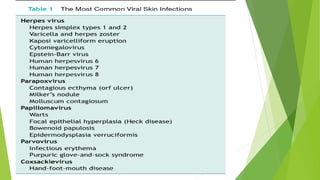
 Herpes simplex virus
 Varicella zoster virus
 Herpes zoster
 Verrucae vulgaris
 Genital warts
 Molluscum contagiosum
 Hand foot mouth disease
 Viral exanthem
 Measles
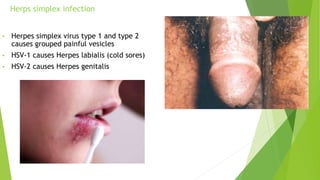
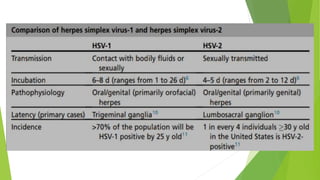
‱ Herpes simplex virus type 1 and type 2
causes grouped painful vesicles
‱ HSV-1 causes Herpes labialis (cold sores)
‱ HSV-2 causes Herpes genitalis
Herps simplex infection
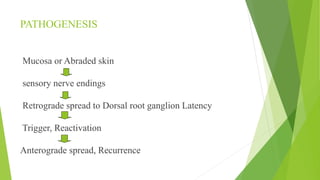
PATHOGENESIS
Mucosa or Abraded skin
sensory nerve endings
Retrograde spread to Dorsal root ganglion Latency
Trigger, Reactivation
Anterograde spread, Recurrence
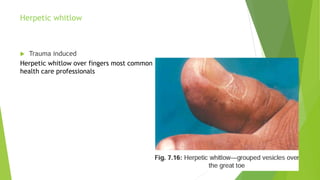
Herpetic whitlow
 Trauma induced
Herpetic whitlow over fingers most common
health care professionals
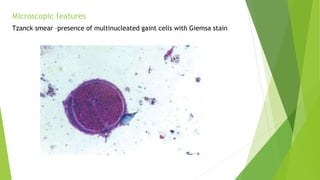
Microscopic features
Tzanck smear –presence of multinucleated gaint cells with Giemsa stain
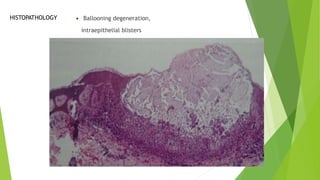
 Ballooning degeneration,
intraepithelial blisters
HISTOPATHOLOGY
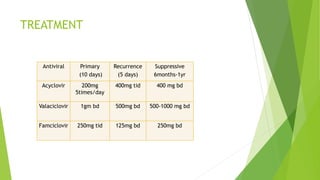
TREATMENT
Antiviral Primary
(10 days)
Recurrence
(5 days)
Suppressive
6months-1yr
Acyclovir 200mg
5times/day
400mg tid 400 mg bd
Valaciclovir 1gm bd 500mg bd 500-1000 mg bd
Famciclovir 250mg tid 125mg bd 250mg bd
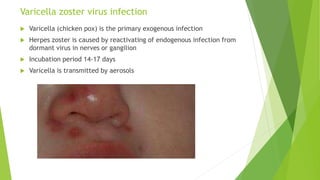
Varicella zoster virus infection
 Varicella (chicken pox) is the primary exogenous infection
 Herpes zoster is caused by reactivating of endogenous infection from
dormant virus in nerves or gangilion
 Incubation period 14-17 days
 Varicella is transmitted by aerosols
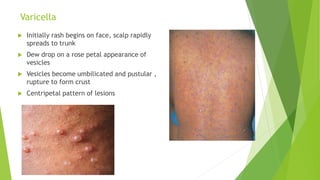
Varicella
 Initially rash begins on face, scalp rapidly
spreads to trunk
 Dew drop on a rose petal appearance of
vesicles
 Vesicles become umbilicated and pustular ,
rupture to form crust
 Centripetal pattern of lesions
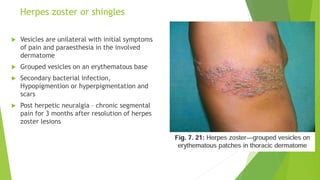
Herpes zoster or shingles
 Vesicles are unilateral with initial symptoms
of pain and paraesthesia in the involved
dermatome
 Grouped vesicles on an erythematous base
 Secondary bacterial infection,
Hypopigmention or hyperpigmentation and
scars
 Post herpetic neuralgia – chronic segmental
pain for 3 months after resolution of herpes
zoster lesions
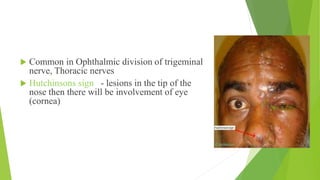
 Common in Ophthalmic division of trigeminal
nerve, Thoracic nerves
 Hutchinsons sign - lesions in the tip of the
nose then there will be involvement of eye
(cornea)
 Acyclovir 800 mg 5 times a day
 Famciclovir 500 mg tds
 Valacyclovir 1000 mg tds
 PEP : Within 96 hrs/ VZV Ig
After 96 hrs / Acyclovir 40-80mg/kg/day x 7 days
Cold compress, analgesic
 Topical capsaicin
 Carbamezepine, Phenytoin, Gabapentin
TREATMENT
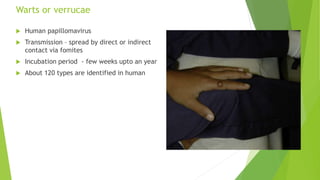
Warts or verrucae
 Human papillomavirus
 Transmission – spread by direct or indirect
contact via fomites
 Incubation period - few weeks upto an year
 About 120 types are identified in human
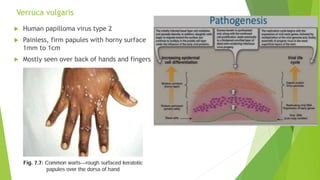
Verruca vulgaris
 Human papilloma virus type 2
 Painless, firm papules with horny surface
1mm to 1cm
 Mostly seen over back of hands and fingers
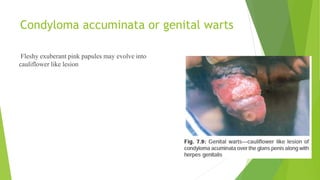
Condyloma accuminata or genital warts
Fleshy exuberant pink papules may evolve into
cauliflower like lesion
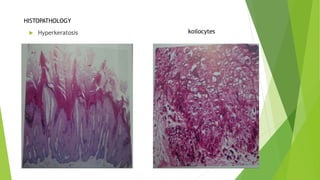
 Hyperkeratosis
HISTOPATHOLOGY
koilocytes
Treatment
Salicyclic acid 10%-20%
Electrodesiccation
Cryotherapy
Curettage for warts unresponsive to topical treatment
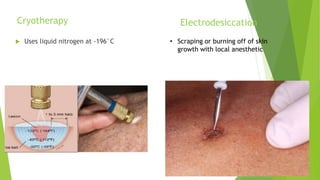
Cryotherapy
 Uses liquid nitrogen at -196°C
Electrodesiccation
‱ Scraping or burning off of skin
growth with local anesthetic
Molluscum contagiosum
 Pox virus [molluscum contagiosum
virus genotype 1(most
common),2(common in hiv patients),3
and 4]
 Affects children, adults with sexually
transmitted disease and
immunocompromised patients
 Skin to skin transmission, contact with
fomites, sexual transmission or auto
inoculation
 Incubation period – 14 to 50 days
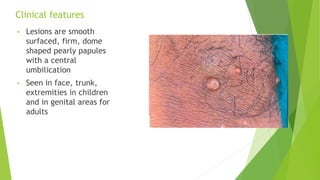
Clinical features
‱ Lesions are smooth
surfaced, firm, dome
shaped pearly papules
with a central
umbilication
‱ Seen in face, trunk,
extremities in children
and in genital areas for
adults
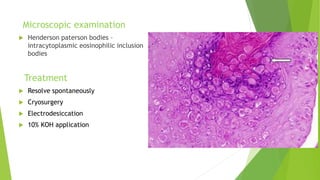
Microscopic examination
 Henderson paterson bodies –
intracytoplasmic eosinophilic inclusion
bodies
Treatment
 Resolve spontaneously
 Cryosurgery
 Electrodesiccation
 10% KOH application
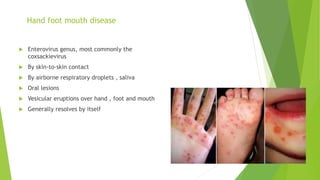
Hand foot mouth disease
 Enterovirus genus, most commonly the
coxsackievirus
 By skin-to-skin contact
 By airborne respiratory droplets , saliva
 Oral lesions
 Vesicular eruptions over hand , foot and mouth
 Generally resolves by itself
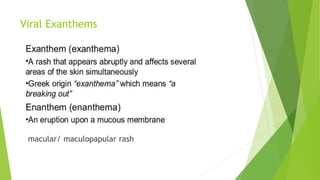
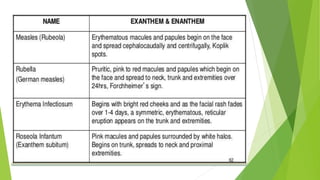
macular/ maculopapular rash
Viral Exanthems
Viral exanthems
 Rubella
 Coxsackie
 EBV
 Parvovirus B19
 Mumps
 Measles
 Hepatitis B & C
 ECHO virus
 HIV
 HPV
 Molluscum
 Orf
 Kaposis sarcoma
 HIV
Macular/ Maculopapular Papular
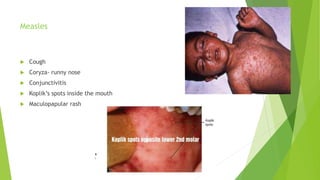
Measles
 Cough
 Coryza- runny nose
 Conjunctivitis
 Koplik’s spots inside the mouth
 Maculopapular rash
THANK YOU

viralinfectionsderm.pptx

  • 1.
    Common Viral infectionsof skin Raj Sharani Final yr MBBS student
  • 3.
    Synopsis  Herpes simplexvirus  Varicella zoster virus  Herpes zoster  Verrucae vulgaris  Genital warts  Molluscum contagiosum  Hand foot mouth disease  Viral exanthem  Measles
  • 4.
    ‱ Herpes simplexvirus type 1 and type 2 causes grouped painful vesicles ‱ HSV-1 causes Herpes labialis (cold sores) ‱ HSV-2 causes Herpes genitalis Herps simplex infection
  • 5.
    PATHOGENESIS Mucosa or Abradedskin sensory nerve endings Retrograde spread to Dorsal root ganglion Latency Trigger, Reactivation Anterograde spread, Recurrence
  • 7.
    Herpetic whitlow  Traumainduced Herpetic whitlow over fingers most common health care professionals
  • 8.
    Microscopic features Tzanck smear–presence of multinucleated gaint cells with Giemsa stain
  • 9.
  • 10.
    TREATMENT Antiviral Primary (10 days) Recurrence (5days) Suppressive 6months-1yr Acyclovir 200mg 5times/day 400mg tid 400 mg bd Valaciclovir 1gm bd 500mg bd 500-1000 mg bd Famciclovir 250mg tid 125mg bd 250mg bd
  • 11.
    Varicella zoster virusinfection  Varicella (chicken pox) is the primary exogenous infection  Herpes zoster is caused by reactivating of endogenous infection from dormant virus in nerves or gangilion  Incubation period 14-17 days  Varicella is transmitted by aerosols
  • 12.
    Varicella  Initially rashbegins on face, scalp rapidly spreads to trunk  Dew drop on a rose petal appearance of vesicles  Vesicles become umbilicated and pustular , rupture to form crust  Centripetal pattern of lesions
  • 13.
    Herpes zoster orshingles  Vesicles are unilateral with initial symptoms of pain and paraesthesia in the involved dermatome  Grouped vesicles on an erythematous base  Secondary bacterial infection, Hypopigmention or hyperpigmentation and scars  Post herpetic neuralgia – chronic segmental pain for 3 months after resolution of herpes zoster lesions
  • 14.
     Common inOphthalmic division of trigeminal nerve, Thoracic nerves  Hutchinsons sign - lesions in the tip of the nose then there will be involvement of eye (cornea)
  • 15.
     Acyclovir 800mg 5 times a day  Famciclovir 500 mg tds  Valacyclovir 1000 mg tds  PEP : Within 96 hrs/ VZV Ig After 96 hrs / Acyclovir 40-80mg/kg/day x 7 days Cold compress, analgesic  Topical capsaicin  Carbamezepine, Phenytoin, Gabapentin TREATMENT
  • 16.
    Warts or verrucae Human papillomavirus  Transmission – spread by direct or indirect contact via fomites  Incubation period - few weeks upto an year  About 120 types are identified in human
  • 17.
    Verruca vulgaris  Humanpapilloma virus type 2  Painless, firm papules with horny surface 1mm to 1cm  Mostly seen over back of hands and fingers
  • 18.
    Condyloma accuminata orgenital warts Fleshy exuberant pink papules may evolve into cauliflower like lesion
  • 19.
  • 20.
  • 21.
    Cryotherapy  Uses liquidnitrogen at -196°C Electrodesiccation ‱ Scraping or burning off of skin growth with local anesthetic
  • 22.
    Molluscum contagiosum  Poxvirus [molluscum contagiosum virus genotype 1(most common),2(common in hiv patients),3 and 4]  Affects children, adults with sexually transmitted disease and immunocompromised patients  Skin to skin transmission, contact with fomites, sexual transmission or auto inoculation  Incubation period – 14 to 50 days
  • 23.
    Clinical features ‱ Lesionsare smooth surfaced, firm, dome shaped pearly papules with a central umbilication ‱ Seen in face, trunk, extremities in children and in genital areas for adults
  • 24.
    Microscopic examination  Hendersonpaterson bodies – intracytoplasmic eosinophilic inclusion bodies Treatment  Resolve spontaneously  Cryosurgery  Electrodesiccation  10% KOH application
  • 25.
    Hand foot mouthdisease  Enterovirus genus, most commonly the coxsackievirus  By skin-to-skin contact  By airborne respiratory droplets , saliva  Oral lesions  Vesicular eruptions over hand , foot and mouth  Generally resolves by itself
  • 26.
  • 27.
    Viral exanthems  Rubella Coxsackie  EBV  Parvovirus B19  Mumps  Measles  Hepatitis B & C  ECHO virus  HIV  HPV  Molluscum  Orf  Kaposis sarcoma  HIV Macular/ Maculopapular Papular
  • 29.
    Measles  Cough  Coryza-runny nose  Conjunctivitis  Koplik’s spots inside the mouth  Maculopapular rash
  • 30.