VERB TO BEBy ANGELA VIVIANA DIAZ RODRIGUEZ
VERB TO BETHE VERB TO BE IS USED TO TALK ABOUT FEELINGS, STATES, DESCRIPTIONS, DEFINITIONS, OR A GENERAL TRUTH.IT IS USED WHEN WE TALK ABOUT AGE, NATIONALITIES, OR PROFESSIONS
VERB TO BETHE VERB TO BE CHANGES IN DIFFERENT SITUATIONS (AFFIRMATIVE, NEGATIVE STATEMENTS OR QUESTIONS).    IN AFFIRMATIVE, NEGATIVE, SENTENCES THIS IRREGULAR VERB IS CONJUGATED AS FOLLOWS:
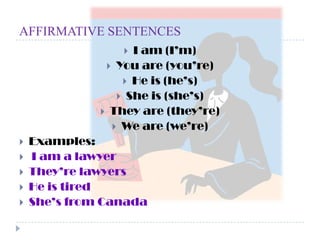
AFFIRMATIVE SENTENCESI am (I’m)You are (you’re)He is (he’s)She is (she’s)They are (they’re)We are (we’re)Examples:I am a lawyerThey’re lawyersHe is tiredShe’s from Canada
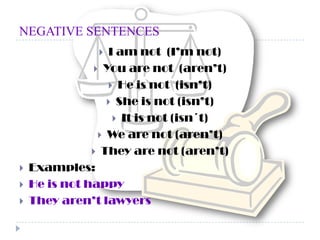
NEGATIVE SENTENCESI am not  (I’m not)You are not  (aren’t)He is not  (isn’t) She is not (isn’t)It is not (isn´t)We are not (aren’t)They are not (aren’t)Examples:He is not happyThey aren’t lawyers
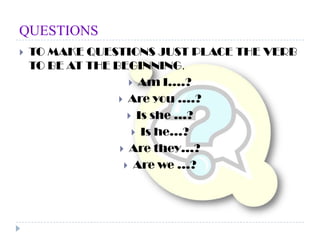
QUESTIONSTO MAKE QUESTIONS JUST PLACE THE VERB TO BE AT THE BEGINNING.Am I….?Are you ….?Is she …?Is he…?Are they…?Are we …?
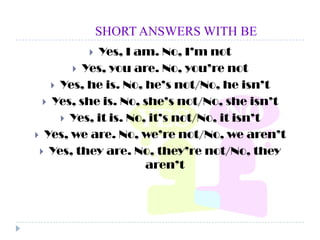
SHORT ANSWERS WITH BEYes, I am. No, I’m notYes, you are. No, you’re notYes, he is. No, he’s not/No, he isn’tYes, she is. No, she’s not/No, she isn’tYes, it is. No, it’s not/No, it isn’tYes, we are. No, we’re not/No, we aren’tYes, they are. No, they’re not/No, they aren’t

Verb To Be[1]

  • 1.
    VERB TO BEByANGELA VIVIANA DIAZ RODRIGUEZ
  • 2.
    VERB TO BETHEVERB TO BE IS USED TO TALK ABOUT FEELINGS, STATES, DESCRIPTIONS, DEFINITIONS, OR A GENERAL TRUTH.IT IS USED WHEN WE TALK ABOUT AGE, NATIONALITIES, OR PROFESSIONS
  • 3.
    VERB TO BETHEVERB TO BE CHANGES IN DIFFERENT SITUATIONS (AFFIRMATIVE, NEGATIVE STATEMENTS OR QUESTIONS). IN AFFIRMATIVE, NEGATIVE, SENTENCES THIS IRREGULAR VERB IS CONJUGATED AS FOLLOWS:
  • 4.
    AFFIRMATIVE SENTENCESI am(I’m)You are (you’re)He is (he’s)She is (she’s)They are (they’re)We are (we’re)Examples:I am a lawyerThey’re lawyersHe is tiredShe’s from Canada
  • 5.
    NEGATIVE SENTENCESI amnot (I’m not)You are not (aren’t)He is not (isn’t) She is not (isn’t)It is not (isn´t)We are not (aren’t)They are not (aren’t)Examples:He is not happyThey aren’t lawyers
  • 6.
    QUESTIONSTO MAKE QUESTIONSJUST PLACE THE VERB TO BE AT THE BEGINNING.Am I….?Are you ….?Is she …?Is he…?Are they…?Are we …?
  • 7.
    SHORT ANSWERS WITHBEYes, I am. No, I’m notYes, you are. No, you’re notYes, he is. No, he’s not/No, he isn’tYes, she is. No, she’s not/No, she isn’tYes, it is. No, it’s not/No, it isn’tYes, we are. No, we’re not/No, we aren’tYes, they are. No, they’re not/No, they aren’t