ATTENTION PROCESS
MODEL BY MCLAUGHLIN
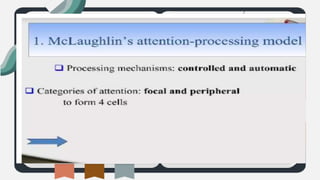
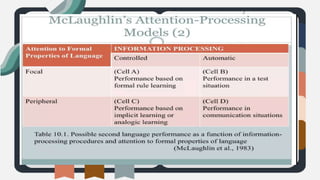
 Attention processing model is propounded by McLaughlin in
1983.
 In this model attention plays a crucial role in information processing
which may be controlled or automatic.
 It involves the processing mechanisms with classes of attention
to property of language.
 The model emphasizes on the significance of attention to
information processing in language learning activities.
Classes of Attention
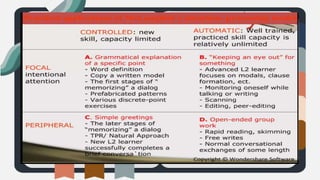
1. Focal Attention Process
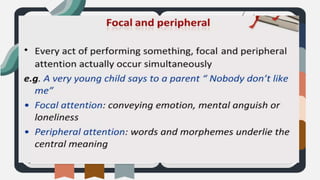
 Involves the ability of the brain to deal with
numerous types of information at a time.
 This demands total attention in processing already
mastered information.
 It can be demonstrated by a learner who reads and
understandsa passage and answers the questions
from the passage with ease and with limitless effort
and speed.
“2. Peripheral Controlled
Process”
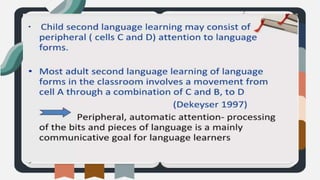
 This involves learning skills without any instruction.
Peripheral attention is the type of attention that demands
less concentration on the information processing.
 In peripheral attention, the information
processing does not take much of the
learners' time.
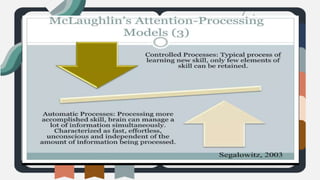
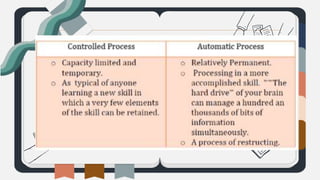
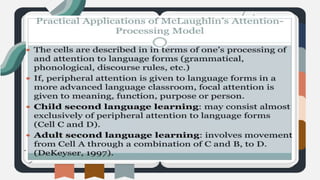
Information processing is said to be
controlled if the processing capacity is
limited or short-lived.
Controlled Process
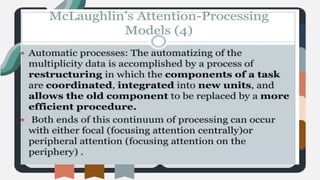
As the information is being mastered, its processing
is said to be automatic
CRÉDITOS: Esta plantilla de presentación fue creada
por Slidesgo, que incluye iconos de Flaticon,
además de infografías e imágenes de Freepik

VENUS T. PATATAG-MCLAUGHLIN'S ATTENTION PROCESSING MODEL.pptx

  • 2.
    ATTENTION PROCESS MODEL BYMCLAUGHLIN  Attention processing model is propounded by McLaughlin in 1983.  In this model attention plays a crucial role in information processing which may be controlled or automatic.  It involves the processing mechanisms with classes of attention to property of language.  The model emphasizes on the significance of attention to information processing in language learning activities.
  • 5.
    Classes of Attention 1.Focal Attention Process  Involves the ability of the brain to deal with numerous types of information at a time.  This demands total attention in processing already mastered information.  It can be demonstrated by a learner who reads and understandsa passage and answers the questions from the passage with ease and with limitless effort and speed.
  • 6.
    “2. Peripheral Controlled Process” This involves learning skills without any instruction. Peripheral attention is the type of attention that demands less concentration on the information processing.  In peripheral attention, the information processing does not take much of the learners' time.
  • 7.
    Information processing issaid to be controlled if the processing capacity is limited or short-lived. Controlled Process As the information is being mastered, its processing is said to be automatic
  • 19.
    CRÉDITOS: Esta plantillade presentación fue creada por Slidesgo, que incluye iconos de Flaticon, además de infografías e imágenes de Freepik