Vending Machines and
Health Systems
Controversies and Concerns
XXX
12/08/09 2
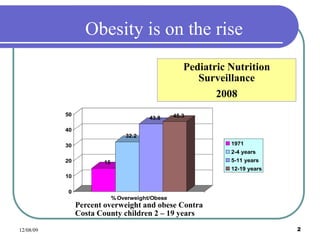
Obesity is on the rise
15
32.2
43.8 45.3
0
10
20
30
40
50
% Overweight/Obese
1971
2-4 years
5-11 years
12-19 years
Percent overweight and obese Contra
Costa County children 2 – 19 years
Pediatric Nutrition
Surveillance
2008
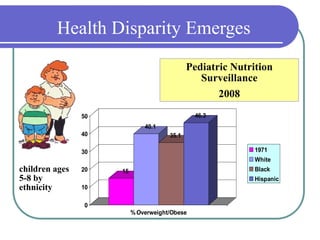
15
40.1
35.1
46.3
0
10
20
30
40
50
%Overweight/Obese
1971
White
Black
Hispanic
children ages
5-8 by
ethnicity
Pediatric Nutrition
Surveillance
2008
Health Disparity Emerges
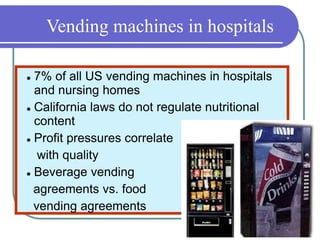
Vending machines in hospitals
 7% of all US vending machines in hospitals
and nursing homes
 California laws do not regulate nutritional
content
 Profit pressures correlate
with quality
 Beverage vending
agreements vs. food
vending agreements
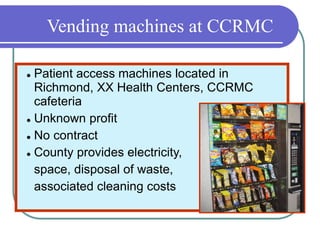
Vending machines at CCRMC
 Patient access machines located in
Richmond, XX Health Centers, CCRMC
cafeteria
 Unknown profit
 No contract
 County provides electricity,
space, disposal of waste,
associated cleaning costs
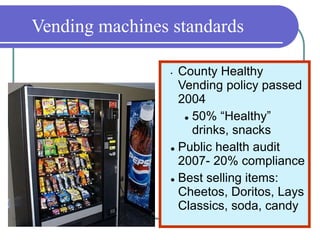
Vending machines standards
• County Healthy
Vending policy passed
2004
 50% “Healthy”
drinks, snacks
 Public health audit
2007- 20% compliance
 Best selling items:
Cheetos, Doritos, Lays
Classics, soda, candy
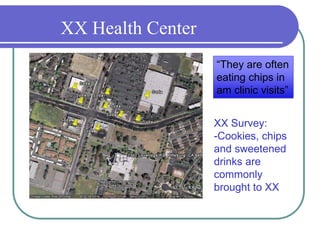
XX Health Center
“They are often
eating chips in
am clinic visits”
XX Survey:
-Cookies, chips
and sweetened
drinks are
commonly
brought to XX
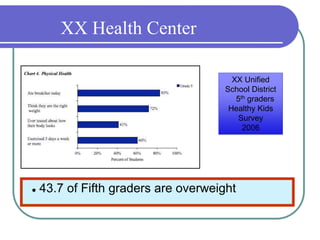
XX Health Center
 43.7 of Fifth graders are overweight
XX Unified
School District
5th graders
Healthy Kids
Survey
2006
Obesity Efforts
XX Health Center
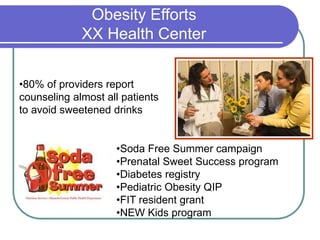
•80% of providers report
counseling almost all patients
to avoid sweetened drinks
•Soda Free Summer campaign
•Prenatal Sweet Success program
•Diabetes registry
•Pediatric Obesity QIP
•FIT resident grant
•NEW Kids program
Obesity Efforts
XX Health Center
•XX social marketing
campaigns
• Have Fun and Be Healthy
• Have Fun and Be Active
• Healthy Drinks
New food package introduced
October 2009:
More breastfeeding support
Less juice
More fruits and vegetables
12/08/09 11
Soda – Should we sell it?
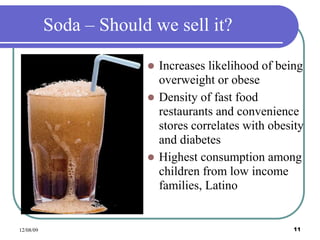
 Increases likelihood of being
overweight or obese
 Density of fast food
restaurants and convenience
stores correlates with obesity
and diabetes
 Highest consumption among
children from low income
families, Latino
12/08/09 12
Soda – Should we sell it?
Concord 44.2
Richmond 46.1
San Francisco 36.9
Bakersfield 60.1
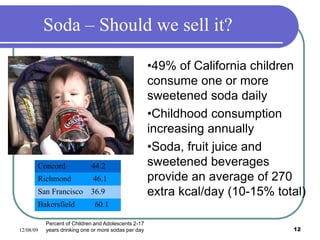
•49% of California children
consume one or more
sweetened soda daily
•Childhood consumption
increasing annually
•Soda, fruit juice and
sweetened beverages
provide an average of 270
extra kcal/day (10-15% total)
Percent of Children and Adolescents 2-17
years drinking one or more sodas per day
12/08/09 13
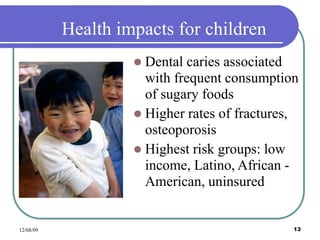
Health impacts for children
 Dental caries associated
with frequent consumption
of sugary foods
 Higher rates of fractures,
osteoporosis
 Highest risk groups: low
income, Latino, African -
American, uninsured
Sweetened Drinks survey
 100% of health professionals surveyed felt
sweetened drinks were a problem
 Most providers discuss the harmful effects of sugar
and sippy cups
 Inadequate time, parental disinterest and easy
access to junk food limit counseling effectiveness
 Culturally appropriate tools and
vending machine restrictions would
assist providers in addressing this
issue
Counseling Patients
Barriers
Top Five:
 Parental disinterest/overwhelm in setting limits for
children
 Parental disinterest/overwhelm in promoting
health
 Lack of adequate time to counsel
 Lack of culturally relevant, up to date educational
materials/counseling tools
 Awareness that families may not have the
resources to buy healthy drinks
• Department of pediatrics worked with Public
Health and CCRMC dietary department in
2008 to develop 100% Healthy vending policy
• Based upon SB 965, SB 12 School standards
• Passed by MEC as part of the pediatric
obesity quality improvement initiative
October 2008
• Implemented by CCRMC cafeteria vending
machines October 2009
100% Healthy Vending Policy
“A supportive environment helps individuals make positive
behavioral changes and models the importance of healthy
lifestyle choices for patients and families”
Nutritional Environment
• Food environment may influence health and
nutritional choices
• Formula and the perinatal unit,
• Cigarettes and smoking at health centers
Make the healthy choice the easy
choice
Conclusion
 Vending machines in clinics provide convenient
foods to patients and profit to the health system.
 Providers in the clinic are actively educating
patients about the hazards of soda and unhealthy
snacks but feel undermined by the presence of
machines in the lobby selling junk food
 Our health system should move towards a 100%
healthy vending policy in all patient access
machines and model a healthy nutritional
environment our patients

Vending Machine Business Plan Overview Powerpoint Presentation Slides

  • 1.
    Vending Machines and HealthSystems Controversies and Concerns XXX
  • 2.
    12/08/09 2 Obesity ison the rise 15 32.2 43.8 45.3 0 10 20 30 40 50 % Overweight/Obese 1971 2-4 years 5-11 years 12-19 years Percent overweight and obese Contra Costa County children 2 – 19 years Pediatric Nutrition Surveillance 2008
  • 3.
  • 4.
    Vending machines inhospitals  7% of all US vending machines in hospitals and nursing homes  California laws do not regulate nutritional content  Profit pressures correlate with quality  Beverage vending agreements vs. food vending agreements
  • 5.
    Vending machines atCCRMC  Patient access machines located in Richmond, XX Health Centers, CCRMC cafeteria  Unknown profit  No contract  County provides electricity, space, disposal of waste, associated cleaning costs
  • 6.
    Vending machines standards •County Healthy Vending policy passed 2004  50% “Healthy” drinks, snacks  Public health audit 2007- 20% compliance  Best selling items: Cheetos, Doritos, Lays Classics, soda, candy
  • 7.
    XX Health Center “Theyare often eating chips in am clinic visits” XX Survey: -Cookies, chips and sweetened drinks are commonly brought to XX
  • 8.
    XX Health Center 43.7 of Fifth graders are overweight XX Unified School District 5th graders Healthy Kids Survey 2006
  • 9.
    Obesity Efforts XX HealthCenter •80% of providers report counseling almost all patients to avoid sweetened drinks •Soda Free Summer campaign •Prenatal Sweet Success program •Diabetes registry •Pediatric Obesity QIP •FIT resident grant •NEW Kids program
  • 10.
    Obesity Efforts XX HealthCenter •XX social marketing campaigns • Have Fun and Be Healthy • Have Fun and Be Active • Healthy Drinks New food package introduced October 2009: More breastfeeding support Less juice More fruits and vegetables
  • 11.
    12/08/09 11 Soda –Should we sell it?  Increases likelihood of being overweight or obese  Density of fast food restaurants and convenience stores correlates with obesity and diabetes  Highest consumption among children from low income families, Latino
  • 12.
    12/08/09 12 Soda –Should we sell it? Concord 44.2 Richmond 46.1 San Francisco 36.9 Bakersfield 60.1 •49% of California children consume one or more sweetened soda daily •Childhood consumption increasing annually •Soda, fruit juice and sweetened beverages provide an average of 270 extra kcal/day (10-15% total) Percent of Children and Adolescents 2-17 years drinking one or more sodas per day
  • 13.
    12/08/09 13 Health impactsfor children  Dental caries associated with frequent consumption of sugary foods  Higher rates of fractures, osteoporosis  Highest risk groups: low income, Latino, African - American, uninsured
  • 14.
    Sweetened Drinks survey 100% of health professionals surveyed felt sweetened drinks were a problem  Most providers discuss the harmful effects of sugar and sippy cups  Inadequate time, parental disinterest and easy access to junk food limit counseling effectiveness  Culturally appropriate tools and vending machine restrictions would assist providers in addressing this issue
  • 15.
    Counseling Patients Barriers Top Five: Parental disinterest/overwhelm in setting limits for children  Parental disinterest/overwhelm in promoting health  Lack of adequate time to counsel  Lack of culturally relevant, up to date educational materials/counseling tools  Awareness that families may not have the resources to buy healthy drinks
  • 16.
    • Department ofpediatrics worked with Public Health and CCRMC dietary department in 2008 to develop 100% Healthy vending policy • Based upon SB 965, SB 12 School standards • Passed by MEC as part of the pediatric obesity quality improvement initiative October 2008 • Implemented by CCRMC cafeteria vending machines October 2009 100% Healthy Vending Policy “A supportive environment helps individuals make positive behavioral changes and models the importance of healthy lifestyle choices for patients and families”
  • 17.
    Nutritional Environment • Foodenvironment may influence health and nutritional choices • Formula and the perinatal unit, • Cigarettes and smoking at health centers Make the healthy choice the easy choice
  • 18.
    Conclusion  Vending machinesin clinics provide convenient foods to patients and profit to the health system.  Providers in the clinic are actively educating patients about the hazards of soda and unhealthy snacks but feel undermined by the presence of machines in the lobby selling junk food  Our health system should move towards a 100% healthy vending policy in all patient access machines and model a healthy nutritional environment our patients