DALIMSS SUNBEAM SCHOOL SIGRA
MADE UNDER THE GUIDENCE OF :-
MR. RAM BHAJAN YADAV SIR
(HEAD OF SCIENCE DEPARTMENT )
MR. MUKESH SIR
MS. SHRADDHA MAAM
Van de Graaff Generator
STUDENT PARTICIPATED
IN MODEL
1. AMEYA VIKRAMA
2. ANANT KHANNA
3. AYUSH KUMAR SINGH
4. AVINASH KUMAR CHAND
5. VIJAY SHANKAR PANDEY
6. VISHNU SINGH
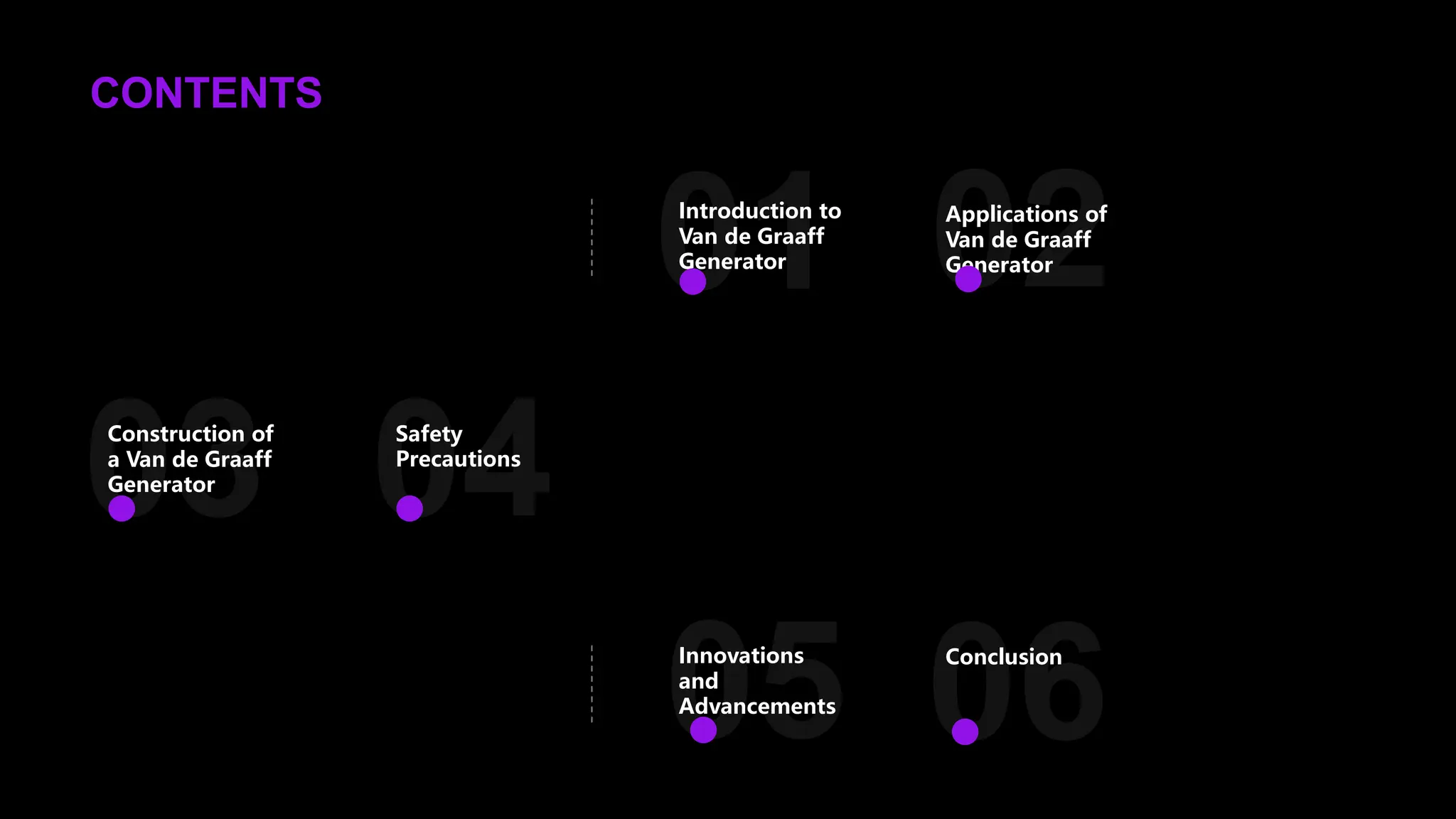
Applications of
Van de Graaff
Generator
Construction of
a Van de Graaff
Generator
Safety
Precautions
Innovations
and
Advancements
CONTENTS
Conclusion
Introduction to
Van de Graaff
Generator
Introduction to Van de Graaff Generator
01 .
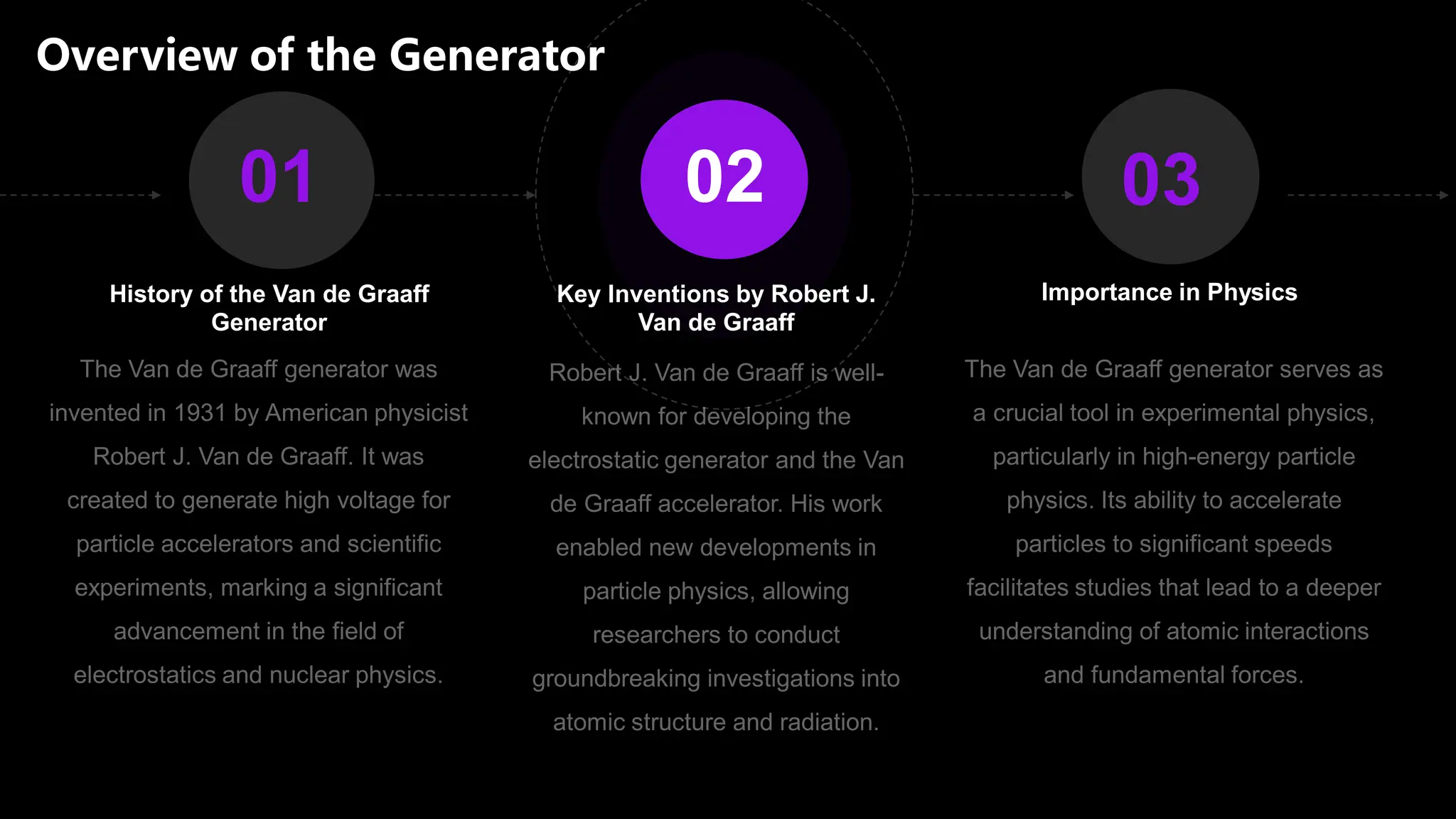
Overview of the Generator
Key Inventions by Robert J.
Van de Graaff
History of the Van de Graaff
Generator
Importance in Physics
01 02 03
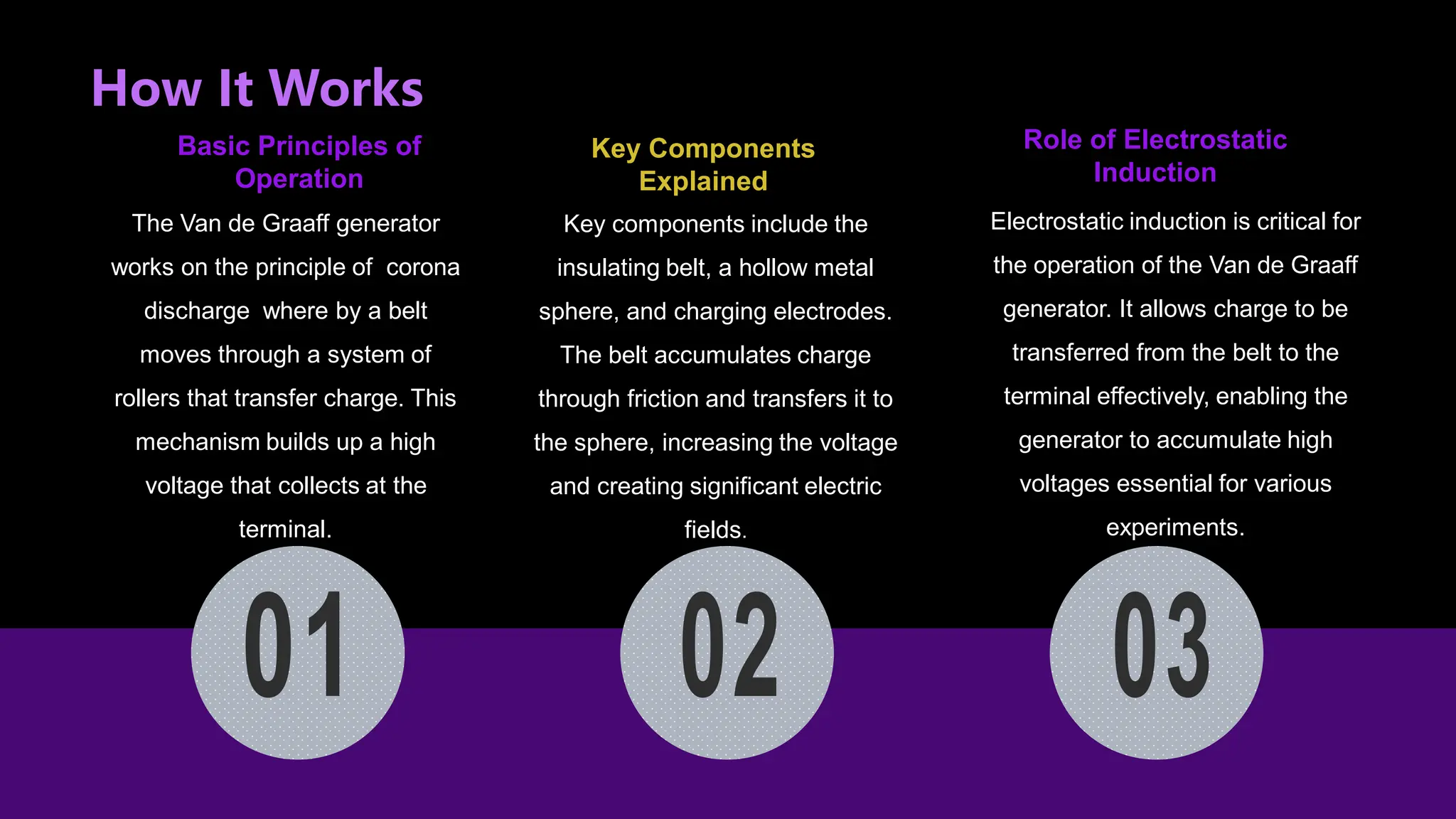
How It Works
Basic Principles of
Operation
The Van de Graaff generator
works on the principle of corona
discharge where by a belt
moves through a system of
rollers that transfer charge. This
mechanism builds up a high
voltage that collects at the
terminal.
Key Components
Explained
Key components include the
insulating belt, a hollow metal
sphere, and charging electrodes.
The belt accumulates charge
through friction and transfers it to
the sphere, increasing the voltage
and creating significant electric
fields.
Role of Electrostatic
Induction
Electrostatic induction is critical for
the operation of the Van de Graaff
generator. It allows charge to be
transferred from the belt to the
terminal effectively, enabling the
generator to accumulate high
voltages essential for various
experiments.
Applications of Van de Graaff
Generator
02 .
Scientific Research
Materials Science Studies
Particle Acceleration Nuclear Physics Experiments
Educational Purposes
Classroom Demonstrations
Student Engagement
Safety in Experiments
Construction of a Van de Graaff
Generator
03 .
Design Considerations
Materials Needed
Constructing a Van de Graaff generator
requires materials such as plastic or
rubber for the belt, a metal sphere for
charge accumulation, and insulating
components to ensure safety and
proper functionality during operation.
Size and Scale Options
Generators can be built in various sizes,
from small tabletop models for
demonstration purposes to larger units
used in research facilities. The design
should match the intended application
and space availability.
Step-by-Step Building Guide
01 02 03
Assembling the Base
Begin by assembling a
stable base that supports
the generator's components.
This includes creating a
sturdy frame to mount the
belt mechanism and the
terminal, ensuring it is level
for optimal operation.
Incorporating the Belt
System
The belt system must be
installed carefully, ensuring
smooth movement and
proper tension. It is essential
to select materials that
reduce friction and provide
efficient charge transfer
during operation.
Installing the Terminal
The terminal, typically a hollow
metallic sphere, should be
securely positioned at the top
of the generator. Proper
alignment ensures maximum
charge accumulation and
enhances the generator's
overall performance.
Safety Precautions
04 .
Understanding Electrical Hazards
Proper Grounding Techniques
High Voltage Risks
Safe Operation Guidelines
Emergency Procedures
Recommended Equipment
01
02
Innovations and Advancements
05 .
Modern Variants of Van de Graaff Generators
01
Improvements in Efficiency
Integration with Other
Technologies
02
Future Directions
Impact on Educational Technology
Potential Research Areas
Conclusion
06 .
Summary of Key Points
Importance in Various Fields
Recap of Functionality
01
02
Further Reading and Resources
01
Recommended Books
Online Resources and
Communities
02
•Thank you for
listening.

Vande graaf generator full detailed project file.pdf

  • 1.
    DALIMSS SUNBEAM SCHOOLSIGRA MADE UNDER THE GUIDENCE OF :- MR. RAM BHAJAN YADAV SIR (HEAD OF SCIENCE DEPARTMENT ) MR. MUKESH SIR MS. SHRADDHA MAAM Van de Graaff Generator
  • 2.
    STUDENT PARTICIPATED IN MODEL 1.AMEYA VIKRAMA 2. ANANT KHANNA 3. AYUSH KUMAR SINGH 4. AVINASH KUMAR CHAND 5. VIJAY SHANKAR PANDEY 6. VISHNU SINGH
  • 3.
    Applications of Van deGraaff Generator Construction of a Van de Graaff Generator Safety Precautions Innovations and Advancements CONTENTS Conclusion Introduction to Van de Graaff Generator
  • 4.
    Introduction to Vande Graaff Generator 01 .
  • 5.
    Overview of theGenerator Key Inventions by Robert J. Van de Graaff History of the Van de Graaff Generator Importance in Physics 01 02 03
  • 6.
    How It Works BasicPrinciples of Operation The Van de Graaff generator works on the principle of corona discharge where by a belt moves through a system of rollers that transfer charge. This mechanism builds up a high voltage that collects at the terminal. Key Components Explained Key components include the insulating belt, a hollow metal sphere, and charging electrodes. The belt accumulates charge through friction and transfers it to the sphere, increasing the voltage and creating significant electric fields. Role of Electrostatic Induction Electrostatic induction is critical for the operation of the Van de Graaff generator. It allows charge to be transferred from the belt to the terminal effectively, enabling the generator to accumulate high voltages essential for various experiments.
  • 7.
    Applications of Vande Graaff Generator 02 .
  • 8.
    Scientific Research Materials ScienceStudies Particle Acceleration Nuclear Physics Experiments
  • 9.
  • 10.
    Construction of aVan de Graaff Generator 03 .
  • 11.
    Design Considerations Materials Needed Constructinga Van de Graaff generator requires materials such as plastic or rubber for the belt, a metal sphere for charge accumulation, and insulating components to ensure safety and proper functionality during operation. Size and Scale Options Generators can be built in various sizes, from small tabletop models for demonstration purposes to larger units used in research facilities. The design should match the intended application and space availability.
  • 12.
    Step-by-Step Building Guide 0102 03 Assembling the Base Begin by assembling a stable base that supports the generator's components. This includes creating a sturdy frame to mount the belt mechanism and the terminal, ensuring it is level for optimal operation. Incorporating the Belt System The belt system must be installed carefully, ensuring smooth movement and proper tension. It is essential to select materials that reduce friction and provide efficient charge transfer during operation. Installing the Terminal The terminal, typically a hollow metallic sphere, should be securely positioned at the top of the generator. Proper alignment ensures maximum charge accumulation and enhances the generator's overall performance.
  • 13.
  • 14.
    Understanding Electrical Hazards ProperGrounding Techniques High Voltage Risks
  • 15.
    Safe Operation Guidelines EmergencyProcedures Recommended Equipment 01 02
  • 16.
  • 17.
    Modern Variants ofVan de Graaff Generators 01 Improvements in Efficiency Integration with Other Technologies 02
  • 18.
    Future Directions Impact onEducational Technology Potential Research Areas
  • 19.
  • 20.
    Summary of KeyPoints Importance in Various Fields Recap of Functionality 01 02
  • 21.
    Further Reading andResources 01 Recommended Books Online Resources and Communities 02
  • 22.