Agriculture Insurance in the Philippines Today’s Dilemmas
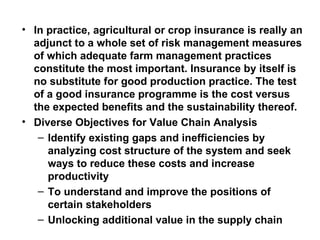
In practice, agricultural or crop insurance is really an adjunct to a whole set of risk management measures of which adequate farm management practices constitute the most important. Insurance by itself is no substitute for good production practice. The test of a good insurance programme is the cost versus the expected benefits and the sustainability thereof. Diverse Objectives for Value Chain Analysis Identify existing gaps and inefficiencies by analyzing cost structure of the system and seek ways to reduce these costs and increase productivity To understand and improve the positions of certain stakeholders Unlocking additional value in the supply chain
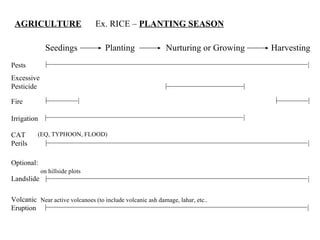
AGRICULTURE Ex. RICE –  PLANTING SEASON Seedings Planting Nurturing or Growing Harvesting Pests Excessive Pesticide Fire Irrigation | | CAT Perils (EQ, TYPHOON, FLOOD) Optional: Landslide on hillside plots Volcanic Eruption Near active volcanoes (to include volcanic ash damage, lahar, etc.. | | | | | | | | | | | | | |
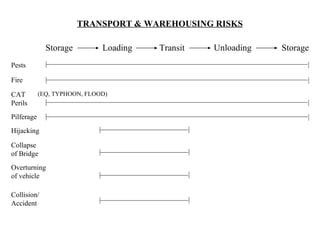
TRANSPORT & WAREHOUSING RISKS Storage Loading Transit Storage Unloading Pests Fire CAT Perils (EQ, TYPHOON, FLOOD) Pilferage Hijacking Collapse of Bridge Overturning of vehicle Collision/Accident | | | | | | | | | | | | | | | |
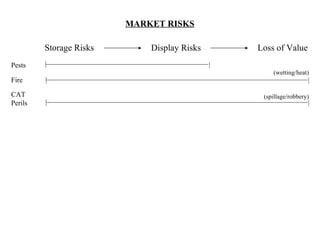
MARKET RISKS Storage Risks Display Risks Loss of Value Pests | | Fire CAT Perils (spillage/robbery) (wetting/heat) | | | |
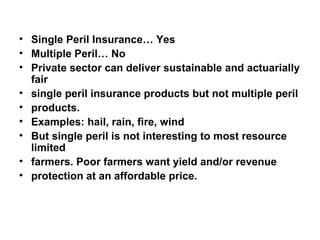
Single Peril Insurance… Yes Multiple Peril… No Private sector can deliver sustainable and actuarially fair single peril insurance products but not multiple peril products. Examples: hail, rain, fire, wind But single peril is not interesting to most resource limited farmers. Poor farmers want yield and/or revenue protection at an affordable price.
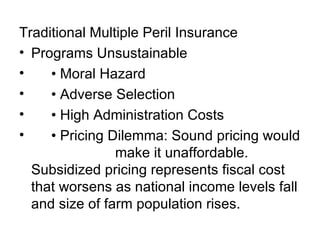
Traditional Multiple Peril Insurance Programs Unsustainable • Moral Hazard • Adverse Selection • High Administration Costs • Pricing Dilemma: Sound pricing would  make it unaffordable. Subsidized pricing represents fiscal cost that worsens as national income levels fall and size of farm population rises.

Valdes private sectorinitiatives

  • 1.
    Agriculture Insurance inthe Philippines Today’s Dilemmas
  • 2.
    In practice, agriculturalor crop insurance is really an adjunct to a whole set of risk management measures of which adequate farm management practices constitute the most important. Insurance by itself is no substitute for good production practice. The test of a good insurance programme is the cost versus the expected benefits and the sustainability thereof. Diverse Objectives for Value Chain Analysis Identify existing gaps and inefficiencies by analyzing cost structure of the system and seek ways to reduce these costs and increase productivity To understand and improve the positions of certain stakeholders Unlocking additional value in the supply chain
  • 3.
    AGRICULTURE Ex. RICE– PLANTING SEASON Seedings Planting Nurturing or Growing Harvesting Pests Excessive Pesticide Fire Irrigation | | CAT Perils (EQ, TYPHOON, FLOOD) Optional: Landslide on hillside plots Volcanic Eruption Near active volcanoes (to include volcanic ash damage, lahar, etc.. | | | | | | | | | | | | | |
  • 4.
    TRANSPORT & WAREHOUSINGRISKS Storage Loading Transit Storage Unloading Pests Fire CAT Perils (EQ, TYPHOON, FLOOD) Pilferage Hijacking Collapse of Bridge Overturning of vehicle Collision/Accident | | | | | | | | | | | | | | | |
  • 5.
    MARKET RISKS StorageRisks Display Risks Loss of Value Pests | | Fire CAT Perils (spillage/robbery) (wetting/heat) | | | |
  • 6.
    Single Peril Insurance…Yes Multiple Peril… No Private sector can deliver sustainable and actuarially fair single peril insurance products but not multiple peril products. Examples: hail, rain, fire, wind But single peril is not interesting to most resource limited farmers. Poor farmers want yield and/or revenue protection at an affordable price.
  • 7.
    Traditional Multiple PerilInsurance Programs Unsustainable • Moral Hazard • Adverse Selection • High Administration Costs • Pricing Dilemma: Sound pricing would make it unaffordable. Subsidized pricing represents fiscal cost that worsens as national income levels fall and size of farm population rises.