Constituent structure
Three fundamental ideas in syntax
1. Sentences have parts, which may themselves have
 parts – the basis of constituent structure analysis
2. The parts of sentences belong to a limited range of
 types – the root of the concept of syntactic
 categories
3. The parts have specific roles or functions within the
 larger parts they belong to – grammatical functions
Constituent structure
Sentences contain parts called constituents.
Those constituents often have constituents themselves,
 and those are made up of still shorter constituents and so
 on.
This hierarchical composition of wholes from parts is
 called constituent structure.
(1) A bird hit the car.
In the first instance – divided into two parts: subject (a
 bird) and predicate (hit the car)
The phrase a bird: a and bird
Hit the car: hit and the car
The car: the and car
Constituent structure
The parts of the sentence shown at the first level
 down, a bird and hit the car – immediate constituents
 of the sentence;
Similarly – hit and the car are the immediate
 constituents of hit the car;
The words are the ultimate constituents of the
 sentence.
Constituent structure
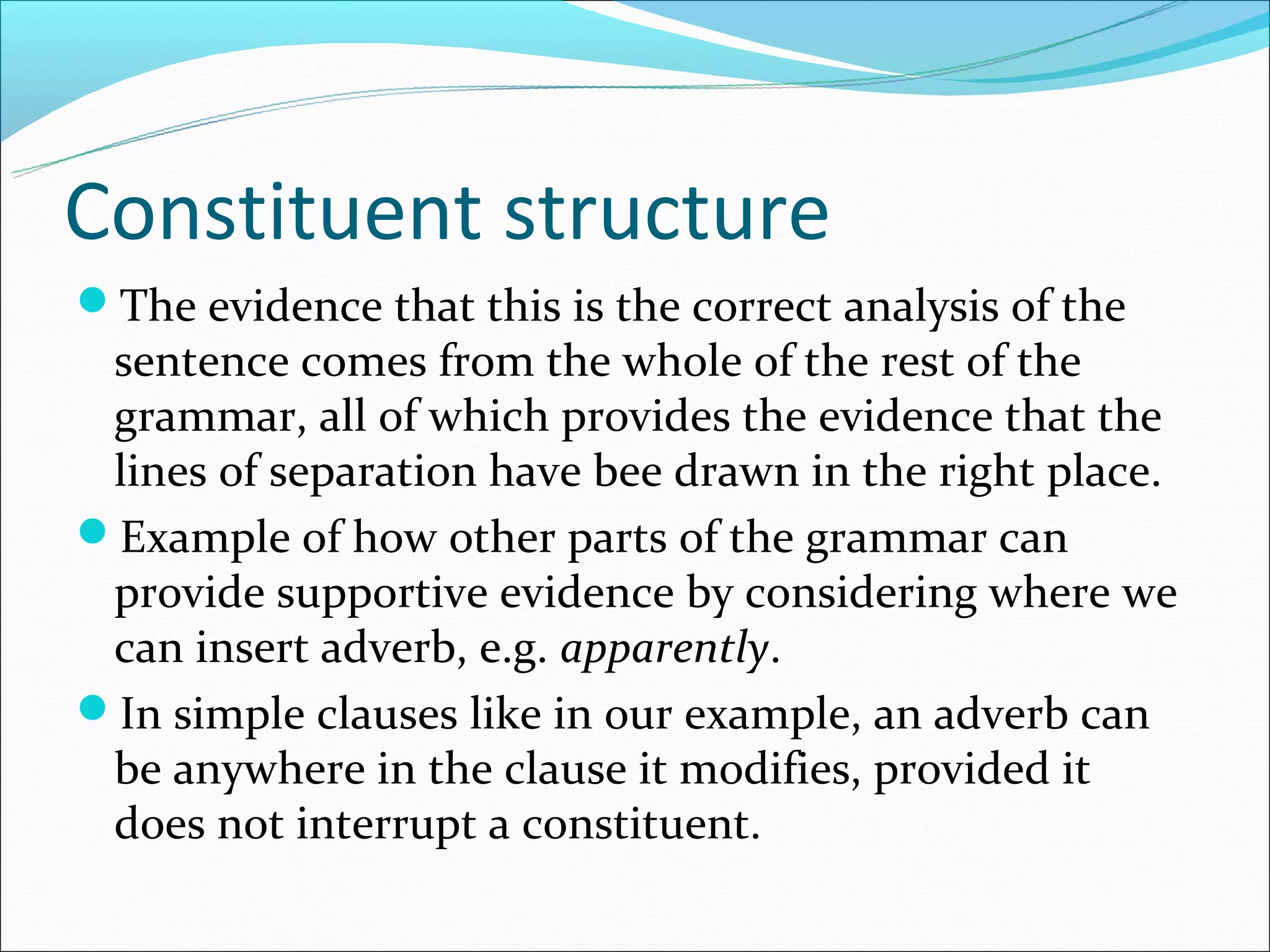
The evidence that this is the correct analysis of the
 sentence comes from the whole of the rest of the
 grammar, all of which provides the evidence that the
 lines of separation have bee drawn in the right place.
Example of how other parts of the grammar can
 provide supportive evidence by considering where we
 can insert adverb, e.g. apparently.
In simple clauses like in our example, an adverb can
 be anywhere in the clause it modifies, provided it
 does not interrupt a constituent.
Constituent structure
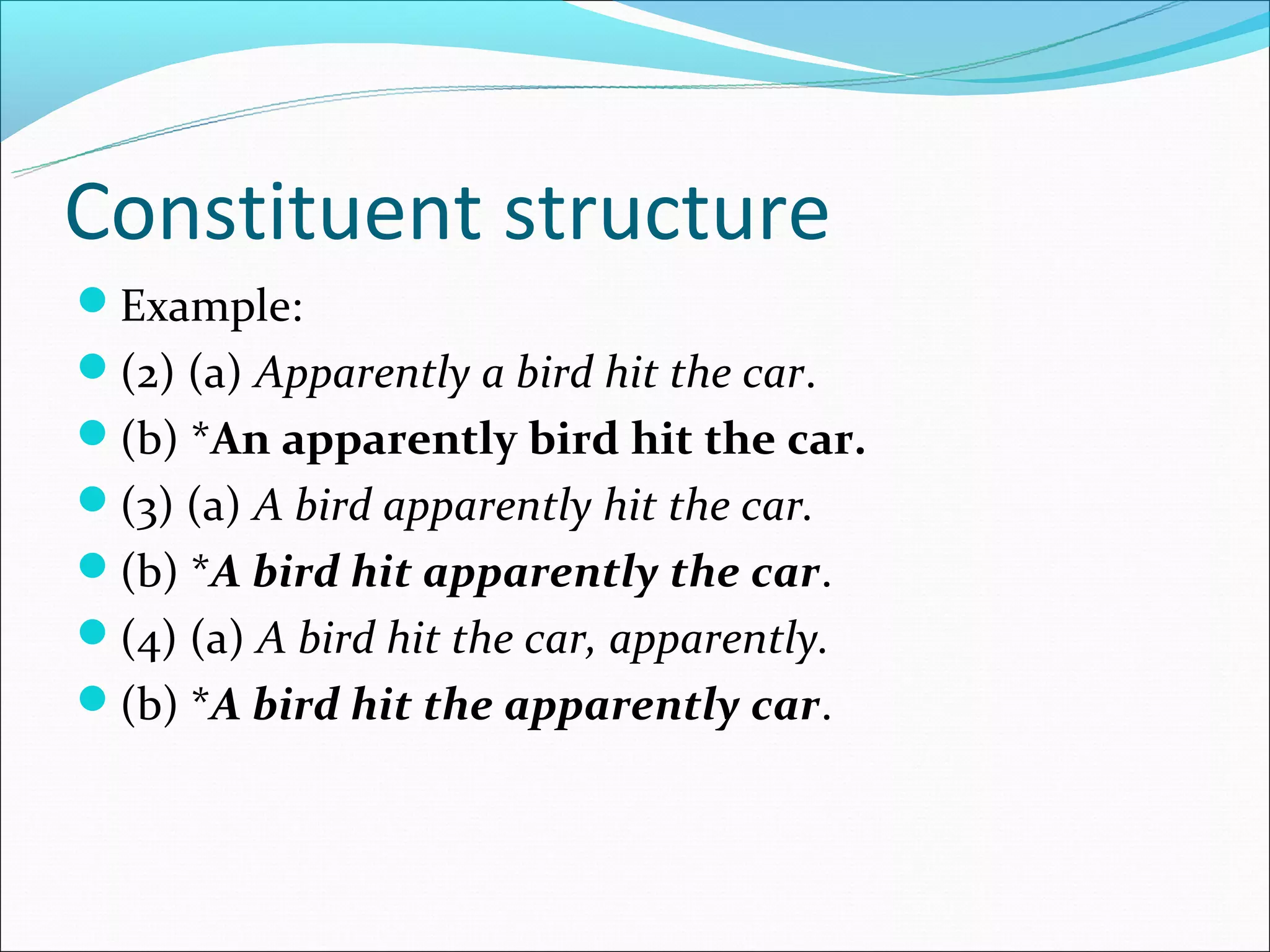
Example:
(2) (a) Apparently a bird hit the car.
(b) *An apparently bird hit the car.
(3) (a) A bird apparently hit the car.
(b) *A bird hit apparently the car.
(4) (a) A bird hit the car, apparently.
(b) *A bird hit the apparently car.
Constituent structure
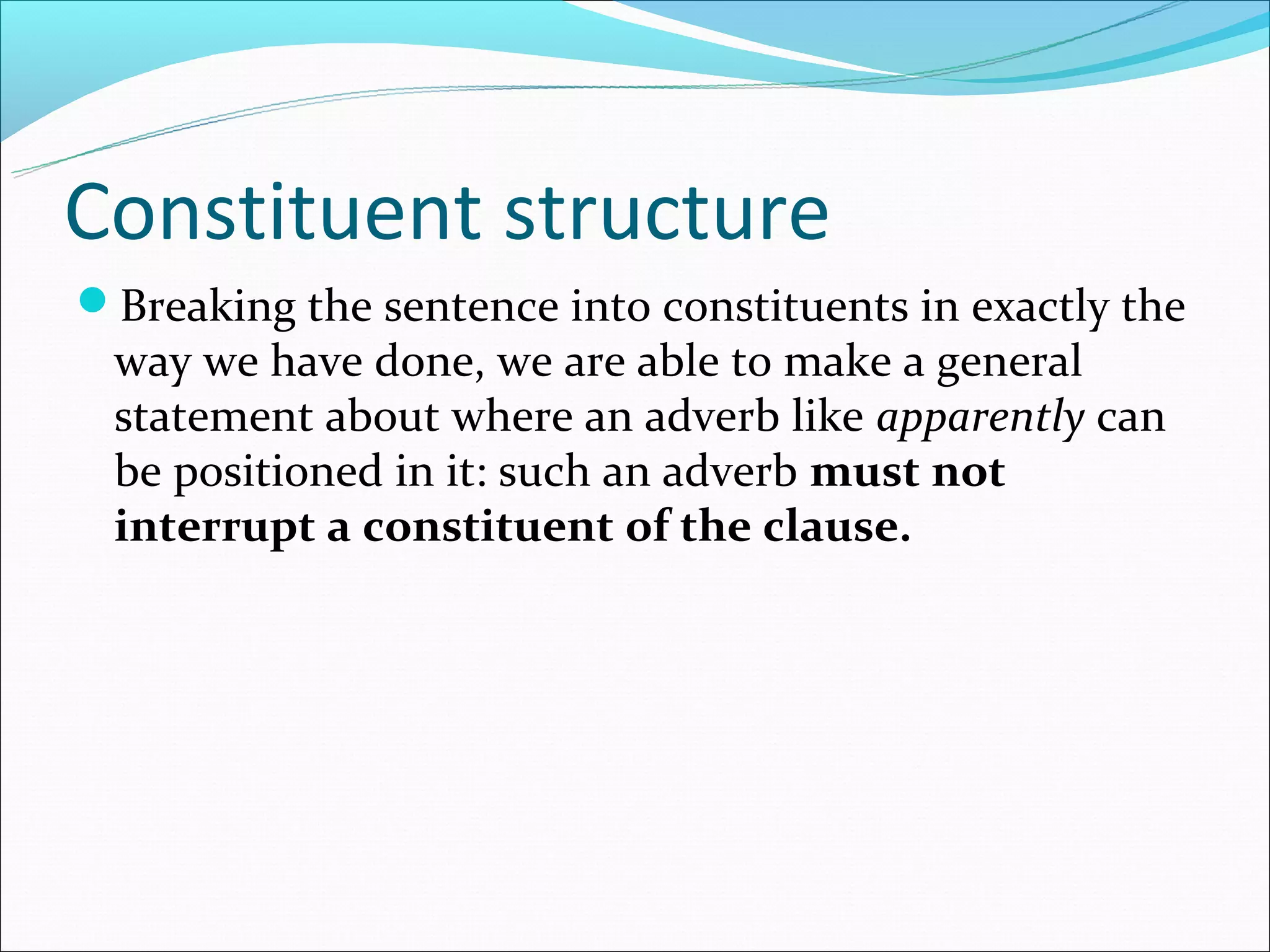
Breaking the sentence into constituents in exactly the
 way we have done, we are able to make a general
 statement about where an adverb like apparently can
 be positioned in it: such an adverb must not
 interrupt a constituent of the clause.
Syntactic categories
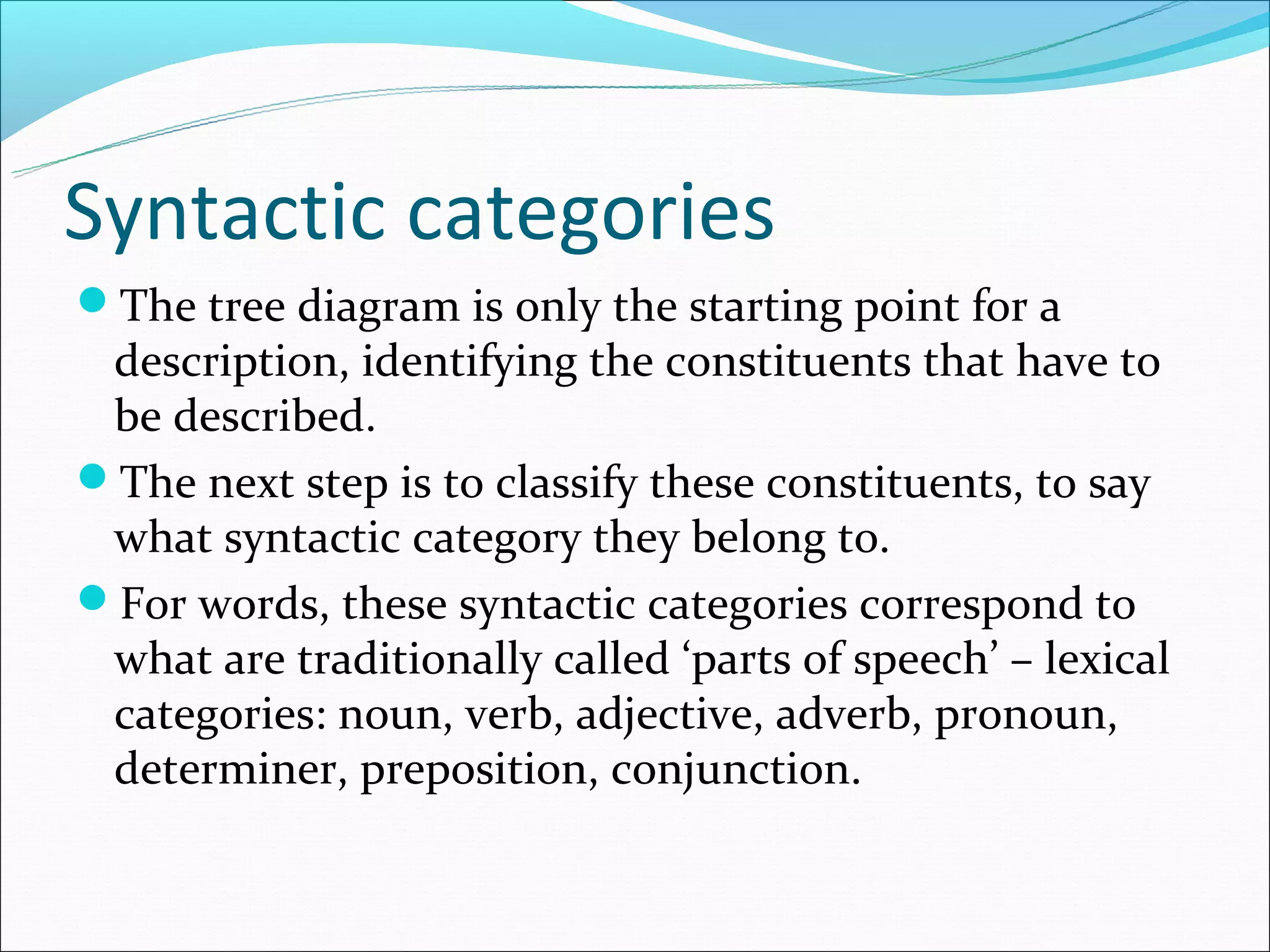
The tree diagram is only the starting point for a
 description, identifying the constituents that have to
 be described.
The next step is to classify these constituents, to say
 what syntactic category they belong to.
For words, these syntactic categories correspond to
 what are traditionally called ‘parts of speech’ – lexical
 categories: noun, verb, adjective, adverb, pronoun,
 determiner, preposition, conjunction.
Phrasal categories
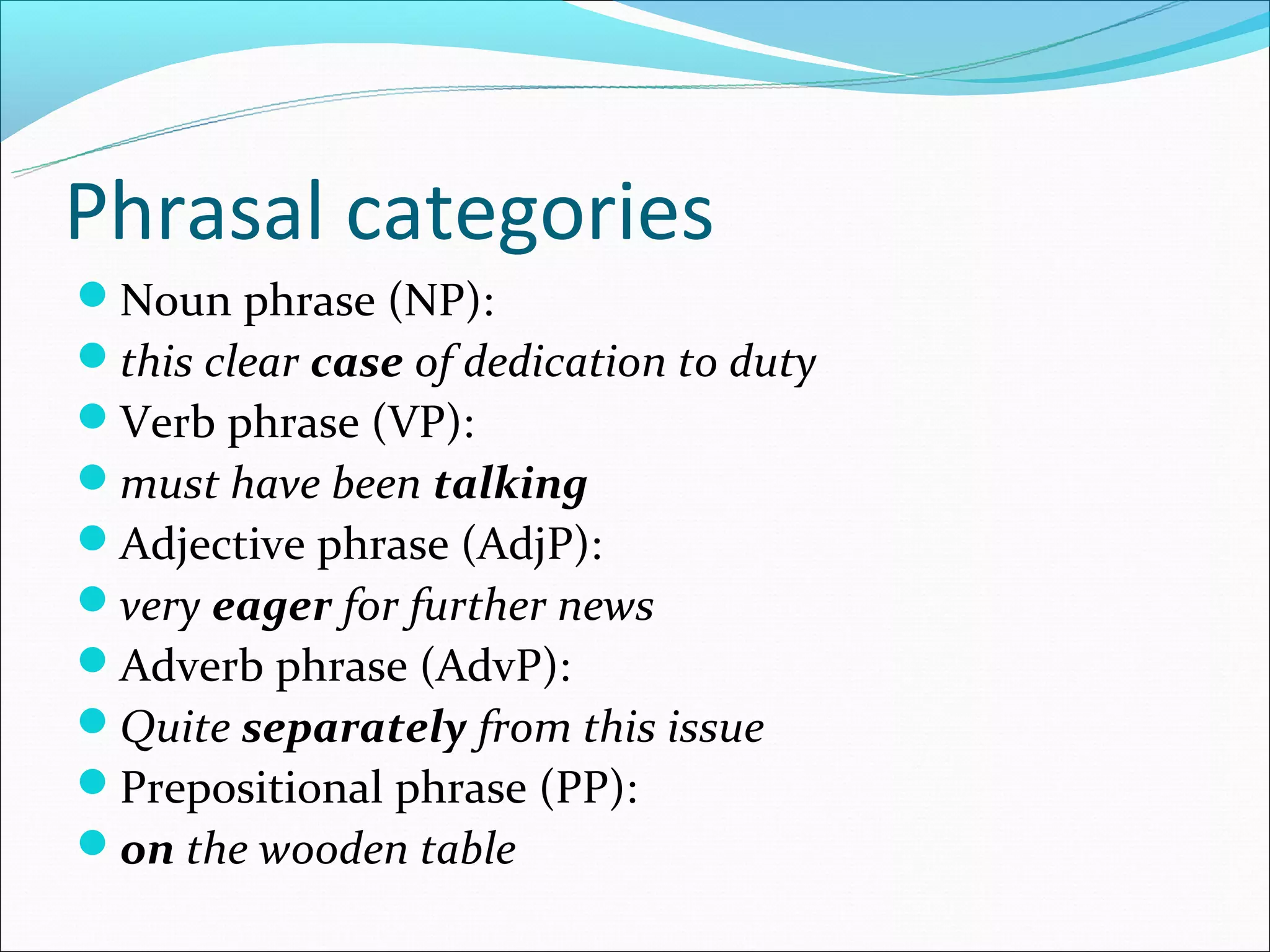
Phrases – constituents containing one and more than
 one word, more specifically, containing a central and
 most important word augmented by appropriate
 accompanying words that elaborate its contribution
 to the sentence.
The lexical categories have corresponding phrase
 types that are actually expansions of them.
Phrasal categories
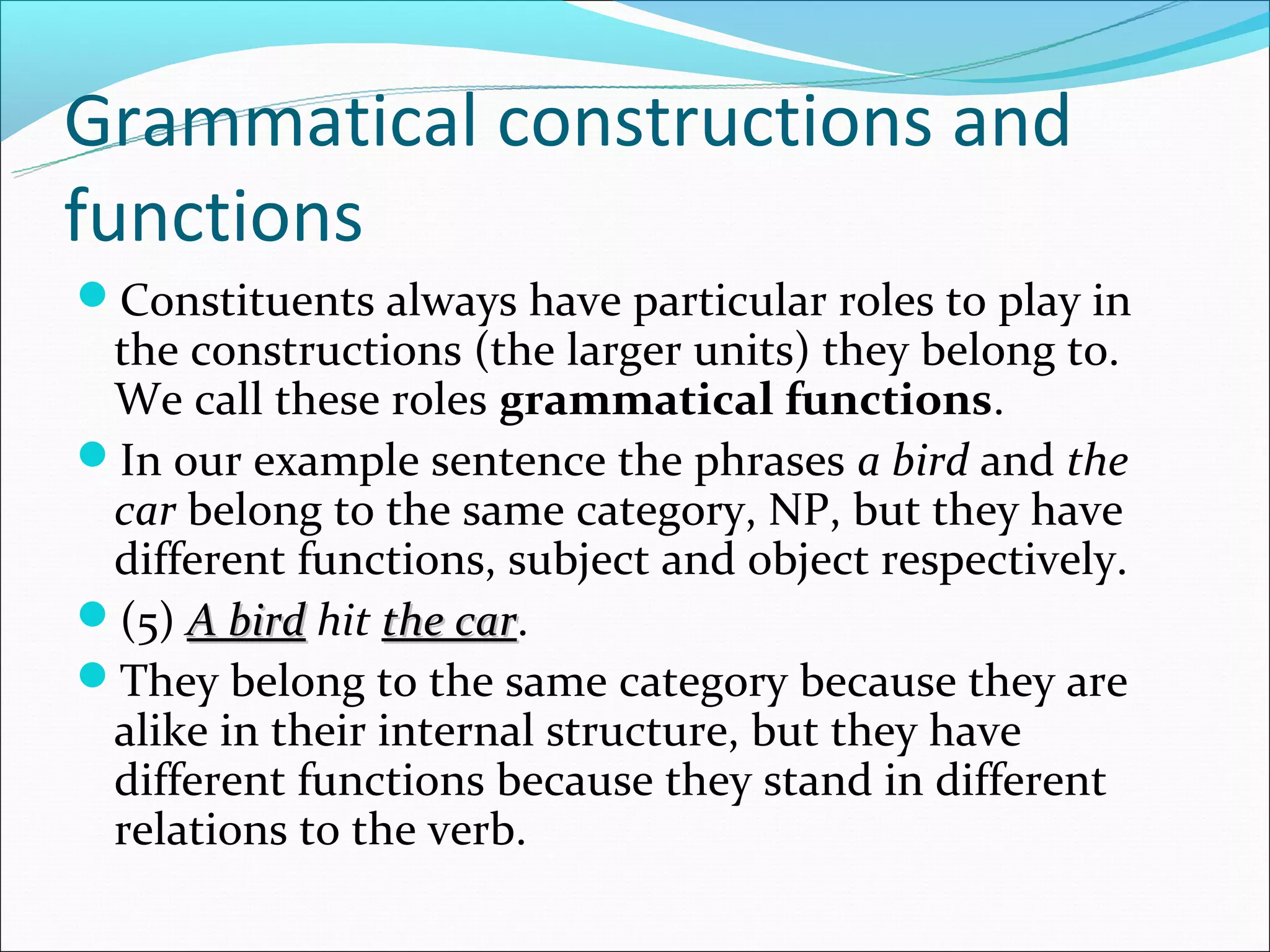
Noun phrase (NP):
this clear case of dedication to duty
Verb phrase (VP):
must have been talking
Adjective phrase (AdjP):
very eager for further news
Adverb phrase (AdvP):
Quite separately from this issue
Prepositional phrase (PP):
on the wooden table
Grammatical constructions and
functions
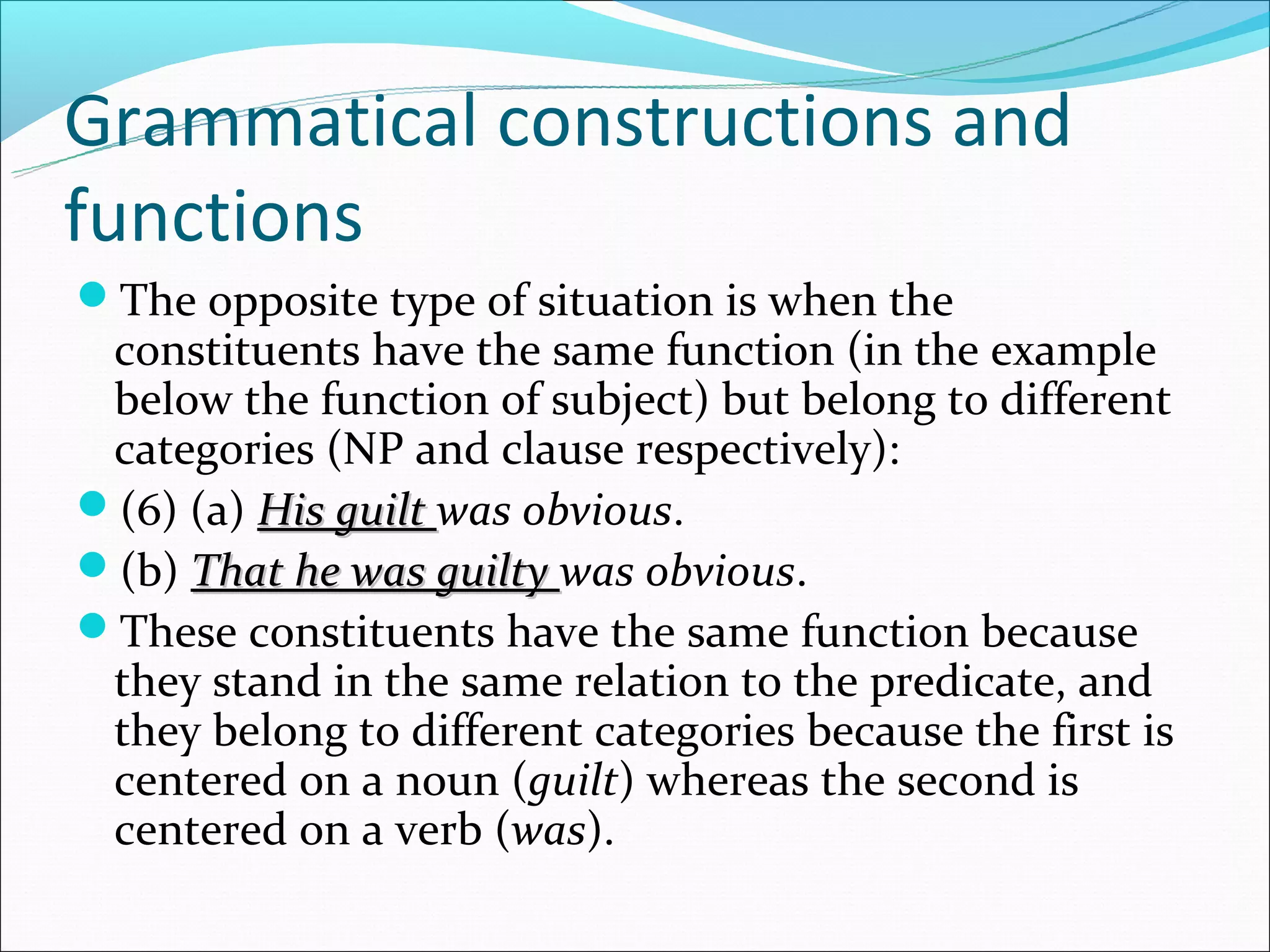
Constituents always have particular roles to play in
 the constructions (the larger units) they belong to.
 We call these roles grammatical functions.
In our example sentence the phrases a bird and the
 car belong to the same category, NP, but they have
 different functions, subject and object respectively.
(5) A bird hit the car.
                    car
They belong to the same category because they are
 alike in their internal structure, but they have
 different functions because they stand in different
 relations to the verb.
Grammatical constructions and
functions
The opposite type of situation is when the
 constituents have the same function (in the example
 below the function of subject) but belong to different
 categories (NP and clause respectively):
(6) (a) His guilt was obvious.
(b) That he was guilty was obvious.
These constituents have the same function because
 they stand in the same relation to the predicate, and
 they belong to different categories because the first is
 centered on a noun (guilt) whereas the second is
 centered on a verb (was).
Heads and dependents
There is a set of functions that to a large extent apply in
 the same way to all phrasal categories.
The first division is that between the head (upravni član)
 and the various dependents (zavisni članovi) that can
 combine with it.
The head, normally obligatory, plays the primary role in
      head
 determining the distribution of the phrase, i.e.
 whereabouts in sentence structure it can occur.
Dependents, often optional, are syntactically subordinate
 elements. The term ‘dependent’ reflects the fact that in
 any given construction what kinds of dependent are
 permitted depends on the head.
Heads and dependents
For example, too can function as dependent to an
 adjective or adverb (too careful, too carefully), but not
 to a noun or verb (*their too extravagance, *You
 shouldn’t too worry).
Similarly, sufficiently can function as dependent to
 and adjective, adverb, or verb, but not to a noun
 (sufficiently good, sufficiently often, He practised
 sufficiently, *sufficiently reason).
Subtypes of dependent
We need to distinguish different subtypes of
 dependent according to their more specific relation to
 the head.
We distinguish complements, modifiers and
 determiners as different subtypes of dependent.
(7) very eager for further news = adjective phrase; very
 is a modifier of the head eager, for further news is a
 complement of the head eager
(8) the chair by the wall = noun phrase; the is a
 determiner in this NP

Uvod u morfosintaksu, lecture 02, 12 13

  • 1.
  • 2.
    Three fundamental ideasin syntax 1. Sentences have parts, which may themselves have parts – the basis of constituent structure analysis 2. The parts of sentences belong to a limited range of types – the root of the concept of syntactic categories 3. The parts have specific roles or functions within the larger parts they belong to – grammatical functions
  • 3.
    Constituent structure Sentences containparts called constituents. Those constituents often have constituents themselves, and those are made up of still shorter constituents and so on. This hierarchical composition of wholes from parts is called constituent structure. (1) A bird hit the car. In the first instance – divided into two parts: subject (a bird) and predicate (hit the car) The phrase a bird: a and bird Hit the car: hit and the car The car: the and car
  • 4.
    Constituent structure The partsof the sentence shown at the first level down, a bird and hit the car – immediate constituents of the sentence; Similarly – hit and the car are the immediate constituents of hit the car; The words are the ultimate constituents of the sentence.
  • 5.
    Constituent structure The evidencethat this is the correct analysis of the sentence comes from the whole of the rest of the grammar, all of which provides the evidence that the lines of separation have bee drawn in the right place. Example of how other parts of the grammar can provide supportive evidence by considering where we can insert adverb, e.g. apparently. In simple clauses like in our example, an adverb can be anywhere in the clause it modifies, provided it does not interrupt a constituent.
  • 6.
    Constituent structure Example: (2) (a)Apparently a bird hit the car. (b) *An apparently bird hit the car. (3) (a) A bird apparently hit the car. (b) *A bird hit apparently the car. (4) (a) A bird hit the car, apparently. (b) *A bird hit the apparently car.
  • 7.
    Constituent structure Breaking thesentence into constituents in exactly the way we have done, we are able to make a general statement about where an adverb like apparently can be positioned in it: such an adverb must not interrupt a constituent of the clause.
  • 8.
    Syntactic categories The treediagram is only the starting point for a description, identifying the constituents that have to be described. The next step is to classify these constituents, to say what syntactic category they belong to. For words, these syntactic categories correspond to what are traditionally called ‘parts of speech’ – lexical categories: noun, verb, adjective, adverb, pronoun, determiner, preposition, conjunction.
  • 9.
    Phrasal categories Phrases –constituents containing one and more than one word, more specifically, containing a central and most important word augmented by appropriate accompanying words that elaborate its contribution to the sentence. The lexical categories have corresponding phrase types that are actually expansions of them.
  • 10.
    Phrasal categories Noun phrase(NP): this clear case of dedication to duty Verb phrase (VP): must have been talking Adjective phrase (AdjP): very eager for further news Adverb phrase (AdvP): Quite separately from this issue Prepositional phrase (PP): on the wooden table
  • 11.
    Grammatical constructions and functions Constituentsalways have particular roles to play in the constructions (the larger units) they belong to. We call these roles grammatical functions. In our example sentence the phrases a bird and the car belong to the same category, NP, but they have different functions, subject and object respectively. (5) A bird hit the car. car They belong to the same category because they are alike in their internal structure, but they have different functions because they stand in different relations to the verb.
  • 12.
    Grammatical constructions and functions Theopposite type of situation is when the constituents have the same function (in the example below the function of subject) but belong to different categories (NP and clause respectively): (6) (a) His guilt was obvious. (b) That he was guilty was obvious. These constituents have the same function because they stand in the same relation to the predicate, and they belong to different categories because the first is centered on a noun (guilt) whereas the second is centered on a verb (was).
  • 13.
    Heads and dependents Thereis a set of functions that to a large extent apply in the same way to all phrasal categories. The first division is that between the head (upravni član) and the various dependents (zavisni članovi) that can combine with it. The head, normally obligatory, plays the primary role in head determining the distribution of the phrase, i.e. whereabouts in sentence structure it can occur. Dependents, often optional, are syntactically subordinate elements. The term ‘dependent’ reflects the fact that in any given construction what kinds of dependent are permitted depends on the head.
  • 14.
    Heads and dependents Forexample, too can function as dependent to an adjective or adverb (too careful, too carefully), but not to a noun or verb (*their too extravagance, *You shouldn’t too worry). Similarly, sufficiently can function as dependent to and adjective, adverb, or verb, but not to a noun (sufficiently good, sufficiently often, He practised sufficiently, *sufficiently reason).
  • 15.
    Subtypes of dependent Weneed to distinguish different subtypes of dependent according to their more specific relation to the head. We distinguish complements, modifiers and determiners as different subtypes of dependent. (7) very eager for further news = adjective phrase; very is a modifier of the head eager, for further news is a complement of the head eager (8) the chair by the wall = noun phrase; the is a determiner in this NP