Today
 What is syntax?
 Grammaticality
 Ambiguity
 Phrase structure
Readings: 6.1 – 6.2
Syntax
 The study of the structure of phrases/
sentences and the rules governing how
words are combined to form
phrases/sentences
 These rules are acquired at a very young
age and internalized.
Ambiguity
 The property of having two or more
meanings.
 Lexical ambiguity
 Structural ambiguity
Lexical ambiguity
Headlines:
 PROSTITUTES APPEAL TO POPE
 IRAQI HEAD SEEKS ARMS
 SOVIET VIRGIN LANDS SHORT OF GOAL AGAIN
 CHILD’S STOOL IS GREAT FOR USE IN GARDEN
 Lexical ambiguity: when a word has more
than one meaning
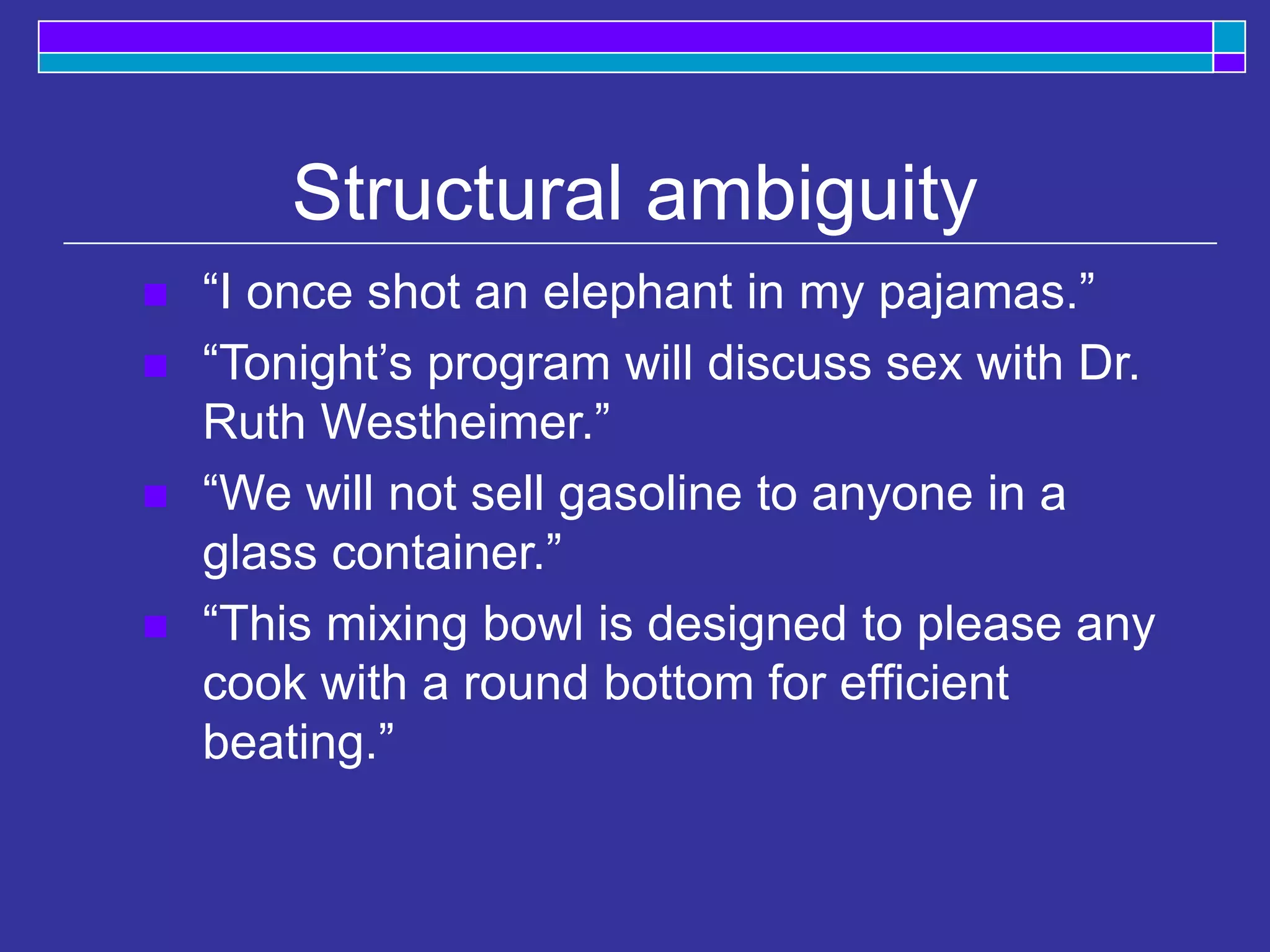
Structural ambiguity
 “I once shot an elephant in my pajamas.”
 “Tonight’s program will discuss sex with Dr.
Ruth Westheimer.”
 “We will not sell gasoline to anyone in a
glass container.”
 “This mixing bowl is designed to please any
cook with a round bottom for efficient
beating.”
Structural ambiguity
 Ambiguity resulting from the structure of
the phrase or sentence
e.g., discuss [sex with Dr. Ruth Westheimer]
[discuss sex] [with Dr. Ruth Westheimer]
e.g., a large [man’s hat]
[a large man’s] hat
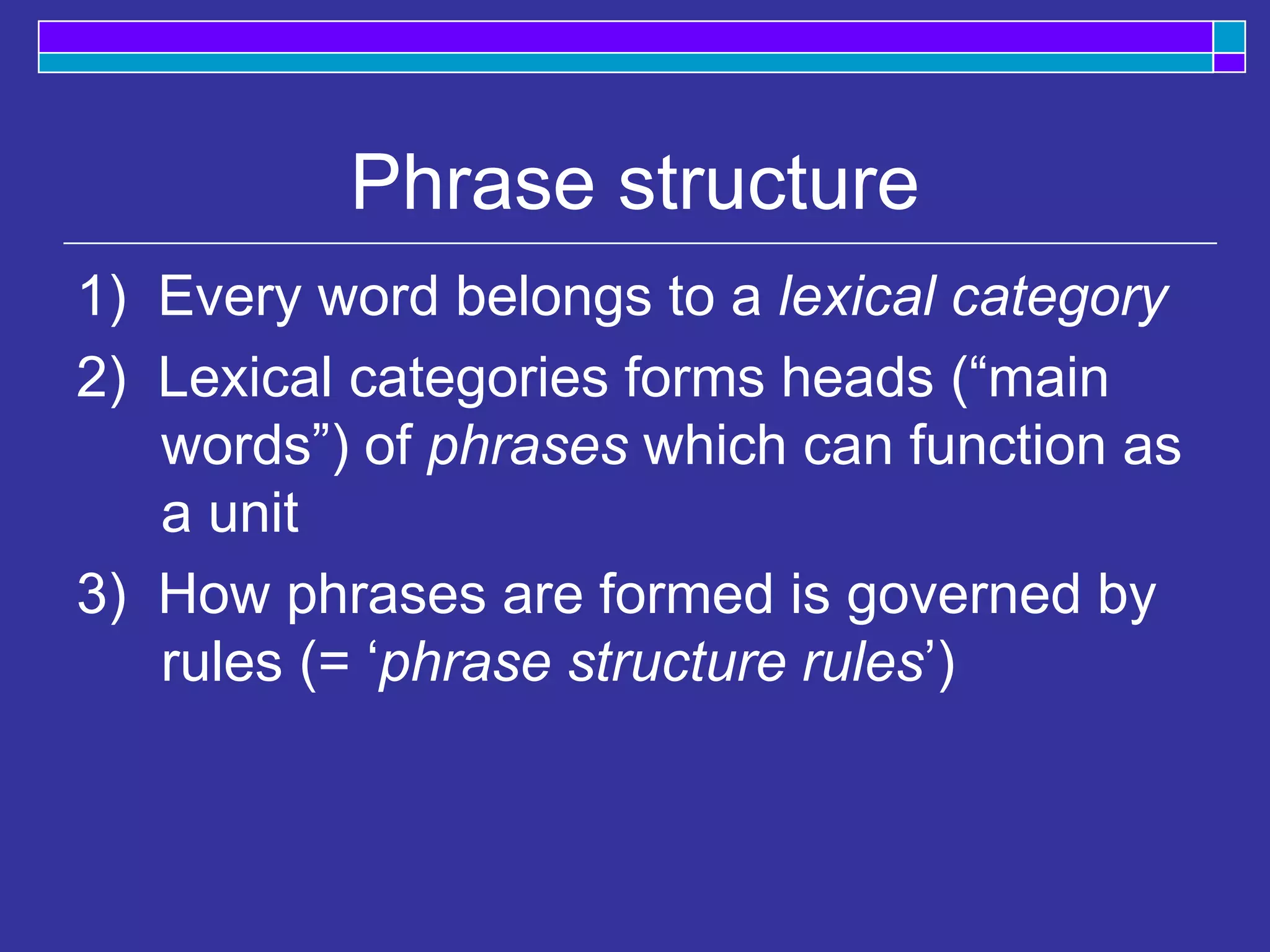
Phrase structure
1) Every word belongs to a lexical category
2) Lexical categories forms heads (“main
words”) of phrases which can function as
a unit
3) How phrases are formed is governed by
rules (= ‘phrase structure rules’)
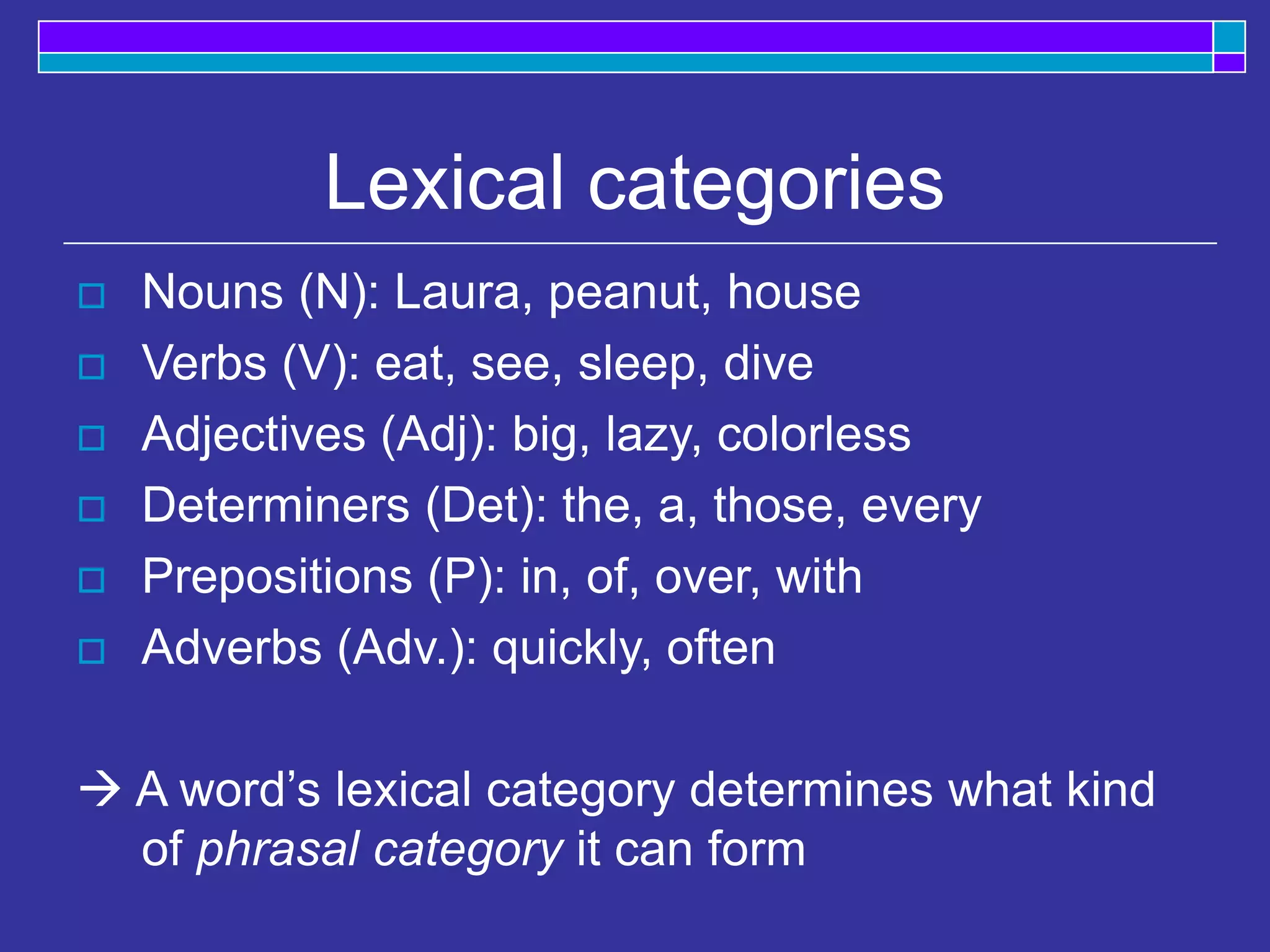
Lexical categories
 Nouns (N): Laura, peanut, house
 Verbs (V): eat, see, sleep, dive
 Adjectives (Adj): big, lazy, colorless
 Determiners (Det): the, a, those, every
 Prepositions (P): in, of, over, with
 Adverbs (Adv.): quickly, often
 A word’s lexical category determines what kind
of phrasal category it can form
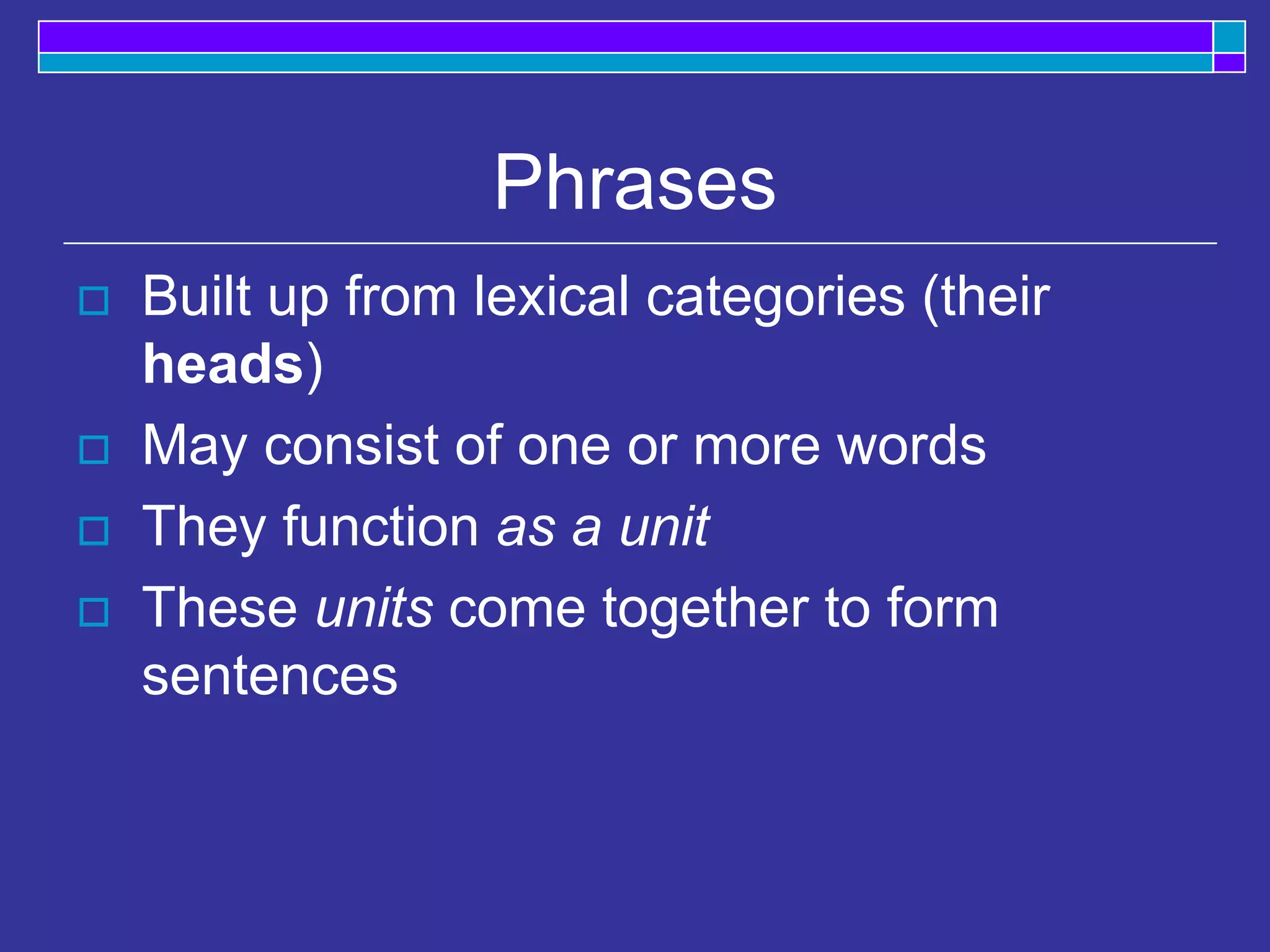
Phrases
 Built up from lexical categories (their
heads)
 May consist of one or more words
 They function as a unit
 These units come together to form
sentences
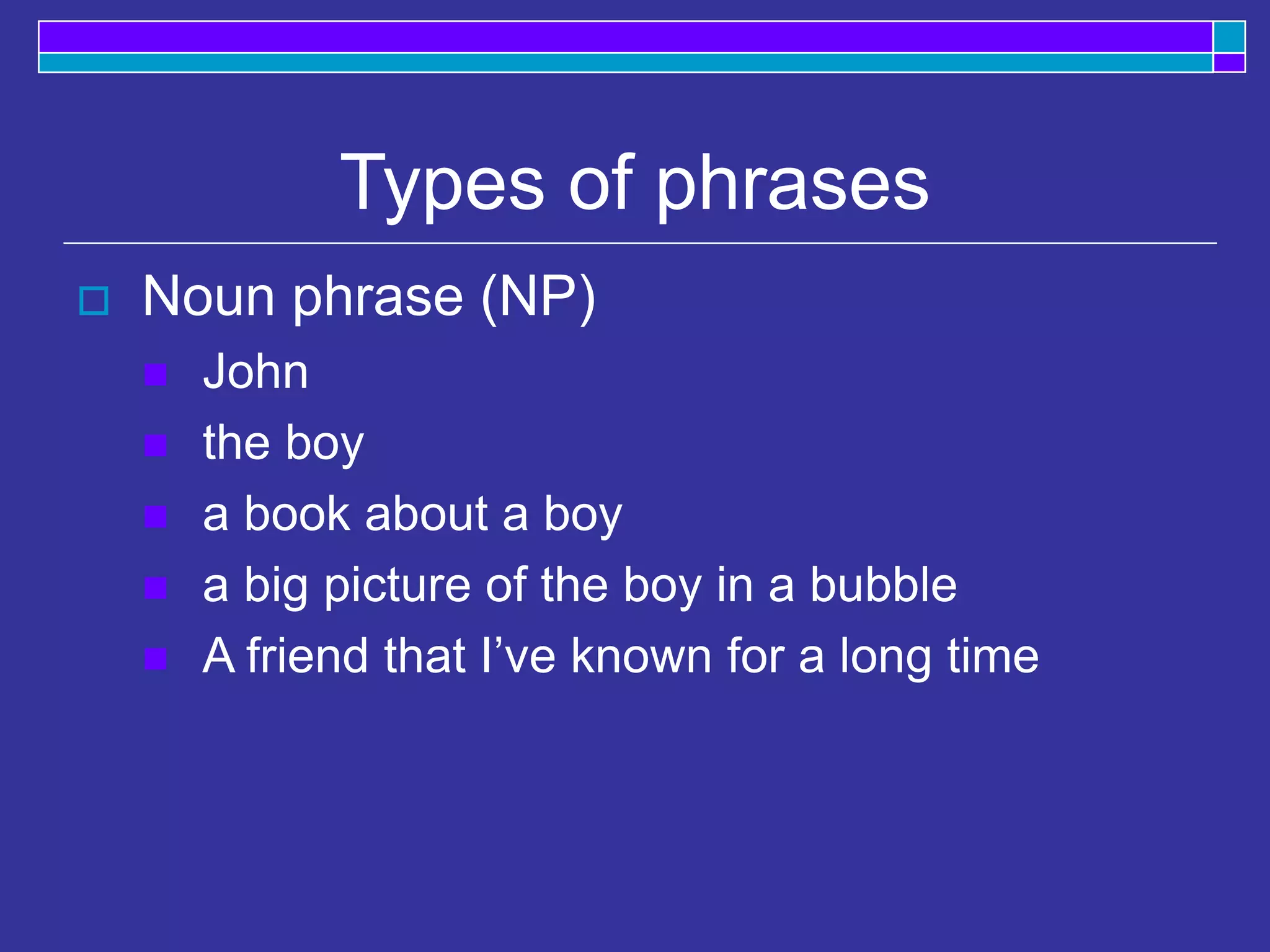
Types of phrases
 Noun phrase (NP)
 John
 the boy
 a book about a boy
 a big picture of the boy in a bubble
 A friend that I’ve known for a long time
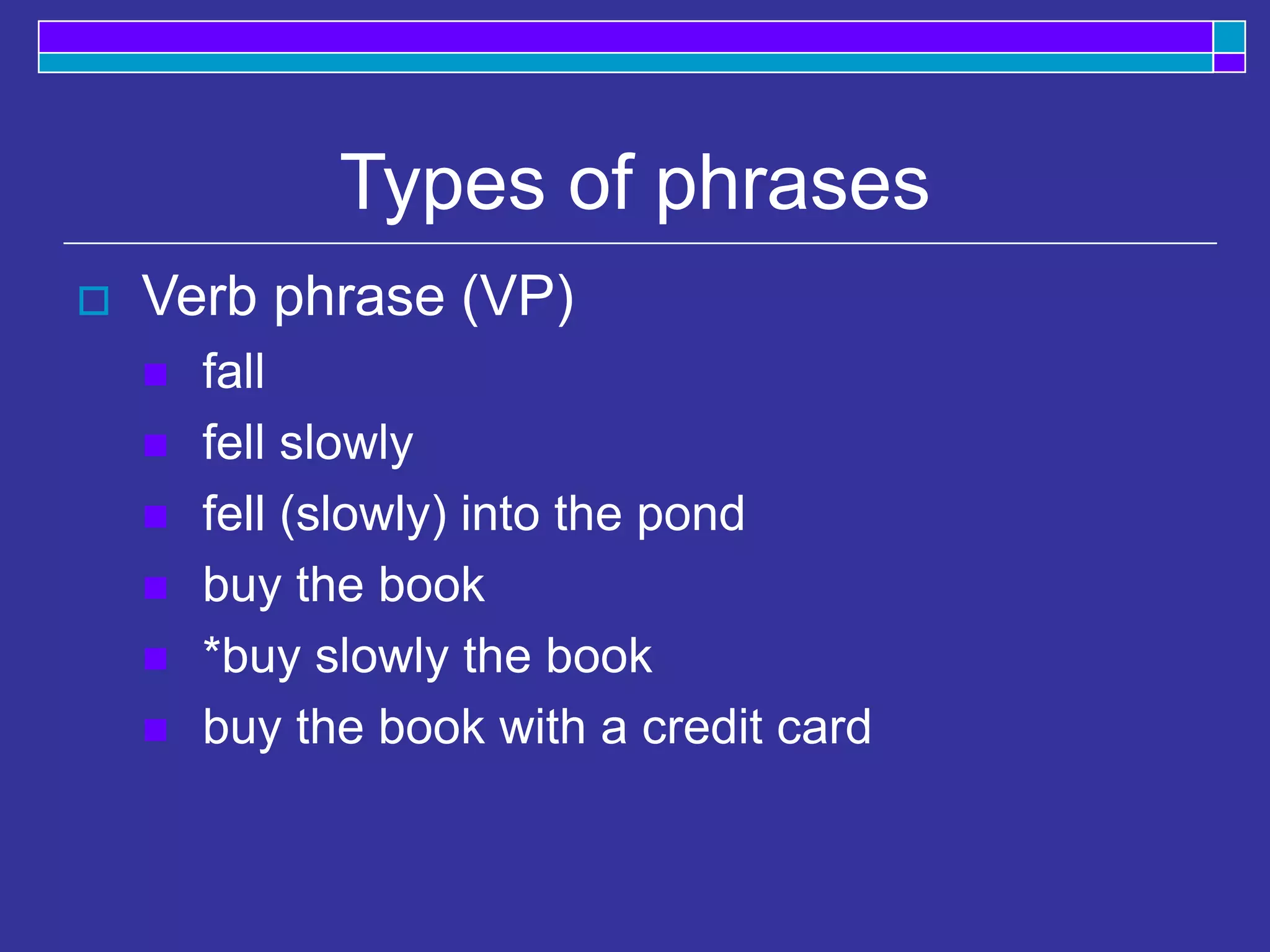
Types of phrases
 Verb phrase (VP)
 fall
 fell slowly
 fell (slowly) into the pond
 buy the book
 *buy slowly the book
 buy the book with a credit card
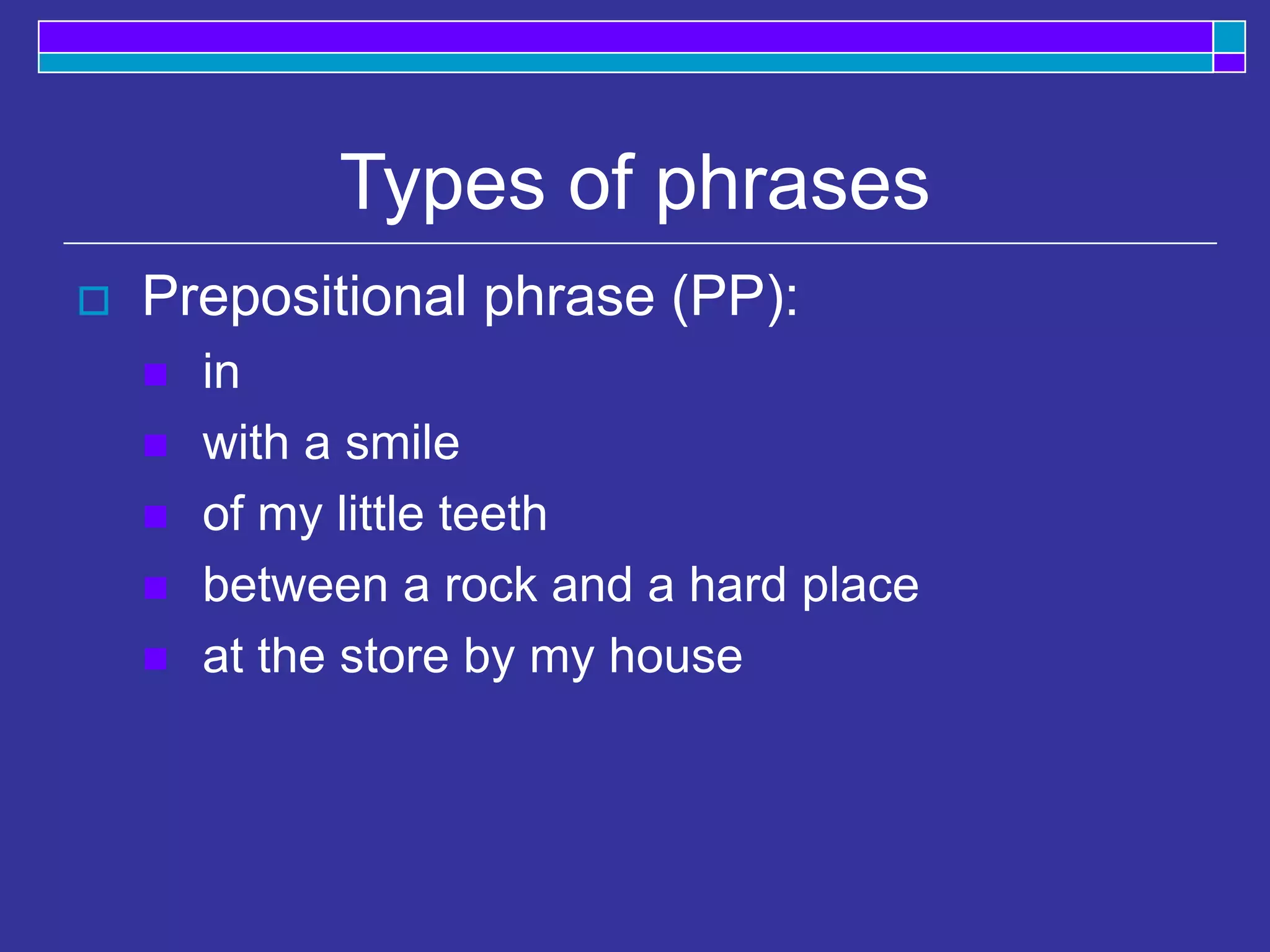
Types of phrases
 Prepositional phrase (PP):
 in
 with a smile
 of my little teeth
 between a rock and a hard place
 at the store by my house

Syntax.ppt

  • 1.
    Today  What issyntax?  Grammaticality  Ambiguity  Phrase structure Readings: 6.1 – 6.2
  • 2.
    Syntax  The studyof the structure of phrases/ sentences and the rules governing how words are combined to form phrases/sentences  These rules are acquired at a very young age and internalized.
  • 3.
    Ambiguity  The propertyof having two or more meanings.  Lexical ambiguity  Structural ambiguity
  • 4.
    Lexical ambiguity Headlines:  PROSTITUTESAPPEAL TO POPE  IRAQI HEAD SEEKS ARMS  SOVIET VIRGIN LANDS SHORT OF GOAL AGAIN  CHILD’S STOOL IS GREAT FOR USE IN GARDEN  Lexical ambiguity: when a word has more than one meaning
  • 5.
    Structural ambiguity  “Ionce shot an elephant in my pajamas.”  “Tonight’s program will discuss sex with Dr. Ruth Westheimer.”  “We will not sell gasoline to anyone in a glass container.”  “This mixing bowl is designed to please any cook with a round bottom for efficient beating.”
  • 6.
    Structural ambiguity  Ambiguityresulting from the structure of the phrase or sentence e.g., discuss [sex with Dr. Ruth Westheimer] [discuss sex] [with Dr. Ruth Westheimer] e.g., a large [man’s hat] [a large man’s] hat
  • 7.
    Phrase structure 1) Everyword belongs to a lexical category 2) Lexical categories forms heads (“main words”) of phrases which can function as a unit 3) How phrases are formed is governed by rules (= ‘phrase structure rules’)
  • 8.
    Lexical categories  Nouns(N): Laura, peanut, house  Verbs (V): eat, see, sleep, dive  Adjectives (Adj): big, lazy, colorless  Determiners (Det): the, a, those, every  Prepositions (P): in, of, over, with  Adverbs (Adv.): quickly, often  A word’s lexical category determines what kind of phrasal category it can form
  • 9.
    Phrases  Built upfrom lexical categories (their heads)  May consist of one or more words  They function as a unit  These units come together to form sentences
  • 10.
    Types of phrases Noun phrase (NP)  John  the boy  a book about a boy  a big picture of the boy in a bubble  A friend that I’ve known for a long time
  • 11.
    Types of phrases Verb phrase (VP)  fall  fell slowly  fell (slowly) into the pond  buy the book  *buy slowly the book  buy the book with a credit card
  • 12.
    Types of phrases Prepositional phrase (PP):  in  with a smile  of my little teeth  between a rock and a hard place  at the store by my house