Using Transcription and Text
Encoding in Digital Exhibits
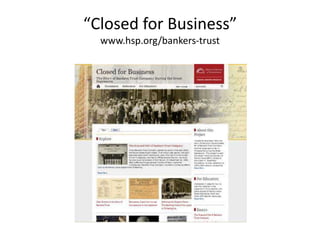
“Closed for Business”
www.hsp.org/bankers-trust
• 320 primary source documents
• Biographies
• Contextual essays
• Teacher resources
Drupal 7 web site
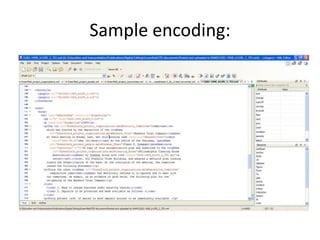
Documents and biographies encoded in XML
following Text Encoding Initiative (TEI) standards
What did we encode?
• Structure (paragraphs, page breaks, additions
and deletions, etc.)
• Basic intellectual content (names and dates)
• Analytical content/pointers
(interpretive/subject tags and document
genres)
Sample encoding:
Process
• Selected & digitized documents
• Transcribed and encoded text in XML using
Oxygen XML Editor
• Proofread XML documents and added
interpretive encoding
• Worked with outside web developers to build site
• Uploaded documents to site
• Processing magic!
• Look for unexpected behavior / errors
The finished product:
www.hsp.org/bankers-trust
Lessons Learned
• Tech side of digital humanities can take a LOT
of time for those of us learning by doing.
• TEI community offers support for newbies.
• Assume that technology will change during
your project, and try to plan accordingly.
• Document your decisions and leave yourself
bread-crumbs.
Want to learn more about TEI?
• The Text Encoding Initiative (TEI) consortium
www.tei-c.org
• TEI-L mailing list
(available through www.tei-c.org)
• Brown University’s Women Writers Project
Offers seminars, training materials, etc.
http://www.wwp.brown.edu/outreach/seminars/
Next up:
William Still Digital History Project
Questions? Contact:
Dana Dorman
Project Manager, Greenfield Digital Project & William Still Digital History Project
Historical Society of Pennsylvania
ddorman@hsp.org
Sarah Newhouse
Greenfield Project Assistant & Processing Archivist
Historical Society of Pennsylvania
snewhouse@hsp.org

Using Transcription and Text Encoding in Digital Exhibits

  • 1.
    Using Transcription andText Encoding in Digital Exhibits
  • 2.
  • 3.
    • 320 primarysource documents • Biographies • Contextual essays • Teacher resources Drupal 7 web site Documents and biographies encoded in XML following Text Encoding Initiative (TEI) standards
  • 4.
    What did weencode? • Structure (paragraphs, page breaks, additions and deletions, etc.) • Basic intellectual content (names and dates) • Analytical content/pointers (interpretive/subject tags and document genres)
  • 5.
  • 6.
    Process • Selected &digitized documents • Transcribed and encoded text in XML using Oxygen XML Editor • Proofread XML documents and added interpretive encoding • Worked with outside web developers to build site • Uploaded documents to site • Processing magic! • Look for unexpected behavior / errors
  • 7.
  • 8.
    Lessons Learned • Techside of digital humanities can take a LOT of time for those of us learning by doing. • TEI community offers support for newbies. • Assume that technology will change during your project, and try to plan accordingly. • Document your decisions and leave yourself bread-crumbs.
  • 9.
    Want to learnmore about TEI? • The Text Encoding Initiative (TEI) consortium www.tei-c.org • TEI-L mailing list (available through www.tei-c.org) • Brown University’s Women Writers Project Offers seminars, training materials, etc. http://www.wwp.brown.edu/outreach/seminars/
  • 10.
    Next up: William StillDigital History Project Questions? Contact: Dana Dorman Project Manager, Greenfield Digital Project & William Still Digital History Project Historical Society of Pennsylvania ddorman@hsp.org Sarah Newhouse Greenfield Project Assistant & Processing Archivist Historical Society of Pennsylvania snewhouse@hsp.org