Using an Agroenterprise
Learning Alliances for Inclusive
Value Chain Support
What did CRS want to achieve?What did CRS want to achieve?
 Five year commitment to Shift fromFive year commitment to Shift from
agriculture to agroenterpriseagriculture to agroenterprise
 Provide a bridge from relief to developmentProvide a bridge from relief to development
 Link poor farmers to marketsLink poor farmers to markets
 Make smallholder farming more competitiveMake smallholder farming more competitive
 Diversify to higher volume / value cropsDiversify to higher volume / value crops
 Strengthen access to finance and other BDSStrengthen access to finance and other BDS
 Improved food and financial securityImproved food and financial security
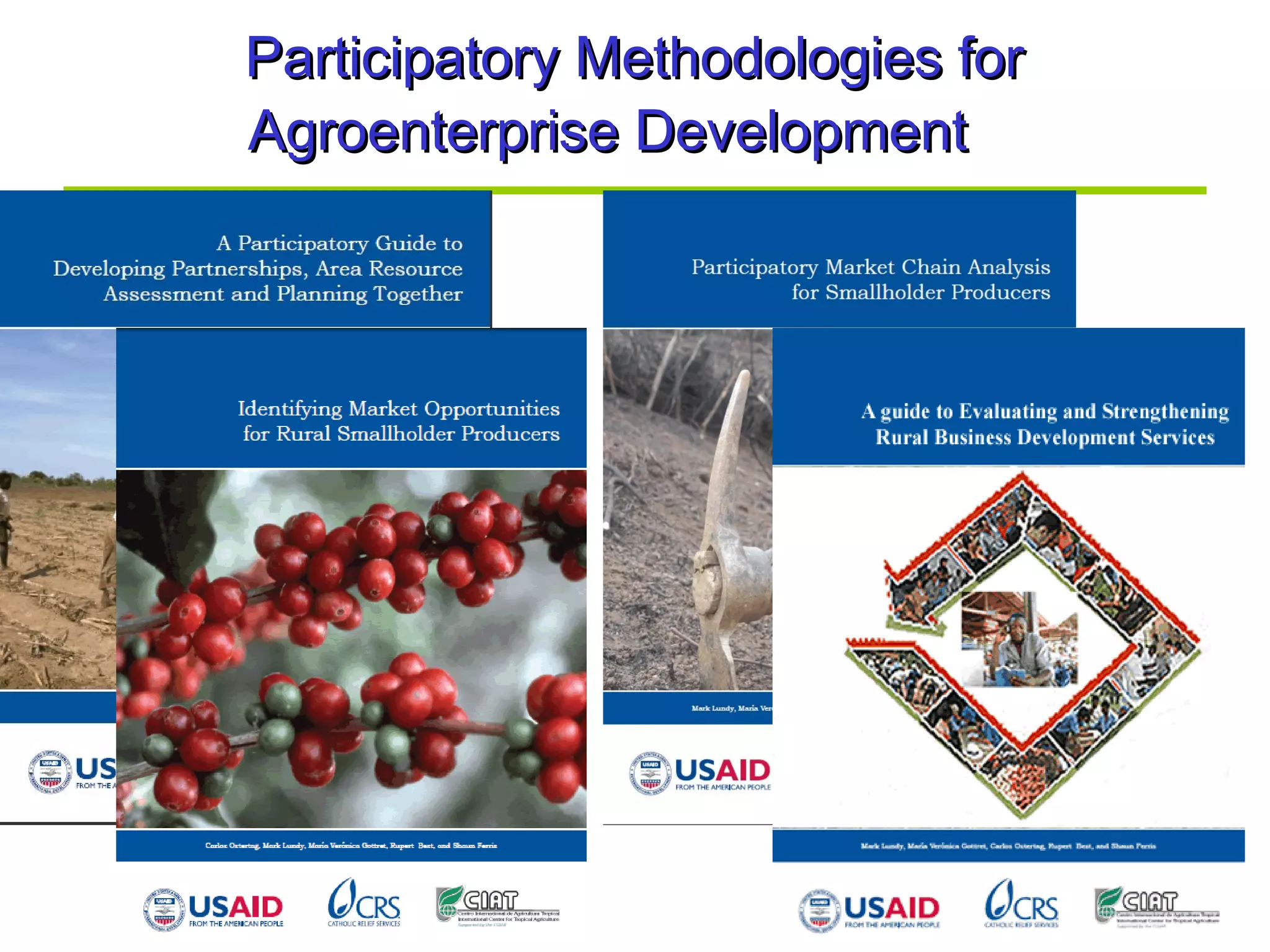
Participatory Methodologies forParticipatory Methodologies for
Agroenterprise DevelopmentAgroenterprise Development
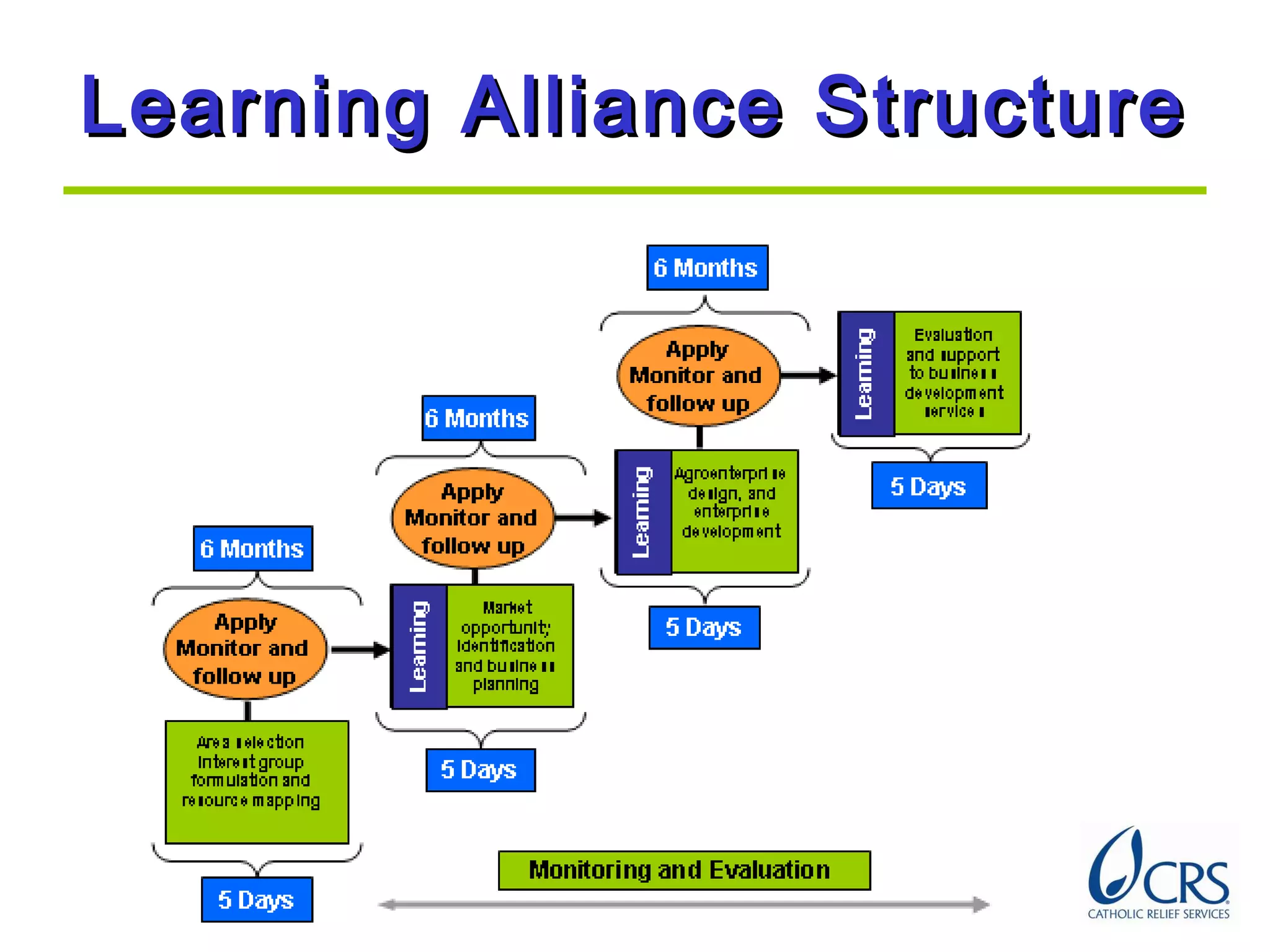
Learning Alliance StructureLearning Alliance Structure
VC DocumentationVC Documentation
 Based on the AgroenterpriseBased on the Agroenterprise
Learning Alliance, CRS is publishingLearning Alliance, CRS is publishing
two bookstwo books
1.1. Working Together, LearningWorking Together, Learning
Together:Together: Learning Alliances inLearning Alliances in
Agroenterprise DevelopmentAgroenterprise Development
2.2. Getting to Market:Getting to Market: Agriculture toAgriculture to
AgroenterpriseAgroenterprise
What worked wellWhat worked well
in AED and value chainsin AED and value chains
 reinvigorated CRS’s approach to agriculturereinvigorated CRS’s approach to agriculture
 aligns incentives in ways that encourage poor communities to rethinkaligns incentives in ways that encourage poor communities to rethink
their options and engage in markets engage more effectivelytheir options and engage in markets engage more effectively
 worked across a range of environments and has proven to be aworked across a range of environments and has proven to be a
bridge between relief and development.bridge between relief and development.
 required greater partnership development with the community,required greater partnership development with the community,
technology providers and private sectortechnology providers and private sector
 led to organic integration between sectors such as MF, Water, andled to organic integration between sectors such as MF, Water, and
Health, where it matters, which was not the case before.Health, where it matters, which was not the case before.
 Improved financial and AE skills is empowering women whenImproved financial and AE skills is empowering women when
programs focus attention on their needs. BUT much more workprograms focus attention on their needs. BUT much more work
needs to be done to define and invest in programs that supportneeds to be done to define and invest in programs that support
women in agriculture more effectivelywomen in agriculture more effectively..
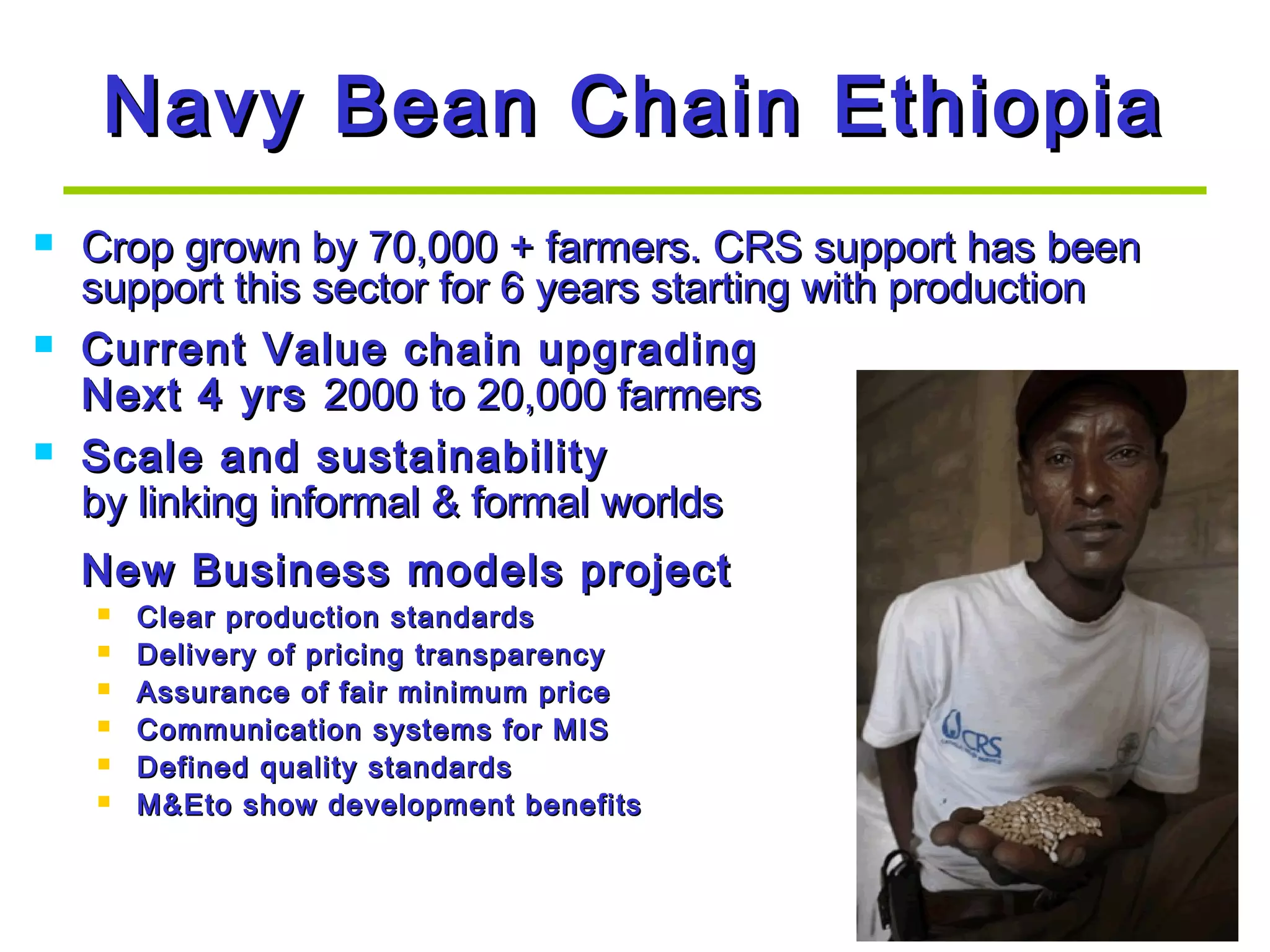
Navy Bean Chain EthiopiaNavy Bean Chain Ethiopia
 Crop grown by 70,000 + farmers. CRS support has beenCrop grown by 70,000 + farmers. CRS support has been
support this sector for 6 years starting with productionsupport this sector for 6 years starting with production
 Current Value chain upgradingCurrent Value chain upgrading
Next 4 yrsNext 4 yrs 2000 to 20,000 farmers2000 to 20,000 farmers
 Scale and sustainabilityScale and sustainability
by linking informal & formal worldsby linking informal & formal worlds
New Business models projectNew Business models project
 Clear production standardsClear production standards
 Delivery of pricing transparencyDelivery of pricing transparency
 Assurance of fair minimum priceAssurance of fair minimum price
 Communication systems for MISCommunication systems for MIS
 Defined quality standardsDefined quality standards
 M&Eto show development benefitsM&Eto show development benefits
Chickpea Chain TanzaniaChickpea Chain Tanzania
 In 2000 new varietyIn 2000 new variety
 2003-05 farmer marketing groups2003-05 farmer marketing groups
 In 2007-08 introduced SILC groups (savings and internalIn 2007-08 introduced SILC groups (savings and internal
loans) which associated SIGAsloans) which associated SIGAs
 Scale generated attracted buyers, in 2007 collectiveScale generated attracted buyers, in 2007 collective
marketingmarketing ∆∆ from 570 mt in 2006 to 2,152 mt in 2007.from 570 mt in 2006 to 2,152 mt in 2007.
 SIGA based on 2500+ farmers was also a conduit to linkSIGA based on 2500+ farmers was also a conduit to link
another 8,100 farmers into this market channel.another 8,100 farmers into this market channel.
 Linkage of MF and AE catalyzed a rapidLinkage of MF and AE catalyzed a rapid
increase in savings groups that reinforced AEincrease in savings groups that reinforced AE
and enabled collective marketing.and enabled collective marketing.
Value Chain challengesValue Chain challenges
 Skills upgrade & transfer to communities takes timeSkills upgrade & transfer to communities takes time
 Care to match product with target communityCare to match product with target community
 Farmer group organisation slow but valuableFarmer group organisation slow but valuable
 Value chain analysis is complex but then continuousValue chain analysis is complex but then continuous
 Finance for the rural poor needs a rethink….Finance for the rural poor needs a rethink….
 Links to local market information and BDS weakLinks to local market information and BDS weak
 Links to formal private sector requires facilitationLinks to formal private sector requires facilitation
 M&E not chain wideM&E not chain wide
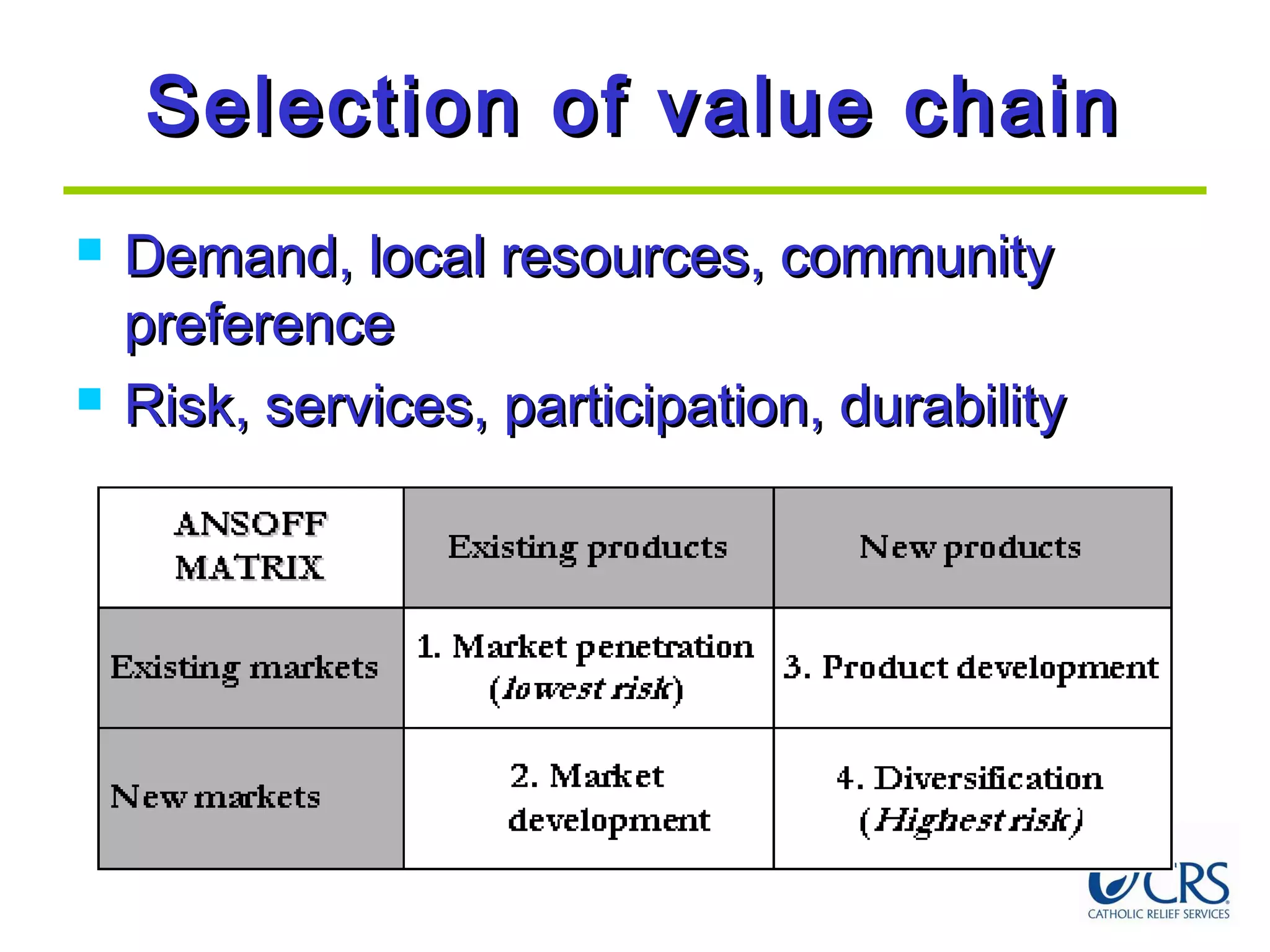
Selection of value chainSelection of value chain
 Demand, local resources, communityDemand, local resources, community
preferencepreference
 Risk, services, participation, durabilityRisk, services, participation, durability
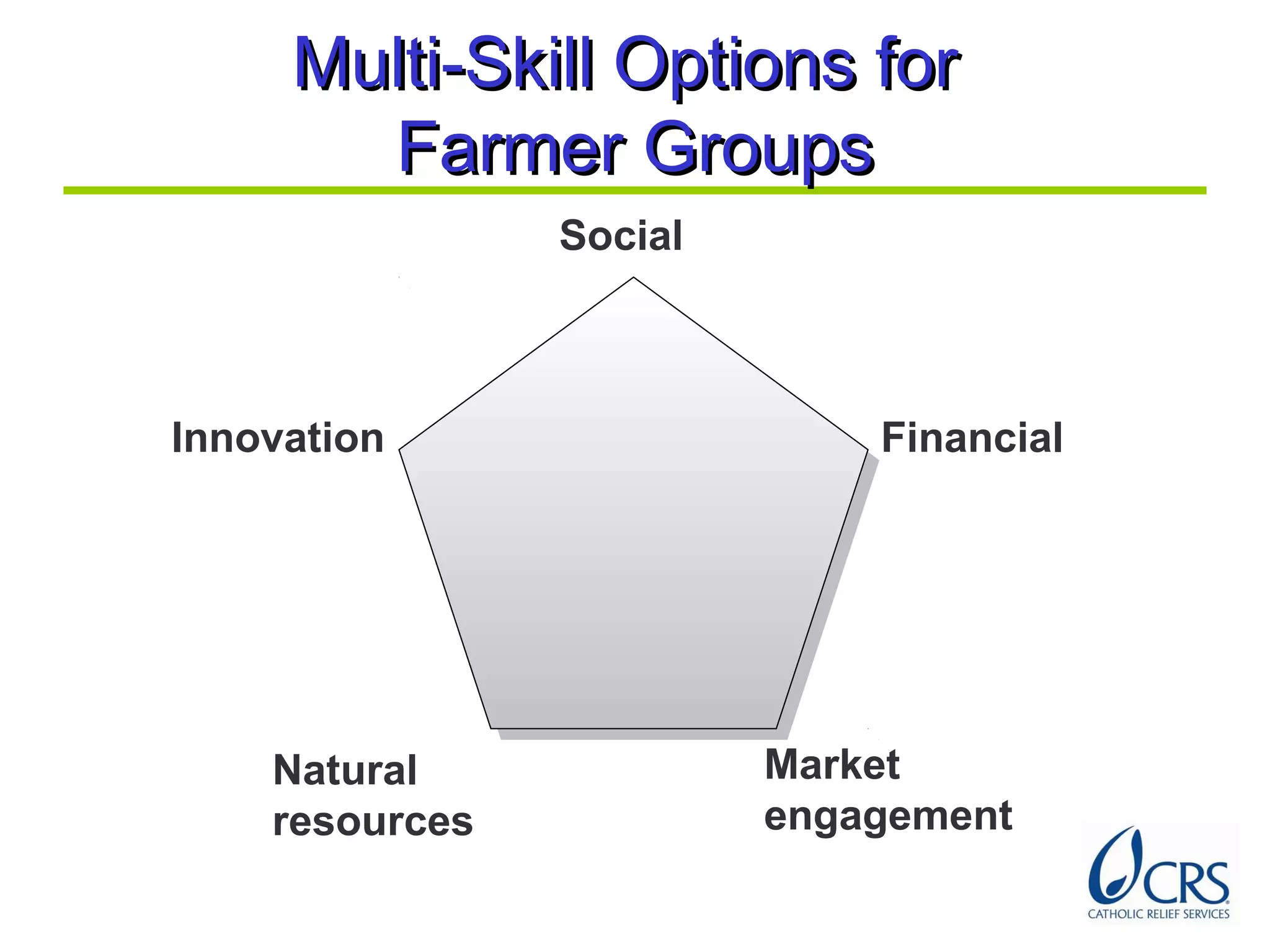
Multi-Skill Options forMulti-Skill Options for
Farmer GroupsFarmer Groups
Social
Innovation
Market
engagement
Natural
resources
Financial
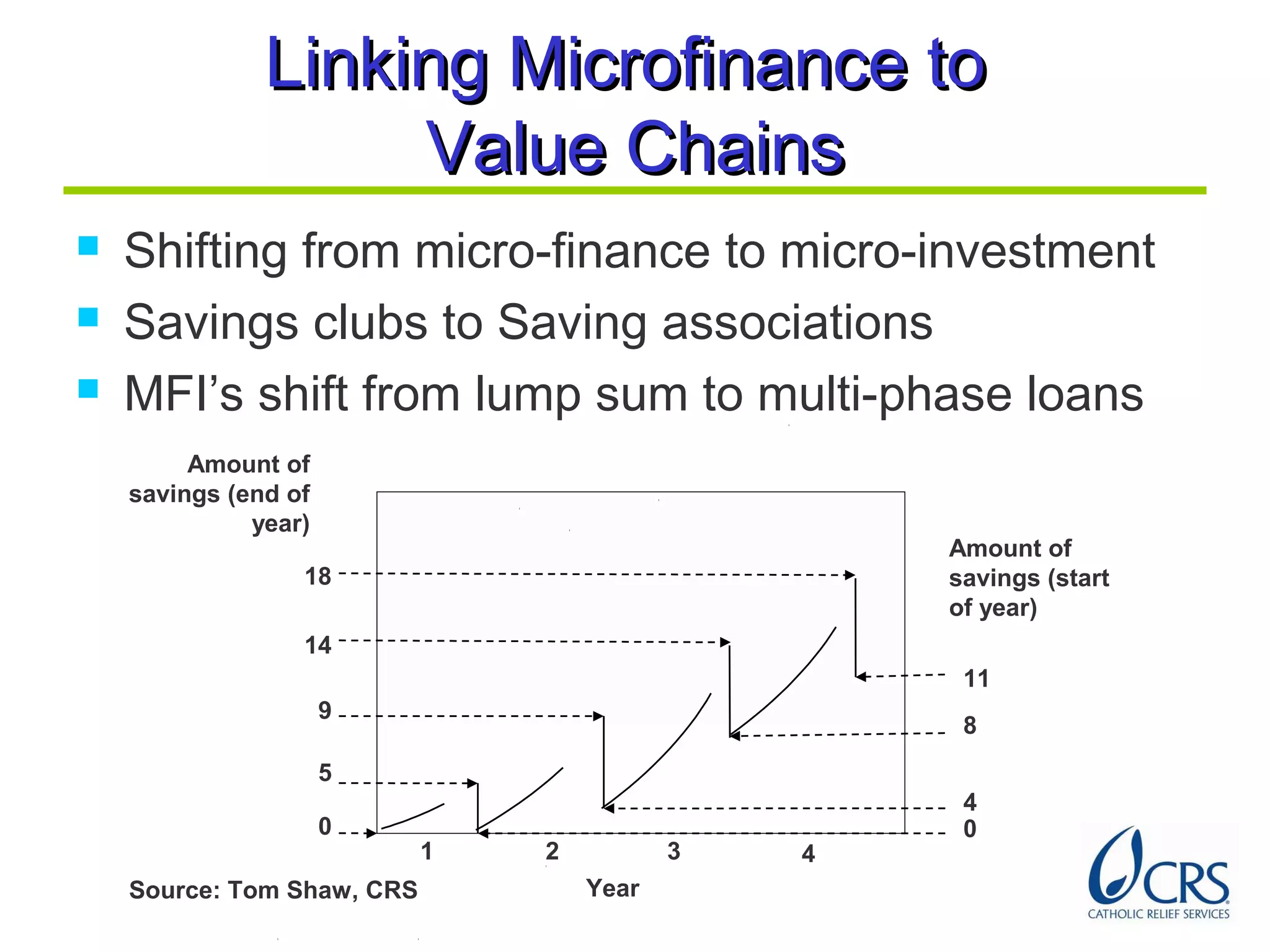
Linking Microfinance toLinking Microfinance to
Value ChainsValue Chains
 Shifting from micro-finance to micro-investment
 Savings clubs to Saving associations
 MFI’s shift from lump sum to multi-phase loans
Amount of
savings (end of
year)
1 2
Amount of
savings (start
of year)
Year
3 4
8
14
18
9
5
0
4
0
11
Source: Tom Shaw, CRS
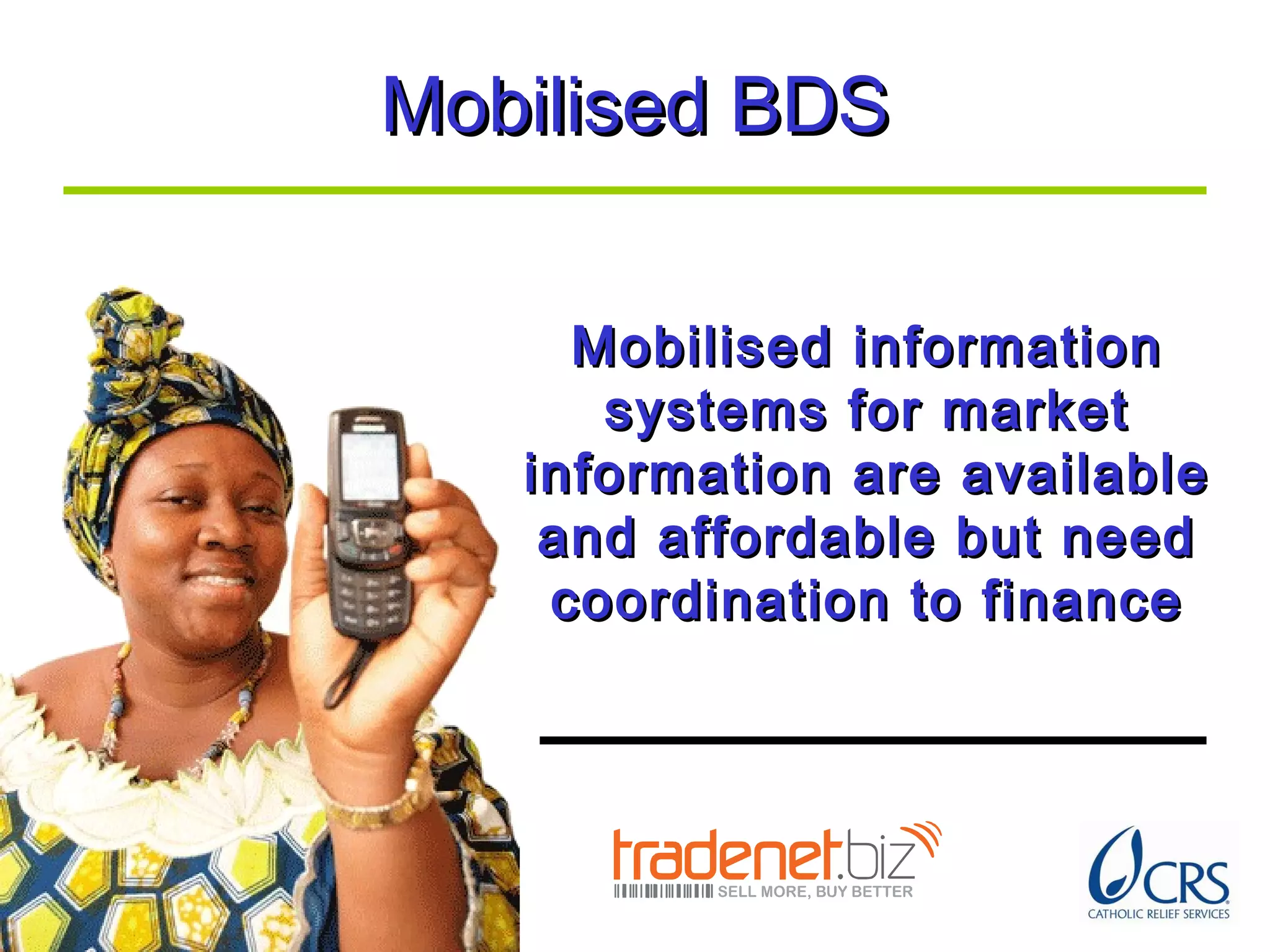
Mobilised BDSMobilised BDS
Mobilised informationMobilised information
systems for marketsystems for market
information are availableinformation are available
and affordable but needand affordable but need
coordination to financecoordination to finance
Promising Methods forPromising Methods for
inclusioninclusion
 Participatory value chain developmentParticipatory value chain development
 Multi-skill options for farmer groupsMulti-skill options for farmer groups
 Savings mobilizationSavings mobilization
 Strengthening local BDS providersStrengthening local BDS providers
 Mobilised information platformsMobilised information platforms
 New business modelsNew business models
 Integration of infrastructure, training andIntegration of infrastructure, training and
marketing linkagemarketing linkage
 Links to Universities and Research InstitutesLinks to Universities and Research Institutes
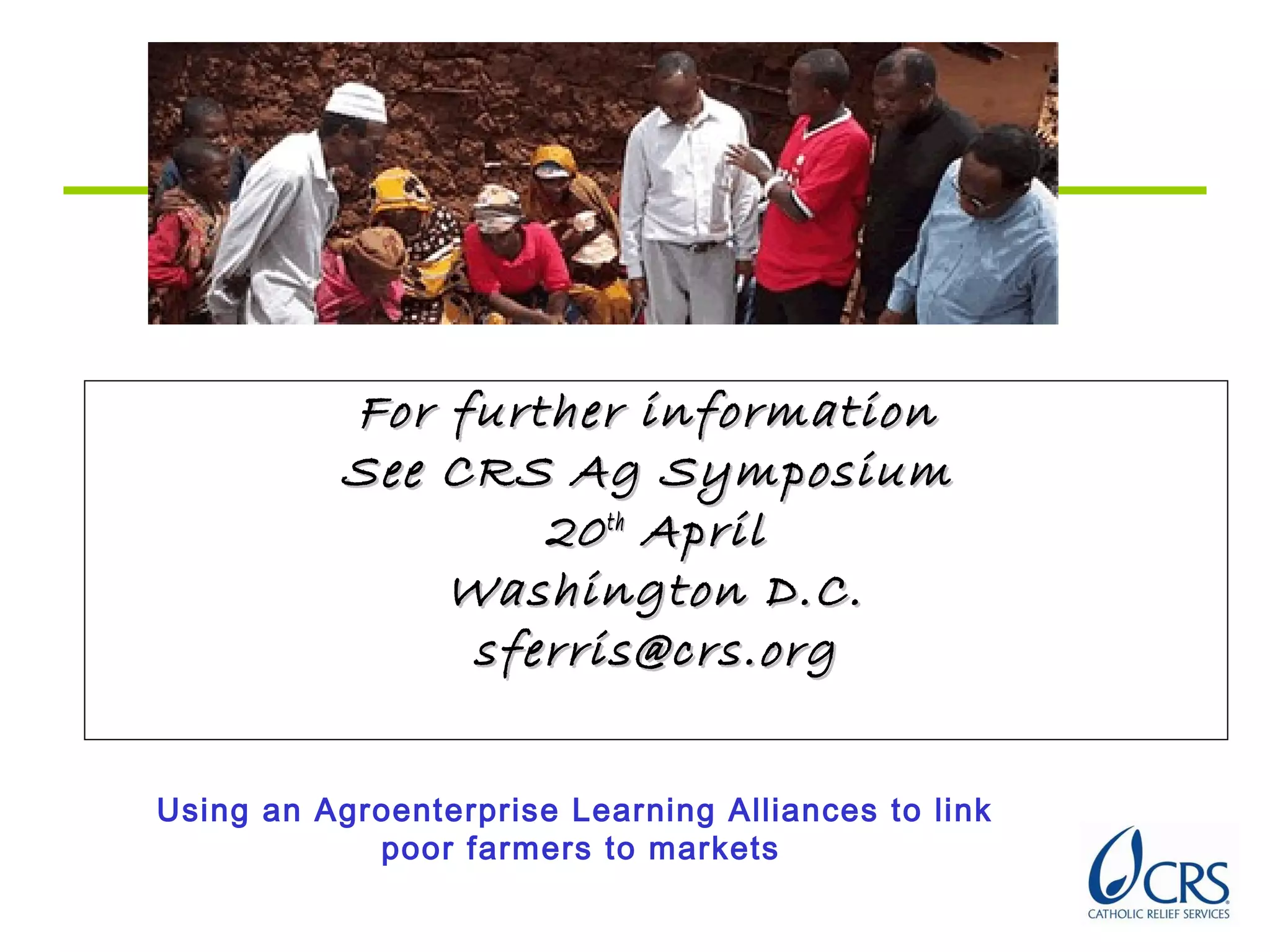
For further informationFor further information
See CRS Ag SymposiumSee CRS Ag Symposium
2020thth
AprilApril
Washington D.C.Washington D.C.
sferris@crs.orgsferris@crs.org
Using an Agroenterprise Learning Alliances to link
poor farmers to markets

Using an Agroenterprise: Learning Alliances for Inclusive Value Chain Support

  • 1.
    Using an Agroenterprise LearningAlliances for Inclusive Value Chain Support
  • 2.
    What did CRSwant to achieve?What did CRS want to achieve?  Five year commitment to Shift fromFive year commitment to Shift from agriculture to agroenterpriseagriculture to agroenterprise  Provide a bridge from relief to developmentProvide a bridge from relief to development  Link poor farmers to marketsLink poor farmers to markets  Make smallholder farming more competitiveMake smallholder farming more competitive  Diversify to higher volume / value cropsDiversify to higher volume / value crops  Strengthen access to finance and other BDSStrengthen access to finance and other BDS  Improved food and financial securityImproved food and financial security
  • 3.
    Participatory Methodologies forParticipatoryMethodologies for Agroenterprise DevelopmentAgroenterprise Development
  • 4.
  • 5.
    VC DocumentationVC Documentation Based on the AgroenterpriseBased on the Agroenterprise Learning Alliance, CRS is publishingLearning Alliance, CRS is publishing two bookstwo books 1.1. Working Together, LearningWorking Together, Learning Together:Together: Learning Alliances inLearning Alliances in Agroenterprise DevelopmentAgroenterprise Development 2.2. Getting to Market:Getting to Market: Agriculture toAgriculture to AgroenterpriseAgroenterprise
  • 6.
    What worked wellWhatworked well in AED and value chainsin AED and value chains  reinvigorated CRS’s approach to agriculturereinvigorated CRS’s approach to agriculture  aligns incentives in ways that encourage poor communities to rethinkaligns incentives in ways that encourage poor communities to rethink their options and engage in markets engage more effectivelytheir options and engage in markets engage more effectively  worked across a range of environments and has proven to be aworked across a range of environments and has proven to be a bridge between relief and development.bridge between relief and development.  required greater partnership development with the community,required greater partnership development with the community, technology providers and private sectortechnology providers and private sector  led to organic integration between sectors such as MF, Water, andled to organic integration between sectors such as MF, Water, and Health, where it matters, which was not the case before.Health, where it matters, which was not the case before.  Improved financial and AE skills is empowering women whenImproved financial and AE skills is empowering women when programs focus attention on their needs. BUT much more workprograms focus attention on their needs. BUT much more work needs to be done to define and invest in programs that supportneeds to be done to define and invest in programs that support women in agriculture more effectivelywomen in agriculture more effectively..
  • 7.
    Navy Bean ChainEthiopiaNavy Bean Chain Ethiopia  Crop grown by 70,000 + farmers. CRS support has beenCrop grown by 70,000 + farmers. CRS support has been support this sector for 6 years starting with productionsupport this sector for 6 years starting with production  Current Value chain upgradingCurrent Value chain upgrading Next 4 yrsNext 4 yrs 2000 to 20,000 farmers2000 to 20,000 farmers  Scale and sustainabilityScale and sustainability by linking informal & formal worldsby linking informal & formal worlds New Business models projectNew Business models project  Clear production standardsClear production standards  Delivery of pricing transparencyDelivery of pricing transparency  Assurance of fair minimum priceAssurance of fair minimum price  Communication systems for MISCommunication systems for MIS  Defined quality standardsDefined quality standards  M&Eto show development benefitsM&Eto show development benefits
  • 8.
    Chickpea Chain TanzaniaChickpeaChain Tanzania  In 2000 new varietyIn 2000 new variety  2003-05 farmer marketing groups2003-05 farmer marketing groups  In 2007-08 introduced SILC groups (savings and internalIn 2007-08 introduced SILC groups (savings and internal loans) which associated SIGAsloans) which associated SIGAs  Scale generated attracted buyers, in 2007 collectiveScale generated attracted buyers, in 2007 collective marketingmarketing ∆∆ from 570 mt in 2006 to 2,152 mt in 2007.from 570 mt in 2006 to 2,152 mt in 2007.  SIGA based on 2500+ farmers was also a conduit to linkSIGA based on 2500+ farmers was also a conduit to link another 8,100 farmers into this market channel.another 8,100 farmers into this market channel.  Linkage of MF and AE catalyzed a rapidLinkage of MF and AE catalyzed a rapid increase in savings groups that reinforced AEincrease in savings groups that reinforced AE and enabled collective marketing.and enabled collective marketing.
  • 9.
    Value Chain challengesValueChain challenges  Skills upgrade & transfer to communities takes timeSkills upgrade & transfer to communities takes time  Care to match product with target communityCare to match product with target community  Farmer group organisation slow but valuableFarmer group organisation slow but valuable  Value chain analysis is complex but then continuousValue chain analysis is complex but then continuous  Finance for the rural poor needs a rethink….Finance for the rural poor needs a rethink….  Links to local market information and BDS weakLinks to local market information and BDS weak  Links to formal private sector requires facilitationLinks to formal private sector requires facilitation  M&E not chain wideM&E not chain wide
  • 10.
    Selection of valuechainSelection of value chain  Demand, local resources, communityDemand, local resources, community preferencepreference  Risk, services, participation, durabilityRisk, services, participation, durability
  • 11.
    Multi-Skill Options forMulti-SkillOptions for Farmer GroupsFarmer Groups Social Innovation Market engagement Natural resources Financial
  • 12.
    Linking Microfinance toLinkingMicrofinance to Value ChainsValue Chains  Shifting from micro-finance to micro-investment  Savings clubs to Saving associations  MFI’s shift from lump sum to multi-phase loans Amount of savings (end of year) 1 2 Amount of savings (start of year) Year 3 4 8 14 18 9 5 0 4 0 11 Source: Tom Shaw, CRS
  • 13.
    Mobilised BDSMobilised BDS MobilisedinformationMobilised information systems for marketsystems for market information are availableinformation are available and affordable but needand affordable but need coordination to financecoordination to finance
  • 14.
    Promising Methods forPromisingMethods for inclusioninclusion  Participatory value chain developmentParticipatory value chain development  Multi-skill options for farmer groupsMulti-skill options for farmer groups  Savings mobilizationSavings mobilization  Strengthening local BDS providersStrengthening local BDS providers  Mobilised information platformsMobilised information platforms  New business modelsNew business models  Integration of infrastructure, training andIntegration of infrastructure, training and marketing linkagemarketing linkage  Links to Universities and Research InstitutesLinks to Universities and Research Institutes
  • 15.
    For further informationForfurther information See CRS Ag SymposiumSee CRS Ag Symposium 2020thth AprilApril Washington D.C.Washington D.C. sferris@crs.orgsferris@crs.org Using an Agroenterprise Learning Alliances to link poor farmers to markets