• Name: KABIR BHANDARI
• Roll No.: 2218905
• Student ID: 220112332
• Section: B1
• Roll No: 39
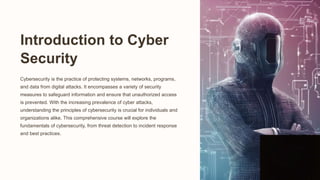
Introduction to Cyber
Security
Cybersecurity is the practice of protecting systems, networks, programs,
and data from digital attacks. It encompasses a variety of security
measures to safeguard information and ensure that unauthorized access
is prevented. With the increasing prevalence of cyber attacks,
understanding the principles of cybersecurity is crucial for individuals and
organizations alike. This comprehensive course will explore the
fundamentals of cybersecurity, from threat detection to incident response
and best practices.
Understanding the Threat Landscape
Cyber Threats
This section delves into the
complex landscape of cyber
threats, covering various
types of attacks and the
motives behind them. It
provides insights into the
strategies employed by
threat actors to compromise
digital security.
Risk Assessment
Understanding and
assessing the risks
associated with cyber threats
is fundamental to
implementing effective
security measures. This
segment explores the
process of identifying
vulnerabilities and potential
impacts of threats.
Emerging Threats
As technology continues to
evolve, new threats
constantly emerge. This part
sheds light on the latest
threats and the proactive
measures needed to mitigate
them.
Common Cyber Attacks and Vulnerabilities
1 Phishing Attacks
Phishing attacks are designed to deceive
individuals into disclosing confidential
information. They often utilize fraudulent
emails or websites.
2 Ransomware
Ransomware is a form of malicious
software that encrypts a user's files,
demanding a ransom to decrypt them.
3 SQL Injection
SQL injection involves manipulating a
database through malicious input,
potentially compromising sensitive data.
4 Zero-Day Exploits
These exploits target software
vulnerabilities that are previously unknown
to the software developers, making them
particularly dangerous.
Principles of Secure Design and
Development
Secure Coding
Understanding secure coding
practices and writing secure
code is foundational for
developing resilient and
secure applications.
Threat Modeling
Threat modeling helps in
identifying potential security
issues and implementing
countermeasures during the
development phase.
Secure Deployment
Deploying secure applications
involves securing the
infrastructure, access control,
and addressing potential
vulnerabilities.
Network Security and Firewalls
Firewall Types
Explore various types of
firewalls and their roles in
regulating and monitoring
traffic to prevent
unauthorized access.
Intrusion Detection
Systems
Learn about intrusion
detection systems that
actively monitor network
traffic to identify unusual or
malicious activities.
Virtual Private
Networks (VPNs)
Understand the key
concepts of VPNs and their
crucial role in securing
communications over
insecure networks.
Encryption and Cryptography
128-bit
Data Encryption
Explore the significance of 128-bit encryption in
protecting sensitive data during transmission and
storage.
AES-256
Advanced Encryption Standard (AES-256)
Understand the robustness of AES-256
encryption and its applications in safeguarding
critical information.
Incident Response and Recovery
1 Preparation
Effective incident response begins with
thorough preparation, including
training, documentation, and response
plans.
2
Detection and Analysis
Once an incident occurs, rapid
detection and analysis are essential for
understanding the nature and extent of
the breach. 3 Containment and Eradication
Implementing measures to contain and
eradicate the threat is critical to
preventing further damage and
minimizing impact.
4
Recovery and Lessons Learned
Recovering from an incident involves
restoring systems and data, followed
by a comprehensive review to identify
areas of improvement.
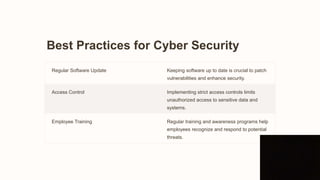
Best Practices for Cyber Security
Regular Software Update Keeping software up to date is crucial to patch
vulnerabilities and enhance security.
Access Control Implementing strict access controls limits
unauthorized access to sensitive data and
systems.
Employee Training Regular training and awareness programs help
employees recognize and respond to potential
threats.
THANK YOU.

Untitled (1).pptx

  • 1.
    • Name: KABIRBHANDARI • Roll No.: 2218905 • Student ID: 220112332 • Section: B1 • Roll No: 39
  • 2.
    Introduction to Cyber Security Cybersecurityis the practice of protecting systems, networks, programs, and data from digital attacks. It encompasses a variety of security measures to safeguard information and ensure that unauthorized access is prevented. With the increasing prevalence of cyber attacks, understanding the principles of cybersecurity is crucial for individuals and organizations alike. This comprehensive course will explore the fundamentals of cybersecurity, from threat detection to incident response and best practices.
  • 3.
    Understanding the ThreatLandscape Cyber Threats This section delves into the complex landscape of cyber threats, covering various types of attacks and the motives behind them. It provides insights into the strategies employed by threat actors to compromise digital security. Risk Assessment Understanding and assessing the risks associated with cyber threats is fundamental to implementing effective security measures. This segment explores the process of identifying vulnerabilities and potential impacts of threats. Emerging Threats As technology continues to evolve, new threats constantly emerge. This part sheds light on the latest threats and the proactive measures needed to mitigate them.
  • 4.
    Common Cyber Attacksand Vulnerabilities 1 Phishing Attacks Phishing attacks are designed to deceive individuals into disclosing confidential information. They often utilize fraudulent emails or websites. 2 Ransomware Ransomware is a form of malicious software that encrypts a user's files, demanding a ransom to decrypt them. 3 SQL Injection SQL injection involves manipulating a database through malicious input, potentially compromising sensitive data. 4 Zero-Day Exploits These exploits target software vulnerabilities that are previously unknown to the software developers, making them particularly dangerous.
  • 5.
    Principles of SecureDesign and Development Secure Coding Understanding secure coding practices and writing secure code is foundational for developing resilient and secure applications. Threat Modeling Threat modeling helps in identifying potential security issues and implementing countermeasures during the development phase. Secure Deployment Deploying secure applications involves securing the infrastructure, access control, and addressing potential vulnerabilities.
  • 6.
    Network Security andFirewalls Firewall Types Explore various types of firewalls and their roles in regulating and monitoring traffic to prevent unauthorized access. Intrusion Detection Systems Learn about intrusion detection systems that actively monitor network traffic to identify unusual or malicious activities. Virtual Private Networks (VPNs) Understand the key concepts of VPNs and their crucial role in securing communications over insecure networks.
  • 7.
    Encryption and Cryptography 128-bit DataEncryption Explore the significance of 128-bit encryption in protecting sensitive data during transmission and storage. AES-256 Advanced Encryption Standard (AES-256) Understand the robustness of AES-256 encryption and its applications in safeguarding critical information.
  • 8.
    Incident Response andRecovery 1 Preparation Effective incident response begins with thorough preparation, including training, documentation, and response plans. 2 Detection and Analysis Once an incident occurs, rapid detection and analysis are essential for understanding the nature and extent of the breach. 3 Containment and Eradication Implementing measures to contain and eradicate the threat is critical to preventing further damage and minimizing impact. 4 Recovery and Lessons Learned Recovering from an incident involves restoring systems and data, followed by a comprehensive review to identify areas of improvement.
  • 9.
    Best Practices forCyber Security Regular Software Update Keeping software up to date is crucial to patch vulnerabilities and enhance security. Access Control Implementing strict access controls limits unauthorized access to sensitive data and systems. Employee Training Regular training and awareness programs help employees recognize and respond to potential threats.
  • 10.