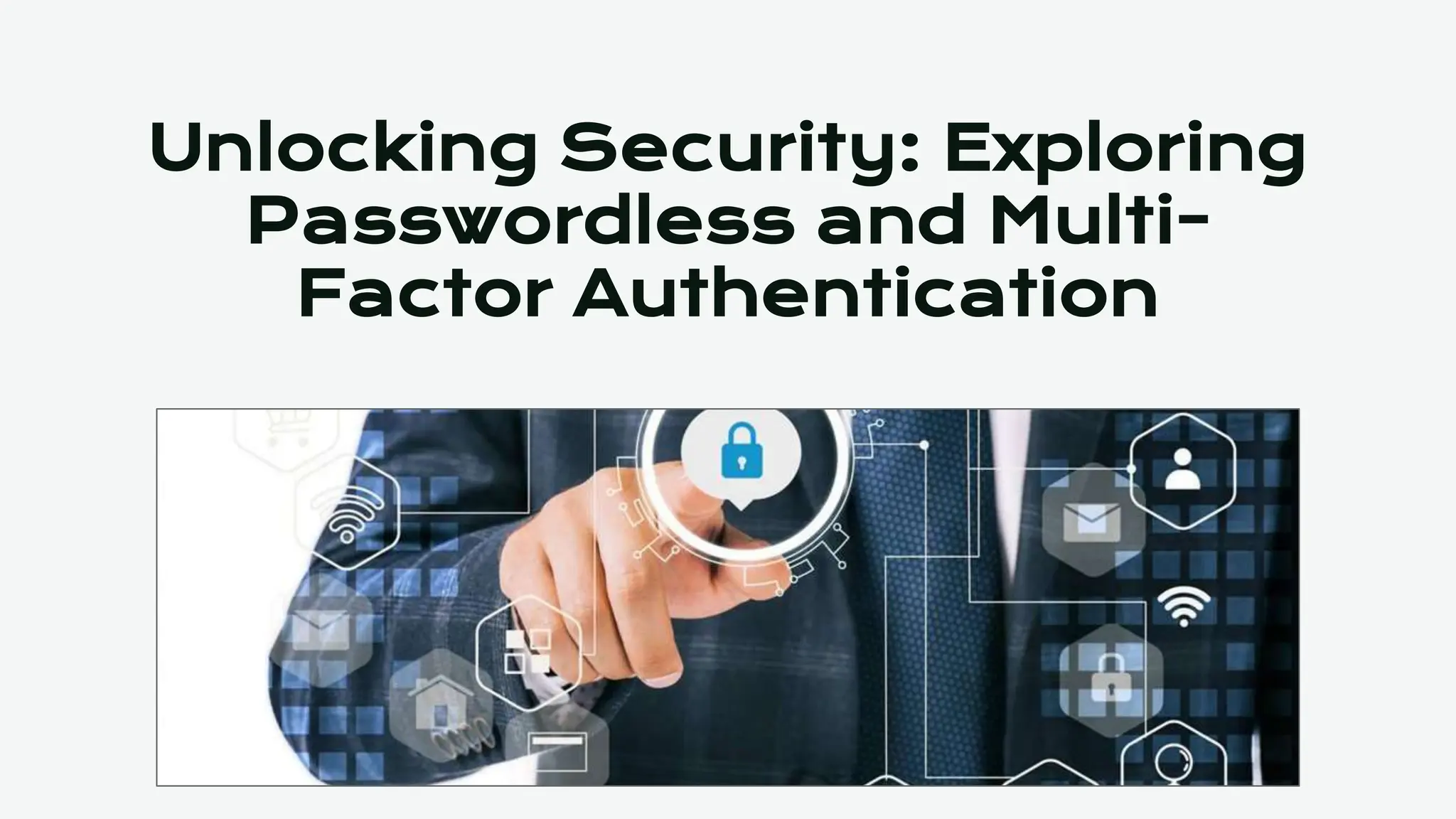
Unlocking Security: Exploring
Passwordless and Multi-
Factor Authentication
In today’s digital era, the way we secure our online identities is evolving rapidly. Traditional methods
of authentication, such as passwords, are increasingly being supplemented or replaced by innovative
approaches like passwordless and multifactor authentication. These advancements aim to enhance
security, usability, and user experience in the ever-expanding digital landscape.
Introduction
01
02
03
04
05
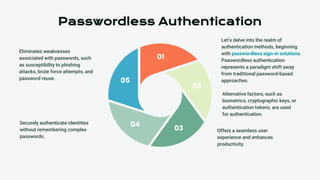
Let’s delve into the realm of
authentication methods, beginning
with passwordless sign-in solutions.
Passwordless authentication
represents a paradigm shift away
from traditional password-based
approaches.
Alternative factors, such as
biometrics, cryptographic keys, or
authentication tokens, are used
for authentication.
Eliminates weaknesses
associated with passwords, such
as susceptibility to phishing
attacks, brute force attempts, and
password reuse.
Securely authenticate identities
without remembering complex
passwords.
Passwordless Authentication
Offers a seamless user
experience and enhances
productivity.
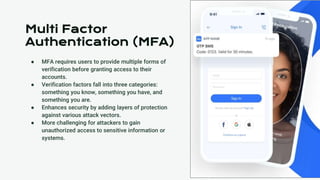
Multi Factor
Authentication (MFA)
● MFA requires users to provide multiple forms of
verification before granting access to their
accounts.
● Verification factors fall into three categories:
something you know, something you have, and
something you are.
● Enhances security by adding layers of protection
against various attack vectors.
● More challenging for attackers to gain
unauthorized access to sensitive information or
systems.
A Comparison of Passwordless
Authentication and Multi-Factor
Authentication
01
02
03
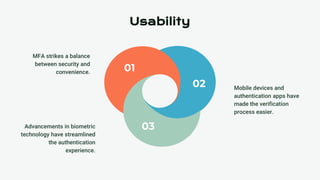
Mobile devices and
authentication apps have
made the verification
process easier.
Usability
MFA strikes a balance
between security and
convenience.
Advancements in biometric
technology have streamlined
the authentication
experience.
01
02
Security
Multi Factor authentication requires multiple forms of
verification, offering robust security.
Passwordless authentication solutions aims in providing
a frictionless user experience.
● Authentication methods evolve to enhance security and user experience.
● Passwordless and multifactor authentication have a common goal of
strengthening authentication mechanisms.
● Embracing innovative authentication solutions is crucial for a safer
digital experience.
Conclusion
Thank You 🙂

Unlocking Security: Exploring Passwordless and Multi-Factor Authentication

  • 1.
    Unlocking Security: Exploring Passwordlessand Multi- Factor Authentication
  • 2.
    In today’s digitalera, the way we secure our online identities is evolving rapidly. Traditional methods of authentication, such as passwords, are increasingly being supplemented or replaced by innovative approaches like passwordless and multifactor authentication. These advancements aim to enhance security, usability, and user experience in the ever-expanding digital landscape. Introduction
  • 3.
    01 02 03 04 05 Let’s delve intothe realm of authentication methods, beginning with passwordless sign-in solutions. Passwordless authentication represents a paradigm shift away from traditional password-based approaches. Alternative factors, such as biometrics, cryptographic keys, or authentication tokens, are used for authentication. Eliminates weaknesses associated with passwords, such as susceptibility to phishing attacks, brute force attempts, and password reuse. Securely authenticate identities without remembering complex passwords. Passwordless Authentication Offers a seamless user experience and enhances productivity.
  • 4.
    Multi Factor Authentication (MFA) ●MFA requires users to provide multiple forms of verification before granting access to their accounts. ● Verification factors fall into three categories: something you know, something you have, and something you are. ● Enhances security by adding layers of protection against various attack vectors. ● More challenging for attackers to gain unauthorized access to sensitive information or systems.
  • 5.
    A Comparison ofPasswordless Authentication and Multi-Factor Authentication
  • 6.
    01 02 03 Mobile devices and authenticationapps have made the verification process easier. Usability MFA strikes a balance between security and convenience. Advancements in biometric technology have streamlined the authentication experience.
  • 7.
    01 02 Security Multi Factor authenticationrequires multiple forms of verification, offering robust security. Passwordless authentication solutions aims in providing a frictionless user experience.
  • 8.
    ● Authentication methodsevolve to enhance security and user experience. ● Passwordless and multifactor authentication have a common goal of strengthening authentication mechanisms. ● Embracing innovative authentication solutions is crucial for a safer digital experience. Conclusion
  • 9.