Unlocking Security: A Guide to Operational
Technology Penetration Testing
What is Operational Technology Pen Testing?
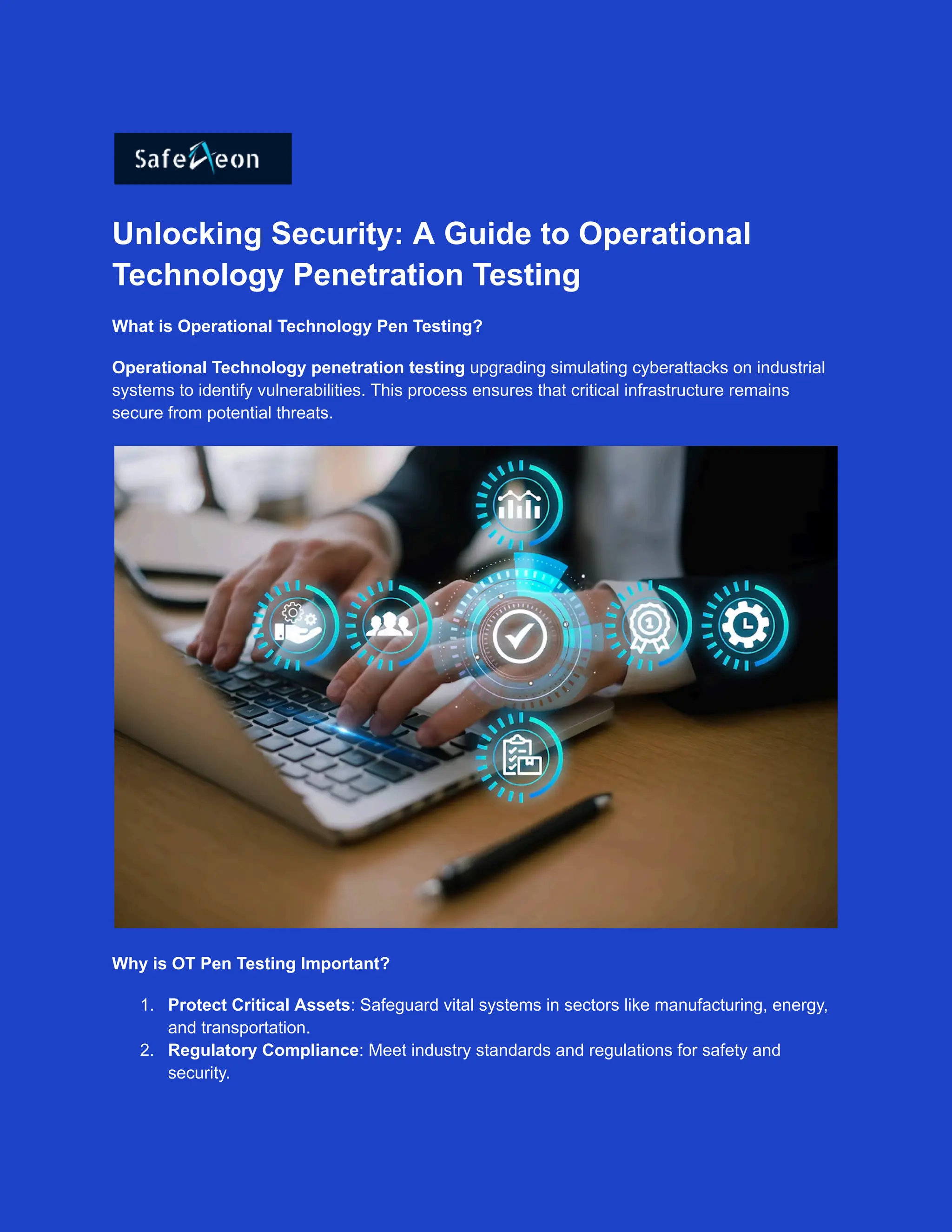
Operational Technology penetration testing upgrading simulating cyberattacks on industrial
systems to identify vulnerabilities. This process ensures that critical infrastructure remains
secure from potential threats.
Why is OT Pen Testing Important?
1. Protect Critical Assets: Safeguard vital systems in sectors like manufacturing, energy,
and transportation.
2. Regulatory Compliance: Meet industry standards and regulations for safety and
security.
3. Risk Management: Proactively identify and mitigate risks before they lead to costly
breaches.
Key Steps in OT Pen Testing
1. Scope Definition: Determine the boundaries and systems to be tested.
2. Vulnerability Assessment: Identify weaknesses in the infrastructure.
3. Exploitation: Test how vulnerabilities can be exploited by simulating real-world attacks.
4. Reporting: Provide actionable insights and recommendations for enhancing security.
Common Tools Used in OT Pen Testing
● Nmap: Network scanning and inventory.
● Metasploit: Exploitation framework for finding vulnerabilities.
● Wireshark: Network protocol analysis for monitoring traffic.
Conclusion:
Operational technology penetration testing is essential for securing industrial environments. By
identifying vulnerabilities, organizations can enhance their defenses against cyber threats.

Unlocking Security: A Guide to Operational Technology Penetration Testing

  • 1.
    Unlocking Security: AGuide to Operational Technology Penetration Testing What is Operational Technology Pen Testing? Operational Technology penetration testing upgrading simulating cyberattacks on industrial systems to identify vulnerabilities. This process ensures that critical infrastructure remains secure from potential threats. Why is OT Pen Testing Important? 1. Protect Critical Assets: Safeguard vital systems in sectors like manufacturing, energy, and transportation. 2. Regulatory Compliance: Meet industry standards and regulations for safety and security.
  • 2.
    3. Risk Management:Proactively identify and mitigate risks before they lead to costly breaches. Key Steps in OT Pen Testing 1. Scope Definition: Determine the boundaries and systems to be tested. 2. Vulnerability Assessment: Identify weaknesses in the infrastructure. 3. Exploitation: Test how vulnerabilities can be exploited by simulating real-world attacks. 4. Reporting: Provide actionable insights and recommendations for enhancing security. Common Tools Used in OT Pen Testing ● Nmap: Network scanning and inventory. ● Metasploit: Exploitation framework for finding vulnerabilities. ● Wireshark: Network protocol analysis for monitoring traffic. Conclusion: Operational technology penetration testing is essential for securing industrial environments. By identifying vulnerabilities, organizations can enhance their defenses against cyber threats.