DATA
ANALYST
Unlocking Data with SQL: A
Beginner's Guide
INTRODUCTIO
N TO SQL
SQL is the standard language used for
interacting with relational databases. It
allows users to create, read, update, and
delete data efficiently. Understanding SQL
is crucial for data analysts, as it empowers
them to extract meaningful information
and make data-driven decisions.
BASIC SQL
SYNTAX
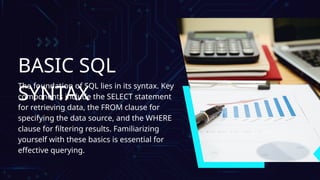
The foundation of SQL lies in its syntax. Key
components include the SELECT statement
for retrieving data, the FROM clause for
specifying the data source, and the WHERE
clause for filtering results. Familiarizing
yourself with these basics is essential for
effective querying.
ESSENTIAL SQL
FUNCTIONS
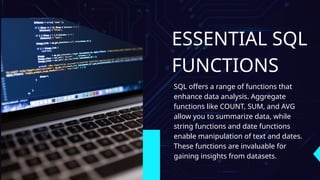
SQL offers a range of functions that
enhance data analysis. Aggregate
functions like COUNT, SUM, and AVG
allow you to summarize data, while
string functions and date functions
enable manipulation of text and dates.
These functions are invaluable for
gaining insights from datasets.
JOINING
TABLES
In many cases, data is spread across
multiple tables. SQL allows you to
join these tables using INNER JOIN,
LEFT JOIN, and RIGHT JOIN.
Understanding how to join tables
helps you create comprehensive
queries that retrieve related data
efficiently.
DATA
MANIPULATIO
N COMMANDS
SQL also enables data manipulation
through commands like INSERT,
UPDATE, and DELETE. These
commands allow you to add new
records, modify existing ones, and
remove data as needed. Mastering
these commands is essential for
managing database content
effectively.
CONCLU
SION
In conclusion, mastering SQL is a crucial step for anyone looking to work with
data. By understanding its syntax, functions, and data manipulation capabilities,
you can unlock the full potential of your datasets. Embrace SQL as a powerful tool
in your data analysis toolkit, and start making informed decisions based on your
findings.
01 02 03
https://www.excelr.com/data-analyst-course-training
Call Us 18002122121

Unlocking Data with SQL A Beginner's Guide.pptx

  • 1.
    DATA ANALYST Unlocking Data withSQL: A Beginner's Guide
  • 2.
    INTRODUCTIO N TO SQL SQLis the standard language used for interacting with relational databases. It allows users to create, read, update, and delete data efficiently. Understanding SQL is crucial for data analysts, as it empowers them to extract meaningful information and make data-driven decisions.
  • 3.
    BASIC SQL SYNTAX The foundationof SQL lies in its syntax. Key components include the SELECT statement for retrieving data, the FROM clause for specifying the data source, and the WHERE clause for filtering results. Familiarizing yourself with these basics is essential for effective querying.
  • 4.
    ESSENTIAL SQL FUNCTIONS SQL offersa range of functions that enhance data analysis. Aggregate functions like COUNT, SUM, and AVG allow you to summarize data, while string functions and date functions enable manipulation of text and dates. These functions are invaluable for gaining insights from datasets.
  • 5.
    JOINING TABLES In many cases,data is spread across multiple tables. SQL allows you to join these tables using INNER JOIN, LEFT JOIN, and RIGHT JOIN. Understanding how to join tables helps you create comprehensive queries that retrieve related data efficiently.
  • 6.
    DATA MANIPULATIO N COMMANDS SQL alsoenables data manipulation through commands like INSERT, UPDATE, and DELETE. These commands allow you to add new records, modify existing ones, and remove data as needed. Mastering these commands is essential for managing database content effectively.
  • 7.
    CONCLU SION In conclusion, masteringSQL is a crucial step for anyone looking to work with data. By understanding its syntax, functions, and data manipulation capabilities, you can unlock the full potential of your datasets. Embrace SQL as a powerful tool in your data analysis toolkit, and start making informed decisions based on your findings. 01 02 03 https://www.excelr.com/data-analyst-course-training Call Us 18002122121