"DATA ANALYST TRAINING ESSENTIALS:
SKILLS FOR THE MODERN ANALYST"
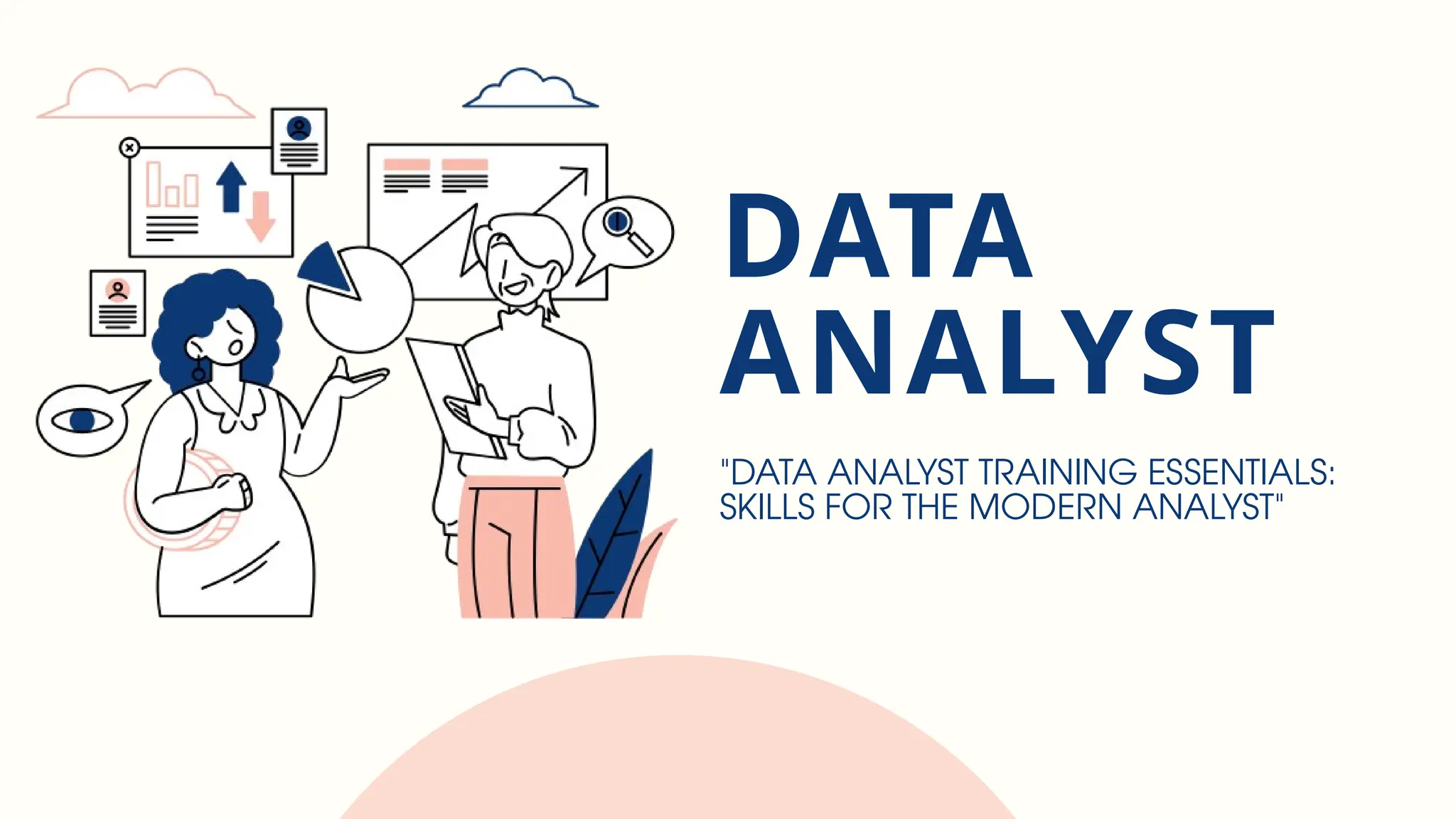
DATA
ANALYST
INTRODUCTION
This presentation will explore the critical skills
needed for modern data analysts in today’s
data-driven landscape. We will discuss the key
responsibilities of a data analyst, the essential
technical and soft skills required, and the
importance of hands-on experience. By the
end, you'll have a clear understanding of how
to equip yourself for success in this growing
field.
Data Analyst Training Essentials: Skills
for the Modern Analyst
UNDERSTANDIN
G THE DATA
ANALYST ROLE
Data analysts are pivotal in organizations, transforming
raw data into actionable insights that guide decision-
making. Their responsibilities include collecting, cleaning,
and analyzing data to identify trends and patterns. By
presenting their findings through data visualization,
analysts help stakeholders understand complex
information. As the demand for data-driven insights
increases across industries, the role of the data analyst is
becoming increasingly vital, underscoring the need for
targeted training in this field.
ESSENTIAL TECHNICAL
SKILLS FOR DATA
ANALYSTS
To excel as a data analyst, one must master several
core technical skills. Key areas include data
manipulation, where proficiency in tools like SQL and
Excel enables analysts to extract, transform, and
organize data efficiently. Additionally, a solid
foundation in statistical analysis is crucial for
interpreting data accurately. Data visualization skills
are also essential; analysts must be adept at using
software like Tableau or Power BI to create visual
representations of their findings. Together, these skills
form the backbone of effective data analysis.
KEY PROGRAMMING
LANGUAGES FOR ANALYSTS
Familiarity with programming languages is
increasingly important for data analysts.
Python has emerged as a favored
language due to its versatility and
extensive libraries, such as Pandas and
NumPy, which facilitate data
manipulation and analysis. Similarly, R is
highly regarded for its statistical
capabilities and visualization features.
Mastering these programming languages
allows data analysts to handle complex
datasets, perform advanced analyses,
and automate repetitive tasks, thereby
enhancing their efficiency and
effectiveness.
While technical skills are crucial, soft skills are equally important
for data analysts. Effective communication is essential for
conveying complex data insights in a clear and understandable
manner to stakeholders. Critical thinking allows analysts to
approach problems logically and develop solutions based on
data-driven insights. Collaboration skills are also vital, as data
analysts frequently work with cross-functional teams. Cultivating
these soft skills ensures that analysts can effectively engage with
colleagues and contribute to team success.
IMPORTANCE OF
SOFT SKILLS
Hands-on experience is a critical component of data
analyst training. Engaging in real-world projects that
simulate industry challenges helps reinforce
theoretical knowledge and enhances practical skills.
Opportunities such as internships, case studies, and
collaborative projects enable aspiring analysts to
apply their skills in a supportive environment. This
practical training not only builds confidence but also
prepares analysts for the complexities of actual data
analysis tasks they will encounter in their careers.
The Value of Practical Training
In conclusion, mastering essential skills—technical
abilities, programming languages, soft skills, and
hands-on experience—is crucial for aspiring data
analysts. To prepare for a successful career, individuals
should explore training programs that cover these
competencies. As a next step, consider researching
relevant courses, participating in workshops, or seeking
mentorship opportunities to enhance your skills and
knowledge in data analysis. By taking proactive steps,
you can position yourself for success in this dynamic
and evolving field.
CONCLUSION
AND CAREER
PATH FORWARD
https://www.excelr.com/data-analyst-course-training
Call Us 18002122121

"Data Analyst Training Essentials: Skills for the Modern Analyst"

  • 1.
    "DATA ANALYST TRAININGESSENTIALS: SKILLS FOR THE MODERN ANALYST" DATA ANALYST
  • 2.
    INTRODUCTION This presentation willexplore the critical skills needed for modern data analysts in today’s data-driven landscape. We will discuss the key responsibilities of a data analyst, the essential technical and soft skills required, and the importance of hands-on experience. By the end, you'll have a clear understanding of how to equip yourself for success in this growing field. Data Analyst Training Essentials: Skills for the Modern Analyst
  • 3.
    UNDERSTANDIN G THE DATA ANALYSTROLE Data analysts are pivotal in organizations, transforming raw data into actionable insights that guide decision- making. Their responsibilities include collecting, cleaning, and analyzing data to identify trends and patterns. By presenting their findings through data visualization, analysts help stakeholders understand complex information. As the demand for data-driven insights increases across industries, the role of the data analyst is becoming increasingly vital, underscoring the need for targeted training in this field.
  • 4.
    ESSENTIAL TECHNICAL SKILLS FORDATA ANALYSTS To excel as a data analyst, one must master several core technical skills. Key areas include data manipulation, where proficiency in tools like SQL and Excel enables analysts to extract, transform, and organize data efficiently. Additionally, a solid foundation in statistical analysis is crucial for interpreting data accurately. Data visualization skills are also essential; analysts must be adept at using software like Tableau or Power BI to create visual representations of their findings. Together, these skills form the backbone of effective data analysis.
  • 5.
    KEY PROGRAMMING LANGUAGES FORANALYSTS Familiarity with programming languages is increasingly important for data analysts. Python has emerged as a favored language due to its versatility and extensive libraries, such as Pandas and NumPy, which facilitate data manipulation and analysis. Similarly, R is highly regarded for its statistical capabilities and visualization features. Mastering these programming languages allows data analysts to handle complex datasets, perform advanced analyses, and automate repetitive tasks, thereby enhancing their efficiency and effectiveness.
  • 6.
    While technical skillsare crucial, soft skills are equally important for data analysts. Effective communication is essential for conveying complex data insights in a clear and understandable manner to stakeholders. Critical thinking allows analysts to approach problems logically and develop solutions based on data-driven insights. Collaboration skills are also vital, as data analysts frequently work with cross-functional teams. Cultivating these soft skills ensures that analysts can effectively engage with colleagues and contribute to team success. IMPORTANCE OF SOFT SKILLS
  • 7.
    Hands-on experience isa critical component of data analyst training. Engaging in real-world projects that simulate industry challenges helps reinforce theoretical knowledge and enhances practical skills. Opportunities such as internships, case studies, and collaborative projects enable aspiring analysts to apply their skills in a supportive environment. This practical training not only builds confidence but also prepares analysts for the complexities of actual data analysis tasks they will encounter in their careers. The Value of Practical Training
  • 8.
    In conclusion, masteringessential skills—technical abilities, programming languages, soft skills, and hands-on experience—is crucial for aspiring data analysts. To prepare for a successful career, individuals should explore training programs that cover these competencies. As a next step, consider researching relevant courses, participating in workshops, or seeking mentorship opportunities to enhance your skills and knowledge in data analysis. By taking proactive steps, you can position yourself for success in this dynamic and evolving field. CONCLUSION AND CAREER PATH FORWARD https://www.excelr.com/data-analyst-course-training Call Us 18002122121