Universal Human
Values in
Engineering
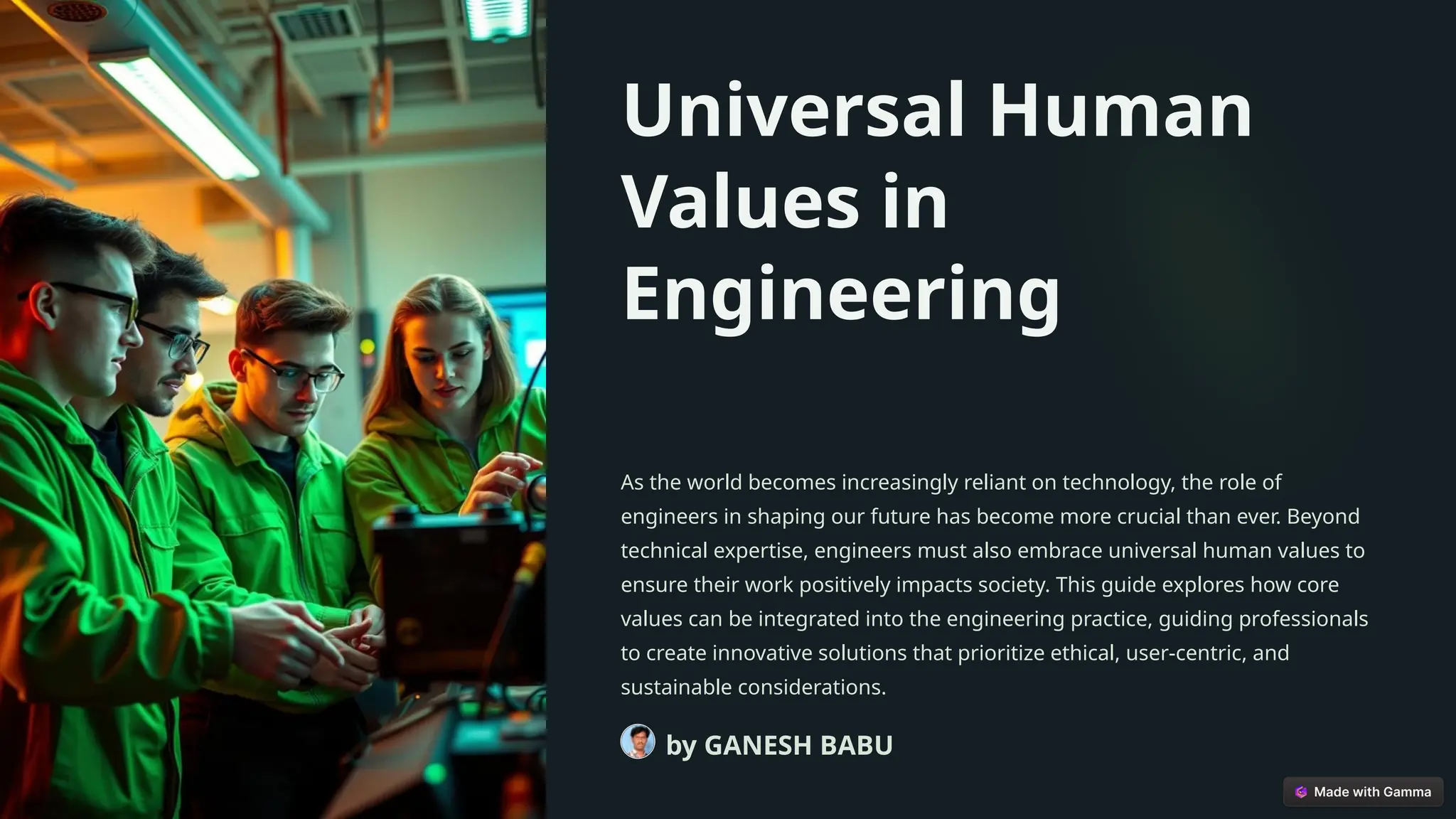
As the world becomes increasingly reliant on technology, the role of
engineers in shaping our future has become more crucial than ever. Beyond
technical expertise, engineers must also embrace universal human values to
ensure their work positively impacts society. This guide explores how core
values can be integrated into the engineering practice, guiding professionals
to create innovative solutions that prioritize ethical, user-centric, and
sustainable considerations.
by GANESH BABU
What are Universal Human Values?
1 Integrity
Upholding honesty, transparency, and ethical decision-
making in all professional conduct.
2 Empathy
Prioritizing the needs and perspectives of end-users and
stakeholders in the design process.
3 Respect for Diversity
Fostering an inclusive environment that celebrates
difference and promotes equal opportunities.
4 Sustainability
Integrating environmental and social responsibility into
engineering solutions for long-term impact.
The Importance of Values in Engineering
Ethical Decision-Making
Values guide engineers in navigating
complex ethical dilemmas, ensuring
their work considers the broader
implications on society and the
environment.
User-Centric Design
Empathy and a deep understanding
of user needs lead to more
innovative, accessible, and impactful
engineering solutions that improve
people's lives.
Sustainable Innovation
By prioritizing sustainability and
environmental stewardship,
engineers can develop technologies
that minimize ecological footprint
and contribute to a greener future.
Integrity and Ethical Decision-Making
1
Upholding Honesty
Engineers must maintain the highest standards of integrity, being truthful in
their work, transparent about risks and limitations, and accountable for their
actions.
2
Ethical Reasoning
When faced with complex ethical dilemmas, engineers should rely on a
structured decision-making process that weighs the potential consequences and
aligns with moral principles.
3
Professional Responsibility
Engineers have a duty to the public to ensure their work enhances safety, well-
being, and the greater good, often going beyond the immediate needs of a client
or employer.
Empathy and User-Centric
Design
Understand Users
Deeply empathize with the needs, pain
points, and perspectives of end-users to
inform the design process.
Inclusive Design
Ensure engineering solutions are
accessible and accommodate diverse
user abilities and backgrounds.
Collaborative Approach
Foster cross-disciplinary teamwork and
stakeholder engagement to capture a
holistic view of user requirements.
Iterative Refinement
Continuously test and refine designs
based on user feedback to ensure
optimal user experience.
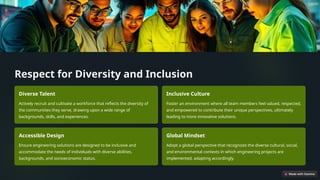
Respect for Diversity and Inclusion
Diverse Talent
Actively recruit and cultivate a workforce that reflects the diversity of
the communities they serve, drawing upon a wide range of
backgrounds, skills, and experiences.
Inclusive Culture
Foster an environment where all team members feel valued, respected,
and empowered to contribute their unique perspectives, ultimately
leading to more innovative solutions.
Accessible Design
Ensure engineering solutions are designed to be inclusive and
accommodate the needs of individuals with diverse abilities,
backgrounds, and socioeconomic status.
Global Mindset
Adopt a global perspective that recognizes the diverse cultural, social,
and environmental contexts in which engineering projects are
implemented, adapting accordingly.
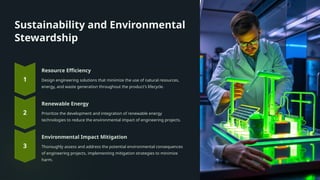
Sustainability and Environmental
Stewardship
Resource Efficiency
Design engineering solutions that minimize the use of natural resources,
energy, and waste generation throughout the product's lifecycle.
Renewable Energy
Prioritize the development and integration of renewable energy
technologies to reduce the environmental impact of engineering projects.
Environmental Impact Mitigation
Thoroughly assess and address the potential environmental consequences
of engineering projects, implementing mitigation strategies to minimize
harm.
Conclusion: Upholding
Values in Engineering
Practice
By embracing universal human values, engineers can ensure their work
positively contributes to society and the environment. From upholding
integrity and ethical decision-making to fostering empathy and
sustainability, these core principles should be at the heart of the
engineering profession. By aligning technical expertise with a values-
driven approach, engineers can create innovative solutions that truly
make a difference in the world.

Universal-Human-Values-in-Engineering.pptx

  • 1.
    Universal Human Values in Engineering Asthe world becomes increasingly reliant on technology, the role of engineers in shaping our future has become more crucial than ever. Beyond technical expertise, engineers must also embrace universal human values to ensure their work positively impacts society. This guide explores how core values can be integrated into the engineering practice, guiding professionals to create innovative solutions that prioritize ethical, user-centric, and sustainable considerations. by GANESH BABU
  • 2.
    What are UniversalHuman Values? 1 Integrity Upholding honesty, transparency, and ethical decision- making in all professional conduct. 2 Empathy Prioritizing the needs and perspectives of end-users and stakeholders in the design process. 3 Respect for Diversity Fostering an inclusive environment that celebrates difference and promotes equal opportunities. 4 Sustainability Integrating environmental and social responsibility into engineering solutions for long-term impact.
  • 3.
    The Importance ofValues in Engineering Ethical Decision-Making Values guide engineers in navigating complex ethical dilemmas, ensuring their work considers the broader implications on society and the environment. User-Centric Design Empathy and a deep understanding of user needs lead to more innovative, accessible, and impactful engineering solutions that improve people's lives. Sustainable Innovation By prioritizing sustainability and environmental stewardship, engineers can develop technologies that minimize ecological footprint and contribute to a greener future.
  • 4.
    Integrity and EthicalDecision-Making 1 Upholding Honesty Engineers must maintain the highest standards of integrity, being truthful in their work, transparent about risks and limitations, and accountable for their actions. 2 Ethical Reasoning When faced with complex ethical dilemmas, engineers should rely on a structured decision-making process that weighs the potential consequences and aligns with moral principles. 3 Professional Responsibility Engineers have a duty to the public to ensure their work enhances safety, well- being, and the greater good, often going beyond the immediate needs of a client or employer.
  • 5.
    Empathy and User-Centric Design UnderstandUsers Deeply empathize with the needs, pain points, and perspectives of end-users to inform the design process. Inclusive Design Ensure engineering solutions are accessible and accommodate diverse user abilities and backgrounds. Collaborative Approach Foster cross-disciplinary teamwork and stakeholder engagement to capture a holistic view of user requirements. Iterative Refinement Continuously test and refine designs based on user feedback to ensure optimal user experience.
  • 6.
    Respect for Diversityand Inclusion Diverse Talent Actively recruit and cultivate a workforce that reflects the diversity of the communities they serve, drawing upon a wide range of backgrounds, skills, and experiences. Inclusive Culture Foster an environment where all team members feel valued, respected, and empowered to contribute their unique perspectives, ultimately leading to more innovative solutions. Accessible Design Ensure engineering solutions are designed to be inclusive and accommodate the needs of individuals with diverse abilities, backgrounds, and socioeconomic status. Global Mindset Adopt a global perspective that recognizes the diverse cultural, social, and environmental contexts in which engineering projects are implemented, adapting accordingly.
  • 7.
    Sustainability and Environmental Stewardship ResourceEfficiency Design engineering solutions that minimize the use of natural resources, energy, and waste generation throughout the product's lifecycle. Renewable Energy Prioritize the development and integration of renewable energy technologies to reduce the environmental impact of engineering projects. Environmental Impact Mitigation Thoroughly assess and address the potential environmental consequences of engineering projects, implementing mitigation strategies to minimize harm.
  • 8.
    Conclusion: Upholding Values inEngineering Practice By embracing universal human values, engineers can ensure their work positively contributes to society and the environment. From upholding integrity and ethical decision-making to fostering empathy and sustainability, these core principles should be at the heart of the engineering profession. By aligning technical expertise with a values- driven approach, engineers can create innovative solutions that truly make a difference in the world.