UNIT-II
Understanding HR Analytics
Definition, Scope, and Strategic
Significance in Modern HR Practices
Asst.Prof.Swati A. Chougule
Introduction
• HR has evolved from administrative to
strategic role.
• HR Analytics enables evidence-based
decisions using workforce data.
Definition of HR Analytics
• Application of data analysis techniques to HR
data to improve decisions.
• Also known as People Analytics or Workforce
Analytics.
• Example: Predicting employee attrition to
design retention programs.
Scope of HR Analytics
• Covers all HR functions:
• - Recruitment & Selection
• - Training & Development
• - Performance Management
• - Employee Engagement
• - Compensation & Benefits
• - Workforce Planning
HR Analytics Process
• 1. Data Collection
• 2. Data Cleaning & Integration
• 3. Data Analysis
• 4. Insight Generation
• 5. Decision Making
• 6. Monitoring & Refinement
Strategic Significance of HR Analytics
• - Evidence-Based Decision Making
• - Linking HR to Business Outcomes
• - Predictive Capability
• - Improved Talent Management
• - Enhanced Employee Experience
• - Competitive Advantage
Case Study: Google’s People Analytics
• Google studied employee attrition trends.
• Project Oxygen identified lack of managerial
support.
• Introduced leadership training.
• Result: Higher satisfaction, lower attrition.
Levels of HR Analytics
• 1. Descriptive – What happened?
• 2. Diagnostic – Why did it happen?
• 3. Predictive – What will happen?
• 4. Prescriptive – What should we do?
• Example: Attrition analysis and retention
strategies.
Conclusion
• HR Analytics = Data + Insights + Action →
Success
• • Moves HR from intuition to evidence.
• • Aligns workforce strategies with business
goals.
• • Essential for modern, competitive
organizations.
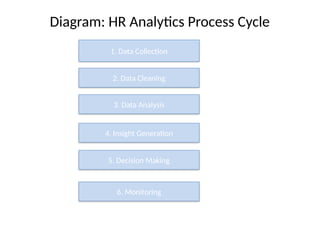
Diagram: HR Analytics Process Cycle
1. Data Collection
3. Data Analysis
4. Insight Generation
5. Decision Making
6. Monitoring
2. Data Cleaning
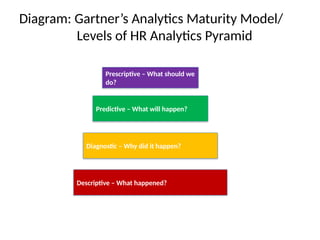
Diagram: Gartner’s Analytics Maturity Model/
Levels of HR Analytics Pyramid
Prescriptive – What should we
do?
Predictive – What will happen?
Diagnostic – Why did it happen?
Descriptive – What happened?

Unit-II PPT 1.FOR MBA HUMAN RESOURCE MANAGEMENT CORE

  • 1.
    UNIT-II Understanding HR Analytics Definition,Scope, and Strategic Significance in Modern HR Practices Asst.Prof.Swati A. Chougule
  • 2.
    Introduction • HR hasevolved from administrative to strategic role. • HR Analytics enables evidence-based decisions using workforce data.
  • 3.
    Definition of HRAnalytics • Application of data analysis techniques to HR data to improve decisions. • Also known as People Analytics or Workforce Analytics. • Example: Predicting employee attrition to design retention programs.
  • 4.
    Scope of HRAnalytics • Covers all HR functions: • - Recruitment & Selection • - Training & Development • - Performance Management • - Employee Engagement • - Compensation & Benefits • - Workforce Planning
  • 5.
    HR Analytics Process •1. Data Collection • 2. Data Cleaning & Integration • 3. Data Analysis • 4. Insight Generation • 5. Decision Making • 6. Monitoring & Refinement
  • 6.
    Strategic Significance ofHR Analytics • - Evidence-Based Decision Making • - Linking HR to Business Outcomes • - Predictive Capability • - Improved Talent Management • - Enhanced Employee Experience • - Competitive Advantage
  • 7.
    Case Study: Google’sPeople Analytics • Google studied employee attrition trends. • Project Oxygen identified lack of managerial support. • Introduced leadership training. • Result: Higher satisfaction, lower attrition.
  • 8.
    Levels of HRAnalytics • 1. Descriptive – What happened? • 2. Diagnostic – Why did it happen? • 3. Predictive – What will happen? • 4. Prescriptive – What should we do? • Example: Attrition analysis and retention strategies.
  • 9.
    Conclusion • HR Analytics= Data + Insights + Action → Success • • Moves HR from intuition to evidence. • • Aligns workforce strategies with business goals. • • Essential for modern, competitive organizations.
  • 10.
    Diagram: HR AnalyticsProcess Cycle 1. Data Collection 3. Data Analysis 4. Insight Generation 5. Decision Making 6. Monitoring 2. Data Cleaning
  • 11.
    Diagram: Gartner’s AnalyticsMaturity Model/ Levels of HR Analytics Pyramid Prescriptive – What should we do? Predictive – What will happen? Diagnostic – Why did it happen? Descriptive – What happened?