2.PRODUCT, OPERATIONS, ANDPROJECT
MANAGEMENT
2.1 Creativity and Innovation Management:
Creativity refers to generating new and original ideas.
while innovation means applying those ideas in practical ways to create value.
To encourage creativity and innovation, managers use various problem-solving
techniques that help generate, analyze, and implement ideas systematically.
Creativity
Creativity is the ability to think differently and produce unique ideas.
Example:
A teacher using games to explain difficult concepts.
2.
•Innovation
•Innovation is theimplementation of creative ideas.
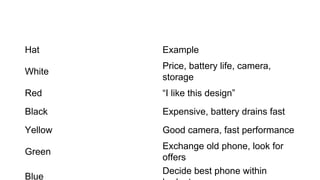
•Example:
Using smart boards and digital tools in classrooms.
3.
Problem-Solving Techniques
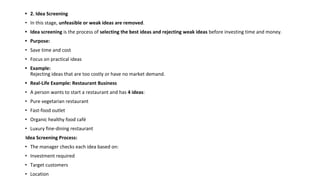
• 1.Brainstorming
• Brainstorming is a group technique used to generate a large number of ideas in a short
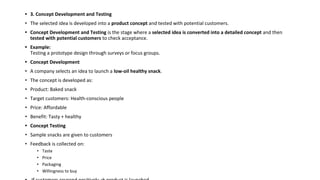
time without criticism.
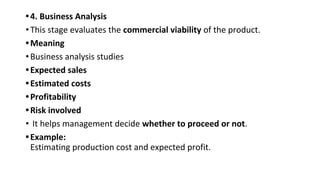
• Steps:
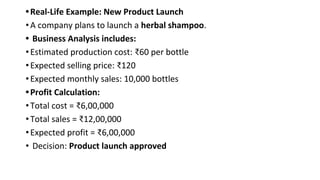
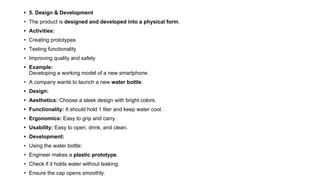
• Define the problem clearly
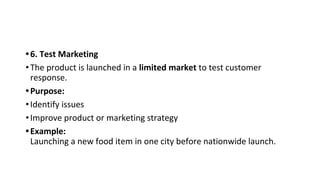
• Encourage free thinking
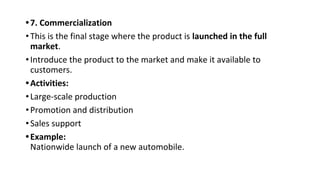
• Avoid criticism
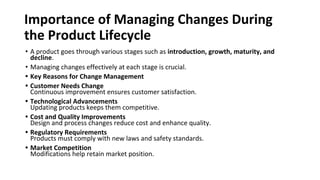
• Record all ideas
• Example:
A team brainstorming ideas to reduce production cost.
• Benefits:
• Encourages participation
• Promotes creativity
• Generates many solutions
4.
2. Checklist Method
•The checklist method involves using a list of questions to think of improvements
or new ideas.
• Example Questions:
• Can it be modified?
• Can it be replaced?
• Can it be simplified?
• Example:
Improving a product by changing its design or material.
• Benefits:
• Simple and systematic
• Easy to use
• Encourages detailed thinking
5.
3. Reverse Brainstorming
•Reversebrainstorming focuses on finding ways to cause the
problem, then reversing those ideas to find solutions.
•Example:
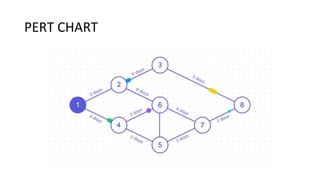
Problem: How to improve customer satisfaction?
Reverse question: How can we make customers unhappy?
•Benefits:
•Helps identify hidden issues
•Encourages creative thinking
•Useful for complex problems
6.
4. Morphological Analysis
•Morphologicalanalysis breaks a problem into smaller components
and explores all possible combinations.
•Example:
Designing a new mobile phone by combining different features like
size, camera, battery, and price.
•Benefits:
•Encourages structured creativity
•Useful for product development
•Explores many alternatives
7.
5. Six ThinkingHats Method
• Developed by Edward de Bono, this method encourages thinking from six different perspectives.
• The Six Hats:
• White Hat: Facts and information
• Red Hat: Feelings and emotions
• Black Hat: Risks and drawbacks
• Yellow Hat: Benefits and positives
• Green Hat: Creativity and new ideas
• Blue Hat: Control and organization of thinking
• Example:
A team evaluating a new project using all six hats.
• Benefits:
• Improves decision-making
• Encourages balanced thinking
• Reduces conflict
8.
• The SixThinking Hats (with Meaning)
• 1 White Hat – Facts & Information
• Focus: Data, facts, figures, and information
• Ask: What do we know? What information is missing?
• Real-life example:
A school wants to start online classes.
White Hat thinking:
• Number of students with smartphones
• Internet availability
• Cost of software
• Attendance data
9.
•Red Hat –Feelings & Emotions
•Focus: Emotions, feelings, intuitions (no logic required)
•Ask: How do people feel about this?
•Real-life example:
Teachers may feel stressed about using technology.
Students may feel excited or scared of online learning.
10.
•Black Hat –Caution & Risks
•Focus: Problems, risks, disadvantages
•Ask: What could go wrong?
•Real-life example:
•Internet failure
•Students may get distracted
•Some teachers may struggle with technology
•Health issues due to screen time
11.
•Yellow Hat –Benefits & Positives
•Focus: Advantages, value, benefits
•Ask: What are the good points?
•Real-life example:
•Learning continues during emergencies
•Saves travel time
•Students can revise recorded lectures
•Flexible learning environment
12.
•Green Hat –Creativity & New Ideas
•Focus: Innovation, alternatives, creative solutions
•Ask: What new ideas can we try?
•Real-life example:
•Hybrid model (online + offline)
•Short interactive sessions
•Recorded lectures for slow learners
•Online quizzes and games
13.
•Blue Hat –Control & Decision
•Focus: Managing the thinking process and final decision
•Ask: What is the conclusion? What is the next step?
•Real-life example:
Decision:
•Start online classes on a trial basis
•Train teachers
•Review feedback after one month
14.
Hat Example
White
Price, batterylife, camera,
storage
Red “I like this design”
Black Expensive, battery drains fast
Yellow Good camera, fast performance
Green
Exchange old phone, look for
offers
Blue
Decide best phone within
15.
•Advantages of SixThinking Hats
•Encourages clear and organized thinking
•Reduces conflicts in group discussions
•Helps in better decision-making
•Useful in education, business, and daily life
16.
2.2 New ProductDevelopment
•Introduction
•New Product Development (NPD) is the process of designing,
creating, and launching a new product to meet customer needs and
market demand.
• In a competitive business environment, organizations must
continuously develop new or improved products to survive and grow.
Effective management of changes during the product lifecycle is
essential to ensure product success, customer satisfaction, and
long-term profitability.
17.
Stages of NewProduct Development
• 1. Idea Generation
• This is the first stage where new product ideas are generated.
• Sources of Ideas:
• Customer feedback
• Market research
• Employee suggestions
• Competitor analysis
• Technological advancements
• Example:
A company identifies the need for an energy-efficient appliance
18.
• 2. IdeaScreening
• In this stage, unfeasible or weak ideas are removed.
• Idea screening is the process of selecting the best ideas and rejecting weak ideas before investing time and money.
• Purpose:
• Save time and cost
• Focus on practical ideas
• Example:
Rejecting ideas that are too costly or have no market demand.
• Real-Life Example: Restaurant Business
• A person wants to start a restaurant and has 4 ideas:
• Pure vegetarian restaurant
• Fast-food outlet
• Organic healthy food café
• Luxury fine-dining restaurant
Idea Screening Process:
• The manager checks each idea based on:
• Investment required
• Target customers
• Location
19.
• 3. ConceptDevelopment and Testing
• The selected idea is developed into a product concept and tested with potential customers.
• Concept Development and Testing is the stage where a selected idea is converted into a detailed concept and then
tested with potential customers to check acceptance.
• Example:
Testing a prototype design through surveys or focus groups.
• Concept Development
• A company selects an idea to launch a low-oil healthy snack.
• The concept is developed as:
• Product: Baked snack
• Target customers: Health-conscious people
• Price: Affordable
• Benefit: Tasty + healthy
• Concept Testing
• Sample snacks are given to customers
• Feedback is collected on:
• Taste
• Price
• Packaging
• Willingness to buy
20.
•4. Business Analysis
•Thisstage evaluates the commercial viability of the product.
•Meaning
•Business analysis studies
•Expected sales
•Estimated costs
•Profitability
•Risk involved
• It helps management decide whether to proceed or not.
•Example:
Estimating production cost and expected profit.
21.
•Real-Life Example: NewProduct Launch
•A company plans to launch a herbal shampoo.
• Business Analysis includes:
•Estimated production cost: ₹60 per bottle
•Expected selling price: ₹120
•Expected monthly sales: 10,000 bottles
•Profit Calculation:
•Total cost = ₹6,00,000
•Total sales = ₹12,00,000
•Expected profit = ₹6,00,000
• Decision: Product launch approved
22.
• 5. Design& Development
• The product is designed and developed into a physical form.
• Activities:
• Creating prototypes
• Testing functionality
• Improving quality and safety
• Example:
Developing a working model of a new smartphone.
• A company wants to launch a new water bottle.
• Design:
• Aesthetics: Choose a sleek design with bright colors.
• Functionality: It should hold 1 liter and keep water cool.
• Ergonomics: Easy to grip and carry.
• Usability: Easy to open, drink, and clean.
• Development:
• Using the water bottle:
• Engineer makes a plastic prototype.
• Check if it holds water without leaking.
• Ensure the cap opens smoothly.
23.
•6. Test Marketing
•Theproduct is launched in a limited market to test customer
response.
•Purpose:
•Identify issues
•Improve product or marketing strategy
•Example:
Launching a new food item in one city before nationwide launch.
24.
•7. Commercialization
•This isthe final stage where the product is launched in the full
market.
•Introduce the product to the market and make it available to
customers.
•Activities:
•Large-scale production
•Promotion and distribution
•Sales support
•Example:
Nationwide launch of a new automobile.
25.
Importance of ManagingChanges During
the Product Lifecycle
• A product goes through various stages such as introduction, growth, maturity, and
decline.
• Managing changes effectively at each stage is crucial.
• Key Reasons for Change Management
• Customer Needs Change
Continuous improvement ensures customer satisfaction.
• Technological Advancements
Updating products keeps them competitive.
• Cost and Quality Improvements
Design and process changes reduce cost and enhance quality.
• Regulatory Requirements
Products must comply with new laws and safety standards.
• Market Competition
Modifications help retain market position.
2.3 Product ManagementFundamentals
•Introduction
•Product management is the process of planning, developing,
launching, and managing a product throughout its lifecycle to
ensure it meets customer needs, industry standards, and
organizational goals.
•It acts as a bridge between customers, engineering, marketing,
production, and management.
•Effective product management helps organizations deliver
high-quality, competitive, and sustainable products in the market.
28.
Key Principles ofProduct Management
• Customer-Centric Approach
Products should be designed based on customer needs and expectations.
Example: Collecting user feedback before adding new features.
• Quality and Standards Compliance
Products must meet industry standards, safety regulations, and quality benchmarks.
Example: ISO certification for manufacturing processes.
• Market and Business Alignment
Product goals should align with business strategy and market demand.
Example: Developing cost-effective products for mass markets.
• Cross-Functional Collaboration
Product management requires coordination among different departments.
Example: Engineers, designers, marketers, and quality teams working together.
• Sustainability and Responsibility
Products should minimize environmental impact and promote sustainable practices.
Example: Using recyclable materials and energy-efficient designs.
29.
Steps in ProductManagement
• 1. Product Planning
• Product planning involves identifying product opportunities and defining
objectives.
• Activities:
• Market research
• Customer requirement analysis
• Competitor analysis
• Defining product vision and roadmap
• Example:
Planning a low-energy electrical appliance based on customer demand.
30.
2. Product Design
•Thisstep focuses on conceptual and detailed design of the product.
•Activities:
•Functional design
•Aesthetic design
•Material selection
•Safety and ergonomic considerations
•Example:
Designing a user-friendly mobile phone with durable materials.
31.
3. Product Development
•Productdevelopment converts the design into a working product.
•Activities:
•Prototype development
•Testing and validation
•Process planning
•Quality checks
•Example:
Developing and testing a prototype before mass production.
32.
4. Product Launch
•Thisstage involves introducing the product to the market.
•Activities:
•Pricing strategy
•Promotion and branding
•Distribution planning
•Sales training
•Example:
Launching a new product with advertisements and demonstrations.
33.
5. Product Monitoringand Improvement
•After launch, the product is continuously monitored and improved.
•Activities:
•Collecting customer feedback
•Performance analysis
•Product upgrades
•Cost and quality improvement
•Example:
Updating a product based on customer reviews.
34.
Meeting Industry Standardsand Customer
Needs
•Compliance with safety and quality standards
•Regular testing and certification
•Continuous customer engagement
35.
Sustainability in ProductManagement
•Sustainable product management focuses on:
•Efficient use of resources
•Reducing waste and emissions
•Product recyclability
•Long product life
•Example:
Designing products that consume less energy and are easy to recycle.
36.
2.4 Project ManagementOverview
•Introduction
•Project management is the application of knowledge, skills, tools,
and techniques to plan, execute, and complete a project successfully
within defined constraints such as time, cost, and quality.
•A project is a temporary activity undertaken to create a unique
product, service, or result.
•Effective project management ensures that objectives are achieved
efficiently while meeting customer expectations and organizational
goals.
37.
Importance of ProjectManagement
• Timely Completion of Projects
Proper planning and monitoring help complete projects on schedule.
• Cost Control
Project management helps in managing budgets and avoiding cost
overruns.
• Quality Assurance
Ensures that project outputs meet required quality standards.
• Risk Management
Identifies potential risks and plans preventive actions.
• Efficient Resource Utilization
Ensures optimal use of manpower, materials, and equipment.
• Customer Satisfaction
Delivers expected results as per customer requirements.
38.
Key Focus Areasof Project Management
•Scope Management – Defining what is included in the project
•Time Management – Scheduling activities and meeting deadlines
•Cost Management – Budget planning and control
•Quality Management – Maintaining required standards
•Risk Management – Identifying and managing uncertainties
•Communication Management – Ensuring clear information flow
•Human Resource Management – Managing project teams
39.
4Ps of ProjectManagement
•The 4Ps provide a holistic view of project management:
•1. Project
•Defines the objectives, scope, schedule, and constraints.
•Example:
Construction of a laboratory building within 6 months.
•2. Product
•Refers to the final output or deliverable of the project.
•Example:
A fully functional laboratory with required equipment.
40.
•3. Process
•Includes themethods, tools, and techniques used to execute the
project.
•Example:
Project scheduling, quality control, and reporting procedures
•4. People
•Represents the team members and stakeholders involved in the
project.
•Example:
Project manager, engineers, technicians, suppliers, and clients.
41.
Phases of ProjectExecution
•. Project Initiation
•Identifying project objectives
•Feasibility study
•Stakeholder identification
•Example:
Approval of a new manufacturing unit project.
42.
•2. Project Planning
•Definingscope and tasks
•Scheduling and budgeting
•Risk planning
•Resource allocation
•Example:
Creating a detailed project plan and timeline.
43.
•3. Project Execution
•Performingplanned activities
•Team coordination
•Quality assurance
•Example:
Actual construction or development work.
44.
•4. Monitoring andControlling
•Tracking progress
•Comparing actual vs planned performance
•Taking corrective actions
45.
• Example:1. Initiation
•A company wants to develop a new mobile app.
• Management evaluates the need: Who will use it? Cost? Time?
• Decision: Yes, go ahead with development.
• 2. Planning
• Example:
• For the mobile app:
• Assign tasks: UI design, coding, testing.
• Set timeline: 3 months.
• Budget: 10,000.
• Identify risks: Delay in development, bugs.
46.
• 3. Execution
•Example:
• Developers start coding the mobile app.
• Designers create screens and graphics.
• Project manager ensures work is on schedule.
• 4.Monitoring and Controlling
• Example:
• Project manager notices coding is behind schedule.
• Reassigns tasks or adds extra resources to catch up.
• Test app features regularly to ensure quality.
• 5. Closure
• Example:
• Mobile app is launched on Google Play and App Store.
• Feedback is collected.
• Project team is disbanded, final report is prepared.
47.
2.5 Project ManagementTools and
Techniques
•Introduction
•Project management tools and techniques help managers plan,
schedule, monitor, and control projects effectively.
• In engineering and technical applications, these tools are essential
for handling complex activities, meeting deadlines, estimating costs,
and controlling budgets.
• Tools such as Gantt Charts, PERT, and CPM provide a clear visual and
analytical understanding of project progress and dependencies.
48.
Importance of ProjectManagement Tools
•Help in systematic planning
•Improve time and cost estimation
•Identify critical activities
•Monitor project progress
•Support decision-making
•Reduce delays and cost overruns
49.
1. Gantt Chart
•A Gantt Chart is a bar chart that shows project activities against time.
• Features
• Horizontal bars represent tasks
• Length of bar shows task duration
• Easy to understand and use
• Uses
• Planning project schedule
• Tracking progress
• Communicating project status
50.
•Example (Engineering Project):
•AGantt chart for constructing a building shows activities such as
design, foundation, structure, and finishing along a timeline.
•Advantages
•Simple and visual
•Good for small and medium projects
•Limitations
•Not suitable for very complex projects
•Does not clearly show dependencies
51.
2. PERT (ProgramEvaluation and Review
Technique)
• PERT is a network-based planning technique used for projects with
uncertain activity durations.
• A PERT chart is a project management tool used to plan, schedule, and
control complex projects.
• It shows tasks/activities, their sequence, and time required to complete a
project.
• Purpose of PERT Chart
• To plan large projects
• To identify critical activities
• To estimate minimum project completion time
• To manage uncertainty in task durations
52.
•Key Features
•Uses anetwork diagram
•Activities are shown as arrows
•Events (start/end) are shown as circles or nodes
•Focuses on time estimation
53.
• Uses
• Projectplanning under uncertainty
• Scheduling and control
• Risk analysis
• Example (Engineering Application):
• Used in research, product development, or new technology projects.
• Advantages
• Handles uncertainty
• Improves planning accuracy
• Limitations
• Time-consuming
• Requires detailed data
3. CPM (CriticalPath Method)
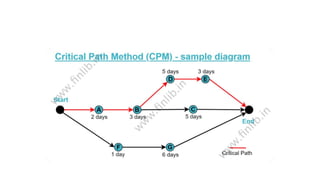
• CPM is a network technique used to identify the longest path of activities in a project.
• CPM is a project management technique used to plan, schedule, and control projects.
• It focuses on identifying the longest sequence of activities (critical path) to complete a project in the minimum time.
• Objectives of CPM
• Identify critical activities
• Calculate minimum project duration
• Help in time and cost control
• Support efficient resource management
• Critical Path
• Longest duration path
• Determines minimum project completion time
• Delay in critical activity delays the whole project
• Uses
• Time and cost optimization
• Identifying critical activities
• Project control
56.
• Key Termsin CPM
• Activity – A task that consumes time
• Event – Start or end of an activity
• Critical Path – Longest path in the network
• Float (Slack) – Extra time an activity can be delayed
• Critical Activity – Activity with zero float
• Steps in CPM
• List all project activities
• Determine activity sequence
• Draw network diagram
• Estimate activity time
• Identify critical path
• Calculate floats
57.
•Example (Engineering Application):
•Usedin construction, plant installation, and manufacturing projects.
•Advantages
•Identifies critical activities
•Helps in resource allocation
•Limitations
•Requires accurate time estimates
•Less suitable for uncertain projects
59.
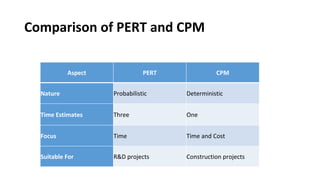
Comparison of PERTand CPM
Aspect PERT CPM
Nature Probabilistic Deterministic
Time Estimates Three One
Focus Time Time and Cost
Suitable For R&D projects Construction projects
60.
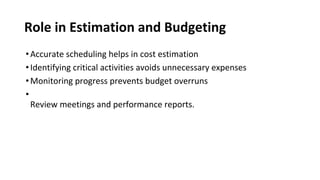
Role in Estimationand Budgeting
•Accurate scheduling helps in cost estimation
•Identifying critical activities avoids unnecessary expenses
•Monitoring progress prevents budget overruns
•
Review meetings and performance reports.
61.
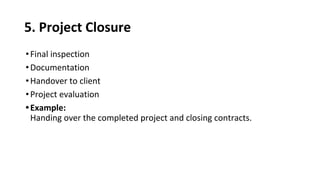
5. Project Closure
•Finalinspection
•Documentation
•Handover to client
•Project evaluation
•Example:
Handing over the completed project and closing contracts.