Unit 1
   CELLS
UNIT REVIEW
What have you learned?
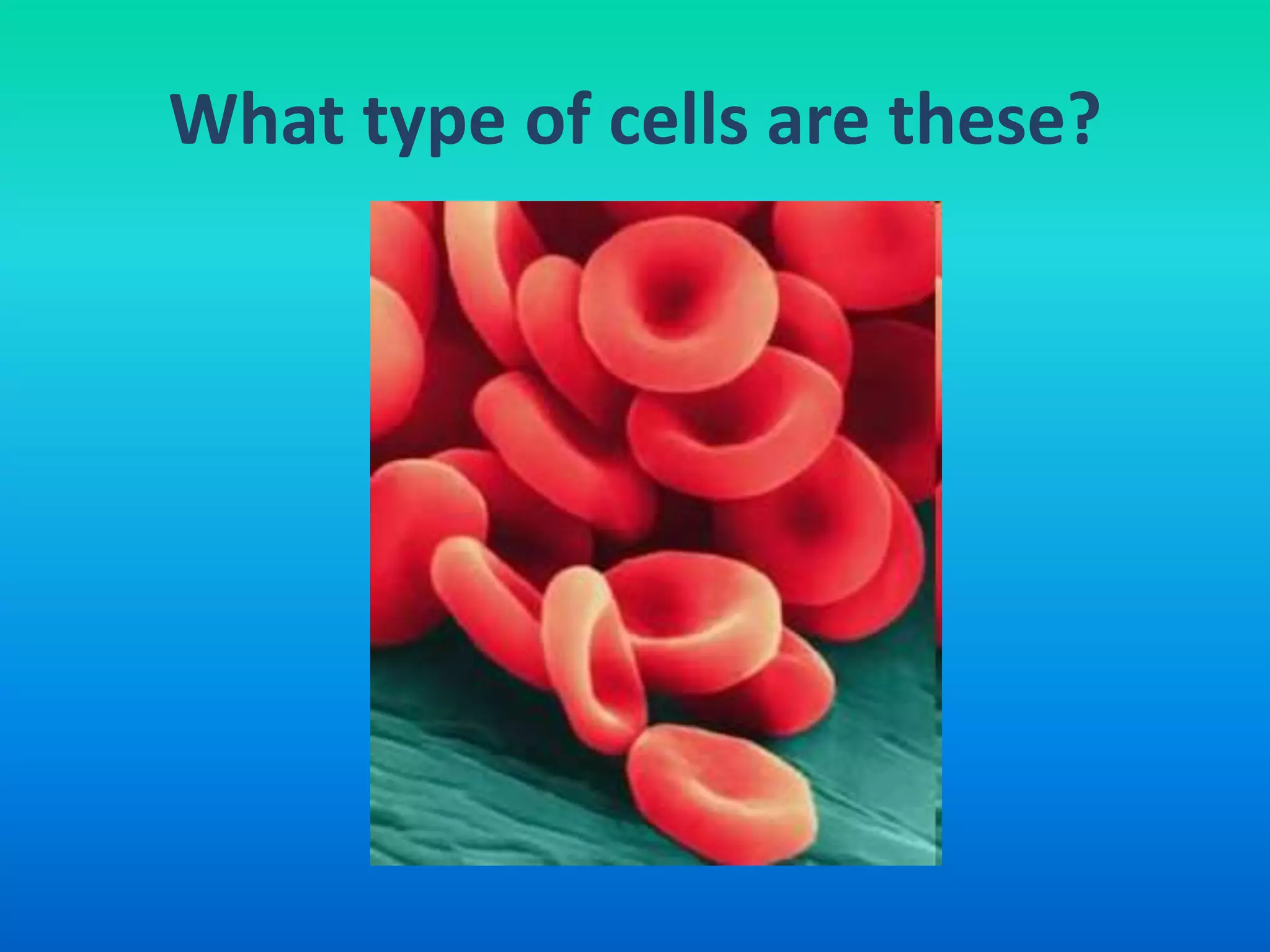
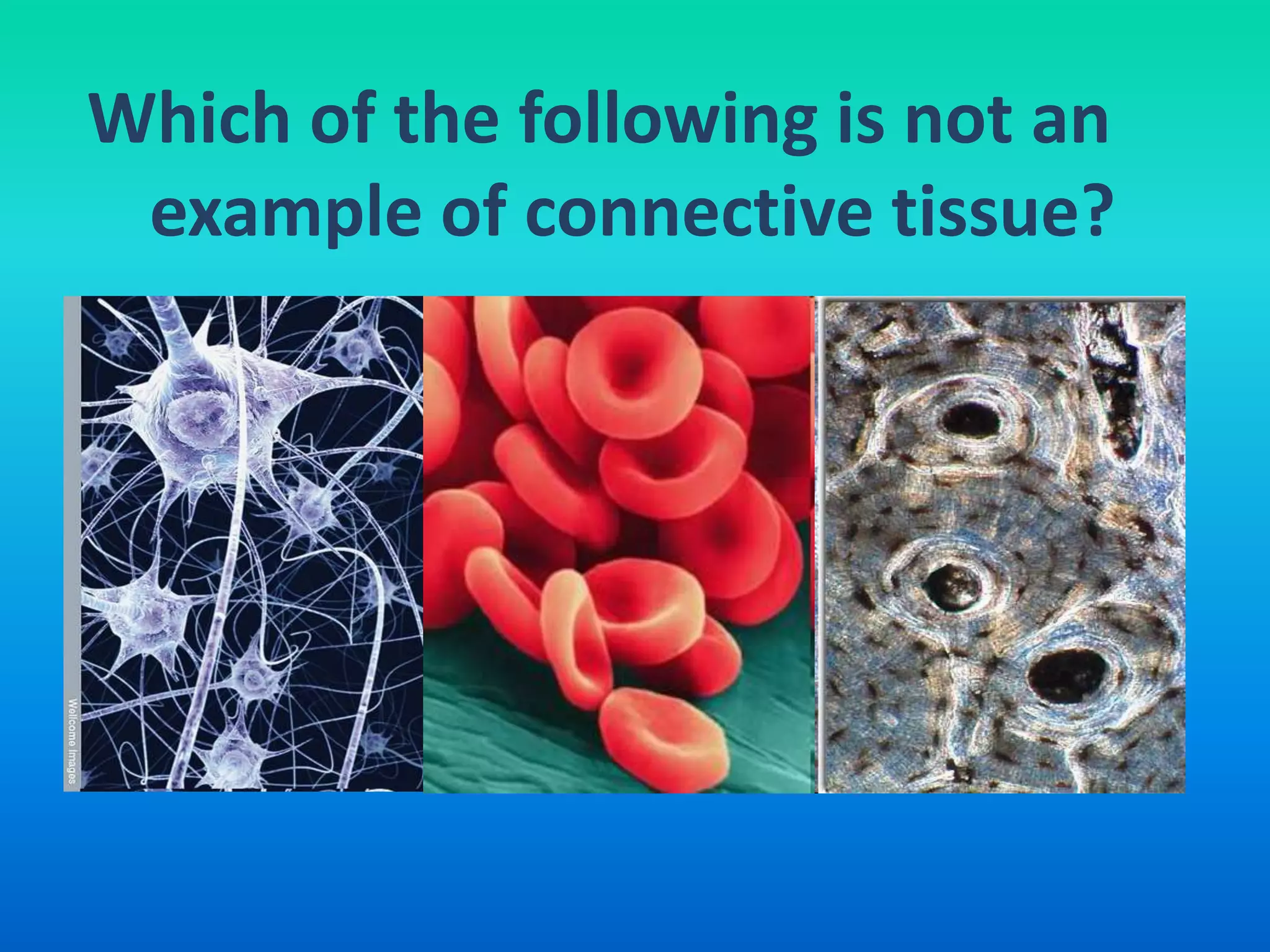
What type of cells are these?
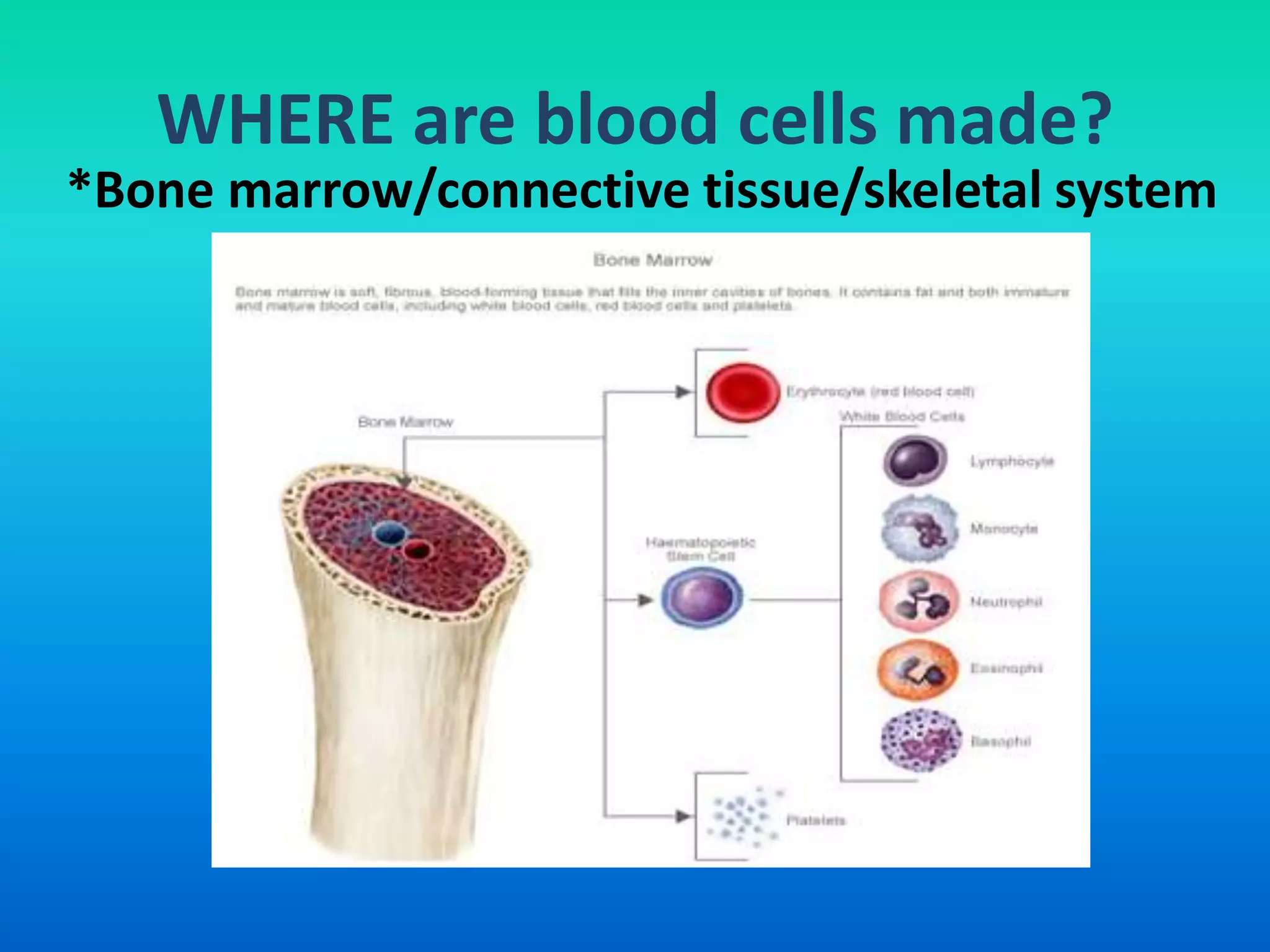
WHERE are blood cells made?
*Bone marrow/connective tissue/skeletal system
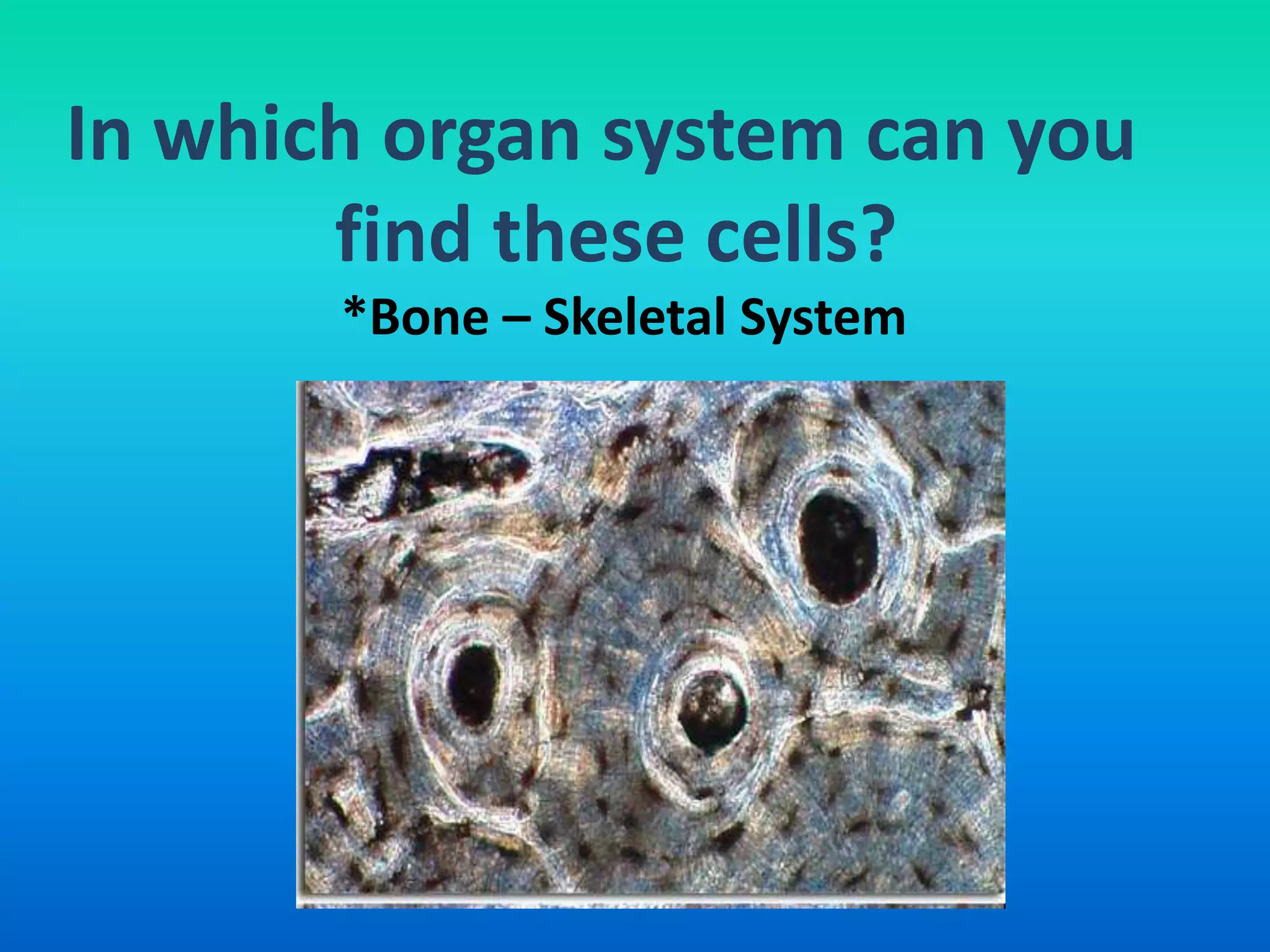
In which organ system can you
       find these cells?
       *Bone – Skeletal System
Which of the following is not an
 example of connective tissue?
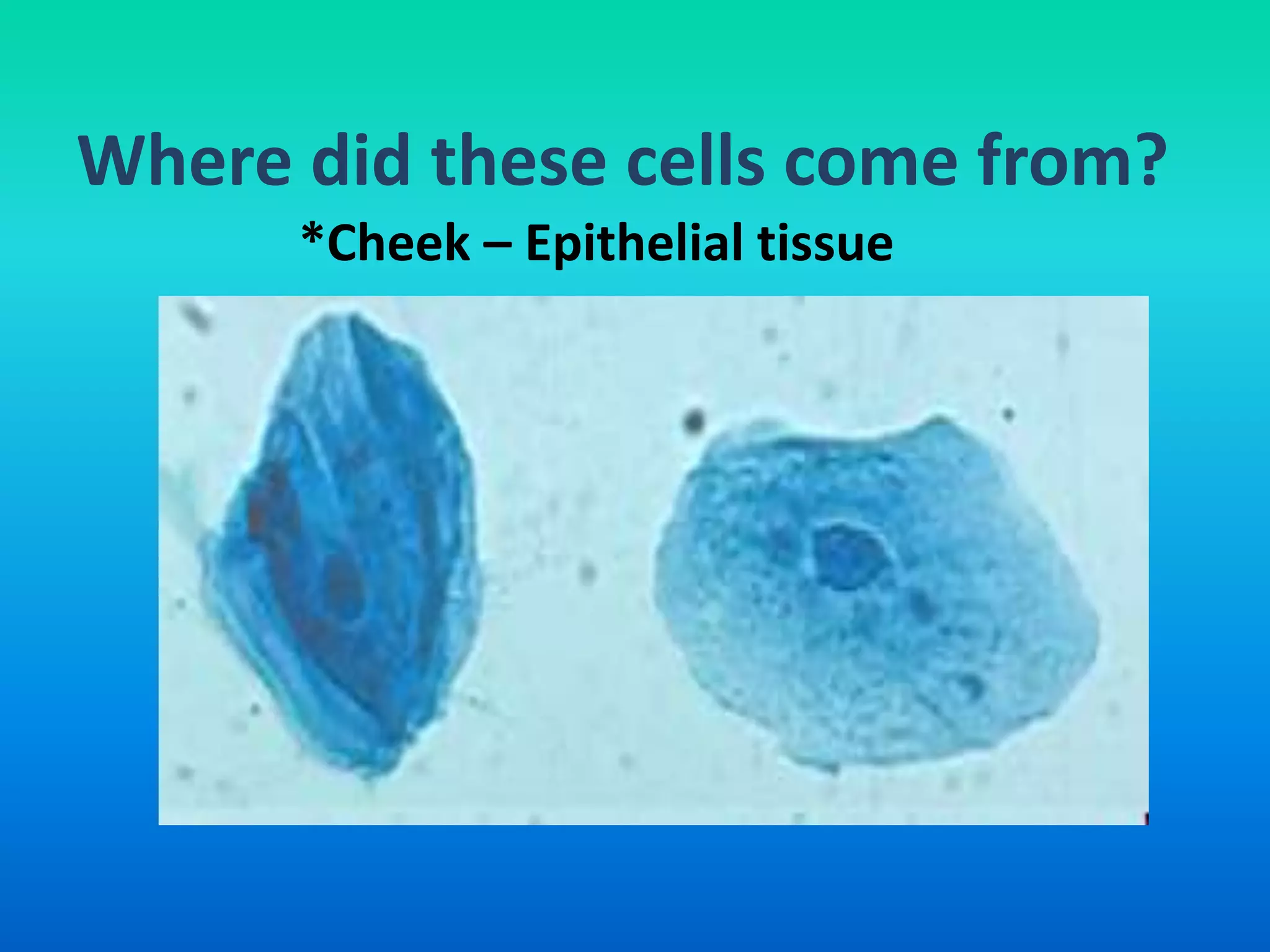
Where did these cells come from?
      *Cheek – Epithelial tissue
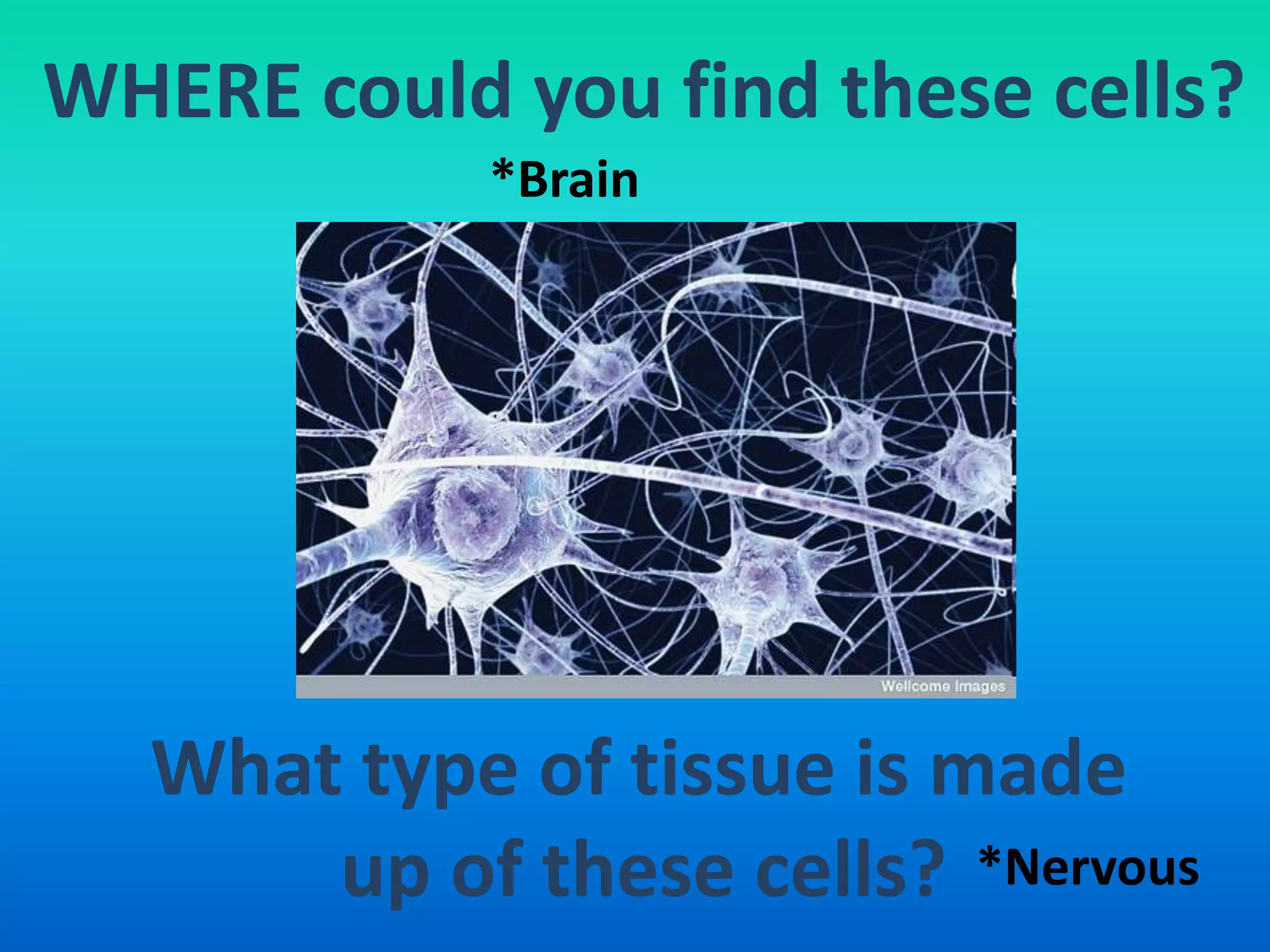
WHERE could you find these cells?
            *Brain


  What type of tissue is made
      up of these cells? *Nervous
Which statement IS part of
      the cell theory?

a. All cells contain a cell membrane
   AND cell wall.
b. All cells contain a nucleus.
c. Cells come from pre-existing cells.
d. Microscopes are needed to see cells.
What is the function of the
     cell membrane?

To control what comes in and
        out of the cell.
Passive transport does NOT require
 energy. Which of the following is
   a form of passive transport?

     a. Osmosis
     b. Diffusion
     c. Neither
     d. Both a and b
What is a characteristic of a
        living thing?
 a. Reproduction
 b. Made up of cells
 c. Pass down traits to offspring
 d. All of the above
 *Also…metabolism & homeostasis
Which of the following organelles
 can be found in BOTH animal
        and plant cells?
   a. Cell membrane
   b. Cell wall
   c. Chloroplasts
   d. Lysosomes
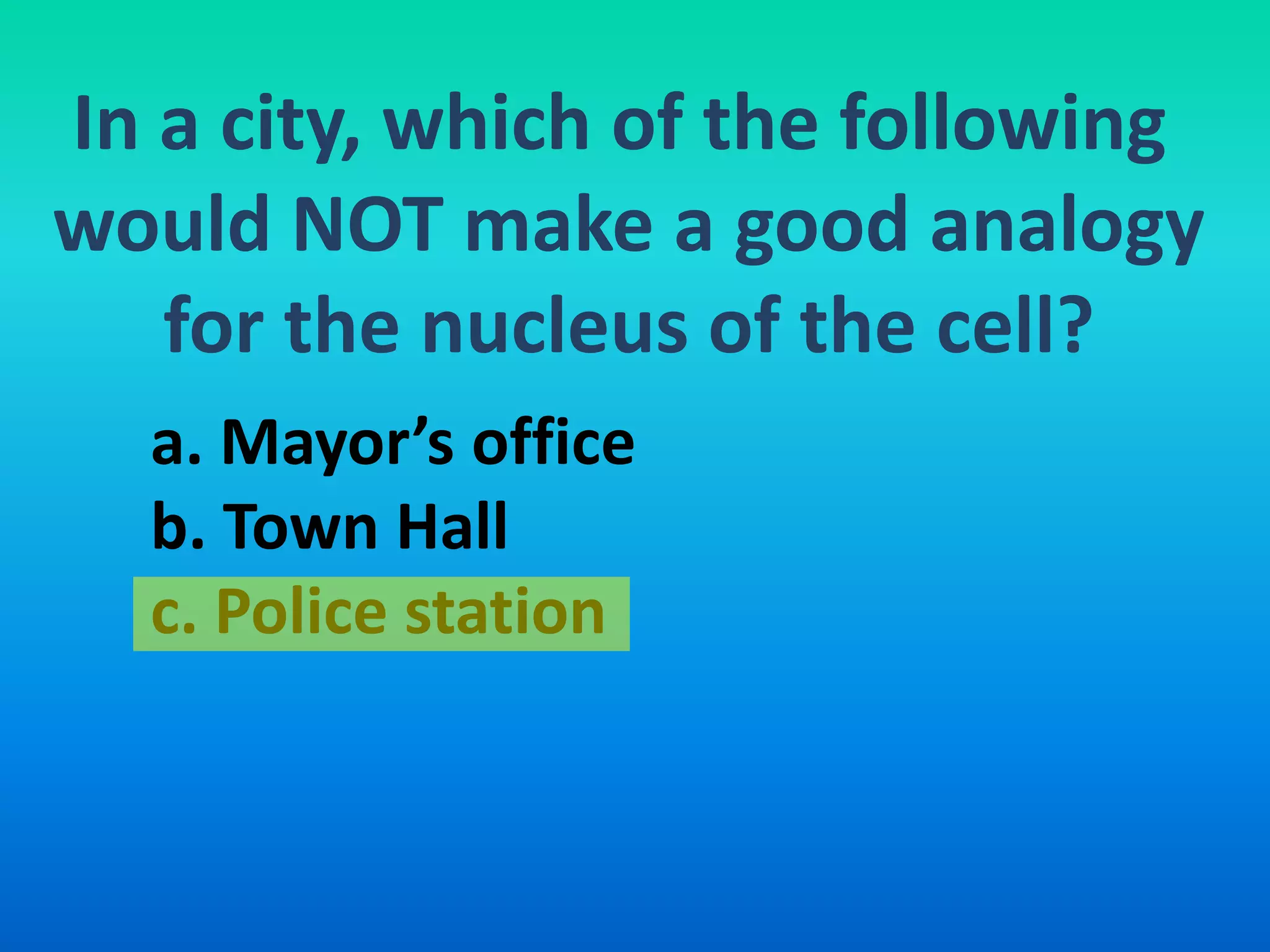
In a city, which of the following
would NOT make a good analogy
   for the nucleus of the cell?
  a. Mayor’s office
  b. Town Hall
  c. Police station
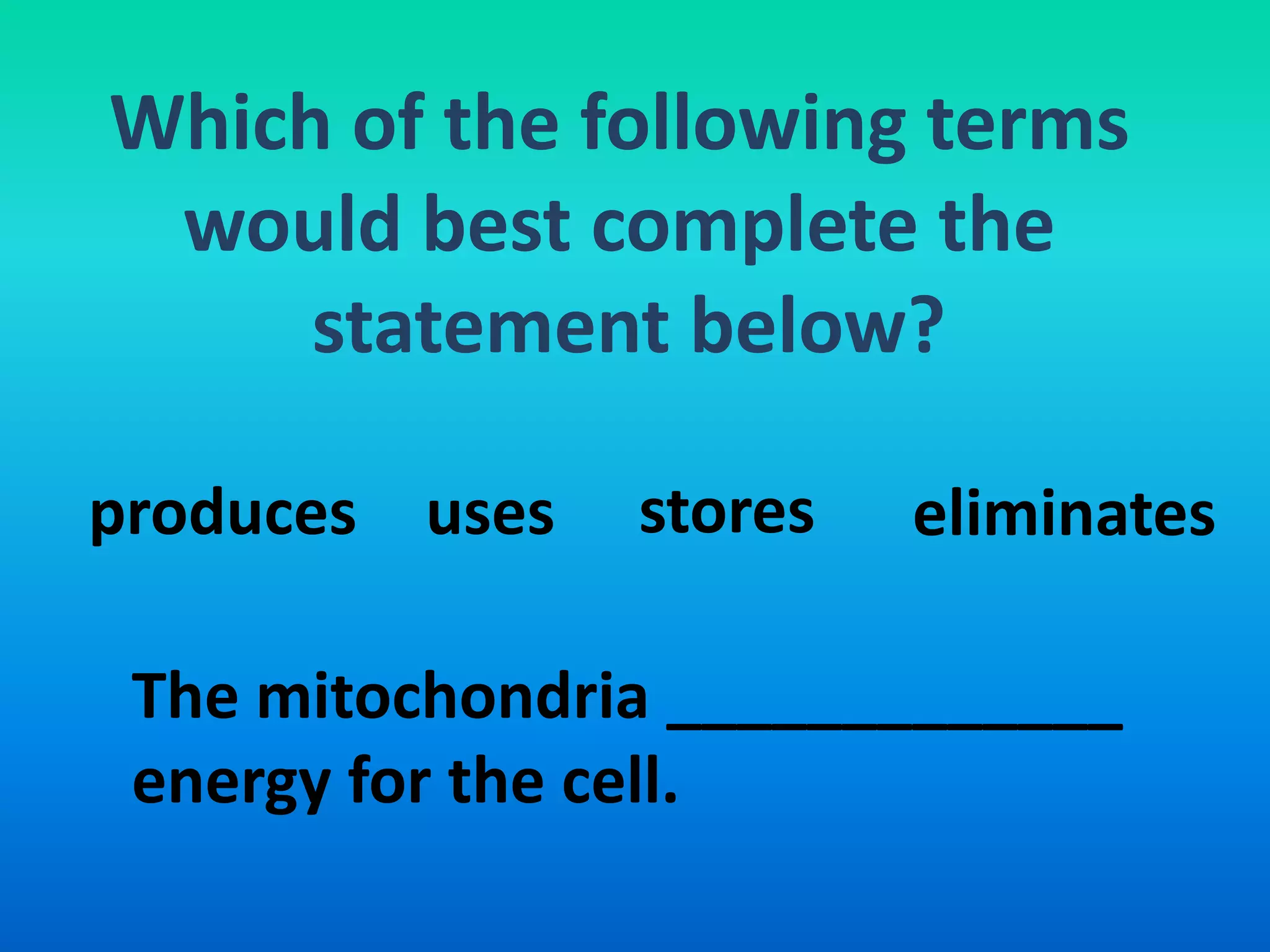
Which of the following terms
 would best complete the
     statement below?

produces uses   stores   eliminates

 The mitochondria _____________
 energy for the cell.
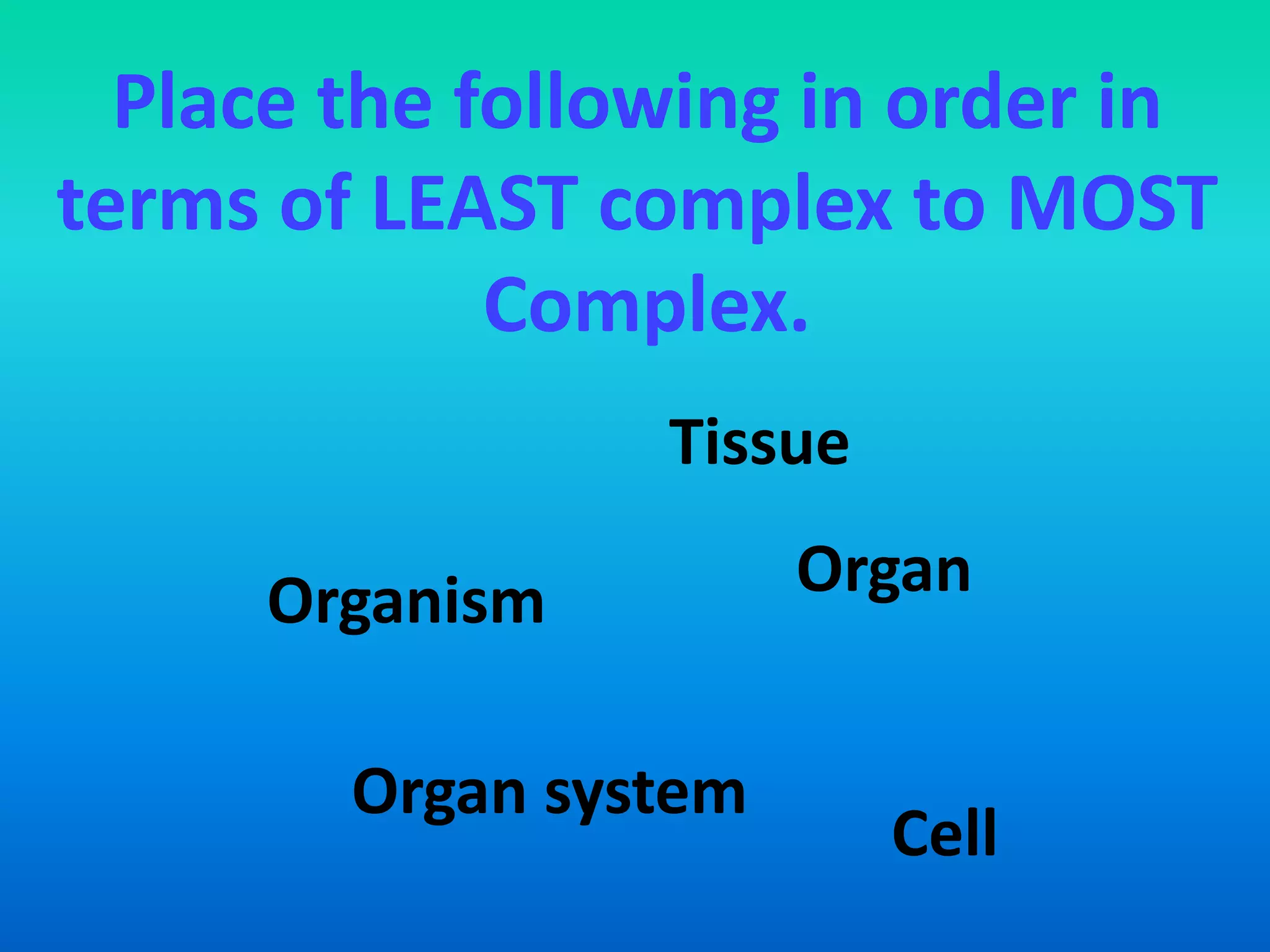
Place the following in order in
terms of LEAST complex to MOST
             Complex.
                 Tissue

     Organism          Organ


        Organ system
                          Cell
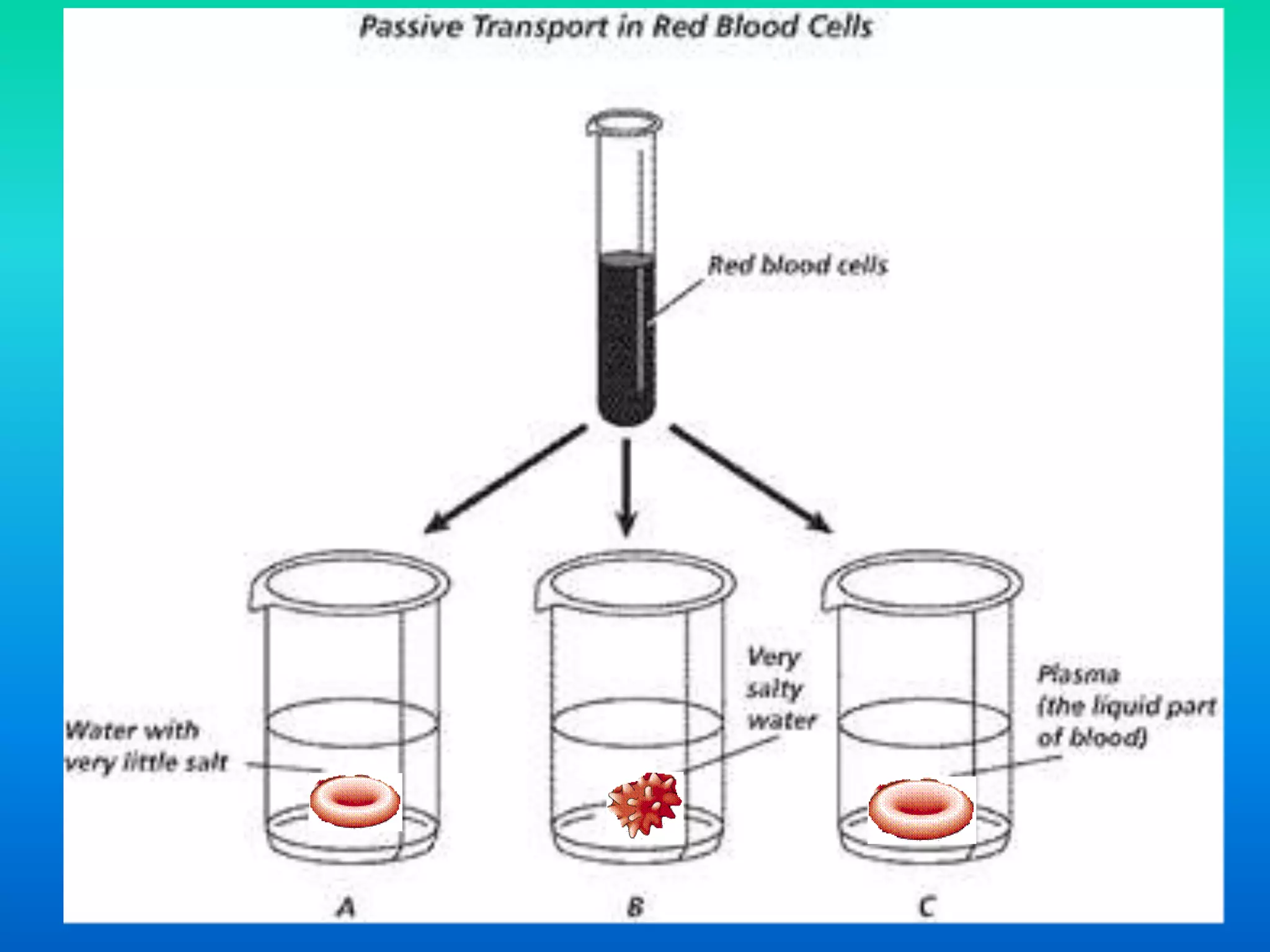
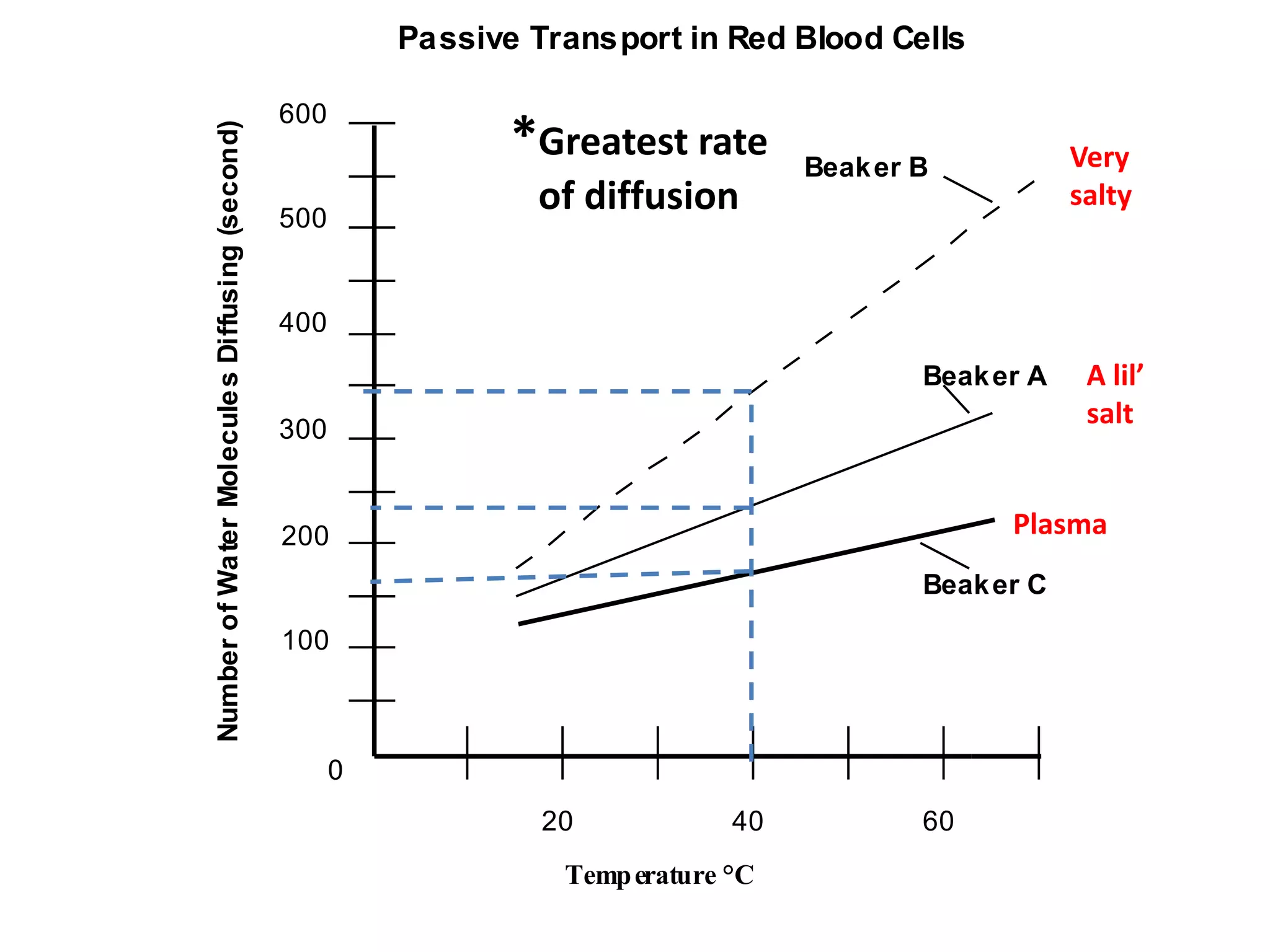
Passive Transport in Red Blood Cells

                                                 600
                                                                  *Greatest rate
Number of Wa ter Molecule s Diffusing (second)
                                                                                       Beak er B           Very
                                                 500
                                                                   of diffusion                            salty


                                                 400
                                                                                               Beak er A    A lil’
                                                 300
                                                                                                            salt


                                                 200                                                 Plasma
                                                                                               Beak er C

                                                 100


                                                       0
                                                                    20            40           60
                                                                     Temp erature °C
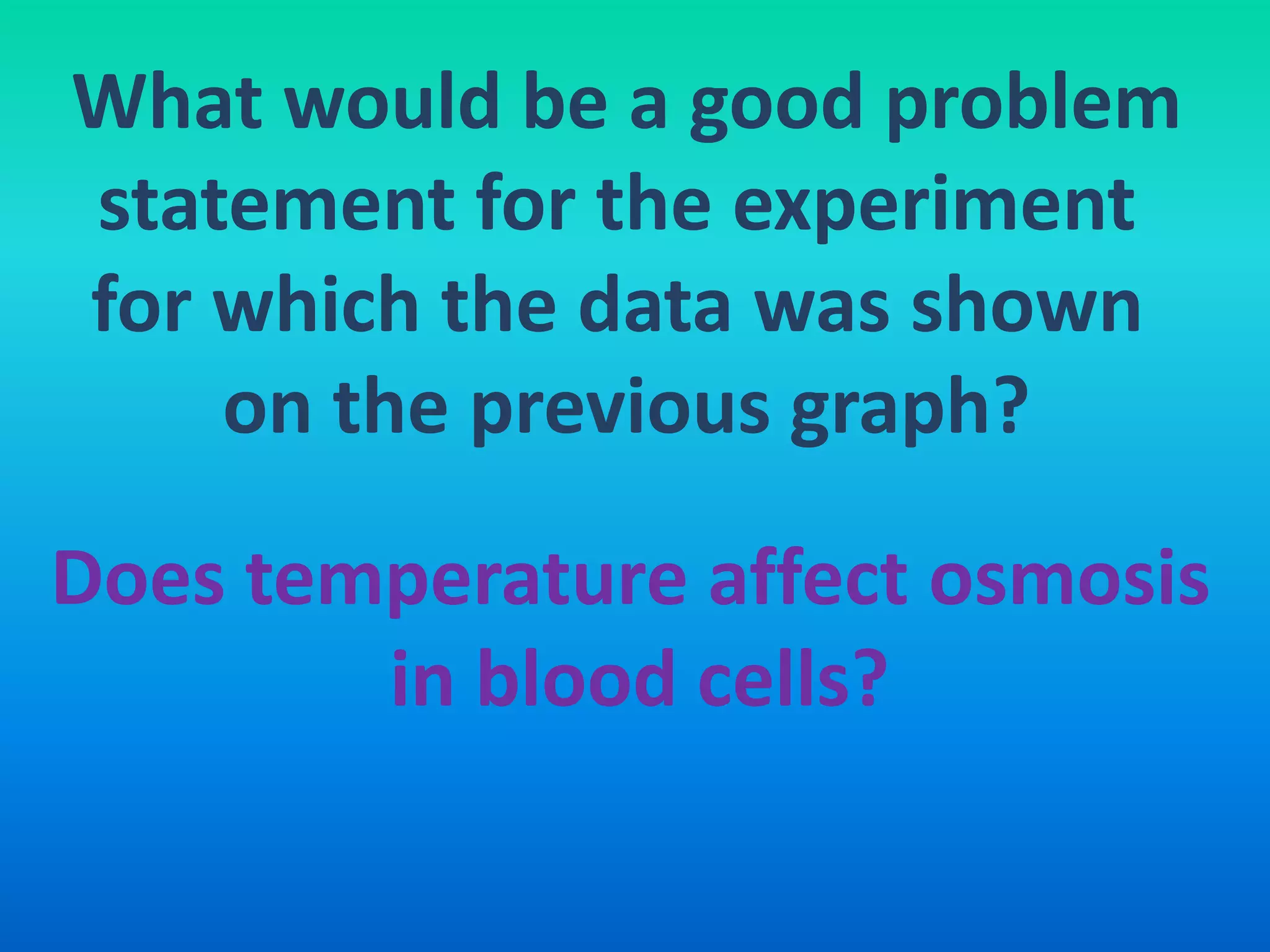
What would be a good problem
statement for the experiment
for which the data was shown
    on the previous graph?

Does temperature affect osmosis
        in blood cells?
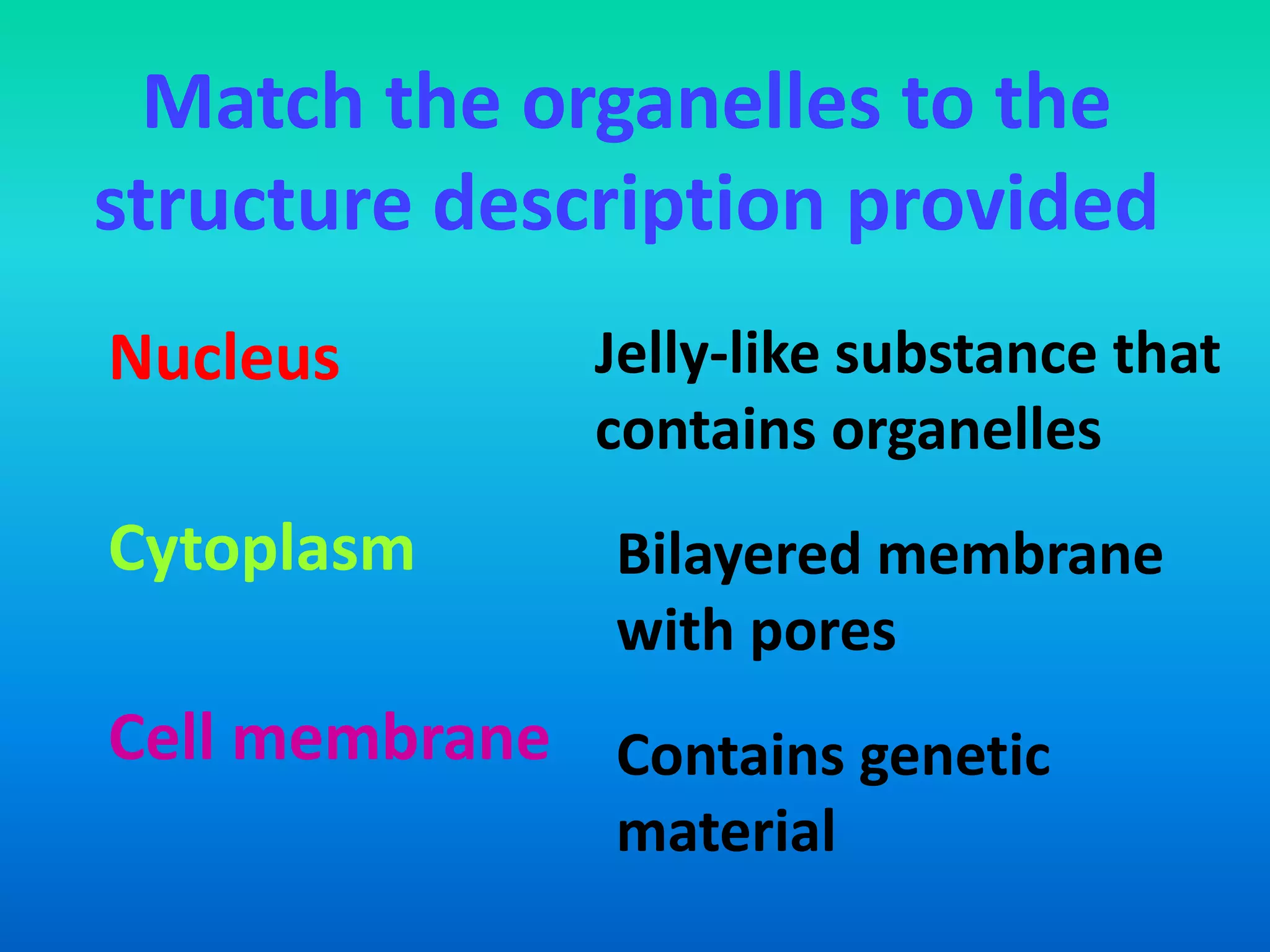
Match the organelles to the
structure description provided
Nucleus        Jelly-like substance that
               contains organelles
Cytoplasm       Bilayered membrane
                with pores
Cell membrane Contains genetic
                material
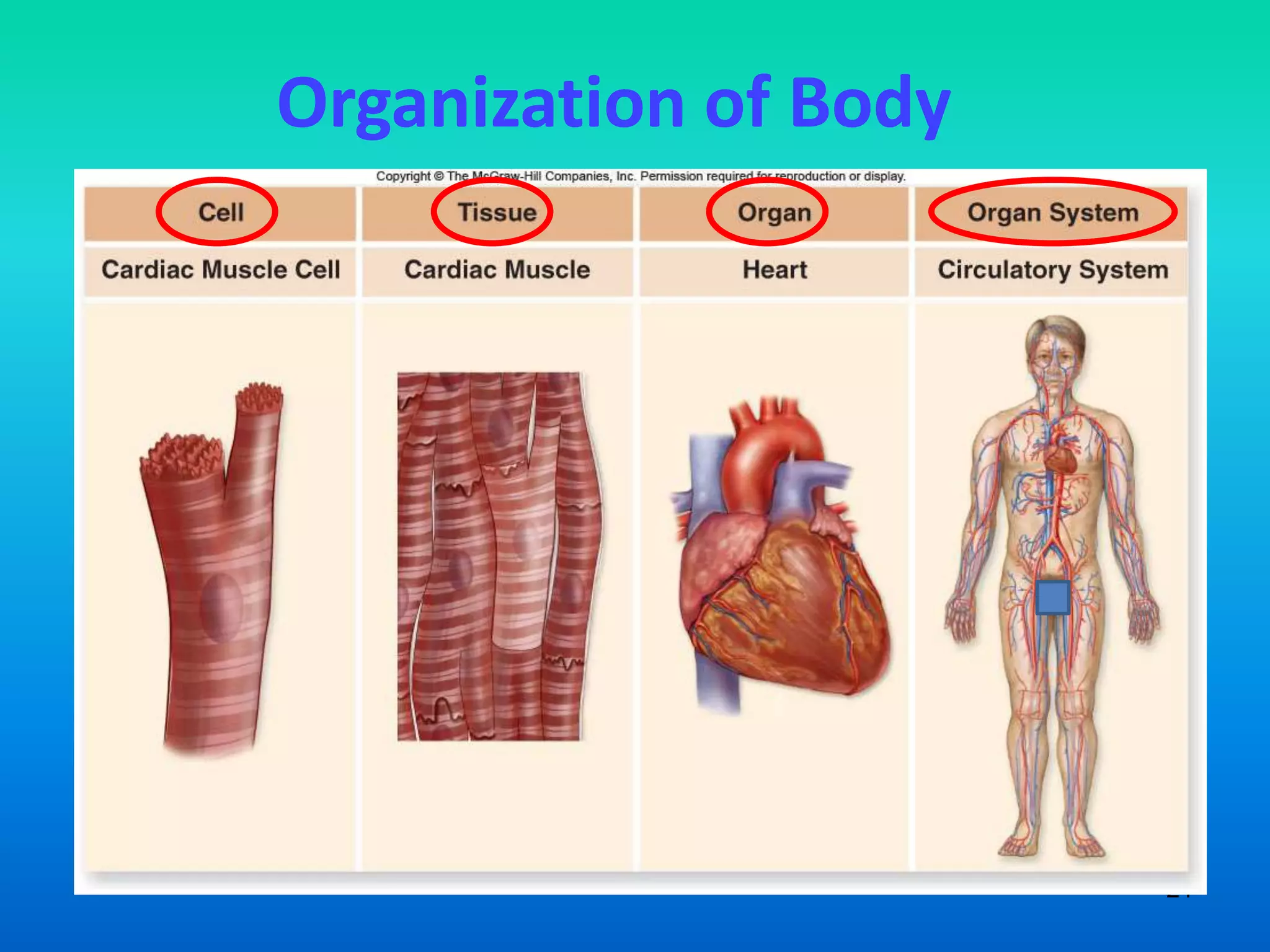
Organization of Body


                       21
Unit 1 review

Unit 1 review

  • 1.
    Unit 1 CELLS UNIT REVIEW
  • 2.
    What have youlearned?
  • 3.
    What type ofcells are these?
  • 4.
    WHERE are bloodcells made? *Bone marrow/connective tissue/skeletal system
  • 5.
    In which organsystem can you find these cells? *Bone – Skeletal System
  • 6.
    Which of thefollowing is not an example of connective tissue?
  • 7.
    Where did thesecells come from? *Cheek – Epithelial tissue
  • 8.
    WHERE could youfind these cells? *Brain What type of tissue is made up of these cells? *Nervous
  • 9.
    Which statement ISpart of the cell theory? a. All cells contain a cell membrane AND cell wall. b. All cells contain a nucleus. c. Cells come from pre-existing cells. d. Microscopes are needed to see cells.
  • 10.
    What is thefunction of the cell membrane? To control what comes in and out of the cell.
  • 11.
    Passive transport doesNOT require energy. Which of the following is a form of passive transport? a. Osmosis b. Diffusion c. Neither d. Both a and b
  • 12.
    What is acharacteristic of a living thing? a. Reproduction b. Made up of cells c. Pass down traits to offspring d. All of the above *Also…metabolism & homeostasis
  • 13.
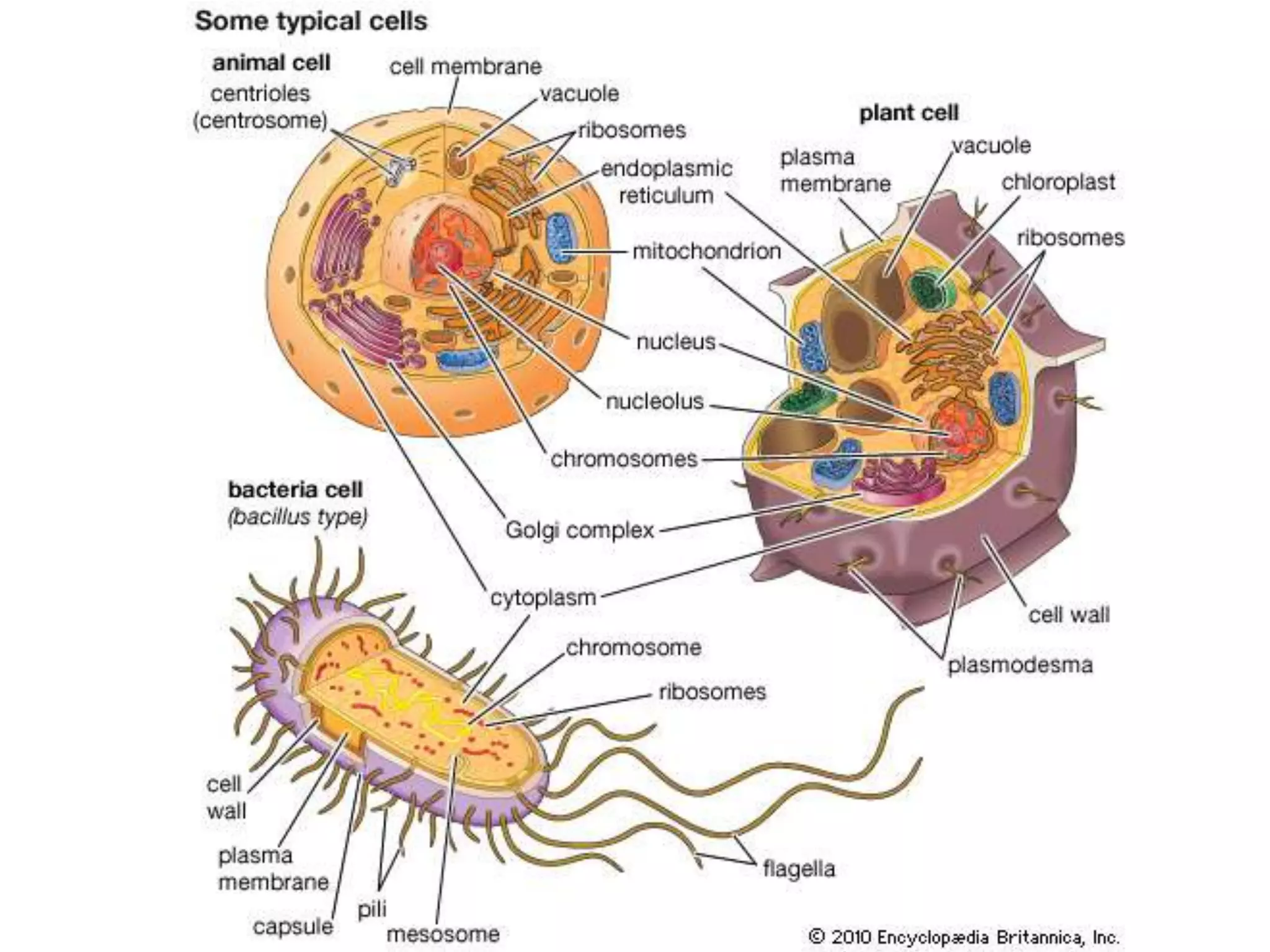
    Which of thefollowing organelles can be found in BOTH animal and plant cells? a. Cell membrane b. Cell wall c. Chloroplasts d. Lysosomes
  • 14.
    In a city,which of the following would NOT make a good analogy for the nucleus of the cell? a. Mayor’s office b. Town Hall c. Police station
  • 15.
    Which of thefollowing terms would best complete the statement below? produces uses stores eliminates The mitochondria _____________ energy for the cell.
  • 16.
    Place the followingin order in terms of LEAST complex to MOST Complex. Tissue Organism Organ Organ system Cell
  • 18.
    Passive Transport inRed Blood Cells 600 *Greatest rate Number of Wa ter Molecule s Diffusing (second) Beak er B Very 500 of diffusion salty 400 Beak er A A lil’ 300 salt 200 Plasma Beak er C 100 0 20 40 60 Temp erature °C
  • 19.
    What would bea good problem statement for the experiment for which the data was shown on the previous graph? Does temperature affect osmosis in blood cells?
  • 20.
    Match the organellesto the structure description provided Nucleus Jelly-like substance that contains organelles Cytoplasm Bilayered membrane with pores Cell membrane Contains genetic material
  • 21.