UNIT – 1
PARTNERSHIP- INTRODUCTION
Dr. P. PIRAKATHEESWARI,
Associate Professor,
Department of B Com – PA,
Sri Ramakrishna College of Arts & Science
(Autonomous), Coimbatore – 6.
2.
1.
PARTNERSHIPS
To define whatis meant by a business
partnership.
To understand who owns, manages and shares the
profits in a business partnership.
To investigate a Deed of Partnership.
3.
PARTNERSHIPS
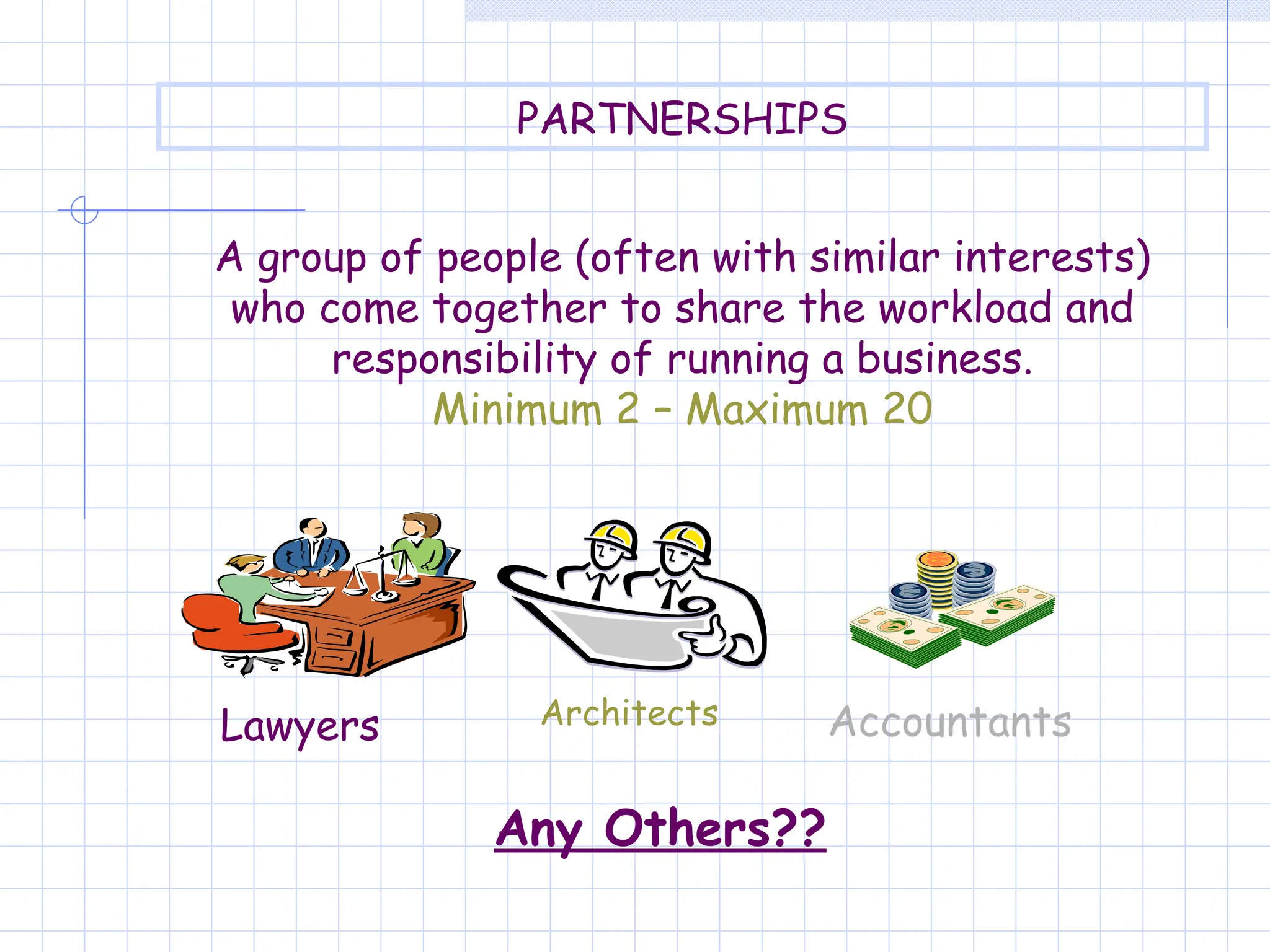
A group ofpeople (often with similar interests)
who come together to share the workload and
responsibility of running a business.
Minimum 2 – Maximum 20
Lawyers Architects Accountants
Any Others??
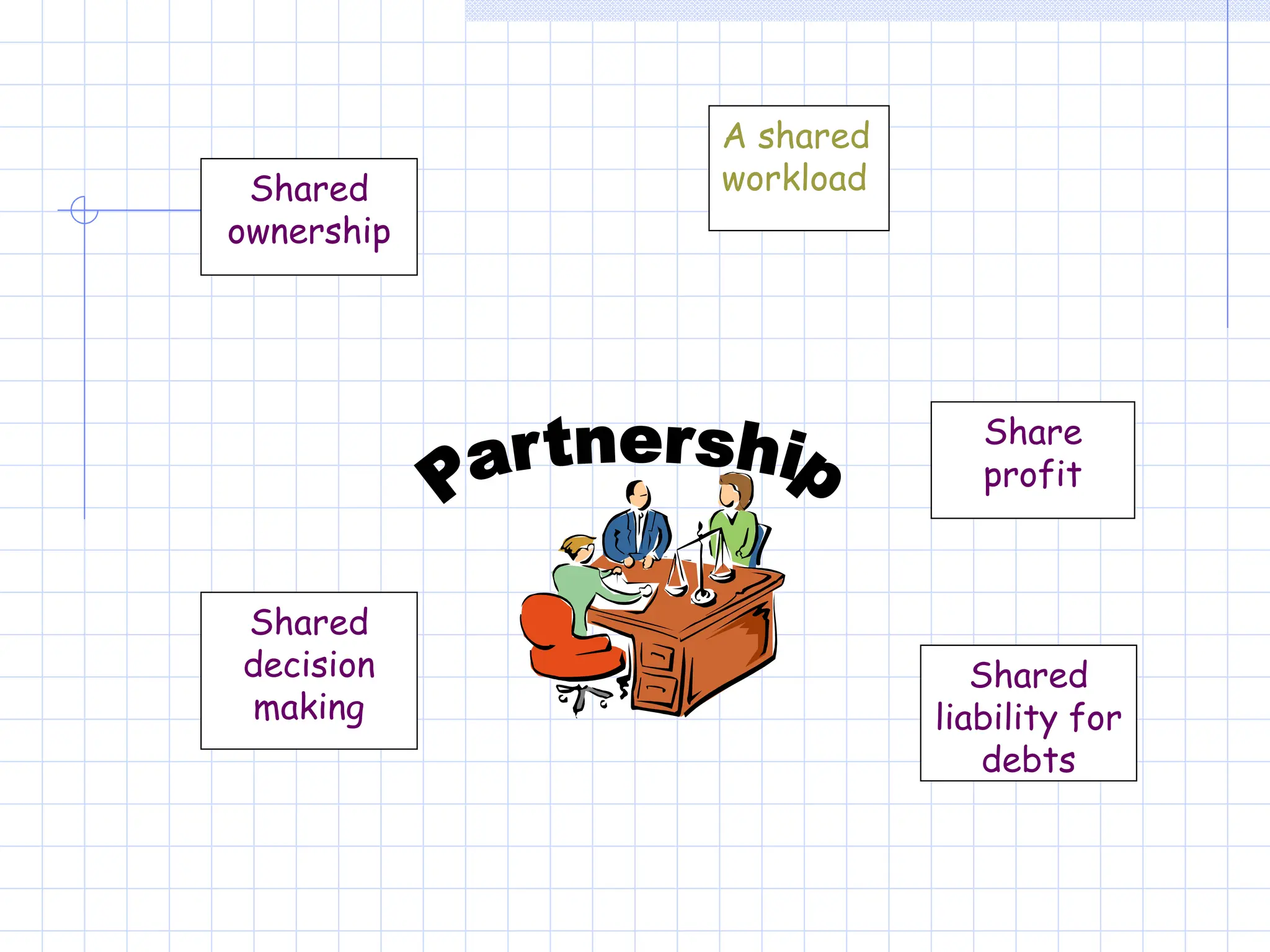
Each partner isresponsible for the entire debt of the
partnership, so if one partner makes a bad decision then it
has to be met by all of the partners.
UNLIMITED LIABILITY
PARTNERSHIPS
•Why Partnerships?
•The mainreason is usually to expand the business by an increase in capital or to
gain specialist skills that are required for the business to develop
•Who owns a partnership?
•The business is owned by the partners equally e.g. if there are 3 partners then
they will each own a third of the business, this is the case unless stated
otherwise in the deed of partnership.
•Who manages the business?
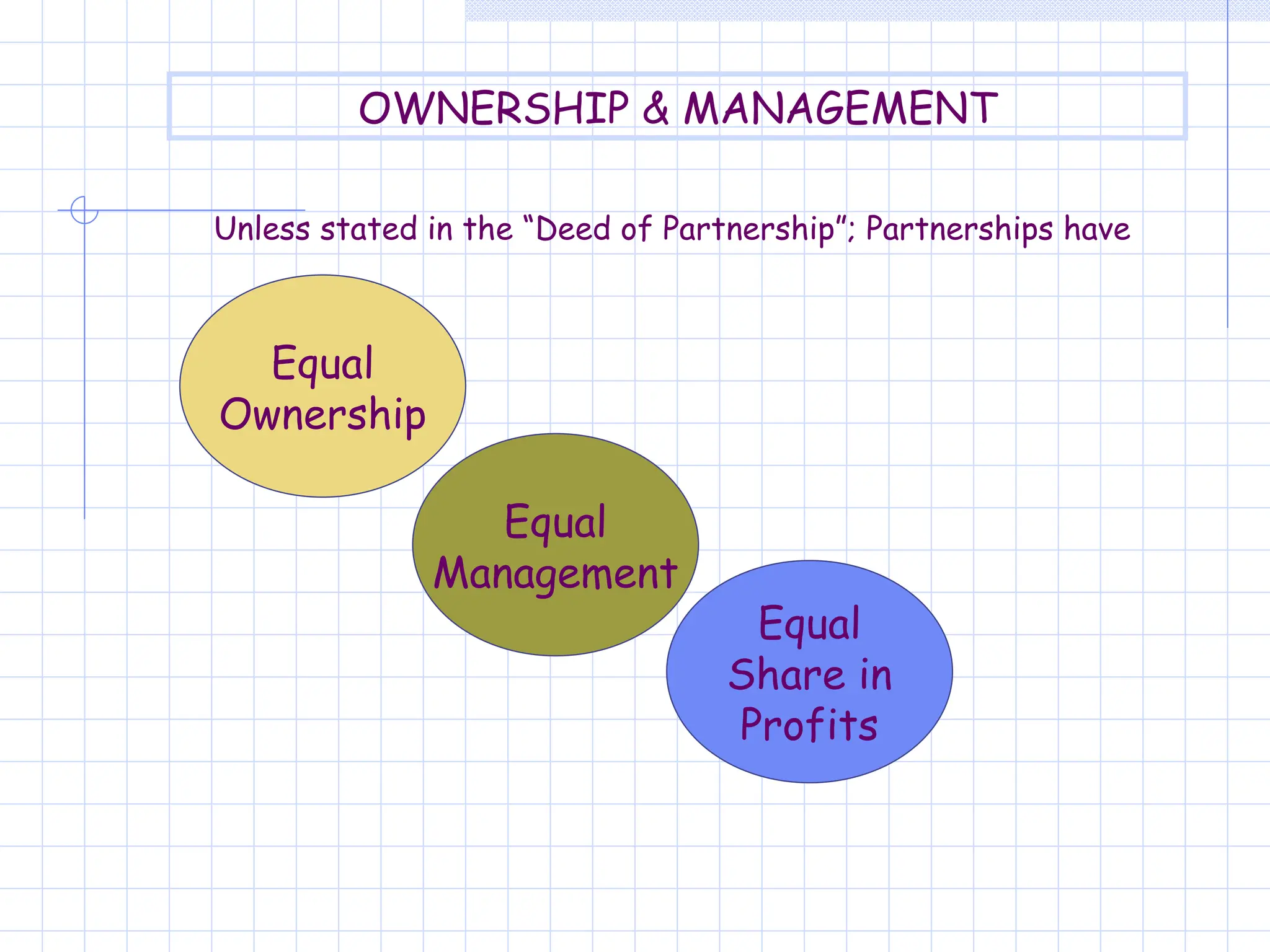
•The partners share the control of the business equally unless the partnership
agreement states otherwise. In many partnerships each partner may run a
separate department.
PARTNERSHIPS
8.
SETTING UP APARTNERSHIP
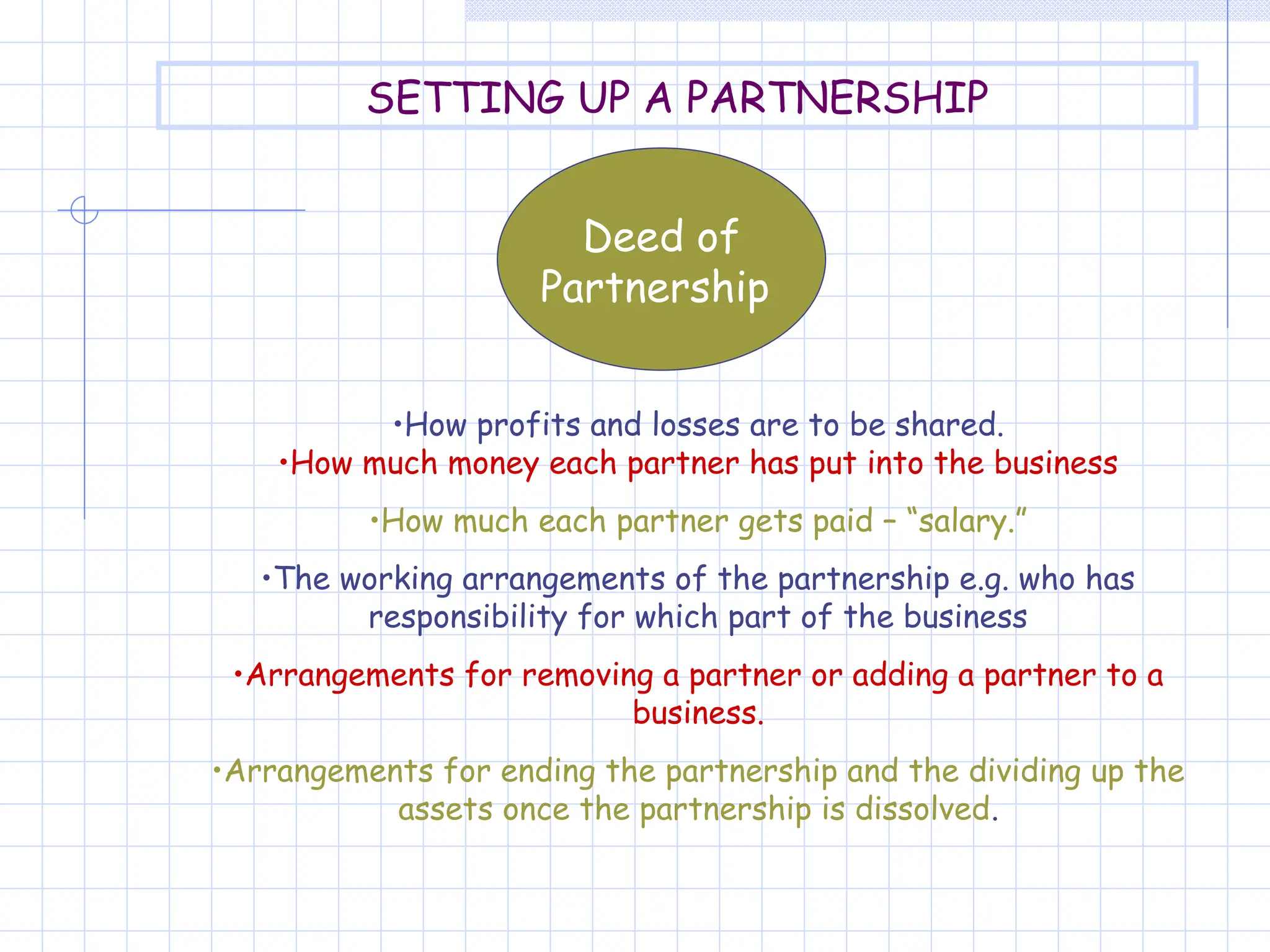
Deed of
Partnership
•How profits and losses are to be shared.
•How much money each partner has put into the business
•How much each partner gets paid – “salary.”
•The working arrangements of the partnership e.g. who has
responsibility for which part of the business
•Arrangements for removing a partner or adding a partner to a
business.
•Arrangements for ending the partnership and the dividing up the
assets once the partnership is dissolved.
9.
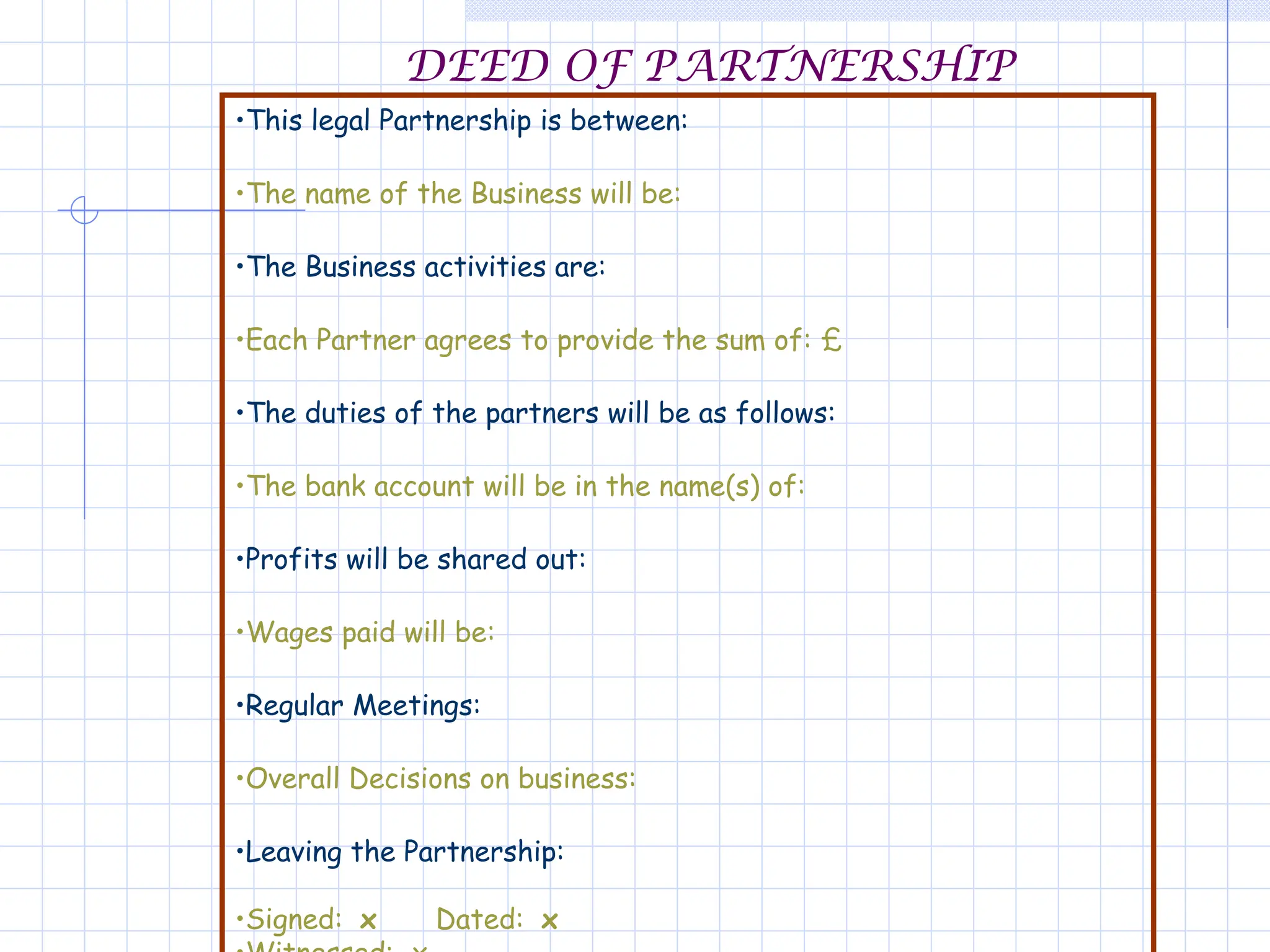
DEED OF PARTNERSHIP
•Thislegal Partnership is between:
•The name of the Business will be:
•The Business activities are:
•Each Partner agrees to provide the sum of: £
•The duties of the partners will be as follows:
•The bank account will be in the name(s) of:
•Profits will be shared out:
•Wages paid will be:
•Regular Meetings:
•Overall Decisions on business:
•Leaving the Partnership:
•Signed: x Dated: x
10.
•Easy to setup.
•Business can gain professional help through taking
on a qualified partner.
•New Partners - New Ideas
•Extra partners bring extra capital
•Responsibility for running the business (both
decision making and workload) is shared
•Finances are kept private
•Division of labour leads to greater expertise
ADVANTAGES OF FORMING A PARTNERSHIP
11.
•Unlimited liability forthe debts of the
business
•Finance still limited
•Lack of continuity
•No consultation required (Deeds of
Partnership are only recommended)
•Decision making more complex
DIS ADVANTAGES OF FORMING A PARTNERSHIP