UNFAIR LABOUR PRACTICES & IT’S
PREVENTIONS
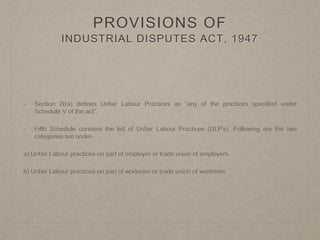
PROVISIONS OF
INDUSTRIAL DISPUTES ACT, 1947
• Section 2(ra) defines Unfair Labour Practices as “any of the practices specified under
Schedule V of the act”.
• Fifth Schedule contains the list of Unfair Labour Practices (ULP’s). Following are the two
categories are under-
a) Unfair Labour practices on part of employer or trade union of employers.
b) Unfair Labour practices on part of workmen or trade union of workmen.
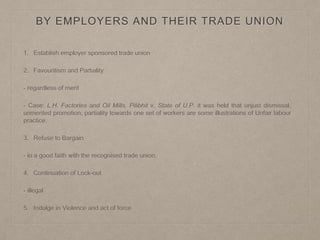
BY EMPLOYERS AND THEIR TRADE UNION
1. Establish employer sponsored trade union
2. Favouritism and Partiality
- regardless of merit
- Case: L.H. Factories and Oil Mills, Pilibhit v. State of U.P. it was held that unjust dismissal,
unmerited promotion, partiality towards one set of workers are some illustrations of Unfair labour
practice.
3. Refuse to Bargain
- in a good faith with the recognised trade union.
4. Continuation of Lock-out
- illegal
5. Indulge in Violence and act of force
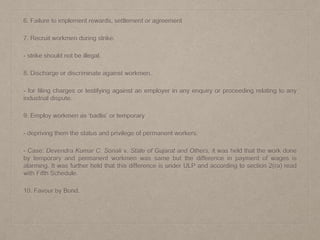
6. Failure to implement rewards, settlement or agreement
7. Recruit workmen during strike.
- strike should not be illegal.
8. Discharge or discriminate against workmen.
- for filing charges or testifying against an employer in any enquiry or proceeding relating to any
industrial dispute.
9. Employ workmen as ‘badlis’ or temporary
- depriving them the status and privilege of permanent workers.
- Case: Devendra Kumar C. Sonali v. State of Gujarat and Others, it was held that the work done
by temporary and permanent workmen was same but the difference in payment of wages is
alarming. It was further held that this difference is under ULP and according to section 2(ra) read
with Fifth Schedule.
10. Favour by Bond.
11. Transfer of workmen
- Transfer mala fide in guise of management policy.
12. Handover the work to Contractor
- Provide that, the strike should not be illegal.
13. Discharge or dismiss workmen
a. by way of victimization;
b. not in good faith;
c. by implication a false case;
d. untrue allegations of absence without leave;
e. discard of Principles of Natural Justice
f. disproportionate punishment, for minor character and without considering past records.
14. Interfere with Workmen- restrain from, or coerce, or interfere to organise, form, join or assist a
trade union
a. threatening with discharge or dismissal, if they join Trade Union;
b. threatening a lock out or closer, if union is organised;
c. wage increase to workmen at crucial period, in order to undermine the efforts of trade union.
15. Contribute support- financially or otherwise,
a. active interest by employer in organising a trade union for his workmen;
b. employer showing partiality or favour to one of the several trade union, where such union is not
a recognised trade union.
16. Encourage or discourage membership of workman- To encourage or discourage membership
in any trade union by discriminating against any workman, that is to say,
a. discharging or punishing a workman, if he urge another workmen to join trade union.
b. discharging or dismissing a workman, if he joins a strike (not be illegal).
c. changing seniority rating of workman because of trade union activities.
d. refuse to promote workmen because of union activities.
e. giving unmerited promotions
f. discharging office-bearers or active members of the trade union on account of their trade union
activities.
BY EMPLOYERS AND THEIR TRADE UNION
1. Support Illegal Strike- nor actively participate neither support.
2. Refuse to Bargain- workmen can not refuse to bargain with employer in a good faith.
3. Indulge in Coercive activity- with the bargaining representative of employer.
4. Indulge in Violence against fellow workmen-
Case: Bengal Bhatdee Coal Co. v. Singh- thirteen workers obstructed other workmen to continue
the work in order them to join the strike. The company served charge-sheet on them. Welfare
officer conduct enquiry and order dismissal. It was held ULP.
5. Damage to employers property- associated with industry.
6. Assemble at employers property- or any of the member of managerial staff.
7. Encourage mala fide practices- go slow or insist ‘ghero’.
8. Coerce other workmen- to join, or to refrain to join Trade Union.
PREVENTION
Section 25-U
- Imprisonment for a term which may extend to 6 months,or
- amount of fine which may extend to one thousand rupees, or
- both
CONCLUSION
It is difficult to define an exhaustive or conclusive test of Unfair labour Practices, but it may be said
that any practices which violates the directive principles of State policies contained in Art 43 of the
Constitution and also other provisions made under the delegated legislation.
Presentation By:
Tanish Khandelwal
3rd year Law Student

Unfair labour practices

  • 1.
    UNFAIR LABOUR PRACTICES& IT’S PREVENTIONS
  • 2.
    PROVISIONS OF INDUSTRIAL DISPUTESACT, 1947 • Section 2(ra) defines Unfair Labour Practices as “any of the practices specified under Schedule V of the act”. • Fifth Schedule contains the list of Unfair Labour Practices (ULP’s). Following are the two categories are under- a) Unfair Labour practices on part of employer or trade union of employers. b) Unfair Labour practices on part of workmen or trade union of workmen.
  • 3.
    BY EMPLOYERS ANDTHEIR TRADE UNION 1. Establish employer sponsored trade union 2. Favouritism and Partiality - regardless of merit - Case: L.H. Factories and Oil Mills, Pilibhit v. State of U.P. it was held that unjust dismissal, unmerited promotion, partiality towards one set of workers are some illustrations of Unfair labour practice. 3. Refuse to Bargain - in a good faith with the recognised trade union. 4. Continuation of Lock-out - illegal 5. Indulge in Violence and act of force
  • 4.
    6. Failure toimplement rewards, settlement or agreement 7. Recruit workmen during strike. - strike should not be illegal. 8. Discharge or discriminate against workmen. - for filing charges or testifying against an employer in any enquiry or proceeding relating to any industrial dispute. 9. Employ workmen as ‘badlis’ or temporary - depriving them the status and privilege of permanent workers. - Case: Devendra Kumar C. Sonali v. State of Gujarat and Others, it was held that the work done by temporary and permanent workmen was same but the difference in payment of wages is alarming. It was further held that this difference is under ULP and according to section 2(ra) read with Fifth Schedule. 10. Favour by Bond.
  • 5.
    11. Transfer ofworkmen - Transfer mala fide in guise of management policy. 12. Handover the work to Contractor - Provide that, the strike should not be illegal. 13. Discharge or dismiss workmen a. by way of victimization; b. not in good faith; c. by implication a false case; d. untrue allegations of absence without leave; e. discard of Principles of Natural Justice f. disproportionate punishment, for minor character and without considering past records.
  • 6.
    14. Interfere withWorkmen- restrain from, or coerce, or interfere to organise, form, join or assist a trade union a. threatening with discharge or dismissal, if they join Trade Union; b. threatening a lock out or closer, if union is organised; c. wage increase to workmen at crucial period, in order to undermine the efforts of trade union. 15. Contribute support- financially or otherwise, a. active interest by employer in organising a trade union for his workmen; b. employer showing partiality or favour to one of the several trade union, where such union is not a recognised trade union. 16. Encourage or discourage membership of workman- To encourage or discourage membership in any trade union by discriminating against any workman, that is to say, a. discharging or punishing a workman, if he urge another workmen to join trade union. b. discharging or dismissing a workman, if he joins a strike (not be illegal).
  • 7.
    c. changing seniorityrating of workman because of trade union activities. d. refuse to promote workmen because of union activities. e. giving unmerited promotions f. discharging office-bearers or active members of the trade union on account of their trade union activities.
  • 8.
    BY EMPLOYERS ANDTHEIR TRADE UNION 1. Support Illegal Strike- nor actively participate neither support. 2. Refuse to Bargain- workmen can not refuse to bargain with employer in a good faith. 3. Indulge in Coercive activity- with the bargaining representative of employer. 4. Indulge in Violence against fellow workmen- Case: Bengal Bhatdee Coal Co. v. Singh- thirteen workers obstructed other workmen to continue the work in order them to join the strike. The company served charge-sheet on them. Welfare officer conduct enquiry and order dismissal. It was held ULP. 5. Damage to employers property- associated with industry. 6. Assemble at employers property- or any of the member of managerial staff. 7. Encourage mala fide practices- go slow or insist ‘ghero’. 8. Coerce other workmen- to join, or to refrain to join Trade Union.
  • 9.
    PREVENTION Section 25-U - Imprisonmentfor a term which may extend to 6 months,or - amount of fine which may extend to one thousand rupees, or - both
  • 10.
    CONCLUSION It is difficultto define an exhaustive or conclusive test of Unfair labour Practices, but it may be said that any practices which violates the directive principles of State policies contained in Art 43 of the Constitution and also other provisions made under the delegated legislation.
  • 11.