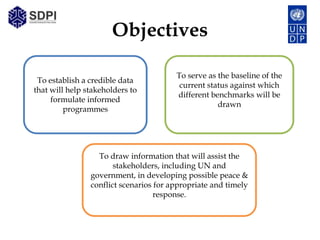
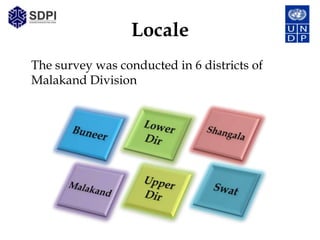
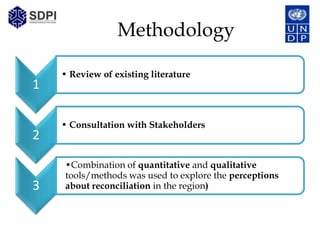
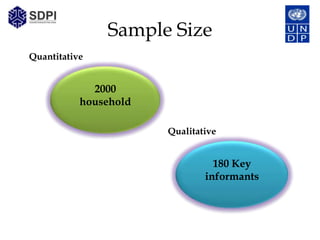
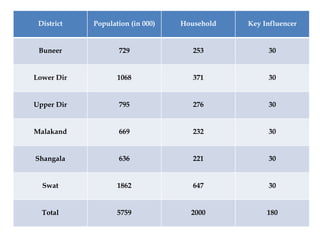
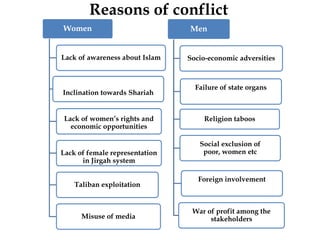
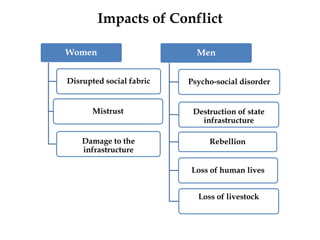
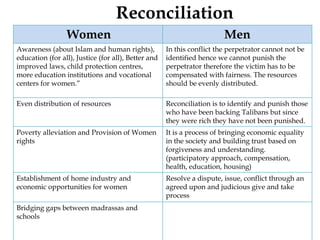
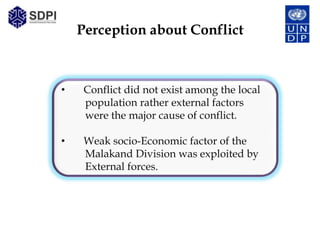
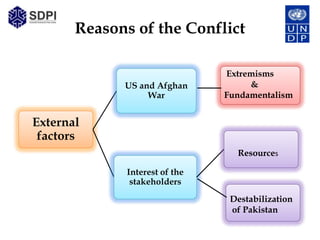
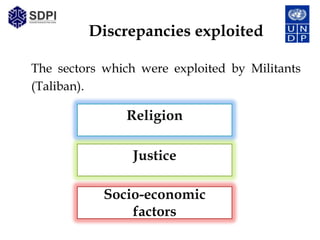
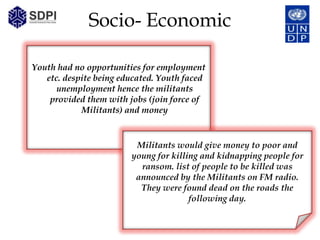
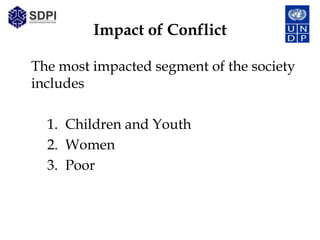
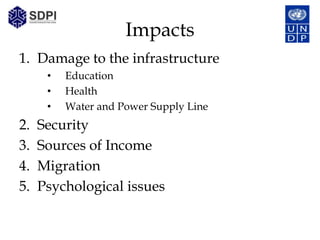
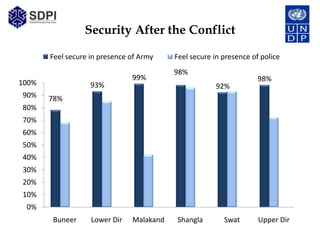
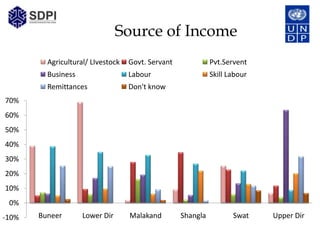
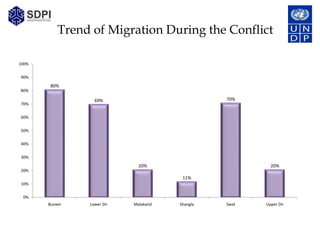
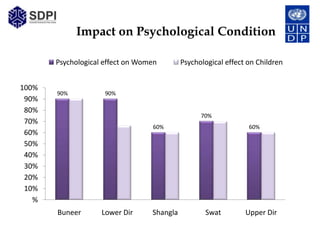
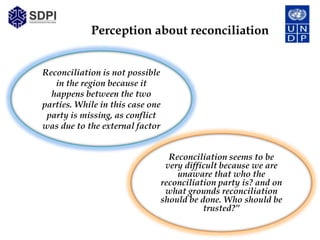
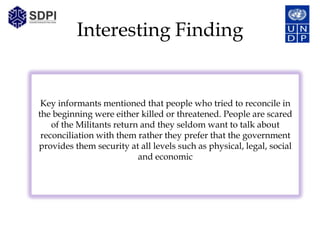
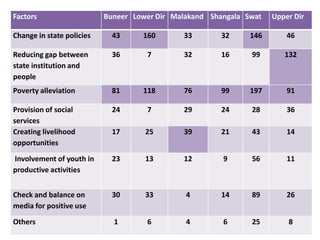
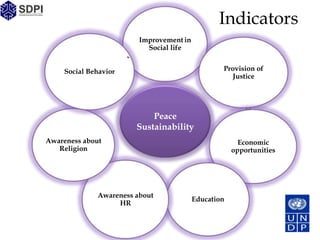
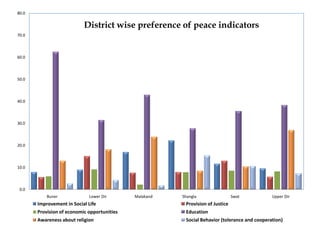
This document summarizes the findings of a perception survey on reconciliation in Malakand Division, Khyber Pakhtunkhwa, Pakistan. The survey was conducted across 6 districts and involved 2000 households and 180 key informants. It aimed to establish a credible data baseline on the current status of reconciliation and inform stakeholder programs. Key findings included that the conflict was largely driven by external factors exploiting local socioeconomic weaknesses rather than existing conflicts. Impacts included damage to infrastructure and livelihoods as well as psychological trauma. Reconciliation will require changes to state policies, reducing gaps between institutions and people, poverty alleviation, education, and economic opportunities to sustain peace in the long run.