Understanding Text
Types: Descriptive,
Recount & Procedure
Explore the fundamental distinctions between descriptive, recount, and
procedure texts. This presentation will illuminate their unique purposes,
structures, and linguistic features.
What We'll Cover Today: An Overview
01
Descriptive Text
Learn how descriptive language creates vivid imagery and
sensory experiences.
02
Recount Text
Understand the art of narrating past events and experiences.
03
Procedure Text
Discover the elements that make instructions clear and
effective.
04
Comparison & Analysis
Examine the overlaps and unique attributes of each text type.
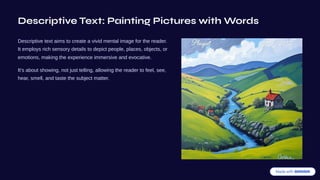
Descriptive Text: Painting Pictures with Words
Descriptive text aims to create a vivid mental image for the reader.
It employs rich sensory details to depict people, places, objects, or
emotions, making the experience immersive and evocative.
It's about showing, not just telling, allowing the reader to feel, see,
hear, smell, and taste the subject matter.
Key Characteristics of
Descriptive Text
Sensory Details
Engages the five senses (sight, sound, smell, taste, touch) to bring
descriptions to life.
Figurative Language
Uses metaphors, similes, and personification to add depth and
impact to descriptions.
Adjectives & Adverbs
Relies heavily on vivid adjectives and precise adverbs to enhance
imagery.
Dominant Impression
Focuses on conveying a single, overriding feeling or mood about
the subject.
Recount Text: Reliving Moments
Recount text tells a story about past events, usually in
chronological order. Its primary purpose is to inform or entertain by
narrating what happened.
It typically includes who was involved, what occurred, when it
happened, and where it took place.
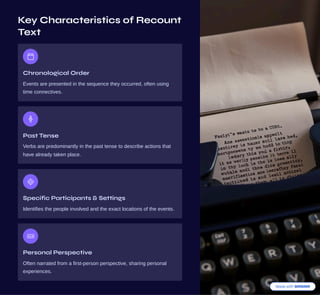
Key Characteristics of Recount
Text
Chronological Order
Events are presented in the sequence they occurred, often using
time connectives.
Past Tense
Verbs are predominantly in the past tense to describe actions that
have already taken place.
Specific Participants & Settings
Identifies the people involved and the exact locations of the events.
Personal Perspective
Often narrated from a first-person perspective, sharing personal
experiences.
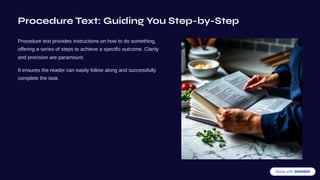
Procedure Text: Guiding You Step-by-Step
Procedure text provides instructions on how to do something,
offering a series of steps to achieve a specific outcome. Clarity
and precision are paramount.
It ensures the reader can easily follow along and successfully
complete the task.
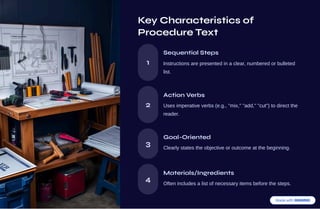
Key Characteristics of
Procedure Text
1
Sequential Steps
Instructions are presented in a clear, numbered or bulleted
list.
2
Action Verbs
Uses imperative verbs (e.g., "mix," "add," "cut") to direct the
reader.
3
Goal-Oriented
Clearly states the objective or outcome at the beginning.
4
Materials/Ingredients
Often includes a list of necessary items before the steps.
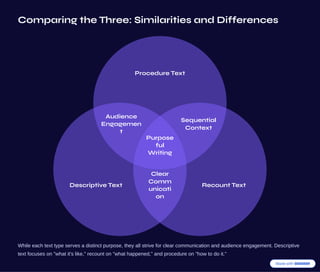
Comparing the Three: Similarities and Differences
Procedure Text
Descriptive Text Recount Text
Audience
Engagemen
t
Sequential
Context
Clear
Comm
unicati
on
Purpose
ful
Writing
While each text type serves a distinct purpose, they all strive for clear communication and audience engagement. Descriptive
text focuses on "what it's like," recount on "what happened," and procedure on "how to do it."
Summary and Key Takeaways
Descriptive
Paints vivid pictures with
words, engaging senses and
emotions.
Recount
Narrates past events
chronologically, often from a
personal viewpoint.
Procedure
Provides clear, sequential instructions to achieve a specific
outcome.
Mastering these text types enhances writing versatility and ensures
effective communication across various contexts. Understanding their
structures allows both writers and readers to better comprehend and
create meaningful content.
Understanding-Text-Types-Descriptive-Recount-and-Procedure.pdf

  • 1.
    Understanding Text Types: Descriptive, Recount& Procedure Explore the fundamental distinctions between descriptive, recount, and procedure texts. This presentation will illuminate their unique purposes, structures, and linguistic features.
  • 2.
    What We'll CoverToday: An Overview 01 Descriptive Text Learn how descriptive language creates vivid imagery and sensory experiences. 02 Recount Text Understand the art of narrating past events and experiences. 03 Procedure Text Discover the elements that make instructions clear and effective. 04 Comparison & Analysis Examine the overlaps and unique attributes of each text type.
  • 3.
    Descriptive Text: PaintingPictures with Words Descriptive text aims to create a vivid mental image for the reader. It employs rich sensory details to depict people, places, objects, or emotions, making the experience immersive and evocative. It's about showing, not just telling, allowing the reader to feel, see, hear, smell, and taste the subject matter.
  • 4.
    Key Characteristics of DescriptiveText Sensory Details Engages the five senses (sight, sound, smell, taste, touch) to bring descriptions to life. Figurative Language Uses metaphors, similes, and personification to add depth and impact to descriptions. Adjectives & Adverbs Relies heavily on vivid adjectives and precise adverbs to enhance imagery. Dominant Impression Focuses on conveying a single, overriding feeling or mood about the subject.
  • 5.
    Recount Text: RelivingMoments Recount text tells a story about past events, usually in chronological order. Its primary purpose is to inform or entertain by narrating what happened. It typically includes who was involved, what occurred, when it happened, and where it took place.
  • 6.
    Key Characteristics ofRecount Text Chronological Order Events are presented in the sequence they occurred, often using time connectives. Past Tense Verbs are predominantly in the past tense to describe actions that have already taken place. Specific Participants & Settings Identifies the people involved and the exact locations of the events. Personal Perspective Often narrated from a first-person perspective, sharing personal experiences.
  • 7.
    Procedure Text: GuidingYou Step-by-Step Procedure text provides instructions on how to do something, offering a series of steps to achieve a specific outcome. Clarity and precision are paramount. It ensures the reader can easily follow along and successfully complete the task.
  • 8.
    Key Characteristics of ProcedureText 1 Sequential Steps Instructions are presented in a clear, numbered or bulleted list. 2 Action Verbs Uses imperative verbs (e.g., "mix," "add," "cut") to direct the reader. 3 Goal-Oriented Clearly states the objective or outcome at the beginning. 4 Materials/Ingredients Often includes a list of necessary items before the steps.
  • 9.
    Comparing the Three:Similarities and Differences Procedure Text Descriptive Text Recount Text Audience Engagemen t Sequential Context Clear Comm unicati on Purpose ful Writing While each text type serves a distinct purpose, they all strive for clear communication and audience engagement. Descriptive text focuses on "what it's like," recount on "what happened," and procedure on "how to do it."
  • 10.
    Summary and KeyTakeaways Descriptive Paints vivid pictures with words, engaging senses and emotions. Recount Narrates past events chronologically, often from a personal viewpoint. Procedure Provides clear, sequential instructions to achieve a specific outcome. Mastering these text types enhances writing versatility and ensures effective communication across various contexts. Understanding their structures allows both writers and readers to better comprehend and create meaningful content.