UNDERSTANDING MARKUP
LANGUAGES
-RAKSHANA R
-111921MC02040
MARKUP LANGUAGE
 A Markup language is a computer language that uses tags to
define elements within a document.
 Markup language, standard text-encoding system consisting
of a set of symbols inserted in a text document to control its
structure, formatting, or the relationship between its parts.
 A marked-up document thus contains two types of text:
 text to be displayed and
 markup language on how to display it.
WHAT IS WEB TAGS?
 Web tags indicate what should be displayed on the
screen when the page loads
 Tags are basic formatting tools in markup language.
WHAT MARKUP LANGUAGE DOES?
 When the document is processed for display, the
markup language is not shown
 It only used to format the text
ADVANTAGE OF MARKUP LANGUAGE
 Markup files contains standard word rather than
typical programming syntax.
 It is human readable.
TYPES OF MARKUP LANGUAGES
 HTML(Hypertext Markup Language)
 SGML(Standard generalized markup language)
 XML (Extensible markup language)
HTML(HYPERTEXT MARKUP LANGUAGE)
 Hyper text- links in the web pages
 Markup language- indicates markup the normal
english
 It was designed by the British scientist Sir Tim
Berners-Lee at the CERN nuclear physics
laboratory in Switzerland during the 1980s.
 HTML is the markup language for encoding Web
pages.
 HTML markup tags specify document elements
such as headings, paragraphs, and tables.
 They mark up a document for display by
a computer program known as a Web browser.
 The browser interprets the tags, displaying the
headings, paragraphs, and tables in a layout that is
adapted to the screen size and fonts available to it.
HOW IT WORKS?
 Html provides the content layer, forms the structure
foundation of a webpage.
 Html provides text formatting instruction to
browsers in the form of tags called markup.
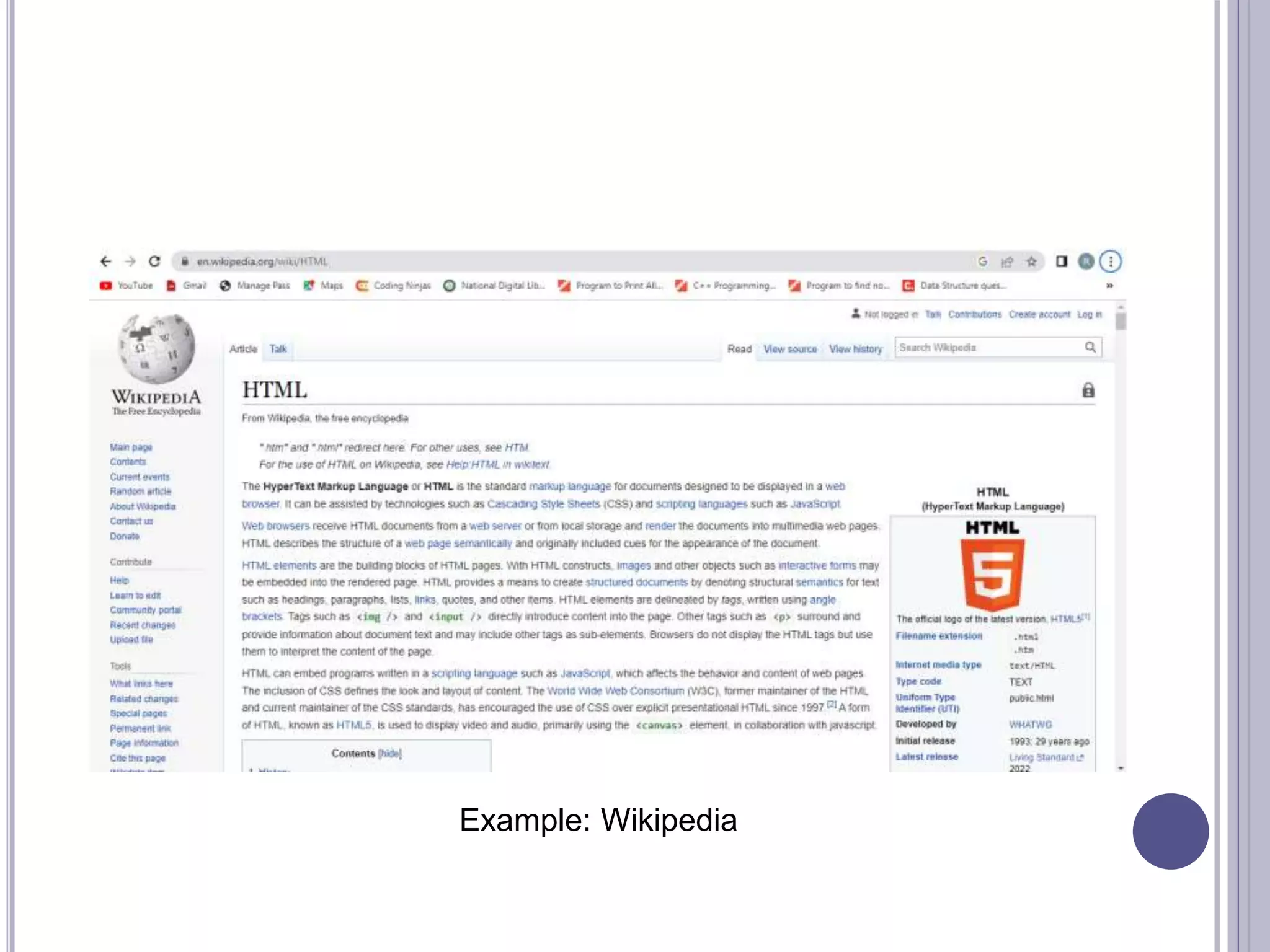
Example: Wikipedia
SGML(STANDARD GENERALIZED MARKUP
LANGUAGE)
 SGML (Standard Generalized Markup Language) is a
standard for how to specify a document markup
language or tag set.
 Such a specification is itself a document type definition
(DTD). SGML is not in itself a document language, but a
description of how to specify one. It is metadata.
ADVANTAGES
 It has the capability to encode the full structure of the
document and can support any media type.
 Separates content from appearance.
 SGML files encoding is allowed for more complex formatting
as compared to HTML.
 The Stylesheets present in SGML make the content to use for
different purposes.
 Extremely flexible.
 Well supported with many tools available because of ISO
standard.
DISADVANTAGES
 It may be typical to code software in SGML.
 Tools that are used in SGML are expensive.
 It may not be used widely.
 Special software is required to run or to allow the
document to display.
 Creating DTD’s requires exacting software engineering.
XML (EXTENSIBLE MARKUP LANGUAGE)
 XML stands for eXtensible Markup Language
 XML is a markup language much like HTML
 XML was designed to store and transport data
 XML was designed to be self-descriptive
 XML is a W3C Recommendation
HOW CAN XML BE USED?
 XML is used in many aspects of web development.
 XML is often used to separate data from presentation.
FEATURES AND ADVANTAGES OF XML
 XML separates data from HTML
 XML simplifies data sharing
 XML simplifies data transport
 XML simplifies Platform change
 XML increases data availability

UNDERSTANDING MARKUP LANGUAGES.pptx

  • 1.
  • 2.
    MARKUP LANGUAGE  AMarkup language is a computer language that uses tags to define elements within a document.  Markup language, standard text-encoding system consisting of a set of symbols inserted in a text document to control its structure, formatting, or the relationship between its parts.  A marked-up document thus contains two types of text:  text to be displayed and  markup language on how to display it.
  • 3.
    WHAT IS WEBTAGS?  Web tags indicate what should be displayed on the screen when the page loads  Tags are basic formatting tools in markup language.
  • 4.
    WHAT MARKUP LANGUAGEDOES?  When the document is processed for display, the markup language is not shown  It only used to format the text
  • 5.
    ADVANTAGE OF MARKUPLANGUAGE  Markup files contains standard word rather than typical programming syntax.  It is human readable.
  • 6.
    TYPES OF MARKUPLANGUAGES  HTML(Hypertext Markup Language)  SGML(Standard generalized markup language)  XML (Extensible markup language)
  • 7.
    HTML(HYPERTEXT MARKUP LANGUAGE) Hyper text- links in the web pages  Markup language- indicates markup the normal english  It was designed by the British scientist Sir Tim Berners-Lee at the CERN nuclear physics laboratory in Switzerland during the 1980s.
  • 8.
     HTML isthe markup language for encoding Web pages.  HTML markup tags specify document elements such as headings, paragraphs, and tables.  They mark up a document for display by a computer program known as a Web browser.  The browser interprets the tags, displaying the headings, paragraphs, and tables in a layout that is adapted to the screen size and fonts available to it.
  • 9.
    HOW IT WORKS? Html provides the content layer, forms the structure foundation of a webpage.  Html provides text formatting instruction to browsers in the form of tags called markup.
  • 10.
  • 11.
    SGML(STANDARD GENERALIZED MARKUP LANGUAGE) SGML (Standard Generalized Markup Language) is a standard for how to specify a document markup language or tag set.  Such a specification is itself a document type definition (DTD). SGML is not in itself a document language, but a description of how to specify one. It is metadata.
  • 12.
    ADVANTAGES  It hasthe capability to encode the full structure of the document and can support any media type.  Separates content from appearance.  SGML files encoding is allowed for more complex formatting as compared to HTML.  The Stylesheets present in SGML make the content to use for different purposes.  Extremely flexible.  Well supported with many tools available because of ISO standard.
  • 13.
    DISADVANTAGES  It maybe typical to code software in SGML.  Tools that are used in SGML are expensive.  It may not be used widely.  Special software is required to run or to allow the document to display.  Creating DTD’s requires exacting software engineering.
  • 14.
    XML (EXTENSIBLE MARKUPLANGUAGE)  XML stands for eXtensible Markup Language  XML is a markup language much like HTML  XML was designed to store and transport data  XML was designed to be self-descriptive  XML is a W3C Recommendation
  • 15.
    HOW CAN XMLBE USED?  XML is used in many aspects of web development.  XML is often used to separate data from presentation.
  • 16.
    FEATURES AND ADVANTAGESOF XML  XML separates data from HTML  XML simplifies data sharing  XML simplifies data transport  XML simplifies Platform change  XML increases data availability