UNDERSTANDING
FINANCE
BUSINESS FINANCE
finance
At the end of the lesson, the
learners are expected to:
 define finance.
 identify the different areas of finance.
 categorize the persons involved in a business
organization through organizational chart; and
 state the qualifications of a finance officer
through acrostic
WHAT IS FINANCE?
Finance as the management of
money, banking, investments, and
credit. –American Heritage Desk
Dictionary
Science of management of money and
other assets.
MONEY
Finance is both a science and an
art of correct application of the
economic and accounting
concepts and principles that
define the system, structure,
and process of management,
allocation, and utilization of
financial resources, investments,
and expenditures.
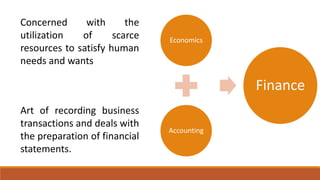
Economics
Accounting
Finance
Concerned with the
utilization of scarce
resources to satisfy human
needs and wants
Art of recording business
transactions and deals with
the preparation of financial
statements.
AREAS OF FINANCE
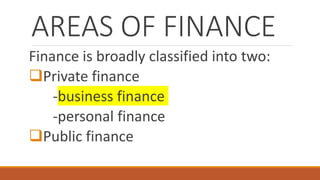
Finance is broadly classified into two:
Private finance
-business finance
-personal finance
Public finance
AREAS OF FINANCE
Business finance is further subdivided
into:
Financial management
Capital market
Financial investment
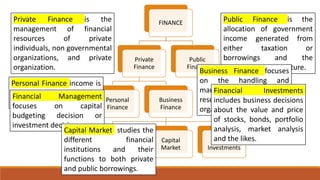
FINANCE
Private
Finance
Personal
Finance
Business
Finance
Financial
Management
Capital
Market
Financial
Investments
Public
Finance
Private Finance is the
management of financial
resources of private
individuals, non governmental
organizations, and private
organization.
Public Finance is the
allocation of government
income generated from
either taxation or
borrowings and the
government expenditure.
Personal Finance income is
allocated based on the
individuals personal needs.
Business Finance focuses
on the handling and
management of financial
resources of a business
organization.
Financial Management
focuses on capital
budgeting decision or
investment decision.
Capital Market studies the
different financial
institutions and their
functions to both private
and public borrowings.
Financial Investments
includes business decisions
about the value and price
of stocks, bonds, portfolio
analysis, market analysis
and the likes.
FINANCE IN A
BUSINESS ORGANIZATION
Functional Divisions
Production and operation division
General administrative or human
resource division
Finance division
Marketing division
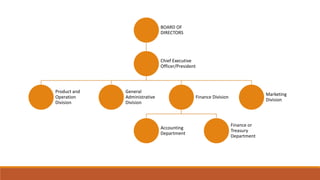
BOARD OF
DIRECTORS
Chief Executive
Officer/President
Product and
Operation
Division
General
Administrative
Division
Finance Division
Accounting
Department
Finance or
Treasury
Department
Marketing
Division
FUNCTIONS OF A FINANCE OFFICER
The finance officer is heavily engaged in
making decisions for the business to
attain its objectives.
OPERATIONG DECISIONS
INVESTING DECISIONS
FINANCING DECISIONS
Financial
Decisions of
the CFO
Operating
Decisions
Investing
Decisions
Financing
Decisions
 Credit and Collection
 Level of Inventory
 Granting of Discounts
 Budgeting
 Payment and Control of
Operating Expenditure
 Daily Operating Decisions
 Non Current asset
acquisition
 Investment Portfolio
 Pricing Decision of stocks
and bonds
 Discounted Cash Flow
analysis in capital
budgeting
 Equity Financing
 Debt Financing
 Cost of Capital and
borrowing
 Short term and long term
borrowings
 Interest rate
QUALIFICATIONS OF A
FINANCE OFFICER
Possesses sound knowledge of
accounting and economic concepts and
principles
Has profound understanding of
operation science, statistics, and
marketing research
QUALIFICATIONS OF A
FINANCE OFFICER
Has gained technical experience in
finance and provided professional
judgement
Has good communication skills in both
oral and written forms
QUALIFICATIONS OF A
FINANCE OFFICER
Has impressive relationship with
banks and other financial institutions
Has outstanding relationship within
the business and among other
functional areas
QUALIFICATIONS OF A
FINANCE OFFICER
Ethically and morally upright and
socially responsible.

UNDERSTANDING FINANCE.pptx

  • 1.
  • 2.
  • 3.
    At the endof the lesson, the learners are expected to:  define finance.  identify the different areas of finance.  categorize the persons involved in a business organization through organizational chart; and  state the qualifications of a finance officer through acrostic
  • 4.
    WHAT IS FINANCE? Financeas the management of money, banking, investments, and credit. –American Heritage Desk Dictionary Science of management of money and other assets. MONEY
  • 5.
    Finance is botha science and an art of correct application of the economic and accounting concepts and principles that define the system, structure, and process of management, allocation, and utilization of financial resources, investments, and expenditures.
  • 6.
    Economics Accounting Finance Concerned with the utilizationof scarce resources to satisfy human needs and wants Art of recording business transactions and deals with the preparation of financial statements.
  • 7.
    AREAS OF FINANCE Financeis broadly classified into two: Private finance -business finance -personal finance Public finance
  • 8.
    AREAS OF FINANCE Businessfinance is further subdivided into: Financial management Capital market Financial investment
  • 9.
    FINANCE Private Finance Personal Finance Business Finance Financial Management Capital Market Financial Investments Public Finance Private Finance isthe management of financial resources of private individuals, non governmental organizations, and private organization. Public Finance is the allocation of government income generated from either taxation or borrowings and the government expenditure. Personal Finance income is allocated based on the individuals personal needs. Business Finance focuses on the handling and management of financial resources of a business organization. Financial Management focuses on capital budgeting decision or investment decision. Capital Market studies the different financial institutions and their functions to both private and public borrowings. Financial Investments includes business decisions about the value and price of stocks, bonds, portfolio analysis, market analysis and the likes.
  • 10.
    FINANCE IN A BUSINESSORGANIZATION Functional Divisions Production and operation division General administrative or human resource division Finance division Marketing division
  • 11.
    BOARD OF DIRECTORS Chief Executive Officer/President Productand Operation Division General Administrative Division Finance Division Accounting Department Finance or Treasury Department Marketing Division
  • 12.
    FUNCTIONS OF AFINANCE OFFICER The finance officer is heavily engaged in making decisions for the business to attain its objectives. OPERATIONG DECISIONS INVESTING DECISIONS FINANCING DECISIONS
  • 13.
    Financial Decisions of the CFO Operating Decisions Investing Decisions Financing Decisions Credit and Collection  Level of Inventory  Granting of Discounts  Budgeting  Payment and Control of Operating Expenditure  Daily Operating Decisions  Non Current asset acquisition  Investment Portfolio  Pricing Decision of stocks and bonds  Discounted Cash Flow analysis in capital budgeting  Equity Financing  Debt Financing  Cost of Capital and borrowing  Short term and long term borrowings  Interest rate
  • 14.
    QUALIFICATIONS OF A FINANCEOFFICER Possesses sound knowledge of accounting and economic concepts and principles Has profound understanding of operation science, statistics, and marketing research
  • 15.
    QUALIFICATIONS OF A FINANCEOFFICER Has gained technical experience in finance and provided professional judgement Has good communication skills in both oral and written forms
  • 16.
    QUALIFICATIONS OF A FINANCEOFFICER Has impressive relationship with banks and other financial institutions Has outstanding relationship within the business and among other functional areas
  • 17.
    QUALIFICATIONS OF A FINANCEOFFICER Ethically and morally upright and socially responsible.