Understanding Economics as an
Applied Science: Principles and
Practical Implications
Understanding Economics as an
Applied Science: Principles and
Practical Implications
Economics is the study of how societies allocate scarce resources. This
presentation will explore economic principles and their practical implications in
real-world scenarios, emphasizing the importance of viewing economics as an
applied science.
Economics is the study of how societies allocate scarce resources. This
presentation will explore economic principles and their practical implications in
real-world scenarios, emphasizing the importance of viewing economics as an
applied science.
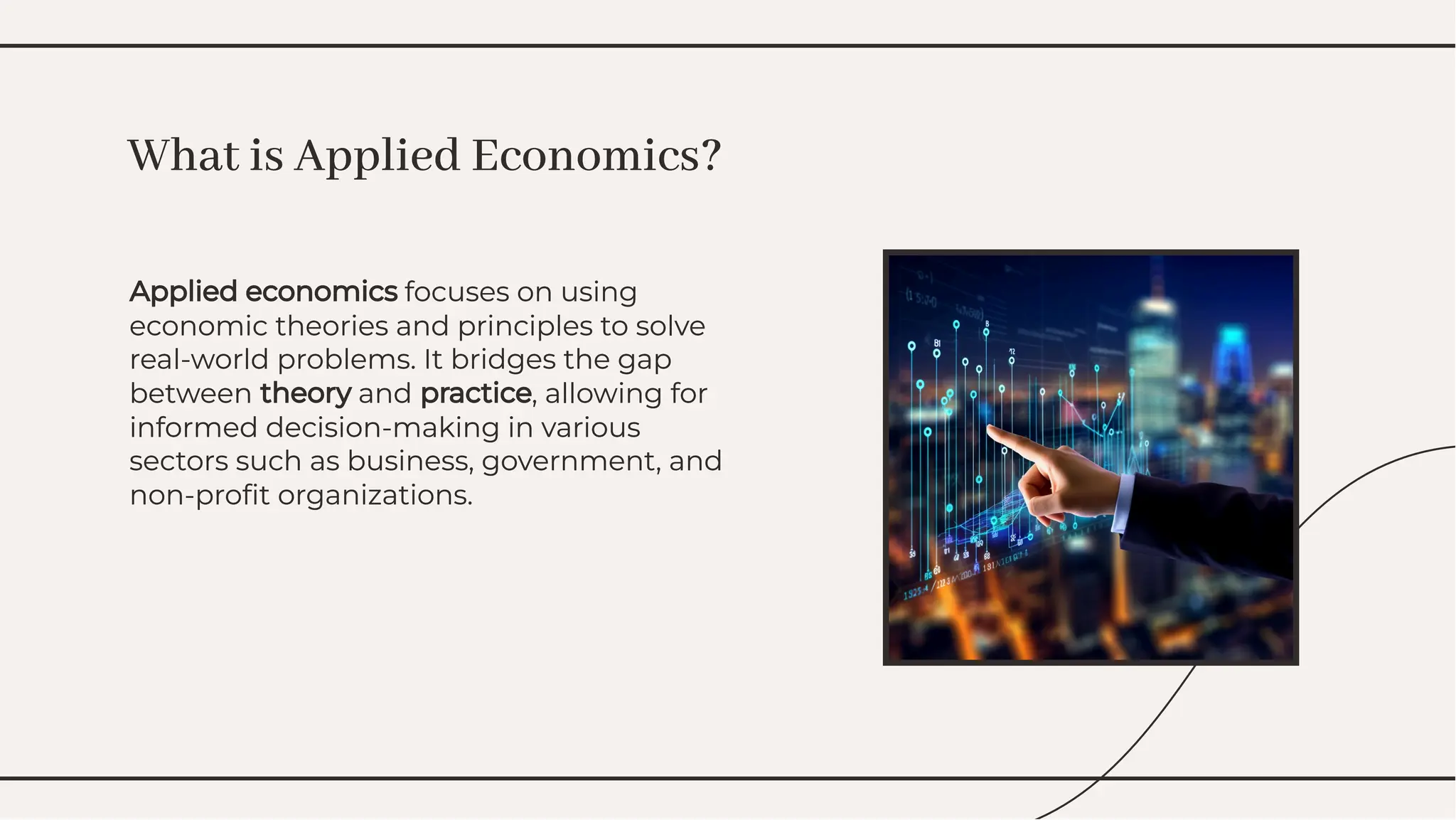
Applied economics focuses on using
economic theories and principles to solve
real-world problems. It bridges the gap
between theory and practice, allowing for
informed decision-making in various
sectors such as business, government, and
non-profit organizations.
Applied economics focuses on using
economic theories and principles to solve
real-world problems. It bridges the gap
between theory and practice, allowing for
informed decision-making in various
sectors such as business, government, and
non-profit organizations.
What is Applied Economics?
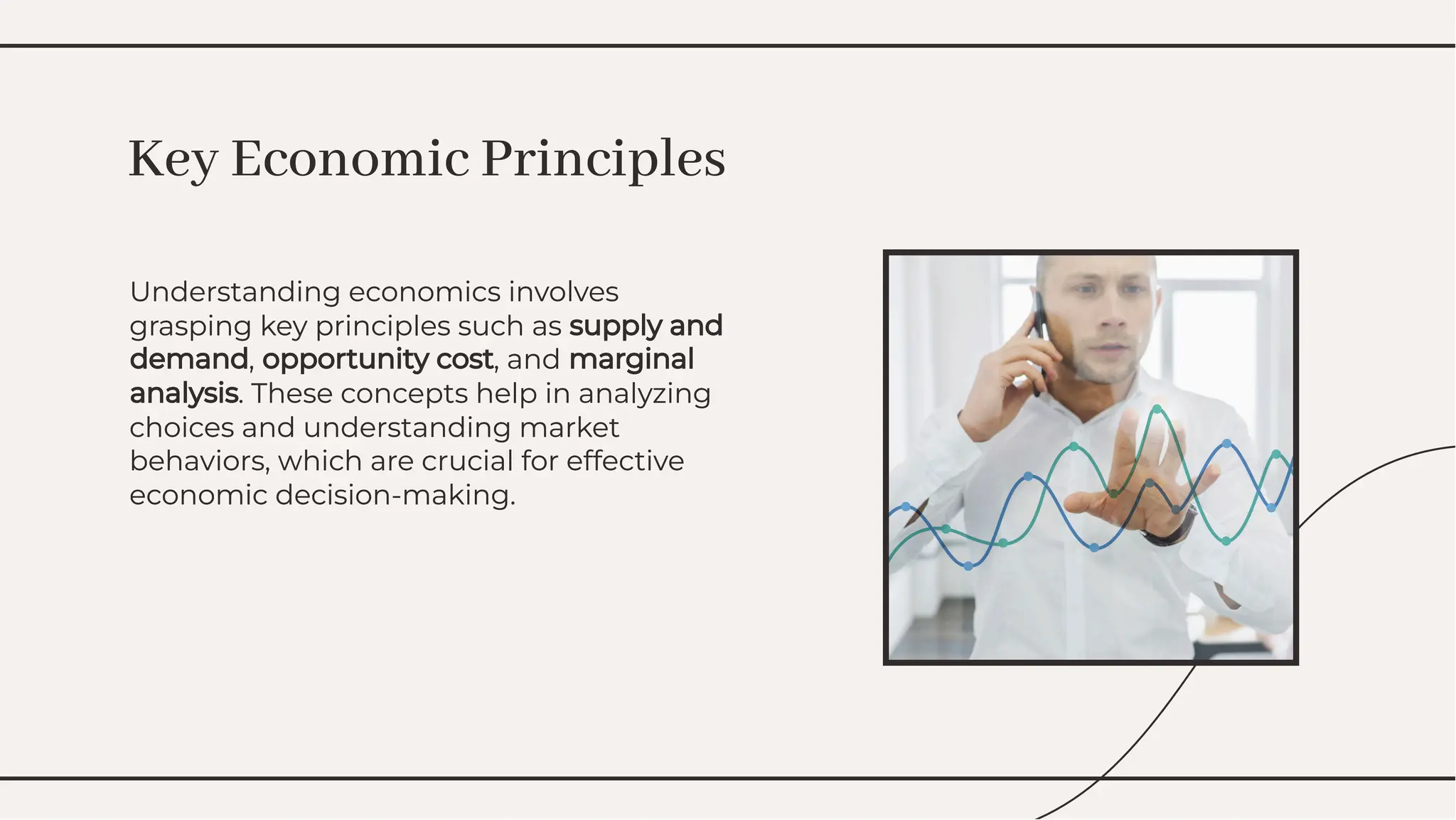
Understanding economics involves
grasping key principles such as supply and
demand, opportunity cost, and marginal
analysis. These concepts help in analyzing
choices and understanding market
behaviors, which are crucial for effective
economic decision-making.
Understanding economics involves
grasping key principles such as supply and
demand, opportunity cost, and marginal
analysis. These concepts help in analyzing
choices and understanding market
behaviors, which are crucial for effective
economic decision-making.
Key Economic Principles
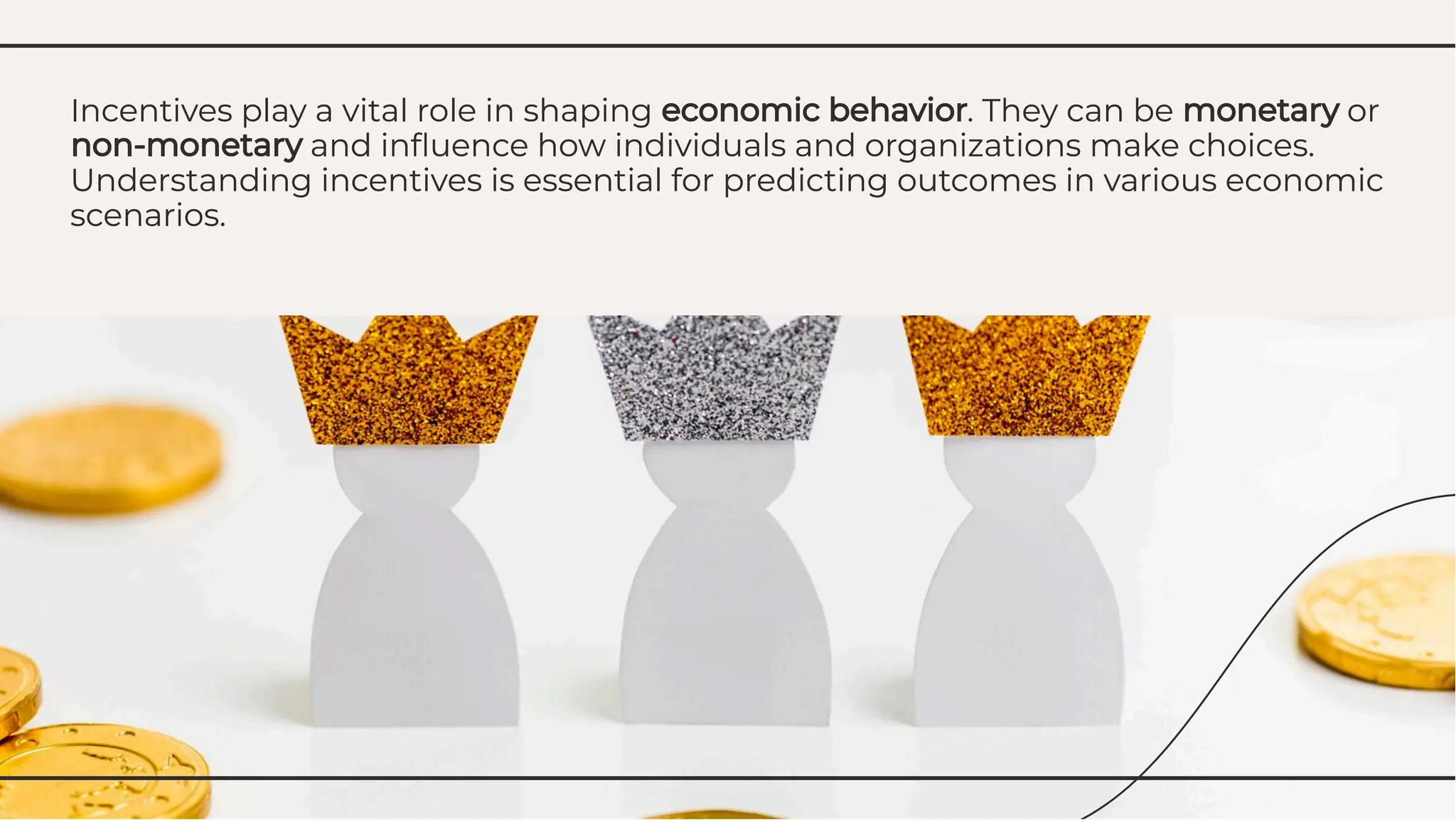
Incentives play a vital role in shaping economic behavior. They can be monetary or
non-monetary and influence how individuals and organizations make choices.
Understanding incentives is essential for predicting outcomes in various economic
scenarios.
Incentives play a vital role in shaping economic behavior. They can be monetary or
non-monetary and influence how individuals and organizations make choices.
Understanding incentives is essential for predicting outcomes in various economic
scenarios.
Different market structures—such as
perfect competition, monopolistic
competition, oligopoly, and monopoly—
affect pricing and output decisions.
Analyzing these structures helps in
understanding how firms operate and the
implications for consumers and the
economy.
Different market structures—such as
perfect competition, monopolistic
competition, oligopoly, and monopoly—
affect pricing and output decisions.
Analyzing these structures helps in
understanding how firms operate and the
implications for consumers and the
economy.
Market Structures and Implications
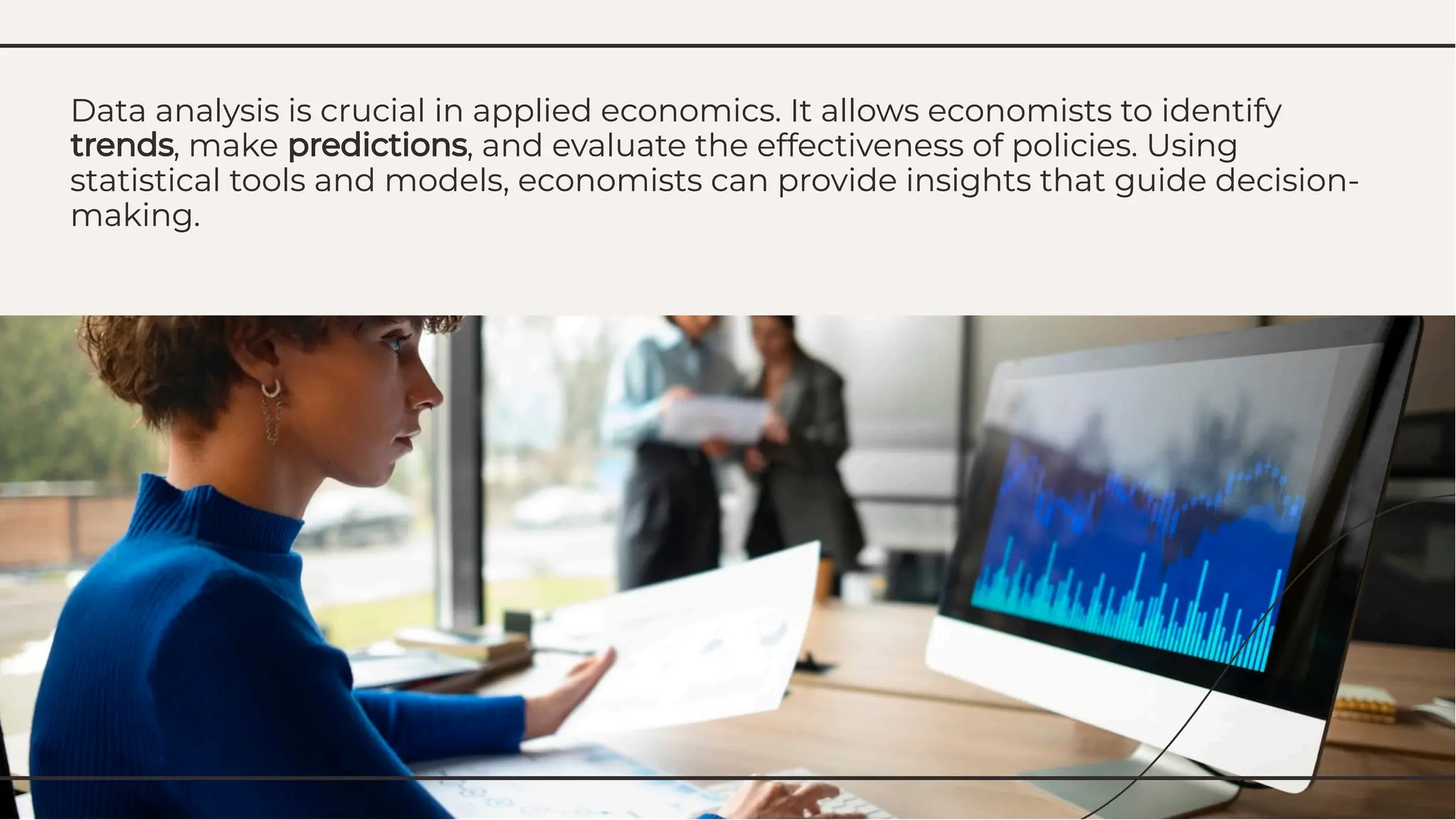
Data analysis is crucial in applied economics. It allows economists to identify
trends, make predictions, and evaluate the effectiveness of policies. Using
statistical tools and models, economists can provide insights that guide decision-
making.
Data analysis is crucial in applied economics. It allows economists to identify
trends, make predictions, and evaluate the effectiveness of policies. Using
statistical tools and models, economists can provide insights that guide decision-
making.
Applied economics informs economic policy formulation by providing evidence-
based recommendations. Policymakers rely on economic analysis to address
issues such as inflation, unemployment, and economic growth, ensuring that
policies are effective and targeted.
Applied economics informs economic policy formulation by providing evidence-
based recommendations. Policymakers rely on economic analysis to address
issues such as inflation, unemployment, and economic growth, ensuring that
policies are effective and targeted.
Behavioral economics examines how
psychological factors influence economic
decisions. It challenges traditional
assumptions about rationality,
highlighting the impact of biases and
heuristics on consumer behavior and
market outcomes.
Behavioral economics examines how
psychological factors influence economic
decisions. It challenges traditional
assumptions about rationality,
highlighting the impact of biases and
heuristics on consumer behavior and
market outcomes.
Behavioral Economics Insights
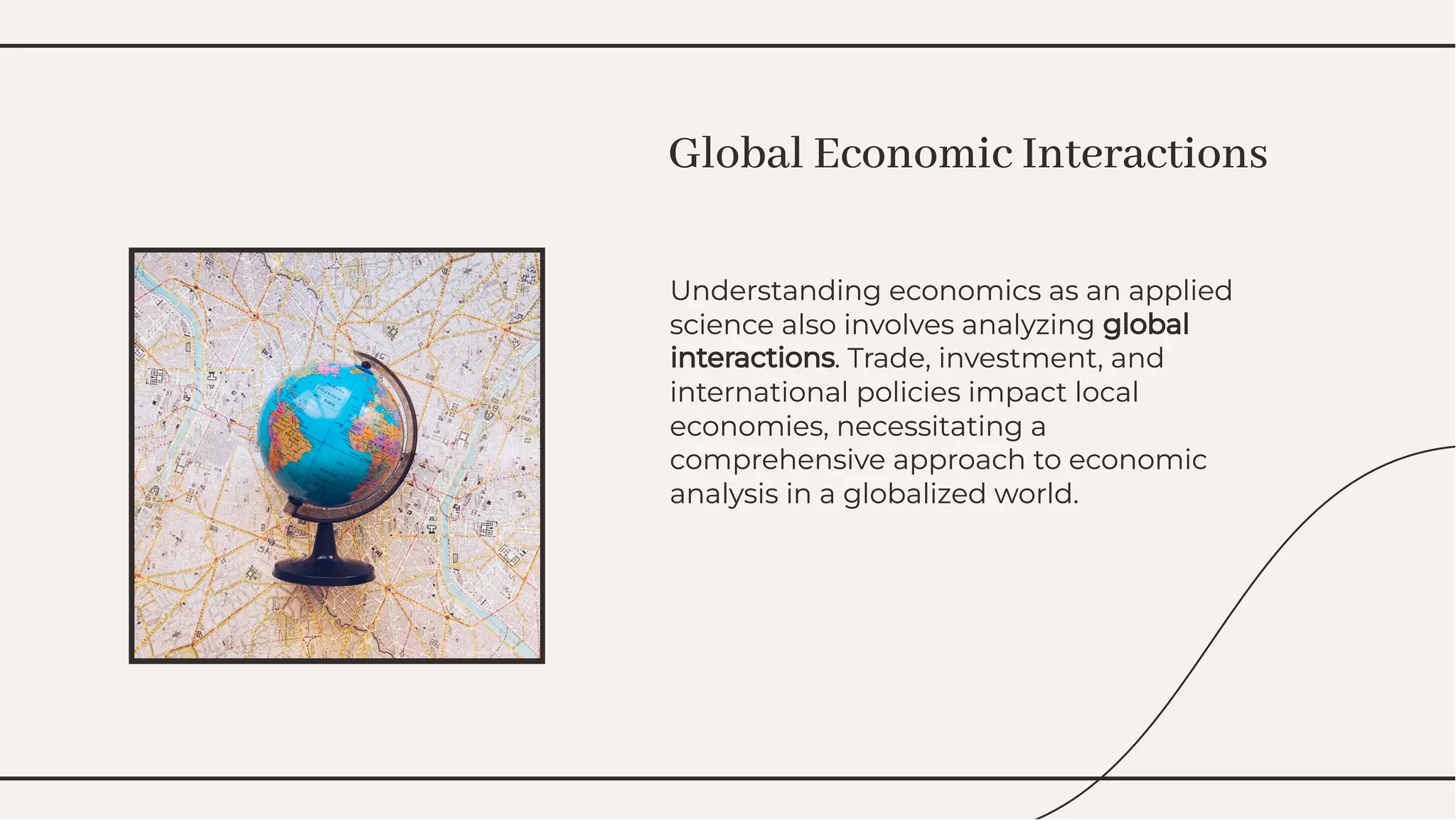
Understanding economics as an applied
science also involves analyzing global
interactions. Trade, investment, and
international policies impact local
economies, necessitating a
comprehensive approach to economic
analysis in a globalized world.
Understanding economics as an applied
science also involves analyzing global
interactions. Trade, investment, and
international policies impact local
economies, necessitating a
comprehensive approach to economic
analysis in a globalized world.
Global Economic Interactions
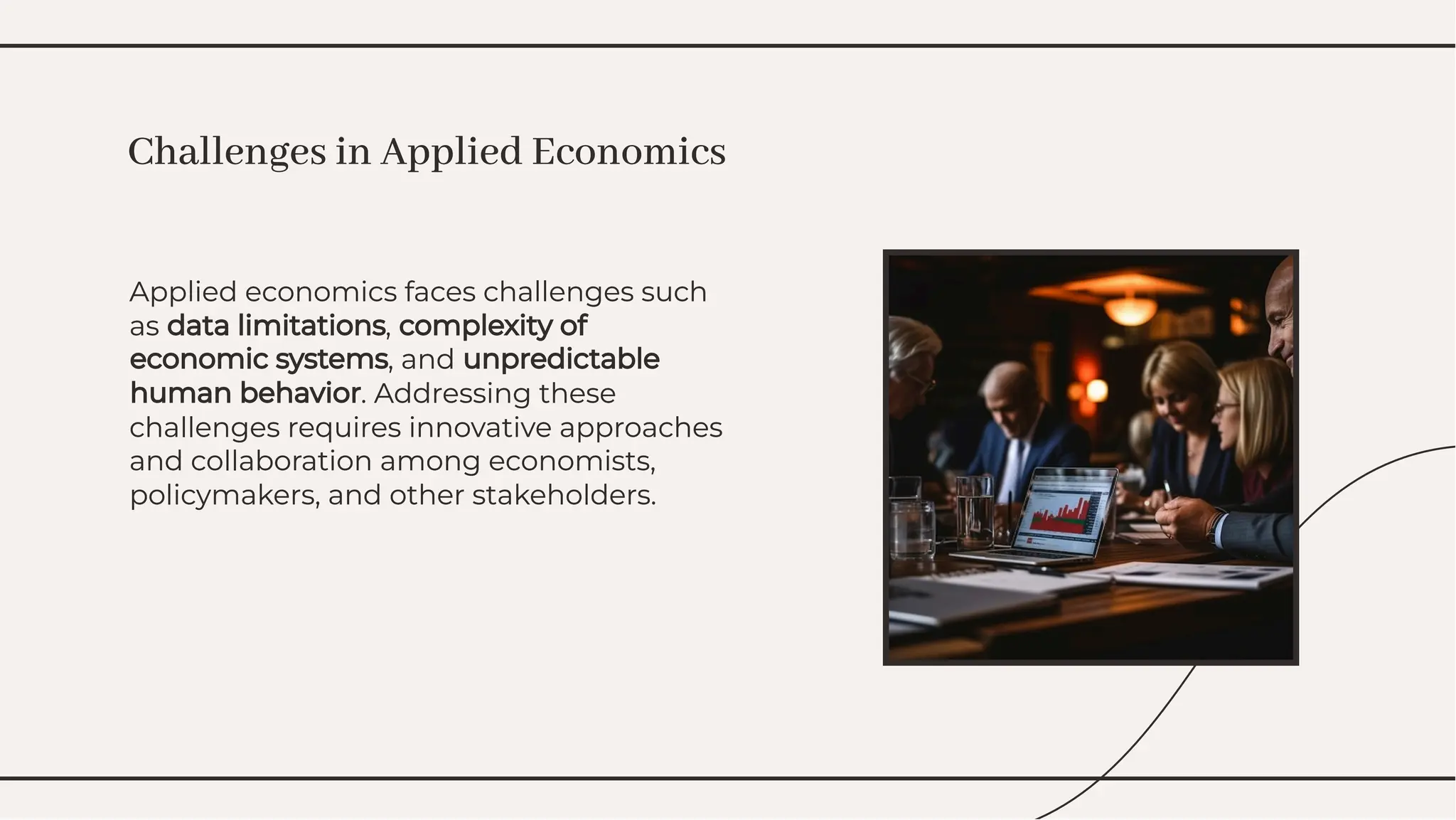
Applied economics faces challenges such
as data limitations, complexity of
economic systems, and unpredictable
human behavior. Addressing these
challenges requires innovative approaches
and collaboration among economists,
policymakers, and other stakeholders.
Applied economics faces challenges such
as data limitations, complexity of
economic systems, and unpredictable
human behavior. Addressing these
challenges requires innovative approaches
and collaboration among economists,
policymakers, and other stakeholders.
Challenges in Applied Economics
The future of economics as an applied
science lies in integrating technology, data
science, and behavioral insights.
Advancements in these areas will enhance
our understanding of economic
phenomena and improve policy
effectiveness.
The future of economics as an applied
science lies in integrating technology, data
science, and behavioral insights.
Advancements in these areas will enhance
our understanding of economic
phenomena and improve policy
effectiveness.
Future Directions in Economics
In conclusion, understanding economics
as an applied science is essential for
addressing real-world challenges. By
applying economic principles, we can
make informed decisions that lead to
better outcomes for individuals and
society as a whole.
In conclusion, understanding economics
as an applied science is essential for
addressing real-world challenges. By
applying economic principles, we can
make informed decisions that lead to
better outcomes for individuals and
society as a whole.
Conclusion
Conclusion
Thanks!
Thanks!
Do you have any questions?
youremail@email.com
+91 620 421 838
www.yourwebsite.com
@yourusername
Do you have any questions?
youremail@email.com
+91 620 421 838
www.yourwebsite.com
@yourusername

understanding-economics-as-an-applied-science-principles-and-practical-implications-202409030334046CeF.pdf

  • 1.
    Understanding Economics asan Applied Science: Principles and Practical Implications Understanding Economics as an Applied Science: Principles and Practical Implications
  • 2.
    Economics is thestudy of how societies allocate scarce resources. This presentation will explore economic principles and their practical implications in real-world scenarios, emphasizing the importance of viewing economics as an applied science. Economics is the study of how societies allocate scarce resources. This presentation will explore economic principles and their practical implications in real-world scenarios, emphasizing the importance of viewing economics as an applied science.
  • 3.
    Applied economics focuseson using economic theories and principles to solve real-world problems. It bridges the gap between theory and practice, allowing for informed decision-making in various sectors such as business, government, and non-profit organizations. Applied economics focuses on using economic theories and principles to solve real-world problems. It bridges the gap between theory and practice, allowing for informed decision-making in various sectors such as business, government, and non-profit organizations. What is Applied Economics? What is Applied Economics?
  • 4.
    Understanding economics involves graspingkey principles such as supply and demand, opportunity cost, and marginal analysis. These concepts help in analyzing choices and understanding market behaviors, which are crucial for effective economic decision-making. Understanding economics involves grasping key principles such as supply and demand, opportunity cost, and marginal analysis. These concepts help in analyzing choices and understanding market behaviors, which are crucial for effective economic decision-making. Key Economic Principles Key Economic Principles
  • 5.
    Incentives play avital role in shaping economic behavior. They can be monetary or non-monetary and influence how individuals and organizations make choices. Understanding incentives is essential for predicting outcomes in various economic scenarios. Incentives play a vital role in shaping economic behavior. They can be monetary or non-monetary and influence how individuals and organizations make choices. Understanding incentives is essential for predicting outcomes in various economic scenarios.
  • 6.
    Different market structures—suchas perfect competition, monopolistic competition, oligopoly, and monopoly— affect pricing and output decisions. Analyzing these structures helps in understanding how firms operate and the implications for consumers and the economy. Different market structures—such as perfect competition, monopolistic competition, oligopoly, and monopoly— affect pricing and output decisions. Analyzing these structures helps in understanding how firms operate and the implications for consumers and the economy. Market Structures and Implications Market Structures and Implications
  • 7.
    Data analysis iscrucial in applied economics. It allows economists to identify trends, make predictions, and evaluate the effectiveness of policies. Using statistical tools and models, economists can provide insights that guide decision- making. Data analysis is crucial in applied economics. It allows economists to identify trends, make predictions, and evaluate the effectiveness of policies. Using statistical tools and models, economists can provide insights that guide decision- making.
  • 8.
    Applied economics informseconomic policy formulation by providing evidence- based recommendations. Policymakers rely on economic analysis to address issues such as inflation, unemployment, and economic growth, ensuring that policies are effective and targeted. Applied economics informs economic policy formulation by providing evidence- based recommendations. Policymakers rely on economic analysis to address issues such as inflation, unemployment, and economic growth, ensuring that policies are effective and targeted.
  • 9.
    Behavioral economics examineshow psychological factors influence economic decisions. It challenges traditional assumptions about rationality, highlighting the impact of biases and heuristics on consumer behavior and market outcomes. Behavioral economics examines how psychological factors influence economic decisions. It challenges traditional assumptions about rationality, highlighting the impact of biases and heuristics on consumer behavior and market outcomes. Behavioral Economics Insights Behavioral Economics Insights
  • 10.
    Understanding economics asan applied science also involves analyzing global interactions. Trade, investment, and international policies impact local economies, necessitating a comprehensive approach to economic analysis in a globalized world. Understanding economics as an applied science also involves analyzing global interactions. Trade, investment, and international policies impact local economies, necessitating a comprehensive approach to economic analysis in a globalized world. Global Economic Interactions Global Economic Interactions
  • 11.
    Applied economics faceschallenges such as data limitations, complexity of economic systems, and unpredictable human behavior. Addressing these challenges requires innovative approaches and collaboration among economists, policymakers, and other stakeholders. Applied economics faces challenges such as data limitations, complexity of economic systems, and unpredictable human behavior. Addressing these challenges requires innovative approaches and collaboration among economists, policymakers, and other stakeholders. Challenges in Applied Economics Challenges in Applied Economics
  • 12.
    The future ofeconomics as an applied science lies in integrating technology, data science, and behavioral insights. Advancements in these areas will enhance our understanding of economic phenomena and improve policy effectiveness. The future of economics as an applied science lies in integrating technology, data science, and behavioral insights. Advancements in these areas will enhance our understanding of economic phenomena and improve policy effectiveness. Future Directions in Economics Future Directions in Economics
  • 13.
    In conclusion, understandingeconomics as an applied science is essential for addressing real-world challenges. By applying economic principles, we can make informed decisions that lead to better outcomes for individuals and society as a whole. In conclusion, understanding economics as an applied science is essential for addressing real-world challenges. By applying economic principles, we can make informed decisions that lead to better outcomes for individuals and society as a whole. Conclusion Conclusion
  • 14.
    Thanks! Thanks! Do you haveany questions? youremail@email.com +91 620 421 838 www.yourwebsite.com @yourusername Do you have any questions? youremail@email.com +91 620 421 838 www.yourwebsite.com @yourusername