Growing the Commons Top-
   Down and Bottom-Up
   Training Part I: The United Nations,
     Creator of Global Commoners
             Lisinka Ulatowska
              February 11, 2013
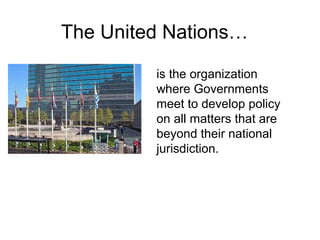
The United Nations…

         is the organization
         where Governments
         meet to develop policy
         on all matters that are
         beyond their national
         jurisdiction.
It is the most universal policy-making
 body in history.

              It deals with:
• Making and keeping the peace, and
• With every aspect of everyday life that
  connects us across national
  boundaries.

The purpose of this training…
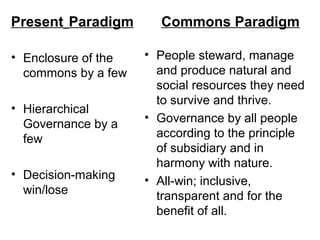
Present Paradigm       Commons Paradigm

• Enclosure of the   • People steward, manage
  commons by a few     and produce natural and
                       social resources they need
                       to survive and thrive.
• Hierarchical
                     • Governance by all people
  Governance by a
  few                  according to the principle
                       of subsidiary and in
                       harmony with nature.
• Decision-making    • All-win; inclusive,
  win/lose             transparent and for the
                       benefit of all.
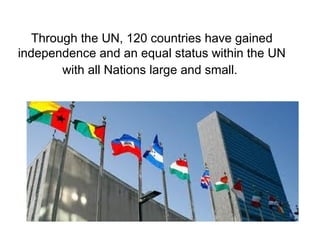
Through the UN, 120 countries have gained
independence and an equal status within the UN
        with all Nations large and small.
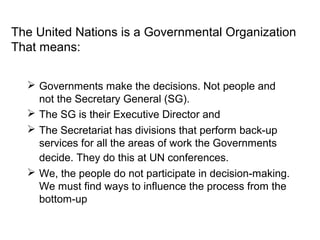
The United Nations is a Governmental Organization
That means:


   Governments make the decisions. Not people and
    not the Secretary General (SG).
   The SG is their Executive Director and
   The Secretariat has divisions that perform back-up
    services for all the areas of work the Governments
    decide. They do this at UN conferences.
   We, the people do not participate in decision-making.
    We must find ways to influence the process from the
    bottom-up
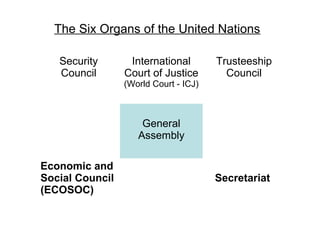
The Six Organs of the United Nations

   Security       International        Trusteeship
   Council       Court of Justice        Council
                 (World Court - ICJ)


                     General
                    Assembly

Economic and
Social Council                         Secretariat
(ECOSOC)
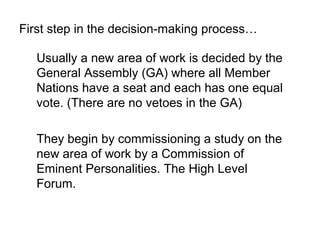
First step in the decision-making process…

   Usually a new area of work is decided by the
   General Assembly (GA) where all Member
   Nations have a seat and each has one equal
   vote. (There are no vetoes in the GA)

   They begin by commissioning a study on the
   new area of work by a Commission of
   Eminent Personalities. The High Level
   Forum.
Pics of Two Official UN Docs (front & Back) of
           submissions by the IPS
Official Languages
• Arabic, Chinese, English, French,
  Russian and Spanish

• And UNESE: GA, ICJ, SG, ECOSOC,
  etc.
Role of the General Assembly Hall at UN
• The General Assembly is the organ where all
  Governments Members of the UN gather every year
  for some 2.5 months to discuss and decide all
  aspects of the work of the UN and its Specialized
  Agencies
• Here, members may decide to hold a conference to
  develop a way of looking at the issue “A Declaration”
  and an “Action Plan”.
• Decide on where, the timing and whether Civil
  Society will be involved and if so what type of
  organizations. We are seeing a trend to openness:
  contributions we might have made to this…
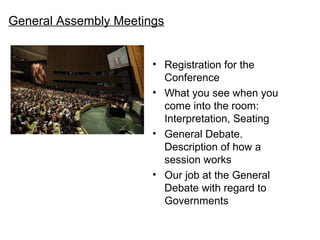
General Assembly Meetings


                       • Registration for the
                         Conference
                       • What you see when you
                         come into the room:
                         Interpretation, Seating
                       • General Debate.
                         Description of how a
                         session works
                       • Our job at the General
                         Debate with regard to
                         Governments
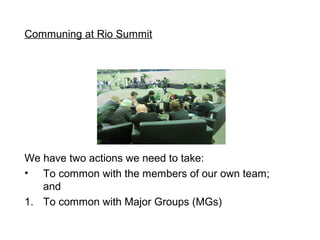
Communing at Rio Summit


We have two actions we need to take:
• To common with the members of our own team;
   and
1. To common with Major Groups (MGs)
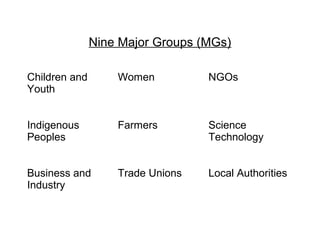
Nine Major Groups (MGs)

Children and       Women          NGOs
Youth


Indigenous         Farmers        Science
Peoples                           Technology


Business and       Trade Unions   Local Authorities
Industry
Statement by a Major Group

• Brevity: How we achieve this through
  commoning and working as a team.
Working with Delegates

• Approaching delegates (putting
  ourselves in their shoes)
• Our deportment, appearance and how
  we make contact
• Meetings with our own delegations
• Side events
Off the Record


• Confidential
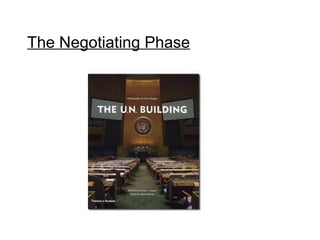
The Negotiating Phase
Summary

• Steps in the decision-making process
• Areas where we must work as a team to
  be effective
Summary: Where we have input in the process

• Activities you can participate in right now
Summary

• Things to remember when you are
  approaching a delegate

Un training 1

  • 1.
    Growing the CommonsTop- Down and Bottom-Up Training Part I: The United Nations, Creator of Global Commoners Lisinka Ulatowska February 11, 2013
  • 2.
    The United Nations… is the organization where Governments meet to develop policy on all matters that are beyond their national jurisdiction.
  • 3.
    It is themost universal policy-making body in history. It deals with: • Making and keeping the peace, and • With every aspect of everyday life that connects us across national boundaries. The purpose of this training…
  • 4.
    Present Paradigm Commons Paradigm • Enclosure of the • People steward, manage commons by a few and produce natural and social resources they need to survive and thrive. • Hierarchical • Governance by all people Governance by a few according to the principle of subsidiary and in harmony with nature. • Decision-making • All-win; inclusive, win/lose transparent and for the benefit of all.
  • 5.
    Through the UN,120 countries have gained independence and an equal status within the UN with all Nations large and small.
  • 6.
    The United Nationsis a Governmental Organization That means:  Governments make the decisions. Not people and not the Secretary General (SG).  The SG is their Executive Director and  The Secretariat has divisions that perform back-up services for all the areas of work the Governments decide. They do this at UN conferences.  We, the people do not participate in decision-making. We must find ways to influence the process from the bottom-up
  • 7.
    The Six Organsof the United Nations Security International Trusteeship Council Court of Justice Council (World Court - ICJ) General Assembly Economic and Social Council Secretariat (ECOSOC)
  • 8.
    First step inthe decision-making process… Usually a new area of work is decided by the General Assembly (GA) where all Member Nations have a seat and each has one equal vote. (There are no vetoes in the GA) They begin by commissioning a study on the new area of work by a Commission of Eminent Personalities. The High Level Forum.
  • 9.
    Pics of TwoOfficial UN Docs (front & Back) of submissions by the IPS
  • 10.
    Official Languages • Arabic,Chinese, English, French, Russian and Spanish • And UNESE: GA, ICJ, SG, ECOSOC, etc.
  • 11.
    Role of theGeneral Assembly Hall at UN • The General Assembly is the organ where all Governments Members of the UN gather every year for some 2.5 months to discuss and decide all aspects of the work of the UN and its Specialized Agencies • Here, members may decide to hold a conference to develop a way of looking at the issue “A Declaration” and an “Action Plan”. • Decide on where, the timing and whether Civil Society will be involved and if so what type of organizations. We are seeing a trend to openness: contributions we might have made to this…
  • 12.
    General Assembly Meetings • Registration for the Conference • What you see when you come into the room: Interpretation, Seating • General Debate. Description of how a session works • Our job at the General Debate with regard to Governments
  • 13.
    Communing at RioSummit We have two actions we need to take: • To common with the members of our own team; and 1. To common with Major Groups (MGs)
  • 14.
    Nine Major Groups(MGs) Children and Women NGOs Youth Indigenous Farmers Science Peoples Technology Business and Trade Unions Local Authorities Industry
  • 15.
    Statement by aMajor Group • Brevity: How we achieve this through commoning and working as a team.
  • 16.
    Working with Delegates •Approaching delegates (putting ourselves in their shoes) • Our deportment, appearance and how we make contact • Meetings with our own delegations • Side events
  • 17.
    Off the Record •Confidential
  • 18.
  • 19.
    Summary • Steps inthe decision-making process • Areas where we must work as a team to be effective
  • 20.
    Summary: Where wehave input in the process • Activities you can participate in right now
  • 21.
    Summary • Things toremember when you are approaching a delegate

Editor's Notes

  • #4 Examples: postal services, the Internet, the weather forecasting, travel by boat, plane, etc. Education Culture Science, Research, Health epidemics, etc. This workshop is about how we can actually impact global policy via the United Nations. We are here to begin to explore ways in which we can actually impact world policy by changing the power structures in the world. This sounds like an overwhelming challenge, and yet is is possible. I have made my contributions and so have hundreds like me. And you are entering the process at a time that is more open than any other time in human history.
  • #5 Myra add arrows….
  • #12 Example of UNCED opening of the UN to the people and development of the UN as a creator of global commoners. History in the making and so many unexpected opportunities can arrive. Some seem far above your capacity but be open anyway.
  • #19 No Photo with governments in the GA Hall found.