

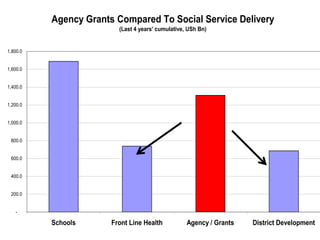

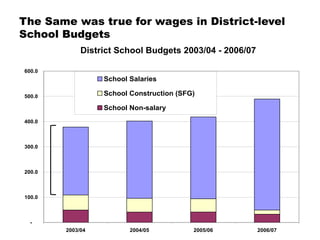

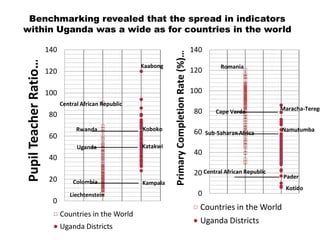

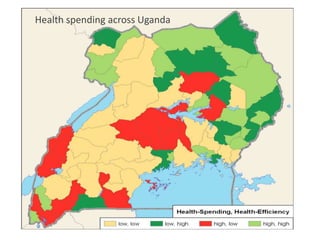
This document analyzes health and education spending in Uganda before and after public expenditure reviews conducted using the BOOST methodology. It finds that: 1) After the reviews, the composition of Uganda's national budget shifted spending away from wages and transfers towards capital investment and goods/services. 2) However, at the district level nearly all increased health spending went to wages, despite rising demand for health services. A similar pattern occurred for education spending. 3) There was wide variation in efficiency and outcomes across Ugandan districts that was comparable to differences between countries worldwide.


