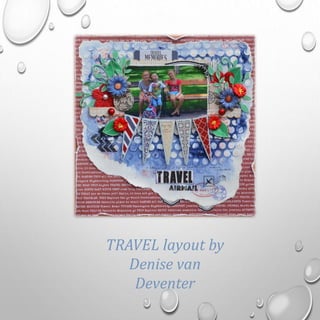
TRAVEL layout by
Denise van
Deventer
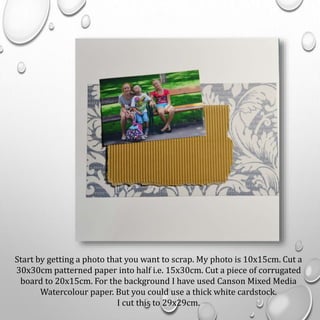
Start by getting a photo that you want to scrap. My photo is 10x15cm. Cut a
30x30cm patterned paper into half i.e. 15x30cm. Cut a piece of corrugated
board to 20x15cm. For the background I have used Canson Mixed Media
Watercolour paper. But you could use a thick white cardstock.
I cut this to 29x29cm.
Hand tear all sides of your patterned paper, by about 1 to 1,5cm off,
around all sides. Do the same with the corrugated board but leave the
top edge of your corrugated board straight.
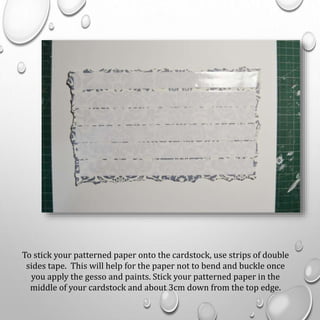
To stick your patterned paper onto the cardstock, use strips of double
sides tape. This will help for the paper not to bend and buckle once
you apply the gesso and paints. Stick your patterned paper in the
middle of your cardstock and about 3cm down from the top edge.
Choose a stencil for your mixed media and get out your Acrylic Gesso
and an old credit card or spatula.
Use the credit card to spread a fairly even layer of gesso around the
edges of the patterned paper towards the edges of the cardstock on
the top and sides, but only about 5cm down from the bottom edge of
the patterned paper and a bit more (+-7cm), towards the right hand
side bottom.
Allow the gesso to dry naturally or dry off with a heat gun. Make sure
the gesso is dry before you start with the paints. Place your layout on
a plastic sheet for the watercolouring. Have your paint to hand
(Adirondack Ranger Acrylic Paint Denim Blue), a water spritzer, a
paintbrush and some dabbing up paper.
First spray some water over the gesso areas, so that the gesso and
paper is just wet. You will see the paper edges start to curl, but don’t
worry, they will settle down again.
Dab some paint with your paintbrush into the water. You don’t need
big dollops, just small amounts. Add more water with your spritzer
right into the centre of your paint dabs. You will see the paint runs
into the water. Then spritz water again, in and around the gesso
parts of your page.
Pick up your page and tilt it in various directions to allow the water
and paint to run into the gesso areas. If it runs to a place you don’t
want it to, just dab it up with your carlton towel or toilet paper. Keep
adding more water and paint, until you are happy that it covers the
gesso and surrounding cardstock. Allow it to dry naturally or use a
heat gun to dry it off.
Once the paint it dry, hand tear along the top and side edges and
then at an angle down towards the right hand side of the page. So
that you have something to the effect of the photo above. Leave some
cardstock white space around the watercolour edge, as this is the
attractive part and you don’t want to tear that off.
Once again I use strips of double sided tape to stick this down onto
the final background, so that if your page has buckled a bit, the strips
pull it straight. When sticking it down, pull off a middle strip to start
with, position it on the patterned background and stick. Pull off the
remaining strips one at a time from the centre out, smoothing from
the centre outwards each time.
Stick your watercolour feature onto the background, as explained in
the previous slide. Position it evenly in the middle. Use a paper
distresser to distress the edges of your final patterned background.
(the red written paper)
Use a paper distresser to distress the
edges of your final patterned
background.
Now use some white acrylic paint and a
paintbrush, to whiten up the edges of
the corrugated board.
Allow some strokes to be longer than
others, so that you get an uneven edge,
as shown above. Allow the paint to dry
or use a heat gun to dry it.
Now the fun begins! This is where you
now start adding your photo and
embelishments! ;-)
Sand the edges of your photo with some
sandpaper or a sanding block.
Paste your photo onto the corrugated
board. I raised my photo with some
foam to give it dimension. Do not stick
the photo right to the edges, as you
might want to still place an
embellishment underneath the edges of
your photo.
Add stickers and die-cuts alongside the
sides of the photo, with their edges
placed just beneath the photo. I used
some foam squares to add dimension to
my layers.
I matted some banner stickers on cardstock and then created
this banner, with some twine under the stickers. The stickers
are raised with foam squares. The twine is then just rolled
round 2 brads, that I altered to flatten their pins and then
stuck down with glue dots. The glue dots hold the twine in
place.
Add some random stamping. The chevrons and bottom right
cluster stamps are stamped with an acrylic block to give
solid images, unlike the random stamping. For the random
stamping just press the stamp with your fingers onto the
page. This does not give a solid image and is uneven, which is
exactly the look you want.
Add some more die-cuts or cut out elements, along with
flowers and leaves. Layer these so that some are raised and
others flat. I added my title “Travel” and also a little line of
journaling.
Voila…you have created your layout and are done! ;-)
The end result!
Supplies List
• Teresa Collins Now and Then Collection –
Stickers, Papers, Die-Cuts
• Canson Mixed Media Watercolour Paper
• Cardstock – Bazzill – Green and Light Blue
• Stamps
1. Prima Cartographer
2. Papermania – All Aboard – Postmark
3. 7 Gypsies – Par Avion
• Flowers
1. Petaloo
2. Bazill Basics
3. Prima
• Twine
• Brads – My Minds Eye – Lost and Found 1
• Stencil – Prima
• Acrylic Gesso – Dala
• Acrylic Paint – Adirondack Ranger – Denim
Blue

Travel layout step by step

  • 1.
  • 2.
    Start by gettinga photo that you want to scrap. My photo is 10x15cm. Cut a 30x30cm patterned paper into half i.e. 15x30cm. Cut a piece of corrugated board to 20x15cm. For the background I have used Canson Mixed Media Watercolour paper. But you could use a thick white cardstock. I cut this to 29x29cm.
  • 3.
    Hand tear allsides of your patterned paper, by about 1 to 1,5cm off, around all sides. Do the same with the corrugated board but leave the top edge of your corrugated board straight.
  • 4.
    To stick yourpatterned paper onto the cardstock, use strips of double sides tape. This will help for the paper not to bend and buckle once you apply the gesso and paints. Stick your patterned paper in the middle of your cardstock and about 3cm down from the top edge.
  • 5.
    Choose a stencilfor your mixed media and get out your Acrylic Gesso and an old credit card or spatula.
  • 6.
    Use the creditcard to spread a fairly even layer of gesso around the edges of the patterned paper towards the edges of the cardstock on the top and sides, but only about 5cm down from the bottom edge of the patterned paper and a bit more (+-7cm), towards the right hand side bottom.
  • 7.
    Allow the gessoto dry naturally or dry off with a heat gun. Make sure the gesso is dry before you start with the paints. Place your layout on a plastic sheet for the watercolouring. Have your paint to hand (Adirondack Ranger Acrylic Paint Denim Blue), a water spritzer, a paintbrush and some dabbing up paper.
  • 8.
    First spray somewater over the gesso areas, so that the gesso and paper is just wet. You will see the paper edges start to curl, but don’t worry, they will settle down again.
  • 9.
    Dab some paintwith your paintbrush into the water. You don’t need big dollops, just small amounts. Add more water with your spritzer right into the centre of your paint dabs. You will see the paint runs into the water. Then spritz water again, in and around the gesso parts of your page.
  • 10.
    Pick up yourpage and tilt it in various directions to allow the water and paint to run into the gesso areas. If it runs to a place you don’t want it to, just dab it up with your carlton towel or toilet paper. Keep adding more water and paint, until you are happy that it covers the gesso and surrounding cardstock. Allow it to dry naturally or use a heat gun to dry it off.
  • 11.
    Once the paintit dry, hand tear along the top and side edges and then at an angle down towards the right hand side of the page. So that you have something to the effect of the photo above. Leave some cardstock white space around the watercolour edge, as this is the attractive part and you don’t want to tear that off.
  • 12.
    Once again Iuse strips of double sided tape to stick this down onto the final background, so that if your page has buckled a bit, the strips pull it straight. When sticking it down, pull off a middle strip to start with, position it on the patterned background and stick. Pull off the remaining strips one at a time from the centre out, smoothing from the centre outwards each time.
  • 13.
    Stick your watercolourfeature onto the background, as explained in the previous slide. Position it evenly in the middle. Use a paper distresser to distress the edges of your final patterned background. (the red written paper)
  • 14.
    Use a paperdistresser to distress the edges of your final patterned background.
  • 15.
    Now use somewhite acrylic paint and a paintbrush, to whiten up the edges of the corrugated board.
  • 16.
    Allow some strokesto be longer than others, so that you get an uneven edge, as shown above. Allow the paint to dry or use a heat gun to dry it.
  • 17.
    Now the funbegins! This is where you now start adding your photo and embelishments! ;-)
  • 18.
    Sand the edgesof your photo with some sandpaper or a sanding block.
  • 19.
    Paste your photoonto the corrugated board. I raised my photo with some foam to give it dimension. Do not stick the photo right to the edges, as you might want to still place an embellishment underneath the edges of your photo.
  • 20.
    Add stickers anddie-cuts alongside the sides of the photo, with their edges placed just beneath the photo. I used some foam squares to add dimension to my layers.
  • 21.
    I matted somebanner stickers on cardstock and then created this banner, with some twine under the stickers. The stickers are raised with foam squares. The twine is then just rolled round 2 brads, that I altered to flatten their pins and then stuck down with glue dots. The glue dots hold the twine in place.
  • 22.
    Add some randomstamping. The chevrons and bottom right cluster stamps are stamped with an acrylic block to give solid images, unlike the random stamping. For the random stamping just press the stamp with your fingers onto the page. This does not give a solid image and is uneven, which is exactly the look you want.
  • 23.
    Add some moredie-cuts or cut out elements, along with flowers and leaves. Layer these so that some are raised and others flat. I added my title “Travel” and also a little line of journaling. Voila…you have created your layout and are done! ;-)
  • 24.
  • 25.
    Supplies List • TeresaCollins Now and Then Collection – Stickers, Papers, Die-Cuts • Canson Mixed Media Watercolour Paper • Cardstock – Bazzill – Green and Light Blue • Stamps 1. Prima Cartographer 2. Papermania – All Aboard – Postmark 3. 7 Gypsies – Par Avion • Flowers 1. Petaloo 2. Bazill Basics 3. Prima • Twine • Brads – My Minds Eye – Lost and Found 1 • Stencil – Prima • Acrylic Gesso – Dala • Acrylic Paint – Adirondack Ranger – Denim Blue