

www.rajasthanpower.in

The transformer is an electrical machine that allows the transmission
and distribution of electric energy simply, or we can say it is a device
which is used for reducing or increasing the alternating current
TRANSFORMER

Install transformers which are clearly manufactured
accordance with the certifications like ISO, EEPC, BEE and
IEEMA etc. These certifications ensures a safe installation as
well as from the reliable and efficient power supply system.
TRANSFORMER STANDARDS

TRANSFORMER STANDARDS

TRANSFORMER STANDARDS

TRANSFORMER STANDARDS

TRANSFORMER STANDARDS

Installation of Transformer is very common yet a very
complicated practice. Must have to take some point in
consideration before operating it
Some Basic Installation Practices

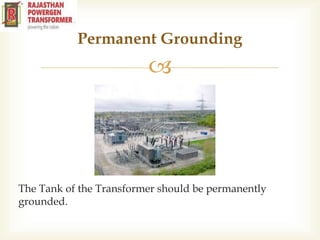
The Tank of the Transformer should be permanently
grounded.
Permanent Grounding

There must not be any access to the liquid filled
compartment in the condition of excessive rain or humidity
Humidity

In future, if there will be any need to empty the tank Make
sure that you have proper equipment for the dry storage of
liquid for inspection and for filtering the liquid in order to
refill the tank.
Always ensure that the equipment used in the handling of
fluid must be dry, clean, and free from contaminated items.
Fluid Inspection
Must record the pressure and ambient temperature
regularly.
Must follow the instructions given by manufacturer for the
storage of the
Pressure Maintenance

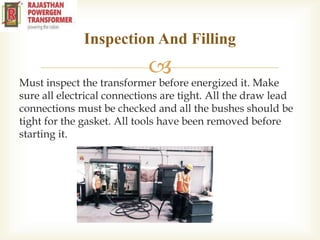
Must inspect the transformer before energized it. Make
sure all electrical connections are tight. All the draw lead
connections must be checked and all the bushes should be
tight for the gasket. All tools have been removed before
starting it.
Inspection And Filling

Must observe the transformer after applying full voltage,
during the first few hours of starting under load.
For first few days , the transformer should be kept under
observation. Keep check the oil and dielectric strength of it.
Record the pressure and temperature in the tank during
the first week of operation.
Loading

At the time of operating, must install the surge arresters
and connect them to terminals or bushings with the
shortest possible leads.
The arresters protect the equipment from the lightning and
switching surges.
Surge Arresters


When the Transformer is Under Vacuum, Never, ever...
 try to Apply voltage to the transformer
 left it unattended; a positive pressure must be
applied over there
 Stand or start walking on the tank of transformer
Points to remember


As long as the weight of transformer is equally distributed ,
multiple transformers can be placed or mounted on a
single pole. the total weight must be balanced within the
capacity of pole.
Structural Considerations

At Secondary mains, sub-100 kVA single-phase
distribution transformers can be mounted. For Above
100kVA transformers pad or platform mounting are
options
Mounting

There are some self-protected transformers types, Apart from
them , all distribution transformers must have installed the fused
cut outs and lighting arresters on the primary side of transformer.
Protection

There are number of cables and wires attached with the
transformer so cover all the wires and cables lying on the
ground with wood or plastic moulding about 8 feet above
from the base of the pole.
Ground Wires

The Guy wires can protect the line of the pole from the
damaged by strain of line conductors and pole mounted
equipment and can minimize the damage caused by the
dauce weather
Guying of Poles

Ways To Keep your Outdoor
Transformers safe

Transformers should be Located at such place where
there will be less chances of damage by natural or
human element. For instance, it might fall out then it
should be kept out way away anything like such
moving vehicles or people.
Minimizing Damage

Particularly for heavy transformers , soil should be
considered. The soil should be good enough to bear the
weight without any shifting. For instance, large amount
of clay in the soil would lead to bogging or
compression
Soil Considerations

Ways To Keep your Indoor
Transformers safe

There must be enough space to cross the air, proper
ventilation must be there.
Ventilation

It should be placed where there is sound –absorbent
material on the walls. It should not be placed at
crowded area.
Noise

Transformers should be placed at clean area i.e. it
should be away from chemical pollutants or dust, that
could be a reason for its damage.
Contaminants

Always ensures that no water gets inside the
transformer. Excess water damages both dry-type and
liquid type transformer.
Water

Transformers should be placed at a place, so that they
can be easily accessible in case of repairing , testing or
maintaining.
Accessibility

 Location must be appropriate: liquid-filled
transformers are fire hazards, they must be placed at
suitable location that match up to fire hazard
specifications
 Avoid the leakage: must position them at certain
location where the possibility of leakage will not risk
anyone over there.
Precautions for Liquid Filled
Transformers

 Ventilation : During the installation of dry-type
transformer, ensure that there must be proper
ventilation. Can get a easy access to dry and clean
air. Should keep enough space, so that the heat can
diffuse easily.
 Surrounding: the near by area must be clear, the air
should be clean, and other pollutants..
Precautions for Dry Type
Transformers

Contact Us

Transformer installation Practices

  • 1.
  • 2.
     The transformer isan electrical machine that allows the transmission and distribution of electric energy simply, or we can say it is a device which is used for reducing or increasing the alternating current TRANSFORMER
  • 3.
     Install transformers whichare clearly manufactured accordance with the certifications like ISO, EEPC, BEE and IEEMA etc. These certifications ensures a safe installation as well as from the reliable and efficient power supply system. TRANSFORMER STANDARDS
  • 4.
  • 5.
  • 6.
  • 7.
  • 8.
     Installation of Transformeris very common yet a very complicated practice. Must have to take some point in consideration before operating it Some Basic Installation Practices
  • 9.
     The Tank ofthe Transformer should be permanently grounded. Permanent Grounding
  • 10.
     There must notbe any access to the liquid filled compartment in the condition of excessive rain or humidity Humidity
  • 11.
     In future, ifthere will be any need to empty the tank Make sure that you have proper equipment for the dry storage of liquid for inspection and for filtering the liquid in order to refill the tank. Always ensure that the equipment used in the handling of fluid must be dry, clean, and free from contaminated items. Fluid Inspection
  • 12.
    Must record thepressure and ambient temperature regularly. Must follow the instructions given by manufacturer for the storage of the Pressure Maintenance
  • 13.
     Must inspect thetransformer before energized it. Make sure all electrical connections are tight. All the draw lead connections must be checked and all the bushes should be tight for the gasket. All tools have been removed before starting it. Inspection And Filling
  • 14.
     Must observe thetransformer after applying full voltage, during the first few hours of starting under load. For first few days , the transformer should be kept under observation. Keep check the oil and dielectric strength of it. Record the pressure and temperature in the tank during the first week of operation. Loading
  • 15.
     At the timeof operating, must install the surge arresters and connect them to terminals or bushings with the shortest possible leads. The arresters protect the equipment from the lightning and switching surges. Surge Arresters
  • 16.
  • 17.
     When the Transformeris Under Vacuum, Never, ever...  try to Apply voltage to the transformer  left it unattended; a positive pressure must be applied over there  Stand or start walking on the tank of transformer Points to remember
  • 18.
  • 19.
     As long asthe weight of transformer is equally distributed , multiple transformers can be placed or mounted on a single pole. the total weight must be balanced within the capacity of pole. Structural Considerations
  • 20.
     At Secondary mains,sub-100 kVA single-phase distribution transformers can be mounted. For Above 100kVA transformers pad or platform mounting are options Mounting
  • 21.
     There are someself-protected transformers types, Apart from them , all distribution transformers must have installed the fused cut outs and lighting arresters on the primary side of transformer. Protection
  • 22.
     There are numberof cables and wires attached with the transformer so cover all the wires and cables lying on the ground with wood or plastic moulding about 8 feet above from the base of the pole. Ground Wires
  • 23.
     The Guy wirescan protect the line of the pole from the damaged by strain of line conductors and pole mounted equipment and can minimize the damage caused by the dauce weather Guying of Poles
  • 24.
     Ways To Keepyour Outdoor Transformers safe
  • 25.
     Transformers should beLocated at such place where there will be less chances of damage by natural or human element. For instance, it might fall out then it should be kept out way away anything like such moving vehicles or people. Minimizing Damage
  • 26.
     Particularly for heavytransformers , soil should be considered. The soil should be good enough to bear the weight without any shifting. For instance, large amount of clay in the soil would lead to bogging or compression Soil Considerations
  • 27.
     Ways To Keepyour Indoor Transformers safe
  • 28.
     There must beenough space to cross the air, proper ventilation must be there. Ventilation
  • 29.
     It should beplaced where there is sound –absorbent material on the walls. It should not be placed at crowded area. Noise
  • 30.
     Transformers should beplaced at clean area i.e. it should be away from chemical pollutants or dust, that could be a reason for its damage. Contaminants
  • 31.
     Always ensures thatno water gets inside the transformer. Excess water damages both dry-type and liquid type transformer. Water
  • 32.
     Transformers should beplaced at a place, so that they can be easily accessible in case of repairing , testing or maintaining. Accessibility
  • 33.
      Location mustbe appropriate: liquid-filled transformers are fire hazards, they must be placed at suitable location that match up to fire hazard specifications  Avoid the leakage: must position them at certain location where the possibility of leakage will not risk anyone over there. Precautions for Liquid Filled Transformers
  • 34.
      Ventilation :During the installation of dry-type transformer, ensure that there must be proper ventilation. Can get a easy access to dry and clean air. Should keep enough space, so that the heat can diffuse easily.  Surrounding: the near by area must be clear, the air should be clean, and other pollutants.. Precautions for Dry Type Transformers
  • 35.