Introduction:
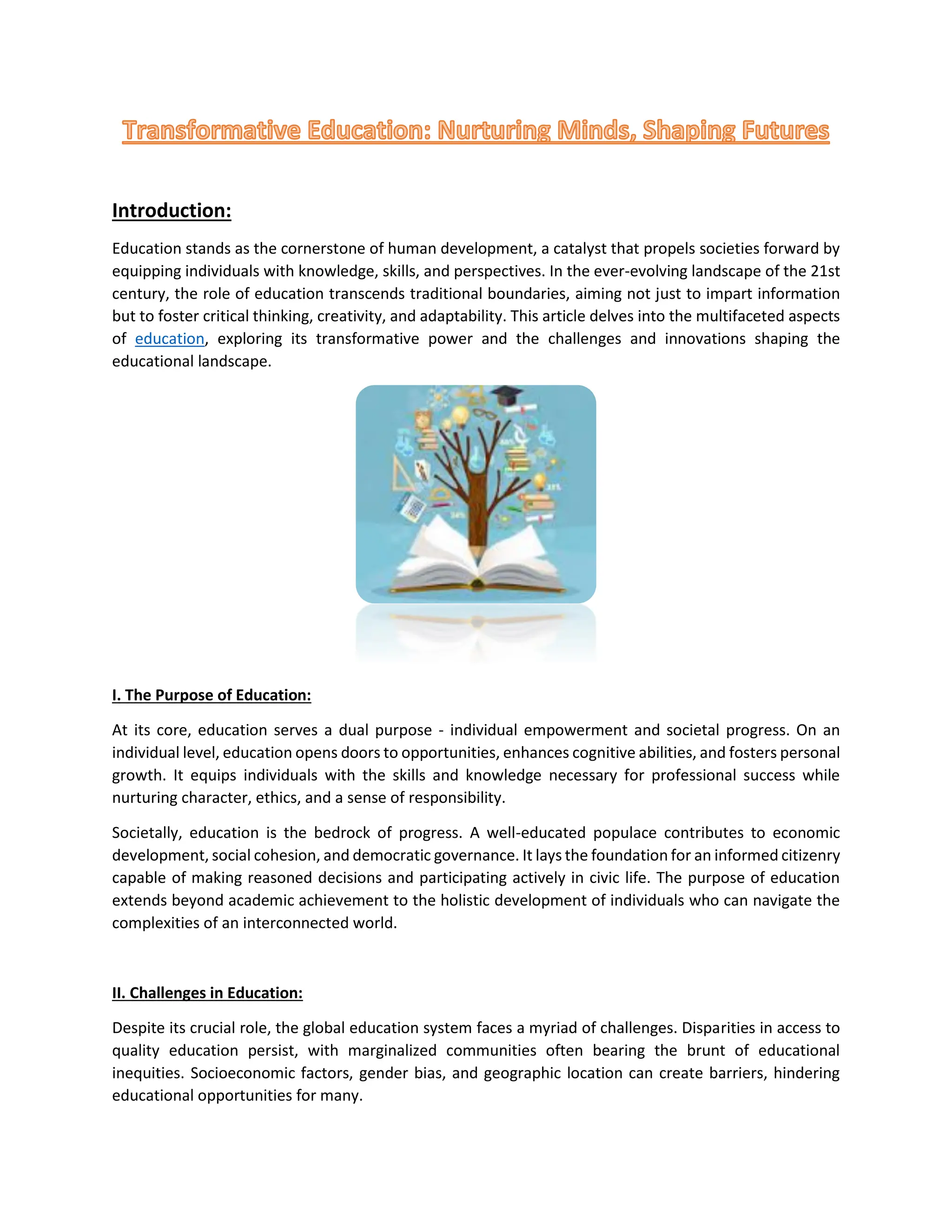
Education stands as the cornerstone of human development, a catalyst that propels societies forward by
equipping individuals with knowledge, skills, and perspectives. In the ever-evolving landscape of the 21st
century, the role of education transcends traditional boundaries, aiming not just to impart information
but to foster critical thinking, creativity, and adaptability. This article delves into the multifaceted aspects
of education, exploring its transformative power and the challenges and innovations shaping the
educational landscape.
I. The Purpose of Education:
At its core, education serves a dual purpose - individual empowerment and societal progress. On an
individual level, education opens doors to opportunities, enhances cognitive abilities, and fosters personal
growth. It equips individuals with the skills and knowledge necessary for professional success while
nurturing character, ethics, and a sense of responsibility.
Societally, education is the bedrock of progress. A well-educated populace contributes to economic
development, social cohesion, and democratic governance. It lays the foundation for an informed citizenry
capable of making reasoned decisions and participating actively in civic life. The purpose of education
extends beyond academic achievement to the holistic development of individuals who can navigate the
complexities of an interconnected world.
II. Challenges in Education:
Despite its crucial role, the global education system faces a myriad of challenges. Disparities in access to
quality education persist, with marginalized communities often bearing the brunt of educational
inequities. Socioeconomic factors, gender bias, and geographic location can create barriers, hindering
educational opportunities for many.
Additionally, outdated pedagogical approaches and curricula may fail to meet the evolving needs of a
dynamic workforce. The digital divide exacerbates disparities, as not all students have equal access to
technology and online resources. Moreover, issues like student mental health, bullying, and educational
burnout have gained prominence, underscoring the need for a holistic approach to education that
addresses both academic and emotional well-being.
III. Innovations in Education:
To address these challenges, the educational landscape is witnessing a wave of innovations aimed at
fostering inclusivity, adaptability, and relevance. Technology plays a pivotal role in democratizing access
to education, offering online courses, virtual classrooms, and interactive learning platforms. The rise of
Massive Open Online Courses (MOOCs) has democratized education, enabling learners worldwide to
access high-quality content from renowned institutions.
Innovative pedagogies, such as project-based learning and personalized learning plans, seek to cater to
diverse learning styles and interests. These approaches prioritize critical thinking, problem-solving, and
creativity over rote memorization, aligning education with the demands of the modern workforce.
Furthermore, interdisciplinary and experiential learning models bridge the gap between theory and
practice, preparing students for real-world challenges. Collaborative learning environments, both online
and offline, encourage teamwork, communication, and cultural competence, essential skills in an
interconnected global society.
IV. Lifelong Learning and Continuous Adaptation:
The rapid pace of technological advancement and societal change necessitate a shift towards a culture of
lifelong learning. The traditional model of education as a one-time endeavor is being replaced by a
dynamic approach that emphasizes continuous skill development and adaptation.
Employers increasingly value soft skills such as adaptability, communication, and critical thinking
alongside technical expertise. Lifelong learning initiatives, including professional development programs
and upskilling opportunities, empower individuals to stay relevant in an ever-changing job market.
V. The Role of Teachers:
Central to the success of any educational system are the teachers who serve as mentors, guides, and
facilitators of knowledge. Recognizing the pivotal role teachers play, efforts are being made to enhance
teacher training programs, provide ongoing professional development, and create supportive work
environments.
Technology also aids educators in creating engaging and personalized learning experiences. Virtual reality,
augmented reality, and other cutting-edge tools offer immersive and interactive teaching methods,
enhancing the learning experience for students.
VI. Education for Global Citizenship:
In an era of interconnectedness, education must transcend national borders and instill a sense of global
citizenship. Encouraging cultural awareness, empathy, and an understanding of diverse perspectives
fosters a generation capable of addressing global challenges, from climate change to social injustice.
International collaborations, exchange programs, and global education initiatives contribute to a more
interconnected and empathetic world. Education becomes a tool for breaking down cultural barriers,
fostering cooperation, and creating a shared vision for a sustainable and inclusive future.
Conclusion:
Education, as a transformative force, holds the key to shaping a brighter and more equitable future. By
addressing challenges, embracing innovations, and fostering a culture of lifelong learning, societies can
unlock the full potential of individuals and contribute to global progress. As we navigate the complexities
of the 21st century, a commitment to quality, inclusive education becomes paramount, laying the
groundwork for a world where every individual can thrive and contribute meaningfully to the collective
tapestry of human achievement.
Please click here, to know more

Transformative Education: Nurturing Minds, Shaping Futures

  • 1.
    Introduction: Education stands asthe cornerstone of human development, a catalyst that propels societies forward by equipping individuals with knowledge, skills, and perspectives. In the ever-evolving landscape of the 21st century, the role of education transcends traditional boundaries, aiming not just to impart information but to foster critical thinking, creativity, and adaptability. This article delves into the multifaceted aspects of education, exploring its transformative power and the challenges and innovations shaping the educational landscape. I. The Purpose of Education: At its core, education serves a dual purpose - individual empowerment and societal progress. On an individual level, education opens doors to opportunities, enhances cognitive abilities, and fosters personal growth. It equips individuals with the skills and knowledge necessary for professional success while nurturing character, ethics, and a sense of responsibility. Societally, education is the bedrock of progress. A well-educated populace contributes to economic development, social cohesion, and democratic governance. It lays the foundation for an informed citizenry capable of making reasoned decisions and participating actively in civic life. The purpose of education extends beyond academic achievement to the holistic development of individuals who can navigate the complexities of an interconnected world. II. Challenges in Education: Despite its crucial role, the global education system faces a myriad of challenges. Disparities in access to quality education persist, with marginalized communities often bearing the brunt of educational inequities. Socioeconomic factors, gender bias, and geographic location can create barriers, hindering educational opportunities for many.
  • 2.
    Additionally, outdated pedagogicalapproaches and curricula may fail to meet the evolving needs of a dynamic workforce. The digital divide exacerbates disparities, as not all students have equal access to technology and online resources. Moreover, issues like student mental health, bullying, and educational burnout have gained prominence, underscoring the need for a holistic approach to education that addresses both academic and emotional well-being. III. Innovations in Education: To address these challenges, the educational landscape is witnessing a wave of innovations aimed at fostering inclusivity, adaptability, and relevance. Technology plays a pivotal role in democratizing access to education, offering online courses, virtual classrooms, and interactive learning platforms. The rise of Massive Open Online Courses (MOOCs) has democratized education, enabling learners worldwide to access high-quality content from renowned institutions. Innovative pedagogies, such as project-based learning and personalized learning plans, seek to cater to diverse learning styles and interests. These approaches prioritize critical thinking, problem-solving, and creativity over rote memorization, aligning education with the demands of the modern workforce. Furthermore, interdisciplinary and experiential learning models bridge the gap between theory and practice, preparing students for real-world challenges. Collaborative learning environments, both online and offline, encourage teamwork, communication, and cultural competence, essential skills in an interconnected global society. IV. Lifelong Learning and Continuous Adaptation: The rapid pace of technological advancement and societal change necessitate a shift towards a culture of lifelong learning. The traditional model of education as a one-time endeavor is being replaced by a dynamic approach that emphasizes continuous skill development and adaptation. Employers increasingly value soft skills such as adaptability, communication, and critical thinking alongside technical expertise. Lifelong learning initiatives, including professional development programs and upskilling opportunities, empower individuals to stay relevant in an ever-changing job market. V. The Role of Teachers: Central to the success of any educational system are the teachers who serve as mentors, guides, and facilitators of knowledge. Recognizing the pivotal role teachers play, efforts are being made to enhance teacher training programs, provide ongoing professional development, and create supportive work environments.
  • 3.
    Technology also aidseducators in creating engaging and personalized learning experiences. Virtual reality, augmented reality, and other cutting-edge tools offer immersive and interactive teaching methods, enhancing the learning experience for students. VI. Education for Global Citizenship: In an era of interconnectedness, education must transcend national borders and instill a sense of global citizenship. Encouraging cultural awareness, empathy, and an understanding of diverse perspectives fosters a generation capable of addressing global challenges, from climate change to social injustice. International collaborations, exchange programs, and global education initiatives contribute to a more interconnected and empathetic world. Education becomes a tool for breaking down cultural barriers, fostering cooperation, and creating a shared vision for a sustainable and inclusive future. Conclusion: Education, as a transformative force, holds the key to shaping a brighter and more equitable future. By addressing challenges, embracing innovations, and fostering a culture of lifelong learning, societies can unlock the full potential of individuals and contribute to global progress. As we navigate the complexities of the 21st century, a commitment to quality, inclusive education becomes paramount, laying the groundwork for a world where every individual can thrive and contribute meaningfully to the collective tapestry of human achievement. Please click here, to know more