TRANSCUTANEOUS
ENERGY TRANSMISSION
INTRODUCTION TO
TRANSCUTANEOUS
ENERGY
TRANSMISSION
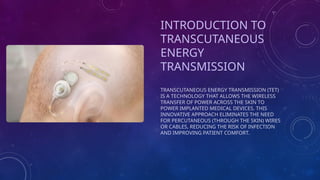
TRANSCUTANEOUS ENERGY TRANSMISSION (TET)
IS A TECHNOLOGY THAT ALLOWS THE WIRELESS
TRANSFER OF POWER ACROSS THE SKIN TO
POWER IMPLANTED MEDICAL DEVICES. THIS
INNOVATIVE APPROACH ELIMINATES THE NEED
FOR PERCUTANEOUS (THROUGH THE SKIN) WIRES
OR CABLES, REDUCING THE RISK OF INFECTION
AND IMPROVING PATIENT COMFORT.
PRINCIPLES OF TRANSCUTANEOUS ENERGY
TRANSMISSION
1.Inductive Coupling
Power is transferred from an external coil to an implanted coil via electromagnetic induction, allowing
energy to cross the skin barrier safely
2. Wireless Telemetry
Bidirectional communication between the external and implanted components allows for monitoring
and control of the implanted device
3. Resonant Circuits
Carefully tuned resonant circuits in the transmitter and receiver optimize power transfer
efficiency, ensuring reliable operation of the implanted device
BENEFITS OF TRANSCUTANEOUS ENERGY
TRANSMISSION
1.Reduced Infection Risk
Eliminating the need for percutaneous wires or cables greatly reduces the risk of infection at the implant
site.
2. Improved Comfort
Patients experience greater comfort and mobility without the constraints of wired connections.
3. Reliable Power Supply
Consistent power delivery to the implanted device ensures uninterrupted functionality and performance
4. Extended Implant Lifetime
TET systems can recharge implanted batteries, extending the lifespan of the medical device
APPLICATIONS OF TRANSCUTANEOUS ENERGY
TRANSMISSION
1.Cardiac Devices
TET is used to power pacemakers, defibrillators, and ventricular assist devices, providing a reliable
energy source for these life-critical implants.
2. Neural Stimulators
TET enables the powering of implanted neural stimulators used to treat conditions like chronic pain,
Parkinson's disease, and epilepsy
3. Orthopedic Devices
TET can power bone growth stimulators, functional electrical stimulation devices, and other
implants that aid in the rehabilitation of musculoskeletal injuries.
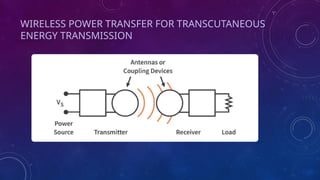
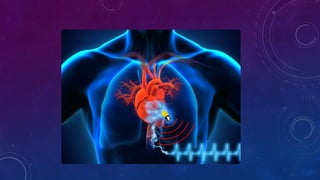
WIRELESS POWER TRANSFER FOR TRANSCUTANEOUS
ENERGY TRANSMISSION
CHALLENGES AND LIMITATIONS OF TRANSCUTANEOUS
ENERGY TRANSMISSION
1. Tissue Heating
The electromagnetic fields used for TET can cause localized heating of surrounding tissues, which must be carefully
monitored and controlled.
2. Alignment and Distance
Maintaining optimal alignment and distance between the external transmitter and implanted receiver coils is crucial for
efficient power transfer
3. Interference and Safety
TET systems must be designed to minimize electromagnetic interference with other medical devices and ensure patient
safety.
4. Regulatory Approval
Extensive testing and regulatory approval are required to ensure the safety and efficacy of TET systems for medical
applications.
SAFETY CONSIDERATIONS IN TRANSCUTANEOUS
ENERGY TRANSMISSION
1. Tissue Heating
Careful design and monitoring of electromagnetic field intensity to prevent excessive tissue
heating.
2. Electromagnetic Interference
Shielding and filtering to minimize interference with other electronic devices and medical
equipment.
3. Implant Integrity
Robust construction and testing to ensure the implant can withstand the transmitted energy
without damage.
EMERGING TRENDS IN TRANSCUTANEOUS ENERGY
TRANSMISSION
1.Miniaturization
Advancements in materials and circuit design are enabling the development of smaller,
more compact TET systems for implantable devices
2. Improved Efficiency
Researchers are exploring new coil geometries and power transmission techniques to
enhance the efficiency of TET, reducing energy losses.
3. Wireless Charging
Integrating TET with wireless charging capabilities allows patients to conveniently recharge
implanted devices without the need for wired connections.
CONCLUSION AND FUTURE OUTLOOK
1.Transformative Technology
Transcutaneous energy transmission is a game-changing technology that is revolutionizing the field of implantable
medical devices.
2. Improved Patient Outcomes
TET's ability to provide reliable, infection-free power to implants is enhancing patient comfort, mobility, and overall
quality of life.
3. Continued Innovation
As research and development in TET continues, we can expect to see even more advanced and versatile applications
for this technology.
4. Bright Future
The widespread adoption of TET is paving the way for a future where implanted medical devices seamlessly integrate
with the human body.

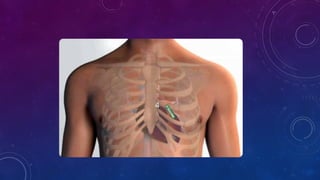
Transcutaneous Energy Transmission system

  • 1.
  • 2.
    INTRODUCTION TO TRANSCUTANEOUS ENERGY TRANSMISSION TRANSCUTANEOUS ENERGYTRANSMISSION (TET) IS A TECHNOLOGY THAT ALLOWS THE WIRELESS TRANSFER OF POWER ACROSS THE SKIN TO POWER IMPLANTED MEDICAL DEVICES. THIS INNOVATIVE APPROACH ELIMINATES THE NEED FOR PERCUTANEOUS (THROUGH THE SKIN) WIRES OR CABLES, REDUCING THE RISK OF INFECTION AND IMPROVING PATIENT COMFORT.
  • 3.
    PRINCIPLES OF TRANSCUTANEOUSENERGY TRANSMISSION 1.Inductive Coupling Power is transferred from an external coil to an implanted coil via electromagnetic induction, allowing energy to cross the skin barrier safely 2. Wireless Telemetry Bidirectional communication between the external and implanted components allows for monitoring and control of the implanted device 3. Resonant Circuits Carefully tuned resonant circuits in the transmitter and receiver optimize power transfer efficiency, ensuring reliable operation of the implanted device
  • 4.
    BENEFITS OF TRANSCUTANEOUSENERGY TRANSMISSION 1.Reduced Infection Risk Eliminating the need for percutaneous wires or cables greatly reduces the risk of infection at the implant site. 2. Improved Comfort Patients experience greater comfort and mobility without the constraints of wired connections. 3. Reliable Power Supply Consistent power delivery to the implanted device ensures uninterrupted functionality and performance 4. Extended Implant Lifetime TET systems can recharge implanted batteries, extending the lifespan of the medical device
  • 5.
    APPLICATIONS OF TRANSCUTANEOUSENERGY TRANSMISSION 1.Cardiac Devices TET is used to power pacemakers, defibrillators, and ventricular assist devices, providing a reliable energy source for these life-critical implants. 2. Neural Stimulators TET enables the powering of implanted neural stimulators used to treat conditions like chronic pain, Parkinson's disease, and epilepsy 3. Orthopedic Devices TET can power bone growth stimulators, functional electrical stimulation devices, and other implants that aid in the rehabilitation of musculoskeletal injuries.
  • 7.
    WIRELESS POWER TRANSFERFOR TRANSCUTANEOUS ENERGY TRANSMISSION
  • 8.
    CHALLENGES AND LIMITATIONSOF TRANSCUTANEOUS ENERGY TRANSMISSION 1. Tissue Heating The electromagnetic fields used for TET can cause localized heating of surrounding tissues, which must be carefully monitored and controlled. 2. Alignment and Distance Maintaining optimal alignment and distance between the external transmitter and implanted receiver coils is crucial for efficient power transfer 3. Interference and Safety TET systems must be designed to minimize electromagnetic interference with other medical devices and ensure patient safety. 4. Regulatory Approval Extensive testing and regulatory approval are required to ensure the safety and efficacy of TET systems for medical applications.
  • 9.
    SAFETY CONSIDERATIONS INTRANSCUTANEOUS ENERGY TRANSMISSION 1. Tissue Heating Careful design and monitoring of electromagnetic field intensity to prevent excessive tissue heating. 2. Electromagnetic Interference Shielding and filtering to minimize interference with other electronic devices and medical equipment. 3. Implant Integrity Robust construction and testing to ensure the implant can withstand the transmitted energy without damage.
  • 10.
    EMERGING TRENDS INTRANSCUTANEOUS ENERGY TRANSMISSION 1.Miniaturization Advancements in materials and circuit design are enabling the development of smaller, more compact TET systems for implantable devices 2. Improved Efficiency Researchers are exploring new coil geometries and power transmission techniques to enhance the efficiency of TET, reducing energy losses. 3. Wireless Charging Integrating TET with wireless charging capabilities allows patients to conveniently recharge implanted devices without the need for wired connections.
  • 12.
    CONCLUSION AND FUTUREOUTLOOK 1.Transformative Technology Transcutaneous energy transmission is a game-changing technology that is revolutionizing the field of implantable medical devices. 2. Improved Patient Outcomes TET's ability to provide reliable, infection-free power to implants is enhancing patient comfort, mobility, and overall quality of life. 3. Continued Innovation As research and development in TET continues, we can expect to see even more advanced and versatile applications for this technology. 4. Bright Future The widespread adoption of TET is paving the way for a future where implanted medical devices seamlessly integrate with the human body.