TRADITIONS OF SARDEGNA
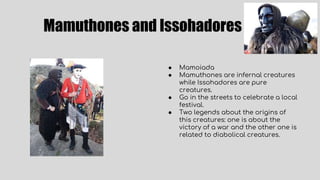
Mamuthones and Issohadores
● Mamoiada
● Mamuthones are infernal creatures
while Issohadores are pure
creatures.
● Go in the streets to celebrate a local
festival.
● Two legends about the origins of
this creatures: one is about the
victory of a war and the other one is
related to diabolical creatures.
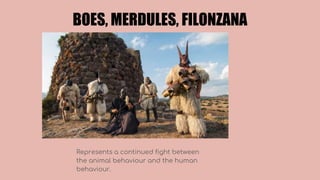
BOES, MERDULES, FILONZANA
Represents a continued fight between
the animal behaviour and the human
behaviour.
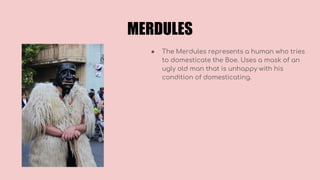
MERDULES
● The Merdules represents a human who tries
to domesticate the Boe. Uses a mask of an
ugly old man that is unhappy with his
condition of domesticating.
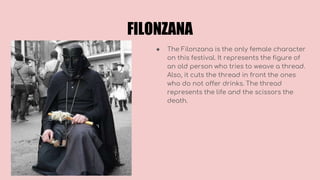
FILONZANA
● The Filonzana is the only female character
on this festival. It represents the figure of
an old person who tries to weave a thread.
Also, it cuts the thread in front the ones
who do not offer drinks. The thread
represents the life and the scissors the
death.
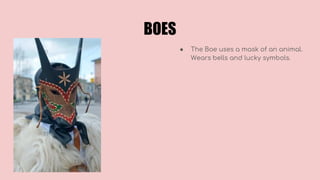
BOES
● The Boe uses a mask of an animal.
Wears bells and lucky symbols.
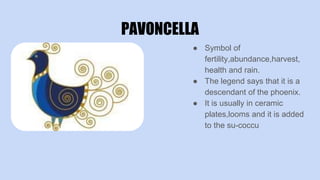
PAVONCELLA
● Symbol of
fertility,abundance,harvest,
health and rain.
● The legend says that it is a
descendant of the phoenix.
● It is usually in ceramic
plates,looms and it is added
to the su-coccu
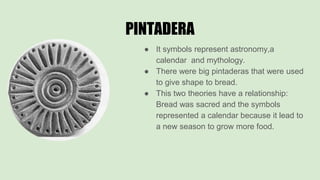
PINTADERA
● It symbols represent astronomy,a
calendar and mythology.
● There were big pintaderas that were used
to give shape to bread.
● This two theories have a relationship:
Bread was sacred and the symbols
represented a calendar because it lead to
a new season to grow more food.
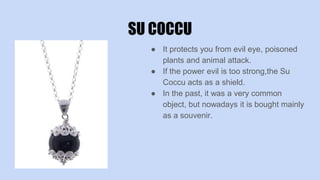
SU COCCU
● It protects you from evil eye, poisoned
plants and animal attack.
● If the power evil is too strong,the Su
Coccu acts as a shield.
● In the past, it was a very common
object, but nowadays it is bought mainly
as a souvenir.
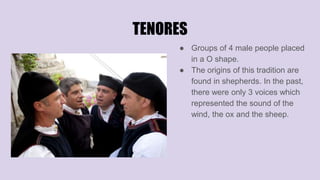
TENORES
● Groups of 4 male people placed
in a O shape.
● The origins of this tradition are
found in shepherds. In the past,
there were only 3 voices which
represented the sound of the
wind, the ox and the sheep.
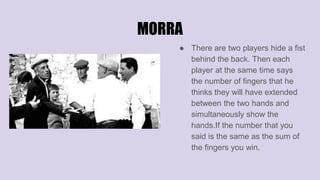
MORRA
● There are two players hide a fist
behind the back. Then each
player at the same time says
the number of fingers that he
thinks they will have extended
between the two hands and
simultaneously show the
hands.If the number that you
said is the same as the sum of
the fingers you win.
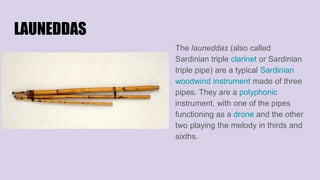
LAUNEDDAS
The launeddas (also called
Sardinian triple clarinet or Sardinian
triple pipe) are a typical Sardinian
woodwind instrument made of three
pipes. They are a polyphonic
instrument, with one of the pipes
functioning as a drone and the other
two playing the melody in thirds and
sixths.
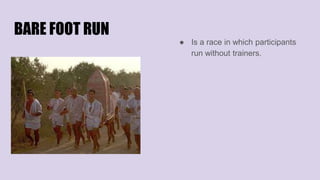
BARE FOOT RUN
● Is a race in which participants
run without trainers.
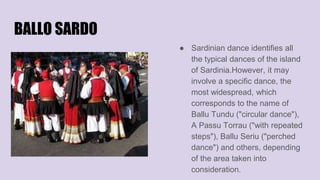
BALLO SARDO
● Sardinian dance identifies all
the typical dances of the island
of Sardinia.However, it may
involve a specific dance, the
most widespread, which
corresponds to the name of
Ballu Tundu ("circular dance"),
A Passu Torrau ("with repeated
steps"), Ballu Seriu ("perched
dance") and others, depending
of the area taken into
consideration.
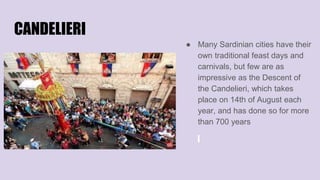
CANDELIERI
● Many Sardinian cities have their
own traditional feast days and
carnivals, but few are as
impressive as the Descent of
the Candelieri, which takes
place on 14th of August each
year, and has done so for more
than 700 years
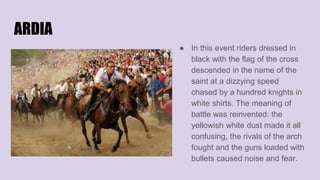
ARDIA
● In this event riders dressed in
black with the flag of the cross
descended in the name of the
saint at a dizzying speed
chased by a hundred knights in
white shirts. The meaning of
battle was reinvented: the
yellowish white dust made it all
confusing, the rivals of the arch
fought and the guns loaded with
bullets caused noise and fear.

Traditions

  • 1.
  • 2.
    Mamuthones and Issohadores ●Mamoiada ● Mamuthones are infernal creatures while Issohadores are pure creatures. ● Go in the streets to celebrate a local festival. ● Two legends about the origins of this creatures: one is about the victory of a war and the other one is related to diabolical creatures.
  • 3.
    BOES, MERDULES, FILONZANA Representsa continued fight between the animal behaviour and the human behaviour.
  • 4.
    MERDULES ● The Merdulesrepresents a human who tries to domesticate the Boe. Uses a mask of an ugly old man that is unhappy with his condition of domesticating.
  • 5.
    FILONZANA ● The Filonzanais the only female character on this festival. It represents the figure of an old person who tries to weave a thread. Also, it cuts the thread in front the ones who do not offer drinks. The thread represents the life and the scissors the death.
  • 6.
    BOES ● The Boeuses a mask of an animal. Wears bells and lucky symbols.
  • 7.
    PAVONCELLA ● Symbol of fertility,abundance,harvest, healthand rain. ● The legend says that it is a descendant of the phoenix. ● It is usually in ceramic plates,looms and it is added to the su-coccu
  • 8.
    PINTADERA ● It symbolsrepresent astronomy,a calendar and mythology. ● There were big pintaderas that were used to give shape to bread. ● This two theories have a relationship: Bread was sacred and the symbols represented a calendar because it lead to a new season to grow more food.
  • 9.
    SU COCCU ● Itprotects you from evil eye, poisoned plants and animal attack. ● If the power evil is too strong,the Su Coccu acts as a shield. ● In the past, it was a very common object, but nowadays it is bought mainly as a souvenir.
  • 10.
    TENORES ● Groups of4 male people placed in a O shape. ● The origins of this tradition are found in shepherds. In the past, there were only 3 voices which represented the sound of the wind, the ox and the sheep.
  • 11.
    MORRA ● There aretwo players hide a fist behind the back. Then each player at the same time says the number of fingers that he thinks they will have extended between the two hands and simultaneously show the hands.If the number that you said is the same as the sum of the fingers you win.
  • 12.
    LAUNEDDAS The launeddas (alsocalled Sardinian triple clarinet or Sardinian triple pipe) are a typical Sardinian woodwind instrument made of three pipes. They are a polyphonic instrument, with one of the pipes functioning as a drone and the other two playing the melody in thirds and sixths.
  • 13.
    BARE FOOT RUN ●Is a race in which participants run without trainers.
  • 14.
    BALLO SARDO ● Sardiniandance identifies all the typical dances of the island of Sardinia.However, it may involve a specific dance, the most widespread, which corresponds to the name of Ballu Tundu ("circular dance"), A Passu Torrau ("with repeated steps"), Ballu Seriu ("perched dance") and others, depending of the area taken into consideration.
  • 15.
    CANDELIERI ● Many Sardiniancities have their own traditional feast days and carnivals, but few are as impressive as the Descent of the Candelieri, which takes place on 14th of August each year, and has done so for more than 700 years
  • 16.
    ARDIA ● In thisevent riders dressed in black with the flag of the cross descended in the name of the saint at a dizzying speed chased by a hundred knights in white shirts. The meaning of battle was reinvented: the yellowish white dust made it all confusing, the rivals of the arch fought and the guns loaded with bullets caused noise and fear.