TPACKTECHNOLOGICAL PEDAGOGICAL CONTENT KNOWLEDGE
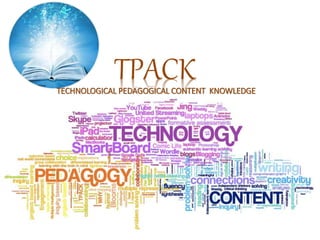
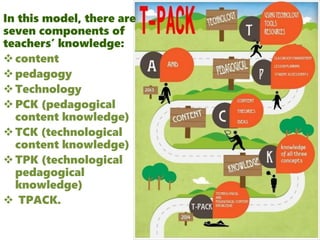
T = TECHNOLOGICAL KNOWLEDGE /TECHNOLOGICAL CONTENT KNOWLEDGE =
knowledge about using technology
P = PEDAGOGICAL KNOWLEDGE / PEDAGOGICAL CONTENT KNOWLEDGE = knowledge
about science , theory , and art of teach
And
C = CONTENT KNOWLEDGE = core subjects , skills , and strategies
K = KNOWLEDGE
Technological pedagogical
content knowledge (TPACK)
is a framework to
understand and describe the
kinds of knowledge needed
by a teacher for effective
pedagogical practice in a
technology enhanced
learning environment.
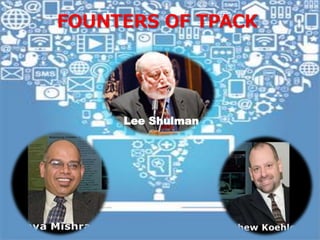
FOUNTERS OF TPACK
Lee Shulman
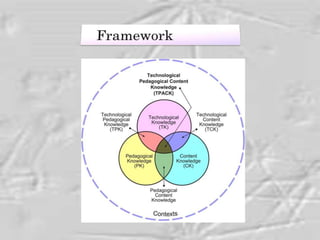
In this model, there are
seven components of
teachers’ knowledge:
content
pedagogy
Technology
PCK (pedagogical
content knowledge)
TCK (technological
content knowledge)
TPK (technological
pedagogical
knowledge)
 TPACK.
Content knowledge (CK) is teachers’
knowledge about the subject matter to be
learned or taught. Knowledge of content
is of critical importance for teachers. It
may also include knowledge of concepts,
theories, conceptual frameworks as well
as knowledge about accepted ways of
developing knowledge.
Content
knowledge (CK)
Pedagogical knowledge (PK) is teachers’ deep
knowledge about the processes and practices
or methods of teaching and learning. This
generic form of knowledge about how
students learn, general classroom
management skills, lesson planning, and
student assessment.
Pedagogical
knowledge (PK)
Pedagogical content knowledge (PCK) is knowledge
about how to combine pedagogy and content
effectively. This is knowledge about how to make a
subject understandable to learners. PCK covers the
core business of teaching, learning, curriculum,
assessment and reporting, such as the conditions that
promote learning and the links among curriculum,
assessment, and pedagogy.
Pedagogical
Content
Knowledge
(PCK)
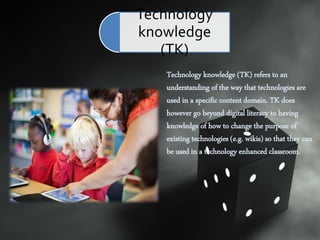
Technology knowledge (TK) refers to an
understanding of the way that technologies are
used in a specific content domain. TK does
however go beyond digital literacy to having
knowledge of how to change the purpose of
existing technologies (e.g. wikis) so that they can
be used in a technology enhanced classroom.
Technology
knowledge
(TK)
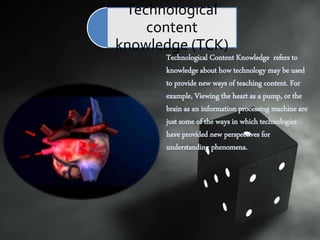
Technological Content Knowledge refers to
knowledge about how technology may be used
to provide new ways of teaching content. For
example, Viewing the heart as a pump, or the
brain as an information processing machine are
just some of the ways in which technologies
have provided new perspectives for
understanding phenomena.
Technological
content
knowledge (TCK)
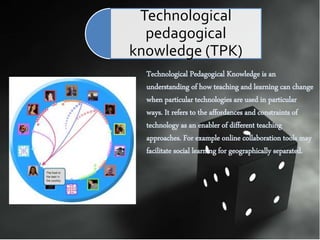
Technological Pedagogical Knowledge is an
understanding of how teaching and learning can change
when particular technologies are used in particular
ways. It refers to the affordances and constraints of
technology as an enabler of different teaching
approaches. For example online collaboration tools may
facilitate social learning for geographically separated.
Technological
pedagogical
knowledge (TPK)
TPACK is an emergent form of knowledge that goes beyond all
three “core” components (content, pedagogy, and technology).
Technological pedagogical content knowledge refers to the
knowledge and understanding of the interplay between CK, PK
and TK when using technology for teaching and learning. It
includes an understanding of the complexity of relationships
between students, teachers, content, practices and technologies.
TPACK is the basis of effective teaching with technology,
requiring an understanding of the representation of concepts
using technologies; pedagogical techniques that use technologies
in constructive ways to teach content; knowledge of what makes
students’ prior knowledge and theories of epistemology; and
knowledge of how technologies can be used to build on existing
knowledge to develop new epistemologies or strengthen old ones.
Technology,
Pedagogy, and
Content Knowledge
Tpack

Tpack

  • 2.
  • 3.
    T = TECHNOLOGICALKNOWLEDGE /TECHNOLOGICAL CONTENT KNOWLEDGE = knowledge about using technology P = PEDAGOGICAL KNOWLEDGE / PEDAGOGICAL CONTENT KNOWLEDGE = knowledge about science , theory , and art of teach And C = CONTENT KNOWLEDGE = core subjects , skills , and strategies K = KNOWLEDGE
  • 4.
    Technological pedagogical content knowledge(TPACK) is a framework to understand and describe the kinds of knowledge needed by a teacher for effective pedagogical practice in a technology enhanced learning environment.
  • 5.
  • 7.
    In this model,there are seven components of teachers’ knowledge: content pedagogy Technology PCK (pedagogical content knowledge) TCK (technological content knowledge) TPK (technological pedagogical knowledge)  TPACK.
  • 8.
    Content knowledge (CK)is teachers’ knowledge about the subject matter to be learned or taught. Knowledge of content is of critical importance for teachers. It may also include knowledge of concepts, theories, conceptual frameworks as well as knowledge about accepted ways of developing knowledge. Content knowledge (CK)
  • 9.
    Pedagogical knowledge (PK)is teachers’ deep knowledge about the processes and practices or methods of teaching and learning. This generic form of knowledge about how students learn, general classroom management skills, lesson planning, and student assessment. Pedagogical knowledge (PK)
  • 10.
    Pedagogical content knowledge(PCK) is knowledge about how to combine pedagogy and content effectively. This is knowledge about how to make a subject understandable to learners. PCK covers the core business of teaching, learning, curriculum, assessment and reporting, such as the conditions that promote learning and the links among curriculum, assessment, and pedagogy. Pedagogical Content Knowledge (PCK)
  • 11.
    Technology knowledge (TK)refers to an understanding of the way that technologies are used in a specific content domain. TK does however go beyond digital literacy to having knowledge of how to change the purpose of existing technologies (e.g. wikis) so that they can be used in a technology enhanced classroom. Technology knowledge (TK)
  • 12.
    Technological Content Knowledgerefers to knowledge about how technology may be used to provide new ways of teaching content. For example, Viewing the heart as a pump, or the brain as an information processing machine are just some of the ways in which technologies have provided new perspectives for understanding phenomena. Technological content knowledge (TCK)
  • 13.
    Technological Pedagogical Knowledgeis an understanding of how teaching and learning can change when particular technologies are used in particular ways. It refers to the affordances and constraints of technology as an enabler of different teaching approaches. For example online collaboration tools may facilitate social learning for geographically separated. Technological pedagogical knowledge (TPK)
  • 14.
    TPACK is anemergent form of knowledge that goes beyond all three “core” components (content, pedagogy, and technology). Technological pedagogical content knowledge refers to the knowledge and understanding of the interplay between CK, PK and TK when using technology for teaching and learning. It includes an understanding of the complexity of relationships between students, teachers, content, practices and technologies. TPACK is the basis of effective teaching with technology, requiring an understanding of the representation of concepts using technologies; pedagogical techniques that use technologies in constructive ways to teach content; knowledge of what makes students’ prior knowledge and theories of epistemology; and knowledge of how technologies can be used to build on existing knowledge to develop new epistemologies or strengthen old ones. Technology, Pedagogy, and Content Knowledge