MODULE 2
TOXICOLOGY
Course outcomes
• Chemical Toxicity of the chemicals in the
environment and Sources of pollution in air ,
water and soil and Solid waste management
and natural Disaster management.
Learning Outcomes
On completion of the course the students will be able to:
1. Demonstrate an understanding of the processes involved in absorption,
distribution, metabolism and excretion of toxicants, including an
understanding of the toxicokinetic behavior of toxicants in mammals.
2. (2) Demonstrate an understanding of the principles and approaches
used to investigate the metabolism of toxicants in laboratory mammals
and in humans and of the metabolic activation of chemicals to toxic
metabolites.
(3) Demonstrate an understanding of target organ toxicity involving the
following organ systems: liver, kidney blood, cardiovascular, immune, skin,
gastrointestinal, pulmonary, reproductive, endocrine, ocular, and central and
peripheral nervous systems. What are the typical mechanisms through which
chemical toxicants affect the structure and function of these systems? What
are the common consequences of toxicant action on these systems?
CONTENTS
• Human Health
– Health issues in developed countries
– Health issues in developing countries
• Environmental Pollution and Disease
– Environmental Contaminants
– Endocrine Disrupters
• Determining Health Effects of Pollutants
• Ecotoxicology
• Risk Assessment
Human Health
• Two indicators of human health
– Life expectancy- how long people are expected to
live
– Infant mortality- how many children die before
age of 1 year
o Vary greatly
between countries
• Developed countries
• Developing countries
Health Issues in
Highly Developed Countries
• By many measures- health is good in these countries
– Great sanitation
– Few childhood diseases
• Average life expectancy
– Men = 75 years
– Women = 80 years
• Leading causes of death in US
– Cardiovascular disease
– Cancer
– Chronic Obstructive Pulmonary Disease (of the lungs)
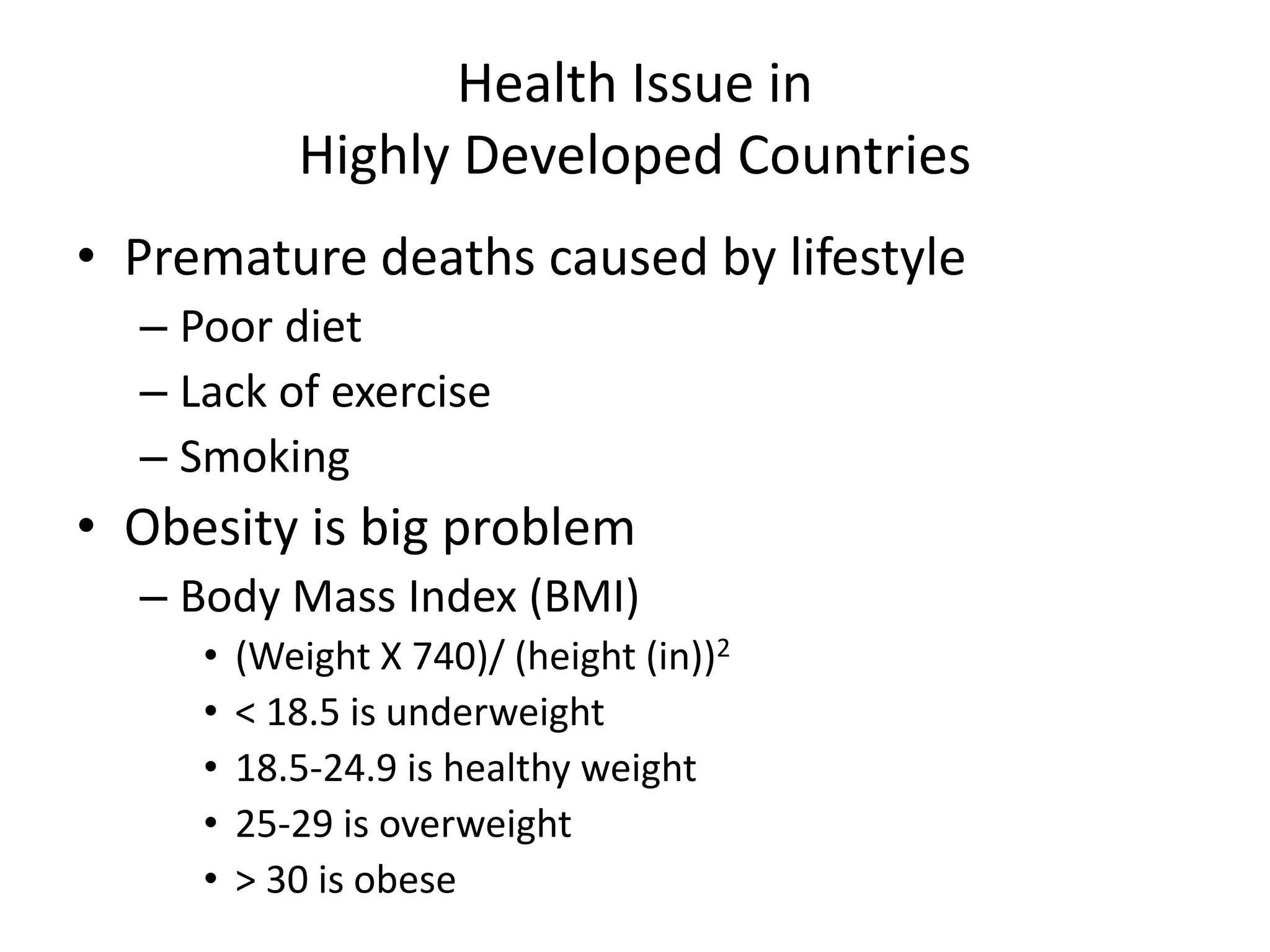
Health Issue in
Highly Developed Countries
• Premature deaths caused by lifestyle
– Poor diet
– Lack of exercise
– Smoking
• Obesity is big problem
– Body Mass Index (BMI)
• (Weight X 740)/ (height (in))2
• < 18.5 is underweight
• 18.5-24.9 is healthy weight
• 25-29 is overweight
• > 30 is obese
Health Issues in Developing Countries
• Biggest problems
– Malnutrition, unsafe water, poor sanitation
• Life Expectancy
– Overall is 65 years
– Very poorest developing countries = 45 years
• Most of these countries have high AIDS epidemics
• Childhood mortality is high (18% of deaths)
– Diarrheal diseases
– Malnutrition
– Malaria
– AIDS/HIV
Emerging and Reemerging Diseases
• Emerging Disease - not
previously observed in
humans
– Usually jumps from
animal host
– Ex: AIDS, lime disease,
West Nile Virus
o Reemerging Disease- existed in the past
and are recently increasing in incidence
• Ex: tuberculosis, yellow fever, malaria
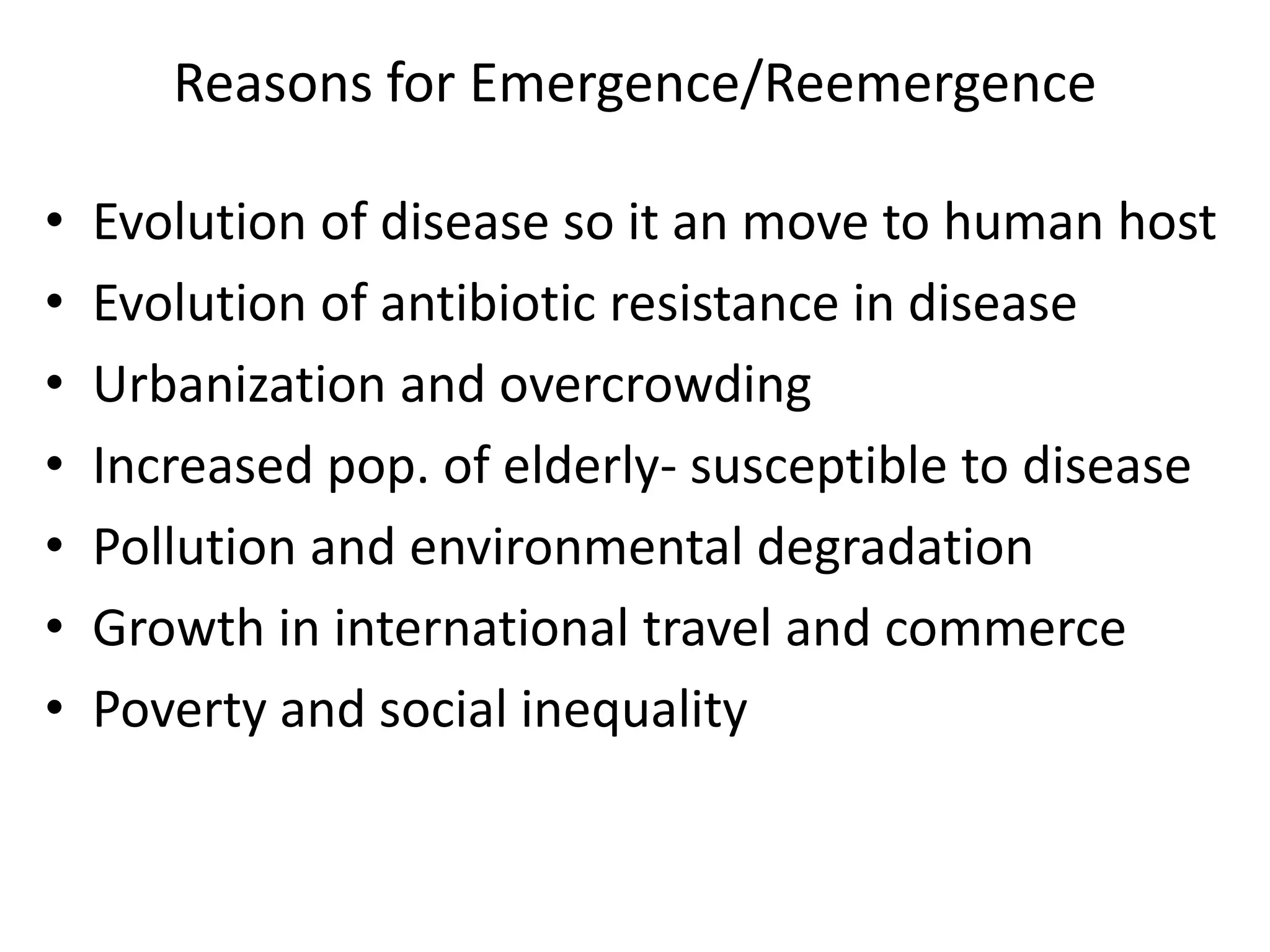
Reasons for Emergence/Reemergence
• Evolution of disease so it an move to human host
• Evolution of antibiotic resistance in disease
• Urbanization and overcrowding
• Increased pop. of elderly- susceptible to disease
• Pollution and environmental degradation
• Growth in international travel and commerce
• Poverty and social inequality
Environmental Pollution and Disease
• Often difficult to
link pollutants to
their effects on
people
– Persistence
– Bioaccumulation
– Biomagnification
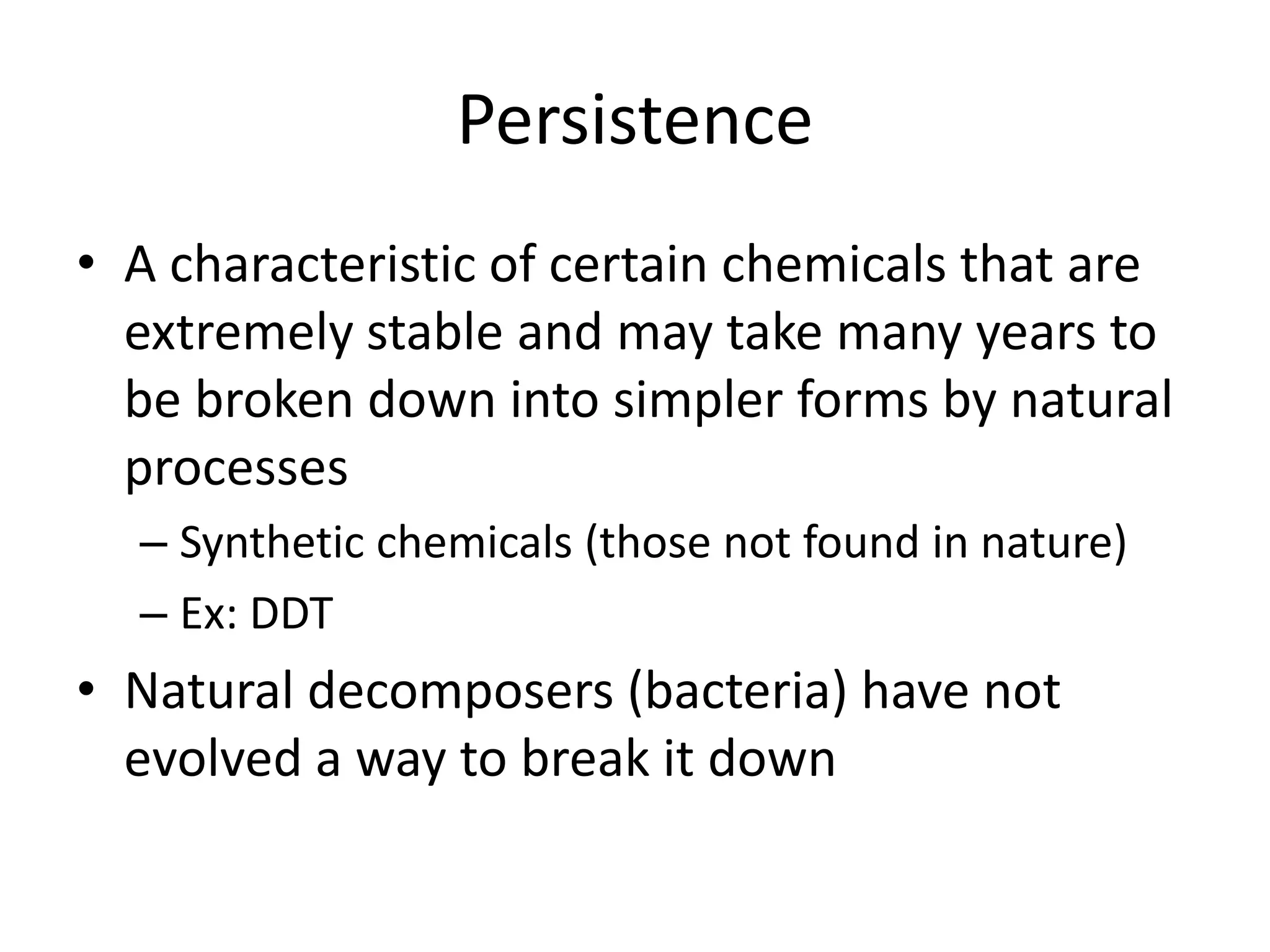
Persistence
• A characteristic of certain chemicals that are
extremely stable and may take many years to
be broken down into simpler forms by natural
processes
– Synthetic chemicals (those not found in nature)
– Ex: DDT
• Natural decomposers (bacteria) have not
evolved a way to break it down
Bioaccumulation
• The buildup of a persistent toxic substance in
an organism’s body, often in fatty tissues
– Synthetic chemical do not metabolize well
– They remain in the body for extended periods of
time
Biomagnification
• The increased
concentration of
toxic chemicals in
the tissues of
organisms that are
at higher levels in
food webs
• Diagram is example
of biomagnification
of DDT
Endocrine Disrupters
• A chemical that mimics or interferes with the actions of
the endocrine system in humans and wildlife
– i.e. It effects the ability of the hormones in the organisms to
function properly
• Examples include:
– PCBs, Dioxins
– Heavy metals – lead and mercury
– DDT
• Animals exposed to these chemicals have altered
reproductive development and are often sterile
Endocrine Disrupters
• Case Study: 1980 chemical spill into Lake
Apopka, FL
– Male alligators began to exhibit low testosterone
levels and high estrogen levels
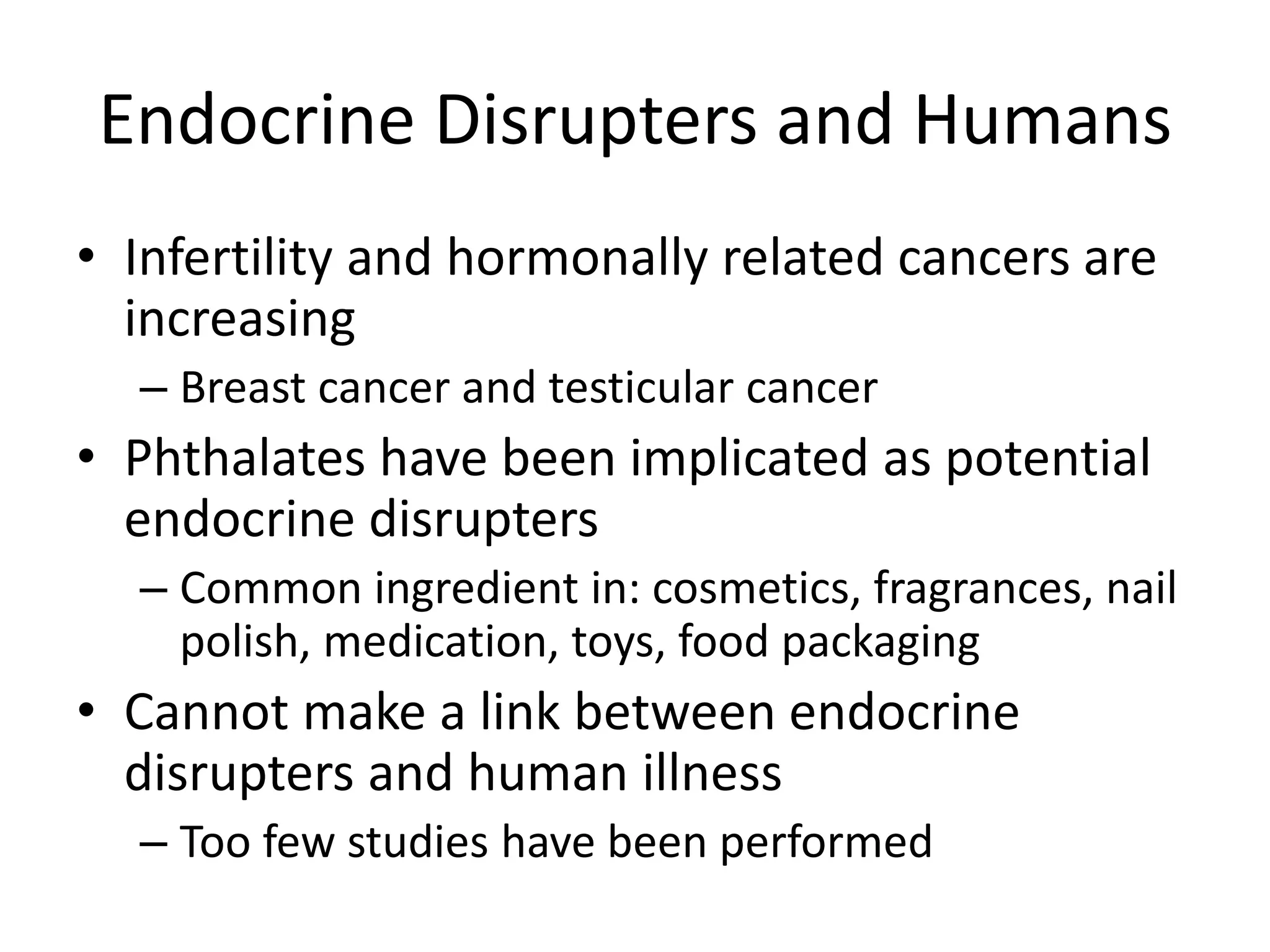
Endocrine Disrupters and Humans
• Infertility and hormonally related cancers are
increasing
– Breast cancer and testicular cancer
• Phthalates have been implicated as potential
endocrine disrupters
– Common ingredient in: cosmetics, fragrances, nail
polish, medication, toys, food packaging
• Cannot make a link between endocrine
disrupters and human illness
– Too few studies have been performed
Determining Health Effects of Pollutants
• Toxicology is the study of the effect of
toxicants on the human body
– Toxicant- chemical with adverse human health
effects
• Acute toxicity
– Adverse effects occur within a short period after
exposure to toxin
• Chronic toxicity
– Adverse effects occur some time after exposure,
or after prolonged exposure to toxin
– Symptoms often mimic other diseases- hard to
assess source
Toxicity
• Toxicity measured by dose and response
– Dose: amount that enters that body of an exposed
organism
– Response: the amount of damage caused by a
specific dose
• LD50
– Lethal dose to 50% of the test organisms
– Smaller the LD50, the more lethal the chemical
– Determined for all new synthetic chemicals
Toxicity
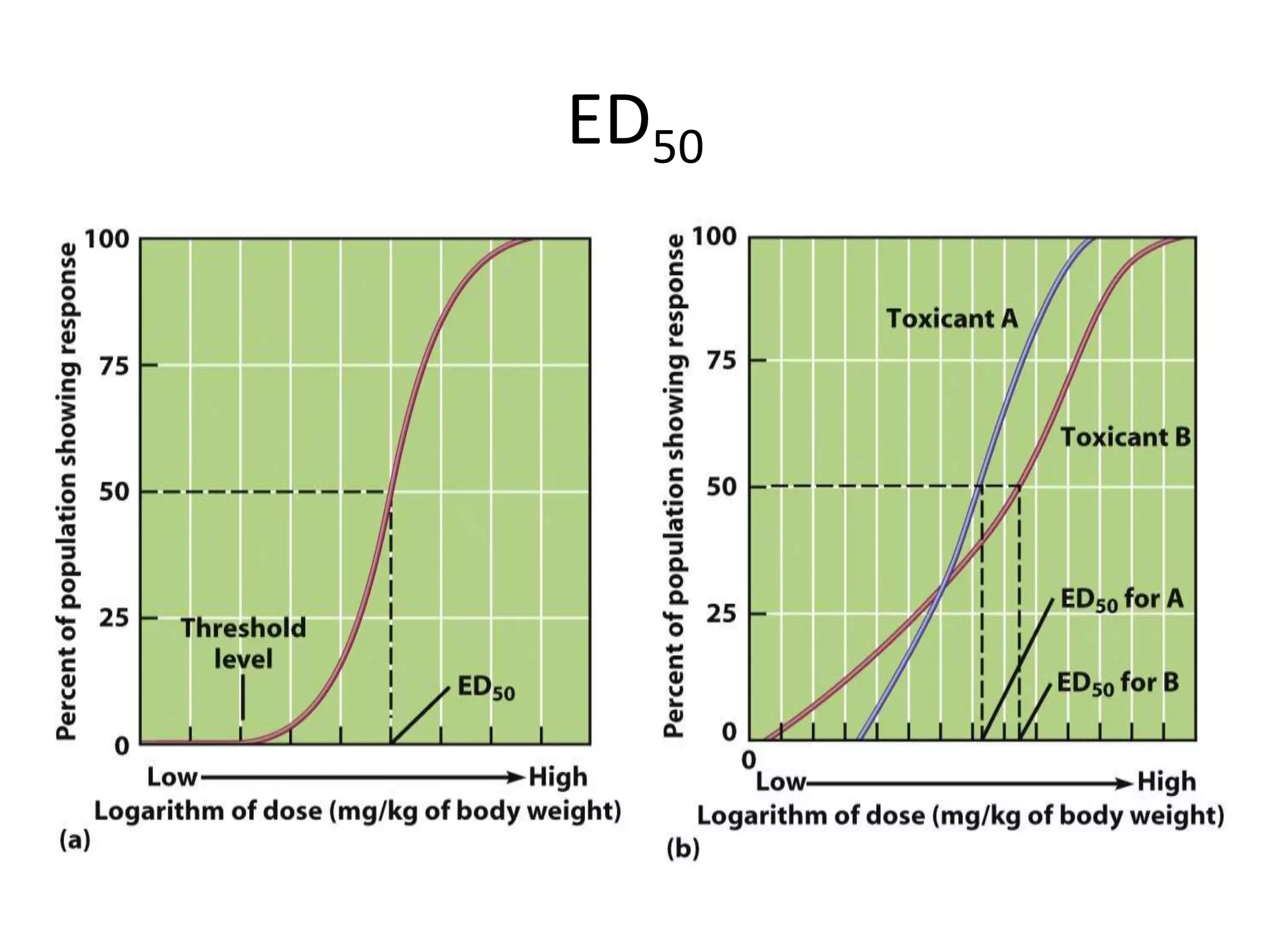
• ED50
– Effective dose to 50% of the test organisms
– ED50 causes 50% of the population to exhibit
whatever effect is under study
• Dose-Response Curve
– Illustrates the effect of different doses on a
population
– Threshold Level
• Maximum dose with no measurable effects
ED50
Children and Chemical Exposure
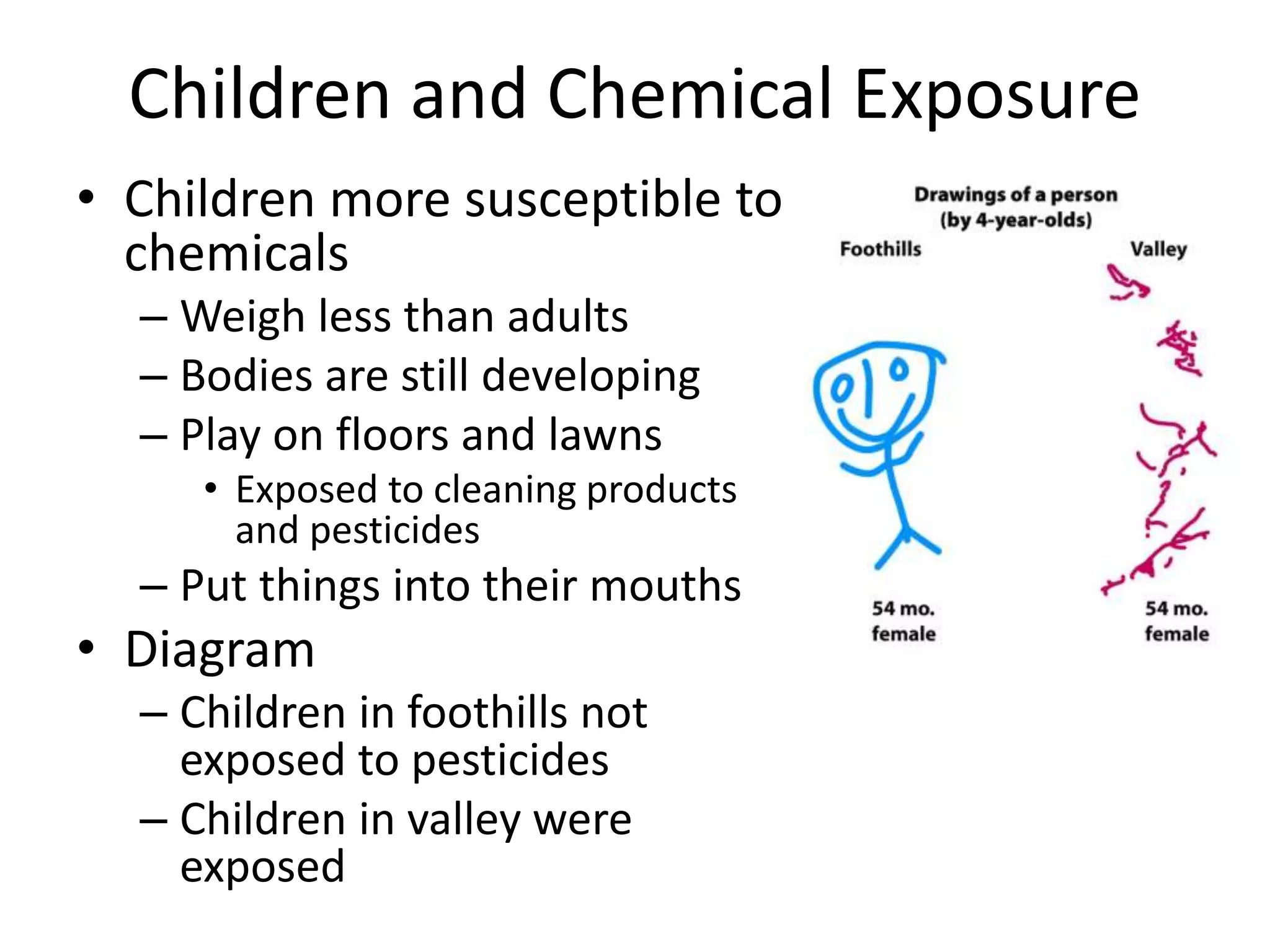
• Children more susceptible to
chemicals
– Weigh less than adults
– Bodies are still developing
– Play on floors and lawns
• Exposed to cleaning products
and pesticides
– Put things into their mouths
• Diagram
– Children in foothills not
exposed to pesticides
– Children in valley were
exposed
Identifying Cancer Causing Substances
• Toxicologist
– Dose rats with varying levels of chemicals to see if
they develop cancer
– Difficult to extrapolate results to humans
• Epidemiologists
– Look at historical exposure of groups of humans
– See if exposed group have increased cancer rate
Chemical Mixtures
• Most studies look at one chemical, but
humans tend to be exposed to chemical
mixtures
– Ex: automobile exhaust
• Chemical Mixtures interact by
– Additivity
– Synergy
– Antagonism
• These studies are expensive and take a while
to complete
Chemical Testing
Ecotoxicology
• Dilution Paradigm is not valid
– “Dilution is the solution to pollution”
• Boomerang Paradigm is accepted
– “What you throw away can come back and hurt
you”
• Ecotoxicology
– The study of contaminants in the biosphere and
their harmful effects on ecosystems
– Helps policy makers determine costs and benefits
of industrial and technological “advances”
• And how they often adversely effect ecosystems
Case Study: The Ocean
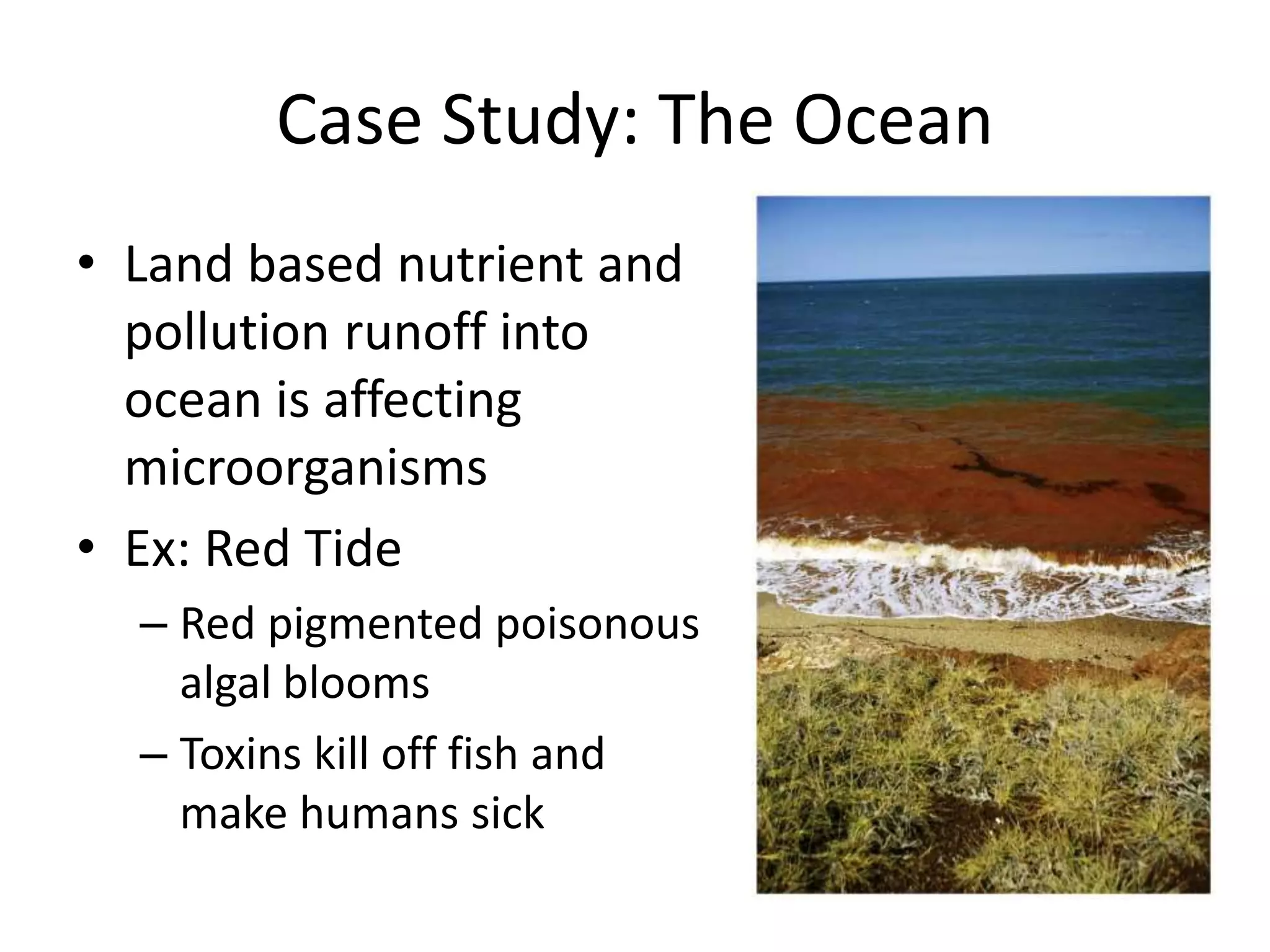
• Land based nutrient and
pollution runoff into
ocean is affecting
microorganisms
• Ex: Red Tide
– Red pigmented poisonous
algal blooms
– Toxins kill off fish and
make humans sick
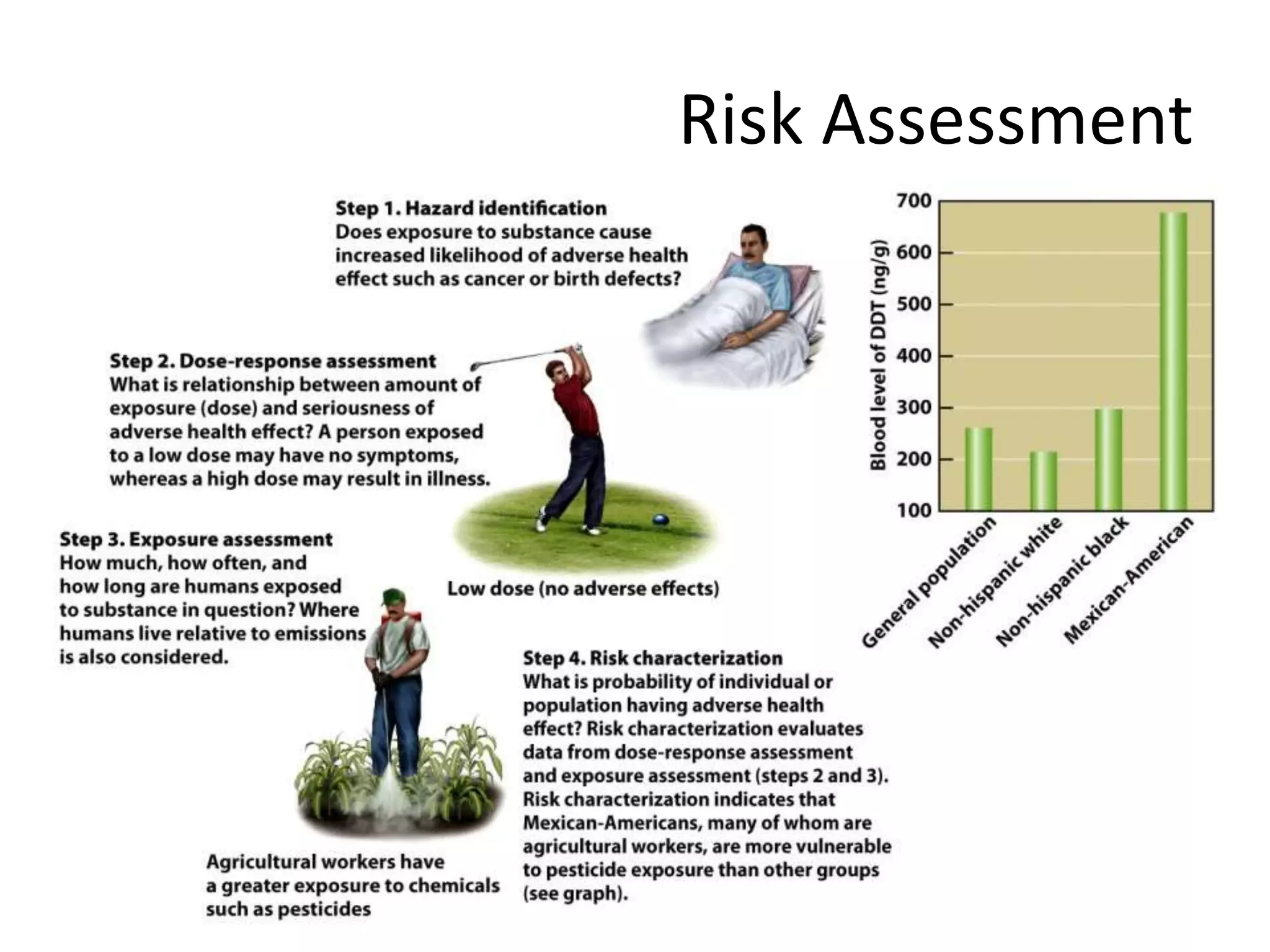
Risk Assessment
• Risk- probability that a particular adverse
effect will result from some exposure or
condition
• We assess risk daily with four steps
1. Hazard identification
2. Dose response assessment
3. Exposure assessment
4. Risk characterization
Risk Assessment
Risk Assessment
Ecological Risk Assessment
• Difficult to assess because effect occur at wide
range of scales
– Individual plants and animals
– Ecological communities over wide regions
• Human-induced environmental stressors also
range greatly
– Good to bad
– Acceptable to unacceptable
• There is a need to quantify risks to the
environment
Case Study on Ecological Risk Assessment
– Results in decrease
in fish, algal blooms
• Ecol. Risk
Assessment
– Used to help
government and
locals set priorities
to manage and
protect ecosystem
o Snake River Ecosystem in Southern Idaho
• River provides hydroelectric power and water for
irrigation
• Human use causes reduced flow, elevated water
temperature and nutrient enrichment
References
• https://www.google.com/search?q=TOXICOLO
GY&sxsrf=ACYBGNTRw2PCyyRmh3Mu17Y1DU
Per0snig:1569049541532&source=lnms&tbm
=isch&sa=X&ved=0ahUKEwiFhLuEreHkAhXPbS
sKHTXjCFYQ_AUIEygC&biw=1422&bih=765#i
mgrc=gbZI5ImJ5Q2k1M:
Toxicology for MLT students

Toxicology for MLT students

  • 1.
  • 2.
    Course outcomes • ChemicalToxicity of the chemicals in the environment and Sources of pollution in air , water and soil and Solid waste management and natural Disaster management.
  • 3.
    Learning Outcomes On completionof the course the students will be able to: 1. Demonstrate an understanding of the processes involved in absorption, distribution, metabolism and excretion of toxicants, including an understanding of the toxicokinetic behavior of toxicants in mammals. 2. (2) Demonstrate an understanding of the principles and approaches used to investigate the metabolism of toxicants in laboratory mammals and in humans and of the metabolic activation of chemicals to toxic metabolites. (3) Demonstrate an understanding of target organ toxicity involving the following organ systems: liver, kidney blood, cardiovascular, immune, skin, gastrointestinal, pulmonary, reproductive, endocrine, ocular, and central and peripheral nervous systems. What are the typical mechanisms through which chemical toxicants affect the structure and function of these systems? What are the common consequences of toxicant action on these systems?
  • 4.
    CONTENTS • Human Health –Health issues in developed countries – Health issues in developing countries • Environmental Pollution and Disease – Environmental Contaminants – Endocrine Disrupters • Determining Health Effects of Pollutants • Ecotoxicology • Risk Assessment
  • 6.
    Human Health • Twoindicators of human health – Life expectancy- how long people are expected to live – Infant mortality- how many children die before age of 1 year o Vary greatly between countries • Developed countries • Developing countries
  • 7.
    Health Issues in HighlyDeveloped Countries • By many measures- health is good in these countries – Great sanitation – Few childhood diseases • Average life expectancy – Men = 75 years – Women = 80 years • Leading causes of death in US – Cardiovascular disease – Cancer – Chronic Obstructive Pulmonary Disease (of the lungs)
  • 8.
    Health Issue in HighlyDeveloped Countries • Premature deaths caused by lifestyle – Poor diet – Lack of exercise – Smoking • Obesity is big problem – Body Mass Index (BMI) • (Weight X 740)/ (height (in))2 • < 18.5 is underweight • 18.5-24.9 is healthy weight • 25-29 is overweight • > 30 is obese
  • 9.
    Health Issues inDeveloping Countries • Biggest problems – Malnutrition, unsafe water, poor sanitation • Life Expectancy – Overall is 65 years – Very poorest developing countries = 45 years • Most of these countries have high AIDS epidemics • Childhood mortality is high (18% of deaths) – Diarrheal diseases – Malnutrition – Malaria – AIDS/HIV
  • 10.
    Emerging and ReemergingDiseases • Emerging Disease - not previously observed in humans – Usually jumps from animal host – Ex: AIDS, lime disease, West Nile Virus o Reemerging Disease- existed in the past and are recently increasing in incidence • Ex: tuberculosis, yellow fever, malaria
  • 11.
    Reasons for Emergence/Reemergence •Evolution of disease so it an move to human host • Evolution of antibiotic resistance in disease • Urbanization and overcrowding • Increased pop. of elderly- susceptible to disease • Pollution and environmental degradation • Growth in international travel and commerce • Poverty and social inequality
  • 12.
    Environmental Pollution andDisease • Often difficult to link pollutants to their effects on people – Persistence – Bioaccumulation – Biomagnification
  • 13.
    Persistence • A characteristicof certain chemicals that are extremely stable and may take many years to be broken down into simpler forms by natural processes – Synthetic chemicals (those not found in nature) – Ex: DDT • Natural decomposers (bacteria) have not evolved a way to break it down
  • 14.
    Bioaccumulation • The buildupof a persistent toxic substance in an organism’s body, often in fatty tissues – Synthetic chemical do not metabolize well – They remain in the body for extended periods of time
  • 15.
    Biomagnification • The increased concentrationof toxic chemicals in the tissues of organisms that are at higher levels in food webs • Diagram is example of biomagnification of DDT
  • 16.
    Endocrine Disrupters • Achemical that mimics or interferes with the actions of the endocrine system in humans and wildlife – i.e. It effects the ability of the hormones in the organisms to function properly • Examples include: – PCBs, Dioxins – Heavy metals – lead and mercury – DDT • Animals exposed to these chemicals have altered reproductive development and are often sterile
  • 17.
    Endocrine Disrupters • CaseStudy: 1980 chemical spill into Lake Apopka, FL – Male alligators began to exhibit low testosterone levels and high estrogen levels
  • 18.
    Endocrine Disrupters andHumans • Infertility and hormonally related cancers are increasing – Breast cancer and testicular cancer • Phthalates have been implicated as potential endocrine disrupters – Common ingredient in: cosmetics, fragrances, nail polish, medication, toys, food packaging • Cannot make a link between endocrine disrupters and human illness – Too few studies have been performed
  • 19.
    Determining Health Effectsof Pollutants • Toxicology is the study of the effect of toxicants on the human body – Toxicant- chemical with adverse human health effects • Acute toxicity – Adverse effects occur within a short period after exposure to toxin • Chronic toxicity – Adverse effects occur some time after exposure, or after prolonged exposure to toxin – Symptoms often mimic other diseases- hard to assess source
  • 20.
    Toxicity • Toxicity measuredby dose and response – Dose: amount that enters that body of an exposed organism – Response: the amount of damage caused by a specific dose • LD50 – Lethal dose to 50% of the test organisms – Smaller the LD50, the more lethal the chemical – Determined for all new synthetic chemicals
  • 22.
    Toxicity • ED50 – Effectivedose to 50% of the test organisms – ED50 causes 50% of the population to exhibit whatever effect is under study • Dose-Response Curve – Illustrates the effect of different doses on a population – Threshold Level • Maximum dose with no measurable effects
  • 23.
  • 24.
    Children and ChemicalExposure • Children more susceptible to chemicals – Weigh less than adults – Bodies are still developing – Play on floors and lawns • Exposed to cleaning products and pesticides – Put things into their mouths • Diagram – Children in foothills not exposed to pesticides – Children in valley were exposed
  • 25.
    Identifying Cancer CausingSubstances • Toxicologist – Dose rats with varying levels of chemicals to see if they develop cancer – Difficult to extrapolate results to humans • Epidemiologists – Look at historical exposure of groups of humans – See if exposed group have increased cancer rate
  • 26.
    Chemical Mixtures • Moststudies look at one chemical, but humans tend to be exposed to chemical mixtures – Ex: automobile exhaust • Chemical Mixtures interact by – Additivity – Synergy – Antagonism • These studies are expensive and take a while to complete
  • 27.
  • 28.
    Ecotoxicology • Dilution Paradigmis not valid – “Dilution is the solution to pollution” • Boomerang Paradigm is accepted – “What you throw away can come back and hurt you” • Ecotoxicology – The study of contaminants in the biosphere and their harmful effects on ecosystems – Helps policy makers determine costs and benefits of industrial and technological “advances” • And how they often adversely effect ecosystems
  • 29.
    Case Study: TheOcean • Land based nutrient and pollution runoff into ocean is affecting microorganisms • Ex: Red Tide – Red pigmented poisonous algal blooms – Toxins kill off fish and make humans sick
  • 30.
    Risk Assessment • Risk-probability that a particular adverse effect will result from some exposure or condition • We assess risk daily with four steps 1. Hazard identification 2. Dose response assessment 3. Exposure assessment 4. Risk characterization
  • 31.
  • 32.
  • 33.
    Ecological Risk Assessment •Difficult to assess because effect occur at wide range of scales – Individual plants and animals – Ecological communities over wide regions • Human-induced environmental stressors also range greatly – Good to bad – Acceptable to unacceptable • There is a need to quantify risks to the environment
  • 34.
    Case Study onEcological Risk Assessment – Results in decrease in fish, algal blooms • Ecol. Risk Assessment – Used to help government and locals set priorities to manage and protect ecosystem o Snake River Ecosystem in Southern Idaho • River provides hydroelectric power and water for irrigation • Human use causes reduced flow, elevated water temperature and nutrient enrichment
  • 35.