Downloaded 91 times
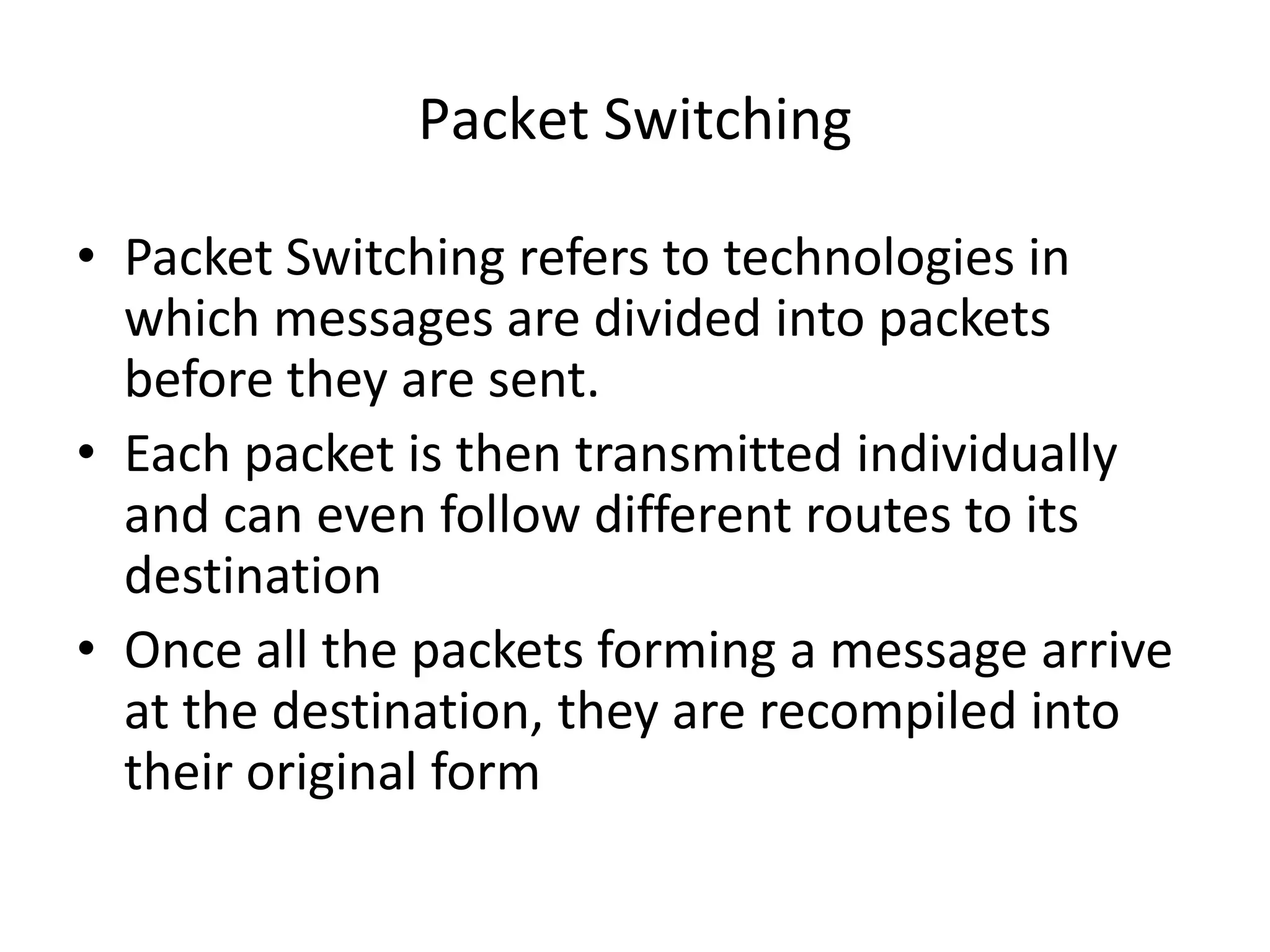
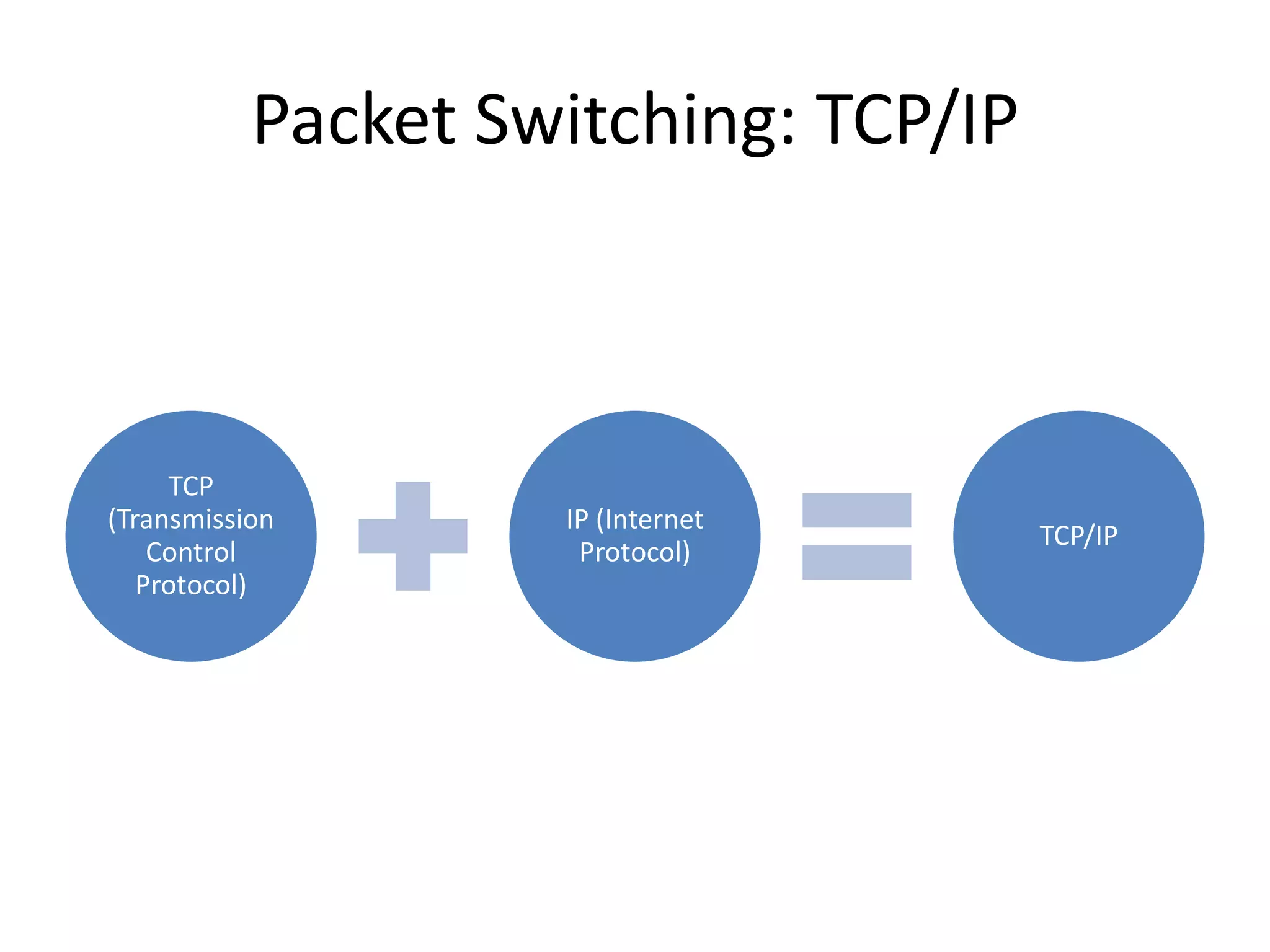
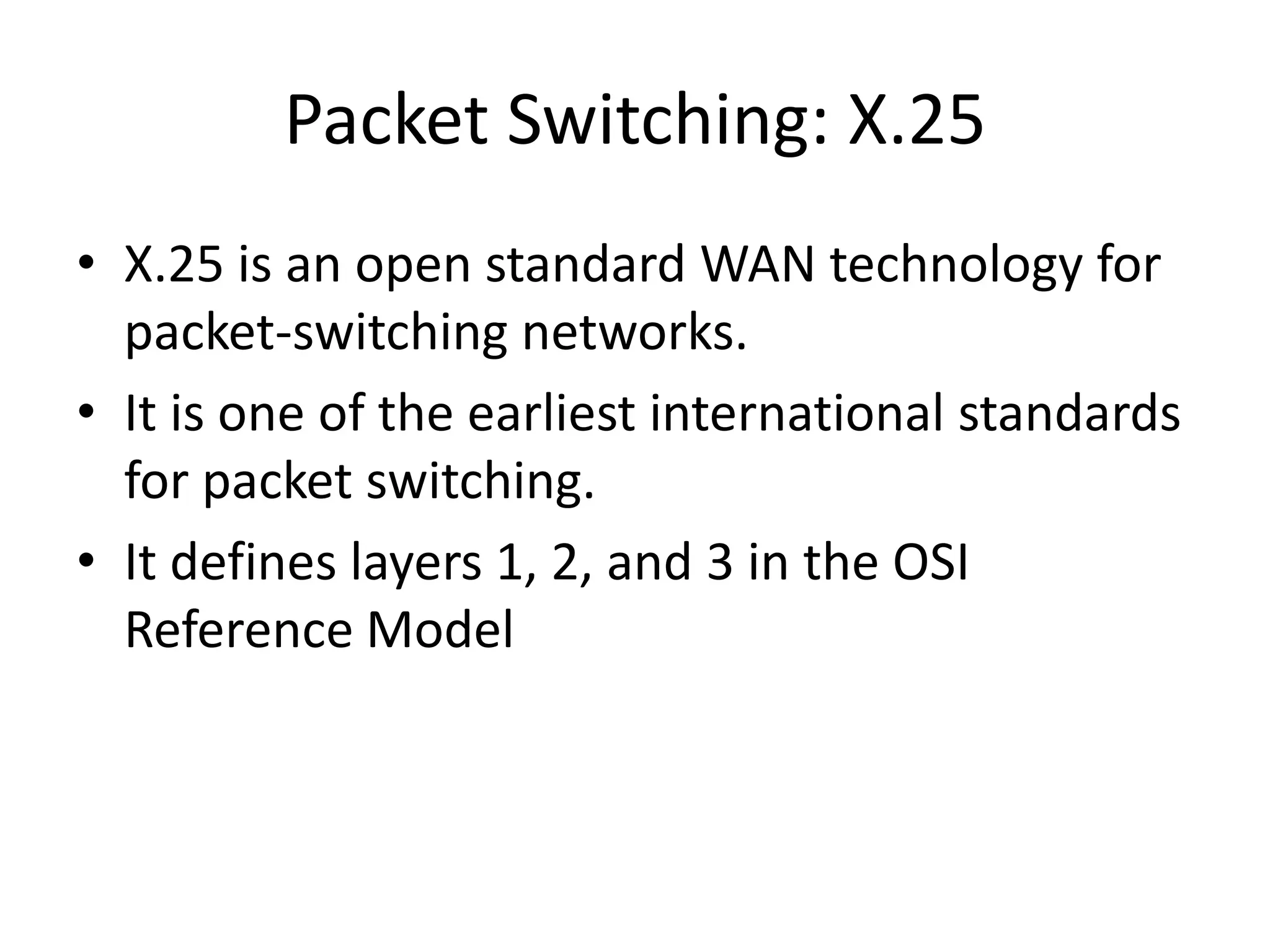
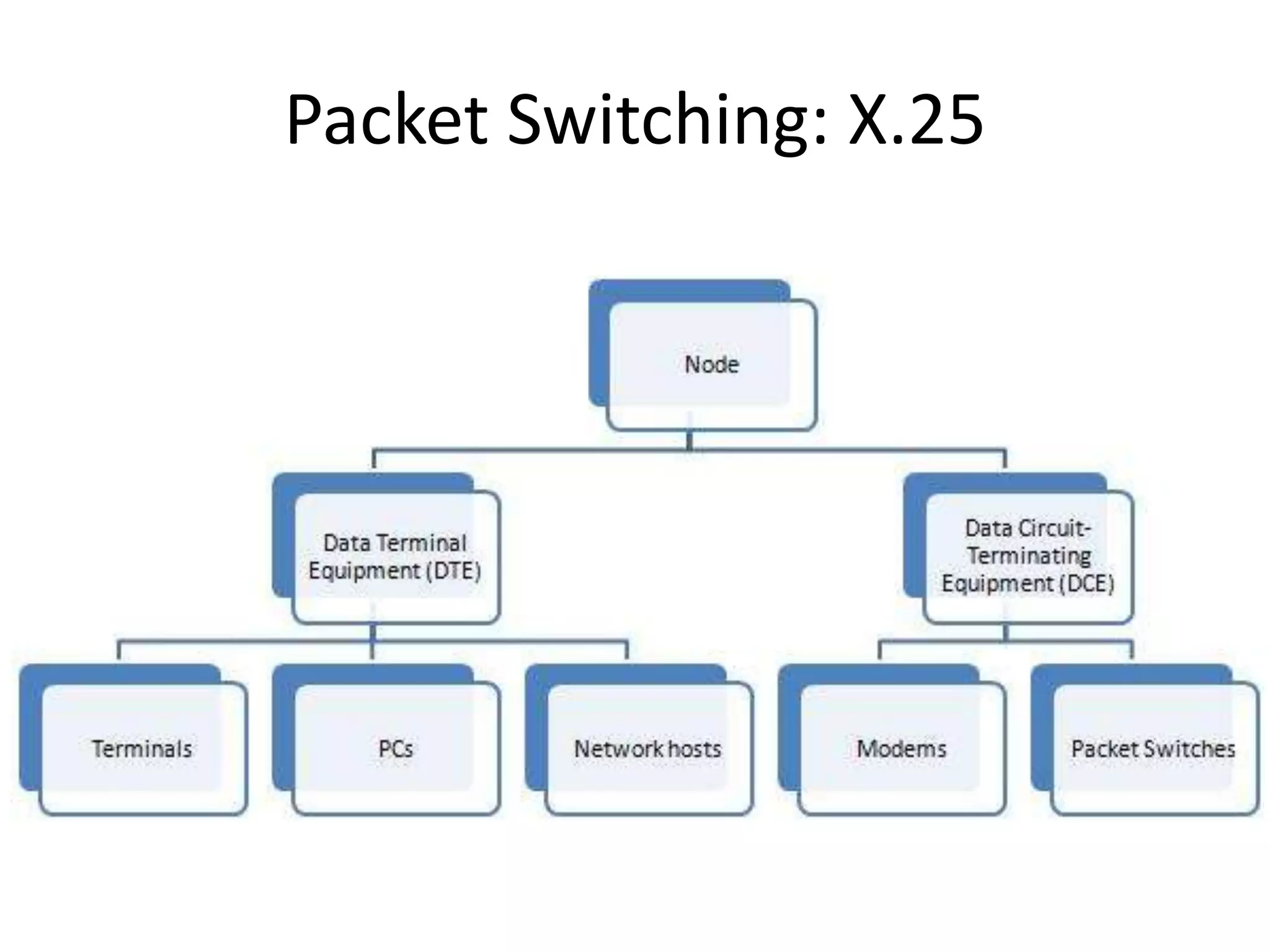
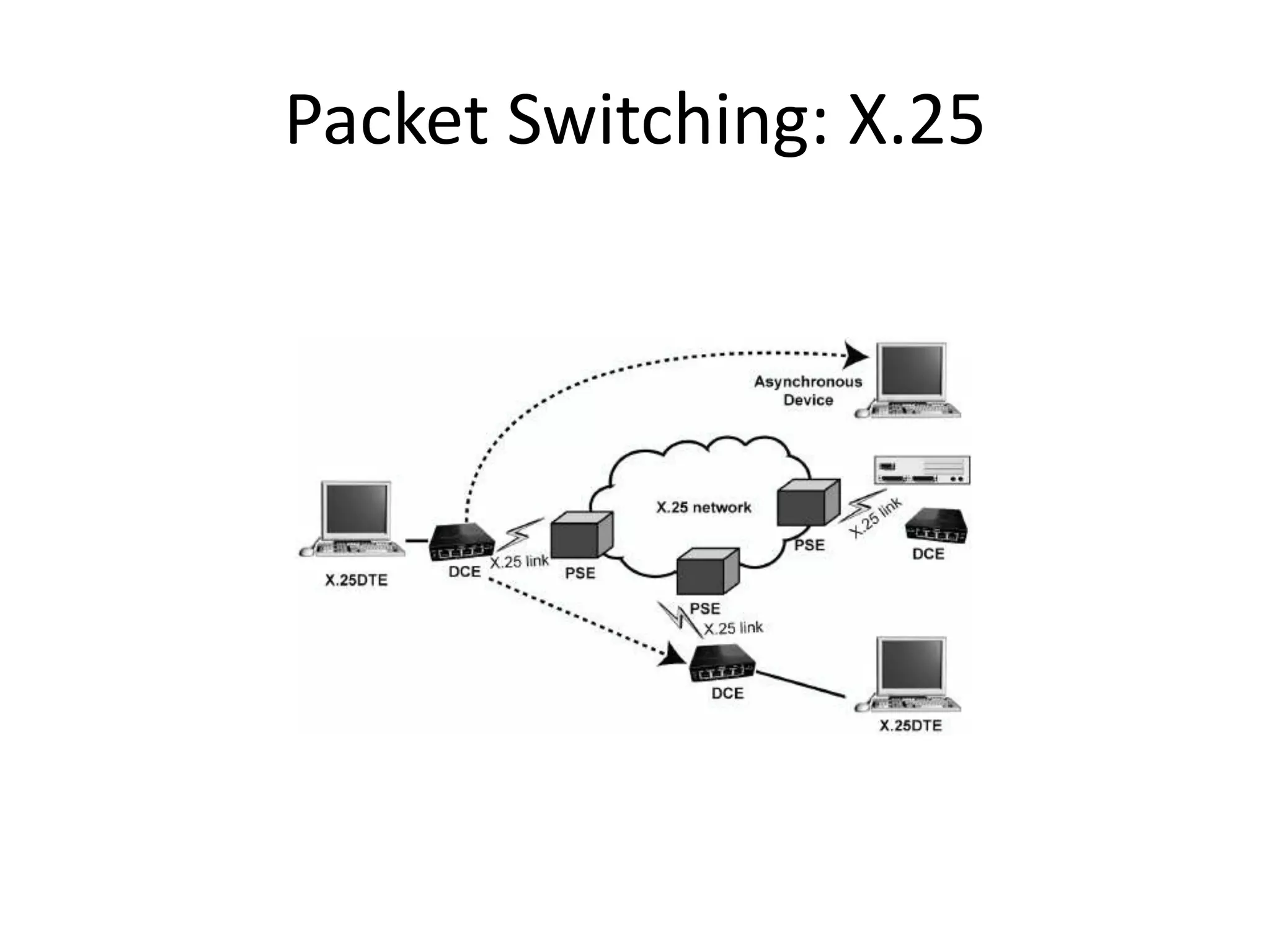


This document defines packet switching and discusses several packet switching technologies. It begins by defining packet switching as dividing messages into packets that can follow different routes to the destination, where they are then recompiled. It then discusses three main packet switching technologies: TCP/IP, X.25, and Frame Relay. It provides details on each technology and notes that Frame Relay was implemented in Malaysia and replaced X.25 for connections within wide area networks.
Overview of packet switching including definitions, technologies, and learning outcomes.
Detailed explanation of packet switching technologies, including TCP/IP, X.25, and Frame Relay.
Focus on TCP (Transmission Control Protocol) and IP (Internet Protocol) within packet switching.
Discussion on X.25 as an early packet-switching standard and its OSI model layers.
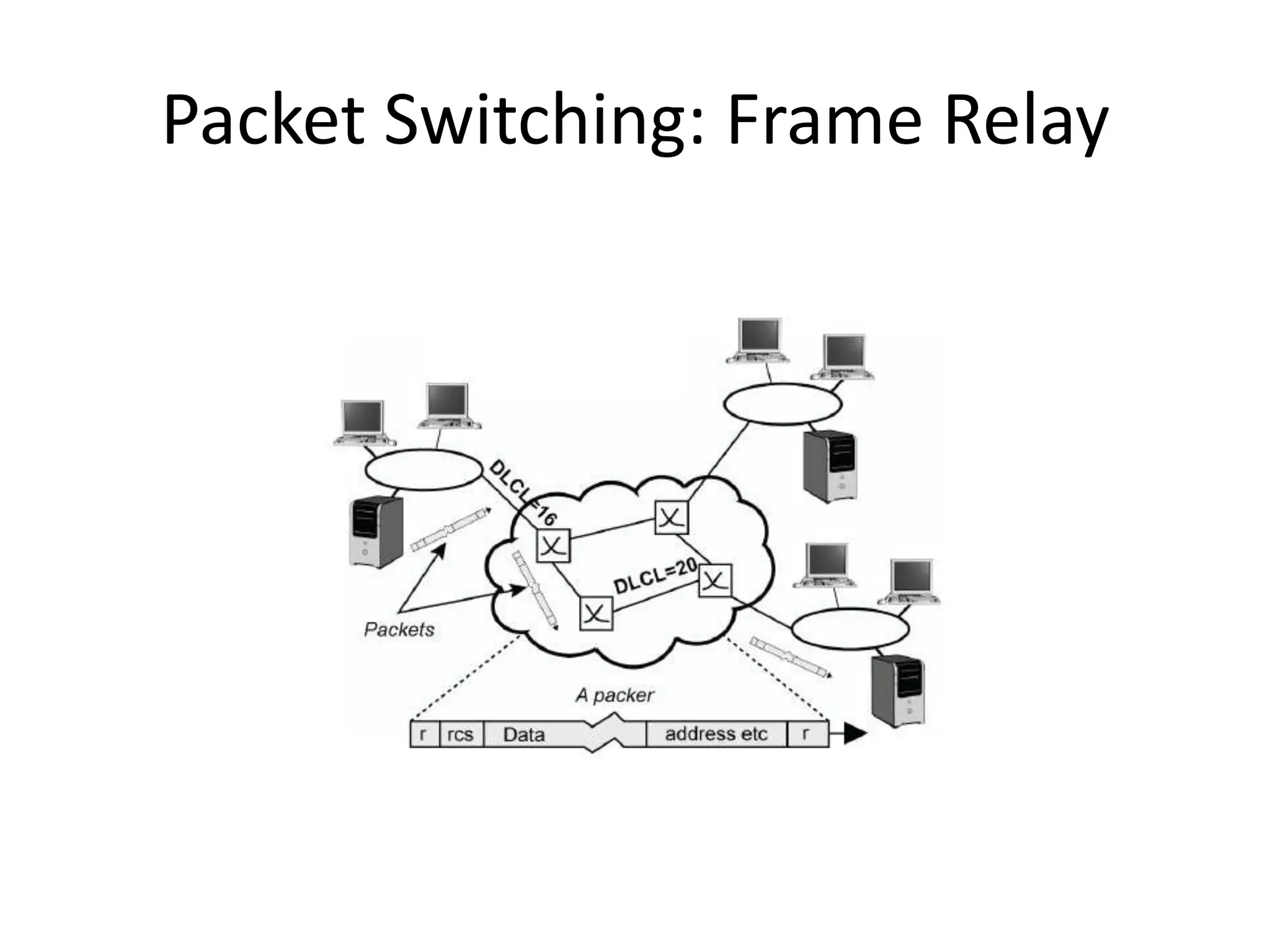
Explanation of Frame Relay, its operation, replacement of X.25, and applications in WAN.Corporate information related to Superhighway and COINS, highlighting its relevance.
Sources of information including links to studies and data on Malaysia's packet-switching.
Closure of the presentation signaling the end of the discussion on packet switching.


![Vibe Coding vs. Spec-Driven Development [Free Meetup]](https://cdn.slidesharecdn.com/ss_thumbnails/vibecodingvsspecdrivendevelopment-251209105622-43f455e7-thumbnail.jpg?width=640&height=640&fit=bounds)


