Executive Masters of Business Administration
Future Ready Business Leadership
YTL
Writable Tool Kit Slides for Project Work Through
1
2
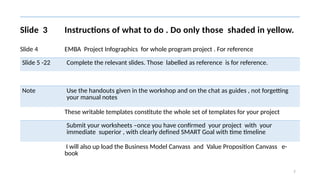
Slide 3 Instructions of what to do . Do only those shaded in yellow.
Slide 4 EMBA Project Infographics for whole program project . For reference
Slide 5 -22 Complete the relevant slides. Those labelled as reference is for reference.
Note Use the handouts given in the workshop and on the chat as guides , not forgetting
your manual notes
These writable templates constitute the whole set of templates for your project
Submit your worksheets –once you have confirmed your project with your
immediate superior , with clearly defined SMART Goal with time timeline
I will also up load the Business Model Canvass and Value Proposition Canvass e-
book
3
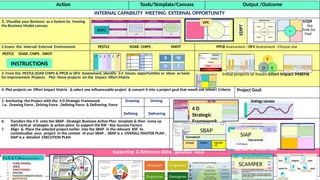
Action Tools/Template/Canvass Output /Outcome
INTERNAL CAPABILITY MEETING EXTERNAL OPPORTUNITY
1. Visualize your Business as a System by framing
the Business Model canvass
STDF
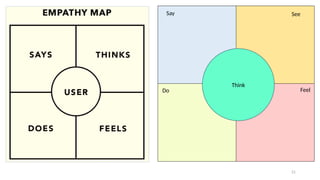
See
Think Do
Feel
2.Scann the Internal External Environment PESTLE SOAR. CHIPS . SWOT PPCB Assessment / DFV Assessment –Choose one
PESTLE SOAR. CHIPS . SWOT
3. From the PESTLE,SOAR CHIPS & PPCB or DFV Assessment, Identify 3-5 Issues, opportunities or Ideas as basis
for Improvement Projects . Plot these projects on the Impact Effort Matrix
Initial projects or Issues-Effort Impact Matrix
4. Plot projects on Effort Impact Matrix & select one influenceable project & convert it into a project goal that meets the SMART Criteria Project Goal:
5. Anchoring the Project with the 4 D Strategic Framework
i.e. Drawing Force , Driving Force , Defining Force & Delivering Force
Drawing Driving
Defining Delivering
6. Transfers the 4 D onto the SBAP –Strategic Business Action Plan template & then come up
with tactical strategies & action plans to support the KSF –Key Success Factors
7. Align & Place the selected project earlier into the SBAP in the relevant KSF to
contextualize your project in the context of your SBAP .. SBAP is a OVERALL MASTER PLAN ,
SIAP is a detailed EXECUTION PLAN
Supporting & Reference slides generate ideas
F
V
D
EDIPT
4 D
Strategic
Framework
SIAP
SBAP
Conceptual
Strategic Tactical Operatio
nal
SCAMPER
INSTRUCTIONS
4
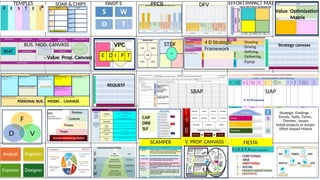
Strategic Findings -
Trends, Taste, Times,
Themes , Issues
Initial projects or Issues-
Effort Impact Matrix
S W
O T
PPCB DFV
SIAP
VPC
Value Prop. Canvass
STDF
SCAMPER FIESTA
4 D Strategic
Framework
BMC
SBAP
V. PROP. CANVASS
PERSONAL BUS. MODEL . CANVASS
BUS. MOD. CANVASS
Value Optimization
Matrix
TEMPLES SWOT S EFFORT:IMPACT MAT.
SOAR & CHIPS
Drawing
Driving
Defining
Delivering
Force
Strategy canvass
E D I P T
REQUEST
CAP
DRB
SLF
5
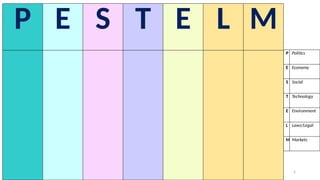
P E S T E L M
P Politics
E Economy
S Social
T Technology
E Environment
L Laws/Legal
M Markets
6
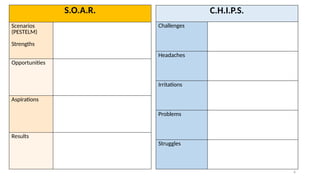
S.O.A.R.
Scenarios
(PESTELM)
Strengths
Opportunities
Aspirations
Results
C.H.I.P.S.
Challenges
Headaches
Irritations
Problems
Struggles
7
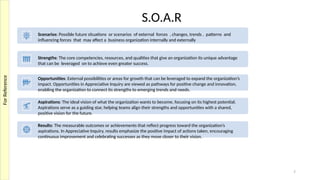
S.O.A.R
Scenarios: Possible future situations or scenarios of external forces , changes, trends , patterns and
influencing forces that may affect a business organization internally and externally
Strengths: The core competencies, resources, and qualities that give an organization its unique advantage
that can be leveraged on to achieve even greater success.
Opportunities: External possibilities or areas for growth that can be leveraged to expand the organization’s
impact. Opportunities in Appreciative Inquiry are viewed as pathways for positive change and innovation,
enabling the organization to connect its strengths to emerging trends and needs.
Aspirations: The ideal vision of what the organization wants to become, focusing on its highest potential.
Aspirations serve as a guiding star, helping teams align their strengths and opportunities with a shared,
positive vision for the future.
Results: The measurable outcomes or achievements that reflect progress toward the organization’s
aspirations. In Appreciative Inquiry, results emphasize the positive impact of actions taken, encouraging
continuous improvement and celebrating successes as they move closer to their vision.
For
Reference
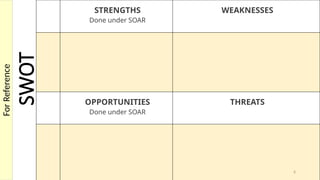
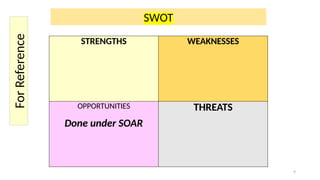
SWOT
8
STRENGTHS
Done under SOAR
WEAKNESSES
OPPORTUNITIES
Done under SOAR
THREATS
For
Reference
9
STRENGTHS WEAKNESSES
OPPORTUNITIES
Done under SOAR
THREATS
SWOT
For
Reference
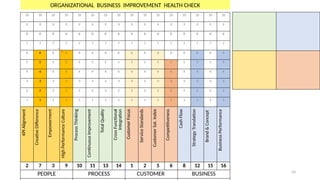
10 10 10 10 10 10 10 10 10 10 10 10 10 10 10 10
9 9 9 9 9 9 9 9 9 9 9 9 9 9 9 9
8 8 8 8 8 8 8 8 8 8 8 8 8 8 8 8
7 7 7 7 7 7 7 7 7 7 7 7 7 7 7 7
6 6 6 6 6 6 6 6 6 6 6 6 6 6 6 6
5 5 5 5 5 5 5 5 5 5 5 5 5 5 5 5
4 4 4 4 4 4 4 4 4 4 4 4 4 4 4 4
3 3 3 3 3 3 3 3 3 3 3 3 3 3 3 3
2 2 2 2 2 2 2 2 2 2 2 2 2 2 2 2
1 1 1 1 1 1 1 1 1 1 1 1 1 1 1 1
KPI
Alignment
Creative
Difference
Empowerment
High
Performance
Culture
Process
Thinking
Continuous
Improvement
Total
Quality
Cross
Functional
Integration
Customer
Focus
Service
Standards
Customer
Sat.
Index
Competitiveness
Cash
Flow
Strategy
Translation
Brand
&
Concept
Business
Performance
2 7 3 9 10 11 13 14 1 2 5 6 8 12 15 16
PEOPLE PROCESS CUSTOMER BUSINESS
ORGANIZATIONAL BUSINESS IMPROVEMENT HEALTH CHECK
10
11
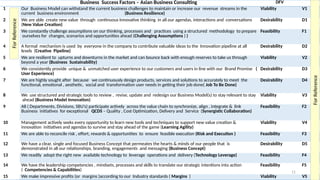
Business Success Factors – Asian Business Consulting DFV
1 Our Business Model can withstand the current business challenges to maintain or increase our revenue streams in the
current business environment (Business Resilience)
Viability V1
2 We are able create new value through continuous Innovative thinking in all our agendas, interactions and conversations
(New Value Creation)
Desirability D1
3 We constantly challenge assumptions on our thinking, processes and practices using a structured methodology to prepare
ourselves for changes, scenarios and opportunities ahead (Challenging Assumptions ) )
Feasibility F1
4 A formal mechanism is used by everyone in the company to contribute valuable ideas to the Innovation pipeline at all
levels (Creative Pipeline)
Desirability D2
5 We are resilient to upturns and downturns in the market and can bounce back with enough reserves to take us through
beyond a year (Business Sustainability)
Viability V2
6 We consistently provide unique & unmatched user experience to our customers and users in line with our Brand Promise (
User Experience)
Desirability D3
7 We are highly sought after because we continuously design products, services and solutions to accurately to meet the
functional, emotional , aesthetic, social and transformation user needs in getting their job done( Job To Be Done)
Desirability D4
8 We use structured and strategic tools to review , revise, update and redesign our Business Model(s) to stay relevant to stay
ahead (Business Model Innovation)
Viability V3
9 All ( Departments, Divisions, SBU’s) participate actively across the value chain to synchronize, align , integrate & link
Business initiatives for exceptional QCDS – Quality , Cost Optimization, Delivery and Service (Synergistic Collaboration)
Feasibility F2
10 Management actively seeks every opportunity to learn new tools and techniques to support new value creation &
innovation initiatives and agendas to survive and stay ahead of the game (Learning Agility)
Viability V4
11 We are able to reconcile risk , effort, rewards & opportunities to ensure feasible execution (Risk and Execution ) Feasibility F3
12 We have a clear, single and focused Business Concept that permeates the hearts & minds of our people that is
demonstrated in all our relationships, branding, engagements and messaging (Business Concept)
Desirability D5
13 We readily adopt the right new available technology to leverage operations and delivery (Technology Leverage) Feasibility F4
14 We have the leadership competencies , mindsets, processes and skills to translate our strategic intentions into action
( Competencies & Capabilities)
Feasibility F5
15 We make impressive profits (or margins )according to our Industry standards ( Margins ) Viability V5
For
Reference
For
Reference
12
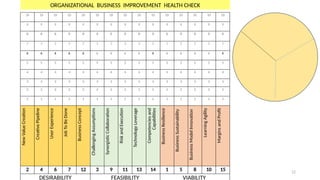
10 10 10 10 10 10 10 10 10 10 10 10 10 10 10
9 9 9 9 9 9 9 9 9 9 9 9 9 9 9
8 8 8 8 8 8 8 8 8 8 8 8 8 8 8
7 7 7 7 7 7 7 7 7 7 7 7 7 7 7
6 6 6 6 6 6 6 6 6 6 6 6 6 6 6
5 5 5 5 5 5 5 5 5 5 5 5 5 5 5
4 4 4 4 4 4 4 4 4 4 4 4 4 4 4
3 3 3 3 3 3 3 3 3 3 3 3 3 3 3
2 2 2 2 2 2 2 2 2 2 2 2 2 2 2
1 1 1 1 1 1 1 1 1 1 1 1 1 1 1
New
Value
Creation
Creative
Pipeline
User
Experience
Job
To
Be
Done
Business
Concept
Challenging
Assumptions
Synergistic
Collaboration
Risk
and
Execution
Technology
Leverage
Competencies
and
Capabilities
Business
Resilience
Business
Sustainability
Business
Model
Innovation
Learning
Agility
Margins
and
Profit
2 4 6 7 12 3 9 11 13 14 1 5 8 10 15
DESIRABILITY FEASIBILITY VIABILITY
ORGANIZATIONAL BUSINESS IMPROVEMENT HEALTH CHECK
Pillars for
Business
Strategy
13
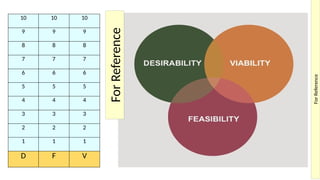
10 10 10
9 9 9
8 8 8
7 7 7
6 6 6
5 5 5
4 4 4
3 3 3
2 2 2
1 1 1
D F V
For
Reference
For
Reference
14
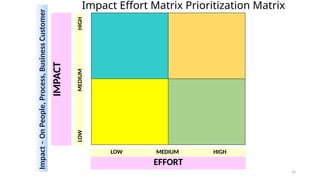
LOW MEDIUM HIGH
EFFORT
Impact Effort Matrix Prioritization Matrix
Time, Effort ,,Resources, Money ( T.E.R.M )
Impact
–
On
People,
Process,
Business
Customer
IMPACT
LOW
MEDIUM
HIGH
15
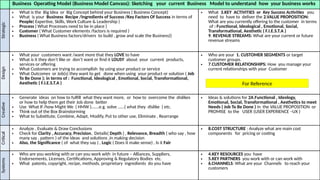
Business Operating Model (Business Model Canvass): Sketching your current Business Model to understand how your business works
Strategic
• What is the Big Idea or Big Concept behind your Business ( Business Concept)
• What is your Business Recipe /Ingredients of Success /Key Factors Of Success in terms of
People( Expertise, Skills, Work Culture & Leadership )
• Process ( What Processes need to be in place )
• Customer ( What Customer elements /factors is required )
• Business ( What Business factors/drivers to build , grow and scale the Business))
• What 3.KEY ACTIVITIES or Key Success Activities you
need to have to deliver the 2.VALUE PROPOSITION:
What are you currently offering to the customer in terms
of : Functional, Ideological , Emotional, Social,
Transformational, Aesthetic ( F.I.E.S.T.A )
9. REVENUE STREAMS: What are your current or future
revenue streams
Design
• What your customers want /want more that they LOVE to have
• What is it they don’t like or don’t want or find it LOUSY about your current products,
services or offering
• What Customers are trying to accomplish by using your product or service
• What Outcomes or Job(s) they want to get done when using your product or solution ( Job
To Be Done ); in terms of : Functional, Ideological , Emotional, Social, Transformational,
Aesthetic ( F.I.E.S.T.A )
• Who are your 1. CUSTOMER SEGMENTS or target
customer groups.
• 7.CUSTOMER RELATIONSHIPS: How you manage your
current relationships with your Customer
Creative
• Generate ideas on how to fulfill what they want more, or how to overcome the dislikes
or how to help them get their Job done better
• Use What If /how Might We ( HMW )…….e.g. solve ……( what they dislike ) etc.
• Think out of the Box Brainstorming
• What to Substitute, Combine, Adapt, Modify, Put to other use, Eliminate , Rearrange
• Ideas & solutions for 2A.Functional , Ideology,
Emotional, Social, Transformational , Aesthetics to meet
Needs ( Job To Be Done ) in the VALUE PROPOSITION or
PROMISE to the USER (USER EXPERIENCE –UX )
Critical
• Analyze , Evaluate & Draw Conclusions
• Check for Clarity , Accuracy, Precision, Details( Depth ) , Relevance, Breadth ( who say , how
many say , pattern ) of the ideas and solutions ,in making decision
• Also, the Significance ( of what they say ) , Logic ( Does it make sense) , Is it Fair
• 8.COST STRUCTURE : Analyze what are main cost
components for pricing or costing
Systems
• Who are you working with or can you work with in future – Alliances, Suppliers,
Endorsements, Licenses, Certifications, Approving & Regulatory Bodies etc.
• What patents, copyright, recipe, methods, proprietary ingredients do you have
• 4.KEY RESOURCES you have
• 5.KEY PARTNERS you work with or can work with
• 6.CHANNELS: What are your Channels to reach your
customers
For Reference
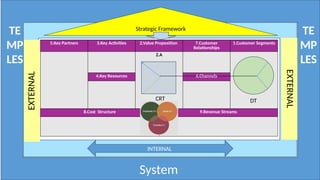
5.Key Partners 3.Key Activities 2.Value Proposition 7.Customer
Relationships
1.Customer Segments
2.A
4.Key Resources 6.Channels
8.Cost Structure 9.Revenue Streams
TE
MP
LES
TE
MP
LES
INTERNAL
Strategic Framework
CRT DT
System
EXTERNAL
EXTERNAL
17
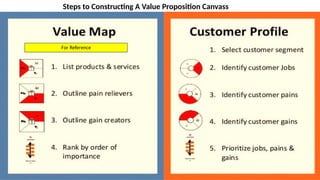
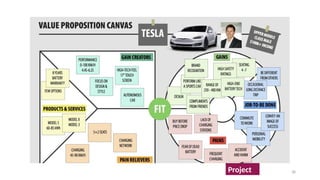
Steps to Constructing A Value Proposition Canvass
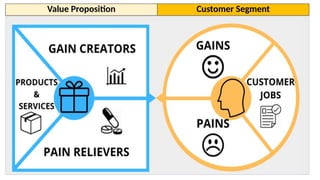
Value Proposition Customer Segment
19
F - FUNCTIONAL
I - IDEA
E - EMOTIONAL
A - AESTHETICS
S - SOCIAL
T - TRANSFORMATIONAL
EMPATHY
DEFINE
ID
E
A
T
E
PROTOTYPE
TEST
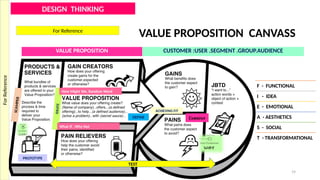
VALUE PROPOSITION CUSTOMER :USER .SEGMENT .GROUP.AUDIENCE
VALUE PROPOSITION CANVASS
ACHIEVING FIT
S
C
A
M
P
E
R
DESIGN THINKING
How Might We, Random Word
What If , Why Not
For
Reference
For Reference
20
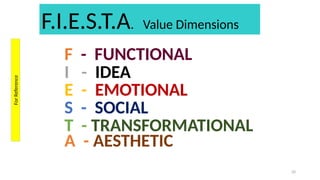
F.I.E.S.T.A. Value Dimensions
F - FUNCTIONAL
I - IDEA
E - EMOTIONAL
S - SOCIAL
T - TRANSFORMATIONAL
A - AESTHETIC
For
Reference
21
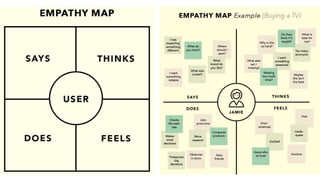
Say See
Do Feel
Think
22
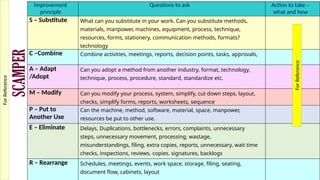
Improvement
principle
Questions to ask Action to take –
what and how
S – Substitute What can you substitute in your work. Can you substitute methods,
materials, manpower, machines, equipment, process, technique,
resources, forms, stationery, communication methods, formats?
technology
C –Combine Combine activities, meetings, reports, decision points, tasks, approvals,
A – Adapt
/Adopt
Can you adopt a method from another industry, format, technology,
technique, process, procedure, standard, standardize etc.
M – Modify Can you modify your process, system, simplify, cut down steps, layout,
checks, simplify forms, reports, worksheets, sequence
P – Put to
Another Use
Can the machine, method, software, material, space, manpower,
resources be put to other use.
E – Eliminate Delays, Duplications, bottlenecks, errors, complaints, unnecessary
steps, unnecessary movement, processing, wastage,
misunderstandings, filing, extra copies, reports, unnecessary, wait time
checks, inspections, reviews. copies. signatures, backlogs
R – Rearrange Schedules, meetings, events, work space, storage, filing, seating,
document flow, cabinets, layout
SCAMPER
For
Reference
For
Reference
23
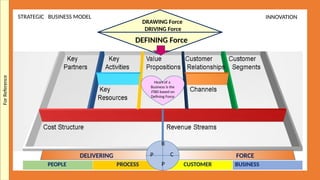
Heart of a
Business is the
JTBD based on
Defining Force
DRAWING Force
DRIVING Force
DEFINING Force
PEOPLE PROCESS CUSTOMER BUSINESS
STRATEGIC BUSINESS MODEL INNOVATION
DELIVERING FORCE
B
P C
P
For
Reference
24
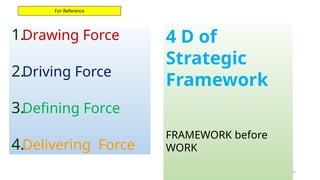
1.Drawing Force
2.Driving Force
3.Defining Force
4.Delivering Force
4 D of
Strategic
Framework
FRAMEWORK before
WORK
25
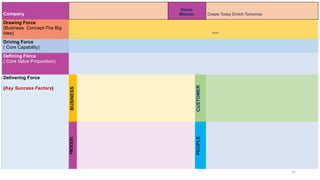
Company
Vision
Mission Create Today Enrich Tomorrow
Drawing Force
(Business Concept-The Big
Idea)
Driving Force
( Core Capability)
Defining Force
( Core Value Proposition)
Delivering Force
(Key Success Factors)
BUSINESS
CUSTOMER
PROCESS
PEOPLE
…..
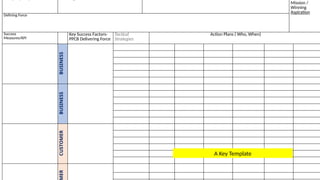
Mission /
Winning
Aspiration
Defining Force
Success
Measures/KPI
Key Success Factors-
PPCB Delivering Force
Tactical
Strategies
Action Plans ( Who, When)
BUSINESS
BUSINESS
CUSTOMER
ER
A Key Template
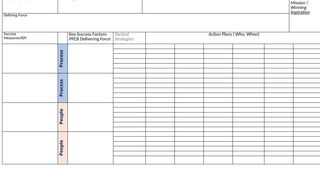
Mission /
Winning
Aspiration
Defining Force
Success
Measures/KPI
Key Success Factors-
PPCB Delivering Force
Tactical
Strategies
Action Plans ( Who, When)
Process
Process
People
People
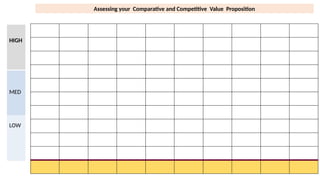
HIGH
MED
LOW
Assessing your Comparative and Competitive Value Proposition
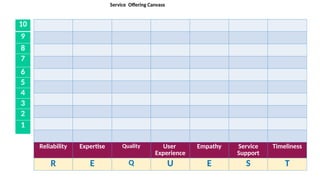
Reliability Expertise Quality User
Experience
Empathy Service
Support
Timeliness
R E Q U E S T
10
9
8
7
6
5
4
3
2
1
Service Offering Canvass
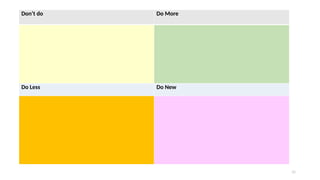
Don’t do Do More
Do Less Do New
30
5 D Process
31
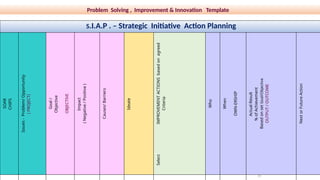
S.I.A.P . – Strategic Initiative Action Planning
SOAR
CHIPS
Issues
-
Problem/
Opportunity
(
PROJECT)
Goal
/
Objective
OBJECTIVE
Impact
(
Negative
/
Positive
)
Causes/
Barriers
Ideate
Select
IMPROVEMENT
ACTIONS
based
on
agreed
Criteria
Who
When
OWN-ERSHIP
Actual
Result
%
of
Achievement
Based
on
set
Goal/Objective
OUTPUT
/
OUTCOME
Next
or
Future
Action
Problem Solving , Improvement & Innovation Template
32
References
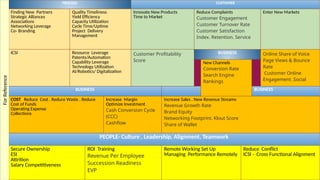
PROCESS CUSTOMER
Finding New Partners
Strategic Alliances
Associations
Networking Leverage
Co- Branding
Quality Timeliness
Yield Efficiency
Capacity Utilization
Cycle Time/Uptime
Project Delivery
Management
Innovate New Products
Time to Market
Reduce Complaints
Customer Engagement
Customer Turnover Rate
Customer Satisfaction
Index. Retention. Service
Enter New Markets
ICSI Resource Leverage
Patents/Automation
Capability Leverage
Technology Utilization
AI/Robotics/ Digitalization
Customer Profitability
Score
BUSINESS Online Share of Voice
Page Views & Bounce
Rate
Customer Online
Engagement .Social
New Channels
Conversion Rate
Search Engine
Rankings
BUSINESS BUSINESS
COST Reduce Cost . Reduce Waste . Reduce
Cost of Funds
Operating Expense
Collections
Increase Margin
Optimize Investment
Cash Conversion Cycle
(CCC)
Cashflow
Increase Sales . New Revenue Streams
Revenue Growth Rate
Brand Equity
Networking Footprint. Klout Score
Share of Wallet
PEOPLE- Culture , Leadership, Alignment, Teamwork
Secure Ownership
ESI
Attrition
Salary Competitiveness
ROI Training
Revenue Per Employee
Succession Readiness
EVP
Remote Working Set Up
Managing Performance Remotely
Reduce Conflict
ICSI - Cross Functional Alignment
For
Reference
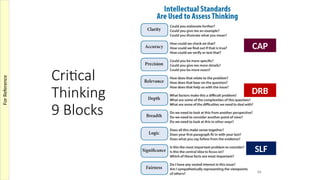
Critical
Thinking
9 Blocks
34
CAP
DRB
SLF
For
Reference
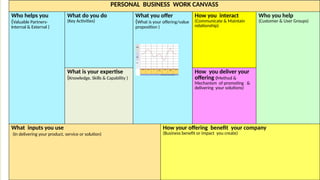
PERSONAL BUSINESS WORK CANVASS
Who helps you
(Valuable Partners-
Internal & External }
What do you do
(Key Activities)
What you offer
(What is your offering/value
proposition )
How you interact
(Communicate & Maintain
relationship)
Who you help
(Customer & User Groups)
What is your expertise
(Knowledge, Skills & Capability )
How you deliver your
offering (Method &
Mechanism of promoting &
delivering your solutions)
What inputs you use
(In delivering your product, service or solution)
How your offering benefit your company
(Business benefit or impact you create)
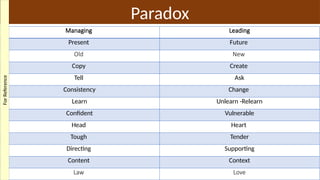
Paradox
Managing Leading
Present Future
Old New
Copy Create
Tell Ask
Consistency Change
Learn Unlearn -Relearn
Confident Vulnerable
Head Heart
Tough Tender
Directing Supporting
Content Context
Law Love
For
Reference
37
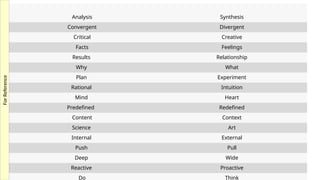
Analysis Synthesis
Convergent Divergent
Critical Creative
Facts Feelings
Results Relationship
Why What
Plan Experiment
Rational Intuition
Mind Heart
Predefined Redefined
Content Context
Science Art
Internal External
Push Pull
Deep Wide
Reactive Proactive
Do Think
For
Reference
38
Project
39
40
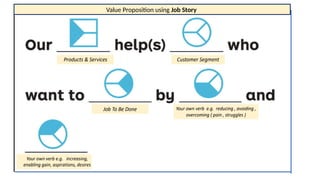
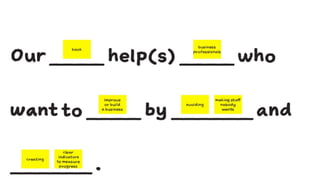
Value Proposition using Job Story
42
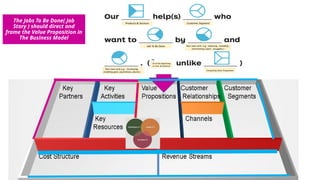
The Jobs To Be Done( Job
Story ) should direct and
frame the Value Proposition in
The Business Model
43
Thank You

Tools A YTL Writable Project Slides Part One.pptx

  • 1.
    Executive Masters ofBusiness Administration Future Ready Business Leadership YTL Writable Tool Kit Slides for Project Work Through 1
  • 2.
    2 Slide 3 Instructionsof what to do . Do only those shaded in yellow. Slide 4 EMBA Project Infographics for whole program project . For reference Slide 5 -22 Complete the relevant slides. Those labelled as reference is for reference. Note Use the handouts given in the workshop and on the chat as guides , not forgetting your manual notes These writable templates constitute the whole set of templates for your project Submit your worksheets –once you have confirmed your project with your immediate superior , with clearly defined SMART Goal with time timeline I will also up load the Business Model Canvass and Value Proposition Canvass e- book
  • 3.
    3 Action Tools/Template/Canvass Output/Outcome INTERNAL CAPABILITY MEETING EXTERNAL OPPORTUNITY 1. Visualize your Business as a System by framing the Business Model canvass STDF See Think Do Feel 2.Scann the Internal External Environment PESTLE SOAR. CHIPS . SWOT PPCB Assessment / DFV Assessment –Choose one PESTLE SOAR. CHIPS . SWOT 3. From the PESTLE,SOAR CHIPS & PPCB or DFV Assessment, Identify 3-5 Issues, opportunities or Ideas as basis for Improvement Projects . Plot these projects on the Impact Effort Matrix Initial projects or Issues-Effort Impact Matrix 4. Plot projects on Effort Impact Matrix & select one influenceable project & convert it into a project goal that meets the SMART Criteria Project Goal: 5. Anchoring the Project with the 4 D Strategic Framework i.e. Drawing Force , Driving Force , Defining Force & Delivering Force Drawing Driving Defining Delivering 6. Transfers the 4 D onto the SBAP –Strategic Business Action Plan template & then come up with tactical strategies & action plans to support the KSF –Key Success Factors 7. Align & Place the selected project earlier into the SBAP in the relevant KSF to contextualize your project in the context of your SBAP .. SBAP is a OVERALL MASTER PLAN , SIAP is a detailed EXECUTION PLAN Supporting & Reference slides generate ideas F V D EDIPT 4 D Strategic Framework SIAP SBAP Conceptual Strategic Tactical Operatio nal SCAMPER INSTRUCTIONS
  • 4.
    4 Strategic Findings - Trends,Taste, Times, Themes , Issues Initial projects or Issues- Effort Impact Matrix S W O T PPCB DFV SIAP VPC Value Prop. Canvass STDF SCAMPER FIESTA 4 D Strategic Framework BMC SBAP V. PROP. CANVASS PERSONAL BUS. MODEL . CANVASS BUS. MOD. CANVASS Value Optimization Matrix TEMPLES SWOT S EFFORT:IMPACT MAT. SOAR & CHIPS Drawing Driving Defining Delivering Force Strategy canvass E D I P T REQUEST CAP DRB SLF
  • 5.
    5 P E ST E L M P Politics E Economy S Social T Technology E Environment L Laws/Legal M Markets
  • 6.
  • 7.
    7 S.O.A.R Scenarios: Possible futuresituations or scenarios of external forces , changes, trends , patterns and influencing forces that may affect a business organization internally and externally Strengths: The core competencies, resources, and qualities that give an organization its unique advantage that can be leveraged on to achieve even greater success. Opportunities: External possibilities or areas for growth that can be leveraged to expand the organization’s impact. Opportunities in Appreciative Inquiry are viewed as pathways for positive change and innovation, enabling the organization to connect its strengths to emerging trends and needs. Aspirations: The ideal vision of what the organization wants to become, focusing on its highest potential. Aspirations serve as a guiding star, helping teams align their strengths and opportunities with a shared, positive vision for the future. Results: The measurable outcomes or achievements that reflect progress toward the organization’s aspirations. In Appreciative Inquiry, results emphasize the positive impact of actions taken, encouraging continuous improvement and celebrating successes as they move closer to their vision. For Reference
  • 8.
  • 9.
    9 STRENGTHS WEAKNESSES OPPORTUNITIES Done underSOAR THREATS SWOT For Reference
  • 10.
    10 10 1010 10 10 10 10 10 10 10 10 10 10 10 10 9 9 9 9 9 9 9 9 9 9 9 9 9 9 9 9 8 8 8 8 8 8 8 8 8 8 8 8 8 8 8 8 7 7 7 7 7 7 7 7 7 7 7 7 7 7 7 7 6 6 6 6 6 6 6 6 6 6 6 6 6 6 6 6 5 5 5 5 5 5 5 5 5 5 5 5 5 5 5 5 4 4 4 4 4 4 4 4 4 4 4 4 4 4 4 4 3 3 3 3 3 3 3 3 3 3 3 3 3 3 3 3 2 2 2 2 2 2 2 2 2 2 2 2 2 2 2 2 1 1 1 1 1 1 1 1 1 1 1 1 1 1 1 1 KPI Alignment Creative Difference Empowerment High Performance Culture Process Thinking Continuous Improvement Total Quality Cross Functional Integration Customer Focus Service Standards Customer Sat. Index Competitiveness Cash Flow Strategy Translation Brand & Concept Business Performance 2 7 3 9 10 11 13 14 1 2 5 6 8 12 15 16 PEOPLE PROCESS CUSTOMER BUSINESS ORGANIZATIONAL BUSINESS IMPROVEMENT HEALTH CHECK 10
  • 11.
    11 Business Success Factors– Asian Business Consulting DFV 1 Our Business Model can withstand the current business challenges to maintain or increase our revenue streams in the current business environment (Business Resilience) Viability V1 2 We are able create new value through continuous Innovative thinking in all our agendas, interactions and conversations (New Value Creation) Desirability D1 3 We constantly challenge assumptions on our thinking, processes and practices using a structured methodology to prepare ourselves for changes, scenarios and opportunities ahead (Challenging Assumptions ) ) Feasibility F1 4 A formal mechanism is used by everyone in the company to contribute valuable ideas to the Innovation pipeline at all levels (Creative Pipeline) Desirability D2 5 We are resilient to upturns and downturns in the market and can bounce back with enough reserves to take us through beyond a year (Business Sustainability) Viability V2 6 We consistently provide unique & unmatched user experience to our customers and users in line with our Brand Promise ( User Experience) Desirability D3 7 We are highly sought after because we continuously design products, services and solutions to accurately to meet the functional, emotional , aesthetic, social and transformation user needs in getting their job done( Job To Be Done) Desirability D4 8 We use structured and strategic tools to review , revise, update and redesign our Business Model(s) to stay relevant to stay ahead (Business Model Innovation) Viability V3 9 All ( Departments, Divisions, SBU’s) participate actively across the value chain to synchronize, align , integrate & link Business initiatives for exceptional QCDS – Quality , Cost Optimization, Delivery and Service (Synergistic Collaboration) Feasibility F2 10 Management actively seeks every opportunity to learn new tools and techniques to support new value creation & innovation initiatives and agendas to survive and stay ahead of the game (Learning Agility) Viability V4 11 We are able to reconcile risk , effort, rewards & opportunities to ensure feasible execution (Risk and Execution ) Feasibility F3 12 We have a clear, single and focused Business Concept that permeates the hearts & minds of our people that is demonstrated in all our relationships, branding, engagements and messaging (Business Concept) Desirability D5 13 We readily adopt the right new available technology to leverage operations and delivery (Technology Leverage) Feasibility F4 14 We have the leadership competencies , mindsets, processes and skills to translate our strategic intentions into action ( Competencies & Capabilities) Feasibility F5 15 We make impressive profits (or margins )according to our Industry standards ( Margins ) Viability V5 For Reference For Reference
  • 12.
    12 10 10 1010 10 10 10 10 10 10 10 10 10 10 10 9 9 9 9 9 9 9 9 9 9 9 9 9 9 9 8 8 8 8 8 8 8 8 8 8 8 8 8 8 8 7 7 7 7 7 7 7 7 7 7 7 7 7 7 7 6 6 6 6 6 6 6 6 6 6 6 6 6 6 6 5 5 5 5 5 5 5 5 5 5 5 5 5 5 5 4 4 4 4 4 4 4 4 4 4 4 4 4 4 4 3 3 3 3 3 3 3 3 3 3 3 3 3 3 3 2 2 2 2 2 2 2 2 2 2 2 2 2 2 2 1 1 1 1 1 1 1 1 1 1 1 1 1 1 1 New Value Creation Creative Pipeline User Experience Job To Be Done Business Concept Challenging Assumptions Synergistic Collaboration Risk and Execution Technology Leverage Competencies and Capabilities Business Resilience Business Sustainability Business Model Innovation Learning Agility Margins and Profit 2 4 6 7 12 3 9 11 13 14 1 5 8 10 15 DESIRABILITY FEASIBILITY VIABILITY ORGANIZATIONAL BUSINESS IMPROVEMENT HEALTH CHECK
  • 13.
    Pillars for Business Strategy 13 10 1010 9 9 9 8 8 8 7 7 7 6 6 6 5 5 5 4 4 4 3 3 3 2 2 2 1 1 1 D F V For Reference For Reference
  • 14.
    14 LOW MEDIUM HIGH EFFORT ImpactEffort Matrix Prioritization Matrix Time, Effort ,,Resources, Money ( T.E.R.M ) Impact – On People, Process, Business Customer IMPACT LOW MEDIUM HIGH
  • 15.
    15 Business Operating Model(Business Model Canvass): Sketching your current Business Model to understand how your business works Strategic • What is the Big Idea or Big Concept behind your Business ( Business Concept) • What is your Business Recipe /Ingredients of Success /Key Factors Of Success in terms of People( Expertise, Skills, Work Culture & Leadership ) • Process ( What Processes need to be in place ) • Customer ( What Customer elements /factors is required ) • Business ( What Business factors/drivers to build , grow and scale the Business)) • What 3.KEY ACTIVITIES or Key Success Activities you need to have to deliver the 2.VALUE PROPOSITION: What are you currently offering to the customer in terms of : Functional, Ideological , Emotional, Social, Transformational, Aesthetic ( F.I.E.S.T.A ) 9. REVENUE STREAMS: What are your current or future revenue streams Design • What your customers want /want more that they LOVE to have • What is it they don’t like or don’t want or find it LOUSY about your current products, services or offering • What Customers are trying to accomplish by using your product or service • What Outcomes or Job(s) they want to get done when using your product or solution ( Job To Be Done ); in terms of : Functional, Ideological , Emotional, Social, Transformational, Aesthetic ( F.I.E.S.T.A ) • Who are your 1. CUSTOMER SEGMENTS or target customer groups. • 7.CUSTOMER RELATIONSHIPS: How you manage your current relationships with your Customer Creative • Generate ideas on how to fulfill what they want more, or how to overcome the dislikes or how to help them get their Job done better • Use What If /how Might We ( HMW )…….e.g. solve ……( what they dislike ) etc. • Think out of the Box Brainstorming • What to Substitute, Combine, Adapt, Modify, Put to other use, Eliminate , Rearrange • Ideas & solutions for 2A.Functional , Ideology, Emotional, Social, Transformational , Aesthetics to meet Needs ( Job To Be Done ) in the VALUE PROPOSITION or PROMISE to the USER (USER EXPERIENCE –UX ) Critical • Analyze , Evaluate & Draw Conclusions • Check for Clarity , Accuracy, Precision, Details( Depth ) , Relevance, Breadth ( who say , how many say , pattern ) of the ideas and solutions ,in making decision • Also, the Significance ( of what they say ) , Logic ( Does it make sense) , Is it Fair • 8.COST STRUCTURE : Analyze what are main cost components for pricing or costing Systems • Who are you working with or can you work with in future – Alliances, Suppliers, Endorsements, Licenses, Certifications, Approving & Regulatory Bodies etc. • What patents, copyright, recipe, methods, proprietary ingredients do you have • 4.KEY RESOURCES you have • 5.KEY PARTNERS you work with or can work with • 6.CHANNELS: What are your Channels to reach your customers For Reference
  • 16.
    5.Key Partners 3.KeyActivities 2.Value Proposition 7.Customer Relationships 1.Customer Segments 2.A 4.Key Resources 6.Channels 8.Cost Structure 9.Revenue Streams TE MP LES TE MP LES INTERNAL Strategic Framework CRT DT System EXTERNAL EXTERNAL
  • 17.
    17 Steps to ConstructingA Value Proposition Canvass
  • 18.
  • 19.
    19 F - FUNCTIONAL I- IDEA E - EMOTIONAL A - AESTHETICS S - SOCIAL T - TRANSFORMATIONAL EMPATHY DEFINE ID E A T E PROTOTYPE TEST VALUE PROPOSITION CUSTOMER :USER .SEGMENT .GROUP.AUDIENCE VALUE PROPOSITION CANVASS ACHIEVING FIT S C A M P E R DESIGN THINKING How Might We, Random Word What If , Why Not For Reference For Reference
  • 20.
    20 F.I.E.S.T.A. Value Dimensions F- FUNCTIONAL I - IDEA E - EMOTIONAL S - SOCIAL T - TRANSFORMATIONAL A - AESTHETIC For Reference
  • 21.
  • 22.
    22 Improvement principle Questions to askAction to take – what and how S – Substitute What can you substitute in your work. Can you substitute methods, materials, manpower, machines, equipment, process, technique, resources, forms, stationery, communication methods, formats? technology C –Combine Combine activities, meetings, reports, decision points, tasks, approvals, A – Adapt /Adopt Can you adopt a method from another industry, format, technology, technique, process, procedure, standard, standardize etc. M – Modify Can you modify your process, system, simplify, cut down steps, layout, checks, simplify forms, reports, worksheets, sequence P – Put to Another Use Can the machine, method, software, material, space, manpower, resources be put to other use. E – Eliminate Delays, Duplications, bottlenecks, errors, complaints, unnecessary steps, unnecessary movement, processing, wastage, misunderstandings, filing, extra copies, reports, unnecessary, wait time checks, inspections, reviews. copies. signatures, backlogs R – Rearrange Schedules, meetings, events, work space, storage, filing, seating, document flow, cabinets, layout SCAMPER For Reference For Reference
  • 23.
    23 Heart of a Businessis the JTBD based on Defining Force DRAWING Force DRIVING Force DEFINING Force PEOPLE PROCESS CUSTOMER BUSINESS STRATEGIC BUSINESS MODEL INNOVATION DELIVERING FORCE B P C P For Reference
  • 24.
    24 1.Drawing Force 2.Driving Force 3.DefiningForce 4.Delivering Force 4 D of Strategic Framework FRAMEWORK before WORK
  • 25.
    25 Company Vision Mission Create TodayEnrich Tomorrow Drawing Force (Business Concept-The Big Idea) Driving Force ( Core Capability) Defining Force ( Core Value Proposition) Delivering Force (Key Success Factors) BUSINESS CUSTOMER PROCESS PEOPLE …..
  • 26.
    Mission / Winning Aspiration Defining Force Success Measures/KPI KeySuccess Factors- PPCB Delivering Force Tactical Strategies Action Plans ( Who, When) BUSINESS BUSINESS CUSTOMER ER A Key Template
  • 27.
    Mission / Winning Aspiration Defining Force Success Measures/KPI KeySuccess Factors- PPCB Delivering Force Tactical Strategies Action Plans ( Who, When) Process Process People People
  • 28.
    HIGH MED LOW Assessing your Comparativeand Competitive Value Proposition
  • 29.
    Reliability Expertise QualityUser Experience Empathy Service Support Timeliness R E Q U E S T 10 9 8 7 6 5 4 3 2 1 Service Offering Canvass
  • 30.
    Don’t do DoMore Do Less Do New 30
  • 31.
    5 D Process 31 S.I.A.P. – Strategic Initiative Action Planning SOAR CHIPS Issues - Problem/ Opportunity ( PROJECT) Goal / Objective OBJECTIVE Impact ( Negative / Positive ) Causes/ Barriers Ideate Select IMPROVEMENT ACTIONS based on agreed Criteria Who When OWN-ERSHIP Actual Result % of Achievement Based on set Goal/Objective OUTPUT / OUTCOME Next or Future Action Problem Solving , Improvement & Innovation Template
  • 32.
  • 33.
    PROCESS CUSTOMER Finding NewPartners Strategic Alliances Associations Networking Leverage Co- Branding Quality Timeliness Yield Efficiency Capacity Utilization Cycle Time/Uptime Project Delivery Management Innovate New Products Time to Market Reduce Complaints Customer Engagement Customer Turnover Rate Customer Satisfaction Index. Retention. Service Enter New Markets ICSI Resource Leverage Patents/Automation Capability Leverage Technology Utilization AI/Robotics/ Digitalization Customer Profitability Score BUSINESS Online Share of Voice Page Views & Bounce Rate Customer Online Engagement .Social New Channels Conversion Rate Search Engine Rankings BUSINESS BUSINESS COST Reduce Cost . Reduce Waste . Reduce Cost of Funds Operating Expense Collections Increase Margin Optimize Investment Cash Conversion Cycle (CCC) Cashflow Increase Sales . New Revenue Streams Revenue Growth Rate Brand Equity Networking Footprint. Klout Score Share of Wallet PEOPLE- Culture , Leadership, Alignment, Teamwork Secure Ownership ESI Attrition Salary Competitiveness ROI Training Revenue Per Employee Succession Readiness EVP Remote Working Set Up Managing Performance Remotely Reduce Conflict ICSI - Cross Functional Alignment For Reference
  • 34.
  • 35.
    PERSONAL BUSINESS WORKCANVASS Who helps you (Valuable Partners- Internal & External } What do you do (Key Activities) What you offer (What is your offering/value proposition ) How you interact (Communicate & Maintain relationship) Who you help (Customer & User Groups) What is your expertise (Knowledge, Skills & Capability ) How you deliver your offering (Method & Mechanism of promoting & delivering your solutions) What inputs you use (In delivering your product, service or solution) How your offering benefit your company (Business benefit or impact you create)
  • 36.
    Paradox Managing Leading Present Future OldNew Copy Create Tell Ask Consistency Change Learn Unlearn -Relearn Confident Vulnerable Head Heart Tough Tender Directing Supporting Content Context Law Love For Reference
  • 37.
    37 Analysis Synthesis Convergent Divergent CriticalCreative Facts Feelings Results Relationship Why What Plan Experiment Rational Intuition Mind Heart Predefined Redefined Content Context Science Art Internal External Push Pull Deep Wide Reactive Proactive Do Think For Reference
  • 38.
  • 39.
  • 40.
  • 42.
    42 The Jobs ToBe Done( Job Story ) should direct and frame the Value Proposition in The Business Model
  • 43.