TMJ Exercises
For Pain Relief
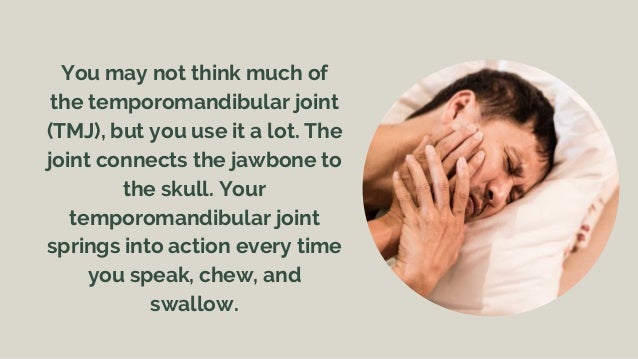
You may not think much of
the temporomandibular joint
(TMJ), but you use it a lot. The
joint connects the jawbone to
the skull. Your
temporomandibular joint
springs into action every time
you speak, chew, and
swallow.
TMJ disorders occur when
something goes wrong with
the temporomandibular joint
and jaw muscles. It often
occurs due to a jaw injury,
inflammation such as arthritis,
or overuse.
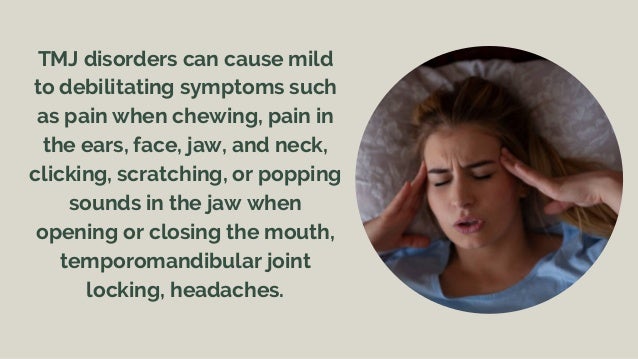
TMJ disorders can cause mild
to debilitating symptoms such
as pain when chewing, pain in
the ears, face, jaw, and neck,
clicking, scratching, or popping
sounds in the jaw when
opening or closing the mouth,
temporomandibular joint
locking, headaches.
Exercise For TMJ Pain Relief
Relaxed Jaw Exercise
Gently place your tongue on the top of your
mouth behind the upper front teeth. Let your
teeth separate while relaxing your jaw muscles.
Place your tongue on the roof of your mouth and one
finger in front of your ear where your TMJ is. Place your
middle finger or pointer on your chin. Lower your lower
jaw halfway, then close. There should be some
resistance but no pain. A variation of this exercise is to
place one finger on each TMJ as you lower the lower
half of the jaw and close it. Do this exercise six times in
one set. You should exercise six times a day.
Goldfish exercise (partially open)
Keeping your tongue on the roof of your mouth, place
one finger on the TMJ and the other on the chin. Lower
your lower jaw completely and pull it back. For a
variation of this exercise, place one finger on each TMJ
as you fully lower your lower jaw and back. Do this
exercise six times to complete one set. You need to do
one set six times a day.
Goldfish exercise (fully open)
With your shoulders back and your chest up,
pull your right chin back, creating a "double
chin". Hold the pose for three seconds and
repeat 10 times.
Chin Tucks
Place your thumb under your chin. Open your
mouth slowly, pushing gently on your chin to
counter it. Hold for three to six seconds, then
slowly close your mouth.
Resistance Mouth Opener
Squeeze your chin with your index finger and
thumb with one hand. Close your mouth, gently
press your chin. This will help strengthen your
muscles, helping you to chew.
Resisted Closing Of The Mouth
With your tongue touching the roof of
your mouth, slowly open and close
your mouth.
Tongue Up
Place a ¼-inch object, such as a stacked tongue
depressor, between your front teeth and slowly
move your jaw from side to side. As the exercise
becomes easier, increase the thickness of the
foreign body between the teeth by stacking
them on top of each other.
Side-to-side Jaw Movement
Place a ¼ inch object between your front teeth.
Move the lower jaw forward so that the lower
teeth are in front of the upper teeth. As the
exercise gets easier, increase the thickness of
the foreign body between your teeth.
Forward Jaw Movement
In some cases, TMJ disorders go away on their
own. If your symptoms persist, TMJ exercises
can help ease the pain. TMJ exercises should
not be performed when you are in severe pain.
The AAFP recommends waiting until your pain
improves before starting a TMJ exercise
program.
When doing TMJ exercises, start slowly. You may
feel some pain at first, but it will be tolerable and
will gradually improve. If the pain is unbearable,
see your doctor. You should do TMJ exercises
when you are relaxing. If you do them while your
muscles are tense, it may not be up to the mark.
If your pain gets worse after doing TMJ
exercises, make an appointment with your
doctor.
ABC 123 Dental - Fort Worth
Address
5416 Basswood Blvd,
Fort Worth, TX 76137
Phone
(817) 813-8070
Opening Hours


Monday - Friday


9 AM - 6 PM


Saturday


9 am - 2 Pm
ABC 123 Dental - Fort Worth

TMJ Exercises For Pain Relief

  • 1.
  • 2.
    You may notthink much of the temporomandibular joint (TMJ), but you use it a lot. The joint connects the jawbone to the skull. Your temporomandibular joint springs into action every time you speak, chew, and swallow.
  • 3.
    TMJ disorders occurwhen something goes wrong with the temporomandibular joint and jaw muscles. It often occurs due to a jaw injury, inflammation such as arthritis, or overuse.
  • 4.
    TMJ disorders cancause mild to debilitating symptoms such as pain when chewing, pain in the ears, face, jaw, and neck, clicking, scratching, or popping sounds in the jaw when opening or closing the mouth, temporomandibular joint locking, headaches.
  • 5.
    Exercise For TMJPain Relief Relaxed Jaw Exercise Gently place your tongue on the top of your mouth behind the upper front teeth. Let your teeth separate while relaxing your jaw muscles.
  • 6.
    Place your tongueon the roof of your mouth and one finger in front of your ear where your TMJ is. Place your middle finger or pointer on your chin. Lower your lower jaw halfway, then close. There should be some resistance but no pain. A variation of this exercise is to place one finger on each TMJ as you lower the lower half of the jaw and close it. Do this exercise six times in one set. You should exercise six times a day. Goldfish exercise (partially open)
  • 7.
    Keeping your tongueon the roof of your mouth, place one finger on the TMJ and the other on the chin. Lower your lower jaw completely and pull it back. For a variation of this exercise, place one finger on each TMJ as you fully lower your lower jaw and back. Do this exercise six times to complete one set. You need to do one set six times a day. Goldfish exercise (fully open)
  • 8.
    With your shouldersback and your chest up, pull your right chin back, creating a "double chin". Hold the pose for three seconds and repeat 10 times. Chin Tucks
  • 9.
    Place your thumbunder your chin. Open your mouth slowly, pushing gently on your chin to counter it. Hold for three to six seconds, then slowly close your mouth. Resistance Mouth Opener
  • 10.
    Squeeze your chinwith your index finger and thumb with one hand. Close your mouth, gently press your chin. This will help strengthen your muscles, helping you to chew. Resisted Closing Of The Mouth
  • 11.
    With your tonguetouching the roof of your mouth, slowly open and close your mouth. Tongue Up
  • 12.
    Place a ¼-inchobject, such as a stacked tongue depressor, between your front teeth and slowly move your jaw from side to side. As the exercise becomes easier, increase the thickness of the foreign body between the teeth by stacking them on top of each other. Side-to-side Jaw Movement
  • 13.
    Place a ¼inch object between your front teeth. Move the lower jaw forward so that the lower teeth are in front of the upper teeth. As the exercise gets easier, increase the thickness of the foreign body between your teeth. Forward Jaw Movement
  • 14.
    In some cases,TMJ disorders go away on their own. If your symptoms persist, TMJ exercises can help ease the pain. TMJ exercises should not be performed when you are in severe pain. The AAFP recommends waiting until your pain improves before starting a TMJ exercise program.
  • 15.
    When doing TMJexercises, start slowly. You may feel some pain at first, but it will be tolerable and will gradually improve. If the pain is unbearable, see your doctor. You should do TMJ exercises when you are relaxing. If you do them while your muscles are tense, it may not be up to the mark.
  • 16.
    If your paingets worse after doing TMJ exercises, make an appointment with your doctor.
  • 17.
    ABC 123 Dental- Fort Worth Address 5416 Basswood Blvd, Fort Worth, TX 76137 Phone (817) 813-8070
  • 18.
    Opening Hours Monday -Friday 9 AM - 6 PM Saturday 9 am - 2 Pm ABC 123 Dental - Fort Worth