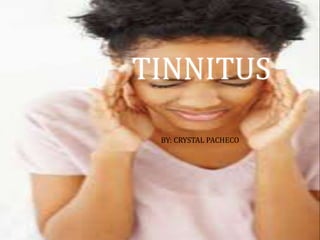
TINNITUS
 BY: CRYSTAL PACHECO
What Is Tinnitus
0 Tinnitus is noise or ringing in the ears.
0 tinnitus affects about 1 in 5 people.
0 Tinnitus isn't a condition itself — it's a symptom such
 as age-related hearing loss, ear injury or a circulatory
 system disorder.
Symptoms
Tinnitus involves the annoying sensation of hearing
sound when no external sound is present. Tinnitus
symptoms include these types of phantom noises in
your ears:
0 Ringing
0 Buzzing
0 Roaring
0 Clicking
0 Whistling
0 Hissing
Causes
0 A number of health conditions can cause or worsen tinnitus. In
  many cases, an exact cause is never found
0 A common cause of tinnitus is inner ear cell damage.
  Tiny, delicate hairs in your inner ear move in relation to the
  pressure of sound waves. This triggers ear cells to release an
  electrical signal through a nerve from your ear (auditory nerve)
  to your brain. Your brain interprets these signals as sound.
Common causes of tinnitus
In many people, tinnitus is caused by one of these conditions:
0 Age-related hearing loss.
0 Exposure to loud noise.
0 Earwax blockage..
0 Ear bone changes.
Treatment
To treat your tinnitus, your doctor will first try to
identify any underlying, treatable condition that may be
associated with your symptoms. If tinnitus is due to a
health condition, your doctor may be able to take steps
that could reduce the noise. Examples include:
0 Earwax removal.
0 Treating a blood vessel condition.
0 Changing your medication.
ALWAYS CLEAN YOUR
EARS
Risk Factors
 Anyone can get tinnitus, but you might be at increased risk
if:
0 You've been exposed to loud noise without ear
   protection, especially on an ongoing basis.
0 You're over age 65.
0 You have age-related hearing loss.
0 You're a man.
0 You're Caucasian.
0 You have post-traumatic stress disorder (PTSD). Tinnitus is
   especially aggravated by loud noises in people with PTSD
Tinnitus[1]

Tinnitus[1]

  • 1.
  • 2.
    What Is Tinnitus 0Tinnitus is noise or ringing in the ears. 0 tinnitus affects about 1 in 5 people. 0 Tinnitus isn't a condition itself — it's a symptom such as age-related hearing loss, ear injury or a circulatory system disorder.
  • 3.
    Symptoms Tinnitus involves theannoying sensation of hearing sound when no external sound is present. Tinnitus symptoms include these types of phantom noises in your ears: 0 Ringing 0 Buzzing 0 Roaring 0 Clicking 0 Whistling 0 Hissing
  • 4.
    Causes 0 A numberof health conditions can cause or worsen tinnitus. In many cases, an exact cause is never found 0 A common cause of tinnitus is inner ear cell damage. Tiny, delicate hairs in your inner ear move in relation to the pressure of sound waves. This triggers ear cells to release an electrical signal through a nerve from your ear (auditory nerve) to your brain. Your brain interprets these signals as sound. Common causes of tinnitus In many people, tinnitus is caused by one of these conditions: 0 Age-related hearing loss. 0 Exposure to loud noise. 0 Earwax blockage.. 0 Ear bone changes.
  • 5.
    Treatment To treat yourtinnitus, your doctor will first try to identify any underlying, treatable condition that may be associated with your symptoms. If tinnitus is due to a health condition, your doctor may be able to take steps that could reduce the noise. Examples include: 0 Earwax removal. 0 Treating a blood vessel condition. 0 Changing your medication.
  • 6.
  • 7.
    Risk Factors Anyonecan get tinnitus, but you might be at increased risk if: 0 You've been exposed to loud noise without ear protection, especially on an ongoing basis. 0 You're over age 65. 0 You have age-related hearing loss. 0 You're a man. 0 You're Caucasian. 0 You have post-traumatic stress disorder (PTSD). Tinnitus is especially aggravated by loud noises in people with PTSD