Noisy Ear
Tinnitus Sounds
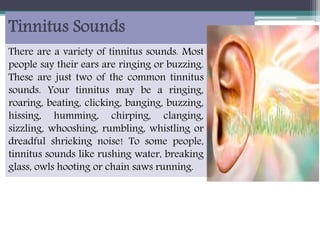
There are a variety of tinnitus sounds. Most
people say their ears are ringing or buzzing.
These are just two of the common tinnitus
sounds. Your tinnitus may be a ringing,
roaring, beating, clicking, banging, buzzing,
hissing, humming, chirping, clanging,
sizzling, whooshing, rumbling, whistling or
dreadful shrieking noise! To some people,
tinnitus sounds like rushing water, breaking
glass, owls hooting or chain saws running.
Causes of tinnitus
Tinnitus is a symptom, not a disease. Conditions that might cause tinnitus
include:
 Hearing loss
 Meniere's disease (disorder of the inner ear)
 Loud noise exposure
 Migraine headaches
 Head injury
 Drugs or medicines that are toxic to hearing
 Anaemia
 Hypertension
 Stress
 Too much wax in the ear
 Certain types of tumours
 Too much coffee
 Smoking cigarettes
Why is tinnitus worse at night?
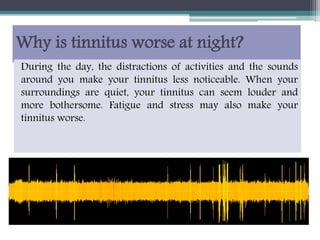
During the day, the distractions of activities and the sounds
around you make your tinnitus less noticeable. When your
surroundings are quiet, your tinnitus can seem louder and
more bothersome. Fatigue and stress may also make your
tinnitus worse.
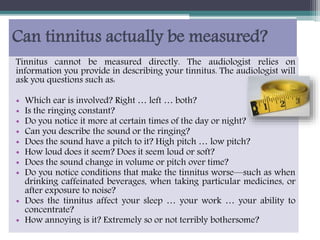
Can tinnitus actually be measured?
Tinnitus cannot be measured directly. The audiologist relies on
information you provide in describing your tinnitus. The audiologist will
ask you questions such as:
• Which ear is involved? Right … left … both?
• Is the ringing constant?
• Do you notice it more at certain times of the day or night?
• Can you describe the sound or the ringing?
• Does the sound have a pitch to it? High pitch … low pitch?
• How loud does it seem? Does it seem loud or soft?
• Does the sound change in volume or pitch over time?
• Do you notice conditions that make the tinnitus worse—such as when
drinking caffeinated beverages, when taking particular medicines, or
after exposure to noise?
• Does the tinnitus affect your sleep … your work … your ability to
concentrate?
• How annoying is it? Extremely so or not terribly bothersome?
How is the cause of tinnitus
diagnosed?
Tinnitus is a symptom of a problem. The first thing you should
do is to try to find out the underlying cause. You should have a
medical examination with special attention given to conditions
associated with tinnitus. You should also receive a full hearing
evaluation including tinnitogram by an audiologist to see if
hearing loss may be causing your tinnitus.
How is tinnitus treated?
The most effective treatment for tinnitus is to
eliminate the underlying cause. Tinnitus, in some
cases, can be a symptom of a treatable medical
condition. Unfortunately, in many cases, the cause
of tinnitus cannot be identified, or
medical/surgical treatment is not an option. In
these cases, the tinnitus can still be managed using
a variety of other methods. Be sure to discuss with
your doctor any medical treatment options before
considering tinnitus management.
Management
•Habituation therapies (TRT)
•Tinnitus maskers
•Sound machines Biofeedback
•Hypnosis
•Electrical stimulation
•Relaxation therapy
•Counselling
How is tinnitus prevented?
• Avoiding loud noise, music, etc
• Proper care of ear
• Limited usage of loud electrical
appliances
• Use of ear plugs or ear muffs
• Avoiding ototoxic drugs
• Avoiding foods causing tinnitus
• Treating ear infections in the early stages
Audiologists and otolaryngologists (ear, nose,
and throat doctors, or ENTs) routinely
collaborate in identifying the cause of tinnitus
and providing treatment and management. A
treatment that is useful and successful for one
person may not be appropriate for another.
Dr. E C Vinay Kumar is Senior Consultant
Surgeon Dept. of ENT Apollo Health City
Hyderabad
Source
Medvarsity Online Limited
www.medvarsity.com

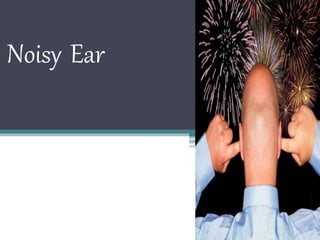
Noisy Ear

  • 1.
  • 2.
    Tinnitus Sounds There area variety of tinnitus sounds. Most people say their ears are ringing or buzzing. These are just two of the common tinnitus sounds. Your tinnitus may be a ringing, roaring, beating, clicking, banging, buzzing, hissing, humming, chirping, clanging, sizzling, whooshing, rumbling, whistling or dreadful shrieking noise! To some people, tinnitus sounds like rushing water, breaking glass, owls hooting or chain saws running.
  • 3.
    Causes of tinnitus Tinnitusis a symptom, not a disease. Conditions that might cause tinnitus include:  Hearing loss  Meniere's disease (disorder of the inner ear)  Loud noise exposure  Migraine headaches  Head injury  Drugs or medicines that are toxic to hearing  Anaemia  Hypertension  Stress  Too much wax in the ear  Certain types of tumours  Too much coffee  Smoking cigarettes
  • 4.
    Why is tinnitusworse at night? During the day, the distractions of activities and the sounds around you make your tinnitus less noticeable. When your surroundings are quiet, your tinnitus can seem louder and more bothersome. Fatigue and stress may also make your tinnitus worse.
  • 5.
    Can tinnitus actuallybe measured? Tinnitus cannot be measured directly. The audiologist relies on information you provide in describing your tinnitus. The audiologist will ask you questions such as: • Which ear is involved? Right … left … both? • Is the ringing constant? • Do you notice it more at certain times of the day or night? • Can you describe the sound or the ringing? • Does the sound have a pitch to it? High pitch … low pitch? • How loud does it seem? Does it seem loud or soft? • Does the sound change in volume or pitch over time? • Do you notice conditions that make the tinnitus worse—such as when drinking caffeinated beverages, when taking particular medicines, or after exposure to noise? • Does the tinnitus affect your sleep … your work … your ability to concentrate? • How annoying is it? Extremely so or not terribly bothersome?
  • 6.
    How is thecause of tinnitus diagnosed? Tinnitus is a symptom of a problem. The first thing you should do is to try to find out the underlying cause. You should have a medical examination with special attention given to conditions associated with tinnitus. You should also receive a full hearing evaluation including tinnitogram by an audiologist to see if hearing loss may be causing your tinnitus.
  • 7.
    How is tinnitustreated? The most effective treatment for tinnitus is to eliminate the underlying cause. Tinnitus, in some cases, can be a symptom of a treatable medical condition. Unfortunately, in many cases, the cause of tinnitus cannot be identified, or medical/surgical treatment is not an option. In these cases, the tinnitus can still be managed using a variety of other methods. Be sure to discuss with your doctor any medical treatment options before considering tinnitus management.
  • 8.
    Management •Habituation therapies (TRT) •Tinnitusmaskers •Sound machines Biofeedback •Hypnosis •Electrical stimulation •Relaxation therapy •Counselling
  • 9.
    How is tinnitusprevented? • Avoiding loud noise, music, etc • Proper care of ear • Limited usage of loud electrical appliances • Use of ear plugs or ear muffs • Avoiding ototoxic drugs • Avoiding foods causing tinnitus • Treating ear infections in the early stages
  • 10.
    Audiologists and otolaryngologists(ear, nose, and throat doctors, or ENTs) routinely collaborate in identifying the cause of tinnitus and providing treatment and management. A treatment that is useful and successful for one person may not be appropriate for another. Dr. E C Vinay Kumar is Senior Consultant Surgeon Dept. of ENT Apollo Health City Hyderabad
  • 11.