to see
rhizomatic learning
decentralizing
breaking down hierarchy
unleashing control
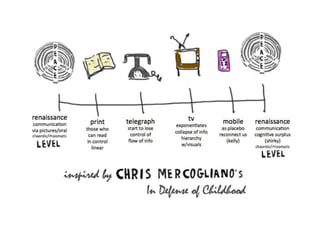
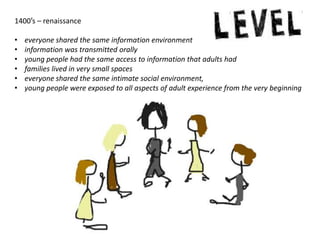
1400′s – renaissance

•   everyone shared the same information environment
•   information was transmitted orally
•   young people had the same access to information that adults had
•   families lived in very small spaces
•   everyone shared the same intimate social environment,
•   young people were exposed to all aspects of adult experience from the very beginning
1450 – gutenburg press

• invention of the printing press
• rapid spread of books created a knowledge gap between adults and children
• access to adult information required the ability to read
• children forced to acquire their reading skills, drawn-out, step-by-step manner in schools
  created expressly for that purpose
• dominant form of information was written and controlled by the adults, available to
  children through a sequential schooling process
- telegraph

• invention of the telegraph
• communication instantaneous
• adults begin to lose control over the flow of information
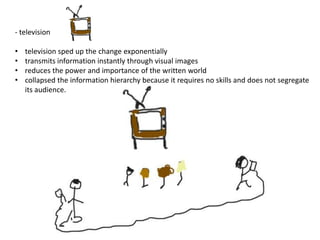
- television

•   television sped up the change exponentially
•   transmits information instantly through visual images
•   reduces the power and importance of the written world
•   collapsed the information hierarchy because it requires no skills and does not segregate
    its audience.
- internet

• internet provides children with almost infinite access to adult knowledge
• entirely on their own terms
As a result, writes Postman, the distinction between childhood and adulthood today
is like a movie playing in reverse.
                                    reversing back to
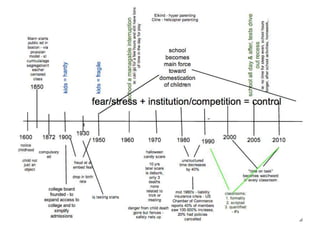
control
where did it stem from
how is it working for us
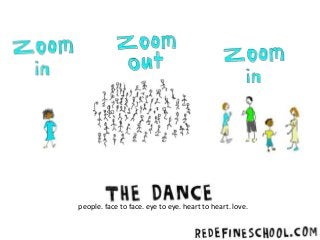
how to zoom us back in – to us
to us
people. face to face. eye to eye. heart to heart. love.

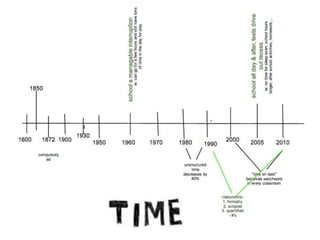
timelines

  • 1.
  • 3.
  • 5.
    1400′s – renaissance • everyone shared the same information environment • information was transmitted orally • young people had the same access to information that adults had • families lived in very small spaces • everyone shared the same intimate social environment, • young people were exposed to all aspects of adult experience from the very beginning
  • 6.
    1450 – gutenburgpress • invention of the printing press • rapid spread of books created a knowledge gap between adults and children • access to adult information required the ability to read • children forced to acquire their reading skills, drawn-out, step-by-step manner in schools created expressly for that purpose • dominant form of information was written and controlled by the adults, available to children through a sequential schooling process
  • 7.
    - telegraph • inventionof the telegraph • communication instantaneous • adults begin to lose control over the flow of information
  • 8.
    - television • television sped up the change exponentially • transmits information instantly through visual images • reduces the power and importance of the written world • collapsed the information hierarchy because it requires no skills and does not segregate its audience.
  • 9.
    - internet • internetprovides children with almost infinite access to adult knowledge • entirely on their own terms
  • 10.
    As a result,writes Postman, the distinction between childhood and adulthood today is like a movie playing in reverse. reversing back to
  • 12.
    control where did itstem from how is it working for us how to zoom us back in – to us
  • 17.
  • 19.
    people. face toface. eye to eye. heart to heart. love.