I N T R O D U C T I O N
U S I N G T H I S F O R R E T U R N I N G V A L U E S
U S I N G T H I S F O R S P E C I F Y I N G M E M O R Y A D D R E S S
U S I N G T H I S F O R A C C E S S I N G D A T A M E M B E R S
This Pointer
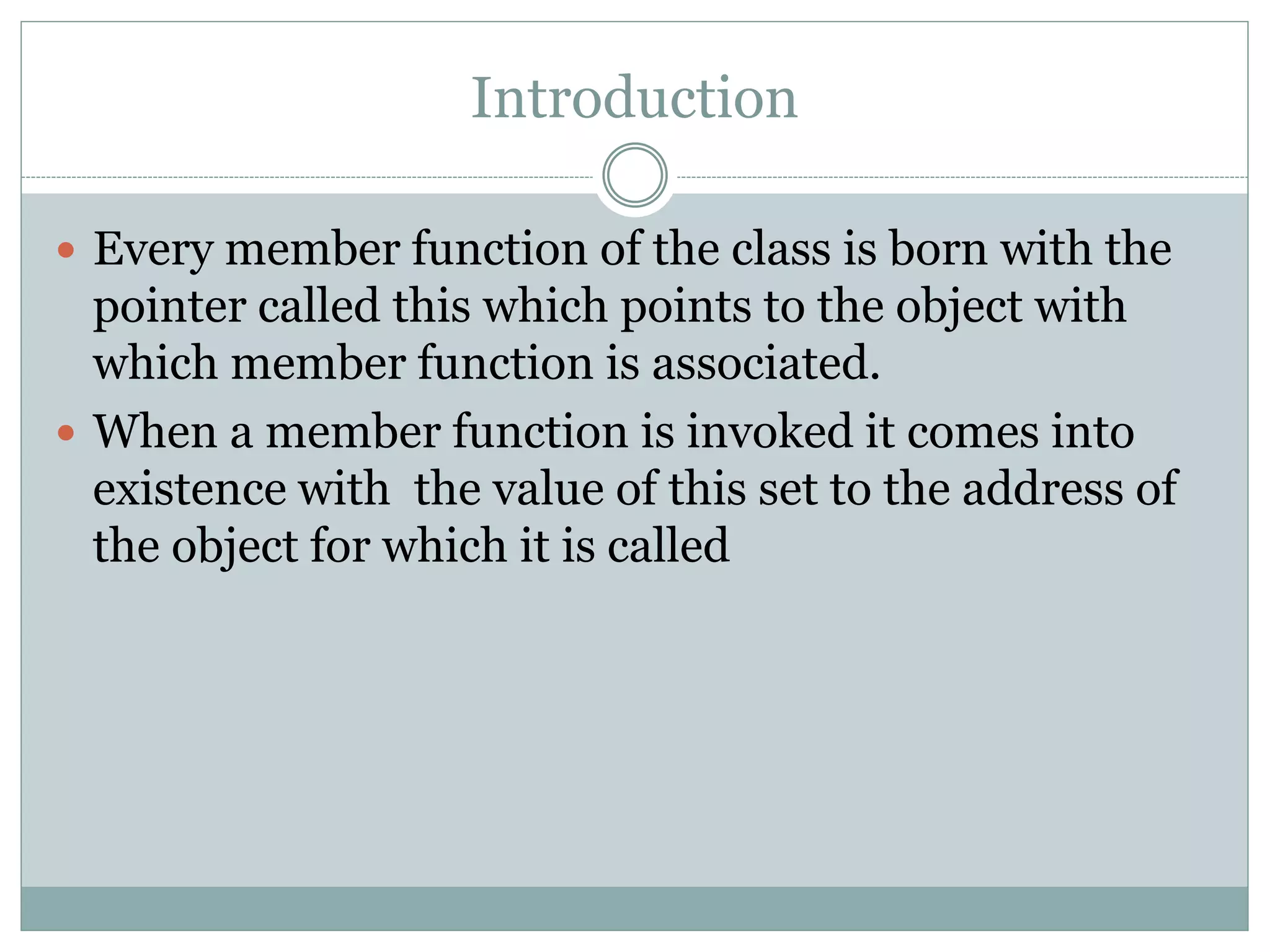
Introduction
 Every member function of the class is born with the
pointer called this which points to the object with
which member function is associated.
 When a member function is invoked it comes into
existence with the value of this set to the address of
the object for which it is called
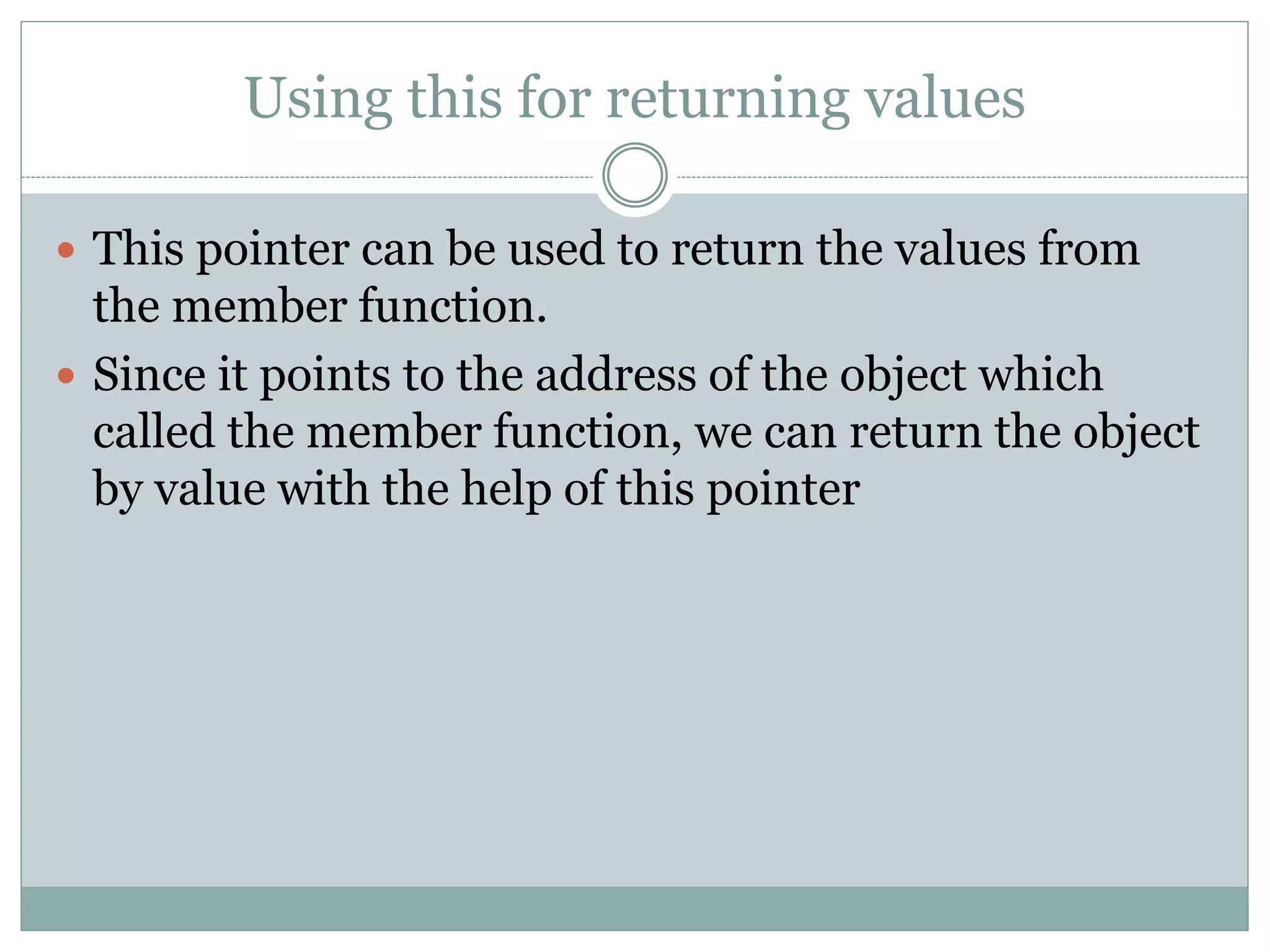
Using this for returning values
 This pointer can be used to return the values from
the member function.
 Since it points to the address of the object which
called the member function, we can return the object
by value with the help of this pointer
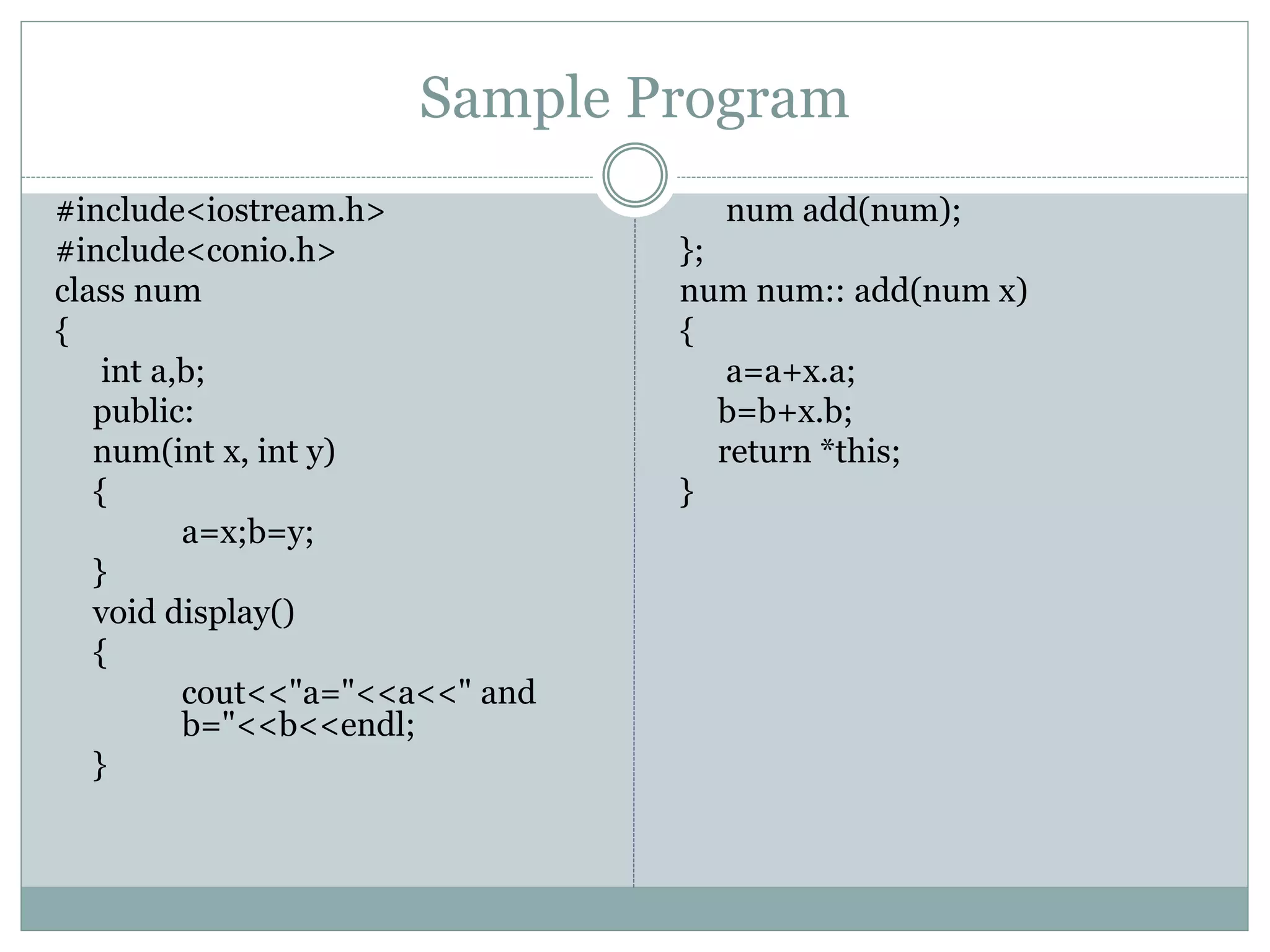
Sample Program
#include<iostream.h>
#include<conio.h>
class num
{
int a,b;
public:
num(int x, int y)
{
a=x;b=y;
}
void display()
{
cout<<"a="<<a<<" and
b="<<b<<endl;
}
num add(num);
};
num num:: add(num x)
{
a=a+x.a;
b=b+x.b;
return *this;
}
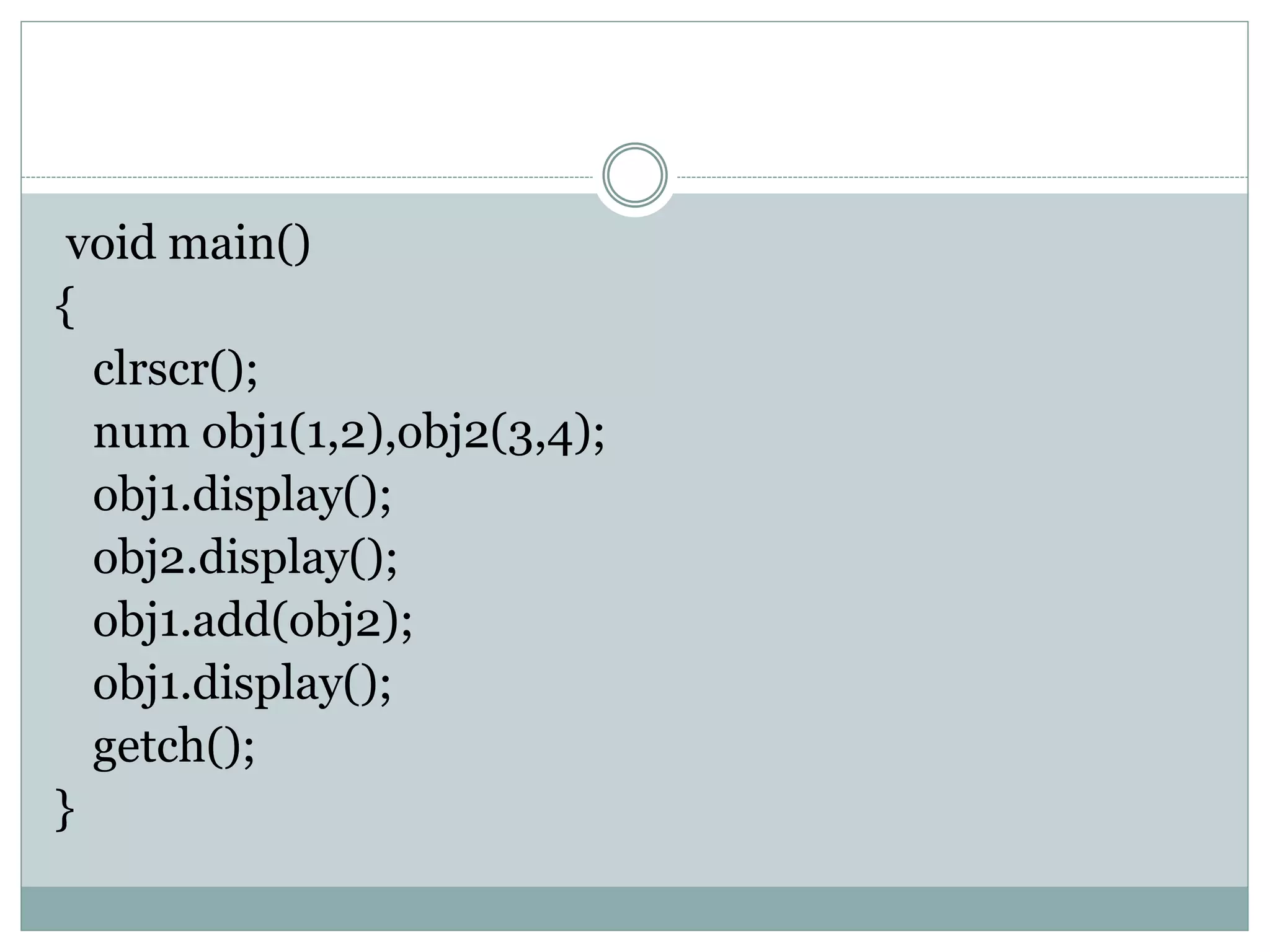
void main()
{
clrscr();
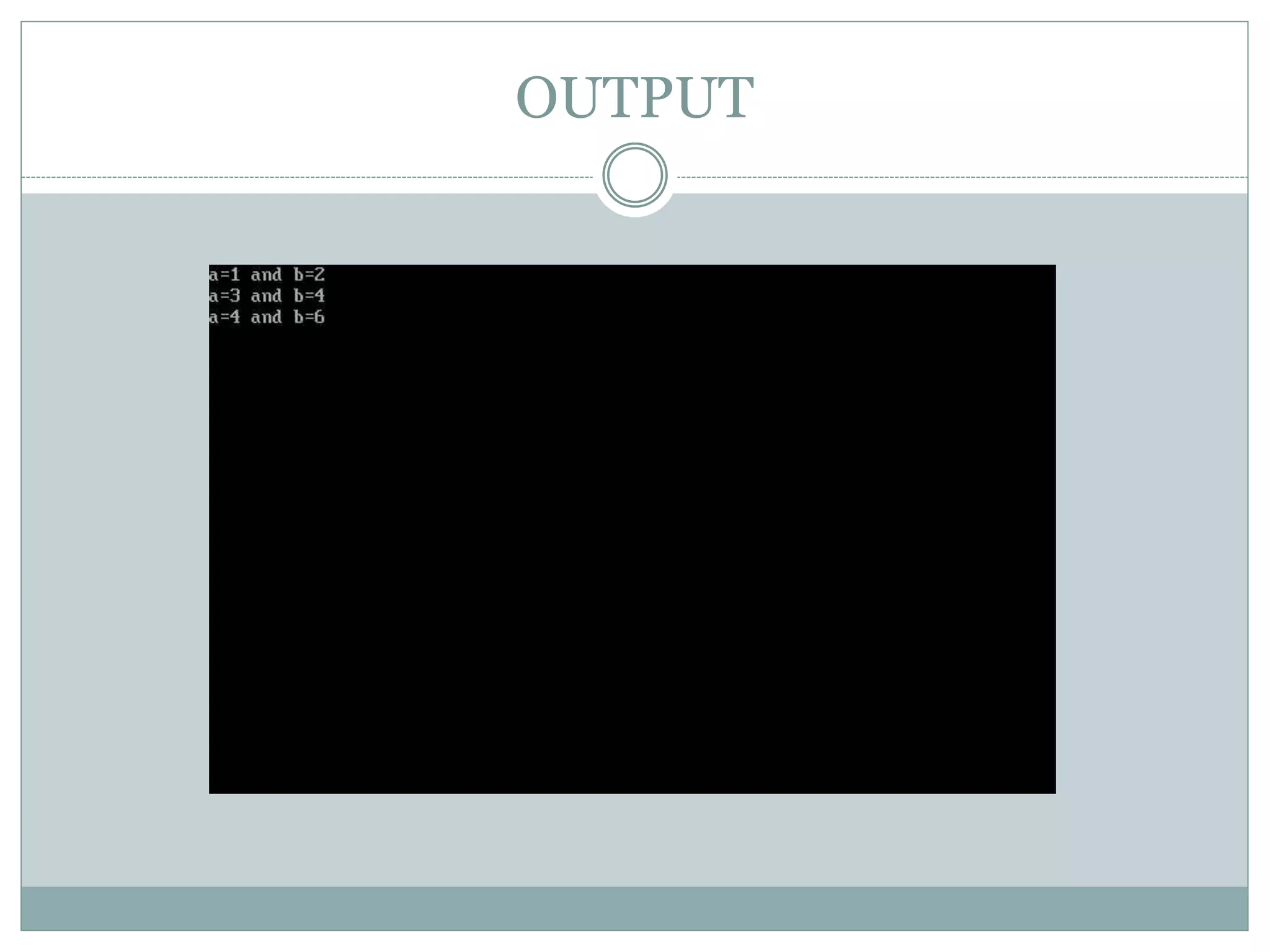
num obj1(1,2),obj2(3,4);
obj1.display();
obj2.display();
obj1.add(obj2);
obj1.display();
getch();
}
OUTPUT
Using this for specifying memory address
 This pointer is created automatically inside the
member function whenever the member function is
invoked by the object.
 It holds the memory address of the object so it can be
used to access the memory address of the object
Sample Program
#include<iostream.h>
#include<conio.h>
class num
{
int a;
public:
void displayAddress()
{
cout<<"The memory
address of the object is
"<<this<<endl;
}
};
void main()
{
clrscr();
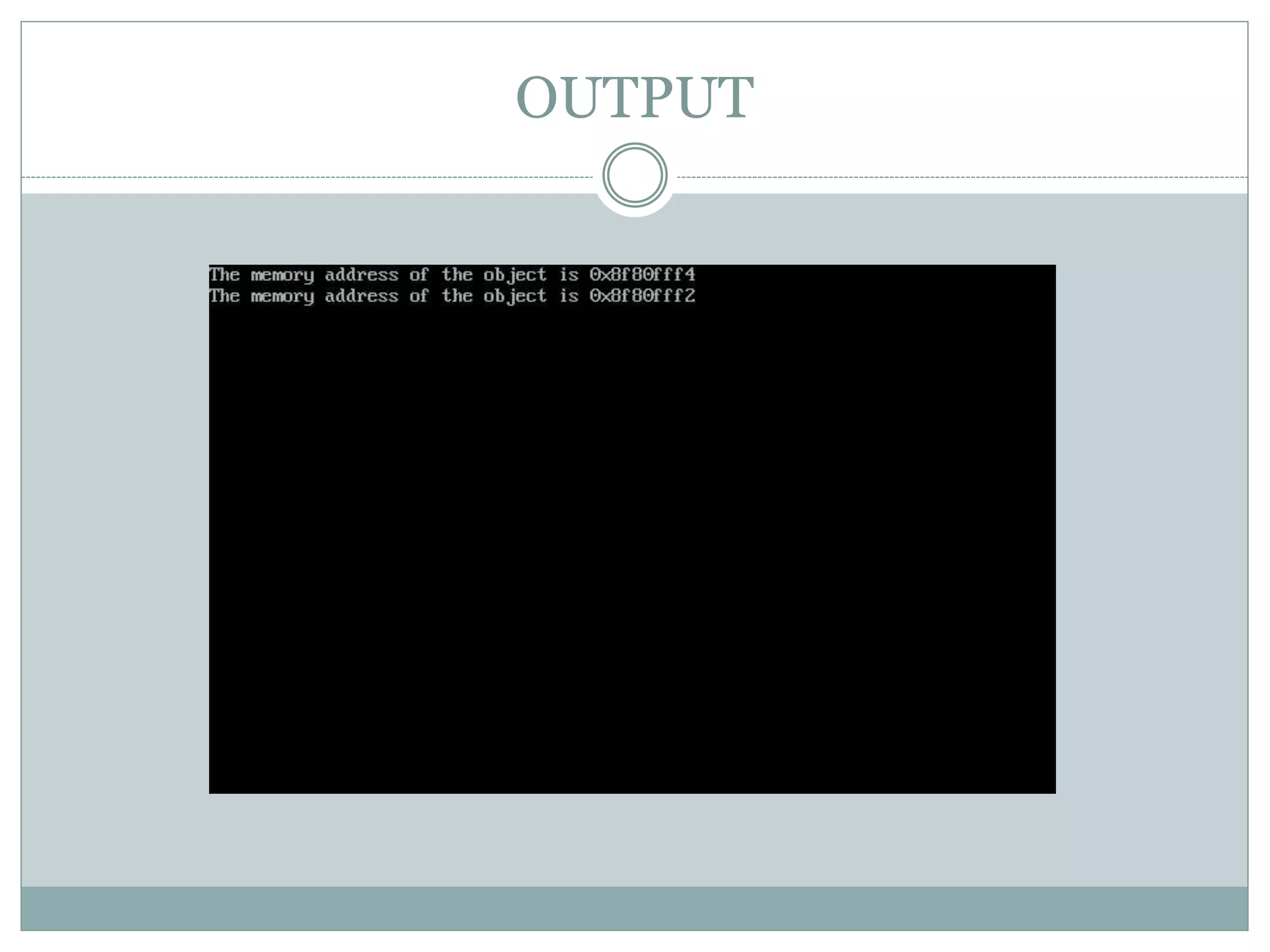
num obj1,obj2;
obj1.displayAddress();
obj2.displayAddress();
getch();
}
OUTPUT
Using this pointer for accessing the data member
 This pointer can also be used to access the data
members inside the member function.
 It can be done with the help of arrow operator(->)
 Arrow operator is the combination of hyphen(-) and
greater than operator(>)
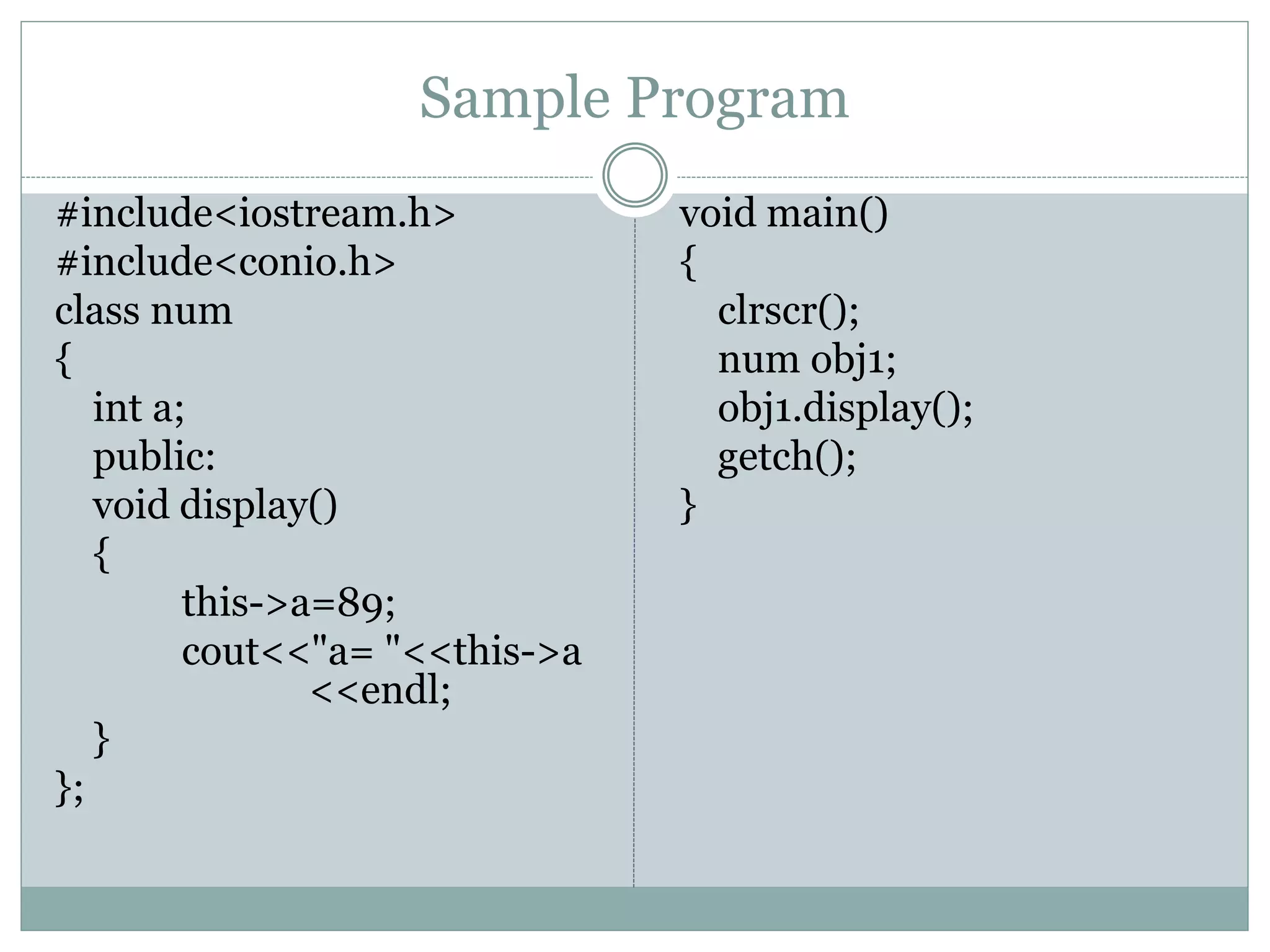
Sample Program
#include<iostream.h>
#include<conio.h>
class num
{
int a;
public:
void display()
{
this->a=89;
cout<<"a= "<<this->a
<<endl;
}
};
void main()
{
clrscr();
num obj1;
obj1.display();
getch();
}
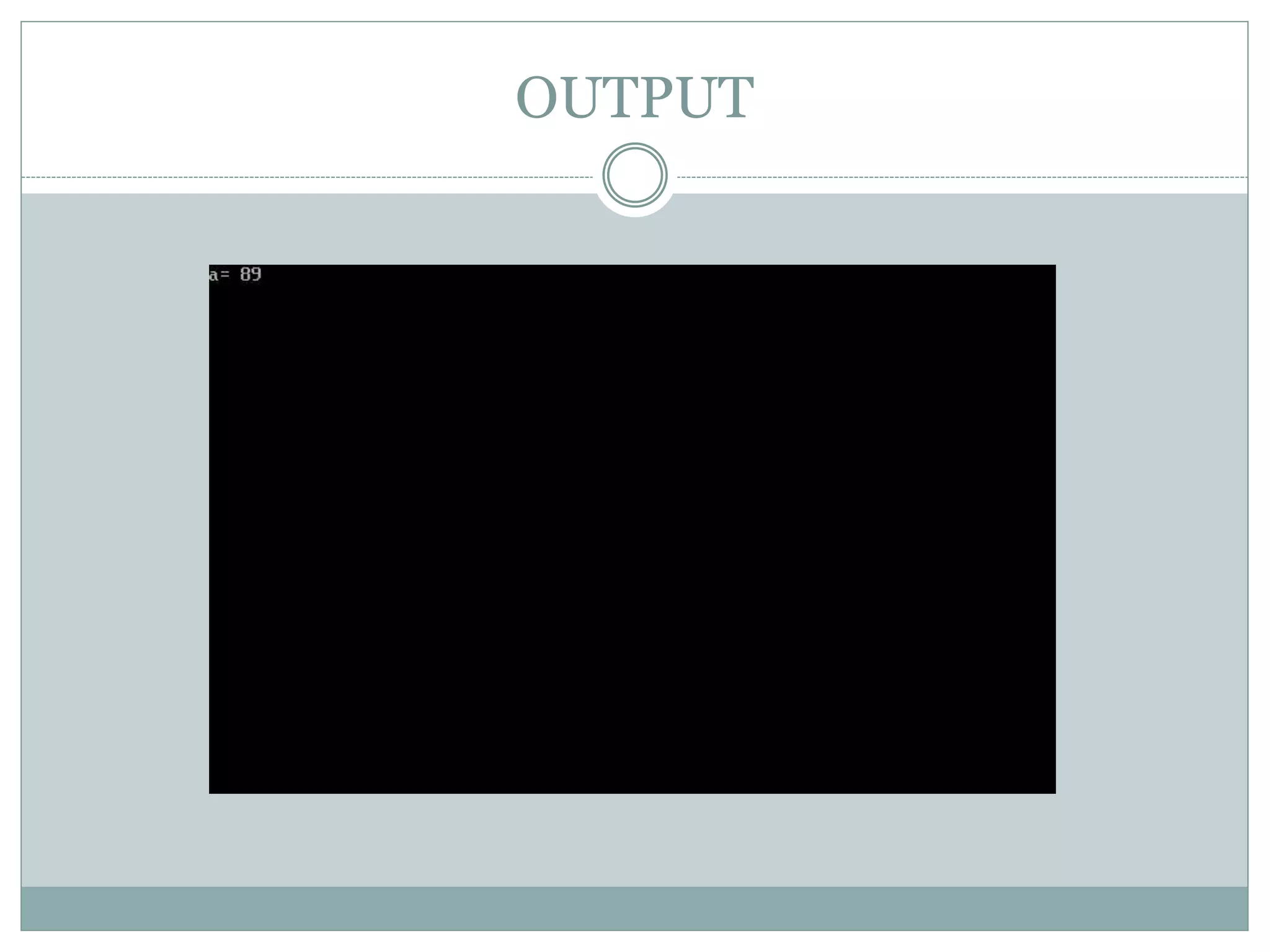
OUTPUT

This pointer

  • 1.
    I N TR O D U C T I O N U S I N G T H I S F O R R E T U R N I N G V A L U E S U S I N G T H I S F O R S P E C I F Y I N G M E M O R Y A D D R E S S U S I N G T H I S F O R A C C E S S I N G D A T A M E M B E R S This Pointer
  • 2.
    Introduction  Every memberfunction of the class is born with the pointer called this which points to the object with which member function is associated.  When a member function is invoked it comes into existence with the value of this set to the address of the object for which it is called
  • 3.
    Using this forreturning values  This pointer can be used to return the values from the member function.  Since it points to the address of the object which called the member function, we can return the object by value with the help of this pointer
  • 4.
    Sample Program #include<iostream.h> #include<conio.h> class num { inta,b; public: num(int x, int y) { a=x;b=y; } void display() { cout<<"a="<<a<<" and b="<<b<<endl; } num add(num); }; num num:: add(num x) { a=a+x.a; b=b+x.b; return *this; }
  • 5.
  • 6.
  • 7.
    Using this forspecifying memory address  This pointer is created automatically inside the member function whenever the member function is invoked by the object.  It holds the memory address of the object so it can be used to access the memory address of the object
  • 8.
    Sample Program #include<iostream.h> #include<conio.h> class num { inta; public: void displayAddress() { cout<<"The memory address of the object is "<<this<<endl; } }; void main() { clrscr(); num obj1,obj2; obj1.displayAddress(); obj2.displayAddress(); getch(); }
  • 9.
  • 10.
    Using this pointerfor accessing the data member  This pointer can also be used to access the data members inside the member function.  It can be done with the help of arrow operator(->)  Arrow operator is the combination of hyphen(-) and greater than operator(>)
  • 11.
    Sample Program #include<iostream.h> #include<conio.h> class num { inta; public: void display() { this->a=89; cout<<"a= "<<this->a <<endl; } }; void main() { clrscr(); num obj1; obj1.display(); getch(); }
  • 12.