Effect of capsular polysaccharide in
Acinetobacter baumannii ATCC
17978 survival and construction of a
capsule operon recombination
system
An honours thesis submitted for the degree of
Bachelor of Science (Honours) at Flinders
University
Megan E. Cox
22 November 2018
College of Science and Engineering
Flinders University SA 5052, Australia
Page | i
Table of Contents
List of figures............................................................................................................................. iv
List of tables.............................................................................................................................. vi
Abstract.................................................................................................................................... vii
Declaration.................................................................................................................................ix
Acknowledgements....................................................................................................................x
Chapter 1: Introduction............................................................................................................. 1
1.1 Acinetobacter baumannii ..................................................................................................... 1
1.1.1 Taxonomy ..................................................................................................................... 1
1.1.2 Epidemiology ................................................................................................................ 2
1.1.3 Pathology...................................................................................................................... 2
1.1.4 Virulence and persistence ............................................................................................ 3
1.2 Bacterial capsular polysaccharides .................................................................................... 16
1.2.1 Capsule structure and serotypes................................................................................ 17
1.3 Acinetobacter baumannii capsular polysaccharides.......................................................... 21
1.3.1 Capsule production in Acinetobacter baumannii....................................................... 23
1.3.2 Structure and serotypes of Acinetobacter baumannii ............................................... 23
1.4 Scope of thesis.................................................................................................................... 26
Chapter 2: Materials and Methods......................................................................................... 27
2.1 Bacterial strains used in this study..................................................................................... 27
2.2 Bacterial growth media, buffers and solutions .................................................................. 27
2.3 Bacterial storage and growth conditions ........................................................................... 33
2.4 Standard procedures.......................................................................................................... 33
Page | ii
2.4.1 Purification of genomic DNA...................................................................................... 33
2.4.2 Purification and isolation of plasmid DNA ................................................................. 34
2.4.3 Polymerase chain reaction......................................................................................... 35
2.4.4 Agarose gel electrophoresis....................................................................................... 42
2.4.5 Purification of polymerase chain reaction products .................................................. 42
2.4.6 Digestion of DNA with restriction endonucleases ..................................................... 43
2.4.7 Adenosine treatment of polymerase chain reaction products .................................. 43
2.4.8 Ligation of DNA........................................................................................................... 44
2.4.9 DNA sequencing ......................................................................................................... 44
2.4.10 Transformation of Escherichia coli........................................................................... 44
2.4.11 Electroporation of Acinetobacter baumannii........................................................... 46
2.5. Characterisation of Acinetobacter baumannii strains ...................................................... 48
2.5.1 Analysis of growth ...................................................................................................... 48
2.5.2 Lysozyme assay........................................................................................................... 48
2.5.3 Desiccation assay........................................................................................................ 49
2.5.4 Sensitivity to disinfectants.......................................................................................... 49
2.5.5 Characterisation of capsule material ......................................................................... 50
Chapter 3: Results.................................................................................................................... 52
3.1 Introduction........................................................................................................................ 52
3.2 Construction of a cps deletion in Acinetobacter baumannii ATCC 17978......................... 55
3.3 Characterisation of ∆cps2 .................................................................................................. 56
3.3.1 Verification of the absence capsule ........................................................................... 58
3.3.2 Growth curve.............................................................................................................. 58
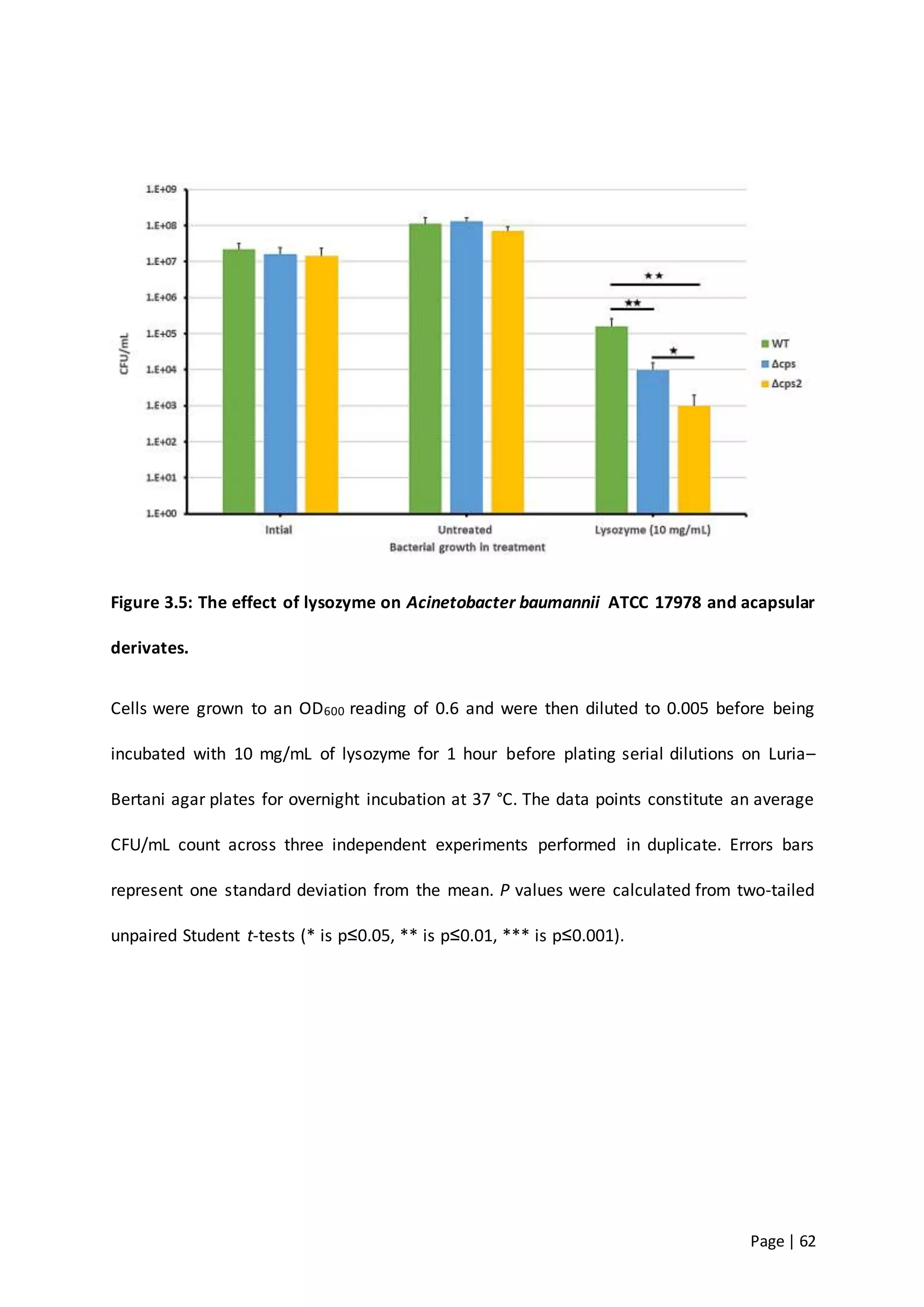
3.3.3 Lysozyme assay........................................................................................................... 58
Page | iii
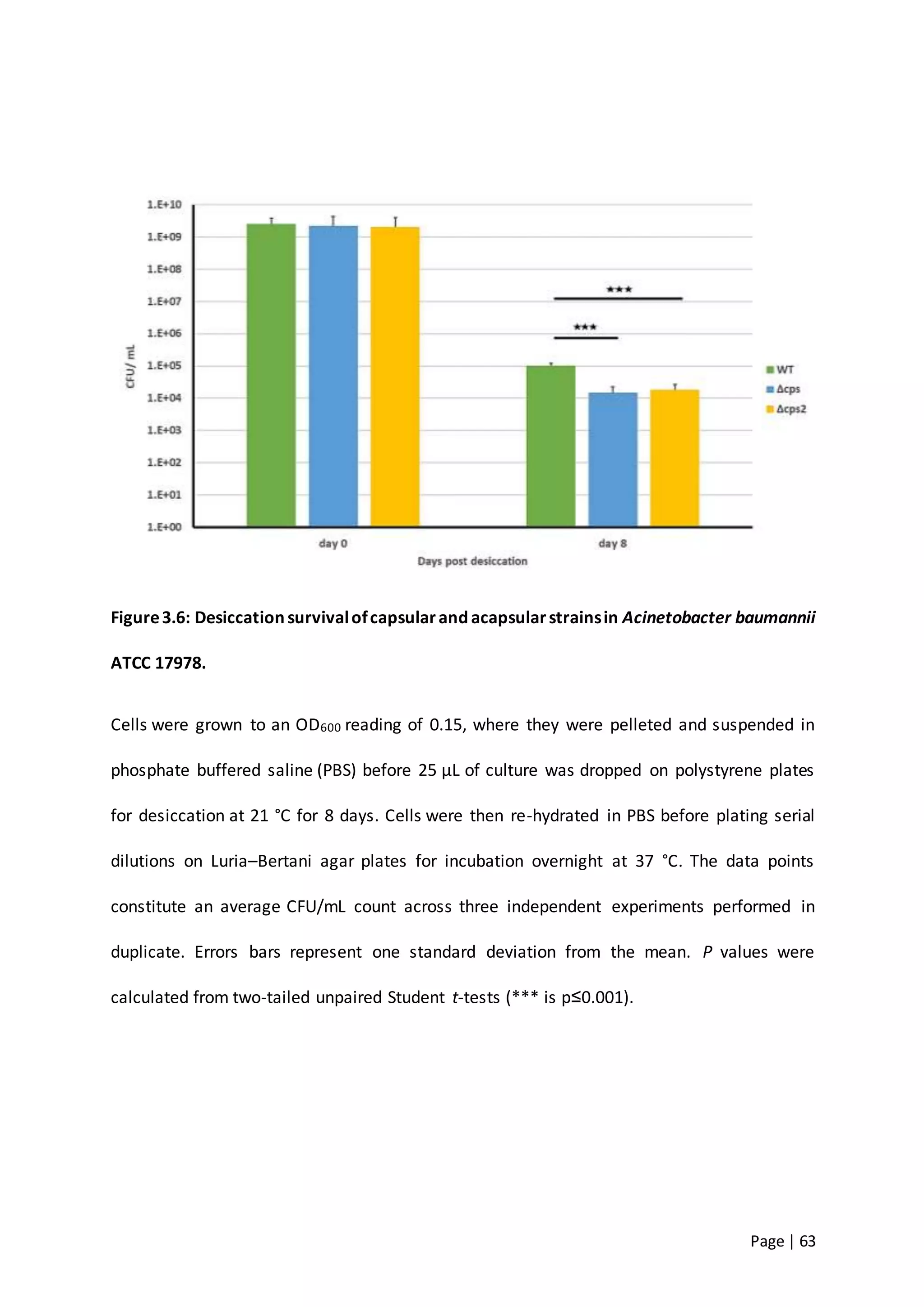
3.3.4 Desiccation survival.................................................................................................... 61
3.3.5 Resistance to antiseptics and disinfectants ............................................................... 64
3.3.6 Colony morphology .................................................................................................... 66
3.4 Cloning of the cps region.................................................................................................... 69
3.4.1 Development of the operon assembly vector using the operon assembly protocol 70
3.4.2 Re-design of the PW ori primer.................................................................................. 81
3.4.3 Design of the pW ori and tetracycline primer............................................................ 87
Chapter 4: Discussion .............................................................................................................. 94
4.1 Characterisation of ∆cps2 .................................................................................................. 94
4.2 The role of capsule in Acinetobacter baumannii survival.................................................. 95
4.3 Operon assembly vector system evaluation.................................................................... 103
4.4 Future directions for this research................................................................................... 112
4.5 Conclusions....................................................................................................................... 113
References ............................................................................................................................. 115
Appendices............................................................................................................................. 130
Appendix 1: List of abbreviations........................................................................................... 130
Appendix 2: Hyperladder 1 .................................................................................................... 133
Appendix 3: pGEM-T Easy Vector® map ................................................................................ 134
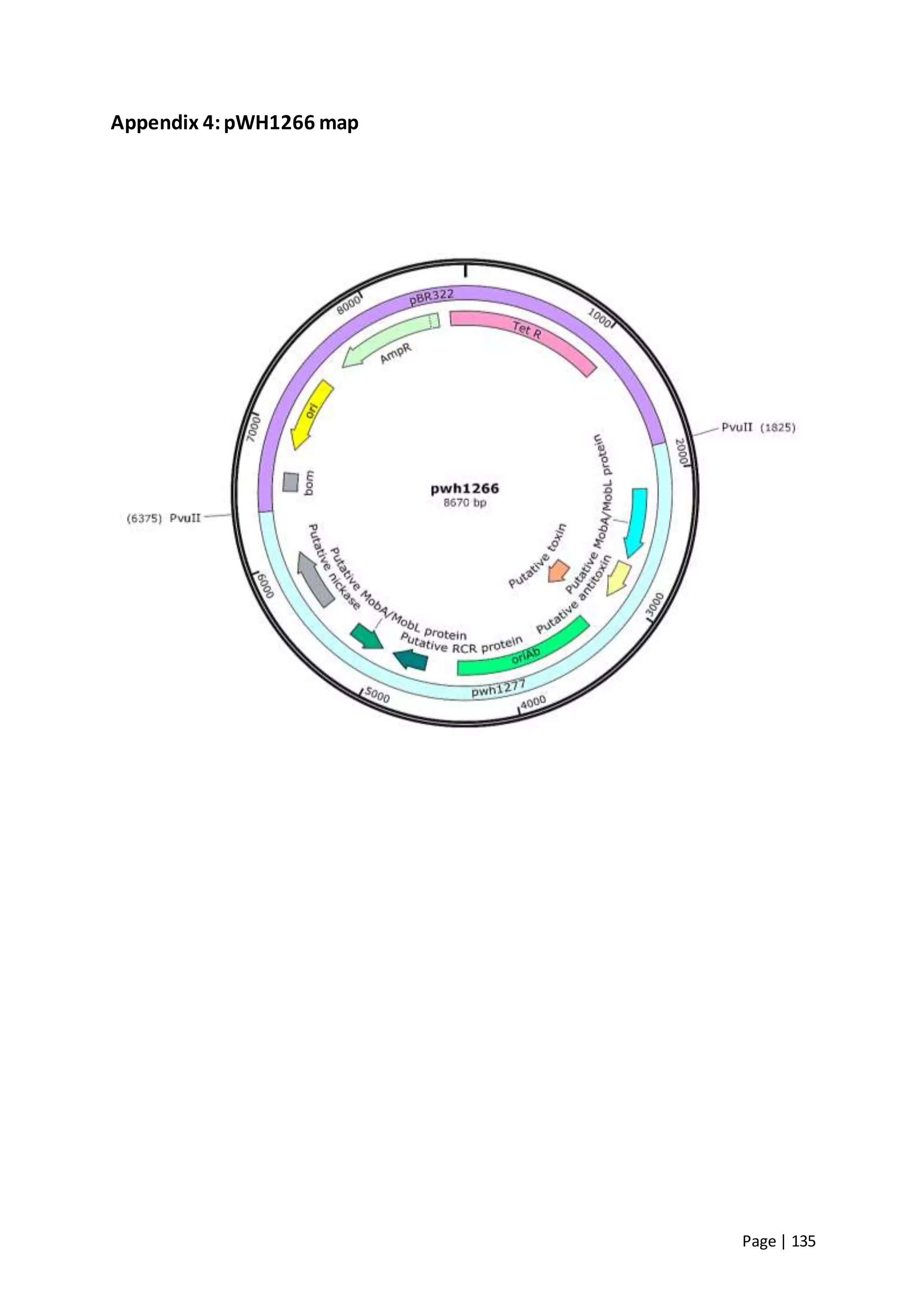
Appendix 4: pWH1266 map ................................................................................................... 135
Appendix 5: pPR2274 map ..................................................................................................... 136
Appendix 6: Genes encoded on pPR2274 and pWH1277...................................................... 137
Page | iv
List of figures
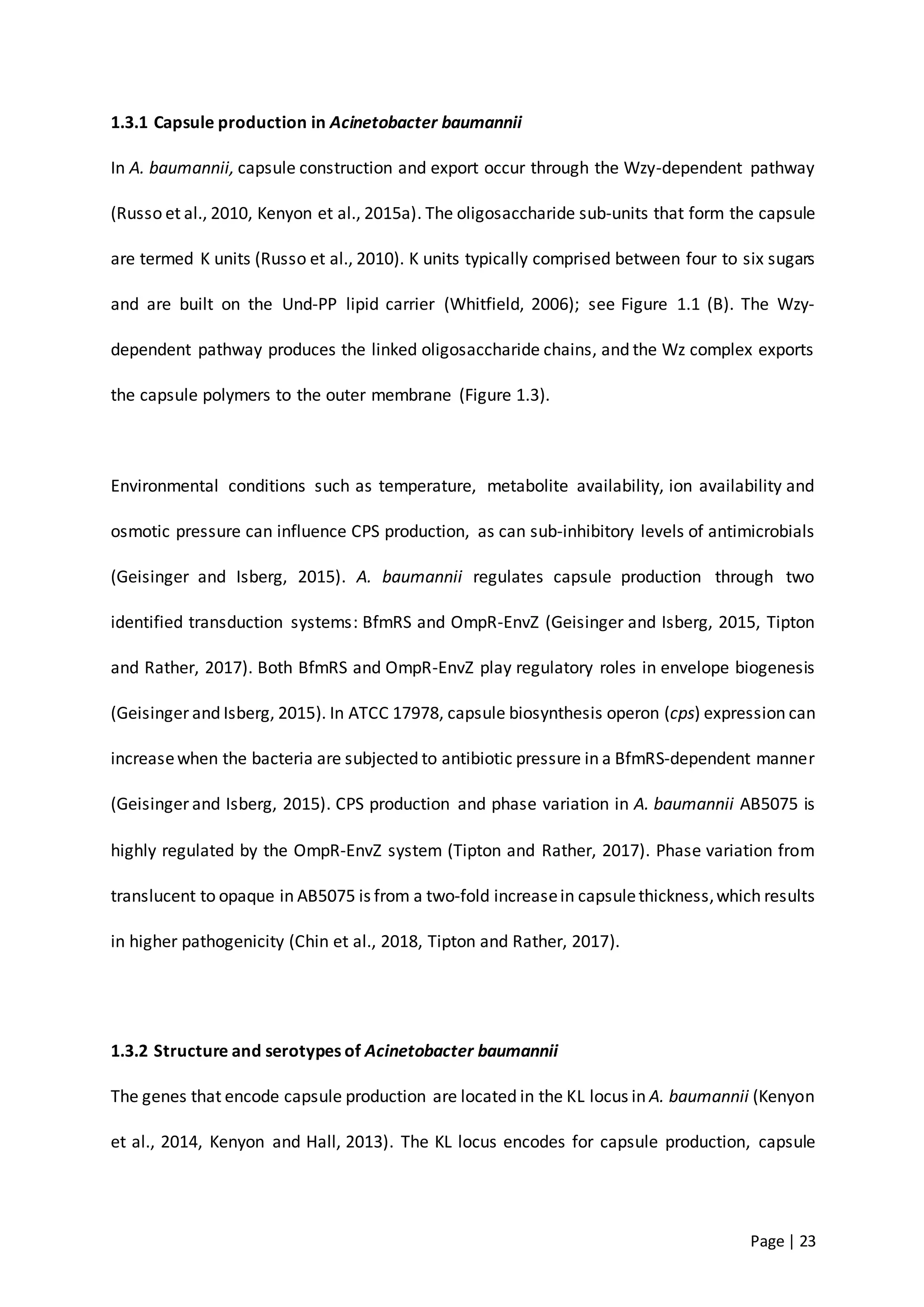
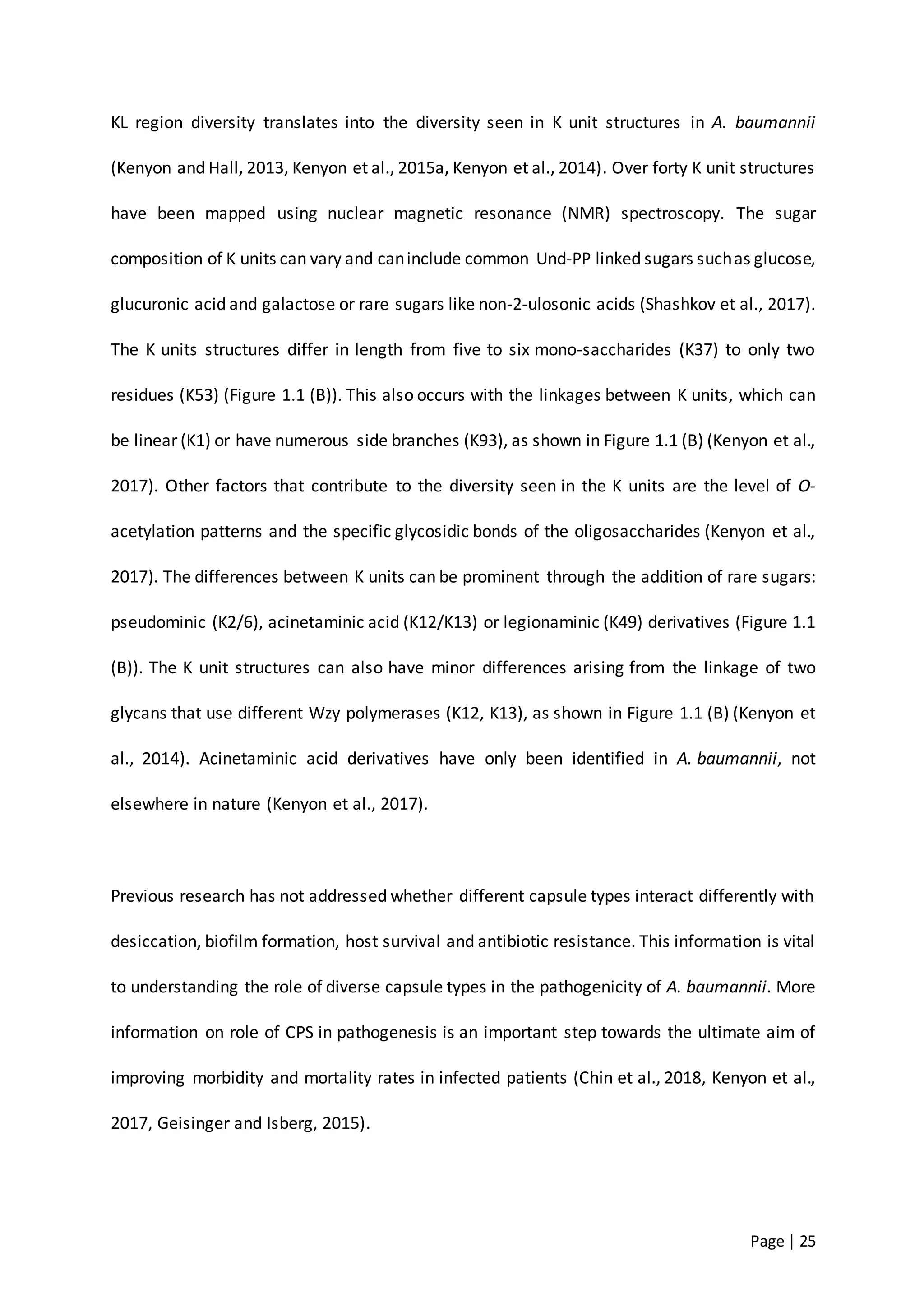
Figure 1.1: Cluster comparison of capsular polysaccharide biosynthesis genes and the
corresponding capsule structure in representative Acinetobacter baumannii strains........ 5
Figure 1.2: Types of surface glycoconjugates in Acinetobacter baumannii............................... 8
Figure 1.3: Expected model of protein glycosylation during capsule synthesis from
Acinetobacter baumannii ATCC17978 taken from Lees-Miller et al. 2013......................... 19
Figure 3.1: Cps gene region in ATCC 17978, ∆cps and ∆cps2 strains...................................... 54
Figure 3.2: Homologous event in ATCC 17978 to create ∆cps2............................................... 57
Figure 3.3: Alcian blue stain of extracted capsular polysaccharides from ATCC 17978 and
acapsular mutants, ∆cps2 and ∆cps in Acinetobacter baumannii ATCC 17978.................. 59
Figure 3.4: Growth Curve of Acinetobacter baumannii strains WT, ∆cps and ∆cps2 at 37
°C in Mueller–Hinton broth under aerobic conditions........................................................ 60
Figure 3.5: The effect of lysozyme on Acinetobacter baumannii ATCC 17978 and
acapsular derivates.............................................................................................................. 62
Figure 3.6: Desiccation survival of capsular and acapsular strains in Acinetobacter
baumannii ATCC 17978....................................................................................................... 63
Figure 3.7: Resistance to chlorhexidine of Acinetobacter baumannii, ATCC 17978 and
acapsular derivates.............................................................................................................. 65
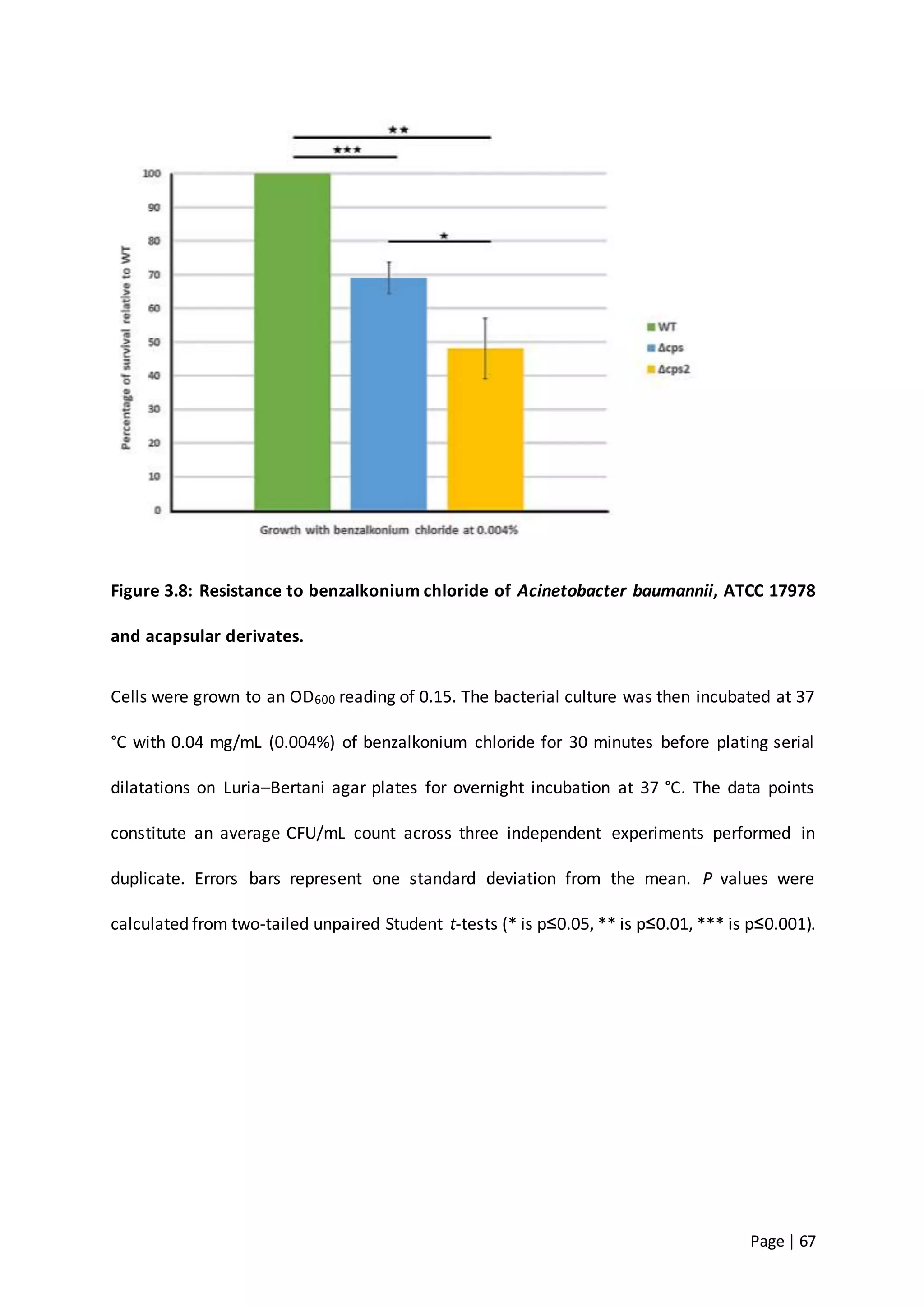
Figure 3.8: Resistance to benzalkonium chloride of Acinetobacter baumannii, ATCC
17978 and acapsular derivates............................................................................................ 67
Figure 3.9: Colony morphology of Acinetobacter baumannii ATCC 17978 and acapsular
derivates ∆cps and ∆cps2.................................................................................................... 68
Figure 3.10: The operon assembly protocol system developed by Liu et al. (2017)............... 72
Page | v
Figure 3.11: Schematic representation of the cloning of pW ori and Gent into pPR2274. ..... 75
Figure 3.12: Schematic representation of thymine to adenosine over-hang cloning of pW
ori and Gent into pGEM-T easy vector................................................................................ 78
Figure 3.13: Schematic representation of thymine to adenosine over-hang cloning of pW
ori into pGEM-T easy vector................................................................................................ 79
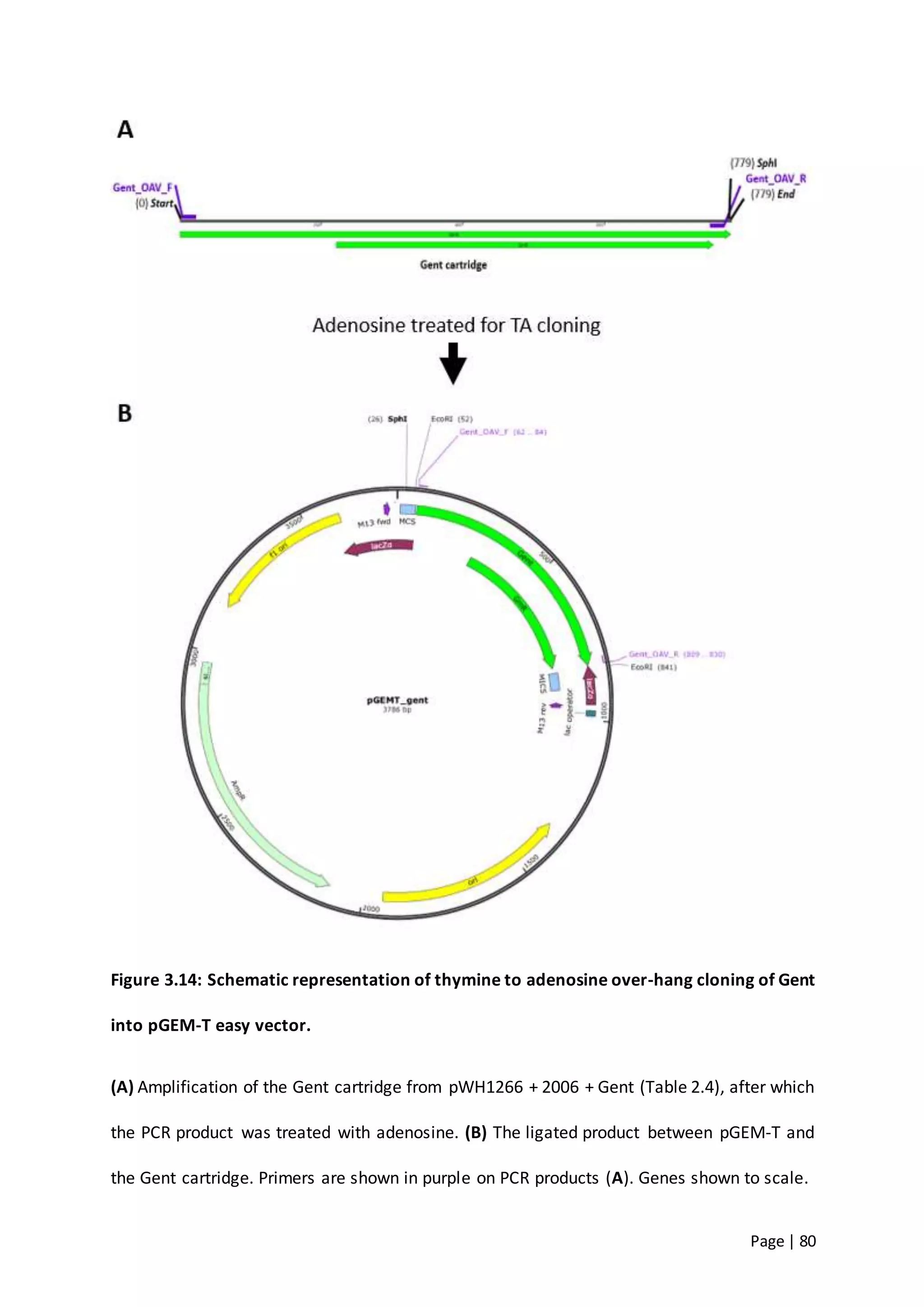
Figure 3.14: Schematic representation of thymine to adenosine over-hang cloning of
Gent into pGEM-T easy vector. ........................................................................................... 80
Figure 3.15: Schematic representation of thymine to adenosine over-hang cloning of
nested product containing 2.5Kb pW ori and Gent cartridge into pGEM-T easy vector.
............................................................................................................................................. 84
Figure 3.16: Schematic representation of restriction cloning of pW ori into pPR2274. ......... 85
Figure 3.17: Schematic representation of restriction cloning of Tet into pPR2274. ............... 86
Figure 3.18: Schematic representation of restriction cloning of 4.5Kb pW ori into
pPR2274............................................................................................................................... 89
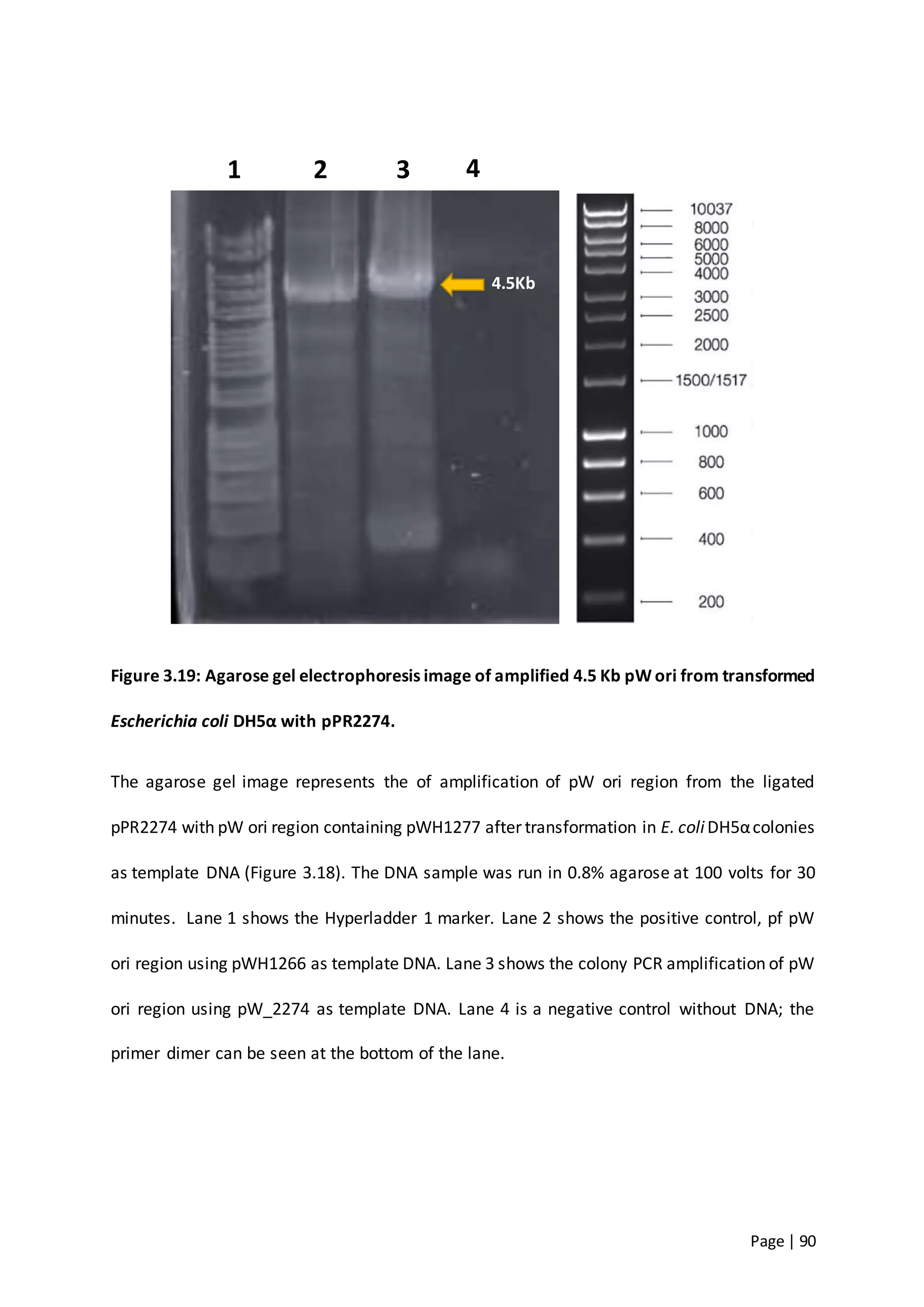
Figure 3.19: Agarose gel electrophoresis image of amplified 4.5 Kb pW ori from
transformed Escherichia coli DH5α with pPR2274.............................................................. 90
Figure 3.20: Agarose gel electrophoresis image of amplified 4.5Kb pW ori and amplified
250 bp of pPR2274 check from pW_2274........................................................................... 92
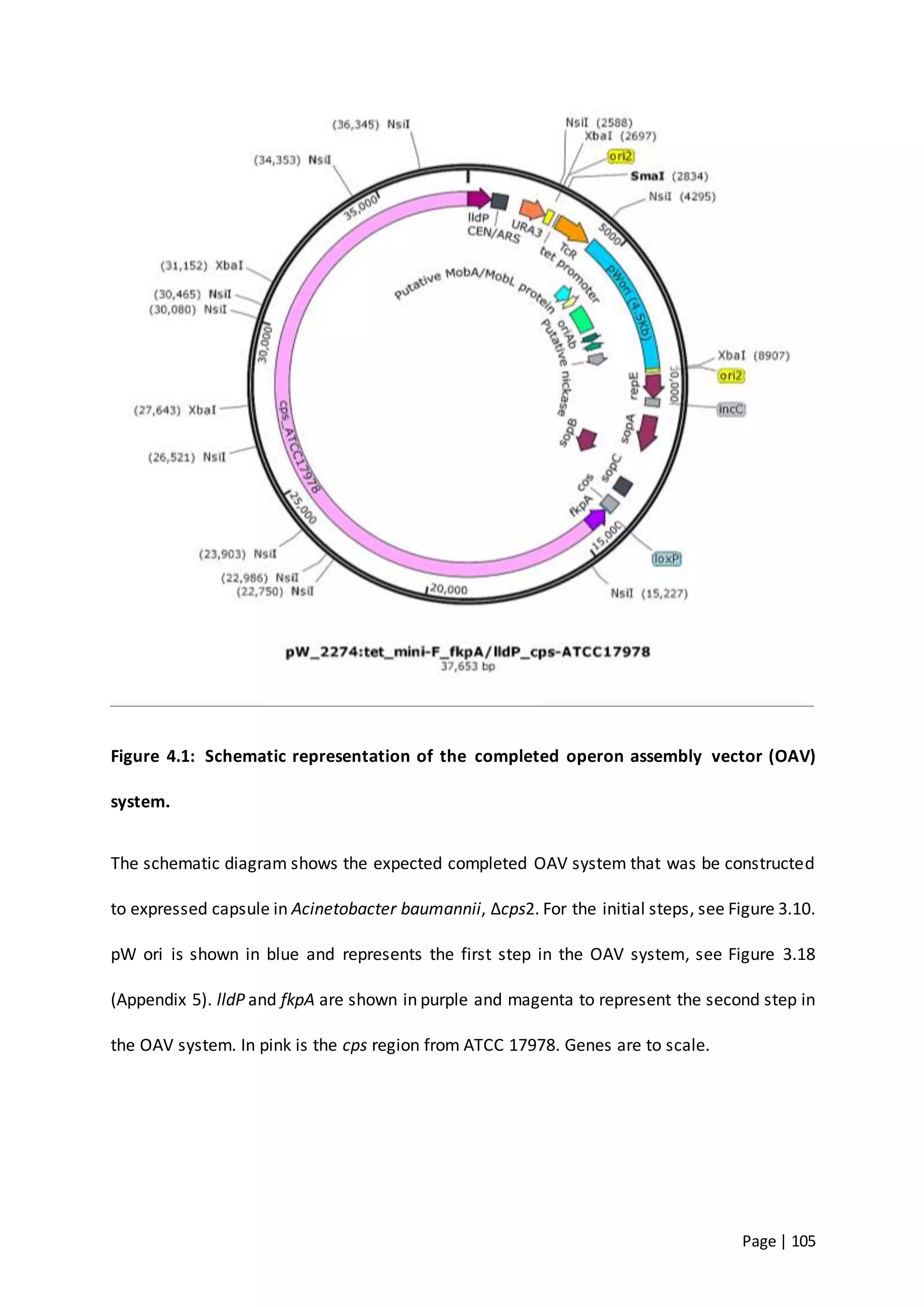
Figure 4.1: Schematic representation of the completed operon assembly vector (OAV)
system................................................................................................................................ 105
Figure 4.2: Schematic representation of restriction cloning at the NsiI site with the
nested PCR product of mini-F and Tetracycline into pW_2274. ....................................... 110
Page | vi
List of tables
Table 2.1: Bacterial strains used in this study.......................................................................... 28
Table 2.2: Growth media, buffers and solutions...................................................................... 29
Table 2.3: Primers used in this study ....................................................................................... 36
Table 2.4: Plasmids used in this study...................................................................................... 40
Page | vii
Abstract
Acinetobacter baumannii is an opportunistic nosocomial pathogen that causes ventilator-
associatedpneumoniae, bacteraemia, and wound and skininfections in immunocompromised
individuals. A. baumannii can be multi-drug resistant and has become a concern for the global
health care community, which must contain contamination and prescribe successful
treatment for affected patients. The success of A. baumannii can be attributed to its plastic
genome, which enables antimicrobial resistance, the ability to survive desiccation for
extended periods, biofilm formation and capsule production to protect it from the human
immune system.
Capsule production by A. baumannii has been linked to antimicrobial resistance, biofilm
formation, immune system evasion and desiccation persistence. Across the A. baumannii
species, there are numerous capsule types that incorporate different sugars and configure
them in different orientations. These capsule regions have been mapped and located across
numerous strains, which suggests that the capsule locus is conserved. All capsule regions are
flanked by the same genes: fkpA and lldP. To date, there has been no investigation of the
possibility of the different capsule types affecting desiccation persistence, antimicrobial
resistance, biofilm formation and immune evasion differently without background genetics
influencing the results.
The first aim of this study was to construct an operon assembly vector (OAV) system to
investigate whether different capsule types will affect desiccation persistence, antimicrobial
resistant, biofilm formation and immune evasion differently. OAV system construction
involves three mains steps: (i) cloning an origin of replication specific to Acinetobacter spp.,
Page | viii
(ii) homologous recombination of the fkpA and lldP genes in yeast that will act as hook regions
and (iii) reassembling the capsule biosynthesis operon (cps) locus from American type culture
collection (ATCC) 17978 into the vector using homologous recombination in yeast. The first
step of OAV system construction was achieved.
The second aimof this study was to knockout the cps gene region in ATCC 17978 to create an
isogenic mutant, ∆cps2, to enable the analysis of different capsule types using the OAV
system. The isogenic mutant ∆cps2 was also characterised for resistance to desiccation,
disinfectants and lysozyme to determine whether, without the capsule protecting the cell,the
strain has reduced survival and therefore reduced persistence.
Page | ix
Declaration
I certify that this thesis does not incorporate without acknowledgment any material previously
submitted for adegree or diploma in any university; and that to the best of my knowledge and
belief it does not contain any material previously published or written by another person
except where due reference is made in the text.
Megan E. Cox
Page | x
Acknowledgements
I would like to thank and personally acknowledge MelissaBrown for giving me the opportunity
to carry out my honour’s year in her laboratory. I would alsolike to thank laboratory members
Jenny, Felise, Mohsen, Abol, Adele and Sylvia for their support, advice and encouragement
throughout this year.
Professional editor Dr Gillian Dite provided copyediting and document formatting services
according to standards D and E of the Australian Standards for Editing Practice and the
Guidelines for Editing Research Theses from the Institute of Professional Editors.
On a more personal note, I would like to thank my Ma, my Pa and my partner, Adnon. I would
also like to thank my twin sister, Erin, without whose statistical brilliance I would have been
lost. Without all of these people I would not have been able to submit this thesis. Their
support, knowledge and laughter were invaluable. To my honour’s year peers, Jess and
Shayne, without our coffee dates and chocolate-filled food comas, this year would have not
been as fun.
Page | 1
Chapter 1: Introduction
1.1 Acinetobacter baumannii
1.1.1 Taxonomy
Acinetobacter baumannii is from the genus Acinetobacter (Giamarellou et al., 2008), which
comprises non-pigmented Gram-negative coccobacillithat can be oxidase-positiveor negative
(Wong et al., 2017, Giamarellou et al., 2008). There is a large amount of diversity in the 50
species of Acinetobacter, which are generally non-pathogenic (avirulent) environmental
organisms (Wong et al., 2017). However, A. baumannii is an opportunistic pathogen in the
human host. Unlike other Acinetobacter spp., A. baumannii rarely colonises the skin of heathy
individuals (Wong et al., 2017, Al Atrouni et al., 2016).
A. baumannii is an opportunistic bacterial pathogen that is responsible for considerable
mortality and morbidity from nosocomial infections globally. Since the 1970s, the increased
incidence of nosocomial infections caused by multi-drug resistant (MDR) A. baumannii has
brought it to the forefront of clinical research (Dijkshoorn et al., 2007). Carbapenem-resistant
A. baumannii has been classified as priority 1 on the World Health Organization’s (WHO)
priority pathogen list for research and drug design for new antibiotics (WHO, 2017).
The increase in the incidence of infections causedby A. baumannii in intensive care units (ICU)
has been linked to increases inthe useof mechanical ventilation, catheterisation of the urinary
tract and bloodstream, and the use of antimicrobial treatments (Wong et al., 2017, Harding et
al., 2017). A. baumannii’s nosocomial success is attributed to its ability to survive long
Page | 2
desiccation periods, avoid the innate immune systemof compromised individuals and rapidly
incorporate resistance genes in its genome to become multi-drug resistant, extremely drug
resistant and pan-drug resistant (Wong et al., 2017, Harding et al., 2017).
1.1.2 Epidemiology
A. baumannii is often acquired in hospital settings by immune-comprised individuals (Wong
et al., 2017, Tanguy et al., 2017, Dexter et al., 2015, Antunes et al., 2014, Eliopoulos et al.,
2008). In the nosocomial setting, A. baumannii can become widespread in its environmental
contamination (Tanguy et al., 2017) and has been reported to be found on curtains, medical
equipment, bed rails and cleaning equipment (Tanguy et al., 2017, Eliopoulos et al., 2008,
Zanetti et al., 2007).
A. baumannii infections are rarely reported outside hospitals but have been linked to natural
disasters,war zones and immune-impaired individuals such as alcoholics (Antunes et al., 2011,
Gaddy and Actis, 2009, Peleg et al., 2008, Eliopoulos et al., 2008, Dijkshoorn et al., 2007). All
A. baumannii infections are in immune-comprised individuals,which shows that this pathogen
is opportunistic rather than highly pathogenic (Antunes et al., 2011). A. baumannii infections
have led to increased hospital stays for patients and increased financialcostfor treatment and
disinfection of hospital wards, equipment and personnel (Gandra et al., 2014).
1.1.3 Pathology
A. baumannii infections can be very severe due to the MDR status of the organism and
because patients who acquire the infection are at a higher risk of disease (Wong et al., 2017,
Page | 3
Tanguy et al., 2017, Dijkshoorn et al., 2007). The clinical manifestations of infection include
ventilator associated pneumonia, septic shock, tracheobronchitis, bacteraemia, skin and soft
tissue infections, biofilms at the site of surgery, and urinary tract infections (Martín-Aspas et
al., 2018, Wong et al., 2017, Dexter et al., 2015). Typically, clinically acquired A. baumannii
infections present as ventilator-associated pneumonia and community-acquired infections
present as pneumonia (Dikshit et al., 2017, Wieland et al., 2018). The mortality rate of A.
baumannii infections can range from 40% to 70% (Dikshit et al., 2017, Wieland et al., 2018).
The reduced ability of immune-comprised patients to fight against infection had led to
research investigating the virulence mechanisms that the clinicalsuccess of A. baumannii have
been attributed to (Harding et al., 2017).
1.1.4 Virulence and persistence
A. baumannii is a dynamic bacterium that can quickly adapt to changing environmental
conditions through its plastic genome (Martín-Aspas et al., 2018, Chin et al., 2018, Harding et
al., 2017). Because A. baumannii rapidly mutates when under stress or in adverse conditions,
this aids survival (Harding et al., 2017). In addition to A. baumannii’s plastic genome, the
essentialvirulence mechanisms that enable it to thrive in ahealth careenvironment and cause
disease are desiccation resistance, biofilm formation and motility, secretion systems, surface
glycoconjugates, and micronutrient acquisition systems (Martín-Aspas et al., 2018, Harding et
al., 2017, Wong et al., 2017).
Page | 4
1.1.4.1 Plastic genome
A. baumannii is naturally competent, which means that it can readily take up foreign and self-
DNA and incorporate it into its genome (Imperi et al., 2011, Ramirez et al., 2010, de Vries and
Wackernagel, 2002). There are two mechanisms that A. baumannii uses to incorporate foreign
and self-DNA (Ramirez et al., 2010). Foreign DNA is incorporated through illegitimate
recombination (Hülter and Wackernagel, 2008), while self-DNA is incorporated through
homologous recombination (Domingues et al., 2012, Hülter and Wackernagel, 2008).
During the process of genetic sharing, horizontal gene transfer that involves gene acquisitions
and gene loss is part of genome evolution that allows A. baumannii to evolve quickly and
rapidly adapt to adverse environments (Domingues et al., 2012, Ramirez et al., 2010). The
genetic elements involved in horizontal gene transfer are gene cassettes, integrons,
transposases, insertion sequence elements and conjugative transposons (de Vries and
Wackernagel, 2002, Hülter and Wackernagel, 2008, Domingues et al., 2012). Newly
introduced DNA can be conjugated into different genes to change or adapt existing gene
functions. For example, in the A. baumannii capsule loci (KL) there are numerous insertion
sequence elements that result in adapted capsulestructures (Wozniak and Waldor, 2010); see
Figure 1.1. These adapted structures may aid A. baumannii to improve its ability to persist and
survive (Giguère, 2015).
Page | 5
Figure 1.1: Cluster comparison of capsular polysaccharide biosynthesis genes and the
corresponding capsule structure in representative Acinetobacter baumannii strains.
Page | 6
(A) Capsule polysaccharide biosynthesis genes between fkpA and lldP were obtained from the
National Center for Biotechnology Information database and aligned using Easyfig 2.2.2. The
arrows indicate gene transcription direction, insertion sequence elements are indicated by
square boxes. Genes are colour matched based on homology to the putative function of gene
products, which can be found in the key. Sequence homology between capsule loci (KL)
regions are shown by a colour gradient. Genes are shown to scale. Genes that are involved in
synthesis of sugars that are of particular interest are Psep5Ac7RHb, 5-acetamido-3,5,7,9-
tetradeoxy-7-(3-hydroxybutanoylamino)-˪-glycero-˪-manno-non-2-ulosonic acid,
Psep5Ac7Ac, 5,7-diacetamido-3,5,7,9-tetradeoxy-˪-glycero-˪-manno-non-2-ulosonic
(pseudaminic) acid, GlcNAc3NAcA4OAc, 2,3-diacetamido-2,3-dideoxy-α-ᴅ-glucuronic acid
with an additional O-acetyl group, ᴅ-GalpNAcA, N-acetyl-ᴅ-galactosaminuronic acid; ᴅ-
QuipNAc4NAc, 2,4-diacetamido-2,4,6-trideoxy-ᴅ-glucopyranose (N,N'-diacetyl-
bacillosamine); ᴅ-QuipNAc, N-acetyl-ᴅ-quinovosaminic acid, 8eLegp5Ac7Ac, 5,7-diacetamido-
3,5,7,9-tetradeoxy-˪-glycero-ᴅ-galacto-non-2-ulopyranosonic (di-N-acetyl-8-epilegionaminic)
acid; Aci5Ac7Ac, 5,7-di-N-acetylacinetaminic acid; ˪-FucpNAc, N-acetyl-˪-fucosaminic acid and
ᴅ-FucpNAc, N-acetyl-ᴅ-fucosaminic acid. Genbank accession numbers for the gene alignment
are KL37 KX712115.1 (23.4 Kb); KL93, CP021345.1 (30.3 Kb); KL6, KF130871.1 (25.5 Kb); KL2,
CP000863.1 (27.1 Kb); KL3, CP012004.1, (25.4 Kb); KL4, JN409449.3 (30.9 Kb); KL1, CP001172.1
(24.9 Kb) ); KL19, KU165787.1 (23.8 Kb); KL53, MH190222.1 (23.4 Kb region); KL49,
KT359616.1 (34.5 Kb region); KL13, MF522810.1 (38.2 Kb region) and KL12, JN107991.2 (38.5
Kb region). (B) Corresponding capsule structures to their KL gene regions shown in (A). K53,
K19 and K1 do not represent the percentage of O-acetylation of specific glycans in the
structural formation. Figure kindly supplied by Jennifer Singh and Felise Adams, College of
Science and Engineering, Flinders University.
Page | 7
1.1.4.2 Desiccation resistance
A. baumannii has adapted to be able to survive prolonged periods of desiccation, and this has
helped make it a nosocomial pathogen (Chin et al., 2018, Roca et al., 2012, Harding et al.,
2017). Desiccationresistanceis the ability of a bacterium to remain viableunder limited water
conditions (Harding et al., 2017). In Acinetobacter spp., desiccation resistance has been linked
to capsular polysaccharides (CPS) and the composition of the outer membrane of the
bacterium (Harding et al., 2017, Espinal et al., 2012, Boll et al., 2015). CPS promote survival
under desiccation by retaining water in the cell and contributing to the formation of biofilms
(Harding et al., 2017, Espinal et al., 2012). What is not known is if different capsule structures
change the bacterium’s ability to survive desiccation.
Another key component of A. baumannii’s outer membrane for desiccation resistance are the
acylated lipooligosaccharides (LOS) (Boll et al., 2015); see Figure 1.2 (6). LOS is a key glycan
structure that is anchored to the outer membrane through hepta-acylated lipid A (Hardings et
al., 2018); see Figure 1.2. LOS are important for a cell’s structural integrity and viability and
have been linked to drug and desiccation resistance (Boll et al., 2015, Hardings et al., 2018).
Strains with reduced acylated-LOShave weakened outer membrane structural integrity, which
results in diminished survival during desiccation (Harding et al., 2017, Boll et al., 2015). This
results in an increase of membrane fluidity and is likely to permit leakage of water and
hydrophilic nutrients into the environment, further starving the cell (Harding et al., 2017, Boll
et al., 2015).
A. baumannii overcomes the additional issueofre-hydration after desiccation, which is known
to cause DNA lesions (Harding et al., 2017, Aranda et al., 2011). These DNA lesions can occur
Page | 8
Figure 1.2: Types of surface glycoconjugates in Acinetobacter baumannii.
The diagram shows the different types of surface glycoconjugates and export systems and
how they are oriented to the cellsurface in A. baumannii. 1, shows lipid-linked oligosaccharide
(LLO) in with the outer membrane. 2, shows the different process that involve LLO. 3, shows
capsule production with liberated oligosaccharides from LLO. 4, shows how glycosylated
proteins are needed within biofilm formation. 5, shows that oligosaccharides are used to
glycated type IV pilins which involved in immune evasion. 6, shows the LOS structure within
the outer membrane. For more information refer to numbers 1 to 6 in text. This diagram was
taken from Harding et al. (2017).
Page | 9
in many forms, including oxidation, alkylation, base removal, crosslinking and strand breaks
(Potts, 1994). To eliminate some of the DNA damage resulting from rehydration after
desiccation, A. baumannii encodes and transcribes a protective protein RecA (Aranda et al.,
2011). RecA is an enzyme that is vital for homologous repair and recombination (Aranda et al.,
2011). Desiccation rehydration in A. baumannii has been hypothesised to contribute to MDR
profile due to an approximately 50-fold increase in the mutation frequency, which was
recorded as spontaneous rifampicin-resistant colonies were produced (Norton et al., 2013a).
The oxidative stress that occurs in the cell during desiccation is overcome by A. baumannii
upregulating proteins that detoxify reactive oxygen species (Harding et al., 2017, Gayoso et
al., 2013). All of these processes help A. baumannii to survive desiccation, allowing the cell to
persist in an unfavourable environment such as the nosocomial setting.
1.1.4.3 Biofilm formation and motility
Biofilms aid in bacterial survival through increased resistance to antimicrobial therapies,
environmental stresses, limited nutrient availability and desiccation (Gaddy and Actis, 2009,
Greene et al.,2016, Espinalet al.,2012). Within abiofilm, resistanceto antimicrobial therapies
can increase to the order of one thousand times greater than that of a planktonic bacterium
(Gaddy and Actis, 2009). A biofilm is a slimy extracellular matrix where bacterial communities
are encased in an extracellular polymeric substance (Gaddy and Actis, 2009, Espinal et al.,
2012). The extracellular polymeric substance is made from carbohydrates, proteins, nucleic
acids and other macromolecules to create a barrier between the environment and the
bacterial community (Gaddy and Actis, 2009, Harding et al., 2017).
Page | 10
A. baumannii can form biofilms on both abiotic and biotic surfaces, which is one of the many
reasons why this pathogen can persist in a health care setting (Greene et al., 2016). A
planktonic A. baumannii cell produces pili to bind to either an abiotic or a biotic surface. This
is the first step in the adherence of cells to surfaces and imitates the microcolony formation
that precedes the development of biofilm structures (Gaddy and Actis, 2009). The pili are
produced from a polycistronic operon with six open-reading frames, 9o|
BABCDE in ATCC 17978 with additional loci that encode secretion functions that aid in pili
assembly and adhesion (Gaddy and Actis, 2009). Expression of this operon is tightly regulated
by a two-component regulatory system (Gaddy and Actis, 2009, Tomaras et al., 2008) that
comprises the sensor kinase bfmS and the response regulator bfmR (Tomaras et al., 2008).
Without BfmR, A. baumannii cannot produce pili and is unable to form a biofilm (Tomaras et
al., 2008). This is not seen when BfmS is removed, and suggests that the BfmR response
regulator talks to other sensing components in the cell (Tomaras et al.,2008). This implies that
different environmental stimuli could control biofilm formation (Gaddy and Actis, 2009,
Tomaras et al., 2008). For example, A. baumannii has been found to have increased ability to
form biofilms when there is resistance to broad-spectrum antibiotics and the presence of
metal cations (Gaddy and Actis, 2009). These factors contribute to A. baumannii forming
biofilms in the health care setting and help the bacterium to persistand remain viable (Greene
et al., 2016, Gaddy and Actis, 2009, Espinal et al., 2012).
1.1.4.4 Secretion systems
There are numerous protein secretion systems in A. baumannii (Weber et al., 2016). These
are extremely diverse in composition and function and are most often important mediators
of virulence (Johnson et al., 2016, Weber et al., 2016). The secretion systems that are well
Page | 11
known for their role in virulence and persistence are type II secretion systems,
autotransporters type V and type VI secretion systems (Weber et al., 2016, Bentancor et al.,
2012).
Type II secretion systems are found across the Acinetobacter species, suggesting that they are
essential for survival. Type II secretion systems are reported to aid in colonisation and survival
in different environments (Weber et al.,2016). LipA and LipH are lipases thatbreak down lipids
and aid fatty acid metabolism (Johnson et al., 2016). This process provides a carbon surface
for the bacteria to digest and use as nutrient supply (Johnson et al., 2016, Weber et al., 2016).
CpaA is a metallopeptidase that degrades coagulated blood and is likely to aid in virulence
(Tilley et al., 2014). Without type II secretion systems, there is a reduction in bacterial load in
infections models (Weber et al., 2016).
Autotransporters are membrane-bound proteins where the C-terminal domain forms the
trimeric β-barrel, which allows the N-terminal passengerdomain to transport macromolecules
to the bacterial cell surface (Bentancor et al., 2012). The autotransporter that has been
characterised in A. baumannii ATCC 17978 falls into the type V secretion system (Weber et al.,
2016, Bentancor et al., 2012). This transporter has been linked to important roles in biofilm
formation and binding to basal membrane or extracellular matrixes (Bentancor et al., 2012).
The ability to bind to basal membranes and extracellular matrixes is important for adhering to
host tissues;this is an important virulence factor when infecting hosts (Bentancor et al., 2012).
Autotransporters have been found to promote biofilm formation (Bentancor et al., 2012).
Page | 12
Type VI secretion systems have been linked to the production of antieukaryotic and
antibacterial toxins, which help the bacteria to out compete other bacteria and survive in the
host environment (Weber et al., 2016). The type VI secretion system injects effectors into
eukaryotic and bacterial cells. These actions bring the cell into a static phase, kill the cell or
stop the immune system from interacting with the cell (Carruthers et al., 2013). The type VI
secretion system is often lost because it requires a large amount of energy to be maintained
(Weber et al., 2016, Wright et al., 2014). Strains retaining type VI secretion systems are able
to out compete other bacteria in infection (Carruthers et al., 2013).
1.1.4.5 Micronutrient acquisition
All organisms need transition metals such as manganese, iron and zinc to live (Harding et al.,
2017). Because transition metals are so important for cellular processes, hosts have evolved
nutritional immunity that involves sequestering free metals such as manganese, iron and zinc
to stop infecting bacteria taking them (Harding et al., 2017). A key factor of the success of
A. baumannii as a nosocomial pathogen is its ability to scavenge scant nutrients such as
transitions metals in vivo (Harding et al., 2017, Wang et al., 2014). These metals become scant
during acute infection because the host decreases the surrounding pH level to acidic
conditions, thereby releasing the zinc chelating protein, calprotectin and other nutrient
immune responses (Harding et al., 2017, Shapiro and Wencewicz, 2015, Moore et al., 2014).
The key mechanism for scavenging free iron encompasses the use of siderophores, which are
high-affinity iron-chelating molecules (Harding et al., 2017). The siderophore that is most
frequently conserved in A. baumannii is the catechol-hydroxymate siderophore acinetobactin
(Shapiro and Wencewicz, 2015). The siderophore can be isomerised, depending on the
Page | 13
environmental pH, into two forms containing either oxazoline or isooazolidinone (Shapiro and
Wencewicz, 2015). Both these forms chelate free iron (Shapiro and Wencewicz, 2015). This
isomerisation of acinetobactin helps A. baumannii to chelate iron in acidic environments and
therefore overcome the host immune response (Harding et al., 2017). To combat calprotectin,
A. baumannii uses a high-affinity zinc acquisition system, ZnuABC (Hood et al., 2012). The
ZnuABC system is tightly regulated by a zinc uptake regulator protein (Zur) that is a
transcriptional repressor. The Zur binds on conserved DNA motifs upstream from zinc-
regulated genes to block expression. The Zur is released when the cell has depleted levels of
zinc, when calprotectin is present or under zinc depleted conditions. Subsequently, blocking
mediated by the Zur is relieved (Mortensen et al., 2014). These systems are all essential for
virulence and infection, and without these systems,the pathogenic A. baumannii are seriously
attenuated (Harding et al., 2017).
1.1.4.6 Efflux pumps
Efflux pumps are most commonly used either in removing and coping with hazardous
compounds such as antibiotics or toxins, or in removing harmful waste products from
metabolic processes (Du et al., 2018). Efflux pumps can also have roles in pathogenicity, cell-
to-cell communication and biofilm formation (Du et al., 2018). Efflux pumps are found across
the bacterial community and are seen in antimicrobial resistant phenotypes (Du et al., 2018).
Antimicrobial resistant phenotypes can evolve from overexpression, asymmetric increase
during division or from mutations occurring in genes that encode energy-dependent
transporters (Liet al.,2015). Effluxpumps canbe divided into sevenbacterial drug efflux pump
families: ATP-binding cassette (ABC), major facilitator superfamily (MFS), resistance-
nodulation-cell division (RND), multi-drug and toxin extrusion (MATE), small multi-drug
Page | 14
resistance (SMR), proteobacterial antimicrobial compound efflux (PACE) and antimetabolite
transporter (AbgT) families (Chitsaz and Brown, 2017).
The two most clinically relevant multi-drug resistant efflux pump families in A. baumannii are
RND and SMR (Du et al., 2018, Lin et al., 2017). One of these, the key efflux system AdeABC,
belongs to the RND family and produces resistance to cefotaxime, aminoglycosides,
erythromycin (Ery), chloramphenicol, fluoroquinolones, trimethoprim and tigecycline (Du et
al., 2018). The other key efflux systemis AbeS, which belongs to the SMR family and produces
resistance to ciprofloxacin, chloramphenicol and Ery (Du et al., 2018). Regulators of efflux
pumps found in MDR A. baumannii are often found to contain mutants that allow for over
expression (Du et al., 2018). The over expression of efflux pumps contributes to a multi-drug
resistant phenotype and therefore aids in virulence and surviving the nosocomial setting (Du
et al., 2018).
1.1.4.7 Antibiotic resistance
Since the 1970s, MDR A. baumannii strains have become more prevalent among critically ill
patients and hospitals, to a concerning level (Dijkshoorn et al., 2007). Approximately 75% of
clinically isolated A. baumannii are MDR (Wieland et al., 2018), and pan-drug resistant strains
have large clinical impacts on treatment and patient outcomes (Wieland et al., 2018). These
dramatic adaptions to antibiotics occur through multiple cellular modifications, including
aminoglycoside modification, β-lactam hydrolysis, antibiotic target alterations, antibiotic
modification, active efflux pumps and changes to outer membrane proteins (Dijkshoorn et al.,
2007).
Page | 15
Resistance to carbapenems and broad spectrum β-lactams are particularly concerning
because these have been the most important antibiotics in the treatment of infections with
A. baumannii (Dijkshoorn et al., 2007). One of the reasons why A. baumannii has accumulated
so many antibiotic resistance mechanisms is its natural ability to incorporate foreign and self-
DNA (Imperi et al., 2011, Dijkshoorn et al., 2007); see Section 1.1.4.1.
1.1.4.8 Surface glycoconjugates
Surface glycoconjugates are bacterial carbohydrates (glycans) that are associated with the
outer membrane of the bacterium(Harding et al., 2017); see Figure 1.2. Surface
glycoconjugates create a barrier between the environment and the bacterial cell (Harding et
al., 2017, Hug and Feldman, 2011). These barriers are key structures that form the first line of
defence against environmental stressors, immune evasion or regulation, and virulence
(Harding et al., 2017, Wang-Lin et al., 2017). Standard bacterial glycoconjugates consist of
glycosylatedproteins, lipopolysaccharides and peptidoglycan (Harding et al., 2017); seeFigure
1.2. These all contribute to A. baumannii virulence (Harding et al., 2017).
Glycan synthesis starts at the inner membrane of A. baumannii where dedicated
glycotransferases transfer sugars onto a phosphorylated lipid that creates a lipid linked
oligosaccharide (Scott et al., 2014, Iwashkiw et al., 2012); see Figure 1.2 (1) LLO. The lipid link
oligosaccharide is flipped to the periplasm (Scott et al., 2014, Harding et al., 2017); see Figure
1.2 (2). This can then lead to one of three processes to produce capsule, glycosylated proteins
or glycosylated type IV pilins using oligosccharyltransferases (Harding et al., 2017); see Figure
1.2 (3, 4 and 5, respectively). A. baumannii glycosylated proteins contribute to virulence by
aiding biofilm formation and maintenance (Iwashkiw et al., 2012). The capsule produced by
Page | 16
A. baumannii protects it from host complement-mediated killing (Russo et al., 2010).
Glycosylated type IV pilins in A. baumannii have been linked to protecting bacterial proteins
from antibody recognition (Harding et al., 2017, Piepenbrink et al., 2016). Finally, LOS in the
core glycan that are anchored to lipid A with no O antigen directly contribute to drug and
desiccation resistance (Boll et al., 2015); see Figure 1.2 (6).
1.2 Bacterial capsular polysaccharides
Several Gram-negative and Gram-positive bacteria produce a layer of polysaccharides, called
the capsule, which is associated with the outer membrane and encapsulates the bacteria
(Willis and Whitfield, 2013); see Figure 1.2 (3). The polymers that comprise the capsule are of
high molecular weight and contain oligosaccharide units that undergo polymerisation to form
a long chain (Kenyon et al., 2014). These repeat units are joined by specific linkages that are
catalysed by glycosyltransferases (Kenyon et al., 2014). Sugars and glycotransferases are used
to create a variety of capsule structures (Mostowy and Holt, 2018). This occurs through
different chemical bonds being used to join the oligosaccharides to create a single sugar
structure that is repeatedly joined to create the capsule (Mostowy and Holt, 2018). This
creates diversity in CPS and therefore results in different serotypes (Mostowy and Holt, 2018).
The polymers act as a glycan shield that protects the cell from external stressors (Chin et al.,
2018, Willis and Whitfield, 2013). The sugar-based matrix is generally hydrophilic in nature,
which aids in retaining water in the cell (Chin et al., 2018, Harding et al., 2017). The capsule is
not crucial for survival but it is used in surviving desiccation, providing protective immunity
and having an essential role in virulence, a feature which is shared across bacterial species
Page | 17
(Harding et al., 2017, Yother, 2011). As well as being important for colonisation and causing
diseases (Mostowy and Holt, 2018), one of the key points for its role in pathogenesis in
humans is that it protects the bacterium from the complement system, antibodies and
engulfment from macrophages (Mostowy and Holt, 2018). An example where a capsule is
important for pathogenicity in the human host is Streptococcus pneumoniae (Yother, 2011).
1.2.1 Capsule structure and serotypes
The polysaccharide chains that comprise the capsule are produced in different biosynthetic
ways (Willis and Whitfield, 2013, Raetz and Whitfield, 2002). The three primary biosynthetic
pathways seen across the bacteria kingdom are the Wzy-dependent, synthase-dependent and
ABC-transporter dependent pathways, of which the two most common are the Wzy-
dependent and ABC-transporter dependent pathways (Raetz and Whitfield, 2002). Only the
Wzy-dependent pathway is found in both Gram-negative and Gram-positive bacteria (Raetz
and Whitfield, 2002). The synthase dependent pathway is less common in bacteria (Raetz and
Whitfield, 2002, Yother, 2011). The biosynthetic pathways involved in the three primary
capsule synthesis mechanisms are as diverse and different as the genes that encode for the
sugars that comprise the polysaccharide chain (Yother, 2011).
The ABC-transporter dependent pathway is limited to producing linear O-polysaccharides
(Raetz and Whitfield, 2002). The undecaprenyl phosphate lipid (und-PP) carrier-linked
polysaccharide chain grows from the addition of glycosyl residues to the non-reducing
terminal (Raetz and Whitfield, 2002). Und-PP, undecaprenyl pyrophosphate lipid carrier is
used as a scaffold for the growing polysaccharide chain (Whitfield, 2006). The polymerase
Page | 18
enzymes involved in attaching new carbohydrates to the chain are not specific to this system.
The polymer chain is constructed on the inner face of the cytoplasmic membrane where
export and ligation occurs through the ABC transporter without involvement from the Wz
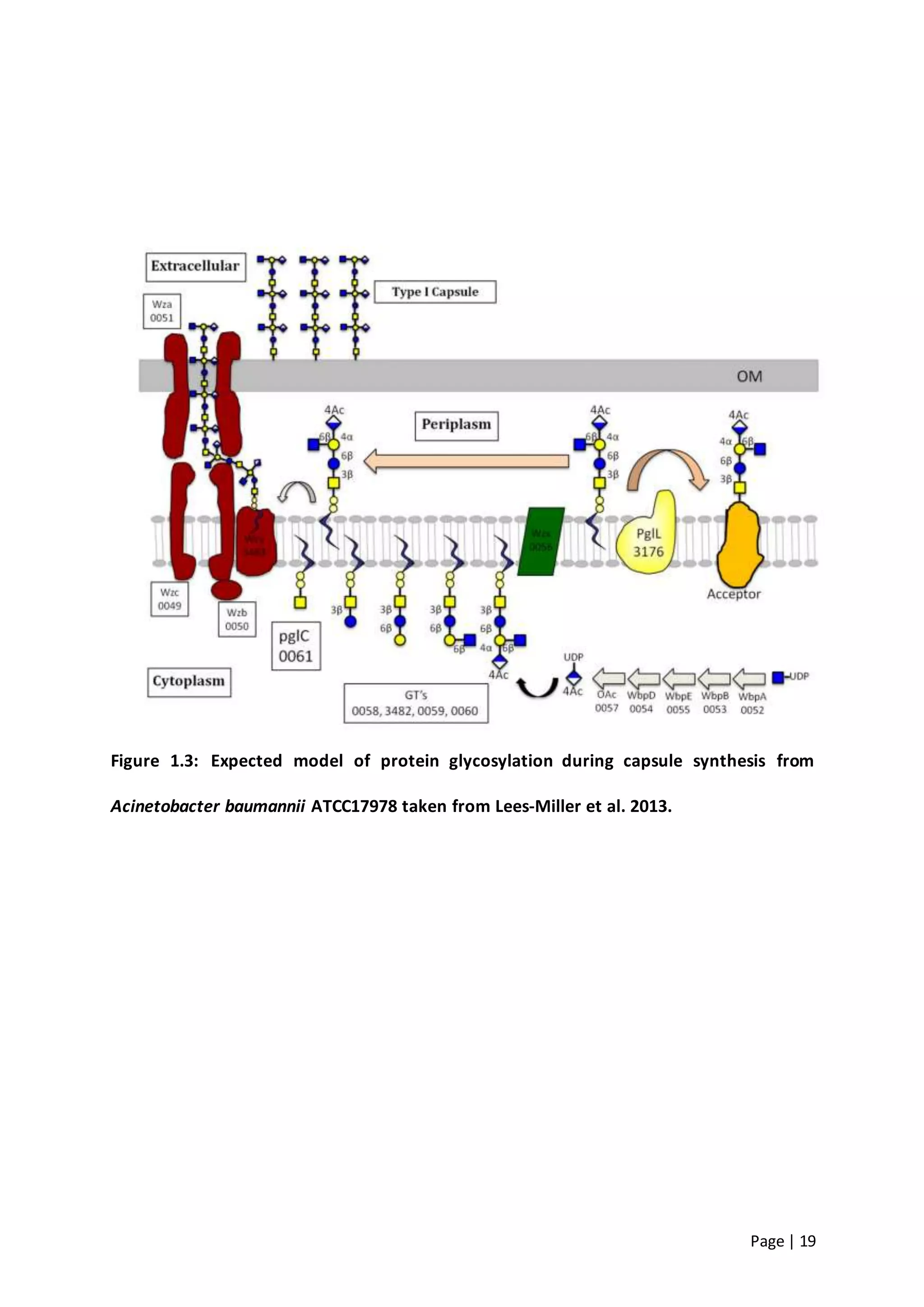
complex (Raetz and Whitfield, 2002); see Figure 1.3. The Wz complex involves the proteins
wza, wzy, wzb and wzc, which are shown in red in Figure 1.3 (Raetz and Whitfield, 2002, Lees-
Miller et al., 2013).
The Wzy-dependent pathway involves single undecaprenyl-linked O-repeating units being
transferred across the inner membrane to the periplasmic space by the Wz complex (Raetz
and Whitfield, 2002). The Wzy complex is attached to the Wz complex and produces a putative
polymerase that uses the single undecaprenyl-linked O-repeating unit as substrates for chain
extension in the periplasm (Raetz and Whitfield, 2002). At the reducing terminus, chain
extension occurs and the nascent chainis transferred from the undecaprenyl linker to the non-
reducing terminus of another undecaprenyl-linked sub-unit (Raetz and Whitfield, 2002). The
chain length and how much polymerisation occurs is determined by the Wzz complex, which
is attached to the Wz complex (Raetz and Whitfield, 2002). Once the nascent polymer chain
has been ligated to a lipid-A core, translocation occurs to the outer membrane (Raetz and
Whitfield, 2002).
The synthase-dependent pathway involves the glycotransferases WbbE, WecA and WbbF
(Raetz and Whitfield, 2002). WecA creates the primer, the start of the polymer chain,and then
WbbE then joins an adaptor to the chain, leading to chain extension by WbbF (Raetz and
Whitfield, 2002). WbbF is a dual linkage processive glycotransferase that is involved in
exporting the undecaprenyl-linked intermediates into the periplasm
Page | 19
Figure 1.3: Expected model of protein glycosylation during capsule synthesis from
Acinetobacter baumannii ATCC17978 taken from Lees-Miller et al. 2013.
Page | 20
(Raetz and Whitfield, 2002). Chain extension occurs by the WbbF glycotransferase,which links
repeat units (Raetz and Whitfield, 2002). The nascent polymer chain is then ligated to a lipid
A core before being translocated to the outer membrane (Raetz and Whitfield, 2002). The
polymer produced from this biosynthetic pathway is simpler than that from the Wzy
dependent pathway because it normally contains only one or two sugars (Yother, 2011).
However, the polymer can be branched or linear, and is therefore more complex than that
from the ABC-transport dependent pathway (Yother, 2011). Branching is determined through
the linkages formed during polymerisation of the sugars (Yother, 2011).
How the different sugars and branches are incorporated into the polymers determines the
capsule type, which is known as a serotype (Yother, 2011). Different serotypes are known to
invoke different immune responses in the host (Jochems et al., 2017). This then affects the
distribution of bacteria with those specific serotypes. For example, S. pneumoniae serotype
6B has declined prevalence since the release of the conjugate vaccine PCV7 (Jochems et al.,
2017, Balsells et al., 2017).
Bacteria have evolved the ability to avoid being recognised and phagocytised by the immune
system by swapping capsule regions through horizontal gene transfer (Chin et al., 2018). The
mechanism that allows capsule swap mutants to occur is homologous recombination (Yother,
2011), which can occur through anchoring highly conserved genes that flank either side of the
capsule region (Willis and Whitfield, 2013, Yother, 2011). This allows the genetic material that
lies between the two flanking genes to be swapped with capsule genes that have been taken
in by the cell through horizontal gene transfer (Yother, 2011, Mostowy and Holt, 2018). This
Page | 21
can create a different serotype of the bacterial strain and can provide immune evasion (Coffey
et al., 1998, Yother, 2011).
The constant evolution of capsule regions can affect the development of vaccines that target
the whole bacterial species and not just a specific serotype (Balsells et al., 2017). This is seen
in vaccination for S. pneumoniae, which has vaccines that target the most common capsule
types but fail to target the whole species (Balsells et al., 2017). Vaccination has affected
serotype prevalence rates for S. pneumoniae, and therefore affects the serotypes that are
important for clinical disease in the wider community (Chen et al., 2018). This shows how
important the capsule is to bacterial species as a virulence factor and enabling persistence in
a clinical setting (Yother, 2011).
1.3 Acinetobacter baumanniicapsular polysaccharides
To date, capsules in A. baumannii strains have only been investigated to determine the effect
of bacterial survival in different environmental stressors (Martín-Aspas et al., 2018, Chin et al.,
2018, Harding et al., 2017). The presence of a capsule has been shown to be a major virulence
factor in A. baumannii, as with most bacterial strains that have capsules (Lees-Miller et al.,
2013, Chin et al., 2018). The presence of a capsule is linked to the pathogenicity of
A. baumannii. Without a capsule the bacteria cannot survive in human serum, grow in human
ascites fluid and remain virulent (Chin et al., 2018, Russo et al., 2013).
Encapsulated A. baumannii strains have been found to have higher rates of bacterial loading
in mouse infection models and have higher colony forming units per millilitre (CFU/mL) in the
Page | 22
lungs, spleen and liver (Chin et al., 2018). Capsules help A. baumannii to persist the clinical
environment by retaining water to keep the cell viable (Harding et al., 2017, Espinal et al.,
2012) and are important in initiating biofilm formation, which helps the bacteria persist in the
clinical environment, including infection in patients (Harding et al., 2017, Greene et al., 2016).
In ATCC 17978 (K3), up-regulation of capsule production increases serum resistance and
virulence in the mouse model (Geisinger and Isberg, 2015). This is also seen in the phase
variant strain A. baumannii AB5075, which can transition between opaque and translucent
colonies. The translucent colonies have reduced capsule production and lower bacterial load
compared with the opaque colony, which produces two-fold thicker capsuleand has a 10,000-
fold higher bacteria load in the lungs (Chin et al., 2018). This further identifies how important
capsule is in the pathogenicity of A. baumannii in a mammalian model.
Currently, there are no licensed vaccines or non-antibiotic treatments for A. baumannii
infection, but recently there has been increased interest in their development due to the WHO
classification of A. baumannii as priority 1 critical organisms for the development of new
antimicrobials (WHO, 2017). Recent studies have shown that the efficacy of passive
immunisation using a CPS-specific antibody and conjugate vaccines using a protein carrier to
exposed purified CPS elicits a protective immune response (Yang et al., 2018, Russo et al.,
2013). Further understanding of the role of capsules in multiple strains of A. baumannii is
essential for identifying the best targets for new vaccines and for establishing whether the
development of new antimicrobials that target capsule synthesis is even possible.
Page | 23
1.3.1 Capsule production in Acinetobacter baumannii
In A. baumannii, capsule construction and export occur through the Wzy-dependent pathway
(Russo et al., 2010, Kenyon et al., 2015a). The oligosaccharide sub-units that form the capsule
are termed K units (Russo et al., 2010). K units typically comprised between four to six sugars
and are built on the Und-PP lipid carrier (Whitfield, 2006); see Figure 1.1 (B). The Wzy-
dependent pathway produces the linked oligosaccharide chains, and the Wz complex exports
the capsule polymers to the outer membrane (Figure 1.3).
Environmental conditions such as temperature, metabolite availability, ion availability and
osmotic pressure can influence CPS production, as can sub-inhibitory levels of antimicrobials
(Geisinger and Isberg, 2015). A. baumannii regulates capsule production through two
identified transduction systems: BfmRS and OmpR-EnvZ (Geisinger and Isberg, 2015, Tipton
and Rather, 2017). Both BfmRS and OmpR-EnvZ play regulatory roles in envelope biogenesis
(Geisinger and Isberg, 2015). In ATCC 17978, capsule biosynthesis operon (cps) expression can
increasewhen the bacteria are subjected to antibiotic pressure in a BfmRS-dependent manner
(Geisinger and Isberg, 2015). CPS production and phase variation in A. baumannii AB5075 is
highly regulated by the OmpR-EnvZ system (Tipton and Rather, 2017). Phase variation from
translucent to opaque in AB5075 is from a two-fold increasein capsulethickness,which results
in higher pathogenicity (Chin et al., 2018, Tipton and Rather, 2017).
1.3.2 Structure and serotypes of Acinetobacter baumannii
The genes that encode capsule production are located in the KL locus in A. baumannii (Kenyon
et al., 2014, Kenyon and Hall, 2013). The KL locus encodes for capsule production, capsule
Page | 24
export and the enzymes that synthesise the linkage of oligosaccharide units (Kenyon et al.,
2014, Kenyon and Hall, 2013). Over 100 different KL loci have been identified in A. baumannii
(Shashkov et al., 2017). These KL regions typically range from 20 to 35 Kb in size (Shashkov et
al., 2017)and lie between the fkpA and lldP genes, which are highly conserved throughout the
species (Kenyon et al., 2014, Kenyon and Hall, 2013); see Figure 1.1 (A). A. baumannii strains
that possess the KL19 and KL39 regions have a Wzy polymerase encoded elsewhere on the
chromosome (Kenyon et al. 2016). A. baumannii KL regions have a similar arrangement with
highly conserved CPS transportation genes shown in orange and containing the Wz complex
(Kenyon and Hall, 2013); see Figure 1.1 (A) and Figure 1.3. Highly variable regions of synthesis
and transferase genes are required for complex sugars to be synthesised (green), which leads
into conserved simple sugars (blue) for CPS production (Figure 1.1 (A)). Repeat unit processing
is undertaken by wzx and wzy genes, which are highly variable between strains (light blue,
Figure 1.1 (A)).
The highly conserved structure of the genes fkpA and lldP on either side of the KL loci in A.
baumannii show how adapted this region is to be modified and exchanged between different
bacteria (Mostowy and Holt, 2018, Kenyon and Hall, 2013); see Figure 1.1. With the KL gene
clusters varying to create both simple and complex K unit structures, A. baumannii can retain
redundant duplicated genes (itr genes in KL8) and insertion sequence elements to contribute
to the diversity seen in these KL regions (Shashkov et al., 2016, Kenyon and Hall, 2013, Lees-
Miller et al., 2013). KL regions can reveal a lot about the corresponding K unit structures, but
they still need to undergo biochemical testing and chemical analysis to determine their exact
structures and the linkages between sugars (Kenyon et al., 2014, Kenyon and Hall, 2013,
Mostowy and Holt, 2018).
Page | 25
KL region diversity translates into the diversity seen in K unit structures in A. baumannii
(Kenyon and Hall, 2013, Kenyon et al., 2015a, Kenyon et al., 2014). Over forty K unit structures
have been mapped using nuclear magnetic resonance (NMR) spectroscopy. The sugar
composition of K units can vary and caninclude common Und-PP linked sugars suchas glucose,
glucuronic acid and galactose or rare sugars like non-2-ulosonic acids (Shashkov et al., 2017).
The K units structures differ in length from five to six mono-saccharides (K37) to only two
residues (K53) (Figure 1.1 (B)). This also occurs with the linkages between K units, which can
be linear (K1) or have numerous side branches (K93), as shown in Figure 1.1 (B) (Kenyon et al.,
2017). Other factors that contribute to the diversity seen in the K units are the level of O-
acetylation patterns and the specific glycosidic bonds of the oligosaccharides (Kenyon et al.,
2017). The differences between K units can be prominent through the addition of rare sugars:
pseudominic (K2/6), acinetaminic acid (K12/K13) or legionaminic (K49) derivatives (Figure 1.1
(B)). The K unit structures can also have minor differences arising from the linkage of two
glycans that use different Wzy polymerases (K12, K13), as shown in Figure 1.1 (B) (Kenyon et
al., 2014). Acinetaminic acid derivatives have only been identified in A. baumannii, not
elsewhere in nature (Kenyon et al., 2017).
Previous research has not addressed whether different capsule types interact differently with
desiccation, biofilm formation, host survival and antibiotic resistance. This information is vital
to understanding the role of diverse capsule types in the pathogenicity of A. baumannii. More
information on role of CPS in pathogenesis is an important step towards the ultimate aim of
improving morbidity and mortality rates in infected patients (Chin et al., 2018, Kenyon et al.,
2017, Geisinger and Isberg, 2015).
Page | 26
1.4 Scope of thesis
The aims of this study were twofold. The first aimwas to address the gap in our knowledge of
the role of capsules inA. baumannii pathogenicity by using an operon assemblyprotocol (OAP)
developed by Liu et al. (2017), to create an operon assembly vector (OAV) specialised for
A. baumannii. This OAV system can be used to produce different capsule types using a single
plasmid, which involves use of the double strain repair pathway in yeast.
The second aim of this study was to create a capsule knockout mutant, ∆cps2, that has the KL
locus from fkpA to lldP replaced with an Ery cartridge. The knockout mutant was created in A.
baumannii ATCC 17978 because this strain has fewer resistant cartridges than other A.
baumannii strains. The resulting capsule knockout mutant, ∆cps2, was the isogenic model for
the OAV system expression. The ∆cps2 mutant was be characterised to understand the direct
role that the capsule plays in resistance to desiccation, disinfectants and lysozyme. This
included identifying whether cell viability and the ability to survive desiccation and treatment
with disinfectants and lysozyme is affected if a larger region in the KL loci is knocked out.
Page | 27
Chapter 2: Materials and Methods
2.1 Bacterial strains usedin this study
The details of bacterial strains used in this study can be found in Table 2.1.
2.2 Bacterial growth media, buffers andsolutions
All stock solutions for media, solutions, buffers and gels were formulated following
manufacturers’ instructions and are described in Table2.2. All media used for bacterialgrowth
were sterilised by autoclave. When antibiotics were added to growth medium for selection,
the growth medium was first autoclaved and then cooled to approximately 45 °C before
addition of the required filter sterilised stock solutions of antibiotic at the correct
concentration. This study used filter sterilised stock solutions of Ery 10 mg/mL, gentamicin
(Gent) 25 mg/mL, ampicillin (Amp) 100 mg/mL, tetracycline (Tet) 4 mg/mL, chloramphenicol
(Cml) 25 mg/mL, benzalkonium chloride (BAK) at 0.004% and chlorhexidine (CHG) at 0.008%.
Media that were used to culture A. baumannii and Escherichia coli were Luria–Bertani (LB)
broth, LB agar, Mueller–Hinton (MH) broth and MH agar.
For antibiotic selection, Ery 25 µg/mL, Gent 16 µg/mL, Amp 100 µg/mL, Tet 12 µg/mL and Cml
25 µg/mL were added as required, allof which were purchased from Sigma. For blue and white
colony selection, filter sterilised 1.25 µg/mL of 5-bromo-4-chloro-3-indoyl-β-D-galacto-
pyranoside (X-gal) and 1.25 µg/mL of isopropyl-β-D-galactopyranoside (IPTG) were added to
molten agar. Both X-gal and IPTG were purchased from Sigma. The LB agar was cooled to
approximately 45 °C before the IPTG and X-gal were added.
Page | 28
Table 2.1: Bacterial strains used in this study
Bacterial strains Genotype
Point of origin or
reference
Acinetobacter baumannii
ATCC 17978
Non-international clone;
meningitis isolate, capsular type
KL3
(Smith et al., 2007)
17978_∆cps A. baumannii ATCC 17978 from
gnaA to gtr9 removed
Jennifer Singh
17978_∆cps2 A. baumannii ATCC 17978 from
fkpA to lldP removed
This study
Escherichia coli DH5α Fᶲ80 lacZ ∆M15 ∆(lacZYA–argF)
U169 recA1 endA1 hsdR17(rK
-,
mk
+) phoA supE44 thi-1 gyrA96
relA1λ-
(Hanahan, 1983)
Page | 29
Table 2.2: Growth media, buffers and solutions
Media
Luria–Bertani broth
1 L
1% NaCl
1% tryptone
0.5% yeast extract
Adjusted to a pH of 7.5
10 g of agar was added to make LB agar in dH2O
Mueller–Hinton broth
OXOID
Milli-Q water was added to a final volume of 1 L
Mueller–Hinton agar
OXOID
Milli-Q water was added to a final volume of 1 L
Yeast extract peptone
dextrose broth
2% peptone
1% yeast extract
2% glucose in dH2O
Yeast extract peptone
dextrose agar
2% peptone
1% yeast extract
2% glucose
2% of volume is the amount add of agar in dH2O
Buffers and solutions
Page | 30
Tris-acetate
ethylenediaminetetra
acetic acid buffer (50×)
24.2% (w/v) Tris base
50 mM ethylenediaminetetra acetic acid (EDTA)
5.7% (v/v) glacial acetic acid
Adjusted to a pH of 8.0 in dH2O
GelRed nucleic acid
stain (Biotium)
0.03% GelRed
33 µM NaCl
in dH2O
Phosphate buffered
saline (PBS)
0.8% (w/v) NaCl
0.14% (w/v) Na2PO4
0.02% (w/v) KCl
0.024% (w/v) KH2PO4
Adjusted to a pH of 7.4 in dH2O
Sodium dodecyl sulfate
(SDS)-PAGE running
buffer
0.3% Tris base
1.44% glycine
0.1% SDS
dH2O was added to a final volume of 1 L
Fixative for SDS-PAGE
1 L
25% isopropanol
7% acetic acid
68% dH2O
Alcian blue stain 99.999% fixative solution for SDS-PAGE
0.001% Alcian blue
Page | 31
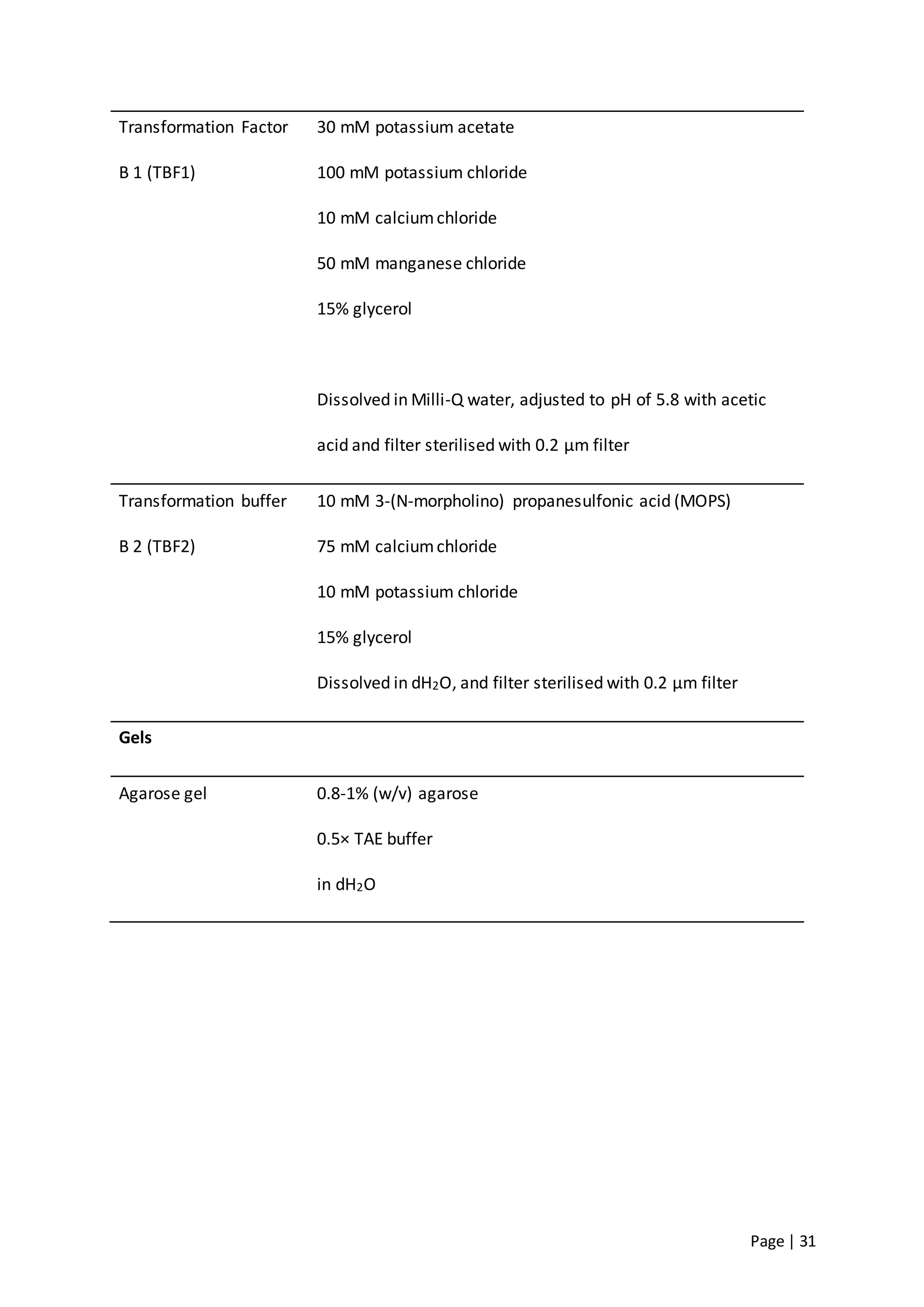
Transformation Factor
B 1 (TBF1)
30 mM potassium acetate
100 mM potassium chloride
10 mM calciumchloride
50 mM manganese chloride
15% glycerol
Dissolved in Milli-Q water, adjusted to pH of 5.8 with acetic
acid and filter sterilised with 0.2 µm filter
Transformation buffer
B 2 (TBF2)
10 mM 3-(N-morpholino) propanesulfonic acid (MOPS)
75 mM calciumchloride
10 mM potassium chloride
15% glycerol
Dissolved in dH2O, and filter sterilised with 0.2 µm filter
Gels
Agarose gel 0.8-1% (w/v) agarose
0.5× TAE buffer
in dH2O
Page | 32
20% SDS-PAGE gel 0.7 mL of in dH2O
6.6 mL 30% acrylamide
2.5 mL 1.5 M Tris (pH 8.8)
100 µL 10% SDS
100 µL 10% ammonium persulfate (APS)
4.0 µL tetramethylethylenediame (TEMED)
0.1% Stacking gel for
SDS-PAGE
3.4 mL of in dH2O
0.83 mL 30% acrylamide mix
0.63 mL 10% M Tris (pH 6.8)
30 µL 10% SDS
30 µL 10% APS
5 µL TEMED
Page | 33
2.3 Bacterial storage andgrowthconditions
Bacterial cultures were grown overnight in either LB or MH broth at 37 °C in a gyratory shaker
at 200 rpm. Bacterial cultures grown on solid LB agar media were incubated overnight in a
Laboro incubator (Townson and Mercer) at 37 °C, unless stated differently. Antibiotics were
added to broth and solid media before inoculation of bacterial cultures. For short-term
storage, culture plates were kept at 4 °C. For long-term storage of cultures, single colonies
were isolated and suspended in LB with 80% glycerol and kept at −80 °C.
2.4 Standard procedures
2.4.1 Purification of genomic DNA
Genomic DNA was purified and isolated using the Wizard® Genomic DNA Purification Kit
(Promega) following the manufacturer’s instructions. In brief, culture was streaked onto solid
media and incubated overnight at 37 °C. The culture was then removed and resuspended in
600 µL of nuclei lysis solution. This was incubated at 80 °C for 5 minutes before being cooled
to room temperature, after which 3 µL of RNase solution was added to the suspension,
inverted to mix and incubated for 15 minutes at 37 °C. The suspension was again cooled to
room temperature and 200 µL of protein precipitation solution was added, vortexed and the
suspension was then placed on ice for 15 minutes. The suspension was centrifuged at
13,500 rpm for 3 minutes using a Dynamica Velocity 13µ Minifuge. The supernatant was
transferred to a sterile 1.5 mL microfuge tube with 600 µL of room-temperature isopropanol,
which was inverted to mix. The DNA was removed with a glass rod and re-suspended in 600
µLof 70% ethanol. This was inverted to mix and then centrifuged for 13,500 rpm for 2 minutes.
Page | 34
Ethanol was aspirated and the pellet was left to dry for 15 minutes. Finally, the pellet was re-
hydrated in 100 µL of rehydration solution overnight at 4 °C.
2.4.2 Purification and isolation of plasmid DNA
The Bioline ISOLATE II Plasmid Mini Kit was used to isolate plasmid DNA following the
manufacturer’s instructions. In brief, 10 mL of overnight culture was pelleted by centrifugation
using a Hermle Z383K (4,500 rpm for 5 minutes at room temperature) where the supernatant
was discharged. The pellet was then re-suspended with Resuspension Buffer P1 by pipetting
up and down. Then, 500 µL of Lysis Buffer P2 was added and the 1.5 mL microfuge tube was
inverted 8 times and then incubated for 5 minutes, after which 600 µL of Neutralising Buffer
P3 was added, mixed by inversion 8 times and centrifuged at 11,000 rpm for 10 minutes at
room temperature using a Dynamica Velocity 13µ Minifuge.
The total of 750 µL of supernatant was pipetted into an ISOLATE II Plasmid Mini Spin Column,
which was already placed inside a 2 mL collection tube. This was centrifuged at 11,000 rpm
for 1 minute at room temperature using a Dynamica Velocity 13µ Minifuge. If there was
remaining supernatant from the sample, this process was repeated. Flow through was
discarded and 500 µLof preheated 50 °C WashBuffer PW1 was added to the Mini Spin Column
and centrifuged (at 11,000 rpm for 1 minute at room temperature using a Dynamica Velocity
13µ Minifuge). Flow through was discarded and then a wash step with 600 µL of Wash Buffer
PW2 and centrifugation (at 11,000 rpm for 1 minute at room temperature using Dynamica
Velocity 13µ Minifuge). Flow through was discarded and then centrifuged for 2 minutes. The
ISOLATE II Plasmid Mini Spin Column was placed in a fresh 1.5 mL microcentrifuge tube with
Page | 35
addition of 50 µL of Ellusion Buffer P preheated to 70 °C and incubated for 2 mins. This was
centrifuged so that the purified plasmid would move into the fresh 1.5 mL microcentrifuge
tube. The DNA concentration was determined with a Thermo Scientific NanoDropTM 1000
Spectrophotometer (Biolab) and stored at 4 °C.
2.4.3 Polymerase chain reaction
Oligonucleotides used for polymerase chain reaction (PCR) in this study were synthesised by
SIGMA-ALDRICH (Table 2.3). All PCRs were performed using a 5PRIME or GeneProTM Thermal
cycler in 0.5 mL thin-walled tubes. Template DNA was either purified plasmid DNA, purified
chromosomal DNA, purified PCR products or whole cells (Table 2.4).
2.4.3.1 Standard polymerase chain reaction
The DNA polymerases Velocity, MangoTaqTM and Econotaq were used in this study to amplify
different products. Velocity was used to amplify PCR products used for cloning into vectors as
well as for nested PCRfor homologous recombination. Econotaq was used to amplify products
for cloning into pGEM®-T Easyvectors. Econotaq and MangoTaqTM were used for allother PCR
amplifications. PCRs using Velocity DNA polymerase were made to a final volume of 50 µL,
which contained 200 ng of the forward and reverse primer in total, 200 ng of the template
DNA, 0.2 mM of dNTPs (Promega), 5 units of Velocity DNA polymerase (Bioline), 1 × Velocity
buffer and sufficientMilli-Qwater to reach the finalvolume. Polymerase chain reactions using
Econotaq were made to a final volume of 20 µL, which contained 200 ng of the forward and
reverse primer in total, 200 ng of the template DNA, 0.2 mM of dNTPs (Promega), 1 × Econtaq
Page | 36
Table 2.3: Primers used in this study
Name Forward primer (5’–3’) Reverse primer (5’–3’)
Reference or
source
Primers used for creation and sequencing of ∆cps2
ERY_nol CTTAAAGAGTGTGTTGAT
AG
ATAGAATTATTTCCTCCCG This study
CPS2_ufr CAGTGTACTGTTTGCTGG CTATCAACACACTCTTAA
GATGAGTAAAGCCTTACC
C
This study
CPS2_dfr CGGGAAGGAAATAATTC
TATATGCTCAATATGTGG
C
GCTGCGGTAATGTCTGG This study
CPS2_ALL GGAATGACCTGGTTAAGC CCTGCGGTATTGGTCG This study
ERY_Read_Out CAGTTTCATCAACCAATG GGTTGAGTACTTTTTCACT
CG
Felise Adams
Primers used for the first step in the OAV system
pW_Ori_OAV GAAACTGGCAGCGAAGA
ATG
CACCCTTATCTATAAACAC
CCGAACAGGCTTATGTCA
ATTCG
This study
Page | 37
Name Forward primer (5’–3’) Reverse primer (5’–3’)
Reference or
source
Gent_OAV GTGTTTATAGATAAGGGT
GCGAATTGACATAAGCCT
GTTCGG
GCTTGAACGAATTGTTAG
GTGG
This study
All_OAV_pWgen
t
GAGA GCATGC
GCGAAGAATGAAGATTG
GAGA GCATGC
CGAATTGTTAGGTGGCGG
This study
pW-
Ori_pPR2274_V
2
CAGACGATGCAAAACGCA
AGATC
CCGAACAGGCTTATGTCA
ATTCGGCCGAAAAAAGAC
AATGACC
This study
M13 GTAAAACGACGGCCAG CAGGAAACAGCTATGAC Promega
All_OAV_pWgen
t_V2
GAGA GCATGC
GATCGGGGCTTACTTACT
G
GAGA GCATGC
CGAATTGTTAGGTGGCGG
This study
Gent_pPR2274_
V2_F
GGTCATTGTCTTTTTTCG
GCCGAATTGACATAAGCC
TGTTCGG
This study
AIS_2565 TGGCTCGATATTCAACGT
CA
TAACAGCAAACCACCACC
AA
Bart Eijkelkamp
Gent_Read_Out GCAGATTACGGTGACGAT
CC
CTGCTTGGATGCCCGAGG
CATAG
Felise Adams
Page | 38
Name Forward primer (5’–3’) Reverse primer (5’–3’)
Reference or
source
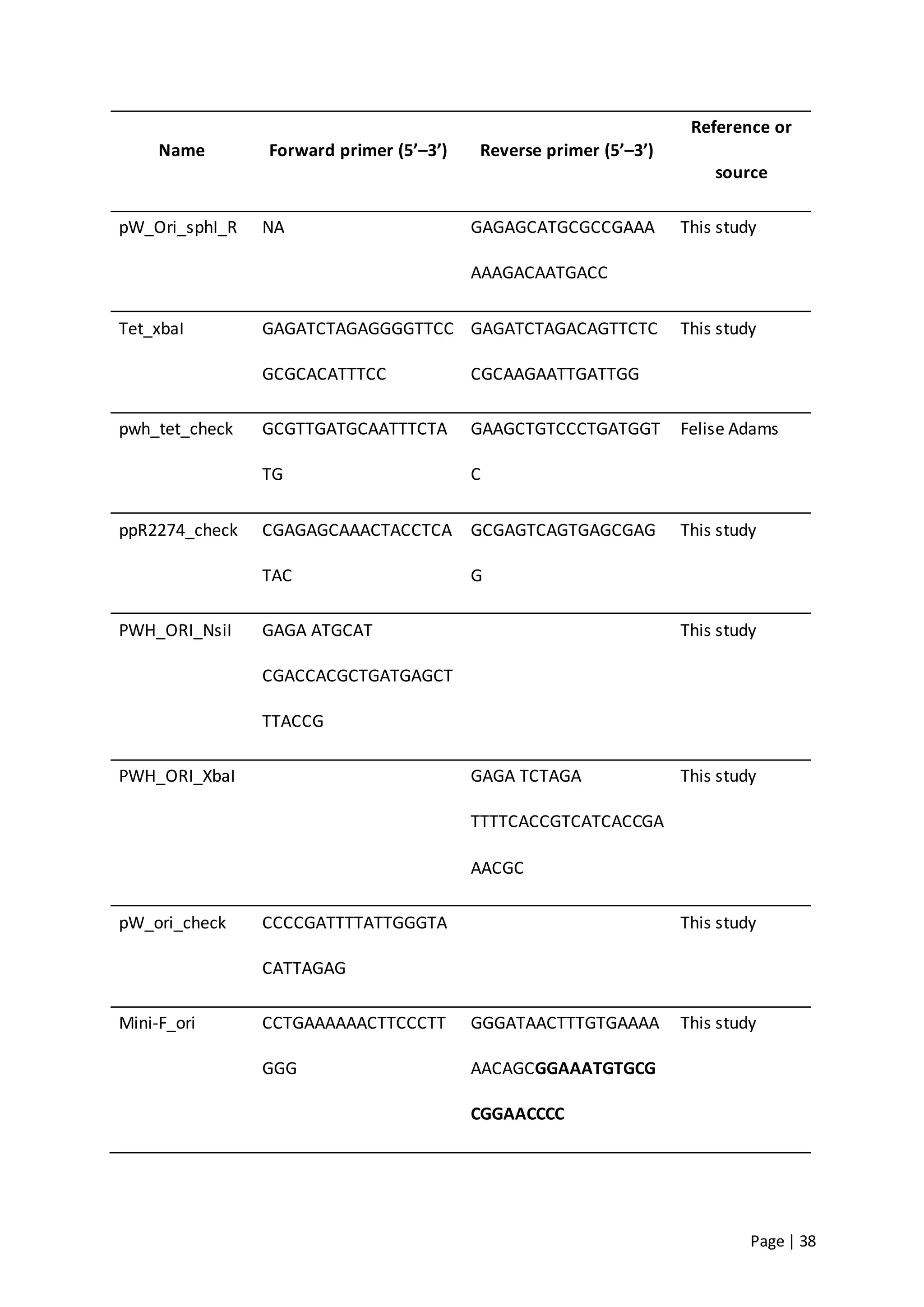
pW_Ori_sphI_R NA GAGAGCATGCGCCGAAA
AAAGACAATGACC
This study
Tet_xbaI GAGATCTAGAGGGGTTCC
GCGCACATTTCC
GAGATCTAGACAGTTCTC
CGCAAGAATTGATTGG
This study
pwh_tet_check GCGTTGATGCAATTTCTA
TG
GAAGCTGTCCCTGATGGT
C
Felise Adams
ppR2274_check CGAGAGCAAACTACCTCA
TAC
GCGAGTCAGTGAGCGAG
G
This study
PWH_ORI_NsiI GAGA ATGCAT
CGACCACGCTGATGAGCT
TTACCG
This study
PWH_ORI_XbaI GAGA TCTAGA
TTTTCACCGTCATCACCGA
AACGC
This study
pW_ori_check CCCCGATTTTATTGGGTA
CATTAGAG
This study
Mini-F_ori CCTGAAAAAACTTCCCTT
GGG
GGGATAACTTTGTGAAAA
AACAGCGGAAATGTGCG
CGGAACCCC
This study
Page | 39
Name Forward primer (5’–3’) Reverse primer (5’–3’)
Reference or
source
TET_v2_F GCTGTTTTTTCACAAAGTT
ATCCCGGGGTTCCGCGCA
CATTTCC
This study
ALL_mini-F_tet GAGAATGCATCCCTTGGG
GTTATCCACTTATCC
GAGAATGCATGCAAGAAT
TGATTGGCTCCAATTC
This study
Note: Bold primer sequence is assigned to overlapping sequence for nested PCR.
Page | 40
Table 2.4: Plasmids used in this study
Plasmid Characterisation
Point of origin or
reference
pATO4 pMMB67EH with RecAb system, TetR (Tucker et al., 2014)
pPR2274 pCRG16; SmaI site in mini-F repE gene
removed (CCCGGG to CCCGAG), AmpR, CmlR (E.
coli), Cyhs (yeast)
(Liu et al., 2017)
pWH1266 AmpR, TetR, fusion of pBR322 and pWH1277
using PvuII sites
(Hunger et al., 1990)
pWH1266 + 2006
+ Gent
AmpR, TetR, fusion of pBR322 and pWH1277
using PvuII site, with GentR and ATCC 17978
A1S_2006
Felise Adams
pGEM-T easy
vector
AmpR, ‘T’ base overhang cloning vector Promega
pGEM-T_ Gent GentR cartridge inserted with TA cloning This study
pPR2274 _Tet TetR cloned in the XbaI site in pPR2274 This study
pW_2274 pCRG16; SmaI site in mini-F repE gene
removed (CCCGGG to CCCGAG), AmpR, CmlR (E.
coli), Cyhs (yeast), pW ori inserted from XbaI to
NsiI site
This study
Page | 41
buffer (Lucigen), 5 units of Econotaq polymerase (Lucigen) and sufficient Milli-Q water to
reach the final volume.PCRs using MangoTaqTM were made to a final volume of 50 µL, which
contained 50 mM of MgCl2, 0.2 mM of dNTPs, 100 ng of the forward and reverse primer in
total, 200 ng of the template DNA, 5 × MangoTaqTM coloured buffer and sufficient Milli-Q
water to reach the final volume.
The routine PCR cycling conditions for purified DNA samples comprised an initial f denaturing
step at 94 °C for 5 minutes, 30 cycles of a second denaturing step at 94 °C for 30 seconds, an
annealing step at 55 °C for 30 seconds and an elongation step at 72 °C for 1 minute per Kb.
This resulted in a final extension step at 72 °C for 10 minutes. Results of PCR reactions were
visualised by agarose gel electrophoresis.
2.4.3.2 Colony polymerase chain reaction
For colony PCR, single colonies were grown on LB plates with selection, picked with a pipette
and re-suspended in 40 µL of milli-Q water. For the PCR reaction, 8 µL of the colony sample
was used as template DNA. The PCR conditions followed those described in Section 2.4.3.1.
2.4.3.3 Nested polymerase chain reaction
For nested PCR, PCR products were used as template DNA and followed the standard PCR
conditions described in Section 2.3.3.1.
Page | 42
2.4.4 Agarose gel electrophoresis
Purified plasmid DNA and amplified PCR products were subjected to electrophoresis on
horizontal gels using routine molecular biological methods (Sambrook and Russell, 2001).
Agarose gels (0.8–1%) were used for visualising DNA products ranging from 0.4 to 4.5 Kb in
length (Table 2.2). Briefly, gels were cast for approximately 20 minutes before the DNA and
loading dye were loaded. To each sample, 0.4 µL per µL of sample DNA of either Gel Loading
Dye purple 6× (Biolabs) or Blue/Orange 6× Loading Dye (Promega) was added and 4 µL of
Hyperladder 1 (Bioline) was used as a molecular weight marker to identify DNA sizes ranging
from 0.2 to 10 Kb in length (Appendix 2). Electrophoresis was completed in 0.5× TAE buffer at
100 volts and stopped after approximately 30 minutes or when the loading buffer dye was
seen to have run approximately three quarters down the gel. The gel was removed from the
tank and stained in Biotum GelRed nucleic acid stain for 15 minutes (Table 2.2). The DNA
fragments were visualised using the Bio Rad Gel DocTMEZ imager.
2.4.5 Purification of polymerase chain reaction products
DNA products amplified from PCR reactions (Section 2.3.3.1) were purified by using the
Wizard® SV Gel and PCR Clean-Up System (Promega) according to the manufacturer’s
instructions. Briefly, equal parts of Membrane Binding Solution and PCR amplification
products were mixed by pipetting. This was added to the SV Minicolumn, which was inserted
into the collection tube. The sample was incubated for 1 minute at room temperature and
then centrifuged at 13,500 rpm for 1 minute. Flow through was discarded and 700 µL of
Membrane Wash Solution added and centrifuged for at 13,500 rpm for 1 minute. Flow
through discarded and 500 µL of Membrane Wash Solution was added and then centrifuged
Page | 43
at 13,500 rpm for 2 minutes. Flow through was discarded and the sample was then centrifuged
13,500 rpm for 2 minutes. The SV Minicolumn was then transferred to a sterile 1.5 mL
microcentrifuge tube where 20 µL pre-heated 60 °C Nuclease-Free water was added and
incubated for 1 minute. This was then centrifuged at 13,500 rpm for 1 minute and the DNA
concentration was determined by a Thermo Scientific NanoDropTM 1000 spectrophotometer
(Biolab). The final sample was stored at 4 °C.
2.4.6 Digestion of DNA with restriction endonucleases
All DNA restriction enzymes were used with the corresponding buffer solutions purchased
from New England Biolabs (Genesearch, Australia), following the manufacturer’s instructions.
PCR and plasmid DNA were digestedin 30 µLvolumes for 2–4 hours at 37 °C (Table 2.4). When
double digestion was required, compatible buffers were used to achieve the optimal cutting
activity between the two enzymes.
2.4.7 Adenosine treatment of polymerase chain reaction products
For TA cloning using the pGEM-T easy vector, purified PCR products were treated with
adenosine to allow ligation with the thymine overhangs of the linear form of the pGEM-T easy
vector (Section 2.3.5). Purified PCR products were treated with 5 units of Econotaq (Lucigen)
DNA polymerase, 1× Econotaq (Lucigen) buffer, 0.2 mM of dNTPs (Promega) and sufficient
Milli-Q water to reach a final volume of 50 µL. Reactions were incubated for 15 minutes at
37 °C.
Page | 44
2.4.8 Ligation of DNA
Ligation reactions were performed with restriction endonucleases digested products in a 3:1
insert to vector ratio in a final volume of 20–30 µL, unless otherwise stated. The ligations
comprised 2 Weiss units of T4 DNA ligase and 1× T4 DNA ligase reaction buffer (New England
Biolabs). Ligation reactions were incubated overnight at 4 °C.
2.4.9 DNA sequencing
All sequencing undertaken in this thesis was performed by the Australian Genome Research
Facility (AGRF) in a final volume of 12 µL. Each sequencing reaction contained 250 ng of
template DNA, 100 ng of the selected primer and sufficient Milli-Q water to reach a final
volume of 12 µL in a 1.5 mL microfuge tube. The DNA sequence was analysed using the
program SequencherTM 4.1.4 (Gene Codes Corp). To find any mutations in the sequenced DNA,
the DNA was aligned against consensus sequence CP012004.1 acquired from the National
Center for Biotechnology Information (NCBI) database.
2.4.10 Transformation of Escherichia coli
2.4.10.1 Preparation of chemically competent cells
Overnight cultures of E. coli DH5α were diluted into 1 into 20 freshly warmed LB media and
incubated for one hour at 37 °C in constant agitation at 200 rpm. Cells were then further
diluted by transferring 200 µL of culture into 200 mL of freshly warmed LB media. The culture
was then incubated at 37 °C with continuous agitation at 200 rpm until the cellular density
reached an OD600 of 0.6. The culture was then divided between sterile chilled centrifuge tubes
and incubated for 5 minutes on ice. The culture was then centrifuged using a Hermle Z383K
Page | 45
centrifuge at 15,000 rpm for 10 minutes at 4 °C to pellet the cells. The supernatant was
discarded, and the cells were resuspended in 40 mL of TFB1 (Table 2.3) and incubated for 10
minutes on ice. Then the culture was centrifuged using a Hermle Z383K centrifuge at 15,000
rpm, for 10 minutes at 4 °C and the supernatant was discarded. The pelleted cells were
resuspended in 3.2 mL of TFB2 (Table 2.3) and incubated on ice for 15 minutes. The
resuspended cells were aliquoted into 100 µL sterile chilled microfuge tubes before being
stored at −80 °C for future use.
2.4.10.2 Transformation of competent Escherichia coli cells
Chemically competent E. coli DH5α cells were used for transformation with plasmid DNA
(Section 2.3.10.1). After the cells were removed from the freezer and thawed on ice for
15 minutes, 150 ng of plasmid DNA or ligated DNA products of interest (Section 2.3.8) was
added to the thawed cells, which were then tapped to mix and incubated on ice. Cells were
then heat shocked for 90 seconds at 42 °C and then immediately placed on ice for 15 minutes
for recovery. Next, 500 mL of sterilised LB broth was added to the cells and they were
incubated for one hour at 37 °C under constant agitation at 200 rpm. The cells were
centrifuged at 13,500 rpm for 1 minute using a Dynamica Velocity 13µ Minifuge. Of the
resulting supernatant, 100 µLwas plated onto selectivemedia for isolation of ligatedplasmids.
The remaining supernatant was partially removed and the pellet was resuspended in 30 µL of
the supernatant and then spread onto plates containing selective media. The resulting plates
were incubated overnight at 37 °C.
Page | 46
2.4.11 Electroporation of Acinetobacter baumannii
2.4.10.1 Preparation of electrocompetent Acinetobacter baumannii cells – A
A. baumannii cells were isolated from single colonies and grown in LB broth overnight. The
overnight culture was then diluted to 1 into 4 with LB broth that included selection and IPTC
at 2 mM. The cells were incubated at 37 °C in a gyratory shaker to an OD600 of 0.04 (early log
phase). The cells were then centrifuged at 4,500 rpm for 10 minutes at −2°C using a Hermle
Z383K centrifuge and the supernatant was discarded. The pelleted cells were then
resuspended in 20 mL of 10% glycerol to wash them and were centrifuged again at 4,500 rpm
for 10 minutes at −2°C using a Hermle Z383K centrifuge. The supernatant was discarded and
the cells were washed again by being resuspended in 10 mL of 10% of glycerol before another
centrifugation at 4,500 rpm for 10 minutes at −2°C using a Hermle Z383K centrifuge. The
supernatant was discarded and the cells were resuspended in 250 µL of 10% glycerol.The cells
were used immediately.
2.4.11.2 Preparation of electrocompetent Acinetobacter baumannii cells – B
A. baumannii wild type (WT) cells were isolated from single colonies and grown in 10 mL of LB
broth overnight at 37 °C. The overnight culture was then diluted to 1 into 100 in 60 mL of LB
broth, which was incubated at 37 °C in a gyratory shaker until an OD600 of 1 was reached. Cells
were then centrifuged at 4,500 rpm for 10 minutes at −2°C using a Hermle Z383K centrifuge
and the supernatant was discarded. Pelleted cells were then resuspended in 10 mL of chilled
10% glycerol to wash and re-centrifuged at 4,500 rpm for 10 minutes at −2°C using a Hermle
Z383K centrifuge, after which the supernatant was discarded. This was repeated three times.
Cells were resuspended in 600 µL of 10 % glycerol and then aliquoted into 150 µL for
electroporation. The cells were used immediately.
Page | 47
2.4.11.3 Electroporation of electrocompetent A. baumannii cells – A
For electroporation, purified PCR amplified DNA product (approximately 250 ng) was added
to electro-competent A. baumannii cells (Section 2.4.11.1) and incubated for 5 minutes on ice.
Cells were electroporated at 1.8 kV, 200 Ω at 25 µF in a Gene Pulser ® II (Bio-Rad). Cells were
placed on ice for 5 minutes and then 4 mL of LB broth was added with 2 mM of IPTG and the
cells transferred to a gyratory shaker for 1 hour at 37 °C. The cells were then centrifuged at
4,500 rpm for 2 minutes at −2 °C. Pelleted cells were resuspended in 500 µL of LB broth and
plated onto LB agar with appropriate antibiotic selection before being incubated overnight at
37 °C. Single colonies were then selectedand streaked onto fresh Ery 10 LB plates,which were
then screened further.
2.4.11.4 Electroporation of electrocompetent A. baumannii cells – B
Purified plasmid product was added at 100 ng to electro-competent A. baumannii cells for
electroporation (Section 2.4.11.3). The cells were incubated for 10 minutes at room
temperature before they were electroporated at 1.8 kV, 200 Ω at 25 µF in a Gene Pulser® II
(Bio-Rad). Then, 600 µL of LB broth was added to the cells for recovery in a gyratory shaker
for 1 hour at 37 °C. Next, the culture was centrifuged at 13,500 rpm for 1 minute at room
temperature using a Dynamica Velocity 13µ Minifuge. Cells were resuspended in 100 µL of LB
broth, plated onto LB agar with Amp 200 and Amp 150, and incubated overnight at 37 °C.
Single colonies were then selected and streaked onto fresh Amp 200 LB plates, which were
then screened further.
Page | 48
2.5. Characterisationof Acinetobacter baumannii strains
2.5.1 Analysis of growth
2.5.1.1 Growth curve
From a single colony, A. baumannii strains were incubated overnight in 10 mL of MH broth in
a gyratory shaker at 200 rpm. The overnight cells were diluted 1 into 100 in 35 mL of fresh MH
broth and incubated at 37 °C in a gyratory shaker at 200 rpm. The initial OD600 reading was
recorded after dilution and an OD600 reading was then recorded every hour after for a total of
8 hours until the OD600 reading reached 1.
2.5.1.2 Colony morphology
To identify if colony morphology had changed due to capsule knockouts in the strain ATCC
17978, single colonies of A. baumannii strains were streaked across LB agar plates and
incubated overnight at 37 °C. Colonies were then observed under a motic BA200 educational
routine laboratory microscope (compound).
2.5.2 Lysozyme assay
From a single colony, A. baumannii strains were incubated overnight in 10 mL of LB broth at
200 rpm. Overnight cultures were then diluted to 1 into 40 in 10 mL of fresh LB broth and
incubated at 37 °C in a gyratory shaker at 200 rpm until an OD600 of 0.6 was reached. The
bacterial culture was further diluted to an OD600 of 0.1 and then further diluted to an OD600 of
0.05; cells were kept on ice throughout this dilution process. To count initial concentrations
of the A. baumannii strains, −2, −3 and −4, dilutions were plated. For the lysozyme treatment,
50 µL of lysozyme (10 mg/mL) was added to 450 µL of bacterial culture and incubated for
Page | 49
1 hour at 37 °C in a gyratory shaker at 200 rpm. A negative control was prepared by adding
50 µL of Milli-Q water to 450 µL of bacterial culture and incubating this for 1 hour at 37 °C in
a gyratory shaker at 200 rpm. Aliquots of 100 µL were then plated on LB agar plates and
incubated overnight at 37 °C.
2.5.3 Desiccation assay
From a single colony, A. baumannii strains were incubated overnight at 200 rpm in 10 mL of
LB broth. The overnight culture was then diluted to 1 into 100 in 10 mL of LB broth and
incubated at 37 °C in a gyratory shaker at 200 rpm until an OD600 of 0.15 was reached. The
cells were centrifuged at room temperature for 5 minutes at 4,500 rpm using a Hermle Z383K
centrifuge. The supernatant was discarded and the pellet was resuspended in 5 mL of sterile.
Next, 25 µL of resuspended bacterial inoculum was pipetted into a 96-well flat bottom
polystyrene plate at room temperature. At each time point, cells were re-hydrated by
incubating in 100 µL of sterile for 30 minutes. Cells were serially diluted and plated onto LB
agar plates, which were then incubated overnight at 37 °C and bacterial colonies counted
(Chin et al., 2018).
2.5.4 Sensitivity to disinfectants
From a single colony, A. baumannii strains were incubated overnight at 200 rpm in 10 mL of
LB broth. The overnight culture was then diluted to 1 into 100 in 10 mL of LB broth. Cells were
incubated until an OD600 of 0.15 was reached. The 990 µL of cell culture was then aliquoted
into microfuges tubes with the addition of 10 µL of CHG 0.008%, or 10 µL of BAK 0.004% or 10
µL of sterilised water. The cells were then incubated for 30 minutes at 37 °C in a gyratory
Page | 50
shaker at 200 rpm. The treated cells were then serially diluted with a microtiter plate and
plated on LB agar plates. These were incubated overnight at 37 °C and enumerated the next
day.
2.5.5 Characterisation of capsule material
2.5.5.1 Cell preparation for capsule isolation
From a single colony, A. baumannii strains were incubated overnight at 200 rpm in 10 mL of
LB broth. Overnight cultures were further diluted to 1 into 40 in 20 mL of LB broth and then
incubated at 37 °C in a gyrating shaker at 2000 rpm until an OD600 of 1 was reached. Cells were
pelleted by centrifugation at 4,500 rpm for 5 minutes at 5 °C using a Hermle Z383K centrifuge
and the supernatant was discarded. The pellet was resuspended in 1 mL of lysis buffer (Table
2.3) with 25 µL of 10 mg/mL hen’s egg derived lysozyme (Sigma), 25 µL of RNAse (25mg/mL)
and 20 µL (25mg/mL) of DNAse. Cells were vortexed and incubated for one hour at 37 °C. Cells
were then crushed using a Cell Disrupter (Constant Systems LTD) and approximately 500 µL of
sample was recovered. To the recovered sample, 10 µL of DNAse and 10 µL of RNAse was
added and the samples incubated for 30 minutes at 37 °C. Next, 20 µL of 10% sodium dodecyl
sulfate (SDS) was added to each sample and incubated at 37 °C for 30 minutes. Samples were
processed by boiling for 5 minutes at 100 °C, after which 1 µL of proteinase K (25 mg/mL) was
added and incubated for 1 hour at 60 °C. Samples were then frozen at −20°C for later use.
2.5.5.2 SDS-PAGE and staining
Frozen samples were thawed and suspended in 1× SDS-PAGE buffer (Table 2.2) in a 1 to 1
ratio. The samples were then heated to 37 °C for 20 minutes. Next, 20 µL of the sample was
Page | 51
added to the SDS-PAGE well with 10 µL of Bio-Rad Precision Plus ProteinTM Dual Colour
Standard to visual size. The gel was run at 90 volts for approximately 12 hours. The gel was
then submerged in fixative solution (Table 2.2) for 1 hour, removed and then submerged in
Alcian blue stain with shaking overnight. The gel was de-stained for 6 hours in fixative solution
(Table 2.2) and imaged using the Bio Rad Gel DocTMEZ imager.
Page | 52
Chapter 3: Results
3.1 Introduction
A. baumannii is an important nosocomial pathogen due to the difficulty of treating infections
and decontaminating hospitals (Harding et al., 2017). These factors have resulted in
A. baumannii being categorised by the World Health Organization as priority 1 for research
into new antibiotic design (WHO, 2017). One of the factors contributing to the success of
A. baumannii in the nosocomial setting is its ability to express a capsule (Harding et al., 2017);
see Section 1.3. A. baumannii’s capsule is known to aid in colonisation, desiccation resistance,
biofilm formation and resistance to the host’s immune system (Powers and Trent, 2018,
Harding et al., 2017, Wang-Lin et al., 2017). To date, there has been no direct analysis of
different capsule types on these virulence traits without background strain genetics
influencing the results. Therefore, this study aims to create an OAV that can incorporate
capsuleregions from different serotypes for direct comparison into the samebackground. This
was chosen as the method of cloning because the cps region in A. baumannii is very large,
which would have been difficult to clone with conventional methods. The OAV also allows for
genetic manipulation once created.
As a first step, a ∆cps derivative, ∆cps2, was be constructed and phenotypically analysed.
∆cps2 was designed as the isogenic host for direct comparison of the OAV system because the
entire KL region has been deleted. ∆cps2 also has the capsular polysaccharide export genes
(wzc, wza and wzb) and initiating transferases removed. These are known to vary between KL
regions in different strains of A. baumannii (Figure 1.1). The smaller deletion mutant, ∆cps,
retains the CPS export system (wzc, wzb and wza), initiating transferase (itrA2), and some
Page | 53
intermate and biosynthesis sugars (galU, Ugd, gpi, gnr1 and pgm) (Figure 3.1). Because the
export system, initiating transferases, intermate and biosynthesis sugars vary between A.
baumannii strains, this affects the direct comparison of the K structures produced in this
model (Figure 1.1 (A)). It was decided to construct a larger deletion in the cps region for the
isogenic model. Phenotypical analysis comparing ∆cps to ∆cps2 determined whether deleting
a larger region in the KL locus in ATCC 17978 affects cell viability (see Section 3.3).
The strain A. baumannii ATCC 17978 was chosen to the isogenic model for the OAV system
becauseit contains few resistancegenes. This enables more diversity in the choice of selective
markers that can be used in the OAV design. It also enables existing selective genes in the
vector pPR2274 to be used (Appendix 6). This means that the isogenic model can be selected
for when it has accepted the OAV, which aids in the initial stages of screening.
The OAV protocol was adapted from an engineered yeast–E. coli shuttle vector designed by
Raymond et al. (2002). The vector was used to clone whole Pseudomonas aeruginosa O-
antigen gene clusters from sheared DNA using the double-strand repair pathway in
Saccharomyces cerevisiae (Raymond et al., 2002). This was then expanded by Liu et al. (2017)
who developed an OAP to simultaneously create several operon clones through the use of
multiple overlapping PCR products that underwent homologous recombination by the DNA
repair pathway in yeast (Liu et al., 2017). Liu et al.’s (2018) OAP system allows rapid
simultaneous cloning of large regions of genetic material in the same isogenic background for
direct functional analysis in operon gene clusters (e.g. the KL loci in A. baumannii). This allows
the direct analysis of different capsule types (K structures) on desiccation, antimicrobial
resistance and immune evasion without having additional genes affecting the results.
Page | 54
Figure 3.1: Cps gene region in ATCC 17978, ∆cps and ∆cps2 strains.
The strain names are indicated on the left as well as the capsule loci (KL) in Acinetobacter
baumannii. Horizonal arrows indicate genes and their direction of transcription.
Corresponding gene names are shown above the gene. Gene colour indicates homology as
both ∆cps and ∆cps2 are mutants of the parental strain ATCC 17978, the KL is located between
fkpA to lldP, shown in pink and purple respectively. The following genes are involved in CPS
export; wzc, wzb and wza. Nucleotide-sugar biosynthesis are encoded by; gna, dgaA and dcaC.
Genes involved in K unit processing are wzx and wzy, in yellow. Genes involved in glycan
modification through acetyl or acyl transferases are dcaB and atr2. Glycosyltransferase are
encoded by; gtr6, gtr7, gtr8 and gtr9. Initiating transferase is encoded by itrA2. Pathway
intermediates and biosynthesis of glucose derivates are encoded by; galU, Ugd, gpi, gne1 and
pgm (Kenyon and Hall, 2013). The gene deletions in acapsular strains ∆cps and ∆cps2 are
indicated by a grey dashed line. KL3 indicates the capsule structure produce by ATCC17978.
Gene size is not to scale.
Page | 55
To use the OAP system in A. baumannii, the plasmid had to be adapted to contain an origin of
replication specific to Acinetobacter (Liu et al., 2017); see Section 3.4.1. The first step was to
construct the acapsular mutant ∆cps2, which was used as the isogenic model for the OAV
system. Phenotypic analysis of ∆cps2 first involved comparing ∆cps and ∆cps2 to determine
whether a larger knockout in the KL locus would affect cell viability (Section 3.3; Figure 3.1).
The second step of phenotypic analysis was to determine whether survival during desiccation,
resistance to disinfectants (BAK and CHG) and resistance to lysozyme were decreased when
the capsule was absent. The following chapter describes these results.
3.2 Constructionof a cps deletionin Acinetobacter baumanniiATCC 17978
Homologous recombination was used to create the ∆cps2 ATCC 17978 derivative (seeSections
2.4.3.2, 2.4.5, 2.4.11.1 and 2.4.11.2). The two sites of homology were fkpa and lldP, which are
located on either side of the cps region (Figure 3.1). This method involved first amplifying the
fkpA and lldP genes and the antibiotic selection marker Ery. Amplification of the fkpA gene
involved using CPS2_ufr_F/R primers to amplify a region of 690 bp that was visualised using
electrophoresis on an agarose gel for a band of 700 bp, which was identified on the gel (Table
2.3; data not shown). Amplification of the lldP gene involved using CPS2_dfr_F/R primers to
amplify a region of 767 bp (Table 2.3; data not shown). This was visualised using
electrophoresis on an agarose gel for a band of 750 bp, which was identified on the (data not
shown). Amplification of the Ery cartidge used ERY_nol_F/R primers to amplify a region of 844
bp that was visualisedusing electrophoresis on an agarosegelfor a band of 850 bp, which was
identified on the gel (Table 2.3; data not shown).
Page | 56
Once the band sizes were identified at 700 bp for fkpA, 750 bp for lldP and 850 bp for Ery, they
were added as template DNA for the nested PCR in a ratio of 1:1:1 with the CPS2_ALL_F/R
primer to connect the three PCRproducts (Table2.3). This was visualisedusing electrophoresis
on agarose gel to determine the band size of 2.3 Kb (data not shown). Once the band size was
determined at 2.3 Kb, the nested PCR product was purified and the amount of DNA was
measured. Next, 300 ng of the nested PCR product was electroporated at 1.8 volts into ATCC
17978. The electroporated cells were then plated on LB agar that contained Ery for selection
of resulting mutant colonies. Resulting colonies were then screened with colony PCR for the
nested product using CPS2_ALL_F/R with a corresponding band size of 2.3 Kb (data not
shown). After the initial identification of the 2.3 Kb region, the colony DNA was then sent to
AGRF for sequence validation using Ery_Read_Out_F/R, primers (Table 2.3; data not shown).
The resulting cps knockout strain was called ∆cps2 and contains the fkpA, Ery and lldP genes
in the cps region (Figure 3.1). ∆cps2 has 22 genes or 23 Kb in ATCC 17978 replaced with an Ery
cartridge of 844 bp (Figures 3.1 and 3.2). Phenotypic analysis of ∆cps2 involved comparing
∆cps2 with the WT strain ATCC 17978 WT, and the smaller capsule knockout mutant ∆cps
(Figure 3.1). Further phenotypic analysis involved comparison of ∆cps and ∆cps2 to determine
whether a bigger deletion in the cps region affects cell viability (Figure 3.1).
3.3 Characterisationof ∆cps2
A number of assays were used to analyse the impact of removal of the capsule in ATCC 17978.
Functional characterisation involved comparing ∆cps2 with both the WT ATCC 17978 and the
smaller knockout mutant ∆cps on growth rates, colony morphology, desiccation survival,
resistance to disinfectants and resistance to lysozyme.
Page | 57
Figure 3.2: Homologous event in ATCC 17978 to create ∆cps2.
The genes fkpA and lldP are shown in pink and purple, respectively. The cps region is shown
in one block for simplicity and contains 22 genes (Figure 3.1). The thin blue arrows show the
replacement of the deleted cps region (23 Kb) in ∆cps2 with an Ery cartridge (8444 bp). The
∆cps2 mutant was created from ATCC 17978 (WT). The primers used for sequencing can be
seen in purple and are labelled CPS2_ALL_F/R (Table 2.3).
Page | 58
3.3.1 Verification of the absence capsule
To confirm the absence of the capsule in ∆cps2, extracted capsule material was isolated from
bacterial colonies (Section 2.5.5). The extracted capsule material was run on 20%
polyacrylamide gel and stained with Alcian blue for visualisation. ∆cps2 was seen to have no
capsule material present compared with the ATCC 17978 WT strain located in the column to
the right of Figure 3.3. Both ∆cps2 and ∆cps can be seen to have no capsule material when
compared with ATCC 17978 WT. This suggests that removing the cps gene region results in an
acapsular mutant.
3.3.2 Growth curve
To evaluate if the total removal of the cps genetic region from ATCC 17978 affected cell viability,a
growthcurve analysiswasundertaken(Section2.5.1.1).Three strainswere usedtocomparedgrowth
rates:ATCC 17978 WT, ∆cps and ∆cps2. ATCC 17978 WT wasusedas a reference strain,and∆cpswas
includedtoassesswhetherremoval of the cps regionwouldaffectcellularviability(Figure 3.4).Two-
tailed, type homoscedastic Student t-tests showed no statistical difference between WT, ∆cps and
∆cps2. The biggest difference occurred in the 2- to 4-hour window of the growth curve (Figure
3.4). This suggests that removing the cps region in ATCC 17978 has no effect on cell viability
because all strains followed the same pattern of cellar growth.
3.3.3 Lysozyme assay
Lysozyme is an antimicrobial protein that is part of the innate human immune system
(Ragland and Criss, 2017, Chipman and Sharon, 1969). Lysozyme hydrolyses the glycosidic
bonds in the peptidoglycan layer in the bacterial cell wall (Ragland and Criss, 2017). When
Page | 59
Figure 3.3: Alcian blue stain of extracted capsular polysaccharides from ATCC 17978 and
acapsular mutants, ∆cps2 and ∆cps in Acinetobacter baumannii ATCC 17978.
Extracted capsular polysaccharides were run on 20% polyacrylamide gel prior to Alcian blue
staining. Acapsular mutants ∆cps2 and ∆cps has no bands present, which indicates that no
capsular polysaccharides are produced by these bacterial cells. This is contrasted by ATCC
17978 WT, which produces a capsular polysaccharide band at 250 KDa in szie.
Page | 60
Figure 3.4: Growth Curve of Acinetobacter baumannii strains WT, ∆cps and ∆cps2 at 37 °C in
Mueller–Hinton broth under aerobic conditions.
Cell growth was recorded over 8 hours by reading the OD600 fromtime point 0 to time point 8
hours. The data points constitute an average OD measurement of three independent
experiments performed in duplicate. The error bars show one standard deviation from the
mean.
Page | 61
the peptidoglycan layer is de-stabilised, it leads to cell death from osmotic pressure (Ragland
and Criss, 2017). A capsule can protect the cell from the effect of lysozyme (Chin et al., 2018).
To compare viability of the A. baumannii capsule knockout mutants, a lysozyme assay was
performed (Section 2.5.2; Figure 3.5). With allstrains starting at the experiment with the same
number of CFU/mL, the effect of lysozyme could be determined for WT, ∆cps and ∆cps2. All
strains dropped in CFU/mL when treated with lysozyme. Optimisation was required for
acapsular mutants because they clumped together when left standing; therefore, vortexing
was incorporated to standardise the experiment. Cell viability was significantly reduced in the
acapsular mutants when compared to WT. This was determined by a Student t-test, using a
two-tailed distribution, type homoscedastic. Of the two knockout mutants, ∆cps survived
better than ∆cps2. This shows how crucial the cps region is to viability when cells are
introduced to environmental stressors.
3.3.4 Desiccation survival
Desiccation resistance is a major contributor to A. baumannii’s persistence in health care
setting to cause nosocomial infections (Harding et al., 2017). Capsule plays a big role in this
ability to survive desiccation as previously stated in Section 1.1.4.1. To assess the impact that
removing the capsule has on desiccation survival, a desiccation assay was performed (Section
2.5.3; Figure 3.6). To determine that all strains had the same starting cell count, the CFU/mL
were counted on day 0 for ATCC 17978 WT, ∆cps and ∆cps2 with no significantdifference. This
was determined by a Student t-test, using a two-tailed distribution, type homoscedastic.
Across 8 days of desiccation, the WT strain survived best with only a 4-log decrease in viable
cells. In contrast, the acapsular mutants ∆cps and ∆cps2 both had a 5-log decrease in viable
Page | 62
Figure 3.5: The effect of lysozyme on Acinetobacter baumannii ATCC 17978 and acapsular
derivates.
Cells were grown to an OD600 reading of 0.6 and were then diluted to 0.005 before being
incubated with 10 mg/mL of lysozyme for 1 hour before plating serial dilutions on Luria–
Bertani agar plates for overnight incubation at 37 °C. The data points constitute an average
CFU/mL count across three independent experiments performed in duplicate. Errors bars
represent one standard deviation from the mean. P values were calculated from two-tailed
unpaired Student t-tests (* is p≤0.05, ** is p≤0.01, *** is p≤0.001).
Page | 63
Figure3.6: Desiccationsurvivalofcapsularandacapsularstrainsin Acinetobacter baumannii
ATCC 17978.
Cells were grown to an OD600 reading of 0.15, where they were pelleted and suspended in
phosphate buffered saline (PBS) before 25 µL of culture was dropped on polystyrene plates
for desiccation at 21 °C for 8 days. Cells were then re-hydrated in PBS before plating serial
dilutions on Luria–Bertani agar plates for incubation overnight at 37 °C. The data points
constitute an average CFU/mL count across three independent experiments performed in
duplicate. Errors bars represent one standard deviation from the mean. P values were
calculated from two-tailed unpaired Student t-tests (*** is p≤0.001).
Page | 64
cells.The difference in viablecells between the WT and the acapsularmutants was significant,
which was determined by a Student t-test, using a two-tailed distribution, type
homoscedastic. This suggests that the presence of a capsule helps A. baumannii ATCC 17978
resist desiccation. There was no significance difference between the two acapsular mutants,
∆cps and ∆cps2, which was determined by a Student t-test, using a two-tailed distribution,
type homoscedastic. This supports the hypothesis that capsule production helps ATCC 17978
survive during desiccation.
3.3.5 Resistance to antiseptics and disinfectants
A. baumannii has been reported to be resistantto hospital disinfectants such as benzalkonium
chloride and chlorhexidine. This resistance has been linked to efflux pumps and the presence
of a capsule (Chin et al., 2018, Hassan et al., 2013, Brooks et al., 2002). Benzalkonium chloride
and chlorhexidine are both classified as cationic bacteroides (Houari and Di Martino, 2007).
Chlorhexidine is a biguanides that acts superficially on the lipid bilayer of the outer-
membrane, altering fluidity by displacing cations and breaking head-group bridging (Hassan
et al., 2013, Houari and Di Martino, 2007). Benzalkonium chloride is a quaternary ammonium
compound that interacts with the bacterial membranes (Houari and Di Martino, 2007, Leeand
Fialkow, 1961).
The assay to determine resistance to antiseptics was performed with cells grown to an OD600
of 0.15, where the bacterial cultures were then incubated in the disinfectants for 30 minutes
before serial dilatation and being plated on LB agar plates for overnight incubation overnight
at 37 °C. Each plate was counted for CFU/mL the next day. Chlorhexidine significantly affects
the growth of ∆cps and ∆cps2 compared with ATCC 17978 WT (Figure 3.7; Section 2.5.4). This
Page | 65
Figure 3.7: Resistance to chlorhexidine of Acinetobacter baumannii, ATCC 17978 and
acapsular derivates.
Cells were grown to an OD600 reading of 0.15. The bacterial culture was then incubated at 37
°C with 0.08 mg/mL (0.008%) of chlorhexidine for 30 minutes before plating serial dilatation
on Luria–Bertani agar plates for incubation overnight at 37 °C. The data points constitute an
average CFU/mL count across three independent experiments performed in duplicate. Errors
bars represent one standard deviation from the mean. P values were calculated from two-
tailed unpaired Student t-tests (* is p≤0.05, ** is p≤0.01).
Page | 66
was determined by a Student t-test, using a two-tailed distribution, type homoscedastic. ∆cps
has a survival rate that is 35% lower than that of WT, which compares to a survival rate that
is 60% lower than WT in ∆cps2. However, when a Student t-test was applied with two-tailed
distribution, type homoscedastic it was rescored to be insufficient. Acapsular mutants have
lower resistance than WT when introduced to chlorhexidine at 0.008% (0.08 mg/mL), with no
statistically significant difference seen between the two different acapsular mutants.
Growth in benzalkonium chloride at 0.004% (0.04 mg/mL) reduced the survival rate of the
acapsularmutants compared with WT (Figure 3.8). ∆cps had a survivalrate that was 30% lower
than that of WT which is significantly less than the acapsular mutant ∆cps2, which had a
reduced survival rate of 52% of WT. Of the two acapsular mutants, ∆cps survives significantly
better than ∆cps2, when aStudent t-test with two-tailed distribution, type homoscedastic was
applied to the data. Overall, acapsular mutants had lower survival rates than WT, which
suggests that capsule is important in resisting antiseptic and disinfectants.
3.3.6 Colony morphology
To identify any changes incolony morphology resulting from knocking out the cps generegion,
strains were streaked out on fresh LB media and incubated over night at 37 °C (Section 2.5.1.2)
(Figure 3.9). There was no difference in colony shape. the WT and acapsular mutants are all
circular in shape, which is expected because A. baumannii is classified as coccobacilli.
A. baumannii is also classified as a diplococcus bacterium, meaning they occur in pairs. This
can be seen in the acapsular mutants in Figure 3.9 (B). Capsulated strains have a glossy film
across the colony surface, which was absent in the acapsular mutants (not shown).
Page | 67
Figure 3.8: Resistance to benzalkonium chloride of Acinetobacter baumannii, ATCC 17978
and acapsular derivates.
Cells were grown to an OD600 reading of 0.15. The bacterial culture was then incubated at 37
°C with 0.04 mg/mL (0.004%) of benzalkonium chloride for 30 minutes before plating serial
dilatations on Luria–Bertani agar plates for overnight incubation at 37 °C. The data points
constitute an average CFU/mL count across three independent experiments performed in
duplicate. Errors bars represent one standard deviation from the mean. P values were
calculated from two-tailed unpaired Student t-tests (* is p≤0.05, ** is p≤0.01, *** is p≤0.001).
Page | 68
Figure 3.9: Colony morphology of Acinetobacter baumannii ATCC 17978 and acapsular
derivates ∆cps and ∆cps2.
All strains were grown on Luria–Bertani agar and incubated overnight at 37 °C. (A) ATCC
17978, (B) ∆cps and (C) ∆cps2. The images are representative of colonies seen across 2
experiments. Viewed under 40× magnification with Motic BA 300 Routine Biological
Laboratory microscope; 1 eye piece unit (epu) is equal to 25 µm.
A
A B C
Page | 69
A size difference could be seen between WT to acapsular mutants (Figure 3.9). WT colonies
are 7 eye piece units (epu) (175 µm) in size, which is 1.5 epu (37.5 µm) larger than the two
acapsularmutants that were 5.5 epu (137.5 µm) in size.This suggests that,with the cps region
knocked out, the resulting colony size is reduced.
3.4 Cloning of the cps region
The OAP allows operons of thousands of base pairs to be cloned in using one step (Liu et al.,
2017). The OAP uses a yeast–E. coli shuttle vector that uses the double stranded repair
pathway in yeast to ligate multiple DNA fragments that overlap in sequence (Liu et al., 2017).
The double-stranded repair pathway of S. cerevisiae uses homologous recombination (Resnick
and Martin, 1976). This pathway is not well understood, but it is known that the RAD family
genes are essentialfor homologous recombination (Xu et al.,2016, Resnickand Martin, 1976).
The RAD gene is translated to a DNA helicase that is recruited to the double-stranded break,
separating the two annealed DNA strands so that a DNA polymerase may move in and repair
the break using the opposite strand as a template, or a homologous amplified PCR product
(Jazayeri et al., 2004, Orr-Weaver and Szostak, 1985, Szostak et al., 1983).The resulting vector
can then be electroporated into aknockout mutant and willexpress that operon for functional
and chemical analysis (Liu et al., 2017).
The OAP system was designed to investigate the substrate preferences of several Wzx
flippases during O-antigen biosynthesis in E. coli (Liu et al., 2017). Because the shuttle vector
was created from an E. coli plasmid, Liu et al. 2017 did not need to clone in an origin of
replication that is specificto E. coli.The first step was to clone in hook regions, which are genes
Page | 70
flanking either side of the operon of interest. The hooks are used to incorporate the operon
of interest into the shuttle vector through homologous recombination in the yeast system
because they hook in the operon (Figure 3.10 (A)).
The next step was to amplify the genes in the operon of intertest with 80 bp of sequence that
overlaps the next gene (Figure 3.10 (B)). The shuttle vector was digested with SmaI to create
double-stranded breaks and inserted into the strain CRY1-2 S. cerevisiae with the amplified
genes from the operon of interest (Figure 3.10 (C)). The double-stranded repair pathway in
yeast is used to reconstruct the shuttle vector to contain the operon of interest between the
two hook regions (Figure 3.10 (D)). This is then electroporated into the knockout mutant for
the operon of interest to be expressed and analysed. Because the hook regions have high
homology in a specific species, the same operon in different strains of a species can be cloned
into the same shuttle vector (Liu et al., 2017). For this reason, the OAP was chosen to be used
in this study because it allows the whole cps operon to be cloned into A. baumannii
simultaneously. The first step to adapting the OAP for this study was to make the shuttle
plasmid pPR2274 specific for A. baumannii (Appendix 5 and 6).
3.4.1 Development of the operon assembly vector using the operon assembly protocol
The OAV is a yeast–E. coli shuttle vector that was first designed by Raymond et al. (2002) and
further developed by Liu et al. (2017) to produce the base plasmid pPR2274. pPR2274 is used
throughout this study to produce an OAV for use in A. baumannii (Appendix 5 and Table 2.4).
The following genetic engineering steps were taken for the completion of the first step in the
Page | 71
A
B
C
Page | 72
Figure 3.10: The operon assembly protocol system developed by Liu et al. (2017).
(A) Plasmid A is the base plasmid pPR2274 (Appendix 5 and 6). The base plasmid undergoes
homologous recombination in Saccharomyces cerevisiae to combine the hook regions into the
NotI sites; the plasmid is then denoted as Plasmid A + hook regions. (B) The operon of interest
is amplified in multiple PCR products, with primers in violet. The coloured boxes on the ends
of the primers show homology between the hook regions and amplified areas. (C) The
digestedplasmid A + hook regions with SmaI undergoes double-stranded repair in S. cerevisiae
with the multiple PCRs of the operon of interest undergoing homologous recombination to
insert the operon into plasmid A + hook regions. (D) The resulting plasmid is denoted as
plasmid A + hook regions + operon.
D
Page | 73
design of an OAV for A. baumannii (Sections; 2.4.1- 2.4.9).
The first step in creating an OAV system that could be used in A. baumannii was to clone an
origin of replication specific to A. baumannii (pW ori) and a resistant cartridge (Gent) into
pPR2274 (Figure 3.11). The antibiotic selection marker was used for simple identification of
cells with the ligated plasmid. Amplification of pW ori was under standard PCR conditions
using pW_Ori_OAV_F/R primers with an increase of the annealing temperature to 56.6 °C
(Table 2.3). Template DNA was pWH1266 because this plasmid contains pWH1277, which is
an Acinetobacter spp. specificplasmid (Table2.4). Bands were visualisedusing electrophoresis
on an agarose gel for the correct band size of 1.8 Kb (Section 2.4).
This process was repeated for the Gent cartridge, using Gent_OAV_F/R as the primer and the
template DNA was pWH1266 +2006+Gent (Table 2.4). The PCR products were purified
(Section 2.4.5) and combined in a 1:1 ratio to be used as template DNA in the nested PCR
reaction using ALL_OAV_pWgent_F/R as the primer (Table 2.4; Section 2.4.3.3). After the PCR
was completed, the product was run on an agarose gel for confirmation of the correct band
sizeof 2.6 Kb. The nested PCR product was then purified (Section 2.4.5). The plasmid, pPR2274
(Appendix 5) and the nested product were digested with SphI in CutSmart® buffer for 4 hours
and then ligated in a 1:3 vector ratio using T4 DNA ligase overnight at 4 °C (see Sections 2.5.6
and 2.4.8). The ligated plasmids were then transformed in E. coli DH5α. Extracted plasmids
were purified and digested using SphI for the correct band size of 2.6 Kb using electrophoresis
on an agarose gel (see Section 2.4.2). Only the Gent cartridge was extracted from pPR2274,
which suggests that pW ori was not able to be cloned into pPR2274.
Page | 74
A
B
Nested PCR
Digested with SphI and ligated
Page | 75
Figure 3.11: Schematic representation of the cloning of pW ori and Gent into pPR2274.
(A) Amplification of the pW ori from pWH1266 (Table 2.4; Appendix 4) and the Gent cartridge
from pWH1266 + 2006 + Gent (Table 2.4). (B) The nested PCR product connecting pW ori and
Gent with the addition of SphI restriction sites to either side. (C) The ligated product between
pPR2274 and the nested PCR product at the SphI restriction site. Primers are shown in purple
on PCR products (A and B). Vectors and nested products are shown to scale.
C
pW_ori_2274_S1
15, 290 bp
C
Page | 76
To test whether the whole nested PCR product could be cloned, the pGEM-T easy cloning
vector (Appendix 3) was used to identify whether the problem was in the nested product or
in the donor plasmid pPR2274 (Figure 3.12). Left over purified nested product was treated
with Econtaq DNA polymerase, which creates single 3’ A over-hangs to each end of the PCR
product (Section 2.4.7). This was then ligated with pGEM-T easy cloning vector by thymine to
adenosine over-hang (TA)cloning (Figure 3.12). The ligatedplasmid was then transformed into
E. coli DH5α and the resulting colonies were checked for the nested PCR product using colony
PCR with ALL_OAV_pWgent_F/R as the primer. This produced a positive result of 2.6 Kb (see
Section 2.4.3.3).
This plasmid was sent to the AGRF for sequencing with the M13_F/R primer because it reads
from the pGEM-T vector into the nested PCR product (see Section 2.4.9). Analysis of the
sequence of the nested PCRproduct showed no homology with pWH1266. Therefore, the DNA
sequence was compared with known DNA sequences using the website. The sequence had a
99% match to Klebsiella pneumoniae strain 13190 plasmid p13190-tetA, suggesting that the
nested PCR product had not been cloned. Therefore, there was an issue with cloning in the
nested PCR product.
To test whether the issue had arisen from joining the two PCR products or from the individual
genes,pW ori and Gent were cloned separately into the pGEM-T easyvector (Figures 3.13 and
3.14). Using leftover purified PCR pW ori product that had been amplified with
pW_ori_OAV_F/R, and after visualising a 1.8 Kb band, the PCR product was treated with
Econtaq DNA polymerase to create a single 3’ A over-hang to each end of the PCR
Page | 77
A
Page | 78
Figure 3.12: Schematic representation of thymine toadenosine over-hang cloning of pW ori
and Gent into pGEM-T easy vector.
(A) Amplification of the pW ori from pWH1266 (Appendix 6) and the Gent cartridge from
pWH1266 + 2006 + Gent (Table 2.4). (B) The nested PCR product treated with adenosine. (C)
The ligated product between pGEM-T and the nested product. Primers are shown in purple
on PCR products (A and B). Genes shown to scale.
Page | 79
Figure 3.13: Schematic representation of thymine toadenosine over-hang cloning of pW ori
into pGEM-T easy vector.
(A) Amplification of the pW ori from pWH1266 (Table 2.4; Appendix 6), after which the PCR
product was adenosine treated. (B) The ligated product between pGEM-T and pW ori. Primers
are shown in purple on the PCR product (A). Genes shown to scale.
Page | 80
Figure 3.14: Schematic representation of thymine to adenosine over-hang cloning of Gent
into pGEM-T easy vector.
(A) Amplification of the Gent cartridge from pWH1266 + 2006 + Gent (Table 2.4), after which
the PCR product was treated with adenosine. (B) The ligated product between pGEM-T and
the Gent cartridge. Primers are shown in purple on PCR products (A). Genes shown to scale.
Page | 81
product (Section 2.4.7). This was then ligated with pGEM-T easy cloning vector by TA cloning
(Figure 3.13 (B)).The ligatedplasmid was transformed in E. coli DH5α, where colony PCR using
the pW_ori_OAV_F/R primer determined that TA cloning had been unsuccessful (see Section
2.4.3.2).
This was contrasted with successful insertion of the Gent cartridge. Using leftover purified
Gent PCR product that had been amplified with the Gent_OAV_F/R primer, and after
visualisation of an 800 bp band, the PCR product was treated with Econtaq DNA polymerase
to create a single3’A over-hangs to each end of the PCR product (Section 2.4.7). This was then
ligated with pGEM-T easy cloning vector by TA cloning (Figure 3.14 (B)). The ligated plasmid
was transformed in E. coli DH5α and through colony PCR with the Gent_OAV_F/R primer, it
was determined that it had been successful. This suggested that the issue was isolated to the
pW ori sequence. Consequently, new pW ori primers were designed and used in the next step.
3.4.2 Re-design of the PW ori primer
The re-design of the pW ori primer increased the amplified area and changed the direction of
the pW ori region in case it was reading into the Gent cartridge. This increased the size of the
amplified product to 2.5 Kb. The newly designed primer denoted pW_ori_pPR2274_V2 (Table
2.3) was used to amplify the pW ori region through standard PCR with an increase in the
annealing temperature to 56.6 °C (Section 2.4). The PCR product was checked for the correct
band size of 2.5 Kb using electrophoresis on an agarose gel. The Gent cartridge was amplified
using standard PCR with Gent_pPR2274_V2_F and Gent_OAV_R primers (Table 2.3; Section
Page | 82
2.4). The PCR product was checked for the correct band size of 750 bp using electrophoresis
on an agarose gel.
Both PCR products were purified before adding them as template DNA to the nested PCR
reaction. The nested PCR reaction occurred under standard conditions with
ALL_OAV_pWgent_V2_F and ALL_OAV_pWgent_R as primers (Table 2.3; Section 2.4). The
resulting PCR product was then checked for the correct band size of 3.2 Kb using
electrophoresis on an agarose gel. The PCR product was then treated with Econtaq DNA
polymerase to create a single 3’ A over-hang on each end of the PCR product and was ligated
with pGEM-T using TA cloning (Figure 3.15). To check for correct insertion, the ligatedplasmids
were transformed in E. coli DH5α and colony PCR using ALL_OAV_pWgent_V2_F and
ALL_OAV_pWgent_R as primers.
The colony PCR showed that cloning of the nested product was unsuccessful. However, the
Gent cartridge was cloned into the pGEM-T easy vector. This suggested that a nested PCR
product containing pW ori and the Gent cartridge could not be successfully cloned. This may
be from the Gent cartridge interfering with the incorporation of pW ori or from the genes
interfering with each other. Therefore, cloning of the pW ori and a new resistant cartridge Tet
was undertaken (Figures 3.16 and 3.17). This would determine whether the Gent cartridge
was interfering with the cloning of pW ori or whether the current amplification of pW ori is
incompatible with insertion.
Page | 83
Page | 84
Figure 3.15: Schematic representation of thymine to adenosine over-hang cloning of nested
product containing 2.5Kb pW ori and Gent cartridge into pGEM-T easy vector.
(A) Amplification of the 2.5Kb pW ori from pWH1266 (Appendix 6) as well as the gentamycin
cartridge from pWH1266 + 2006 + Gent. (B) The nested PCR product treated with adenosine.
(C) The ligatedproduct between pGEM-T and the nested product. Primers are shown in purple
on PCR products (A and B). Genes shown to scale.
Page | 85
Figure 3.16: Schematic representation of restriction cloning of pW ori into pPR2274.
(A) Amplification of pW ori from pWH1266 (Table 2.4; Appendix 6), after which the PCR
product was digested with SphI. (B) The ligated product between pPR2274 and the pW ori
region at the SphI site. Primers are shown in purple on PCR products (A). Genes shown to
scale.
Page | 86
Figure 3.17: Schematic representation of restriction cloning of Tet into pPR2274.
(A) Amplification of the Tet cartridge from pWH1266 (Table 2.4; Appendix 6), after which the
PCR product and pPR2274 was digested with XbaI. (B) The ligated product between pPR2274
and the Tet cartridge at the XbaI site. Primers are shown in purple on PCR products (A and B).
Genes shown to scale.
Page | 87
3.4.3 Design of the pW ori and tetracycline primer
Design of the pW ori and Tet primer first involved the insertion of pW ori into pPR2274 before
insertion of a Tet cartridge. The Tet cartridge was then be cloned into the XbaI site because it
is located opposite the SphI site where pW ori will be cloned into (Appendix 5). This was to
avoid having the genes interfere with each other and so that no double cutting needed to
occur with SphI or XbaI.
The pW ori was amplified with the ALL_OAV_pWgent_V2_F and pW_Ori_sphI_R primers and
then checked for the correct band size of 2.5 Kb with electrophoresis on an agarose gel. Once
purified, the PCR product and pPR2274 plasmid were digested with SphI in CutSmart® buffer.
After ligation, the resulting plasmid was transformed into E. coli DH5α (Figure 3.16). The
plasmid was purified and digested for identification of a 2.5 Kb band using electrophoresis on
an agarose gel to determine whether pW ori was successfully cloned in (Sections 2.4.2 and
2.4.6). This produced a negative result, indicating that the pW ori design was not able to be
incorporated into pPR2274. This may have been because of the restriction site location or the
pW ori sequence.
The Tet cartridge was used to determine whether amplified PCR product could be cloned into
pPR2274. The Tet cartidgewas amplified with the Tet_xbaI_F/R primer following standard PCR
conditions (Table 2.3 and Section 2.4.3.1). The PCR product was checked for the correct band
size of 1.4 Kb using electrophoresis on an agarose gel. The PCR product was then purified
before being digested with XbaI. The plasmid pPR2274 was digested with XbaI in CutSmart®
buffer. After ligation, the plasmid was transformed in E. coli DH5α. Plasmid DNA was isolated
from the resulting colonies and digested with XbaI. The digested DNA was run on agarose gels
Page | 88
using electrophoresis for identification of the correct band size of 1.4 Kb. This indicated that
Tet was successfully cloned into pPR2274 at the XbaI site (Figure 3.17). This result suggested
that cloning could be successful at the XbaI site in pPR2274.
At this stageof the study, the pWH1277 plasmid was mapped becausepreviously it was cryptic
(Lucidi et al., 2018). This information led to the whole pWH1277 plasmid being designed to be
cloned into the XbaI and NsiI sites due to a toxin–antitoxin system being identified on
pWH1277 and the success of cloning at the XbaI site (Figure 3.18). This involved new primer
design. The whole pWH1277 plasmid was amplified with the PWH_ORI_NsiI_F and
PWH_ORI_XbaI_R primers using standard PCR with the annealing temperature increased to
62.3 °C (Table 2.3). Correct amplification of the 4.5 Kb band size was identified by
electrophoresis on an agarose gel, after which the PCR product was purified. The purified PCR
product and the pPR2274 plasmid were digested with XbaI and NsiI in NEB Buffer 3.1 and
ligated together. The ligated product was transformed in E. coli DH5α. This methodology was
successful in producing a newly ligated plasmid, which was annotated as pW_2274. This was
checked through colony PCR using PWH_ORI_NsiI_F /PWH_ORI_XbaI_R and
pPR2274_check_F/R primers (Figure 3.19) and plasmid digestion (data not shown).
Electrocompetent A. baumannii cells were then transformed with the pW_2274 plasmid to
would determine whether the plasmid could be read (Sections 2.4.11.2 and 2.4.11.4). E. coli
DH5α were transformed with 100 ng of DNA and plated onto selective LB agar plates that
contained Amp200 LB agar. The colonies were then screened using colony PCR using
PWH_ORI_NsiI_F/PWH_ORI_XbaI_Rand pPR2274_check_F/R to identify the pPR2274 plasmid
and the pW ori region (Table 2.3; Figure 3.20). With correct bands being identified at 4.5 Kb
Page | 89
Figure 3.18: Schematic representation of restriction cloning of 4.5Kb pW ori into pPR2274.
(A) Amplification of the 4.5Kb pW ori from pWH1266 (Table2.4; Appendix 6) with the addition
of NsiI and XbaI restriction sites added to each end, after which the PCR product was digested
ready for ligation with pPR2274. (B) The ligated product between pPR2274 with 4.5Kb pW ori
region. Primers are shown in purple on PCR products (A). Genes shown to scale.
Page | 90
Figure 3.19: Agarose gel electrophoresis image of amplified 4.5 Kb pW ori from transformed
Escherichia coli DH5α with pPR2274.
The agarose gel image represents the of amplification of pW ori region from the ligated
pPR2274 with pW ori region containing pWH1277 after transformation in E. coliDH5αcolonies
as template DNA (Figure 3.18). The DNA sample was run in 0.8% agarose at 100 volts for 30
minutes. Lane 1 shows the Hyperladder 1 marker. Lane 2 shows the positive control, pf pW
ori region using pWH1266 as template DNA. Lane 3 shows the colony PCR amplification of pW
ori region using pW_2274 as template DNA. Lane 4 is a negative control without DNA; the
primer dimer can be seen at the bottom of the lane.
1 2 3 4
4.5Kb
Page | 91
Page | 92
Figure 3.20: Agarose gel electrophoresis image of amplified 4.5Kb pW ori and amplified 250
bp of pPR2274 check from pW_2274.
The agarose gel image represents the amplification of the pW ori region as well as a pPR2274
check from pW_2274 plasmid after transformation in A. baumannii competent cells. The PCR
products were run in 1% agarose at 110 volts for 30 minutes. Lane 1 shows the Hyperladder 1
marker. Lane 2 is the positive control for pPR2274 check ~250 bp in size using purified plasmid
DNA of pPR2274. Lane 3 and Lane 4 show the amplification of pPR2274 check ~250 bp from
using colony PCR of different transformed A. baumannii cells. Lane 5 is the negative control of
pPR2274 check. Lane 6 is the positive control of pW ori region ~4.5 Kb in size, using purified
plasmid DNA of pWH1266 with unspecific amplification. Lane 7 and 8 show amplification of
pW ori region ~4.5 Kb in size, using colony PCR of different transformed A. baumannii cells.
Lane 9 is the negative control for pW ori region amplification.
Page | 93
for the PWH_ORI_NsiI_F/PWH_ORI_XbaI_R primers and at 250 bp for the
pPR2274_check_F/R primer, this indicated that the plasmid pW_2274 was taken up,
maintained and able to express the Amp resistance from the plasmid in A. baumannii ATCC
17978. This suggestedthat the pPR2274 plasmid is now optimised for A. baumannii and is now
denoted as pW_2274 (Table 2.4).
Purified pW_2274 plasmid DNA isolated from E. coli DH5α cells that were used for
electroporation of A. baumannii cells was sequenced at AGRF. Analysis of the DNA sequence
identified high homology to pWH1277 (data not shown). This suggestedthat the pW ori region
was successfully cloned into pPR2274 between XbaI and NsiI without additional mutations.
This showed that cloning the whole pWH1277 region into pPR2274 was the only successful
pathway into incorporating pW ori. No smalleramplification of the pW ori region in pWH1277,
would be successful in incorporating pW ori into pPR2274. Therefore, the first step in the OAV
system to incorporate an origin of replication that is optimised for Acinetobacter spp. was
completed by inserting the whole pWH1277 plasmid into the pPR2274 base plasmid (Figure
3.18).
Page | 94
Chapter 4: Discussion
4.1 Characterisationof ∆cps2
In this study A. baumannii ATCC 17978 was successfully manipulated to create ∆cps2. This
involved homologous recombination and the nested PCR product being electroporated into
ATCC 17978. The flanking genes fkpA and lldP, which are located on either side of the cps
region, were used for the homologous recombination to replace the cps region
(approximatively 23 Kb in size) and replace it with an Ery cartidge (844 bp in size); see Figure
3.1). This was checked through growth on selective media containing Ery, screening of PCR
products with Sanger sequencing and capsule visualisation using Alcian blue stain. The SDS-
PAGE showed no band representing a capsule from ∆cps2. This was compared with the ATCC
17978 WT and a previously constructed acapsular mutant, ∆cps, which also had no capsule
band. This evidence suggested that the experiment had been successfully completed.
The resulting mutant, ∆cps2, had reduced resistance against desiccation, disinfectants and
lysozyme. This was expected due to the absence of capsule (Sections 3.3 and 4.2). Without
the capsule being produced, the colonies started to aggregate while in suspension and not in
constant motion. This needed to be factored into downstream experiments because
aggregation can lead to inconsistent results if cells are not properly homogenised. Other
characteristics that resulted from knocking out the cps region were a 22% reduction in colony
size and a loss of glossiness from the colony’s surface (Figure 3.9).
The reduction in colony size and loss of glossiness have been seen previously in other capsule
knockouts (Geisinger and Isberg, 2015, Lee-Miller et al., 2013). The reduced colony size still
Page | 95
falls in the parameters for Acinetobacter spp. species (Almasaudi, 2018). No growth
differences were observed between the acapsular mutants and the ATCC 17978 WT strain.
Therefore, removal of the entire cps region had no detrimental effect on cell viability.
The A. baumannii ATCC 17978 strain has been considered a poor model because it was
isolated almost 70 years ago and because it does not sufficiently reflect clinical isolates
recovered in the last30 years due to its low virulence and low resistance(Harding et al., 2017).
However, the A. baumannii ATCC 17978 strain was chosen for this research because of its low
resistance to antimicrobials. This meant that it could aid in selection for bacteria that have
undergone homologous recombination or that have been transformed with plasmids. The
∆cps2 mutant was designed to be used as the isogenic mutant for the OAV system. This OAV
system was used to examine the effect of different capsule types on resistance and
persistence strategies.
4.2 The role of capsule in Acinetobacter baumannii survival
A. baumannii is an opportunistic pathogen that has increasingly become a threat in health
care facilities (Zeidler and Müller, 2018). The emergence of this pathogen has been
multifactorial and include its natural resistance to several antibiotics and disinfectants, ability
to survive desiccation and the ability to avoid the human immune system (Martín-Aspas et al.,
2018, Powers and Trent, 2018, Knauf et al., 2018). The presence of a capsuleincreases survival
when A. baumannii is stressed by these factors (Harding et al., 2017).
Page | 96
One aim of this study was to evaluate how the capsule aids survival. This was investigated by
comparing the survival rates of two acapsular mutants with the survival rate of the WT strain
when subjected to host and nosocomial stressors. This included assessing whether a larger
knockout of the cps gene region – the export machinery wzc, wzb and wza – would affect cell
viability. To assess how the capsule aids survival, acapsular mutants were assayed for
desiccation, disinfectant and lysozyme resistance (Section 3.2). This included growth curve
analysis and assessment of colony morphology to check for cell viability (Section 3.2). It was
hypothesised that, without the capsule protecting the cell, the cell would have reduced
resistance to desiccation, disinfectants and lysozyme.
Bacterial growth curve analyses found no significant difference between the WT strain and
the acapsular mutants ∆cps and ∆cps2 (see Section 3.3.2). This suggested that removing the
cps region does not affect cell viability (Section 3.2.1.6) but removing the cps region does
affect colony size (Section 3.2.1.1). Once it was determined that knocking out the cps region
does not affect cell viability, investigation into how the capsule affects bacterial survival when
stressed with nosocomial stressors such as desiccation, common hospital disinfectants (such
as benzalkonium chloride and chlorhexidine), the host immune system (such as host
antimicrobial lysozyme) could commence.
Overall, acapsular mutants had reduced survival rates when stressed with desiccation and
disinfectants and lysozyme (Sections 3.2.1.3 to 3.2.1.5). This corelates with previous studies
that show that when acapsular mutants are stressed with desiccation, disinfectants and
lysozyme, their survival rates are significantly lower than their WT counterparts (Tipton et al.,
2018, Chin et al.,2018). This reveals how important the capsuleis for survival when faced with
Page | 97
nosocomial and human immune system stressors. This is consistent with recent evidence
about the protective role of the capsule(Chin et al.,2018, Geisingerand Isberg,2015, Hardings
et. al., 2017, Tipton et al., 2018).
The lysozyme resistance assay was used to determine how capsular polysaccharides assist
bacterial survivalby evading this part of the human immune system. The assaywas performed
in vitro with 10 mg/mL lysozyme, which has previously been found to be the best
concentration to assess how the capsule aids resistance to lysozyme (unpublished data by
Jennifer Singh). Despite this concentration being higher than the serum level of lysozyme in
humans, it is used for in vitro studies for producing quantifiable results and consistent data
(Chin et al., 2018, Ragland et al., 2017, García-Quintanilla et al., 2014).
Lysozyme is anantimicrobial protein that is part of the human innate immune system (Ragland
and Criss, 2017, Chipman and Sharon, 1969); see Section 3.3.3). Lysozyme hydrolyses the β-
1,4 glycosidic bond between N-acetylmuramic acid and N-acetylglucosamine acid, which are
alternating monomers that make up the bacterial peptidoglycan layer (Ragland and Criss,
2017). These monomers comprise the bacKbone of the cell wall, which is found in both Gram-
negative and Gram-positive bacteria (Ragland and Criss, 2017, Goldman, 1993). Once these
glycosidic bonds are hydrolysed, the peptidoglycan layer can become de-stabilised and can
result in cell death due to an increase in osmotic pressure (Ragland and Criss, 2017). Another
action of lysozyme involves the cationic action of the antimicrobial protein with the negatively
charged bacterial outer membrane, which results in pores forming in the outer membrane.
This causes an increase in osmotic pressure and, ultimately, cellular death (Ragland and Criss,
2017).
Page | 98
When the strains of A. baumannii were introduced to lysozyme, they all had reductions in
CFU/mL (Section 3.2.1.3). This is expected due to the lysing effect when lysozyme is in contact
with bacterial cells (Chin et al., 2018, Ragland et al., 2017). After lysozyme treatment the
acapsular mutants ∆cps and ∆cps2 both significantly decreased in CFU/mL compared with WT
cells. When compared with WT cells, ∆cps cells had a 1-log decrease in CFU/mL, while ∆cps2
calls had a 2-log decrease in CFU/mL (Section 3.3.3). This suggests that both of the acapsular
mutants became more sensitive to lysozyme with the removal of the capsule and that the
∆cps2 mutant become more sensitive than the ∆cps mutant. This is consistent with the results
of a recently published study that found an acapsular mutants in A. baumannii strain AB5075
(capsule structure KL25) were significantly more sensitive than WT when treated with
lysozyme (Tipton et al., 2018).
The acapsularmutant in AB5075 was created by inactivating the wzc gene (Tipton et al.,2018);
see Section 1.3.1. Tipton et al. (2018) reported a survival rate of 0.01% of WT for their
acapsular mutant (a ~2-log decrease). This was similar to the acapsular mutant ∆cps2 in this
study. Both the ∆cps2 mutant in this study and the acapsular mutant of AB5075 have lost the
wzc gene. The differences between the strains ATCC 17978 and AB5075 include how recently
the strains have been isolated from the clinical setting and the capsule structures, K13 for
ATCC 17978 and K25 for AB5075, where K13 is known to be a thinner capsule than K25
(Geisinger and Isberg, 2015). This may account for the differences in the survival rates of the
WT and acapsular mutants from ATCC 17978 and AB5075.
When comparing the ∆cps2 mutant to the acapsular mutant of AB5075, both have similar
reductions in surviving CFU/mL when compared to the WT strain. This may result from
Page | 99
destabilisation of the wzc, wza and wzb complex, which may be integral to the membrane
stability which is seen in S. pneumoniae (Yother, 2011). This suggests that, when the capsule
is present it protects the cell from lysozyme binding to the negatively charged outer
membrane and protects the β-1,4 glycosidic bond between N-acetylmuramic acid and N-
acetylglucosamine acid in the peptidoglycan layer. This can be seen in the capsule variant
strains, where strains that produce thicker capsules have higher resistance to lysozyme than
strains with thin capsules or acapsular strains (Chin et al., 2018). This supports the hypothesis
that the capsule protects the bacterial cell from the action of lysozyme, which aids in survival
and virulence once infection has occurred in the host.
Interestingly, the two ATCC 17978 acapsular mutants, ∆cps and ∆cps2, had different survival
rates when treated with lysozyme. ∆cps had a 1-log decrease in CFU/mL and ∆cps2 had a 2-
log decrease of CFU/mL compared with WT. This suggests that ∆cps2 is more sensitive to
lysozyme than ∆cps. The difference between the two acapsular strains was statistically
significant (p=0.011). Therefore, having a larger part of the cps region knocked out further
reduces the resistanceto lysozyme. Of the nine genes that differ between ∆cps and ∆cps2, the
wz export complex genes (wzc, wzb and wza) are the only ones that are associated the outer
and inner membranes. These genes transport polysaccharide units to the outer membrane
(Lees-Miller et al., 2013, Yother, 2011); see Figure 1.3). The wz export complex comprises
glycosyltransferases that are integrated into the inner and outer membranes and span the
periplasm (Lees-Miller et al., 2013, Yother, 2011); see Figure 1.3). Without these structures
the outer membrane could be disrupted, making it more acceptable to lysozyme action.
Further investigation is needed to determine whether the wz export complex is associated
with the outer membrane.
Page | 100
Desiccation survival is a key factor in the pathogenicity of A. baumannii because it allows the
cells to remain viable when there are no nutrients or water available (Antunes et al., 2014).
This is especiallyrelevant when A. baumannii cells arein nosocomial environments; this ability
allows A. baumannii to remain infectious and spread by ventilators, bed rails and medical
personal to vulnerable hosts (Wieland et al., 2018, Harding et al., 2017). A. baumannii is
known to have a very high resistance to desiccation, with some strains surviving almost 100
days (Harding et al., 2017). Therefore, a desiccation assay was used to investigate the effect
of the presence of a capsule in resisting desiccation.
The desiccation assay protocol was adapted from one recently published in Nature
Microbiology (Chin et al.,2018). Desiccationresistanceis highlystrain specific in A. baumannii,
especially for strains that have been isolated from a clinical setting (Chin et al., 2018, Zeidler
and Müller, 2018). Therefore, for A. baumannii to be a successful nosocomial pathogen it must
overcome desiccation.BecauseATCC 17978 was isolated from a nosocomial environment, this
suggests that it has some desiccation resistance (Harding et al., 2017). When interpreting
survival rates produced in this study, there will be some differences with those reported in
the literature because different A. baumannii strains have been used. Overall, WT survived
best with a 4-log decrease in CFU/mL compared with a 5-log decreased in CFU/mL in both of
the acapsular mutants. This means that the ATCC 17978 acapsular mutants retained only 10%
of the WT strain’s resistance to desiccation across the 8 days, a difference that was statically
significant (p=0.000005). This evidence suggests that the capsule aids cellular survival during
desiccation, which is consistent with the conclusions in the recent literature (Chin et al., 2018,
Zeidler and Müller, 2018, Gayoso et al., 2013, Tipton et al., 2018).
Page | 101
There was a difference in the number of viable cells after desiccation between Chin et al.
(2018) and this study. Chin et al. (2018) found a 2-log decrease in surviving CFU/mL for their
acapsular mutant in AB5075, while this study found a 1-log decrease in survival for both ∆cps
and ∆cps2. This could be due to slight differences in methodology (e.g. the resuspension
volume) but it is more likely to be due to the different A. baumannii strains being used. This is
supported by both Chin et al. (2018) and Tipton et al. (2018) having smaller fold decrease in
the survival rate for acapsular mutants from AB5075.
Antiseptics and disinfectant resistance are other contributors to A. baumannii’s ability to
persist in the nosocomial environment (Fernández-Cuenca et al., 2015). The capsule is known
to aid A. baumannii’s survival when treated with antiseptics and disinfectants (Fernández-
Cuenca et al., 2015, Chin et al., 2018, Tipton et al., 2018). Therefore, to investigate the effect
of the capsule in ATCC 17978, a disinfectant assay was used. The disinfectant assay was
adapted from that of Chin et al. (2018) who used chlorhexidine and benzalkonium chloride,
which are both commonly used disinfectants in the health care setting (Fernández-Cuenca et
al., 2015). In Chin et al. (2018), ATCC 17978 WT survived significantly better under the two
disinfectant treatments than the two acapsular mutants, showing that the capsule helps the
cell resist the action of these disinfectants.
This was also seen in Tipton et al. (2018) who used the same methodology and showed a
significantly lower survival rate in the acapsular AB5075 mutant. The acapsular strains
survived the two disinfectants differently, this may have resulted from one disinfectant having
a more effective action on the outer membrane. The recommend use of benzalkonium
Page | 102
chloride in the clinical setting is 0.5% (Health, 2017). This is different to the recommend dose
of chlorhexidine in the clinical environment, which recombined between 0.5 to 3% (Weinstein
et al., 2008). This indicates that chlorhexidine needs to be at a higher concentration to be
effective.Both are higher than the concentration usedin this study becausethey are inhibitory
levels (Health, 2017,Weinstein et al., 2008).
Chlorhexidine acts on the bacterial cell through inhibiting adenosine triphosphate activity
(Hassan et al., 2013, Houari and Di Martino, 2007) and superficially acting on the outer
membrane by displacing cations in the head group bridging, which alters fluidity and causes
celldeath (Houari and DiMartino, 2007). The acapsularmutant ∆cps had 35% lower resistance
to chlorhexidine than the WT, while ∆cps2 had 60% lower resistanceto chlorhexidine than the
WT. There was a statisticallysignificantdifferencebetween the acapsularmutants and the WT
parental strain (WT vs. ∆cps p=0.01, WT vs. ∆cps2 p=0.001) but not between ∆cps and ∆cps2
(p=0.1). This suggests that the presence of the capsule is protective against chlorhexidine
treatment.
Benzalkonium chloride acts through disrupting the outer membrane when the long alkyl
chains in benzalkonium chloride solubilise the membrane, which leads to cells death and
disruption of protein homeostasis through aggregation of proteins (Knauf et al., 2018).
Therefore, the presence of the capsule should limit interactions between benzalkonium
chloride and the cell surface, thereby increasing bacterial survival. This was seen in this study
as the WT cells had less sensitivity to the disinfectants than the acapsular mutants.
Interestingly, the ∆cps derivate had a 30% lower survival rate than WT, which was a
statistically significant reduction in the survival rate (p=0.0007). Acapsular mutant, ∆cps2 had
Page | 103
a 53% lower survival rate than WT, a statisticallysignificantdrop in the survival rate compared
with WT (p=0.001) and ∆cps (p=0.04).
Overall, this research shows that the WT had a higher threshold of resistance towards
desiccation, disinfects and lysozyme. Because both of the acapsular mutants originated from
the WT strain, the differences are in the capsule region. Therefore, the differences in survival
rate suggests thatthe capsuleis vital for increasedresistanceand cellularsurvival, as has been
previously seen (Tipton et al., 2018, Knauf et al., 2018, Houari and Di Martino, 2007, Chin et
al., 2018, Zeidler and Müller, 2018, Harding et al., 2017).
4.3 Operonassembly vector systemevaluation
It is not understood whether different capsule types differently affect resistance to
desiccation and antimicrobials and the host immune system. Therefore, it was attempted to
modify an OAV system to be capable of expression in A. baumannii in conjunction with the
knockout mutant ∆cps2.
The OAV systemis based on the OAV protocol designed by Liu et al. (2017). This protocol uses
the double-stranded DNA repair systemin S. cerevisiae for homologous recombination of DNA
fragments into the assembly vector. The advantage of the OAV system is that it reduces the
work needed compared with clones constructed with traditional cloning techniques such as
the lambda-RED recombinase system (Liu et al., 2017). The OAV system is useful because
multiple constructs can be assembled in parallel and large KL regions can be cloned without
needing to use inducible recombinase genes that need to be introduced and removed from
Page | 104
the cell at various stages (Datsenko and Wanner, 2000, Liu et al., 2017). Using the same OAV
system and test strain, ∆cps2, direct comparison can be made between the different
constructs due to uniformity of trans-acting regulatory factors (Liu et al., 2017). Because the
isogenic model has the same genetic background, unrelated genes (trans-regulatory
elements) are prevented from influencing expression levels of distant genes, and this allows
for direct comparison of the different capsule regions.
The OAV protocol comprises three main steps to create a working vector for capsule
expression in A. baumannii. The first step was to clone an origin of replication specific to
Acinetobacter into an OAV plasmid (Sections 3.4 and 3.4.1). The second step was to use
homologous recombination in S. cerevisiae to clone in the hook regions fkpA and lldP. These
were then used for homologous recombination of the capsule region into the OAV (Section
3.4). The third step was to amplify the cps gene region in four PCR products that have
overlapping sequences for homologous recombination with the OAV vector containing the
hook regions in S. cerevisiae (Figure 3. 10, Figure 4.1). This vector was then be extracted,
purified and transformed into E. coli DH5α to be replicated. This was then extracted from
E. coli DH5α and electroporated into A. baumannii ∆cps2 for analysis of expression of the
capsule.
The first step of inserting an origin of replication specificto Acinetobacter into the OAV system
pPR2274 proved to be difficult. The origin of replication (pW ori) was selectedfrom pWH1277,
a cryptic Acinetobacter spp. plasmid (Lucidi et al., 2018). This proved to be a hindrance when
Page | 105
Figure 4.1: Schematic representation of the completed operon assembly vector (OAV)
system.
The schematic diagram shows the expected completed OAV system that was be constructed
to expressed capsule in Acinetobacter baumannii, ∆cps2. For the initial steps, see Figure 3.10.
pW ori is shown in blue and represents the first step in the OAV system, see Figure 3.18
(Appendix 5). lldP and fkpA are shown in purple and magenta to represent the second step in
the OAV system. In pink is the cps region from ATCC 17978. Genes are to scale.
Page | 106
cloning in regions of the pWH1277 plasmid. This resulted in cloning the entire pWH1277
plasmid into pPR2274 (Figure 3.18). The first approach to clone pW ori into pPR2274 (Figure
3.11) had an area of 1.8 Kb amplified from pWH1266 to be joined with a Gent cartridge using
nested PCR (Section 3.4.1). The 1.8 Kb region was designed by a colleague, Jennifer Singh, and
was initially thought to include the origin of replication, but further analysis revealed that it
did not. The initial amplification of pW ori using standard PCR techniques resulted in no PCR
product being produced. This led to a gradient PCR being undertaken, which resulted in an
optimised annealing temperature of 56.6 °C for the amplification of pW ori (Section 2.4.3).
The ligation of the nested PCR product that contained pW ori and Gent into pPR2274 was
unsuccessful (Section 2.4.8 and Section 3.4.1). This necessitated trouble shooting using the
pGEM-T easy vector to determine where the problem was occurring. Therefore, the Gent
cartridge, pW ori region and the nested PCRproduct were allcloned separately into the pGEM-
T easy vector using TA cloning to find out what would ligate back together (Figures 3.12 to
3.15; Section 3.4.1). This was unsuccessful for the pW ori and nested product but successful
for the Gent cartridge, suggesting that the pW ori region was incompatible. The pW ori could
be incompatible from the gene interactions within the amplified area to the pGEM-T vector
or the E. coli DH5α strain. This resulted in re-design of new primers that amplified the pW ori
region. The second approach was to use the pGEM-T easy vector to determine whether the
nested PCR product of the newly amplified pW ori and Gent cartridge could be ligated
together (Figure 3.15). Only the Gent cartridge was successfully ligating with the pGEM-T easy
vector. The Gent cartridge may have negatively affected the incorporation of pW ori into the
pGEM-T easy vector. Therefore, a new antibiotic resistance cartridge was chosen.
Page | 107
The third approach was to separately clone the pW ori and a new resistance cartridge, Tet,
into pPR2274. Two sites were chosen in pPR2274 to clone in the pW ori region and Tet
cartridge. pW ori cloned into the SphI site, and the Tet cartridge cloned into the XbaI site
(Figures 3.17 and 3.16). The pW ori was cloned in first and the Tet cartridge was cloned in after
because a SphI site was identified in the Tet cartridge. Ligation of the pW ori region was
unsuccessful at the SphI site in pPR2274. Despite this, cloning of the Tet cartridge was still
performed to determine whether cloning into pPR2274 was possible. This resulted in a
successful ligation of the Tet cartridge at the XbaI site in pPR2274. This suggested that a
successful site for cloning in the pPR2274 plasmid was at the XbaI site.
At this time a paper was published that identified and mapped the genes on the pWH1277
cryptic plasmid (Lucidi et al., 2018). This study identified seven putative open reading frames:
MobA/MobL protein, antitoxin, toxin, oriAb (origin of replication), rolling circle replication
(RCR), MobA/MobL protein and a nickase (Lucidi et al., 2018). The putative MobA/MobL
protein was found to be involved in plasmid mobilisation, the putative toxin and putative
antitoxin are most likely involved in plasmid stability and maintenance, oriAb is an origin of
replication for Acinetobacter spp., the putative RCR protein is likely involved with binding the
origin of replication and recruiting other factors involved in RCR, and putative nickase is likely
involved in RCR in generating a single-strand DNA nick (Lucidi et al., 2018). With this
information and the use of the SnapGene program, the pWH1277 plasmid was mapped
(Appendix 4). This led to the understanding that the initial primers used for the first approach
did not cover the origin of replication. The second approach, with the increase in the pW ori
size to 2.5 Kb, did amplify the origin of replication but the PCR product was still not able to be
cloned. This led to the belief that for the plasmid to be stableand maintained, allgenes located
Page | 108
on pWH1277 needed to be present for successful cloning. This information informed the fifth
and final approach.
Approach five used XbaI and NsiI sites for insertion of the entire pWH1277 plasmid. XbaI was
chosen because it had previously been successful with the insertion of the Tet cartridge.
pWH1266 is a hybrid plasmid containing pWH1277 and PBR322 and was therefore used as the
template to amplify the whole pWH1277 plasmid. The NsiI restriction site was chosen so that
the insertion would occur in one direction in the pPR2274 plasmid. The drawbacks to this
insertion were the removal of the chloramphenicol resistance gene and the disruption of the
mini-F, which is an origin of replication needed for replication in E. coli (Appendix 5; Figure
3.18). The removal of the chloramphenicol cartridge meant removing the selection for E. coli
that contain the plasmid. This was outweighed by the need to use viable restriction sites and
not interfering with other restrictions sites such as NotI (which is need for cloning in hook
regions) and not disrupting S. cerevisiae’sspecificgenes.Therefore, it was decided that a mini-
F and an antibiotic resistance cartridge would be cloned in later (Figure 4.2). The successful
insertion of pWH1277 at XbaI and NsiI concluded the first step in the assembly of the OAV
system and was denoted as pW_2274 (Table 2.4).
The next step was to determine if the ligated plasmid, pW_2274, could be electroporated into
ATCC 17978 and be maintained. The standard method used 20 ng of plasmid DNA for
electroporation in ATCC 17978 and did not produce any colonies, while the positive control,
pWH1266, produced close to 400 colonies. Because some Acinetobacter spp. plasmids need
up to 300 ng to produce colonies during transformation (Lucidi et al., 2018), this method was
then optimised with the addition of 100 ng of pW_2274 and keeping all solutions on ice for
Page | 109
A
B
Digested with NsiI and ligated
Nested PCR
Pr
Page | 110
Figure 4.2: Schematic representation of restriction cloning at the NsiI site with the nested
PCR product of mini-F and Tetracycline into pW_2274.
(A) The individual amplification of the mini-F origin of replication specific for Escherichia coli
and Tetracycline cartridge for Nested PCR. (B) The resulting product from nested PCR, mini-
F_Tet with the addition of NsiI restriction sites added to each end, which will be digested with
NsiI ready for ligation with pW_2274. (Table 2.4; Appendix 6) (C) The ligated product
between pW_2274 and mini-F_Tet product. Primers are shown in purple on PCR products (A).
Genes shown to scale.
CC
Page | 111
optimal cell recovery (Sections 2.4.11.2 and 2.4.11.4). Supernatant plated on Amp 200 LB
plates and incubated overnight at 37 °C produced 200 colonies, with the pW_2274 plasmid
being identified in multiple colonies that were tested with colony PCR.
Therefore, the transformation efficiencywent from 0 to 2 CFU/ µg.This was not alsoseenwith
the positive control pWH1266, which had a transformation efficiency of 20 CFU/ µg with 20
ng of plasmid DNA. This dropped to a transformation efficiency of 5 CFU/ µg after the addition
of 100 ng of plasmid DNA. This may be due to the size difference between pW_2274 (15,351
bp) and pWH1266 (8,670 bp). This would affect the number of plasmid copies and result in
the need for higher concentrations for transformation. This showed that the pW_2274
plasmid was viable in ATCC 17978 and cloning of the origin of replication specific to
Acinetobacter spp. was completed. This will enable the project to continue on in creating the
OAV system.
In the current OAV system, the resulting plasmid will be approximately 38 Kb in size when
completely reconstructed with the cps region from ATCC 17978 (Figure 4.1). Once,
electroplated into ATCC 17978, this will need to be checked with mass spectrometry for the
correct sugar structure of the capsule as well as checking with Alcian blue staining for capsule
presence. This OAV system size will fluctuate depending on which capsule regions are being
cloned in because they range in size (Kenyon and Hall, 2013). This is much larger than regular
plasmids that are used in the laboratory. However, biological plasmids have been recorded at
far greater sizes; for example, the pSCL4 plasmid in Streptomyces clavuligerus is 1.8 Mb
(Medema et al., 2010) and the pIH1 plasmid in A. baumannii is 61,669 bp (Salto et al., 2018).
Page | 112
Based on these larger naturally occurring plasmids, there should be no viability problems but
there some optimisation will probably be needed.
4.4 Future directions for this research
This study has paved the way for the continuation of the development of the OAV system by
demonstrating that when cloning the pWH1277 plasmid, the entire plasmid needs to be used.
This study has found a significant difference between the two acapsular derivatives of ATCC
17978 and has led to the hypothesis that the wz export complex is important to membrane
stability.
During this study, the next step in the development of the OAV system has been designed:
incorporation of mini-F and a Tet resistancecartridge into the NsiI siteof pW_2274 (Table2.3).
Primers have been designed for amplification of mini-F, Tet and the nested PCR product (Table
2.3; see Figure 4.2). After cloning the nested PCR product of mini-F and Tet, the project may
continue to the second step in the OAV system of homologous recombining the hook regions
at the NotI sites. Incorporation of the hook regions uses the double-strand repair mechanism
in S. cerevisiae. This could lead into the final step of recombining the capsule region in the
OAV system and expressing it in ∆cps2.
The last two steps on the OAV system use homologous recombination in S. cerevisiae, which
has proved to be apowerful and effective tool (Shanks et al., 2009). Becauseseveral unmarked
pieces of DNA can be sewn together seamlessly in one step without restriction sites, the
recombination event is simple and efficient to perform and does not need to occur in close
proximity to the double-stranded break (Shanks et al., 2009, Raymond et al., 2002).
Page | 113
Transcription analyses would be needed to determine the level of expression of the Wz
complex in ATCC 17978 and how often it interacts with the outer membrane (Geisinger and
Isberg, 2015). This could be done by mRNA transcriptomics. This would improve our
understanding of whether the wzc, wzb and wza export complex has a supporting role in
membrane stability and possibly explain why there was a difference between ∆cps and ∆cps2.
The work in this study is vital to the development of a system that can be used to investigate
different capsule types. When the OAV system is completed, it will further our understanding
of conserved capsule structures and the chemical interactions between different capsule
types that may make them better at surviving desiccation or resisting disinfectants. This
knowledge could be used to develop new drug targets for A. baumannii infections as well as
creating specialised disinfectant procedures for hospital contamination. This information
could also lead to the development of vaccines to offer protection in vulnerable populations.
4.5 Conclusions
This study has shown the importance of the capsule in desiccation, disinfectant and lysozyme
resistance. This study has also identified an additional role for the capsule in disinfectant
resistance in Gram-negative bacteria, which had been previously been linked to disinfectant
resistance from the low permeability of their outer membranes (McDonnell and Russell,
1999). This is supported by the recent knowledge that the capsule in important in survival and
persistence of A. baumannii (Chin et al., 2018, Tipton et al., 2018).
Page | 114
This study has found differences between the acapsular mutants ∆cps and ∆cps2 that suggest
that there is a significant difference in resistance to desiccation, disinfectants and lysozyme
between different capsule knockout regions in ATCC 17978. Further investigation of the
difference between the two mutants could look at wza, wzc and wzb expression and identify
whether they are involved in membrane stability. This study also found that development of
the OAV system is feasible with pW ori being able to be read in ATCC 17978. Finishing the OAV
system is needed to be able to determine whether different capsule types affect survival and
persistence in response to different environmental stressors.
Page | 115
References
AL ATROUNI, A., JOLY-GUILLOU, M.-L., HAMZE, M. & KEMPF, M. 2016. Reservoirs of Non-
baumannii Acinetobacter Species. Frontiers in Microbiology, 7, 49.
ALMASAUDI, S. B. 2018. Acinetobacter spp. as nosocomial pathogens: epidemiology and
resistance features. Saudi Journal of Biological Sciences, 25, 586-596.
ANTUNES, L. C., IMPERI, F., CARATTOLI, A. & VISCA, P. 2011. Deciphering the multifactorial
nature of Acinetobacter baumannii pathogenicity. PloS One, 6, e22674.
ANTUNES, L. C. S., VISCA, P. & TOWNER, K. J. 2014. Acinetobacter baumannii: evolution of a
global pathogen. Pathogens and Disease, 71, 292-301.
ARANDA, J., BARDINA, C., BECEIRO, A., RUMBO, S., CABRAL, M. P., BARBÉ, J. & BOU, G. 2011.
The Acinetobacter baumannii RecA protein in the repair of DNA damage, antimicrobial
resistance, general stress response, and virulence. Journal of Bacteriology, JB. 00389-
11.
BALSELLS,E., GUILLOT,L., NAIR, H. &KYAW, M. H. 2017. Serotype distribution of Streptococcus
pneumoniae causing invasive disease in children in the post-PCV era: A systematic
review and meta-analysis. PLOS ONE, 12, e0177113.
BENTANCOR, L. V., CAMACHO-PEIRO, A., BOZKURT-GUZEL, C., PIER, G. B. & MAIRA-LITRÁN, T.
2012. Identification of Ata, amultifunctional trimeric autotransporter of Acinetobacter
baumannii. Journal of Bacteriology, 194, 3950-3960.
BOLL, J. M., TUCKER, A. T., KLEIN, D. R., BELTRAN, A. M., BRODBELT, J. S., DAVIES, B. W. &
TRENT, M. S. 2015. Reinforcing lipid A acylation on the cell surface of Acinetobacter
baumannii promotes cationic antimicrobial peptide resistance and desiccation
survival. MBio, 6, e00478-15.
Page | 116
BROOKS, S. E., WALCZAK, M. A., HAMEED, R. & COONAN, P. 2002. Chlorhexidine resistance in
antibiotic-resistant bacteriaisolated from the surfaces ofdispensers of soap containing
chlorhexidine. Infection Control & Hospital Epidemiology, 23, 692-695.
CARRUTHERS,M. D.,NICHOLSON, P. A., TRACY,E. N. & MUNSON, R. S., JR. 2013. Acinetobacter
baumannii utilizes a type VI secretion system for bacterial competition. PLOS ONE, 8,
e59388.
CHEN, K., ZHANG, X., SHAN, W., ZHAO, G. & ZHANG, T. 2018. Serotype distribution of
Streptococcus pneumoniae and potential impact of pneumococcal conjugate vaccines
in China: A systematic review and meta-analysis. Human Vaccines &
Immunotherapeutics, 1-11.
CHIN, C. Y., TIPTON, K. A., FAROKHYFAR, M., BURD, E. M., WEISS, D. S. & RATHER, P. N. 2018.
A high-frequency phenotypic switch links bacterial virulence and environmental
survival in Acinetobacter baumannii. Nature Microbiology, 3, 563-569.
CHIPMAN, D. M. & SHARON, N. 1969. Mechanism of lysozyme action. Science, 165, 454-465.
CHITSAZ, M. & BROWN, M. H. 2017. The role played by drug efflux pumps in bacterial
multidrug resistance. Essays in Biochemistry, 61, 127-139.
COFFEY, T. J., ENRIGHT, M. C., DANIELS, M., MORONA, J. K., MORONA, R., HRYNIEWICZ, W.,
PATON, J. C. & SPRATT, B. G. 1998. Recombinational exchanges at the capsular
polysaccharide biosynthetic locus lead to frequent serotype changes among natural
isolates of Streptococcus pneumoniae. Molecular Microbiology, 27, 73-83.
DATSENKO, K. A. & WANNER, B. L. 2000. One-step inactivation of chromosomal genes in
Escherichia coli K-12 using PCR products. Proceedings of the National Academy of
Sciences, 97, 6640-6645.
Page | 117
DE VRIES, J. & WACKERNAGEL, W. 2002. Integration of foreign DNA during natural
transformation of Acinetobacter sp. by homology-facilitated illegitimate
recombination. Proceedings of the National Academy of Sciences, 99, 2094-2099.
DEXTER, C., MURRAY, G. L., PAULSEN, I. T. & PELEG, A. Y. 2015. Community-acquired
Acinetobacter baumannii: clinical characteristics, epidemiology and pathogenesis.
Expert Review of Anti-infective Therapy, 13, 567-573.
DIJKSHOORN, L., NEMEC, A. & SEIFERT, H. 2007. An increasing threat in hospitals: multidrug -
resistant Acinetobacter baumannii. Nature Reviews Microbiology, 5, 939.
DIKSHIT, N., KALE, S. D.,KHAMENEH, H.J., BALAMURALIDHAR, V., TANG, C. Y.,KUMAR, P., LIM,
T. P., TAN, T. T., KWA, A. L., MORTELLARO, A. & SUKUMARAN, B. 2017. NLRP3
inflammasome pathway has a critical role in the host immunity against clinically
relevant Acinetobacter baumannii pulmonary infection. Mucosal Immunology, 11,
257.
DOMINGUES, S., HARMS, K., FRICKE, W. F., JOHNSEN, P. J., DA SILVA, G. J. & NIELSEN, K. M.
2012. Natural Transformation Facilitates Transfer of Transposons, Integrons and Gene
Cassettes between Bacterial Species. PLOS Pathogens, 8, e1002837.
DU, D., WANG-KAN, X., NEUBERGER,A., VAN VEEN, H.W., POS, K. M., PIDDOCK,L. J. V. & LUISI,
B. F. 2018. Multidrug efflux pumps: structure, function and regulation. Nature Reviews
Microbiology, 16, 523-539.
ELIOPOULOS, G. M., MARAGAKIS, L. L. & PERL, T. M. 2008. Acinetobacter baumannii:
Epidemiology, Antimicrobial Resistance, and Treatment Options. Clinical Infectious
Diseases, 46, 1254-1263.
ESPINAL, P., MARTI, S. & VILA, J. 2012. Effect of biofilm formation on the survival of
Acinetobacter baumannii on dry surfaces. Journal of Hospital Infection, 80, 56-60.
Page | 118
FERNÁNDEZ-CUENCA, F., TOMÁS, M., CABALLERO-MOYANO, F.-J., BOU, G., MARTÍNEZ-
MARTÍNEZ, L., VILA, J., PACHÓN, J., CISNEROS, J.-M., RODRÍGUEZ-BAÑO, J. & PASCUAL,
Á. 2015. Reduced susceptibility to biocides in Acinetobacter baumannii: association
with resistance to antimicrobials, epidemiological behaviour, biological cost and effect
on the expression of genes encoding porins and efflux pumps. Journal of Antimicrobial
Chemotherapy, 70, 3222-3229.
GADDY, J. A. & ACTIS, L. A. 2009. Regulation of Acinetobacter baumannii biofilm formation.
Future Microbiology.
GANDRA, S., BARTER, D. M. & LAXMINARAYAN, R. 2014. Economic burden of antibiotic
resistance: how much do we really know? Clinical Microbiology and Infection, 20, 973-
980.
GARCÍA-QUINTANILLA, M., PULIDO, M. R., MORENO-MARTÍNEZ, P., MARTÍN-PEÑA, R., LÓPEZ-
ROJAS, R., PACHÓN, J. & MCCONNELL, M. J. 2014. Activity of host antimicrobials
against multidrug-resistant Acinetobacter baumannii acquiring colistin resistance
through loss of lipopolysaccharide. Antimicrobial Agents and Chemotherapy, 58, 2972-
2975.
GAYOSO, C. M., MATEOS, J. S., MÉNDEZ, J. A., FERNÁNDEZ-PUENTE, P., RUMBO, C., TOMÁS,
M., MARTÍNEZ DE ILARDUYA, O. S. & BOU, G. N. 2013. Molecular mechanisms involved
in the response to desiccation stress and persistence in Acinetobacter baumannii.
Journal of Proteome Research, 13, 460-476.
GEISINGER, E. & ISBERG, R. R. 2015. Antibiotic modulation of capsular exopolysaccharide and
virulence in Acinetobacter baumannii. PLoS Pathogens, 11, e1004691.
Page | 119
GIAMARELLOU, H., ANTONIADOU, A. & KANELLAKOPOULOU, K. 2008. Acinetobacter
baumannii: a universal threat to public health? International Journal of Antimicrobial
Agents, 32, 106-119.
GIGUÈRE, D. 2015. Surface polysaccharides from Acinetobacter baumannii: structures and
syntheses. Carbohydrate Research, 418, 29-43.
GOLDMAN, A. S. 1993. The immune system of human milk: antimicrobial, antiinflammatory
and immunomodulating properties. The Pediatric Infectious Disease Journal, 12, 664-
672.
GREENE, C., WU, J., RICKARD, A. H. & XI, C. 2016. Evaluation of the ability of Acinetobacter
baumannii to form biofilms on six different biomedical relevant surfaces. Letters in
Applied Microbiology, 63, 233-239.
HANAHAN, D. 1983. Studies on transformation of Escherichia coli with plasmids. Journal of
Molecular Biology, 166, 557-580.
HARDING, C. M., HENNON, S. W. & FELDMAN, M. F. 2017. Uncovering the mechanisms of
Acinetobacter baumannii virulence. Nature Reviews Microbiology, 16, 91.
HASSAN, K. A., JACKSON, S. M., PENESYAN, A., PATCHING, S. G., TETU, S. G., EIJKELKAMP, B.
A., BROWN, M. H., HENDERSON, P. J. F. & PAULSEN, I. T. 2013. Transcriptomic and
biochemical analyses identify a family of chlorhexidine efflux proteins. Proceedings of
the National Academy of Sciences, 110, 20254.
HEALTH, D. O. 2017. Medical Devices Safety Update [Online]. Australian Goverment
Available: https://www.tga.gov.au/sites/default/files/medical-devices-safety-update-
volume-5-number-3-may-2017.pdf [Accessed 21/11/2018 2018].
HOOD, M. I., MORTENSEN, B. L., MOORE, J. L., ZHANG, Y., KEHL-FIE, T. E., SUGITANI, N.,
CHAZIN, W. J., CAPRIOLI, R. M. & SKAAR, E. P. 2012. Identification of an Acinetobacter
Page | 120
baumannii zinc acquisition system that facilitates resistance to calprotectin-mediated
zinc sequestration. PLoS pathogens, 8, e1003068.
HOUARI, A. & DI MARTINO, P. 2007. Effect of chlorhexidine and benzalkonium chloride on
bacterial biofilm formation. Letters in Applied Microbiology, 45, 652-656.
HUG, I. & FELDMAN, M. F. 2011. Analogies and homologies in lipopolysaccharide and
glycoprotein biosynthesis in bacteria. Glycobiology, 21, 138-151.
HÜLTER, N. & WACKERNAGEL, W. 2008. Double illegitimate recombination events integrate
DNA segments through two different mechanisms during natural transformation of
Acinetobacter baylyi. Molecular Microbiology, 67, 984-995.
HUNGER, M., SCHMUCKER, R., KISHAN, V. & HILLEN, W. 1990. Analysis and nucleotide
sequence of an origin of an origin of DNA replication in Acinetobacter calcoaceticus
and its use for Escherichia coli shuttle plasmids. Gene, 87, 45-51.
IMPERI, F., ANTUNES, L. C., BLOM, J., VILLA, L., IACONO, M., VISCA, P. & CARATTOLI, A. 2011.
The genomics of Acinetobacter baumannii: insights into genome plasticity,
antimicrobial resistance and pathogenicity. IUBMB life, 63, 1068-1074.
IWASHKIW, J. A., SEPER, A., WEBER, B. S., SCOTT, N. E., VINOGRADOV, E., STRATILO, C., REIZ,
B., CORDWELL,S.J., WHITTAL, R. & SCHILD, S. 2012. Identification of ageneral O-linked
protein glycosylation system in Acinetobacter baumannii and its role in virulence and
biofilm formation. PLoS Pathogens, 8, e1002758.
JAZAYERI, A., MCAINSH, A. D. & JACKSON, S. P. 2004. Saccharomyces cerevisiae Sin3p
facilitates DNA double-strand break repair. Proceedings of the National Academy of
Sciences of the United States of America, 101, 1644.
JOCHEMS, S. P., WEISER, J. N., MALLEY, R. & FERREIRA, D. M. 2017. The immunological
mechanisms that control pneumococcal carriage. PLOS Pathogens, 13, e1006665.
Page | 121
JOHNSON, T. L., WAACK, U., SMITH, S., MOBLEY, H. & SANDKVIST, M. 2016. Acinetobacter
baumannii is dependent on the type II secretion system and its substrate LipA for lipid
utilization and in vivo fitness. Journal of Bacteriology, 198, 711-719.
KENYON, J. J. & HALL, R. M. 2013. Variation in the complex carbohydrate biosynthesis loci of
Acinetobacter baumannii genomes. PLoS One, 8, e62160.
KENYON, J. J., HALL, R. M. & DE CASTRO, C. 2015a. Structural determination of the K14
capsular polysaccharide from an ST25 Acinetobacter baumannii isolate, D46.
Carbohydrate Research, 417, 52-56.
KENYON, J. J., MARZAIOLI, A. M., HALL, R. M. & DE CASTRO, C. 2014. Structure of the K2
capsule associated with the KL2 gene cluster of Acinetobacter baumannii.
Glycobiology, 24, 554-563.
KENYON, J. J., MARZAIOLI, A. M., HALL, R. M. & DE CASTRO, C. 2015b. Structure of the K6
capsular polysaccharide from Acinetobacter baumannii isolate RBH4. Carbohydrate
Research, 409, 30-35.
KENYON, J. J., NOTARO, A., HSU, L. Y., DE CASTRO, C. & HALL, R. M. 2017. 5,7-Di-N-acetyl-8-
epiacinetaminic acid: A new non-2-ulosonic acid found in the K73 capsule produced by
an Acinetobacter baumannii isolate from Singapore. Scientific Reports, 7, 11357.
Kenyon, J.J., Shneider, M.M., Senchenkova, S.N., Shashkov, A.S., Siniagina, M.N., Malanin, S.Y.,
et al. (2016a). K19 capsularpolysaccharide of Acinetobacter baumannii is produced via
a Wzy polymerase encoded in a small genomic island rather than the KL19 capsule
gene cluster. Microbiology 162, 1479-1489.
KNAUF, G. A., CUNNINGHAM, A. L., KAZI, M. I., RIDDINGTON, I. M., CROFTS, A. A., CATTOIR,
V., TRENT,M. S. & DAVIES, B. W. 2018. Exploring the antimicrobial action of quaternary
amines against Acinetobacter baumannii. mBio, 9.
Page | 122
LEE, J. C. & FIALKOW, P. J. 1961. Benzalkonium chloride—source of hospital infection with
gram-negative bacteria. JAMA, 177, 708-710.
LEES-MILLER, R. G., IWASHKIW, J. A., SCOTT, N. E., SEPER, A., VINOGRADOV, E., SCHILD, S. &
FELDMAN, M. F. 2013. A common pathway for O-linked protein-glycosylation and
synthesis of capsule in Acinetobacter baumannii. Molecular Microbiology, 89, 816-830.
LI, X.-Z.,PLÉSIAT, P. &NIKAIDO, H.2015. The challengeof efflux-mediated antibiotic resistance
in Gram-negative bacteria. Clinical Microbiology Reviews, 28, 337-418.
LIN, M.-F., LIN, Y.-Y., TU, C.-C. & LAN, C.-Y. 2017. Distribution of different efflux pump genes in
clinical isolates of multidrug-resistant Acinetobacter baumannii and their correlation
with antimicrobial resistance. Journal of Microbiology, Immunology and Infection, 50,
224-231.
LIU, M. A., KENYON, J. J., LEE, J. & REEVES, P. R. 2017. Rapid customised operon assembly by
yeast recombinational cloning. Applied Microbiology and Biotechnology, 101, 4569-
4580.
LUCIDI, M., RUNCI, F., RAMPIONI, G., FRANGIPANI, E., LEONI, L. & VISCA, P. 2018. New shuttle
vectors for gene cloning and expression in multidrug-resistant Acinetobacter species.
Antimicrobial Agents and Chemotherapy, AAC. 02480-17.
MARTÍN-ASPAS, A., GUERRERO-SÁNCHEZ, F. M., GARCÍA-COLCHERO, F., RODRÍGUEZ-ROCA, S.
& GIRÓN-GONZÁLEZ, J.-A. 2018. Differential characteristics of Acinetobacter
baumannii colonization and infection: risk factors, clinical picture, and mortality.
Infection and Drug Resistance, 11, 861-872.
MCDONNELL, G. & RUSSELL, A. D. 1999. Antiseptics and disinfectants: activity, action, and
resistance. Clinical Microbiology Reviews, 12, 147-179.
Page | 123
MEDEMA, M. H., TREFZER, A., KOVALCHUK, A., VAN DEN BERG, M., MÜLLER, U., HEIJNE, W.,
WU, L., ALAM, M. T., RONNING, C. M., NIERMAN, W. C., BOVENBERG, R. A. L.,
BREITLING, R. & TAKANO, E. 2010. The sequence of a 1.8-Mb bacterial linear plasmid
reveals a rich evolutionary reservoir of secondary metabolic pathways. Genome
Biology and Evolution, 2, 212-224.
MOORE, J. L., BECKER, K. W., NICKLAY, J. J., BOYD, K. L., SKAAR, E. P. & CAPRIOLI, R. M. 2014.
Imaging mass spectrometry for assessing temporalproteomics: analysis ofcalprotectin
in Acinetobacter baumannii pulmonary infection. Proteomics, 14, 820-828.
MORTENSEN, B. L., RATHI, S., CHAZIN, W. J. & SKAAR, E. P. 2014. Acinetobacter baumannii
response to host-mediated zinc limitation requires the transcriptional regulator Zur.
Journal of Bacteriology, JB. 01650-14.
MOSTOWY, R. J. & HOLT, K. E. 2018. Diversity-generating machines: genetics of bacterial
sugar-coating. Trends in Microbiology.
NORTON, M. D., SPILKIA, A. J. & GODOY, V. G. 2013a. Antibiotic resistance acquired through a
DNA damage-inducible response in Acinetobacter baumannii. Journal of Bacteriology,
195, 1335-1345.
NORTON, M. D., SPILKIA, A. J. & GODOY, V. G. 2013b. Antibiotic resistance acquired through a
DNA damage-inducible response in Acinetobacter baumannii. Journal of Bacteriology,
JB. 02176-12.
ORR-WEAVER, T. L. & SZOSTAK, J. 1985. Fungal recombination. Microbiological Reviews, 49,
33.
PELEG, A. Y., SEIFERT, H. & PATERSON, D. L. 2008. Acinetobacter baumannii: emergence of a
successful pathogen. Clinical Microbiology Reviews, 21, 538-582.
Page | 124
PIEPENBRINK, K. J., LILLEHOJ, E. P., HARDING, C. M., LABONTE, J. W., ZUO, X., RAPP, C. A.,
MUNSON, R. S., GOLDBLUM, S. E., FELDMAN, M. F. & GRAY, J. J. 2016. Structural
diversity in the type IV pili of multidrug-resistant Acinetobacter. Journal of Biological
Chemistry, jbc. M116. 751099.
POTTS, M. 1994. Desiccation tolerance of prokaryotes. Microbiological reviews, 58, 755-805.
POWERS, M. J. & TRENT, M. S. 2018. Expanding the paradigm for the outer membrane:
Acinetobacter baumannii in the absence of endotoxin. Molecular Microbiology, 107,
47-56.
RAETZ, C. R. H. & WHITFIELD, C. 2002. Lipopolysaccharide Endotoxins. Annual Review of
Biochemistry, 71, 635-700.
RAGLAND, S. A. & CRISS, A. K. 2017. From bacterial killing to immune modulation: Recent
insights into the functions of lysozyme. PLoS pathogens, 13, e1006512.
RAGLAND, S. A., SCHAUB, R. E., HACKETT, K. T., DILLARD, J. P. & CRISS, A. K. 2017. Two lytic
transglycosylases inNeisseriagonorrhoeae impart resistanceto killing by lysozyme and
human neutrophils. Cellular Microbiology, 19, e12662.
RAMIREZ, M. S., DON, M., MERKIER, A. K., BISTUÉ, A. J. S., ZORREGUIETA, A., CENTRÓN, D. &
TOLMASKY, M. E. 2010. Naturally competent Acinetobacter baumannii clinical isolate
as a convenient model for genetic studies. Journal of Clinical Microbiology, 48, 1488-
1490.
RAYMOND, C. K., SIMS, E. H. & OLSON, M. V. 2002. Linker-mediated recombinational
subcloning of large DNA fragments using yeast. Genome Research, 12, 190-197.
RESNICK, M. A. & MARTIN, P. 1976. The repair of double-strand breaks in the nuclear DNA of
Saccharomyces cerevisiae and its genetic control. Molecular and General Genetics
MGG, 143, 119-129.
Page | 125
ROCA, I., ESPINAL, P., VILA-FARRÉS, X. & VILA, J. 2012. The Acinetobacter baumannii
oxymoron: commensal hospital dweller turned pan-drug-resistant menace. Frontiers
in Microbiology, 3, 148.
RUSSO, T. A., BEANAN, J. M., OLSON, R., MACDONALD, U., COX, A. D., ST. MICHAEL, F.,
VINOGRADOV, E. V., SPELLBERG, B., LUKE-MARSHALL, N. R. & CAMPAGNARI, A. A.
2013. The K1 capsular polysaccharide from Acinetobacter baumannii Is a potential
therapeutic target via passive immunization. Infection and Immunity, 81, 915-922.
RUSSO, T. A., LUKE, N. R., BEANAN, J. M., OLSON, R., SAUBERAN, S. L., MACDONALD, U.,
SCHULTZ, L. W., UMLAND, T. C. & CAMPAGNARI, A. A. 2010. The K1 capsular
polysaccharide of Acinetobacter baumannii strain 307-0294 is amajor virulence factor.
Infection and Immunity, 78, 3993-4000.
SALTO, I. P., TORRES TEJERIZO, G., WIBBERG, D., PÜHLER, A., SCHLÜTER, A. & PISTORIO, M.
2018. Comparative genomic analysis of Acinetobacter spp. plasmids originating from
clinical settings and environmental habitats. Scientific Reports, 8, 7783.
SAMBROOK, J. & RUSSELL, D. W. 2001. Molecular Cloning: A Laboratory Manal, Cold Spring
Harbour, New York, Cold Spring Harbor.
SCOTT, N. E., KINSELLA, R. L., EDWARDS, A. V., LARSEN, M. R., DUTTA, S., SABA, J., FOSTER, L.
J. & FELDMAN, M. F. 2014. Diversity within the O-linked protein glycosylation systems
of Acinetobacter species. Molecular & Cellular Proteomics, 13, 2354-2370.
SHANKS, R. M., KADOURI, D. E., MACEACHRAN, D. P. & O’TOOLE, G. A. 2009. New yeast
recombineering tools for bacteria. Plasmid, 62, 88-97.
SHAPIRO, J. A. & WENCEWICZ, T. A. 2015. Acinetobactin isomerization enables adaptive iron
acquisition in Acinetobacter baumannii through pH-triggered siderophore swapping.
ACS infectious diseases, 2, 157-168.
Page | 126
SHASHKOV, A. S., KENYON, J. J., ARBATSKY, N. P., SHNEIDER, M. M., POPOVA, A. V.,
MIROSHNIKOV, K. A., HALL, R. M. & KNIREL, Y. A. 2016. Related structures of neutral
capsular polysaccharides of Acinetobacter baumannii isolates that carry related
capsule gene clusters KL43, KL47, and KL88. Carbohydrate Research, 435, 173-179.
SHASHKOV, A. S., LIU, B., KENYON, J. J., POPOVA, A. V., SHNEIDER, M. M., SOF'YA, N. S.,
ARBATSKY, N. P., MIROSHNIKOV, K. A., WANG, L. & KNIREL, Y. A. 2017. Structures of
the K35 and K15 capsular polysaccharides of Acinetobacter baumannii LUH5535 and
LUH5554 containing amino and diamino uronic acids. Carbohydrate Research, 448, 28-
34.
SMITH, M. G., GIANOULIS, T. A., PUKATZKI, S., MEKALANOS, J. J., ORNSTON, L. N., GERSTEIN,
M. & SNYDER, M. 2007. New insights into Acinetobacter baumannii pathogenesis
revealed by high-density pyrosequencing and transposon mutagenesis. Genes &
Development, 21, 601-614.
SOF'YA, N. S., POPOVA, A. V., SHASHKOV, A. S., SHNEIDER, M. M., MEI, Z., ARBATSKY, N. P.,
LIU, B., MIROSHNIKOV, K. A., VOLOZHANTSEV, N. V. & KNIREL, Y. A. 2015. Structure of
a new pseudaminic acid-containing capsular polysaccharide of Acinetobacter
baumannii LUH5550 having the KL42 capsule biosynthesis locus. Carbohydrate
Research, 407, 154-157.
SZOSTAK, J. W., ORR-WEAVER, T. L., ROTHSTEIN, R. J. & STAHL, F. W. 1983. The double-strand-
break repair model for recombination. Cell, 33, 25-35.
TANGUY, M., KOUATCHET, A., TANGUY, B., PICHARD, É., FANELLO, S. & JOLY-GUILLOU, M. L.
2017. Management of an Acinetobacter baumannii outbreak in an intensive care unit.
Médecine et Maladies Infectieuses, 47, 409-414.
Page | 127
TILLEY, D., LAW, R., WARREN, S., SAMIS, J. A. & KUMAR, A. 2014. CpaA a novel protease from
Acinetobacter baumannii clinical isolates deregulates blood coagulation. FEMS
Microbiology Letters, 356, 53-61.
TIPTON, K. A., CHIN, C.-Y., FAROKHYFAR, M., WEISS, D. S. & RATHER, P. N. 2018. Role of capsule in
resistance to disinfectants, host antimicrobials and desiccation in Acinetobacter baumannii.
Antimicrobial Agents and Chemotherapy, AAC. 01188-18.
TIPTON, K. A. & RATHER,P. N. 2017. An ompR-envZ two-component systemortholog regulates
phase variation, osmotic tolerance, motility, and virulence in Acinetobacter baumannii
strain AB5075. Journal of Bacteriology, 199, e00705-16.
TOMARAS, A. P., FLAGLER, M. J., DORSEY, C. W., GADDY, J. A. & ACTIS, L. A. 2008.
Characterization of a two-component regulatory system from Acinetobacter
baumannii that controls biofilm formation and cellularmorphology. Microbiology,154,
3398-3409.
TUCKER,A. T., NOWICKI, E.M., BOLL,J. M., KNAUF, G. A., BURDIS, N. C.,TRENT, M. S. & DAVIES,
B. W. 2014. Defining gene-phenotype relationships in Acinetobacter baumannii
through one-step chromosomal gene inactivation. MBio, 5.
VARGAS-ALZATE, C. A., HIGUITA-GUTIÉRREZ, L. F., LÓPEZ-LÓPEZ, L., CIENFUEGOS-GALLET, A.
V. & JIMÉNEZ QUICENO, J. N. 2018. High excess costs of infections caused by
carbapenem-resistant Gram-negative bacilli in an endemic region. International
Journal of Antimicrobial Agents, 51, 601-607.
WANG-LIN, S. X., OLSON, R., BEANAN, J. M., MACDONALD, U., BALTHASAR, J. P. & RUSSO, T.
A. 2017. The capsular polysaccharide of Acinetobacter baumannii is an obstacle for
therapeutic passive immunization strategies. Infection and Immunity, 85, e00591-17.
Page | 128
WANG, N., OZER, E. A., MANDEL, M. J. & HAUSER, A. R. 2014. Genome-wide identification of
Acinetobacter baumannii genes necessaryfor persistence in the lung. MBio, 5, e01163-
14.
WEBER, B. S., HARDING, C. M. & FELDMAN, M. F. 2016. Pathogenic Acinetobacter: from the
cell surface to infinity and beyond. Journal of Bacteriology, 198, 880-887.
WEINSTEIN, R. A., MILSTONE, A. M., PASSARETTI, C. L. & PERL, T. M. 2008. Chlorhexidine:
Expanding the Armamentarium for Infection Control and Prevention. Clinical
Infectious Diseases, 46, 274-281.
WHO. 2017. WHO publishes list of bacteria for which new antibiotics are urgently needed
[Online]. Available: http://www.who.int/news-room/detail/27-02-2017-who-
publishes-list-of-bacteria-for-which-new-antibiotics-are-urgently-needed [Accessed].
WIELAND, K., CHHATWAL, P. & VONBERG, R.-P. 2018. Nosocomial outbreaks caused by
Acinetobacter baumannii and Pseudomonas aeruginosa: Results of a systematic
review. American Journal of Infection Control, 46, 643-648.
WHITFIELD, C.2006. Biosynthesis and assemblyof capsularpolysaccharides in Escherichia coli.
Annu. Rev. Biochem., 75, 39-68.
WILLIS, L. M. & WHITFIELD, C. 2013. Capsule and lipopolysaccharide. Escherichia coli (Second
Edition). Elsevier.
WONG, D., NIELSEN, T. B., BONOMO, R. A., PANTAPALANGKOOR, P., LUNA, B. & SPELLBERG,
B. 2017. Clinical and pathophysiological overview of Acinetobacter infections: a
century of challenges. Clinical Microbiology Reviews, 30, 409-447.
WOZNIAK, R. A. F. & WALDOR, M. K. 2010. Integrative and conjugative elements: mosaic
mobile genetic elements enabling dynamic lateral gene flow. Nature Reviews
Microbiology, 8, 552.
Page | 129
WRIGHT, M. S., HAFT, D. H., HARKINS, D. M., PEREZ, F., HUJER, K. M., BAJAKSOUZIAN, S.,
BENARD, M. F., JACOBS, M. R., BONOMO, R. A. & ADAMS, M. D. 2014. New insights
into dissemination and variation of the health care-associatedpathogen Acinetobacter
baumannii from genomic analysis. MBio, 5, e00963-13.
XU, X., LIN, A., ZHOU,C., BLACKWELL,S. R., ZHANG, Y., WANG, Z.,FENG, Q., GUAN, R., HANNA,
M. D., CHEN, Z. & XIAO, W. 2016. Involvement of budding yeast Rad5 in translesion
DNA synthesis through physical interaction with Rev1. Nucleic Acids Research, 44,
5231-5245.
YANG, F.-L., LOU, T.-C., KUO, S.-C., WU, W.-L., CHERN, J., LEE, Y.-T., CHEN, S.-T., ZOU, W., LIN,
N.-T. & WU, S.-H. 2017. A medically relevant capsular polysaccharide in Acinetobacter
baumannii is a potential vaccine candidate. Vaccine, 35, 1440-1447.
YOTHER, J. 2011. Capsules of Streptococcus pneumoniae and other bacteria: paradigms for
polysaccharide biosynthesis and regulation. Annual Review of Microbiology, 65, 563-
581.
ZANETTI, G., BLANC, D. S., FEDERLI, I., RAFFOUL, W., PETIGNAT, C., MARAVIC, P., FRANCIOLI,
P. & BERGER, M. M. 2007. Importation of Acinetobacter baumannii into a burn unit: a
recurrent outbreak of infection associated with widespread environmental
contamination. Infection Control & Hospital Epidemiology, 28, 723-725.
ZEIDLER, S. & MÜLLER, V. 2018. The role of compatible solutes in desiccation resistance of
Acinetobacter baumannii. MicrobiologyOpen, 0, e740.
Page | 130
Appendices
Appendix 1:List of abbreviations
µg micrograms
µL microlitres
µm micrometres
ABC ATP-binding cassette
AGRF Australian genome research facility
Amp ampicillin
APS ammonium persulfate
ATCC American Type Culture Collection
BAK benzalkonium chloride
bp base pairs
CFU/mL colony forming units per millilitre
CHG chlorhexidine
Cml chloramphenicol
CPS capsular polysaccharide
cps capsule biosynthesis operon
dH2O deionised water
DNA deoxyribonucleic acid
EDTA ethylenediaminetetra acetic acid
EOTH ethanol
epu eye piece unit
Ery erythromycin
Page | 131
Gent gentamicin
ICU intensive care units
IPTG isopropyl-β-D-thiogalactpyranoside
K capsule structure (serotype)
Kb kilobase pairs
KL capsule loci in A. baumannii
L litres
LB Luria–Bertani
LOS lipooligosaccharides
Mb megabase pairs
MDR multi-drug resistant
mg milligrams
mg/mL milligrams per millilitre
MH Mueller–Hinton
milli Q MilliporeTM distilled water
mL millilitres
ng nanograms
NMR spectroscopy – nuclear magnetic resonance spectroscopy
OAP operon assembly protocol
OAV operon assembly vector
OD optical density
PCR polymerase chain reaction
pW ori point of replication from pWH1266, which is specific to Acinetobacter spp.
RCR rolling circle replication
Page | 132
RO de-ionised water
SDS sodium dodecyl sulfate
spp. species
TA cloning thymine to adenosine over-hang cloning
TAE tris-acetate- ethylenediaminetetra acetic acid
TEMED tetramethylethylenediame
Tet tetracycline
Und-PP undecaprenyl phosphate lipid carrier
WHO World Health Organisation
WT wild type
Xgal 5-bromo-4-chloro-3-indoyl-β-D-galacto-pyranoside
Zur zinc uptake regulated protein
Page | 133
Appendix 2:Hyperladder 1
*1% agarose gel,5 µL perlane
Page | 134
Appendix 3:pGEM-T Easy Vector® map
Page | 135
Appendix 4:pWH1266 map
Page | 136
Appendix 5:pPR2274 map
Page | 137
Appendix 6:Genes encodedon pPR2274 andpWH1277
Genes names Predicted gene roles Reference
pPR2274
ColE1 ori (denoted
as ori on diagrams)
Origin of replication for E. coli, high copy number (Liu et al., 2017)
Mini-F (denoted as
ori 2 on diagrams)
Origin of replication for E. coli, low copy region (Liu et al., 2017)
CEN-ARS Origin of replication in S. cerevisiae (Liu et al., 2017)
URA3 Selective gene for S. cerevisiae (Liu et al., 2017)
CYN2 Counter selective gene for S. cerevisiae (Liu et al., 2017)
Amp and Cml Selective antimicrobial resistance markers (Liu et al., 2017)
sopA Protein from E. coli,essentialfor plasmidpartition-
ensures proper distribution of newly replicated
plasmids to daughter cells during cell division.
(Liu et al., 2017)
sopC Plasmid partition (Liu et al., 2017)
repE Replication initiation protein from E. coli (Liu et al., 2017)
cos A lambda phage cos sequence - hybrid plasmid
with a lambda phage, often are found in cloning
vectors
(Liu et al., 2017)
loxP Is a site from bacteriophage P1 often used in
genetic cloning, utilized in recombinase-mediated
cassette exchange
(Liu et al., 2017)
pWH1277
Page | 138
Putative
MobA/MobL
protein
Protein involved in plasmid mobilisation (Lucidi et al.,
2018)
Putative antitoxin Component of a putative toxin-antitoxin system
involved in plasmid maintenance and stability
(Lucidi et al.,
2018)
Putative toxin Component of a putative toxin-antitoxin system
involved in plasmid maintenance and stability
(Lucidi et al.,
2018)
oriAb Origin of replication for Acinetobacter spp. (Lucidi et al.,
2018)
Putative RCR
protein
Protein involved in binding the origin of replication
and other recruiting factors involved in rolling-
circle replication (RCR)
(Lucidi et al.,
2018)
Putative
MobA/MobL
protein
Protein involved in plasmid mobilisation (Lucidi et al.,
2018)
Putative nickase Involved in rolling-circlereplication in generating a
nick in single stranded DNA
(Lucidi et al.,
2018)

Honours Thesis

  • 1.
    Effect of capsularpolysaccharide in Acinetobacter baumannii ATCC 17978 survival and construction of a capsule operon recombination system An honours thesis submitted for the degree of Bachelor of Science (Honours) at Flinders University Megan E. Cox 22 November 2018 College of Science and Engineering Flinders University SA 5052, Australia
  • 2.
    Page | i Tableof Contents List of figures............................................................................................................................. iv List of tables.............................................................................................................................. vi Abstract.................................................................................................................................... vii Declaration.................................................................................................................................ix Acknowledgements....................................................................................................................x Chapter 1: Introduction............................................................................................................. 1 1.1 Acinetobacter baumannii ..................................................................................................... 1 1.1.1 Taxonomy ..................................................................................................................... 1 1.1.2 Epidemiology ................................................................................................................ 2 1.1.3 Pathology...................................................................................................................... 2 1.1.4 Virulence and persistence ............................................................................................ 3 1.2 Bacterial capsular polysaccharides .................................................................................... 16 1.2.1 Capsule structure and serotypes................................................................................ 17 1.3 Acinetobacter baumannii capsular polysaccharides.......................................................... 21 1.3.1 Capsule production in Acinetobacter baumannii....................................................... 23 1.3.2 Structure and serotypes of Acinetobacter baumannii ............................................... 23 1.4 Scope of thesis.................................................................................................................... 26 Chapter 2: Materials and Methods......................................................................................... 27 2.1 Bacterial strains used in this study..................................................................................... 27 2.2 Bacterial growth media, buffers and solutions .................................................................. 27 2.3 Bacterial storage and growth conditions ........................................................................... 33 2.4 Standard procedures.......................................................................................................... 33
  • 3.
    Page | ii 2.4.1Purification of genomic DNA...................................................................................... 33 2.4.2 Purification and isolation of plasmid DNA ................................................................. 34 2.4.3 Polymerase chain reaction......................................................................................... 35 2.4.4 Agarose gel electrophoresis....................................................................................... 42 2.4.5 Purification of polymerase chain reaction products .................................................. 42 2.4.6 Digestion of DNA with restriction endonucleases ..................................................... 43 2.4.7 Adenosine treatment of polymerase chain reaction products .................................. 43 2.4.8 Ligation of DNA........................................................................................................... 44 2.4.9 DNA sequencing ......................................................................................................... 44 2.4.10 Transformation of Escherichia coli........................................................................... 44 2.4.11 Electroporation of Acinetobacter baumannii........................................................... 46 2.5. Characterisation of Acinetobacter baumannii strains ...................................................... 48 2.5.1 Analysis of growth ...................................................................................................... 48 2.5.2 Lysozyme assay........................................................................................................... 48 2.5.3 Desiccation assay........................................................................................................ 49 2.5.4 Sensitivity to disinfectants.......................................................................................... 49 2.5.5 Characterisation of capsule material ......................................................................... 50 Chapter 3: Results.................................................................................................................... 52 3.1 Introduction........................................................................................................................ 52 3.2 Construction of a cps deletion in Acinetobacter baumannii ATCC 17978......................... 55 3.3 Characterisation of ∆cps2 .................................................................................................. 56 3.3.1 Verification of the absence capsule ........................................................................... 58 3.3.2 Growth curve.............................................................................................................. 58 3.3.3 Lysozyme assay........................................................................................................... 58
  • 4.
    Page | iii 3.3.4Desiccation survival.................................................................................................... 61 3.3.5 Resistance to antiseptics and disinfectants ............................................................... 64 3.3.6 Colony morphology .................................................................................................... 66 3.4 Cloning of the cps region.................................................................................................... 69 3.4.1 Development of the operon assembly vector using the operon assembly protocol 70 3.4.2 Re-design of the PW ori primer.................................................................................. 81 3.4.3 Design of the pW ori and tetracycline primer............................................................ 87 Chapter 4: Discussion .............................................................................................................. 94 4.1 Characterisation of ∆cps2 .................................................................................................. 94 4.2 The role of capsule in Acinetobacter baumannii survival.................................................. 95 4.3 Operon assembly vector system evaluation.................................................................... 103 4.4 Future directions for this research................................................................................... 112 4.5 Conclusions....................................................................................................................... 113 References ............................................................................................................................. 115 Appendices............................................................................................................................. 130 Appendix 1: List of abbreviations........................................................................................... 130 Appendix 2: Hyperladder 1 .................................................................................................... 133 Appendix 3: pGEM-T Easy Vector® map ................................................................................ 134 Appendix 4: pWH1266 map ................................................................................................... 135 Appendix 5: pPR2274 map ..................................................................................................... 136 Appendix 6: Genes encoded on pPR2274 and pWH1277...................................................... 137
  • 5.
    Page | iv Listof figures Figure 1.1: Cluster comparison of capsular polysaccharide biosynthesis genes and the corresponding capsule structure in representative Acinetobacter baumannii strains........ 5 Figure 1.2: Types of surface glycoconjugates in Acinetobacter baumannii............................... 8 Figure 1.3: Expected model of protein glycosylation during capsule synthesis from Acinetobacter baumannii ATCC17978 taken from Lees-Miller et al. 2013......................... 19 Figure 3.1: Cps gene region in ATCC 17978, ∆cps and ∆cps2 strains...................................... 54 Figure 3.2: Homologous event in ATCC 17978 to create ∆cps2............................................... 57 Figure 3.3: Alcian blue stain of extracted capsular polysaccharides from ATCC 17978 and acapsular mutants, ∆cps2 and ∆cps in Acinetobacter baumannii ATCC 17978.................. 59 Figure 3.4: Growth Curve of Acinetobacter baumannii strains WT, ∆cps and ∆cps2 at 37 °C in Mueller–Hinton broth under aerobic conditions........................................................ 60 Figure 3.5: The effect of lysozyme on Acinetobacter baumannii ATCC 17978 and acapsular derivates.............................................................................................................. 62 Figure 3.6: Desiccation survival of capsular and acapsular strains in Acinetobacter baumannii ATCC 17978....................................................................................................... 63 Figure 3.7: Resistance to chlorhexidine of Acinetobacter baumannii, ATCC 17978 and acapsular derivates.............................................................................................................. 65 Figure 3.8: Resistance to benzalkonium chloride of Acinetobacter baumannii, ATCC 17978 and acapsular derivates............................................................................................ 67 Figure 3.9: Colony morphology of Acinetobacter baumannii ATCC 17978 and acapsular derivates ∆cps and ∆cps2.................................................................................................... 68 Figure 3.10: The operon assembly protocol system developed by Liu et al. (2017)............... 72
  • 6.
    Page | v Figure3.11: Schematic representation of the cloning of pW ori and Gent into pPR2274. ..... 75 Figure 3.12: Schematic representation of thymine to adenosine over-hang cloning of pW ori and Gent into pGEM-T easy vector................................................................................ 78 Figure 3.13: Schematic representation of thymine to adenosine over-hang cloning of pW ori into pGEM-T easy vector................................................................................................ 79 Figure 3.14: Schematic representation of thymine to adenosine over-hang cloning of Gent into pGEM-T easy vector. ........................................................................................... 80 Figure 3.15: Schematic representation of thymine to adenosine over-hang cloning of nested product containing 2.5Kb pW ori and Gent cartridge into pGEM-T easy vector. ............................................................................................................................................. 84 Figure 3.16: Schematic representation of restriction cloning of pW ori into pPR2274. ......... 85 Figure 3.17: Schematic representation of restriction cloning of Tet into pPR2274. ............... 86 Figure 3.18: Schematic representation of restriction cloning of 4.5Kb pW ori into pPR2274............................................................................................................................... 89 Figure 3.19: Agarose gel electrophoresis image of amplified 4.5 Kb pW ori from transformed Escherichia coli DH5α with pPR2274.............................................................. 90 Figure 3.20: Agarose gel electrophoresis image of amplified 4.5Kb pW ori and amplified 250 bp of pPR2274 check from pW_2274........................................................................... 92 Figure 4.1: Schematic representation of the completed operon assembly vector (OAV) system................................................................................................................................ 105 Figure 4.2: Schematic representation of restriction cloning at the NsiI site with the nested PCR product of mini-F and Tetracycline into pW_2274. ....................................... 110
  • 7.
    Page | vi Listof tables Table 2.1: Bacterial strains used in this study.......................................................................... 28 Table 2.2: Growth media, buffers and solutions...................................................................... 29 Table 2.3: Primers used in this study ....................................................................................... 36 Table 2.4: Plasmids used in this study...................................................................................... 40
  • 8.
    Page | vii Abstract Acinetobacterbaumannii is an opportunistic nosocomial pathogen that causes ventilator- associatedpneumoniae, bacteraemia, and wound and skininfections in immunocompromised individuals. A. baumannii can be multi-drug resistant and has become a concern for the global health care community, which must contain contamination and prescribe successful treatment for affected patients. The success of A. baumannii can be attributed to its plastic genome, which enables antimicrobial resistance, the ability to survive desiccation for extended periods, biofilm formation and capsule production to protect it from the human immune system. Capsule production by A. baumannii has been linked to antimicrobial resistance, biofilm formation, immune system evasion and desiccation persistence. Across the A. baumannii species, there are numerous capsule types that incorporate different sugars and configure them in different orientations. These capsule regions have been mapped and located across numerous strains, which suggests that the capsule locus is conserved. All capsule regions are flanked by the same genes: fkpA and lldP. To date, there has been no investigation of the possibility of the different capsule types affecting desiccation persistence, antimicrobial resistance, biofilm formation and immune evasion differently without background genetics influencing the results. The first aim of this study was to construct an operon assembly vector (OAV) system to investigate whether different capsule types will affect desiccation persistence, antimicrobial resistant, biofilm formation and immune evasion differently. OAV system construction involves three mains steps: (i) cloning an origin of replication specific to Acinetobacter spp.,
  • 9.
    Page | viii (ii)homologous recombination of the fkpA and lldP genes in yeast that will act as hook regions and (iii) reassembling the capsule biosynthesis operon (cps) locus from American type culture collection (ATCC) 17978 into the vector using homologous recombination in yeast. The first step of OAV system construction was achieved. The second aimof this study was to knockout the cps gene region in ATCC 17978 to create an isogenic mutant, ∆cps2, to enable the analysis of different capsule types using the OAV system. The isogenic mutant ∆cps2 was also characterised for resistance to desiccation, disinfectants and lysozyme to determine whether, without the capsule protecting the cell,the strain has reduced survival and therefore reduced persistence.
  • 10.
    Page | ix Declaration Icertify that this thesis does not incorporate without acknowledgment any material previously submitted for adegree or diploma in any university; and that to the best of my knowledge and belief it does not contain any material previously published or written by another person except where due reference is made in the text. Megan E. Cox
  • 11.
    Page | x Acknowledgements Iwould like to thank and personally acknowledge MelissaBrown for giving me the opportunity to carry out my honour’s year in her laboratory. I would alsolike to thank laboratory members Jenny, Felise, Mohsen, Abol, Adele and Sylvia for their support, advice and encouragement throughout this year. Professional editor Dr Gillian Dite provided copyediting and document formatting services according to standards D and E of the Australian Standards for Editing Practice and the Guidelines for Editing Research Theses from the Institute of Professional Editors. On a more personal note, I would like to thank my Ma, my Pa and my partner, Adnon. I would also like to thank my twin sister, Erin, without whose statistical brilliance I would have been lost. Without all of these people I would not have been able to submit this thesis. Their support, knowledge and laughter were invaluable. To my honour’s year peers, Jess and Shayne, without our coffee dates and chocolate-filled food comas, this year would have not been as fun.
  • 12.
    Page | 1 Chapter1: Introduction 1.1 Acinetobacter baumannii 1.1.1 Taxonomy Acinetobacter baumannii is from the genus Acinetobacter (Giamarellou et al., 2008), which comprises non-pigmented Gram-negative coccobacillithat can be oxidase-positiveor negative (Wong et al., 2017, Giamarellou et al., 2008). There is a large amount of diversity in the 50 species of Acinetobacter, which are generally non-pathogenic (avirulent) environmental organisms (Wong et al., 2017). However, A. baumannii is an opportunistic pathogen in the human host. Unlike other Acinetobacter spp., A. baumannii rarely colonises the skin of heathy individuals (Wong et al., 2017, Al Atrouni et al., 2016). A. baumannii is an opportunistic bacterial pathogen that is responsible for considerable mortality and morbidity from nosocomial infections globally. Since the 1970s, the increased incidence of nosocomial infections caused by multi-drug resistant (MDR) A. baumannii has brought it to the forefront of clinical research (Dijkshoorn et al., 2007). Carbapenem-resistant A. baumannii has been classified as priority 1 on the World Health Organization’s (WHO) priority pathogen list for research and drug design for new antibiotics (WHO, 2017). The increase in the incidence of infections causedby A. baumannii in intensive care units (ICU) has been linked to increases inthe useof mechanical ventilation, catheterisation of the urinary tract and bloodstream, and the use of antimicrobial treatments (Wong et al., 2017, Harding et al., 2017). A. baumannii’s nosocomial success is attributed to its ability to survive long
  • 13.
    Page | 2 desiccationperiods, avoid the innate immune systemof compromised individuals and rapidly incorporate resistance genes in its genome to become multi-drug resistant, extremely drug resistant and pan-drug resistant (Wong et al., 2017, Harding et al., 2017). 1.1.2 Epidemiology A. baumannii is often acquired in hospital settings by immune-comprised individuals (Wong et al., 2017, Tanguy et al., 2017, Dexter et al., 2015, Antunes et al., 2014, Eliopoulos et al., 2008). In the nosocomial setting, A. baumannii can become widespread in its environmental contamination (Tanguy et al., 2017) and has been reported to be found on curtains, medical equipment, bed rails and cleaning equipment (Tanguy et al., 2017, Eliopoulos et al., 2008, Zanetti et al., 2007). A. baumannii infections are rarely reported outside hospitals but have been linked to natural disasters,war zones and immune-impaired individuals such as alcoholics (Antunes et al., 2011, Gaddy and Actis, 2009, Peleg et al., 2008, Eliopoulos et al., 2008, Dijkshoorn et al., 2007). All A. baumannii infections are in immune-comprised individuals,which shows that this pathogen is opportunistic rather than highly pathogenic (Antunes et al., 2011). A. baumannii infections have led to increased hospital stays for patients and increased financialcostfor treatment and disinfection of hospital wards, equipment and personnel (Gandra et al., 2014). 1.1.3 Pathology A. baumannii infections can be very severe due to the MDR status of the organism and because patients who acquire the infection are at a higher risk of disease (Wong et al., 2017,
  • 14.
    Page | 3 Tanguyet al., 2017, Dijkshoorn et al., 2007). The clinical manifestations of infection include ventilator associated pneumonia, septic shock, tracheobronchitis, bacteraemia, skin and soft tissue infections, biofilms at the site of surgery, and urinary tract infections (Martín-Aspas et al., 2018, Wong et al., 2017, Dexter et al., 2015). Typically, clinically acquired A. baumannii infections present as ventilator-associated pneumonia and community-acquired infections present as pneumonia (Dikshit et al., 2017, Wieland et al., 2018). The mortality rate of A. baumannii infections can range from 40% to 70% (Dikshit et al., 2017, Wieland et al., 2018). The reduced ability of immune-comprised patients to fight against infection had led to research investigating the virulence mechanisms that the clinicalsuccess of A. baumannii have been attributed to (Harding et al., 2017). 1.1.4 Virulence and persistence A. baumannii is a dynamic bacterium that can quickly adapt to changing environmental conditions through its plastic genome (Martín-Aspas et al., 2018, Chin et al., 2018, Harding et al., 2017). Because A. baumannii rapidly mutates when under stress or in adverse conditions, this aids survival (Harding et al., 2017). In addition to A. baumannii’s plastic genome, the essentialvirulence mechanisms that enable it to thrive in ahealth careenvironment and cause disease are desiccation resistance, biofilm formation and motility, secretion systems, surface glycoconjugates, and micronutrient acquisition systems (Martín-Aspas et al., 2018, Harding et al., 2017, Wong et al., 2017).
  • 15.
    Page | 4 1.1.4.1Plastic genome A. baumannii is naturally competent, which means that it can readily take up foreign and self- DNA and incorporate it into its genome (Imperi et al., 2011, Ramirez et al., 2010, de Vries and Wackernagel, 2002). There are two mechanisms that A. baumannii uses to incorporate foreign and self-DNA (Ramirez et al., 2010). Foreign DNA is incorporated through illegitimate recombination (Hülter and Wackernagel, 2008), while self-DNA is incorporated through homologous recombination (Domingues et al., 2012, Hülter and Wackernagel, 2008). During the process of genetic sharing, horizontal gene transfer that involves gene acquisitions and gene loss is part of genome evolution that allows A. baumannii to evolve quickly and rapidly adapt to adverse environments (Domingues et al., 2012, Ramirez et al., 2010). The genetic elements involved in horizontal gene transfer are gene cassettes, integrons, transposases, insertion sequence elements and conjugative transposons (de Vries and Wackernagel, 2002, Hülter and Wackernagel, 2008, Domingues et al., 2012). Newly introduced DNA can be conjugated into different genes to change or adapt existing gene functions. For example, in the A. baumannii capsule loci (KL) there are numerous insertion sequence elements that result in adapted capsulestructures (Wozniak and Waldor, 2010); see Figure 1.1. These adapted structures may aid A. baumannii to improve its ability to persist and survive (Giguère, 2015).
  • 16.
    Page | 5 Figure1.1: Cluster comparison of capsular polysaccharide biosynthesis genes and the corresponding capsule structure in representative Acinetobacter baumannii strains.
  • 17.
    Page | 6 (A)Capsule polysaccharide biosynthesis genes between fkpA and lldP were obtained from the National Center for Biotechnology Information database and aligned using Easyfig 2.2.2. The arrows indicate gene transcription direction, insertion sequence elements are indicated by square boxes. Genes are colour matched based on homology to the putative function of gene products, which can be found in the key. Sequence homology between capsule loci (KL) regions are shown by a colour gradient. Genes are shown to scale. Genes that are involved in synthesis of sugars that are of particular interest are Psep5Ac7RHb, 5-acetamido-3,5,7,9- tetradeoxy-7-(3-hydroxybutanoylamino)-˪-glycero-˪-manno-non-2-ulosonic acid, Psep5Ac7Ac, 5,7-diacetamido-3,5,7,9-tetradeoxy-˪-glycero-˪-manno-non-2-ulosonic (pseudaminic) acid, GlcNAc3NAcA4OAc, 2,3-diacetamido-2,3-dideoxy-α-ᴅ-glucuronic acid with an additional O-acetyl group, ᴅ-GalpNAcA, N-acetyl-ᴅ-galactosaminuronic acid; ᴅ- QuipNAc4NAc, 2,4-diacetamido-2,4,6-trideoxy-ᴅ-glucopyranose (N,N'-diacetyl- bacillosamine); ᴅ-QuipNAc, N-acetyl-ᴅ-quinovosaminic acid, 8eLegp5Ac7Ac, 5,7-diacetamido- 3,5,7,9-tetradeoxy-˪-glycero-ᴅ-galacto-non-2-ulopyranosonic (di-N-acetyl-8-epilegionaminic) acid; Aci5Ac7Ac, 5,7-di-N-acetylacinetaminic acid; ˪-FucpNAc, N-acetyl-˪-fucosaminic acid and ᴅ-FucpNAc, N-acetyl-ᴅ-fucosaminic acid. Genbank accession numbers for the gene alignment are KL37 KX712115.1 (23.4 Kb); KL93, CP021345.1 (30.3 Kb); KL6, KF130871.1 (25.5 Kb); KL2, CP000863.1 (27.1 Kb); KL3, CP012004.1, (25.4 Kb); KL4, JN409449.3 (30.9 Kb); KL1, CP001172.1 (24.9 Kb) ); KL19, KU165787.1 (23.8 Kb); KL53, MH190222.1 (23.4 Kb region); KL49, KT359616.1 (34.5 Kb region); KL13, MF522810.1 (38.2 Kb region) and KL12, JN107991.2 (38.5 Kb region). (B) Corresponding capsule structures to their KL gene regions shown in (A). K53, K19 and K1 do not represent the percentage of O-acetylation of specific glycans in the structural formation. Figure kindly supplied by Jennifer Singh and Felise Adams, College of Science and Engineering, Flinders University.
  • 18.
    Page | 7 1.1.4.2Desiccation resistance A. baumannii has adapted to be able to survive prolonged periods of desiccation, and this has helped make it a nosocomial pathogen (Chin et al., 2018, Roca et al., 2012, Harding et al., 2017). Desiccationresistanceis the ability of a bacterium to remain viableunder limited water conditions (Harding et al., 2017). In Acinetobacter spp., desiccation resistance has been linked to capsular polysaccharides (CPS) and the composition of the outer membrane of the bacterium (Harding et al., 2017, Espinal et al., 2012, Boll et al., 2015). CPS promote survival under desiccation by retaining water in the cell and contributing to the formation of biofilms (Harding et al., 2017, Espinal et al., 2012). What is not known is if different capsule structures change the bacterium’s ability to survive desiccation. Another key component of A. baumannii’s outer membrane for desiccation resistance are the acylated lipooligosaccharides (LOS) (Boll et al., 2015); see Figure 1.2 (6). LOS is a key glycan structure that is anchored to the outer membrane through hepta-acylated lipid A (Hardings et al., 2018); see Figure 1.2. LOS are important for a cell’s structural integrity and viability and have been linked to drug and desiccation resistance (Boll et al., 2015, Hardings et al., 2018). Strains with reduced acylated-LOShave weakened outer membrane structural integrity, which results in diminished survival during desiccation (Harding et al., 2017, Boll et al., 2015). This results in an increase of membrane fluidity and is likely to permit leakage of water and hydrophilic nutrients into the environment, further starving the cell (Harding et al., 2017, Boll et al., 2015). A. baumannii overcomes the additional issueofre-hydration after desiccation, which is known to cause DNA lesions (Harding et al., 2017, Aranda et al., 2011). These DNA lesions can occur
  • 19.
    Page | 8 Figure1.2: Types of surface glycoconjugates in Acinetobacter baumannii. The diagram shows the different types of surface glycoconjugates and export systems and how they are oriented to the cellsurface in A. baumannii. 1, shows lipid-linked oligosaccharide (LLO) in with the outer membrane. 2, shows the different process that involve LLO. 3, shows capsule production with liberated oligosaccharides from LLO. 4, shows how glycosylated proteins are needed within biofilm formation. 5, shows that oligosaccharides are used to glycated type IV pilins which involved in immune evasion. 6, shows the LOS structure within the outer membrane. For more information refer to numbers 1 to 6 in text. This diagram was taken from Harding et al. (2017).
  • 20.
    Page | 9 inmany forms, including oxidation, alkylation, base removal, crosslinking and strand breaks (Potts, 1994). To eliminate some of the DNA damage resulting from rehydration after desiccation, A. baumannii encodes and transcribes a protective protein RecA (Aranda et al., 2011). RecA is an enzyme that is vital for homologous repair and recombination (Aranda et al., 2011). Desiccation rehydration in A. baumannii has been hypothesised to contribute to MDR profile due to an approximately 50-fold increase in the mutation frequency, which was recorded as spontaneous rifampicin-resistant colonies were produced (Norton et al., 2013a). The oxidative stress that occurs in the cell during desiccation is overcome by A. baumannii upregulating proteins that detoxify reactive oxygen species (Harding et al., 2017, Gayoso et al., 2013). All of these processes help A. baumannii to survive desiccation, allowing the cell to persist in an unfavourable environment such as the nosocomial setting. 1.1.4.3 Biofilm formation and motility Biofilms aid in bacterial survival through increased resistance to antimicrobial therapies, environmental stresses, limited nutrient availability and desiccation (Gaddy and Actis, 2009, Greene et al.,2016, Espinalet al.,2012). Within abiofilm, resistanceto antimicrobial therapies can increase to the order of one thousand times greater than that of a planktonic bacterium (Gaddy and Actis, 2009). A biofilm is a slimy extracellular matrix where bacterial communities are encased in an extracellular polymeric substance (Gaddy and Actis, 2009, Espinal et al., 2012). The extracellular polymeric substance is made from carbohydrates, proteins, nucleic acids and other macromolecules to create a barrier between the environment and the bacterial community (Gaddy and Actis, 2009, Harding et al., 2017).
  • 21.
    Page | 10 A.baumannii can form biofilms on both abiotic and biotic surfaces, which is one of the many reasons why this pathogen can persist in a health care setting (Greene et al., 2016). A planktonic A. baumannii cell produces pili to bind to either an abiotic or a biotic surface. This is the first step in the adherence of cells to surfaces and imitates the microcolony formation that precedes the development of biofilm structures (Gaddy and Actis, 2009). The pili are produced from a polycistronic operon with six open-reading frames, 9o| BABCDE in ATCC 17978 with additional loci that encode secretion functions that aid in pili assembly and adhesion (Gaddy and Actis, 2009). Expression of this operon is tightly regulated by a two-component regulatory system (Gaddy and Actis, 2009, Tomaras et al., 2008) that comprises the sensor kinase bfmS and the response regulator bfmR (Tomaras et al., 2008). Without BfmR, A. baumannii cannot produce pili and is unable to form a biofilm (Tomaras et al., 2008). This is not seen when BfmS is removed, and suggests that the BfmR response regulator talks to other sensing components in the cell (Tomaras et al.,2008). This implies that different environmental stimuli could control biofilm formation (Gaddy and Actis, 2009, Tomaras et al., 2008). For example, A. baumannii has been found to have increased ability to form biofilms when there is resistance to broad-spectrum antibiotics and the presence of metal cations (Gaddy and Actis, 2009). These factors contribute to A. baumannii forming biofilms in the health care setting and help the bacterium to persistand remain viable (Greene et al., 2016, Gaddy and Actis, 2009, Espinal et al., 2012). 1.1.4.4 Secretion systems There are numerous protein secretion systems in A. baumannii (Weber et al., 2016). These are extremely diverse in composition and function and are most often important mediators of virulence (Johnson et al., 2016, Weber et al., 2016). The secretion systems that are well
  • 22.
    Page | 11 knownfor their role in virulence and persistence are type II secretion systems, autotransporters type V and type VI secretion systems (Weber et al., 2016, Bentancor et al., 2012). Type II secretion systems are found across the Acinetobacter species, suggesting that they are essential for survival. Type II secretion systems are reported to aid in colonisation and survival in different environments (Weber et al.,2016). LipA and LipH are lipases thatbreak down lipids and aid fatty acid metabolism (Johnson et al., 2016). This process provides a carbon surface for the bacteria to digest and use as nutrient supply (Johnson et al., 2016, Weber et al., 2016). CpaA is a metallopeptidase that degrades coagulated blood and is likely to aid in virulence (Tilley et al., 2014). Without type II secretion systems, there is a reduction in bacterial load in infections models (Weber et al., 2016). Autotransporters are membrane-bound proteins where the C-terminal domain forms the trimeric β-barrel, which allows the N-terminal passengerdomain to transport macromolecules to the bacterial cell surface (Bentancor et al., 2012). The autotransporter that has been characterised in A. baumannii ATCC 17978 falls into the type V secretion system (Weber et al., 2016, Bentancor et al., 2012). This transporter has been linked to important roles in biofilm formation and binding to basal membrane or extracellular matrixes (Bentancor et al., 2012). The ability to bind to basal membranes and extracellular matrixes is important for adhering to host tissues;this is an important virulence factor when infecting hosts (Bentancor et al., 2012). Autotransporters have been found to promote biofilm formation (Bentancor et al., 2012).
  • 23.
    Page | 12 TypeVI secretion systems have been linked to the production of antieukaryotic and antibacterial toxins, which help the bacteria to out compete other bacteria and survive in the host environment (Weber et al., 2016). The type VI secretion system injects effectors into eukaryotic and bacterial cells. These actions bring the cell into a static phase, kill the cell or stop the immune system from interacting with the cell (Carruthers et al., 2013). The type VI secretion system is often lost because it requires a large amount of energy to be maintained (Weber et al., 2016, Wright et al., 2014). Strains retaining type VI secretion systems are able to out compete other bacteria in infection (Carruthers et al., 2013). 1.1.4.5 Micronutrient acquisition All organisms need transition metals such as manganese, iron and zinc to live (Harding et al., 2017). Because transition metals are so important for cellular processes, hosts have evolved nutritional immunity that involves sequestering free metals such as manganese, iron and zinc to stop infecting bacteria taking them (Harding et al., 2017). A key factor of the success of A. baumannii as a nosocomial pathogen is its ability to scavenge scant nutrients such as transitions metals in vivo (Harding et al., 2017, Wang et al., 2014). These metals become scant during acute infection because the host decreases the surrounding pH level to acidic conditions, thereby releasing the zinc chelating protein, calprotectin and other nutrient immune responses (Harding et al., 2017, Shapiro and Wencewicz, 2015, Moore et al., 2014). The key mechanism for scavenging free iron encompasses the use of siderophores, which are high-affinity iron-chelating molecules (Harding et al., 2017). The siderophore that is most frequently conserved in A. baumannii is the catechol-hydroxymate siderophore acinetobactin (Shapiro and Wencewicz, 2015). The siderophore can be isomerised, depending on the
  • 24.
    Page | 13 environmentalpH, into two forms containing either oxazoline or isooazolidinone (Shapiro and Wencewicz, 2015). Both these forms chelate free iron (Shapiro and Wencewicz, 2015). This isomerisation of acinetobactin helps A. baumannii to chelate iron in acidic environments and therefore overcome the host immune response (Harding et al., 2017). To combat calprotectin, A. baumannii uses a high-affinity zinc acquisition system, ZnuABC (Hood et al., 2012). The ZnuABC system is tightly regulated by a zinc uptake regulator protein (Zur) that is a transcriptional repressor. The Zur binds on conserved DNA motifs upstream from zinc- regulated genes to block expression. The Zur is released when the cell has depleted levels of zinc, when calprotectin is present or under zinc depleted conditions. Subsequently, blocking mediated by the Zur is relieved (Mortensen et al., 2014). These systems are all essential for virulence and infection, and without these systems,the pathogenic A. baumannii are seriously attenuated (Harding et al., 2017). 1.1.4.6 Efflux pumps Efflux pumps are most commonly used either in removing and coping with hazardous compounds such as antibiotics or toxins, or in removing harmful waste products from metabolic processes (Du et al., 2018). Efflux pumps can also have roles in pathogenicity, cell- to-cell communication and biofilm formation (Du et al., 2018). Efflux pumps are found across the bacterial community and are seen in antimicrobial resistant phenotypes (Du et al., 2018). Antimicrobial resistant phenotypes can evolve from overexpression, asymmetric increase during division or from mutations occurring in genes that encode energy-dependent transporters (Liet al.,2015). Effluxpumps canbe divided into sevenbacterial drug efflux pump families: ATP-binding cassette (ABC), major facilitator superfamily (MFS), resistance- nodulation-cell division (RND), multi-drug and toxin extrusion (MATE), small multi-drug
  • 25.
    Page | 14 resistance(SMR), proteobacterial antimicrobial compound efflux (PACE) and antimetabolite transporter (AbgT) families (Chitsaz and Brown, 2017). The two most clinically relevant multi-drug resistant efflux pump families in A. baumannii are RND and SMR (Du et al., 2018, Lin et al., 2017). One of these, the key efflux system AdeABC, belongs to the RND family and produces resistance to cefotaxime, aminoglycosides, erythromycin (Ery), chloramphenicol, fluoroquinolones, trimethoprim and tigecycline (Du et al., 2018). The other key efflux systemis AbeS, which belongs to the SMR family and produces resistance to ciprofloxacin, chloramphenicol and Ery (Du et al., 2018). Regulators of efflux pumps found in MDR A. baumannii are often found to contain mutants that allow for over expression (Du et al., 2018). The over expression of efflux pumps contributes to a multi-drug resistant phenotype and therefore aids in virulence and surviving the nosocomial setting (Du et al., 2018). 1.1.4.7 Antibiotic resistance Since the 1970s, MDR A. baumannii strains have become more prevalent among critically ill patients and hospitals, to a concerning level (Dijkshoorn et al., 2007). Approximately 75% of clinically isolated A. baumannii are MDR (Wieland et al., 2018), and pan-drug resistant strains have large clinical impacts on treatment and patient outcomes (Wieland et al., 2018). These dramatic adaptions to antibiotics occur through multiple cellular modifications, including aminoglycoside modification, β-lactam hydrolysis, antibiotic target alterations, antibiotic modification, active efflux pumps and changes to outer membrane proteins (Dijkshoorn et al., 2007).
  • 26.
    Page | 15 Resistanceto carbapenems and broad spectrum β-lactams are particularly concerning because these have been the most important antibiotics in the treatment of infections with A. baumannii (Dijkshoorn et al., 2007). One of the reasons why A. baumannii has accumulated so many antibiotic resistance mechanisms is its natural ability to incorporate foreign and self- DNA (Imperi et al., 2011, Dijkshoorn et al., 2007); see Section 1.1.4.1. 1.1.4.8 Surface glycoconjugates Surface glycoconjugates are bacterial carbohydrates (glycans) that are associated with the outer membrane of the bacterium(Harding et al., 2017); see Figure 1.2. Surface glycoconjugates create a barrier between the environment and the bacterial cell (Harding et al., 2017, Hug and Feldman, 2011). These barriers are key structures that form the first line of defence against environmental stressors, immune evasion or regulation, and virulence (Harding et al., 2017, Wang-Lin et al., 2017). Standard bacterial glycoconjugates consist of glycosylatedproteins, lipopolysaccharides and peptidoglycan (Harding et al., 2017); seeFigure 1.2. These all contribute to A. baumannii virulence (Harding et al., 2017). Glycan synthesis starts at the inner membrane of A. baumannii where dedicated glycotransferases transfer sugars onto a phosphorylated lipid that creates a lipid linked oligosaccharide (Scott et al., 2014, Iwashkiw et al., 2012); see Figure 1.2 (1) LLO. The lipid link oligosaccharide is flipped to the periplasm (Scott et al., 2014, Harding et al., 2017); see Figure 1.2 (2). This can then lead to one of three processes to produce capsule, glycosylated proteins or glycosylated type IV pilins using oligosccharyltransferases (Harding et al., 2017); see Figure 1.2 (3, 4 and 5, respectively). A. baumannii glycosylated proteins contribute to virulence by aiding biofilm formation and maintenance (Iwashkiw et al., 2012). The capsule produced by
  • 27.
    Page | 16 A.baumannii protects it from host complement-mediated killing (Russo et al., 2010). Glycosylated type IV pilins in A. baumannii have been linked to protecting bacterial proteins from antibody recognition (Harding et al., 2017, Piepenbrink et al., 2016). Finally, LOS in the core glycan that are anchored to lipid A with no O antigen directly contribute to drug and desiccation resistance (Boll et al., 2015); see Figure 1.2 (6). 1.2 Bacterial capsular polysaccharides Several Gram-negative and Gram-positive bacteria produce a layer of polysaccharides, called the capsule, which is associated with the outer membrane and encapsulates the bacteria (Willis and Whitfield, 2013); see Figure 1.2 (3). The polymers that comprise the capsule are of high molecular weight and contain oligosaccharide units that undergo polymerisation to form a long chain (Kenyon et al., 2014). These repeat units are joined by specific linkages that are catalysed by glycosyltransferases (Kenyon et al., 2014). Sugars and glycotransferases are used to create a variety of capsule structures (Mostowy and Holt, 2018). This occurs through different chemical bonds being used to join the oligosaccharides to create a single sugar structure that is repeatedly joined to create the capsule (Mostowy and Holt, 2018). This creates diversity in CPS and therefore results in different serotypes (Mostowy and Holt, 2018). The polymers act as a glycan shield that protects the cell from external stressors (Chin et al., 2018, Willis and Whitfield, 2013). The sugar-based matrix is generally hydrophilic in nature, which aids in retaining water in the cell (Chin et al., 2018, Harding et al., 2017). The capsule is not crucial for survival but it is used in surviving desiccation, providing protective immunity and having an essential role in virulence, a feature which is shared across bacterial species
  • 28.
    Page | 17 (Hardinget al., 2017, Yother, 2011). As well as being important for colonisation and causing diseases (Mostowy and Holt, 2018), one of the key points for its role in pathogenesis in humans is that it protects the bacterium from the complement system, antibodies and engulfment from macrophages (Mostowy and Holt, 2018). An example where a capsule is important for pathogenicity in the human host is Streptococcus pneumoniae (Yother, 2011). 1.2.1 Capsule structure and serotypes The polysaccharide chains that comprise the capsule are produced in different biosynthetic ways (Willis and Whitfield, 2013, Raetz and Whitfield, 2002). The three primary biosynthetic pathways seen across the bacteria kingdom are the Wzy-dependent, synthase-dependent and ABC-transporter dependent pathways, of which the two most common are the Wzy- dependent and ABC-transporter dependent pathways (Raetz and Whitfield, 2002). Only the Wzy-dependent pathway is found in both Gram-negative and Gram-positive bacteria (Raetz and Whitfield, 2002). The synthase dependent pathway is less common in bacteria (Raetz and Whitfield, 2002, Yother, 2011). The biosynthetic pathways involved in the three primary capsule synthesis mechanisms are as diverse and different as the genes that encode for the sugars that comprise the polysaccharide chain (Yother, 2011). The ABC-transporter dependent pathway is limited to producing linear O-polysaccharides (Raetz and Whitfield, 2002). The undecaprenyl phosphate lipid (und-PP) carrier-linked polysaccharide chain grows from the addition of glycosyl residues to the non-reducing terminal (Raetz and Whitfield, 2002). Und-PP, undecaprenyl pyrophosphate lipid carrier is used as a scaffold for the growing polysaccharide chain (Whitfield, 2006). The polymerase
  • 29.
    Page | 18 enzymesinvolved in attaching new carbohydrates to the chain are not specific to this system. The polymer chain is constructed on the inner face of the cytoplasmic membrane where export and ligation occurs through the ABC transporter without involvement from the Wz complex (Raetz and Whitfield, 2002); see Figure 1.3. The Wz complex involves the proteins wza, wzy, wzb and wzc, which are shown in red in Figure 1.3 (Raetz and Whitfield, 2002, Lees- Miller et al., 2013). The Wzy-dependent pathway involves single undecaprenyl-linked O-repeating units being transferred across the inner membrane to the periplasmic space by the Wz complex (Raetz and Whitfield, 2002). The Wzy complex is attached to the Wz complex and produces a putative polymerase that uses the single undecaprenyl-linked O-repeating unit as substrates for chain extension in the periplasm (Raetz and Whitfield, 2002). At the reducing terminus, chain extension occurs and the nascent chainis transferred from the undecaprenyl linker to the non- reducing terminus of another undecaprenyl-linked sub-unit (Raetz and Whitfield, 2002). The chain length and how much polymerisation occurs is determined by the Wzz complex, which is attached to the Wz complex (Raetz and Whitfield, 2002). Once the nascent polymer chain has been ligated to a lipid-A core, translocation occurs to the outer membrane (Raetz and Whitfield, 2002). The synthase-dependent pathway involves the glycotransferases WbbE, WecA and WbbF (Raetz and Whitfield, 2002). WecA creates the primer, the start of the polymer chain,and then WbbE then joins an adaptor to the chain, leading to chain extension by WbbF (Raetz and Whitfield, 2002). WbbF is a dual linkage processive glycotransferase that is involved in exporting the undecaprenyl-linked intermediates into the periplasm
  • 30.
    Page | 19 Figure1.3: Expected model of protein glycosylation during capsule synthesis from Acinetobacter baumannii ATCC17978 taken from Lees-Miller et al. 2013.
  • 31.
    Page | 20 (Raetzand Whitfield, 2002). Chain extension occurs by the WbbF glycotransferase,which links repeat units (Raetz and Whitfield, 2002). The nascent polymer chain is then ligated to a lipid A core before being translocated to the outer membrane (Raetz and Whitfield, 2002). The polymer produced from this biosynthetic pathway is simpler than that from the Wzy dependent pathway because it normally contains only one or two sugars (Yother, 2011). However, the polymer can be branched or linear, and is therefore more complex than that from the ABC-transport dependent pathway (Yother, 2011). Branching is determined through the linkages formed during polymerisation of the sugars (Yother, 2011). How the different sugars and branches are incorporated into the polymers determines the capsule type, which is known as a serotype (Yother, 2011). Different serotypes are known to invoke different immune responses in the host (Jochems et al., 2017). This then affects the distribution of bacteria with those specific serotypes. For example, S. pneumoniae serotype 6B has declined prevalence since the release of the conjugate vaccine PCV7 (Jochems et al., 2017, Balsells et al., 2017). Bacteria have evolved the ability to avoid being recognised and phagocytised by the immune system by swapping capsule regions through horizontal gene transfer (Chin et al., 2018). The mechanism that allows capsule swap mutants to occur is homologous recombination (Yother, 2011), which can occur through anchoring highly conserved genes that flank either side of the capsule region (Willis and Whitfield, 2013, Yother, 2011). This allows the genetic material that lies between the two flanking genes to be swapped with capsule genes that have been taken in by the cell through horizontal gene transfer (Yother, 2011, Mostowy and Holt, 2018). This
  • 32.
    Page | 21 cancreate a different serotype of the bacterial strain and can provide immune evasion (Coffey et al., 1998, Yother, 2011). The constant evolution of capsule regions can affect the development of vaccines that target the whole bacterial species and not just a specific serotype (Balsells et al., 2017). This is seen in vaccination for S. pneumoniae, which has vaccines that target the most common capsule types but fail to target the whole species (Balsells et al., 2017). Vaccination has affected serotype prevalence rates for S. pneumoniae, and therefore affects the serotypes that are important for clinical disease in the wider community (Chen et al., 2018). This shows how important the capsule is to bacterial species as a virulence factor and enabling persistence in a clinical setting (Yother, 2011). 1.3 Acinetobacter baumanniicapsular polysaccharides To date, capsules in A. baumannii strains have only been investigated to determine the effect of bacterial survival in different environmental stressors (Martín-Aspas et al., 2018, Chin et al., 2018, Harding et al., 2017). The presence of a capsule has been shown to be a major virulence factor in A. baumannii, as with most bacterial strains that have capsules (Lees-Miller et al., 2013, Chin et al., 2018). The presence of a capsule is linked to the pathogenicity of A. baumannii. Without a capsule the bacteria cannot survive in human serum, grow in human ascites fluid and remain virulent (Chin et al., 2018, Russo et al., 2013). Encapsulated A. baumannii strains have been found to have higher rates of bacterial loading in mouse infection models and have higher colony forming units per millilitre (CFU/mL) in the
  • 33.
    Page | 22 lungs,spleen and liver (Chin et al., 2018). Capsules help A. baumannii to persist the clinical environment by retaining water to keep the cell viable (Harding et al., 2017, Espinal et al., 2012) and are important in initiating biofilm formation, which helps the bacteria persist in the clinical environment, including infection in patients (Harding et al., 2017, Greene et al., 2016). In ATCC 17978 (K3), up-regulation of capsule production increases serum resistance and virulence in the mouse model (Geisinger and Isberg, 2015). This is also seen in the phase variant strain A. baumannii AB5075, which can transition between opaque and translucent colonies. The translucent colonies have reduced capsule production and lower bacterial load compared with the opaque colony, which produces two-fold thicker capsuleand has a 10,000- fold higher bacteria load in the lungs (Chin et al., 2018). This further identifies how important capsule is in the pathogenicity of A. baumannii in a mammalian model. Currently, there are no licensed vaccines or non-antibiotic treatments for A. baumannii infection, but recently there has been increased interest in their development due to the WHO classification of A. baumannii as priority 1 critical organisms for the development of new antimicrobials (WHO, 2017). Recent studies have shown that the efficacy of passive immunisation using a CPS-specific antibody and conjugate vaccines using a protein carrier to exposed purified CPS elicits a protective immune response (Yang et al., 2018, Russo et al., 2013). Further understanding of the role of capsules in multiple strains of A. baumannii is essential for identifying the best targets for new vaccines and for establishing whether the development of new antimicrobials that target capsule synthesis is even possible.
  • 34.
    Page | 23 1.3.1Capsule production in Acinetobacter baumannii In A. baumannii, capsule construction and export occur through the Wzy-dependent pathway (Russo et al., 2010, Kenyon et al., 2015a). The oligosaccharide sub-units that form the capsule are termed K units (Russo et al., 2010). K units typically comprised between four to six sugars and are built on the Und-PP lipid carrier (Whitfield, 2006); see Figure 1.1 (B). The Wzy- dependent pathway produces the linked oligosaccharide chains, and the Wz complex exports the capsule polymers to the outer membrane (Figure 1.3). Environmental conditions such as temperature, metabolite availability, ion availability and osmotic pressure can influence CPS production, as can sub-inhibitory levels of antimicrobials (Geisinger and Isberg, 2015). A. baumannii regulates capsule production through two identified transduction systems: BfmRS and OmpR-EnvZ (Geisinger and Isberg, 2015, Tipton and Rather, 2017). Both BfmRS and OmpR-EnvZ play regulatory roles in envelope biogenesis (Geisinger and Isberg, 2015). In ATCC 17978, capsule biosynthesis operon (cps) expression can increasewhen the bacteria are subjected to antibiotic pressure in a BfmRS-dependent manner (Geisinger and Isberg, 2015). CPS production and phase variation in A. baumannii AB5075 is highly regulated by the OmpR-EnvZ system (Tipton and Rather, 2017). Phase variation from translucent to opaque in AB5075 is from a two-fold increasein capsulethickness,which results in higher pathogenicity (Chin et al., 2018, Tipton and Rather, 2017). 1.3.2 Structure and serotypes of Acinetobacter baumannii The genes that encode capsule production are located in the KL locus in A. baumannii (Kenyon et al., 2014, Kenyon and Hall, 2013). The KL locus encodes for capsule production, capsule
  • 35.
    Page | 24 exportand the enzymes that synthesise the linkage of oligosaccharide units (Kenyon et al., 2014, Kenyon and Hall, 2013). Over 100 different KL loci have been identified in A. baumannii (Shashkov et al., 2017). These KL regions typically range from 20 to 35 Kb in size (Shashkov et al., 2017)and lie between the fkpA and lldP genes, which are highly conserved throughout the species (Kenyon et al., 2014, Kenyon and Hall, 2013); see Figure 1.1 (A). A. baumannii strains that possess the KL19 and KL39 regions have a Wzy polymerase encoded elsewhere on the chromosome (Kenyon et al. 2016). A. baumannii KL regions have a similar arrangement with highly conserved CPS transportation genes shown in orange and containing the Wz complex (Kenyon and Hall, 2013); see Figure 1.1 (A) and Figure 1.3. Highly variable regions of synthesis and transferase genes are required for complex sugars to be synthesised (green), which leads into conserved simple sugars (blue) for CPS production (Figure 1.1 (A)). Repeat unit processing is undertaken by wzx and wzy genes, which are highly variable between strains (light blue, Figure 1.1 (A)). The highly conserved structure of the genes fkpA and lldP on either side of the KL loci in A. baumannii show how adapted this region is to be modified and exchanged between different bacteria (Mostowy and Holt, 2018, Kenyon and Hall, 2013); see Figure 1.1. With the KL gene clusters varying to create both simple and complex K unit structures, A. baumannii can retain redundant duplicated genes (itr genes in KL8) and insertion sequence elements to contribute to the diversity seen in these KL regions (Shashkov et al., 2016, Kenyon and Hall, 2013, Lees- Miller et al., 2013). KL regions can reveal a lot about the corresponding K unit structures, but they still need to undergo biochemical testing and chemical analysis to determine their exact structures and the linkages between sugars (Kenyon et al., 2014, Kenyon and Hall, 2013, Mostowy and Holt, 2018).
  • 36.
    Page | 25 KLregion diversity translates into the diversity seen in K unit structures in A. baumannii (Kenyon and Hall, 2013, Kenyon et al., 2015a, Kenyon et al., 2014). Over forty K unit structures have been mapped using nuclear magnetic resonance (NMR) spectroscopy. The sugar composition of K units can vary and caninclude common Und-PP linked sugars suchas glucose, glucuronic acid and galactose or rare sugars like non-2-ulosonic acids (Shashkov et al., 2017). The K units structures differ in length from five to six mono-saccharides (K37) to only two residues (K53) (Figure 1.1 (B)). This also occurs with the linkages between K units, which can be linear (K1) or have numerous side branches (K93), as shown in Figure 1.1 (B) (Kenyon et al., 2017). Other factors that contribute to the diversity seen in the K units are the level of O- acetylation patterns and the specific glycosidic bonds of the oligosaccharides (Kenyon et al., 2017). The differences between K units can be prominent through the addition of rare sugars: pseudominic (K2/6), acinetaminic acid (K12/K13) or legionaminic (K49) derivatives (Figure 1.1 (B)). The K unit structures can also have minor differences arising from the linkage of two glycans that use different Wzy polymerases (K12, K13), as shown in Figure 1.1 (B) (Kenyon et al., 2014). Acinetaminic acid derivatives have only been identified in A. baumannii, not elsewhere in nature (Kenyon et al., 2017). Previous research has not addressed whether different capsule types interact differently with desiccation, biofilm formation, host survival and antibiotic resistance. This information is vital to understanding the role of diverse capsule types in the pathogenicity of A. baumannii. More information on role of CPS in pathogenesis is an important step towards the ultimate aim of improving morbidity and mortality rates in infected patients (Chin et al., 2018, Kenyon et al., 2017, Geisinger and Isberg, 2015).
  • 37.
    Page | 26 1.4Scope of thesis The aims of this study were twofold. The first aimwas to address the gap in our knowledge of the role of capsules inA. baumannii pathogenicity by using an operon assemblyprotocol (OAP) developed by Liu et al. (2017), to create an operon assembly vector (OAV) specialised for A. baumannii. This OAV system can be used to produce different capsule types using a single plasmid, which involves use of the double strain repair pathway in yeast. The second aim of this study was to create a capsule knockout mutant, ∆cps2, that has the KL locus from fkpA to lldP replaced with an Ery cartridge. The knockout mutant was created in A. baumannii ATCC 17978 because this strain has fewer resistant cartridges than other A. baumannii strains. The resulting capsule knockout mutant, ∆cps2, was the isogenic model for the OAV system expression. The ∆cps2 mutant was be characterised to understand the direct role that the capsule plays in resistance to desiccation, disinfectants and lysozyme. This included identifying whether cell viability and the ability to survive desiccation and treatment with disinfectants and lysozyme is affected if a larger region in the KL loci is knocked out.
  • 38.
    Page | 27 Chapter2: Materials and Methods 2.1 Bacterial strains usedin this study The details of bacterial strains used in this study can be found in Table 2.1. 2.2 Bacterial growth media, buffers andsolutions All stock solutions for media, solutions, buffers and gels were formulated following manufacturers’ instructions and are described in Table2.2. All media used for bacterialgrowth were sterilised by autoclave. When antibiotics were added to growth medium for selection, the growth medium was first autoclaved and then cooled to approximately 45 °C before addition of the required filter sterilised stock solutions of antibiotic at the correct concentration. This study used filter sterilised stock solutions of Ery 10 mg/mL, gentamicin (Gent) 25 mg/mL, ampicillin (Amp) 100 mg/mL, tetracycline (Tet) 4 mg/mL, chloramphenicol (Cml) 25 mg/mL, benzalkonium chloride (BAK) at 0.004% and chlorhexidine (CHG) at 0.008%. Media that were used to culture A. baumannii and Escherichia coli were Luria–Bertani (LB) broth, LB agar, Mueller–Hinton (MH) broth and MH agar. For antibiotic selection, Ery 25 µg/mL, Gent 16 µg/mL, Amp 100 µg/mL, Tet 12 µg/mL and Cml 25 µg/mL were added as required, allof which were purchased from Sigma. For blue and white colony selection, filter sterilised 1.25 µg/mL of 5-bromo-4-chloro-3-indoyl-β-D-galacto- pyranoside (X-gal) and 1.25 µg/mL of isopropyl-β-D-galactopyranoside (IPTG) were added to molten agar. Both X-gal and IPTG were purchased from Sigma. The LB agar was cooled to approximately 45 °C before the IPTG and X-gal were added.
  • 39.
    Page | 28 Table2.1: Bacterial strains used in this study Bacterial strains Genotype Point of origin or reference Acinetobacter baumannii ATCC 17978 Non-international clone; meningitis isolate, capsular type KL3 (Smith et al., 2007) 17978_∆cps A. baumannii ATCC 17978 from gnaA to gtr9 removed Jennifer Singh 17978_∆cps2 A. baumannii ATCC 17978 from fkpA to lldP removed This study Escherichia coli DH5α Fᶲ80 lacZ ∆M15 ∆(lacZYA–argF) U169 recA1 endA1 hsdR17(rK -, mk +) phoA supE44 thi-1 gyrA96 relA1λ- (Hanahan, 1983)
  • 40.
    Page | 29 Table2.2: Growth media, buffers and solutions Media Luria–Bertani broth 1 L 1% NaCl 1% tryptone 0.5% yeast extract Adjusted to a pH of 7.5 10 g of agar was added to make LB agar in dH2O Mueller–Hinton broth OXOID Milli-Q water was added to a final volume of 1 L Mueller–Hinton agar OXOID Milli-Q water was added to a final volume of 1 L Yeast extract peptone dextrose broth 2% peptone 1% yeast extract 2% glucose in dH2O Yeast extract peptone dextrose agar 2% peptone 1% yeast extract 2% glucose 2% of volume is the amount add of agar in dH2O Buffers and solutions
  • 41.
    Page | 30 Tris-acetate ethylenediaminetetra aceticacid buffer (50×) 24.2% (w/v) Tris base 50 mM ethylenediaminetetra acetic acid (EDTA) 5.7% (v/v) glacial acetic acid Adjusted to a pH of 8.0 in dH2O GelRed nucleic acid stain (Biotium) 0.03% GelRed 33 µM NaCl in dH2O Phosphate buffered saline (PBS) 0.8% (w/v) NaCl 0.14% (w/v) Na2PO4 0.02% (w/v) KCl 0.024% (w/v) KH2PO4 Adjusted to a pH of 7.4 in dH2O Sodium dodecyl sulfate (SDS)-PAGE running buffer 0.3% Tris base 1.44% glycine 0.1% SDS dH2O was added to a final volume of 1 L Fixative for SDS-PAGE 1 L 25% isopropanol 7% acetic acid 68% dH2O Alcian blue stain 99.999% fixative solution for SDS-PAGE 0.001% Alcian blue
  • 42.
    Page | 31 TransformationFactor B 1 (TBF1) 30 mM potassium acetate 100 mM potassium chloride 10 mM calciumchloride 50 mM manganese chloride 15% glycerol Dissolved in Milli-Q water, adjusted to pH of 5.8 with acetic acid and filter sterilised with 0.2 µm filter Transformation buffer B 2 (TBF2) 10 mM 3-(N-morpholino) propanesulfonic acid (MOPS) 75 mM calciumchloride 10 mM potassium chloride 15% glycerol Dissolved in dH2O, and filter sterilised with 0.2 µm filter Gels Agarose gel 0.8-1% (w/v) agarose 0.5× TAE buffer in dH2O
  • 43.
    Page | 32 20%SDS-PAGE gel 0.7 mL of in dH2O 6.6 mL 30% acrylamide 2.5 mL 1.5 M Tris (pH 8.8) 100 µL 10% SDS 100 µL 10% ammonium persulfate (APS) 4.0 µL tetramethylethylenediame (TEMED) 0.1% Stacking gel for SDS-PAGE 3.4 mL of in dH2O 0.83 mL 30% acrylamide mix 0.63 mL 10% M Tris (pH 6.8) 30 µL 10% SDS 30 µL 10% APS 5 µL TEMED
  • 44.
    Page | 33 2.3Bacterial storage andgrowthconditions Bacterial cultures were grown overnight in either LB or MH broth at 37 °C in a gyratory shaker at 200 rpm. Bacterial cultures grown on solid LB agar media were incubated overnight in a Laboro incubator (Townson and Mercer) at 37 °C, unless stated differently. Antibiotics were added to broth and solid media before inoculation of bacterial cultures. For short-term storage, culture plates were kept at 4 °C. For long-term storage of cultures, single colonies were isolated and suspended in LB with 80% glycerol and kept at −80 °C. 2.4 Standard procedures 2.4.1 Purification of genomic DNA Genomic DNA was purified and isolated using the Wizard® Genomic DNA Purification Kit (Promega) following the manufacturer’s instructions. In brief, culture was streaked onto solid media and incubated overnight at 37 °C. The culture was then removed and resuspended in 600 µL of nuclei lysis solution. This was incubated at 80 °C for 5 minutes before being cooled to room temperature, after which 3 µL of RNase solution was added to the suspension, inverted to mix and incubated for 15 minutes at 37 °C. The suspension was again cooled to room temperature and 200 µL of protein precipitation solution was added, vortexed and the suspension was then placed on ice for 15 minutes. The suspension was centrifuged at 13,500 rpm for 3 minutes using a Dynamica Velocity 13µ Minifuge. The supernatant was transferred to a sterile 1.5 mL microfuge tube with 600 µL of room-temperature isopropanol, which was inverted to mix. The DNA was removed with a glass rod and re-suspended in 600 µLof 70% ethanol. This was inverted to mix and then centrifuged for 13,500 rpm for 2 minutes.
  • 45.
    Page | 34 Ethanolwas aspirated and the pellet was left to dry for 15 minutes. Finally, the pellet was re- hydrated in 100 µL of rehydration solution overnight at 4 °C. 2.4.2 Purification and isolation of plasmid DNA The Bioline ISOLATE II Plasmid Mini Kit was used to isolate plasmid DNA following the manufacturer’s instructions. In brief, 10 mL of overnight culture was pelleted by centrifugation using a Hermle Z383K (4,500 rpm for 5 minutes at room temperature) where the supernatant was discharged. The pellet was then re-suspended with Resuspension Buffer P1 by pipetting up and down. Then, 500 µL of Lysis Buffer P2 was added and the 1.5 mL microfuge tube was inverted 8 times and then incubated for 5 minutes, after which 600 µL of Neutralising Buffer P3 was added, mixed by inversion 8 times and centrifuged at 11,000 rpm for 10 minutes at room temperature using a Dynamica Velocity 13µ Minifuge. The total of 750 µL of supernatant was pipetted into an ISOLATE II Plasmid Mini Spin Column, which was already placed inside a 2 mL collection tube. This was centrifuged at 11,000 rpm for 1 minute at room temperature using a Dynamica Velocity 13µ Minifuge. If there was remaining supernatant from the sample, this process was repeated. Flow through was discarded and 500 µLof preheated 50 °C WashBuffer PW1 was added to the Mini Spin Column and centrifuged (at 11,000 rpm for 1 minute at room temperature using a Dynamica Velocity 13µ Minifuge). Flow through was discarded and then a wash step with 600 µL of Wash Buffer PW2 and centrifugation (at 11,000 rpm for 1 minute at room temperature using Dynamica Velocity 13µ Minifuge). Flow through was discarded and then centrifuged for 2 minutes. The ISOLATE II Plasmid Mini Spin Column was placed in a fresh 1.5 mL microcentrifuge tube with
  • 46.
    Page | 35 additionof 50 µL of Ellusion Buffer P preheated to 70 °C and incubated for 2 mins. This was centrifuged so that the purified plasmid would move into the fresh 1.5 mL microcentrifuge tube. The DNA concentration was determined with a Thermo Scientific NanoDropTM 1000 Spectrophotometer (Biolab) and stored at 4 °C. 2.4.3 Polymerase chain reaction Oligonucleotides used for polymerase chain reaction (PCR) in this study were synthesised by SIGMA-ALDRICH (Table 2.3). All PCRs were performed using a 5PRIME or GeneProTM Thermal cycler in 0.5 mL thin-walled tubes. Template DNA was either purified plasmid DNA, purified chromosomal DNA, purified PCR products or whole cells (Table 2.4). 2.4.3.1 Standard polymerase chain reaction The DNA polymerases Velocity, MangoTaqTM and Econotaq were used in this study to amplify different products. Velocity was used to amplify PCR products used for cloning into vectors as well as for nested PCRfor homologous recombination. Econotaq was used to amplify products for cloning into pGEM®-T Easyvectors. Econotaq and MangoTaqTM were used for allother PCR amplifications. PCRs using Velocity DNA polymerase were made to a final volume of 50 µL, which contained 200 ng of the forward and reverse primer in total, 200 ng of the template DNA, 0.2 mM of dNTPs (Promega), 5 units of Velocity DNA polymerase (Bioline), 1 × Velocity buffer and sufficientMilli-Qwater to reach the finalvolume. Polymerase chain reactions using Econotaq were made to a final volume of 20 µL, which contained 200 ng of the forward and reverse primer in total, 200 ng of the template DNA, 0.2 mM of dNTPs (Promega), 1 × Econtaq
  • 47.
    Page | 36 Table2.3: Primers used in this study Name Forward primer (5’–3’) Reverse primer (5’–3’) Reference or source Primers used for creation and sequencing of ∆cps2 ERY_nol CTTAAAGAGTGTGTTGAT AG ATAGAATTATTTCCTCCCG This study CPS2_ufr CAGTGTACTGTTTGCTGG CTATCAACACACTCTTAA GATGAGTAAAGCCTTACC C This study CPS2_dfr CGGGAAGGAAATAATTC TATATGCTCAATATGTGG C GCTGCGGTAATGTCTGG This study CPS2_ALL GGAATGACCTGGTTAAGC CCTGCGGTATTGGTCG This study ERY_Read_Out CAGTTTCATCAACCAATG GGTTGAGTACTTTTTCACT CG Felise Adams Primers used for the first step in the OAV system pW_Ori_OAV GAAACTGGCAGCGAAGA ATG CACCCTTATCTATAAACAC CCGAACAGGCTTATGTCA ATTCG This study
  • 48.
    Page | 37 NameForward primer (5’–3’) Reverse primer (5’–3’) Reference or source Gent_OAV GTGTTTATAGATAAGGGT GCGAATTGACATAAGCCT GTTCGG GCTTGAACGAATTGTTAG GTGG This study All_OAV_pWgen t GAGA GCATGC GCGAAGAATGAAGATTG GAGA GCATGC CGAATTGTTAGGTGGCGG This study pW- Ori_pPR2274_V 2 CAGACGATGCAAAACGCA AGATC CCGAACAGGCTTATGTCA ATTCGGCCGAAAAAAGAC AATGACC This study M13 GTAAAACGACGGCCAG CAGGAAACAGCTATGAC Promega All_OAV_pWgen t_V2 GAGA GCATGC GATCGGGGCTTACTTACT G GAGA GCATGC CGAATTGTTAGGTGGCGG This study Gent_pPR2274_ V2_F GGTCATTGTCTTTTTTCG GCCGAATTGACATAAGCC TGTTCGG This study AIS_2565 TGGCTCGATATTCAACGT CA TAACAGCAAACCACCACC AA Bart Eijkelkamp Gent_Read_Out GCAGATTACGGTGACGAT CC CTGCTTGGATGCCCGAGG CATAG Felise Adams
  • 49.
    Page | 38 NameForward primer (5’–3’) Reverse primer (5’–3’) Reference or source pW_Ori_sphI_R NA GAGAGCATGCGCCGAAA AAAGACAATGACC This study Tet_xbaI GAGATCTAGAGGGGTTCC GCGCACATTTCC GAGATCTAGACAGTTCTC CGCAAGAATTGATTGG This study pwh_tet_check GCGTTGATGCAATTTCTA TG GAAGCTGTCCCTGATGGT C Felise Adams ppR2274_check CGAGAGCAAACTACCTCA TAC GCGAGTCAGTGAGCGAG G This study PWH_ORI_NsiI GAGA ATGCAT CGACCACGCTGATGAGCT TTACCG This study PWH_ORI_XbaI GAGA TCTAGA TTTTCACCGTCATCACCGA AACGC This study pW_ori_check CCCCGATTTTATTGGGTA CATTAGAG This study Mini-F_ori CCTGAAAAAACTTCCCTT GGG GGGATAACTTTGTGAAAA AACAGCGGAAATGTGCG CGGAACCCC This study
  • 50.
    Page | 39 NameForward primer (5’–3’) Reverse primer (5’–3’) Reference or source TET_v2_F GCTGTTTTTTCACAAAGTT ATCCCGGGGTTCCGCGCA CATTTCC This study ALL_mini-F_tet GAGAATGCATCCCTTGGG GTTATCCACTTATCC GAGAATGCATGCAAGAAT TGATTGGCTCCAATTC This study Note: Bold primer sequence is assigned to overlapping sequence for nested PCR.
  • 51.
    Page | 40 Table2.4: Plasmids used in this study Plasmid Characterisation Point of origin or reference pATO4 pMMB67EH with RecAb system, TetR (Tucker et al., 2014) pPR2274 pCRG16; SmaI site in mini-F repE gene removed (CCCGGG to CCCGAG), AmpR, CmlR (E. coli), Cyhs (yeast) (Liu et al., 2017) pWH1266 AmpR, TetR, fusion of pBR322 and pWH1277 using PvuII sites (Hunger et al., 1990) pWH1266 + 2006 + Gent AmpR, TetR, fusion of pBR322 and pWH1277 using PvuII site, with GentR and ATCC 17978 A1S_2006 Felise Adams pGEM-T easy vector AmpR, ‘T’ base overhang cloning vector Promega pGEM-T_ Gent GentR cartridge inserted with TA cloning This study pPR2274 _Tet TetR cloned in the XbaI site in pPR2274 This study pW_2274 pCRG16; SmaI site in mini-F repE gene removed (CCCGGG to CCCGAG), AmpR, CmlR (E. coli), Cyhs (yeast), pW ori inserted from XbaI to NsiI site This study
  • 52.
    Page | 41 buffer(Lucigen), 5 units of Econotaq polymerase (Lucigen) and sufficient Milli-Q water to reach the final volume.PCRs using MangoTaqTM were made to a final volume of 50 µL, which contained 50 mM of MgCl2, 0.2 mM of dNTPs, 100 ng of the forward and reverse primer in total, 200 ng of the template DNA, 5 × MangoTaqTM coloured buffer and sufficient Milli-Q water to reach the final volume. The routine PCR cycling conditions for purified DNA samples comprised an initial f denaturing step at 94 °C for 5 minutes, 30 cycles of a second denaturing step at 94 °C for 30 seconds, an annealing step at 55 °C for 30 seconds and an elongation step at 72 °C for 1 minute per Kb. This resulted in a final extension step at 72 °C for 10 minutes. Results of PCR reactions were visualised by agarose gel electrophoresis. 2.4.3.2 Colony polymerase chain reaction For colony PCR, single colonies were grown on LB plates with selection, picked with a pipette and re-suspended in 40 µL of milli-Q water. For the PCR reaction, 8 µL of the colony sample was used as template DNA. The PCR conditions followed those described in Section 2.4.3.1. 2.4.3.3 Nested polymerase chain reaction For nested PCR, PCR products were used as template DNA and followed the standard PCR conditions described in Section 2.3.3.1.
  • 53.
    Page | 42 2.4.4Agarose gel electrophoresis Purified plasmid DNA and amplified PCR products were subjected to electrophoresis on horizontal gels using routine molecular biological methods (Sambrook and Russell, 2001). Agarose gels (0.8–1%) were used for visualising DNA products ranging from 0.4 to 4.5 Kb in length (Table 2.2). Briefly, gels were cast for approximately 20 minutes before the DNA and loading dye were loaded. To each sample, 0.4 µL per µL of sample DNA of either Gel Loading Dye purple 6× (Biolabs) or Blue/Orange 6× Loading Dye (Promega) was added and 4 µL of Hyperladder 1 (Bioline) was used as a molecular weight marker to identify DNA sizes ranging from 0.2 to 10 Kb in length (Appendix 2). Electrophoresis was completed in 0.5× TAE buffer at 100 volts and stopped after approximately 30 minutes or when the loading buffer dye was seen to have run approximately three quarters down the gel. The gel was removed from the tank and stained in Biotum GelRed nucleic acid stain for 15 minutes (Table 2.2). The DNA fragments were visualised using the Bio Rad Gel DocTMEZ imager. 2.4.5 Purification of polymerase chain reaction products DNA products amplified from PCR reactions (Section 2.3.3.1) were purified by using the Wizard® SV Gel and PCR Clean-Up System (Promega) according to the manufacturer’s instructions. Briefly, equal parts of Membrane Binding Solution and PCR amplification products were mixed by pipetting. This was added to the SV Minicolumn, which was inserted into the collection tube. The sample was incubated for 1 minute at room temperature and then centrifuged at 13,500 rpm for 1 minute. Flow through was discarded and 700 µL of Membrane Wash Solution added and centrifuged for at 13,500 rpm for 1 minute. Flow through discarded and 500 µL of Membrane Wash Solution was added and then centrifuged
  • 54.
    Page | 43 at13,500 rpm for 2 minutes. Flow through was discarded and the sample was then centrifuged 13,500 rpm for 2 minutes. The SV Minicolumn was then transferred to a sterile 1.5 mL microcentrifuge tube where 20 µL pre-heated 60 °C Nuclease-Free water was added and incubated for 1 minute. This was then centrifuged at 13,500 rpm for 1 minute and the DNA concentration was determined by a Thermo Scientific NanoDropTM 1000 spectrophotometer (Biolab). The final sample was stored at 4 °C. 2.4.6 Digestion of DNA with restriction endonucleases All DNA restriction enzymes were used with the corresponding buffer solutions purchased from New England Biolabs (Genesearch, Australia), following the manufacturer’s instructions. PCR and plasmid DNA were digestedin 30 µLvolumes for 2–4 hours at 37 °C (Table 2.4). When double digestion was required, compatible buffers were used to achieve the optimal cutting activity between the two enzymes. 2.4.7 Adenosine treatment of polymerase chain reaction products For TA cloning using the pGEM-T easy vector, purified PCR products were treated with adenosine to allow ligation with the thymine overhangs of the linear form of the pGEM-T easy vector (Section 2.3.5). Purified PCR products were treated with 5 units of Econotaq (Lucigen) DNA polymerase, 1× Econotaq (Lucigen) buffer, 0.2 mM of dNTPs (Promega) and sufficient Milli-Q water to reach a final volume of 50 µL. Reactions were incubated for 15 minutes at 37 °C.
  • 55.
    Page | 44 2.4.8Ligation of DNA Ligation reactions were performed with restriction endonucleases digested products in a 3:1 insert to vector ratio in a final volume of 20–30 µL, unless otherwise stated. The ligations comprised 2 Weiss units of T4 DNA ligase and 1× T4 DNA ligase reaction buffer (New England Biolabs). Ligation reactions were incubated overnight at 4 °C. 2.4.9 DNA sequencing All sequencing undertaken in this thesis was performed by the Australian Genome Research Facility (AGRF) in a final volume of 12 µL. Each sequencing reaction contained 250 ng of template DNA, 100 ng of the selected primer and sufficient Milli-Q water to reach a final volume of 12 µL in a 1.5 mL microfuge tube. The DNA sequence was analysed using the program SequencherTM 4.1.4 (Gene Codes Corp). To find any mutations in the sequenced DNA, the DNA was aligned against consensus sequence CP012004.1 acquired from the National Center for Biotechnology Information (NCBI) database. 2.4.10 Transformation of Escherichia coli 2.4.10.1 Preparation of chemically competent cells Overnight cultures of E. coli DH5α were diluted into 1 into 20 freshly warmed LB media and incubated for one hour at 37 °C in constant agitation at 200 rpm. Cells were then further diluted by transferring 200 µL of culture into 200 mL of freshly warmed LB media. The culture was then incubated at 37 °C with continuous agitation at 200 rpm until the cellular density reached an OD600 of 0.6. The culture was then divided between sterile chilled centrifuge tubes and incubated for 5 minutes on ice. The culture was then centrifuged using a Hermle Z383K
  • 56.
    Page | 45 centrifugeat 15,000 rpm for 10 minutes at 4 °C to pellet the cells. The supernatant was discarded, and the cells were resuspended in 40 mL of TFB1 (Table 2.3) and incubated for 10 minutes on ice. Then the culture was centrifuged using a Hermle Z383K centrifuge at 15,000 rpm, for 10 minutes at 4 °C and the supernatant was discarded. The pelleted cells were resuspended in 3.2 mL of TFB2 (Table 2.3) and incubated on ice for 15 minutes. The resuspended cells were aliquoted into 100 µL sterile chilled microfuge tubes before being stored at −80 °C for future use. 2.4.10.2 Transformation of competent Escherichia coli cells Chemically competent E. coli DH5α cells were used for transformation with plasmid DNA (Section 2.3.10.1). After the cells were removed from the freezer and thawed on ice for 15 minutes, 150 ng of plasmid DNA or ligated DNA products of interest (Section 2.3.8) was added to the thawed cells, which were then tapped to mix and incubated on ice. Cells were then heat shocked for 90 seconds at 42 °C and then immediately placed on ice for 15 minutes for recovery. Next, 500 mL of sterilised LB broth was added to the cells and they were incubated for one hour at 37 °C under constant agitation at 200 rpm. The cells were centrifuged at 13,500 rpm for 1 minute using a Dynamica Velocity 13µ Minifuge. Of the resulting supernatant, 100 µLwas plated onto selectivemedia for isolation of ligatedplasmids. The remaining supernatant was partially removed and the pellet was resuspended in 30 µL of the supernatant and then spread onto plates containing selective media. The resulting plates were incubated overnight at 37 °C.
  • 57.
    Page | 46 2.4.11Electroporation of Acinetobacter baumannii 2.4.10.1 Preparation of electrocompetent Acinetobacter baumannii cells – A A. baumannii cells were isolated from single colonies and grown in LB broth overnight. The overnight culture was then diluted to 1 into 4 with LB broth that included selection and IPTC at 2 mM. The cells were incubated at 37 °C in a gyratory shaker to an OD600 of 0.04 (early log phase). The cells were then centrifuged at 4,500 rpm for 10 minutes at −2°C using a Hermle Z383K centrifuge and the supernatant was discarded. The pelleted cells were then resuspended in 20 mL of 10% glycerol to wash them and were centrifuged again at 4,500 rpm for 10 minutes at −2°C using a Hermle Z383K centrifuge. The supernatant was discarded and the cells were washed again by being resuspended in 10 mL of 10% of glycerol before another centrifugation at 4,500 rpm for 10 minutes at −2°C using a Hermle Z383K centrifuge. The supernatant was discarded and the cells were resuspended in 250 µL of 10% glycerol.The cells were used immediately. 2.4.11.2 Preparation of electrocompetent Acinetobacter baumannii cells – B A. baumannii wild type (WT) cells were isolated from single colonies and grown in 10 mL of LB broth overnight at 37 °C. The overnight culture was then diluted to 1 into 100 in 60 mL of LB broth, which was incubated at 37 °C in a gyratory shaker until an OD600 of 1 was reached. Cells were then centrifuged at 4,500 rpm for 10 minutes at −2°C using a Hermle Z383K centrifuge and the supernatant was discarded. Pelleted cells were then resuspended in 10 mL of chilled 10% glycerol to wash and re-centrifuged at 4,500 rpm for 10 minutes at −2°C using a Hermle Z383K centrifuge, after which the supernatant was discarded. This was repeated three times. Cells were resuspended in 600 µL of 10 % glycerol and then aliquoted into 150 µL for electroporation. The cells were used immediately.
  • 58.
    Page | 47 2.4.11.3Electroporation of electrocompetent A. baumannii cells – A For electroporation, purified PCR amplified DNA product (approximately 250 ng) was added to electro-competent A. baumannii cells (Section 2.4.11.1) and incubated for 5 minutes on ice. Cells were electroporated at 1.8 kV, 200 Ω at 25 µF in a Gene Pulser ® II (Bio-Rad). Cells were placed on ice for 5 minutes and then 4 mL of LB broth was added with 2 mM of IPTG and the cells transferred to a gyratory shaker for 1 hour at 37 °C. The cells were then centrifuged at 4,500 rpm for 2 minutes at −2 °C. Pelleted cells were resuspended in 500 µL of LB broth and plated onto LB agar with appropriate antibiotic selection before being incubated overnight at 37 °C. Single colonies were then selectedand streaked onto fresh Ery 10 LB plates,which were then screened further. 2.4.11.4 Electroporation of electrocompetent A. baumannii cells – B Purified plasmid product was added at 100 ng to electro-competent A. baumannii cells for electroporation (Section 2.4.11.3). The cells were incubated for 10 minutes at room temperature before they were electroporated at 1.8 kV, 200 Ω at 25 µF in a Gene Pulser® II (Bio-Rad). Then, 600 µL of LB broth was added to the cells for recovery in a gyratory shaker for 1 hour at 37 °C. Next, the culture was centrifuged at 13,500 rpm for 1 minute at room temperature using a Dynamica Velocity 13µ Minifuge. Cells were resuspended in 100 µL of LB broth, plated onto LB agar with Amp 200 and Amp 150, and incubated overnight at 37 °C. Single colonies were then selected and streaked onto fresh Amp 200 LB plates, which were then screened further.
  • 59.
    Page | 48 2.5.Characterisationof Acinetobacter baumannii strains 2.5.1 Analysis of growth 2.5.1.1 Growth curve From a single colony, A. baumannii strains were incubated overnight in 10 mL of MH broth in a gyratory shaker at 200 rpm. The overnight cells were diluted 1 into 100 in 35 mL of fresh MH broth and incubated at 37 °C in a gyratory shaker at 200 rpm. The initial OD600 reading was recorded after dilution and an OD600 reading was then recorded every hour after for a total of 8 hours until the OD600 reading reached 1. 2.5.1.2 Colony morphology To identify if colony morphology had changed due to capsule knockouts in the strain ATCC 17978, single colonies of A. baumannii strains were streaked across LB agar plates and incubated overnight at 37 °C. Colonies were then observed under a motic BA200 educational routine laboratory microscope (compound). 2.5.2 Lysozyme assay From a single colony, A. baumannii strains were incubated overnight in 10 mL of LB broth at 200 rpm. Overnight cultures were then diluted to 1 into 40 in 10 mL of fresh LB broth and incubated at 37 °C in a gyratory shaker at 200 rpm until an OD600 of 0.6 was reached. The bacterial culture was further diluted to an OD600 of 0.1 and then further diluted to an OD600 of 0.05; cells were kept on ice throughout this dilution process. To count initial concentrations of the A. baumannii strains, −2, −3 and −4, dilutions were plated. For the lysozyme treatment, 50 µL of lysozyme (10 mg/mL) was added to 450 µL of bacterial culture and incubated for
  • 60.
    Page | 49 1hour at 37 °C in a gyratory shaker at 200 rpm. A negative control was prepared by adding 50 µL of Milli-Q water to 450 µL of bacterial culture and incubating this for 1 hour at 37 °C in a gyratory shaker at 200 rpm. Aliquots of 100 µL were then plated on LB agar plates and incubated overnight at 37 °C. 2.5.3 Desiccation assay From a single colony, A. baumannii strains were incubated overnight at 200 rpm in 10 mL of LB broth. The overnight culture was then diluted to 1 into 100 in 10 mL of LB broth and incubated at 37 °C in a gyratory shaker at 200 rpm until an OD600 of 0.15 was reached. The cells were centrifuged at room temperature for 5 minutes at 4,500 rpm using a Hermle Z383K centrifuge. The supernatant was discarded and the pellet was resuspended in 5 mL of sterile. Next, 25 µL of resuspended bacterial inoculum was pipetted into a 96-well flat bottom polystyrene plate at room temperature. At each time point, cells were re-hydrated by incubating in 100 µL of sterile for 30 minutes. Cells were serially diluted and plated onto LB agar plates, which were then incubated overnight at 37 °C and bacterial colonies counted (Chin et al., 2018). 2.5.4 Sensitivity to disinfectants From a single colony, A. baumannii strains were incubated overnight at 200 rpm in 10 mL of LB broth. The overnight culture was then diluted to 1 into 100 in 10 mL of LB broth. Cells were incubated until an OD600 of 0.15 was reached. The 990 µL of cell culture was then aliquoted into microfuges tubes with the addition of 10 µL of CHG 0.008%, or 10 µL of BAK 0.004% or 10 µL of sterilised water. The cells were then incubated for 30 minutes at 37 °C in a gyratory
  • 61.
    Page | 50 shakerat 200 rpm. The treated cells were then serially diluted with a microtiter plate and plated on LB agar plates. These were incubated overnight at 37 °C and enumerated the next day. 2.5.5 Characterisation of capsule material 2.5.5.1 Cell preparation for capsule isolation From a single colony, A. baumannii strains were incubated overnight at 200 rpm in 10 mL of LB broth. Overnight cultures were further diluted to 1 into 40 in 20 mL of LB broth and then incubated at 37 °C in a gyrating shaker at 2000 rpm until an OD600 of 1 was reached. Cells were pelleted by centrifugation at 4,500 rpm for 5 minutes at 5 °C using a Hermle Z383K centrifuge and the supernatant was discarded. The pellet was resuspended in 1 mL of lysis buffer (Table 2.3) with 25 µL of 10 mg/mL hen’s egg derived lysozyme (Sigma), 25 µL of RNAse (25mg/mL) and 20 µL (25mg/mL) of DNAse. Cells were vortexed and incubated for one hour at 37 °C. Cells were then crushed using a Cell Disrupter (Constant Systems LTD) and approximately 500 µL of sample was recovered. To the recovered sample, 10 µL of DNAse and 10 µL of RNAse was added and the samples incubated for 30 minutes at 37 °C. Next, 20 µL of 10% sodium dodecyl sulfate (SDS) was added to each sample and incubated at 37 °C for 30 minutes. Samples were processed by boiling for 5 minutes at 100 °C, after which 1 µL of proteinase K (25 mg/mL) was added and incubated for 1 hour at 60 °C. Samples were then frozen at −20°C for later use. 2.5.5.2 SDS-PAGE and staining Frozen samples were thawed and suspended in 1× SDS-PAGE buffer (Table 2.2) in a 1 to 1 ratio. The samples were then heated to 37 °C for 20 minutes. Next, 20 µL of the sample was
  • 62.
    Page | 51 addedto the SDS-PAGE well with 10 µL of Bio-Rad Precision Plus ProteinTM Dual Colour Standard to visual size. The gel was run at 90 volts for approximately 12 hours. The gel was then submerged in fixative solution (Table 2.2) for 1 hour, removed and then submerged in Alcian blue stain with shaking overnight. The gel was de-stained for 6 hours in fixative solution (Table 2.2) and imaged using the Bio Rad Gel DocTMEZ imager.
  • 63.
    Page | 52 Chapter3: Results 3.1 Introduction A. baumannii is an important nosocomial pathogen due to the difficulty of treating infections and decontaminating hospitals (Harding et al., 2017). These factors have resulted in A. baumannii being categorised by the World Health Organization as priority 1 for research into new antibiotic design (WHO, 2017). One of the factors contributing to the success of A. baumannii in the nosocomial setting is its ability to express a capsule (Harding et al., 2017); see Section 1.3. A. baumannii’s capsule is known to aid in colonisation, desiccation resistance, biofilm formation and resistance to the host’s immune system (Powers and Trent, 2018, Harding et al., 2017, Wang-Lin et al., 2017). To date, there has been no direct analysis of different capsule types on these virulence traits without background strain genetics influencing the results. Therefore, this study aims to create an OAV that can incorporate capsuleregions from different serotypes for direct comparison into the samebackground. This was chosen as the method of cloning because the cps region in A. baumannii is very large, which would have been difficult to clone with conventional methods. The OAV also allows for genetic manipulation once created. As a first step, a ∆cps derivative, ∆cps2, was be constructed and phenotypically analysed. ∆cps2 was designed as the isogenic host for direct comparison of the OAV system because the entire KL region has been deleted. ∆cps2 also has the capsular polysaccharide export genes (wzc, wza and wzb) and initiating transferases removed. These are known to vary between KL regions in different strains of A. baumannii (Figure 1.1). The smaller deletion mutant, ∆cps, retains the CPS export system (wzc, wzb and wza), initiating transferase (itrA2), and some
  • 64.
    Page | 53 intermateand biosynthesis sugars (galU, Ugd, gpi, gnr1 and pgm) (Figure 3.1). Because the export system, initiating transferases, intermate and biosynthesis sugars vary between A. baumannii strains, this affects the direct comparison of the K structures produced in this model (Figure 1.1 (A)). It was decided to construct a larger deletion in the cps region for the isogenic model. Phenotypical analysis comparing ∆cps to ∆cps2 determined whether deleting a larger region in the KL locus in ATCC 17978 affects cell viability (see Section 3.3). The strain A. baumannii ATCC 17978 was chosen to the isogenic model for the OAV system becauseit contains few resistancegenes. This enables more diversity in the choice of selective markers that can be used in the OAV design. It also enables existing selective genes in the vector pPR2274 to be used (Appendix 6). This means that the isogenic model can be selected for when it has accepted the OAV, which aids in the initial stages of screening. The OAV protocol was adapted from an engineered yeast–E. coli shuttle vector designed by Raymond et al. (2002). The vector was used to clone whole Pseudomonas aeruginosa O- antigen gene clusters from sheared DNA using the double-strand repair pathway in Saccharomyces cerevisiae (Raymond et al., 2002). This was then expanded by Liu et al. (2017) who developed an OAP to simultaneously create several operon clones through the use of multiple overlapping PCR products that underwent homologous recombination by the DNA repair pathway in yeast (Liu et al., 2017). Liu et al.’s (2018) OAP system allows rapid simultaneous cloning of large regions of genetic material in the same isogenic background for direct functional analysis in operon gene clusters (e.g. the KL loci in A. baumannii). This allows the direct analysis of different capsule types (K structures) on desiccation, antimicrobial resistance and immune evasion without having additional genes affecting the results.
  • 65.
    Page | 54 Figure3.1: Cps gene region in ATCC 17978, ∆cps and ∆cps2 strains. The strain names are indicated on the left as well as the capsule loci (KL) in Acinetobacter baumannii. Horizonal arrows indicate genes and their direction of transcription. Corresponding gene names are shown above the gene. Gene colour indicates homology as both ∆cps and ∆cps2 are mutants of the parental strain ATCC 17978, the KL is located between fkpA to lldP, shown in pink and purple respectively. The following genes are involved in CPS export; wzc, wzb and wza. Nucleotide-sugar biosynthesis are encoded by; gna, dgaA and dcaC. Genes involved in K unit processing are wzx and wzy, in yellow. Genes involved in glycan modification through acetyl or acyl transferases are dcaB and atr2. Glycosyltransferase are encoded by; gtr6, gtr7, gtr8 and gtr9. Initiating transferase is encoded by itrA2. Pathway intermediates and biosynthesis of glucose derivates are encoded by; galU, Ugd, gpi, gne1 and pgm (Kenyon and Hall, 2013). The gene deletions in acapsular strains ∆cps and ∆cps2 are indicated by a grey dashed line. KL3 indicates the capsule structure produce by ATCC17978. Gene size is not to scale.
  • 66.
    Page | 55 Touse the OAP system in A. baumannii, the plasmid had to be adapted to contain an origin of replication specific to Acinetobacter (Liu et al., 2017); see Section 3.4.1. The first step was to construct the acapsular mutant ∆cps2, which was used as the isogenic model for the OAV system. Phenotypic analysis of ∆cps2 first involved comparing ∆cps and ∆cps2 to determine whether a larger knockout in the KL locus would affect cell viability (Section 3.3; Figure 3.1). The second step of phenotypic analysis was to determine whether survival during desiccation, resistance to disinfectants (BAK and CHG) and resistance to lysozyme were decreased when the capsule was absent. The following chapter describes these results. 3.2 Constructionof a cps deletionin Acinetobacter baumanniiATCC 17978 Homologous recombination was used to create the ∆cps2 ATCC 17978 derivative (seeSections 2.4.3.2, 2.4.5, 2.4.11.1 and 2.4.11.2). The two sites of homology were fkpa and lldP, which are located on either side of the cps region (Figure 3.1). This method involved first amplifying the fkpA and lldP genes and the antibiotic selection marker Ery. Amplification of the fkpA gene involved using CPS2_ufr_F/R primers to amplify a region of 690 bp that was visualised using electrophoresis on an agarose gel for a band of 700 bp, which was identified on the gel (Table 2.3; data not shown). Amplification of the lldP gene involved using CPS2_dfr_F/R primers to amplify a region of 767 bp (Table 2.3; data not shown). This was visualised using electrophoresis on an agarose gel for a band of 750 bp, which was identified on the (data not shown). Amplification of the Ery cartidge used ERY_nol_F/R primers to amplify a region of 844 bp that was visualisedusing electrophoresis on an agarosegelfor a band of 850 bp, which was identified on the gel (Table 2.3; data not shown).
  • 67.
    Page | 56 Oncethe band sizes were identified at 700 bp for fkpA, 750 bp for lldP and 850 bp for Ery, they were added as template DNA for the nested PCR in a ratio of 1:1:1 with the CPS2_ALL_F/R primer to connect the three PCRproducts (Table2.3). This was visualisedusing electrophoresis on agarose gel to determine the band size of 2.3 Kb (data not shown). Once the band size was determined at 2.3 Kb, the nested PCR product was purified and the amount of DNA was measured. Next, 300 ng of the nested PCR product was electroporated at 1.8 volts into ATCC 17978. The electroporated cells were then plated on LB agar that contained Ery for selection of resulting mutant colonies. Resulting colonies were then screened with colony PCR for the nested product using CPS2_ALL_F/R with a corresponding band size of 2.3 Kb (data not shown). After the initial identification of the 2.3 Kb region, the colony DNA was then sent to AGRF for sequence validation using Ery_Read_Out_F/R, primers (Table 2.3; data not shown). The resulting cps knockout strain was called ∆cps2 and contains the fkpA, Ery and lldP genes in the cps region (Figure 3.1). ∆cps2 has 22 genes or 23 Kb in ATCC 17978 replaced with an Ery cartridge of 844 bp (Figures 3.1 and 3.2). Phenotypic analysis of ∆cps2 involved comparing ∆cps2 with the WT strain ATCC 17978 WT, and the smaller capsule knockout mutant ∆cps (Figure 3.1). Further phenotypic analysis involved comparison of ∆cps and ∆cps2 to determine whether a bigger deletion in the cps region affects cell viability (Figure 3.1). 3.3 Characterisationof ∆cps2 A number of assays were used to analyse the impact of removal of the capsule in ATCC 17978. Functional characterisation involved comparing ∆cps2 with both the WT ATCC 17978 and the smaller knockout mutant ∆cps on growth rates, colony morphology, desiccation survival, resistance to disinfectants and resistance to lysozyme.
  • 68.
    Page | 57 Figure3.2: Homologous event in ATCC 17978 to create ∆cps2. The genes fkpA and lldP are shown in pink and purple, respectively. The cps region is shown in one block for simplicity and contains 22 genes (Figure 3.1). The thin blue arrows show the replacement of the deleted cps region (23 Kb) in ∆cps2 with an Ery cartridge (8444 bp). The ∆cps2 mutant was created from ATCC 17978 (WT). The primers used for sequencing can be seen in purple and are labelled CPS2_ALL_F/R (Table 2.3).
  • 69.
    Page | 58 3.3.1Verification of the absence capsule To confirm the absence of the capsule in ∆cps2, extracted capsule material was isolated from bacterial colonies (Section 2.5.5). The extracted capsule material was run on 20% polyacrylamide gel and stained with Alcian blue for visualisation. ∆cps2 was seen to have no capsule material present compared with the ATCC 17978 WT strain located in the column to the right of Figure 3.3. Both ∆cps2 and ∆cps can be seen to have no capsule material when compared with ATCC 17978 WT. This suggests that removing the cps gene region results in an acapsular mutant. 3.3.2 Growth curve To evaluate if the total removal of the cps genetic region from ATCC 17978 affected cell viability,a growthcurve analysiswasundertaken(Section2.5.1.1).Three strainswere usedtocomparedgrowth rates:ATCC 17978 WT, ∆cps and ∆cps2. ATCC 17978 WT wasusedas a reference strain,and∆cpswas includedtoassesswhetherremoval of the cps regionwouldaffectcellularviability(Figure 3.4).Two- tailed, type homoscedastic Student t-tests showed no statistical difference between WT, ∆cps and ∆cps2. The biggest difference occurred in the 2- to 4-hour window of the growth curve (Figure 3.4). This suggests that removing the cps region in ATCC 17978 has no effect on cell viability because all strains followed the same pattern of cellar growth. 3.3.3 Lysozyme assay Lysozyme is an antimicrobial protein that is part of the innate human immune system (Ragland and Criss, 2017, Chipman and Sharon, 1969). Lysozyme hydrolyses the glycosidic bonds in the peptidoglycan layer in the bacterial cell wall (Ragland and Criss, 2017). When
  • 70.
    Page | 59 Figure3.3: Alcian blue stain of extracted capsular polysaccharides from ATCC 17978 and acapsular mutants, ∆cps2 and ∆cps in Acinetobacter baumannii ATCC 17978. Extracted capsular polysaccharides were run on 20% polyacrylamide gel prior to Alcian blue staining. Acapsular mutants ∆cps2 and ∆cps has no bands present, which indicates that no capsular polysaccharides are produced by these bacterial cells. This is contrasted by ATCC 17978 WT, which produces a capsular polysaccharide band at 250 KDa in szie.
  • 71.
    Page | 60 Figure3.4: Growth Curve of Acinetobacter baumannii strains WT, ∆cps and ∆cps2 at 37 °C in Mueller–Hinton broth under aerobic conditions. Cell growth was recorded over 8 hours by reading the OD600 fromtime point 0 to time point 8 hours. The data points constitute an average OD measurement of three independent experiments performed in duplicate. The error bars show one standard deviation from the mean.
  • 72.
    Page | 61 thepeptidoglycan layer is de-stabilised, it leads to cell death from osmotic pressure (Ragland and Criss, 2017). A capsule can protect the cell from the effect of lysozyme (Chin et al., 2018). To compare viability of the A. baumannii capsule knockout mutants, a lysozyme assay was performed (Section 2.5.2; Figure 3.5). With allstrains starting at the experiment with the same number of CFU/mL, the effect of lysozyme could be determined for WT, ∆cps and ∆cps2. All strains dropped in CFU/mL when treated with lysozyme. Optimisation was required for acapsular mutants because they clumped together when left standing; therefore, vortexing was incorporated to standardise the experiment. Cell viability was significantly reduced in the acapsular mutants when compared to WT. This was determined by a Student t-test, using a two-tailed distribution, type homoscedastic. Of the two knockout mutants, ∆cps survived better than ∆cps2. This shows how crucial the cps region is to viability when cells are introduced to environmental stressors. 3.3.4 Desiccation survival Desiccation resistance is a major contributor to A. baumannii’s persistence in health care setting to cause nosocomial infections (Harding et al., 2017). Capsule plays a big role in this ability to survive desiccation as previously stated in Section 1.1.4.1. To assess the impact that removing the capsule has on desiccation survival, a desiccation assay was performed (Section 2.5.3; Figure 3.6). To determine that all strains had the same starting cell count, the CFU/mL were counted on day 0 for ATCC 17978 WT, ∆cps and ∆cps2 with no significantdifference. This was determined by a Student t-test, using a two-tailed distribution, type homoscedastic. Across 8 days of desiccation, the WT strain survived best with only a 4-log decrease in viable cells. In contrast, the acapsular mutants ∆cps and ∆cps2 both had a 5-log decrease in viable
  • 73.
    Page | 62 Figure3.5: The effect of lysozyme on Acinetobacter baumannii ATCC 17978 and acapsular derivates. Cells were grown to an OD600 reading of 0.6 and were then diluted to 0.005 before being incubated with 10 mg/mL of lysozyme for 1 hour before plating serial dilutions on Luria– Bertani agar plates for overnight incubation at 37 °C. The data points constitute an average CFU/mL count across three independent experiments performed in duplicate. Errors bars represent one standard deviation from the mean. P values were calculated from two-tailed unpaired Student t-tests (* is p≤0.05, ** is p≤0.01, *** is p≤0.001).
  • 74.
    Page | 63 Figure3.6:Desiccationsurvivalofcapsularandacapsularstrainsin Acinetobacter baumannii ATCC 17978. Cells were grown to an OD600 reading of 0.15, where they were pelleted and suspended in phosphate buffered saline (PBS) before 25 µL of culture was dropped on polystyrene plates for desiccation at 21 °C for 8 days. Cells were then re-hydrated in PBS before plating serial dilutions on Luria–Bertani agar plates for incubation overnight at 37 °C. The data points constitute an average CFU/mL count across three independent experiments performed in duplicate. Errors bars represent one standard deviation from the mean. P values were calculated from two-tailed unpaired Student t-tests (*** is p≤0.001).
  • 75.
    Page | 64 cells.Thedifference in viablecells between the WT and the acapsularmutants was significant, which was determined by a Student t-test, using a two-tailed distribution, type homoscedastic. This suggests that the presence of a capsule helps A. baumannii ATCC 17978 resist desiccation. There was no significance difference between the two acapsular mutants, ∆cps and ∆cps2, which was determined by a Student t-test, using a two-tailed distribution, type homoscedastic. This supports the hypothesis that capsule production helps ATCC 17978 survive during desiccation. 3.3.5 Resistance to antiseptics and disinfectants A. baumannii has been reported to be resistantto hospital disinfectants such as benzalkonium chloride and chlorhexidine. This resistance has been linked to efflux pumps and the presence of a capsule (Chin et al., 2018, Hassan et al., 2013, Brooks et al., 2002). Benzalkonium chloride and chlorhexidine are both classified as cationic bacteroides (Houari and Di Martino, 2007). Chlorhexidine is a biguanides that acts superficially on the lipid bilayer of the outer- membrane, altering fluidity by displacing cations and breaking head-group bridging (Hassan et al., 2013, Houari and Di Martino, 2007). Benzalkonium chloride is a quaternary ammonium compound that interacts with the bacterial membranes (Houari and Di Martino, 2007, Leeand Fialkow, 1961). The assay to determine resistance to antiseptics was performed with cells grown to an OD600 of 0.15, where the bacterial cultures were then incubated in the disinfectants for 30 minutes before serial dilatation and being plated on LB agar plates for overnight incubation overnight at 37 °C. Each plate was counted for CFU/mL the next day. Chlorhexidine significantly affects the growth of ∆cps and ∆cps2 compared with ATCC 17978 WT (Figure 3.7; Section 2.5.4). This
  • 76.
    Page | 65 Figure3.7: Resistance to chlorhexidine of Acinetobacter baumannii, ATCC 17978 and acapsular derivates. Cells were grown to an OD600 reading of 0.15. The bacterial culture was then incubated at 37 °C with 0.08 mg/mL (0.008%) of chlorhexidine for 30 minutes before plating serial dilatation on Luria–Bertani agar plates for incubation overnight at 37 °C. The data points constitute an average CFU/mL count across three independent experiments performed in duplicate. Errors bars represent one standard deviation from the mean. P values were calculated from two- tailed unpaired Student t-tests (* is p≤0.05, ** is p≤0.01).
  • 77.
    Page | 66 wasdetermined by a Student t-test, using a two-tailed distribution, type homoscedastic. ∆cps has a survival rate that is 35% lower than that of WT, which compares to a survival rate that is 60% lower than WT in ∆cps2. However, when a Student t-test was applied with two-tailed distribution, type homoscedastic it was rescored to be insufficient. Acapsular mutants have lower resistance than WT when introduced to chlorhexidine at 0.008% (0.08 mg/mL), with no statistically significant difference seen between the two different acapsular mutants. Growth in benzalkonium chloride at 0.004% (0.04 mg/mL) reduced the survival rate of the acapsularmutants compared with WT (Figure 3.8). ∆cps had a survivalrate that was 30% lower than that of WT which is significantly less than the acapsular mutant ∆cps2, which had a reduced survival rate of 52% of WT. Of the two acapsular mutants, ∆cps survives significantly better than ∆cps2, when aStudent t-test with two-tailed distribution, type homoscedastic was applied to the data. Overall, acapsular mutants had lower survival rates than WT, which suggests that capsule is important in resisting antiseptic and disinfectants. 3.3.6 Colony morphology To identify any changes incolony morphology resulting from knocking out the cps generegion, strains were streaked out on fresh LB media and incubated over night at 37 °C (Section 2.5.1.2) (Figure 3.9). There was no difference in colony shape. the WT and acapsular mutants are all circular in shape, which is expected because A. baumannii is classified as coccobacilli. A. baumannii is also classified as a diplococcus bacterium, meaning they occur in pairs. This can be seen in the acapsular mutants in Figure 3.9 (B). Capsulated strains have a glossy film across the colony surface, which was absent in the acapsular mutants (not shown).
  • 78.
    Page | 67 Figure3.8: Resistance to benzalkonium chloride of Acinetobacter baumannii, ATCC 17978 and acapsular derivates. Cells were grown to an OD600 reading of 0.15. The bacterial culture was then incubated at 37 °C with 0.04 mg/mL (0.004%) of benzalkonium chloride for 30 minutes before plating serial dilatations on Luria–Bertani agar plates for overnight incubation at 37 °C. The data points constitute an average CFU/mL count across three independent experiments performed in duplicate. Errors bars represent one standard deviation from the mean. P values were calculated from two-tailed unpaired Student t-tests (* is p≤0.05, ** is p≤0.01, *** is p≤0.001).
  • 79.
    Page | 68 Figure3.9: Colony morphology of Acinetobacter baumannii ATCC 17978 and acapsular derivates ∆cps and ∆cps2. All strains were grown on Luria–Bertani agar and incubated overnight at 37 °C. (A) ATCC 17978, (B) ∆cps and (C) ∆cps2. The images are representative of colonies seen across 2 experiments. Viewed under 40× magnification with Motic BA 300 Routine Biological Laboratory microscope; 1 eye piece unit (epu) is equal to 25 µm. A A B C
  • 80.
    Page | 69 Asize difference could be seen between WT to acapsular mutants (Figure 3.9). WT colonies are 7 eye piece units (epu) (175 µm) in size, which is 1.5 epu (37.5 µm) larger than the two acapsularmutants that were 5.5 epu (137.5 µm) in size.This suggests that,with the cps region knocked out, the resulting colony size is reduced. 3.4 Cloning of the cps region The OAP allows operons of thousands of base pairs to be cloned in using one step (Liu et al., 2017). The OAP uses a yeast–E. coli shuttle vector that uses the double stranded repair pathway in yeast to ligate multiple DNA fragments that overlap in sequence (Liu et al., 2017). The double-stranded repair pathway of S. cerevisiae uses homologous recombination (Resnick and Martin, 1976). This pathway is not well understood, but it is known that the RAD family genes are essentialfor homologous recombination (Xu et al.,2016, Resnickand Martin, 1976). The RAD gene is translated to a DNA helicase that is recruited to the double-stranded break, separating the two annealed DNA strands so that a DNA polymerase may move in and repair the break using the opposite strand as a template, or a homologous amplified PCR product (Jazayeri et al., 2004, Orr-Weaver and Szostak, 1985, Szostak et al., 1983).The resulting vector can then be electroporated into aknockout mutant and willexpress that operon for functional and chemical analysis (Liu et al., 2017). The OAP system was designed to investigate the substrate preferences of several Wzx flippases during O-antigen biosynthesis in E. coli (Liu et al., 2017). Because the shuttle vector was created from an E. coli plasmid, Liu et al. 2017 did not need to clone in an origin of replication that is specificto E. coli.The first step was to clone in hook regions, which are genes
  • 81.
    Page | 70 flankingeither side of the operon of interest. The hooks are used to incorporate the operon of interest into the shuttle vector through homologous recombination in the yeast system because they hook in the operon (Figure 3.10 (A)). The next step was to amplify the genes in the operon of intertest with 80 bp of sequence that overlaps the next gene (Figure 3.10 (B)). The shuttle vector was digested with SmaI to create double-stranded breaks and inserted into the strain CRY1-2 S. cerevisiae with the amplified genes from the operon of interest (Figure 3.10 (C)). The double-stranded repair pathway in yeast is used to reconstruct the shuttle vector to contain the operon of interest between the two hook regions (Figure 3.10 (D)). This is then electroporated into the knockout mutant for the operon of interest to be expressed and analysed. Because the hook regions have high homology in a specific species, the same operon in different strains of a species can be cloned into the same shuttle vector (Liu et al., 2017). For this reason, the OAP was chosen to be used in this study because it allows the whole cps operon to be cloned into A. baumannii simultaneously. The first step to adapting the OAP for this study was to make the shuttle plasmid pPR2274 specific for A. baumannii (Appendix 5 and 6). 3.4.1 Development of the operon assembly vector using the operon assembly protocol The OAV is a yeast–E. coli shuttle vector that was first designed by Raymond et al. (2002) and further developed by Liu et al. (2017) to produce the base plasmid pPR2274. pPR2274 is used throughout this study to produce an OAV for use in A. baumannii (Appendix 5 and Table 2.4). The following genetic engineering steps were taken for the completion of the first step in the
  • 82.
  • 83.
    Page | 72 Figure3.10: The operon assembly protocol system developed by Liu et al. (2017). (A) Plasmid A is the base plasmid pPR2274 (Appendix 5 and 6). The base plasmid undergoes homologous recombination in Saccharomyces cerevisiae to combine the hook regions into the NotI sites; the plasmid is then denoted as Plasmid A + hook regions. (B) The operon of interest is amplified in multiple PCR products, with primers in violet. The coloured boxes on the ends of the primers show homology between the hook regions and amplified areas. (C) The digestedplasmid A + hook regions with SmaI undergoes double-stranded repair in S. cerevisiae with the multiple PCRs of the operon of interest undergoing homologous recombination to insert the operon into plasmid A + hook regions. (D) The resulting plasmid is denoted as plasmid A + hook regions + operon. D
  • 84.
    Page | 73 designof an OAV for A. baumannii (Sections; 2.4.1- 2.4.9). The first step in creating an OAV system that could be used in A. baumannii was to clone an origin of replication specific to A. baumannii (pW ori) and a resistant cartridge (Gent) into pPR2274 (Figure 3.11). The antibiotic selection marker was used for simple identification of cells with the ligated plasmid. Amplification of pW ori was under standard PCR conditions using pW_Ori_OAV_F/R primers with an increase of the annealing temperature to 56.6 °C (Table 2.3). Template DNA was pWH1266 because this plasmid contains pWH1277, which is an Acinetobacter spp. specificplasmid (Table2.4). Bands were visualisedusing electrophoresis on an agarose gel for the correct band size of 1.8 Kb (Section 2.4). This process was repeated for the Gent cartridge, using Gent_OAV_F/R as the primer and the template DNA was pWH1266 +2006+Gent (Table 2.4). The PCR products were purified (Section 2.4.5) and combined in a 1:1 ratio to be used as template DNA in the nested PCR reaction using ALL_OAV_pWgent_F/R as the primer (Table 2.4; Section 2.4.3.3). After the PCR was completed, the product was run on an agarose gel for confirmation of the correct band sizeof 2.6 Kb. The nested PCR product was then purified (Section 2.4.5). The plasmid, pPR2274 (Appendix 5) and the nested product were digested with SphI in CutSmart® buffer for 4 hours and then ligated in a 1:3 vector ratio using T4 DNA ligase overnight at 4 °C (see Sections 2.5.6 and 2.4.8). The ligated plasmids were then transformed in E. coli DH5α. Extracted plasmids were purified and digested using SphI for the correct band size of 2.6 Kb using electrophoresis on an agarose gel (see Section 2.4.2). Only the Gent cartridge was extracted from pPR2274, which suggests that pW ori was not able to be cloned into pPR2274.
  • 85.
    Page | 74 A B NestedPCR Digested with SphI and ligated
  • 86.
    Page | 75 Figure3.11: Schematic representation of the cloning of pW ori and Gent into pPR2274. (A) Amplification of the pW ori from pWH1266 (Table 2.4; Appendix 4) and the Gent cartridge from pWH1266 + 2006 + Gent (Table 2.4). (B) The nested PCR product connecting pW ori and Gent with the addition of SphI restriction sites to either side. (C) The ligated product between pPR2274 and the nested PCR product at the SphI restriction site. Primers are shown in purple on PCR products (A and B). Vectors and nested products are shown to scale. C pW_ori_2274_S1 15, 290 bp C
  • 87.
    Page | 76 Totest whether the whole nested PCR product could be cloned, the pGEM-T easy cloning vector (Appendix 3) was used to identify whether the problem was in the nested product or in the donor plasmid pPR2274 (Figure 3.12). Left over purified nested product was treated with Econtaq DNA polymerase, which creates single 3’ A over-hangs to each end of the PCR product (Section 2.4.7). This was then ligated with pGEM-T easy cloning vector by thymine to adenosine over-hang (TA)cloning (Figure 3.12). The ligatedplasmid was then transformed into E. coli DH5α and the resulting colonies were checked for the nested PCR product using colony PCR with ALL_OAV_pWgent_F/R as the primer. This produced a positive result of 2.6 Kb (see Section 2.4.3.3). This plasmid was sent to the AGRF for sequencing with the M13_F/R primer because it reads from the pGEM-T vector into the nested PCR product (see Section 2.4.9). Analysis of the sequence of the nested PCRproduct showed no homology with pWH1266. Therefore, the DNA sequence was compared with known DNA sequences using the website. The sequence had a 99% match to Klebsiella pneumoniae strain 13190 plasmid p13190-tetA, suggesting that the nested PCR product had not been cloned. Therefore, there was an issue with cloning in the nested PCR product. To test whether the issue had arisen from joining the two PCR products or from the individual genes,pW ori and Gent were cloned separately into the pGEM-T easyvector (Figures 3.13 and 3.14). Using leftover purified PCR pW ori product that had been amplified with pW_ori_OAV_F/R, and after visualising a 1.8 Kb band, the PCR product was treated with Econtaq DNA polymerase to create a single 3’ A over-hang to each end of the PCR
  • 88.
  • 89.
    Page | 78 Figure3.12: Schematic representation of thymine toadenosine over-hang cloning of pW ori and Gent into pGEM-T easy vector. (A) Amplification of the pW ori from pWH1266 (Appendix 6) and the Gent cartridge from pWH1266 + 2006 + Gent (Table 2.4). (B) The nested PCR product treated with adenosine. (C) The ligated product between pGEM-T and the nested product. Primers are shown in purple on PCR products (A and B). Genes shown to scale.
  • 90.
    Page | 79 Figure3.13: Schematic representation of thymine toadenosine over-hang cloning of pW ori into pGEM-T easy vector. (A) Amplification of the pW ori from pWH1266 (Table 2.4; Appendix 6), after which the PCR product was adenosine treated. (B) The ligated product between pGEM-T and pW ori. Primers are shown in purple on the PCR product (A). Genes shown to scale.
  • 91.
    Page | 80 Figure3.14: Schematic representation of thymine to adenosine over-hang cloning of Gent into pGEM-T easy vector. (A) Amplification of the Gent cartridge from pWH1266 + 2006 + Gent (Table 2.4), after which the PCR product was treated with adenosine. (B) The ligated product between pGEM-T and the Gent cartridge. Primers are shown in purple on PCR products (A). Genes shown to scale.
  • 92.
    Page | 81 product(Section 2.4.7). This was then ligated with pGEM-T easy cloning vector by TA cloning (Figure 3.13 (B)).The ligatedplasmid was transformed in E. coli DH5α, where colony PCR using the pW_ori_OAV_F/R primer determined that TA cloning had been unsuccessful (see Section 2.4.3.2). This was contrasted with successful insertion of the Gent cartridge. Using leftover purified Gent PCR product that had been amplified with the Gent_OAV_F/R primer, and after visualisation of an 800 bp band, the PCR product was treated with Econtaq DNA polymerase to create a single3’A over-hangs to each end of the PCR product (Section 2.4.7). This was then ligated with pGEM-T easy cloning vector by TA cloning (Figure 3.14 (B)). The ligated plasmid was transformed in E. coli DH5α and through colony PCR with the Gent_OAV_F/R primer, it was determined that it had been successful. This suggested that the issue was isolated to the pW ori sequence. Consequently, new pW ori primers were designed and used in the next step. 3.4.2 Re-design of the PW ori primer The re-design of the pW ori primer increased the amplified area and changed the direction of the pW ori region in case it was reading into the Gent cartridge. This increased the size of the amplified product to 2.5 Kb. The newly designed primer denoted pW_ori_pPR2274_V2 (Table 2.3) was used to amplify the pW ori region through standard PCR with an increase in the annealing temperature to 56.6 °C (Section 2.4). The PCR product was checked for the correct band size of 2.5 Kb using electrophoresis on an agarose gel. The Gent cartridge was amplified using standard PCR with Gent_pPR2274_V2_F and Gent_OAV_R primers (Table 2.3; Section
  • 93.
    Page | 82 2.4).The PCR product was checked for the correct band size of 750 bp using electrophoresis on an agarose gel. Both PCR products were purified before adding them as template DNA to the nested PCR reaction. The nested PCR reaction occurred under standard conditions with ALL_OAV_pWgent_V2_F and ALL_OAV_pWgent_R as primers (Table 2.3; Section 2.4). The resulting PCR product was then checked for the correct band size of 3.2 Kb using electrophoresis on an agarose gel. The PCR product was then treated with Econtaq DNA polymerase to create a single 3’ A over-hang on each end of the PCR product and was ligated with pGEM-T using TA cloning (Figure 3.15). To check for correct insertion, the ligatedplasmids were transformed in E. coli DH5α and colony PCR using ALL_OAV_pWgent_V2_F and ALL_OAV_pWgent_R as primers. The colony PCR showed that cloning of the nested product was unsuccessful. However, the Gent cartridge was cloned into the pGEM-T easy vector. This suggested that a nested PCR product containing pW ori and the Gent cartridge could not be successfully cloned. This may be from the Gent cartridge interfering with the incorporation of pW ori or from the genes interfering with each other. Therefore, cloning of the pW ori and a new resistant cartridge Tet was undertaken (Figures 3.16 and 3.17). This would determine whether the Gent cartridge was interfering with the cloning of pW ori or whether the current amplification of pW ori is incompatible with insertion.
  • 94.
  • 95.
    Page | 84 Figure3.15: Schematic representation of thymine to adenosine over-hang cloning of nested product containing 2.5Kb pW ori and Gent cartridge into pGEM-T easy vector. (A) Amplification of the 2.5Kb pW ori from pWH1266 (Appendix 6) as well as the gentamycin cartridge from pWH1266 + 2006 + Gent. (B) The nested PCR product treated with adenosine. (C) The ligatedproduct between pGEM-T and the nested product. Primers are shown in purple on PCR products (A and B). Genes shown to scale.
  • 96.
    Page | 85 Figure3.16: Schematic representation of restriction cloning of pW ori into pPR2274. (A) Amplification of pW ori from pWH1266 (Table 2.4; Appendix 6), after which the PCR product was digested with SphI. (B) The ligated product between pPR2274 and the pW ori region at the SphI site. Primers are shown in purple on PCR products (A). Genes shown to scale.
  • 97.
    Page | 86 Figure3.17: Schematic representation of restriction cloning of Tet into pPR2274. (A) Amplification of the Tet cartridge from pWH1266 (Table 2.4; Appendix 6), after which the PCR product and pPR2274 was digested with XbaI. (B) The ligated product between pPR2274 and the Tet cartridge at the XbaI site. Primers are shown in purple on PCR products (A and B). Genes shown to scale.
  • 98.
    Page | 87 3.4.3Design of the pW ori and tetracycline primer Design of the pW ori and Tet primer first involved the insertion of pW ori into pPR2274 before insertion of a Tet cartridge. The Tet cartridge was then be cloned into the XbaI site because it is located opposite the SphI site where pW ori will be cloned into (Appendix 5). This was to avoid having the genes interfere with each other and so that no double cutting needed to occur with SphI or XbaI. The pW ori was amplified with the ALL_OAV_pWgent_V2_F and pW_Ori_sphI_R primers and then checked for the correct band size of 2.5 Kb with electrophoresis on an agarose gel. Once purified, the PCR product and pPR2274 plasmid were digested with SphI in CutSmart® buffer. After ligation, the resulting plasmid was transformed into E. coli DH5α (Figure 3.16). The plasmid was purified and digested for identification of a 2.5 Kb band using electrophoresis on an agarose gel to determine whether pW ori was successfully cloned in (Sections 2.4.2 and 2.4.6). This produced a negative result, indicating that the pW ori design was not able to be incorporated into pPR2274. This may have been because of the restriction site location or the pW ori sequence. The Tet cartridge was used to determine whether amplified PCR product could be cloned into pPR2274. The Tet cartidgewas amplified with the Tet_xbaI_F/R primer following standard PCR conditions (Table 2.3 and Section 2.4.3.1). The PCR product was checked for the correct band size of 1.4 Kb using electrophoresis on an agarose gel. The PCR product was then purified before being digested with XbaI. The plasmid pPR2274 was digested with XbaI in CutSmart® buffer. After ligation, the plasmid was transformed in E. coli DH5α. Plasmid DNA was isolated from the resulting colonies and digested with XbaI. The digested DNA was run on agarose gels
  • 99.
    Page | 88 usingelectrophoresis for identification of the correct band size of 1.4 Kb. This indicated that Tet was successfully cloned into pPR2274 at the XbaI site (Figure 3.17). This result suggested that cloning could be successful at the XbaI site in pPR2274. At this stageof the study, the pWH1277 plasmid was mapped becausepreviously it was cryptic (Lucidi et al., 2018). This information led to the whole pWH1277 plasmid being designed to be cloned into the XbaI and NsiI sites due to a toxin–antitoxin system being identified on pWH1277 and the success of cloning at the XbaI site (Figure 3.18). This involved new primer design. The whole pWH1277 plasmid was amplified with the PWH_ORI_NsiI_F and PWH_ORI_XbaI_R primers using standard PCR with the annealing temperature increased to 62.3 °C (Table 2.3). Correct amplification of the 4.5 Kb band size was identified by electrophoresis on an agarose gel, after which the PCR product was purified. The purified PCR product and the pPR2274 plasmid were digested with XbaI and NsiI in NEB Buffer 3.1 and ligated together. The ligated product was transformed in E. coli DH5α. This methodology was successful in producing a newly ligated plasmid, which was annotated as pW_2274. This was checked through colony PCR using PWH_ORI_NsiI_F /PWH_ORI_XbaI_R and pPR2274_check_F/R primers (Figure 3.19) and plasmid digestion (data not shown). Electrocompetent A. baumannii cells were then transformed with the pW_2274 plasmid to would determine whether the plasmid could be read (Sections 2.4.11.2 and 2.4.11.4). E. coli DH5α were transformed with 100 ng of DNA and plated onto selective LB agar plates that contained Amp200 LB agar. The colonies were then screened using colony PCR using PWH_ORI_NsiI_F/PWH_ORI_XbaI_Rand pPR2274_check_F/R to identify the pPR2274 plasmid and the pW ori region (Table 2.3; Figure 3.20). With correct bands being identified at 4.5 Kb
  • 100.
    Page | 89 Figure3.18: Schematic representation of restriction cloning of 4.5Kb pW ori into pPR2274. (A) Amplification of the 4.5Kb pW ori from pWH1266 (Table2.4; Appendix 6) with the addition of NsiI and XbaI restriction sites added to each end, after which the PCR product was digested ready for ligation with pPR2274. (B) The ligated product between pPR2274 with 4.5Kb pW ori region. Primers are shown in purple on PCR products (A). Genes shown to scale.
  • 101.
    Page | 90 Figure3.19: Agarose gel electrophoresis image of amplified 4.5 Kb pW ori from transformed Escherichia coli DH5α with pPR2274. The agarose gel image represents the of amplification of pW ori region from the ligated pPR2274 with pW ori region containing pWH1277 after transformation in E. coliDH5αcolonies as template DNA (Figure 3.18). The DNA sample was run in 0.8% agarose at 100 volts for 30 minutes. Lane 1 shows the Hyperladder 1 marker. Lane 2 shows the positive control, pf pW ori region using pWH1266 as template DNA. Lane 3 shows the colony PCR amplification of pW ori region using pW_2274 as template DNA. Lane 4 is a negative control without DNA; the primer dimer can be seen at the bottom of the lane. 1 2 3 4 4.5Kb
  • 102.
  • 103.
    Page | 92 Figure3.20: Agarose gel electrophoresis image of amplified 4.5Kb pW ori and amplified 250 bp of pPR2274 check from pW_2274. The agarose gel image represents the amplification of the pW ori region as well as a pPR2274 check from pW_2274 plasmid after transformation in A. baumannii competent cells. The PCR products were run in 1% agarose at 110 volts for 30 minutes. Lane 1 shows the Hyperladder 1 marker. Lane 2 is the positive control for pPR2274 check ~250 bp in size using purified plasmid DNA of pPR2274. Lane 3 and Lane 4 show the amplification of pPR2274 check ~250 bp from using colony PCR of different transformed A. baumannii cells. Lane 5 is the negative control of pPR2274 check. Lane 6 is the positive control of pW ori region ~4.5 Kb in size, using purified plasmid DNA of pWH1266 with unspecific amplification. Lane 7 and 8 show amplification of pW ori region ~4.5 Kb in size, using colony PCR of different transformed A. baumannii cells. Lane 9 is the negative control for pW ori region amplification.
  • 104.
    Page | 93 forthe PWH_ORI_NsiI_F/PWH_ORI_XbaI_R primers and at 250 bp for the pPR2274_check_F/R primer, this indicated that the plasmid pW_2274 was taken up, maintained and able to express the Amp resistance from the plasmid in A. baumannii ATCC 17978. This suggestedthat the pPR2274 plasmid is now optimised for A. baumannii and is now denoted as pW_2274 (Table 2.4). Purified pW_2274 plasmid DNA isolated from E. coli DH5α cells that were used for electroporation of A. baumannii cells was sequenced at AGRF. Analysis of the DNA sequence identified high homology to pWH1277 (data not shown). This suggestedthat the pW ori region was successfully cloned into pPR2274 between XbaI and NsiI without additional mutations. This showed that cloning the whole pWH1277 region into pPR2274 was the only successful pathway into incorporating pW ori. No smalleramplification of the pW ori region in pWH1277, would be successful in incorporating pW ori into pPR2274. Therefore, the first step in the OAV system to incorporate an origin of replication that is optimised for Acinetobacter spp. was completed by inserting the whole pWH1277 plasmid into the pPR2274 base plasmid (Figure 3.18).
  • 105.
    Page | 94 Chapter4: Discussion 4.1 Characterisationof ∆cps2 In this study A. baumannii ATCC 17978 was successfully manipulated to create ∆cps2. This involved homologous recombination and the nested PCR product being electroporated into ATCC 17978. The flanking genes fkpA and lldP, which are located on either side of the cps region, were used for the homologous recombination to replace the cps region (approximatively 23 Kb in size) and replace it with an Ery cartidge (844 bp in size); see Figure 3.1). This was checked through growth on selective media containing Ery, screening of PCR products with Sanger sequencing and capsule visualisation using Alcian blue stain. The SDS- PAGE showed no band representing a capsule from ∆cps2. This was compared with the ATCC 17978 WT and a previously constructed acapsular mutant, ∆cps, which also had no capsule band. This evidence suggested that the experiment had been successfully completed. The resulting mutant, ∆cps2, had reduced resistance against desiccation, disinfectants and lysozyme. This was expected due to the absence of capsule (Sections 3.3 and 4.2). Without the capsule being produced, the colonies started to aggregate while in suspension and not in constant motion. This needed to be factored into downstream experiments because aggregation can lead to inconsistent results if cells are not properly homogenised. Other characteristics that resulted from knocking out the cps region were a 22% reduction in colony size and a loss of glossiness from the colony’s surface (Figure 3.9). The reduction in colony size and loss of glossiness have been seen previously in other capsule knockouts (Geisinger and Isberg, 2015, Lee-Miller et al., 2013). The reduced colony size still
  • 106.
    Page | 95 fallsin the parameters for Acinetobacter spp. species (Almasaudi, 2018). No growth differences were observed between the acapsular mutants and the ATCC 17978 WT strain. Therefore, removal of the entire cps region had no detrimental effect on cell viability. The A. baumannii ATCC 17978 strain has been considered a poor model because it was isolated almost 70 years ago and because it does not sufficiently reflect clinical isolates recovered in the last30 years due to its low virulence and low resistance(Harding et al., 2017). However, the A. baumannii ATCC 17978 strain was chosen for this research because of its low resistance to antimicrobials. This meant that it could aid in selection for bacteria that have undergone homologous recombination or that have been transformed with plasmids. The ∆cps2 mutant was designed to be used as the isogenic mutant for the OAV system. This OAV system was used to examine the effect of different capsule types on resistance and persistence strategies. 4.2 The role of capsule in Acinetobacter baumannii survival A. baumannii is an opportunistic pathogen that has increasingly become a threat in health care facilities (Zeidler and Müller, 2018). The emergence of this pathogen has been multifactorial and include its natural resistance to several antibiotics and disinfectants, ability to survive desiccation and the ability to avoid the human immune system (Martín-Aspas et al., 2018, Powers and Trent, 2018, Knauf et al., 2018). The presence of a capsuleincreases survival when A. baumannii is stressed by these factors (Harding et al., 2017).
  • 107.
    Page | 96 Oneaim of this study was to evaluate how the capsule aids survival. This was investigated by comparing the survival rates of two acapsular mutants with the survival rate of the WT strain when subjected to host and nosocomial stressors. This included assessing whether a larger knockout of the cps gene region – the export machinery wzc, wzb and wza – would affect cell viability. To assess how the capsule aids survival, acapsular mutants were assayed for desiccation, disinfectant and lysozyme resistance (Section 3.2). This included growth curve analysis and assessment of colony morphology to check for cell viability (Section 3.2). It was hypothesised that, without the capsule protecting the cell, the cell would have reduced resistance to desiccation, disinfectants and lysozyme. Bacterial growth curve analyses found no significant difference between the WT strain and the acapsular mutants ∆cps and ∆cps2 (see Section 3.3.2). This suggested that removing the cps region does not affect cell viability (Section 3.2.1.6) but removing the cps region does affect colony size (Section 3.2.1.1). Once it was determined that knocking out the cps region does not affect cell viability, investigation into how the capsule affects bacterial survival when stressed with nosocomial stressors such as desiccation, common hospital disinfectants (such as benzalkonium chloride and chlorhexidine), the host immune system (such as host antimicrobial lysozyme) could commence. Overall, acapsular mutants had reduced survival rates when stressed with desiccation and disinfectants and lysozyme (Sections 3.2.1.3 to 3.2.1.5). This corelates with previous studies that show that when acapsular mutants are stressed with desiccation, disinfectants and lysozyme, their survival rates are significantly lower than their WT counterparts (Tipton et al., 2018, Chin et al.,2018). This reveals how important the capsuleis for survival when faced with
  • 108.
    Page | 97 nosocomialand human immune system stressors. This is consistent with recent evidence about the protective role of the capsule(Chin et al.,2018, Geisingerand Isberg,2015, Hardings et. al., 2017, Tipton et al., 2018). The lysozyme resistance assay was used to determine how capsular polysaccharides assist bacterial survivalby evading this part of the human immune system. The assaywas performed in vitro with 10 mg/mL lysozyme, which has previously been found to be the best concentration to assess how the capsule aids resistance to lysozyme (unpublished data by Jennifer Singh). Despite this concentration being higher than the serum level of lysozyme in humans, it is used for in vitro studies for producing quantifiable results and consistent data (Chin et al., 2018, Ragland et al., 2017, García-Quintanilla et al., 2014). Lysozyme is anantimicrobial protein that is part of the human innate immune system (Ragland and Criss, 2017, Chipman and Sharon, 1969); see Section 3.3.3). Lysozyme hydrolyses the β- 1,4 glycosidic bond between N-acetylmuramic acid and N-acetylglucosamine acid, which are alternating monomers that make up the bacterial peptidoglycan layer (Ragland and Criss, 2017). These monomers comprise the bacKbone of the cell wall, which is found in both Gram- negative and Gram-positive bacteria (Ragland and Criss, 2017, Goldman, 1993). Once these glycosidic bonds are hydrolysed, the peptidoglycan layer can become de-stabilised and can result in cell death due to an increase in osmotic pressure (Ragland and Criss, 2017). Another action of lysozyme involves the cationic action of the antimicrobial protein with the negatively charged bacterial outer membrane, which results in pores forming in the outer membrane. This causes an increase in osmotic pressure and, ultimately, cellular death (Ragland and Criss, 2017).
  • 109.
    Page | 98 Whenthe strains of A. baumannii were introduced to lysozyme, they all had reductions in CFU/mL (Section 3.2.1.3). This is expected due to the lysing effect when lysozyme is in contact with bacterial cells (Chin et al., 2018, Ragland et al., 2017). After lysozyme treatment the acapsular mutants ∆cps and ∆cps2 both significantly decreased in CFU/mL compared with WT cells. When compared with WT cells, ∆cps cells had a 1-log decrease in CFU/mL, while ∆cps2 calls had a 2-log decrease in CFU/mL (Section 3.3.3). This suggests that both of the acapsular mutants became more sensitive to lysozyme with the removal of the capsule and that the ∆cps2 mutant become more sensitive than the ∆cps mutant. This is consistent with the results of a recently published study that found an acapsular mutants in A. baumannii strain AB5075 (capsule structure KL25) were significantly more sensitive than WT when treated with lysozyme (Tipton et al., 2018). The acapsularmutant in AB5075 was created by inactivating the wzc gene (Tipton et al.,2018); see Section 1.3.1. Tipton et al. (2018) reported a survival rate of 0.01% of WT for their acapsular mutant (a ~2-log decrease). This was similar to the acapsular mutant ∆cps2 in this study. Both the ∆cps2 mutant in this study and the acapsular mutant of AB5075 have lost the wzc gene. The differences between the strains ATCC 17978 and AB5075 include how recently the strains have been isolated from the clinical setting and the capsule structures, K13 for ATCC 17978 and K25 for AB5075, where K13 is known to be a thinner capsule than K25 (Geisinger and Isberg, 2015). This may account for the differences in the survival rates of the WT and acapsular mutants from ATCC 17978 and AB5075. When comparing the ∆cps2 mutant to the acapsular mutant of AB5075, both have similar reductions in surviving CFU/mL when compared to the WT strain. This may result from
  • 110.
    Page | 99 destabilisationof the wzc, wza and wzb complex, which may be integral to the membrane stability which is seen in S. pneumoniae (Yother, 2011). This suggests that, when the capsule is present it protects the cell from lysozyme binding to the negatively charged outer membrane and protects the β-1,4 glycosidic bond between N-acetylmuramic acid and N- acetylglucosamine acid in the peptidoglycan layer. This can be seen in the capsule variant strains, where strains that produce thicker capsules have higher resistance to lysozyme than strains with thin capsules or acapsular strains (Chin et al., 2018). This supports the hypothesis that the capsule protects the bacterial cell from the action of lysozyme, which aids in survival and virulence once infection has occurred in the host. Interestingly, the two ATCC 17978 acapsular mutants, ∆cps and ∆cps2, had different survival rates when treated with lysozyme. ∆cps had a 1-log decrease in CFU/mL and ∆cps2 had a 2- log decrease of CFU/mL compared with WT. This suggests that ∆cps2 is more sensitive to lysozyme than ∆cps. The difference between the two acapsular strains was statistically significant (p=0.011). Therefore, having a larger part of the cps region knocked out further reduces the resistanceto lysozyme. Of the nine genes that differ between ∆cps and ∆cps2, the wz export complex genes (wzc, wzb and wza) are the only ones that are associated the outer and inner membranes. These genes transport polysaccharide units to the outer membrane (Lees-Miller et al., 2013, Yother, 2011); see Figure 1.3). The wz export complex comprises glycosyltransferases that are integrated into the inner and outer membranes and span the periplasm (Lees-Miller et al., 2013, Yother, 2011); see Figure 1.3). Without these structures the outer membrane could be disrupted, making it more acceptable to lysozyme action. Further investigation is needed to determine whether the wz export complex is associated with the outer membrane.
  • 111.
    Page | 100 Desiccationsurvival is a key factor in the pathogenicity of A. baumannii because it allows the cells to remain viable when there are no nutrients or water available (Antunes et al., 2014). This is especiallyrelevant when A. baumannii cells arein nosocomial environments; this ability allows A. baumannii to remain infectious and spread by ventilators, bed rails and medical personal to vulnerable hosts (Wieland et al., 2018, Harding et al., 2017). A. baumannii is known to have a very high resistance to desiccation, with some strains surviving almost 100 days (Harding et al., 2017). Therefore, a desiccation assay was used to investigate the effect of the presence of a capsule in resisting desiccation. The desiccation assay protocol was adapted from one recently published in Nature Microbiology (Chin et al.,2018). Desiccationresistanceis highlystrain specific in A. baumannii, especially for strains that have been isolated from a clinical setting (Chin et al., 2018, Zeidler and Müller, 2018). Therefore, for A. baumannii to be a successful nosocomial pathogen it must overcome desiccation.BecauseATCC 17978 was isolated from a nosocomial environment, this suggests that it has some desiccation resistance (Harding et al., 2017). When interpreting survival rates produced in this study, there will be some differences with those reported in the literature because different A. baumannii strains have been used. Overall, WT survived best with a 4-log decrease in CFU/mL compared with a 5-log decreased in CFU/mL in both of the acapsular mutants. This means that the ATCC 17978 acapsular mutants retained only 10% of the WT strain’s resistance to desiccation across the 8 days, a difference that was statically significant (p=0.000005). This evidence suggests that the capsule aids cellular survival during desiccation, which is consistent with the conclusions in the recent literature (Chin et al., 2018, Zeidler and Müller, 2018, Gayoso et al., 2013, Tipton et al., 2018).
  • 112.
    Page | 101 Therewas a difference in the number of viable cells after desiccation between Chin et al. (2018) and this study. Chin et al. (2018) found a 2-log decrease in surviving CFU/mL for their acapsular mutant in AB5075, while this study found a 1-log decrease in survival for both ∆cps and ∆cps2. This could be due to slight differences in methodology (e.g. the resuspension volume) but it is more likely to be due to the different A. baumannii strains being used. This is supported by both Chin et al. (2018) and Tipton et al. (2018) having smaller fold decrease in the survival rate for acapsular mutants from AB5075. Antiseptics and disinfectant resistance are other contributors to A. baumannii’s ability to persist in the nosocomial environment (Fernández-Cuenca et al., 2015). The capsule is known to aid A. baumannii’s survival when treated with antiseptics and disinfectants (Fernández- Cuenca et al., 2015, Chin et al., 2018, Tipton et al., 2018). Therefore, to investigate the effect of the capsule in ATCC 17978, a disinfectant assay was used. The disinfectant assay was adapted from that of Chin et al. (2018) who used chlorhexidine and benzalkonium chloride, which are both commonly used disinfectants in the health care setting (Fernández-Cuenca et al., 2015). In Chin et al. (2018), ATCC 17978 WT survived significantly better under the two disinfectant treatments than the two acapsular mutants, showing that the capsule helps the cell resist the action of these disinfectants. This was also seen in Tipton et al. (2018) who used the same methodology and showed a significantly lower survival rate in the acapsular AB5075 mutant. The acapsular strains survived the two disinfectants differently, this may have resulted from one disinfectant having a more effective action on the outer membrane. The recommend use of benzalkonium
  • 113.
    Page | 102 chloridein the clinical setting is 0.5% (Health, 2017). This is different to the recommend dose of chlorhexidine in the clinical environment, which recombined between 0.5 to 3% (Weinstein et al., 2008). This indicates that chlorhexidine needs to be at a higher concentration to be effective.Both are higher than the concentration usedin this study becausethey are inhibitory levels (Health, 2017,Weinstein et al., 2008). Chlorhexidine acts on the bacterial cell through inhibiting adenosine triphosphate activity (Hassan et al., 2013, Houari and Di Martino, 2007) and superficially acting on the outer membrane by displacing cations in the head group bridging, which alters fluidity and causes celldeath (Houari and DiMartino, 2007). The acapsularmutant ∆cps had 35% lower resistance to chlorhexidine than the WT, while ∆cps2 had 60% lower resistanceto chlorhexidine than the WT. There was a statisticallysignificantdifferencebetween the acapsularmutants and the WT parental strain (WT vs. ∆cps p=0.01, WT vs. ∆cps2 p=0.001) but not between ∆cps and ∆cps2 (p=0.1). This suggests that the presence of the capsule is protective against chlorhexidine treatment. Benzalkonium chloride acts through disrupting the outer membrane when the long alkyl chains in benzalkonium chloride solubilise the membrane, which leads to cells death and disruption of protein homeostasis through aggregation of proteins (Knauf et al., 2018). Therefore, the presence of the capsule should limit interactions between benzalkonium chloride and the cell surface, thereby increasing bacterial survival. This was seen in this study as the WT cells had less sensitivity to the disinfectants than the acapsular mutants. Interestingly, the ∆cps derivate had a 30% lower survival rate than WT, which was a statistically significant reduction in the survival rate (p=0.0007). Acapsular mutant, ∆cps2 had
  • 114.
    Page | 103 a53% lower survival rate than WT, a statisticallysignificantdrop in the survival rate compared with WT (p=0.001) and ∆cps (p=0.04). Overall, this research shows that the WT had a higher threshold of resistance towards desiccation, disinfects and lysozyme. Because both of the acapsular mutants originated from the WT strain, the differences are in the capsule region. Therefore, the differences in survival rate suggests thatthe capsuleis vital for increasedresistanceand cellularsurvival, as has been previously seen (Tipton et al., 2018, Knauf et al., 2018, Houari and Di Martino, 2007, Chin et al., 2018, Zeidler and Müller, 2018, Harding et al., 2017). 4.3 Operonassembly vector systemevaluation It is not understood whether different capsule types differently affect resistance to desiccation and antimicrobials and the host immune system. Therefore, it was attempted to modify an OAV system to be capable of expression in A. baumannii in conjunction with the knockout mutant ∆cps2. The OAV systemis based on the OAV protocol designed by Liu et al. (2017). This protocol uses the double-stranded DNA repair systemin S. cerevisiae for homologous recombination of DNA fragments into the assembly vector. The advantage of the OAV system is that it reduces the work needed compared with clones constructed with traditional cloning techniques such as the lambda-RED recombinase system (Liu et al., 2017). The OAV system is useful because multiple constructs can be assembled in parallel and large KL regions can be cloned without needing to use inducible recombinase genes that need to be introduced and removed from
  • 115.
    Page | 104 thecell at various stages (Datsenko and Wanner, 2000, Liu et al., 2017). Using the same OAV system and test strain, ∆cps2, direct comparison can be made between the different constructs due to uniformity of trans-acting regulatory factors (Liu et al., 2017). Because the isogenic model has the same genetic background, unrelated genes (trans-regulatory elements) are prevented from influencing expression levels of distant genes, and this allows for direct comparison of the different capsule regions. The OAV protocol comprises three main steps to create a working vector for capsule expression in A. baumannii. The first step was to clone an origin of replication specific to Acinetobacter into an OAV plasmid (Sections 3.4 and 3.4.1). The second step was to use homologous recombination in S. cerevisiae to clone in the hook regions fkpA and lldP. These were then used for homologous recombination of the capsule region into the OAV (Section 3.4). The third step was to amplify the cps gene region in four PCR products that have overlapping sequences for homologous recombination with the OAV vector containing the hook regions in S. cerevisiae (Figure 3. 10, Figure 4.1). This vector was then be extracted, purified and transformed into E. coli DH5α to be replicated. This was then extracted from E. coli DH5α and electroporated into A. baumannii ∆cps2 for analysis of expression of the capsule. The first step of inserting an origin of replication specificto Acinetobacter into the OAV system pPR2274 proved to be difficult. The origin of replication (pW ori) was selectedfrom pWH1277, a cryptic Acinetobacter spp. plasmid (Lucidi et al., 2018). This proved to be a hindrance when
  • 116.
    Page | 105 Figure4.1: Schematic representation of the completed operon assembly vector (OAV) system. The schematic diagram shows the expected completed OAV system that was be constructed to expressed capsule in Acinetobacter baumannii, ∆cps2. For the initial steps, see Figure 3.10. pW ori is shown in blue and represents the first step in the OAV system, see Figure 3.18 (Appendix 5). lldP and fkpA are shown in purple and magenta to represent the second step in the OAV system. In pink is the cps region from ATCC 17978. Genes are to scale.
  • 117.
    Page | 106 cloningin regions of the pWH1277 plasmid. This resulted in cloning the entire pWH1277 plasmid into pPR2274 (Figure 3.18). The first approach to clone pW ori into pPR2274 (Figure 3.11) had an area of 1.8 Kb amplified from pWH1266 to be joined with a Gent cartridge using nested PCR (Section 3.4.1). The 1.8 Kb region was designed by a colleague, Jennifer Singh, and was initially thought to include the origin of replication, but further analysis revealed that it did not. The initial amplification of pW ori using standard PCR techniques resulted in no PCR product being produced. This led to a gradient PCR being undertaken, which resulted in an optimised annealing temperature of 56.6 °C for the amplification of pW ori (Section 2.4.3). The ligation of the nested PCR product that contained pW ori and Gent into pPR2274 was unsuccessful (Section 2.4.8 and Section 3.4.1). This necessitated trouble shooting using the pGEM-T easy vector to determine where the problem was occurring. Therefore, the Gent cartridge, pW ori region and the nested PCRproduct were allcloned separately into the pGEM- T easy vector using TA cloning to find out what would ligate back together (Figures 3.12 to 3.15; Section 3.4.1). This was unsuccessful for the pW ori and nested product but successful for the Gent cartridge, suggesting that the pW ori region was incompatible. The pW ori could be incompatible from the gene interactions within the amplified area to the pGEM-T vector or the E. coli DH5α strain. This resulted in re-design of new primers that amplified the pW ori region. The second approach was to use the pGEM-T easy vector to determine whether the nested PCR product of the newly amplified pW ori and Gent cartridge could be ligated together (Figure 3.15). Only the Gent cartridge was successfully ligating with the pGEM-T easy vector. The Gent cartridge may have negatively affected the incorporation of pW ori into the pGEM-T easy vector. Therefore, a new antibiotic resistance cartridge was chosen.
  • 118.
    Page | 107 Thethird approach was to separately clone the pW ori and a new resistance cartridge, Tet, into pPR2274. Two sites were chosen in pPR2274 to clone in the pW ori region and Tet cartridge. pW ori cloned into the SphI site, and the Tet cartridge cloned into the XbaI site (Figures 3.17 and 3.16). The pW ori was cloned in first and the Tet cartridge was cloned in after because a SphI site was identified in the Tet cartridge. Ligation of the pW ori region was unsuccessful at the SphI site in pPR2274. Despite this, cloning of the Tet cartridge was still performed to determine whether cloning into pPR2274 was possible. This resulted in a successful ligation of the Tet cartridge at the XbaI site in pPR2274. This suggested that a successful site for cloning in the pPR2274 plasmid was at the XbaI site. At this time a paper was published that identified and mapped the genes on the pWH1277 cryptic plasmid (Lucidi et al., 2018). This study identified seven putative open reading frames: MobA/MobL protein, antitoxin, toxin, oriAb (origin of replication), rolling circle replication (RCR), MobA/MobL protein and a nickase (Lucidi et al., 2018). The putative MobA/MobL protein was found to be involved in plasmid mobilisation, the putative toxin and putative antitoxin are most likely involved in plasmid stability and maintenance, oriAb is an origin of replication for Acinetobacter spp., the putative RCR protein is likely involved with binding the origin of replication and recruiting other factors involved in RCR, and putative nickase is likely involved in RCR in generating a single-strand DNA nick (Lucidi et al., 2018). With this information and the use of the SnapGene program, the pWH1277 plasmid was mapped (Appendix 4). This led to the understanding that the initial primers used for the first approach did not cover the origin of replication. The second approach, with the increase in the pW ori size to 2.5 Kb, did amplify the origin of replication but the PCR product was still not able to be cloned. This led to the belief that for the plasmid to be stableand maintained, allgenes located
  • 119.
    Page | 108 onpWH1277 needed to be present for successful cloning. This information informed the fifth and final approach. Approach five used XbaI and NsiI sites for insertion of the entire pWH1277 plasmid. XbaI was chosen because it had previously been successful with the insertion of the Tet cartridge. pWH1266 is a hybrid plasmid containing pWH1277 and PBR322 and was therefore used as the template to amplify the whole pWH1277 plasmid. The NsiI restriction site was chosen so that the insertion would occur in one direction in the pPR2274 plasmid. The drawbacks to this insertion were the removal of the chloramphenicol resistance gene and the disruption of the mini-F, which is an origin of replication needed for replication in E. coli (Appendix 5; Figure 3.18). The removal of the chloramphenicol cartridge meant removing the selection for E. coli that contain the plasmid. This was outweighed by the need to use viable restriction sites and not interfering with other restrictions sites such as NotI (which is need for cloning in hook regions) and not disrupting S. cerevisiae’sspecificgenes.Therefore, it was decided that a mini- F and an antibiotic resistance cartridge would be cloned in later (Figure 4.2). The successful insertion of pWH1277 at XbaI and NsiI concluded the first step in the assembly of the OAV system and was denoted as pW_2274 (Table 2.4). The next step was to determine if the ligated plasmid, pW_2274, could be electroporated into ATCC 17978 and be maintained. The standard method used 20 ng of plasmid DNA for electroporation in ATCC 17978 and did not produce any colonies, while the positive control, pWH1266, produced close to 400 colonies. Because some Acinetobacter spp. plasmids need up to 300 ng to produce colonies during transformation (Lucidi et al., 2018), this method was then optimised with the addition of 100 ng of pW_2274 and keeping all solutions on ice for
  • 120.
    Page | 109 A B Digestedwith NsiI and ligated Nested PCR Pr
  • 121.
    Page | 110 Figure4.2: Schematic representation of restriction cloning at the NsiI site with the nested PCR product of mini-F and Tetracycline into pW_2274. (A) The individual amplification of the mini-F origin of replication specific for Escherichia coli and Tetracycline cartridge for Nested PCR. (B) The resulting product from nested PCR, mini- F_Tet with the addition of NsiI restriction sites added to each end, which will be digested with NsiI ready for ligation with pW_2274. (Table 2.4; Appendix 6) (C) The ligated product between pW_2274 and mini-F_Tet product. Primers are shown in purple on PCR products (A). Genes shown to scale. CC
  • 122.
    Page | 111 optimalcell recovery (Sections 2.4.11.2 and 2.4.11.4). Supernatant plated on Amp 200 LB plates and incubated overnight at 37 °C produced 200 colonies, with the pW_2274 plasmid being identified in multiple colonies that were tested with colony PCR. Therefore, the transformation efficiencywent from 0 to 2 CFU/ µg.This was not alsoseenwith the positive control pWH1266, which had a transformation efficiency of 20 CFU/ µg with 20 ng of plasmid DNA. This dropped to a transformation efficiency of 5 CFU/ µg after the addition of 100 ng of plasmid DNA. This may be due to the size difference between pW_2274 (15,351 bp) and pWH1266 (8,670 bp). This would affect the number of plasmid copies and result in the need for higher concentrations for transformation. This showed that the pW_2274 plasmid was viable in ATCC 17978 and cloning of the origin of replication specific to Acinetobacter spp. was completed. This will enable the project to continue on in creating the OAV system. In the current OAV system, the resulting plasmid will be approximately 38 Kb in size when completely reconstructed with the cps region from ATCC 17978 (Figure 4.1). Once, electroplated into ATCC 17978, this will need to be checked with mass spectrometry for the correct sugar structure of the capsule as well as checking with Alcian blue staining for capsule presence. This OAV system size will fluctuate depending on which capsule regions are being cloned in because they range in size (Kenyon and Hall, 2013). This is much larger than regular plasmids that are used in the laboratory. However, biological plasmids have been recorded at far greater sizes; for example, the pSCL4 plasmid in Streptomyces clavuligerus is 1.8 Mb (Medema et al., 2010) and the pIH1 plasmid in A. baumannii is 61,669 bp (Salto et al., 2018).
  • 123.
    Page | 112 Basedon these larger naturally occurring plasmids, there should be no viability problems but there some optimisation will probably be needed. 4.4 Future directions for this research This study has paved the way for the continuation of the development of the OAV system by demonstrating that when cloning the pWH1277 plasmid, the entire plasmid needs to be used. This study has found a significant difference between the two acapsular derivatives of ATCC 17978 and has led to the hypothesis that the wz export complex is important to membrane stability. During this study, the next step in the development of the OAV system has been designed: incorporation of mini-F and a Tet resistancecartridge into the NsiI siteof pW_2274 (Table2.3). Primers have been designed for amplification of mini-F, Tet and the nested PCR product (Table 2.3; see Figure 4.2). After cloning the nested PCR product of mini-F and Tet, the project may continue to the second step in the OAV system of homologous recombining the hook regions at the NotI sites. Incorporation of the hook regions uses the double-strand repair mechanism in S. cerevisiae. This could lead into the final step of recombining the capsule region in the OAV system and expressing it in ∆cps2. The last two steps on the OAV system use homologous recombination in S. cerevisiae, which has proved to be apowerful and effective tool (Shanks et al., 2009). Becauseseveral unmarked pieces of DNA can be sewn together seamlessly in one step without restriction sites, the recombination event is simple and efficient to perform and does not need to occur in close proximity to the double-stranded break (Shanks et al., 2009, Raymond et al., 2002).
  • 124.
    Page | 113 Transcriptionanalyses would be needed to determine the level of expression of the Wz complex in ATCC 17978 and how often it interacts with the outer membrane (Geisinger and Isberg, 2015). This could be done by mRNA transcriptomics. This would improve our understanding of whether the wzc, wzb and wza export complex has a supporting role in membrane stability and possibly explain why there was a difference between ∆cps and ∆cps2. The work in this study is vital to the development of a system that can be used to investigate different capsule types. When the OAV system is completed, it will further our understanding of conserved capsule structures and the chemical interactions between different capsule types that may make them better at surviving desiccation or resisting disinfectants. This knowledge could be used to develop new drug targets for A. baumannii infections as well as creating specialised disinfectant procedures for hospital contamination. This information could also lead to the development of vaccines to offer protection in vulnerable populations. 4.5 Conclusions This study has shown the importance of the capsule in desiccation, disinfectant and lysozyme resistance. This study has also identified an additional role for the capsule in disinfectant resistance in Gram-negative bacteria, which had been previously been linked to disinfectant resistance from the low permeability of their outer membranes (McDonnell and Russell, 1999). This is supported by the recent knowledge that the capsule in important in survival and persistence of A. baumannii (Chin et al., 2018, Tipton et al., 2018).
  • 125.
    Page | 114 Thisstudy has found differences between the acapsular mutants ∆cps and ∆cps2 that suggest that there is a significant difference in resistance to desiccation, disinfectants and lysozyme between different capsule knockout regions in ATCC 17978. Further investigation of the difference between the two mutants could look at wza, wzc and wzb expression and identify whether they are involved in membrane stability. This study also found that development of the OAV system is feasible with pW ori being able to be read in ATCC 17978. Finishing the OAV system is needed to be able to determine whether different capsule types affect survival and persistence in response to different environmental stressors.
  • 126.
    Page | 115 References ALATROUNI, A., JOLY-GUILLOU, M.-L., HAMZE, M. & KEMPF, M. 2016. Reservoirs of Non- baumannii Acinetobacter Species. Frontiers in Microbiology, 7, 49. ALMASAUDI, S. B. 2018. Acinetobacter spp. as nosocomial pathogens: epidemiology and resistance features. Saudi Journal of Biological Sciences, 25, 586-596. ANTUNES, L. C., IMPERI, F., CARATTOLI, A. & VISCA, P. 2011. Deciphering the multifactorial nature of Acinetobacter baumannii pathogenicity. PloS One, 6, e22674. ANTUNES, L. C. S., VISCA, P. & TOWNER, K. J. 2014. Acinetobacter baumannii: evolution of a global pathogen. Pathogens and Disease, 71, 292-301. ARANDA, J., BARDINA, C., BECEIRO, A., RUMBO, S., CABRAL, M. P., BARBÉ, J. & BOU, G. 2011. The Acinetobacter baumannii RecA protein in the repair of DNA damage, antimicrobial resistance, general stress response, and virulence. Journal of Bacteriology, JB. 00389- 11. BALSELLS,E., GUILLOT,L., NAIR, H. &KYAW, M. H. 2017. Serotype distribution of Streptococcus pneumoniae causing invasive disease in children in the post-PCV era: A systematic review and meta-analysis. PLOS ONE, 12, e0177113. BENTANCOR, L. V., CAMACHO-PEIRO, A., BOZKURT-GUZEL, C., PIER, G. B. & MAIRA-LITRÁN, T. 2012. Identification of Ata, amultifunctional trimeric autotransporter of Acinetobacter baumannii. Journal of Bacteriology, 194, 3950-3960. BOLL, J. M., TUCKER, A. T., KLEIN, D. R., BELTRAN, A. M., BRODBELT, J. S., DAVIES, B. W. & TRENT, M. S. 2015. Reinforcing lipid A acylation on the cell surface of Acinetobacter baumannii promotes cationic antimicrobial peptide resistance and desiccation survival. MBio, 6, e00478-15.
  • 127.
    Page | 116 BROOKS,S. E., WALCZAK, M. A., HAMEED, R. & COONAN, P. 2002. Chlorhexidine resistance in antibiotic-resistant bacteriaisolated from the surfaces ofdispensers of soap containing chlorhexidine. Infection Control & Hospital Epidemiology, 23, 692-695. CARRUTHERS,M. D.,NICHOLSON, P. A., TRACY,E. N. & MUNSON, R. S., JR. 2013. Acinetobacter baumannii utilizes a type VI secretion system for bacterial competition. PLOS ONE, 8, e59388. CHEN, K., ZHANG, X., SHAN, W., ZHAO, G. & ZHANG, T. 2018. Serotype distribution of Streptococcus pneumoniae and potential impact of pneumococcal conjugate vaccines in China: A systematic review and meta-analysis. Human Vaccines & Immunotherapeutics, 1-11. CHIN, C. Y., TIPTON, K. A., FAROKHYFAR, M., BURD, E. M., WEISS, D. S. & RATHER, P. N. 2018. A high-frequency phenotypic switch links bacterial virulence and environmental survival in Acinetobacter baumannii. Nature Microbiology, 3, 563-569. CHIPMAN, D. M. & SHARON, N. 1969. Mechanism of lysozyme action. Science, 165, 454-465. CHITSAZ, M. & BROWN, M. H. 2017. The role played by drug efflux pumps in bacterial multidrug resistance. Essays in Biochemistry, 61, 127-139. COFFEY, T. J., ENRIGHT, M. C., DANIELS, M., MORONA, J. K., MORONA, R., HRYNIEWICZ, W., PATON, J. C. & SPRATT, B. G. 1998. Recombinational exchanges at the capsular polysaccharide biosynthetic locus lead to frequent serotype changes among natural isolates of Streptococcus pneumoniae. Molecular Microbiology, 27, 73-83. DATSENKO, K. A. & WANNER, B. L. 2000. One-step inactivation of chromosomal genes in Escherichia coli K-12 using PCR products. Proceedings of the National Academy of Sciences, 97, 6640-6645.
  • 128.
    Page | 117 DEVRIES, J. & WACKERNAGEL, W. 2002. Integration of foreign DNA during natural transformation of Acinetobacter sp. by homology-facilitated illegitimate recombination. Proceedings of the National Academy of Sciences, 99, 2094-2099. DEXTER, C., MURRAY, G. L., PAULSEN, I. T. & PELEG, A. Y. 2015. Community-acquired Acinetobacter baumannii: clinical characteristics, epidemiology and pathogenesis. Expert Review of Anti-infective Therapy, 13, 567-573. DIJKSHOORN, L., NEMEC, A. & SEIFERT, H. 2007. An increasing threat in hospitals: multidrug - resistant Acinetobacter baumannii. Nature Reviews Microbiology, 5, 939. DIKSHIT, N., KALE, S. D.,KHAMENEH, H.J., BALAMURALIDHAR, V., TANG, C. Y.,KUMAR, P., LIM, T. P., TAN, T. T., KWA, A. L., MORTELLARO, A. & SUKUMARAN, B. 2017. NLRP3 inflammasome pathway has a critical role in the host immunity against clinically relevant Acinetobacter baumannii pulmonary infection. Mucosal Immunology, 11, 257. DOMINGUES, S., HARMS, K., FRICKE, W. F., JOHNSEN, P. J., DA SILVA, G. J. & NIELSEN, K. M. 2012. Natural Transformation Facilitates Transfer of Transposons, Integrons and Gene Cassettes between Bacterial Species. PLOS Pathogens, 8, e1002837. DU, D., WANG-KAN, X., NEUBERGER,A., VAN VEEN, H.W., POS, K. M., PIDDOCK,L. J. V. & LUISI, B. F. 2018. Multidrug efflux pumps: structure, function and regulation. Nature Reviews Microbiology, 16, 523-539. ELIOPOULOS, G. M., MARAGAKIS, L. L. & PERL, T. M. 2008. Acinetobacter baumannii: Epidemiology, Antimicrobial Resistance, and Treatment Options. Clinical Infectious Diseases, 46, 1254-1263. ESPINAL, P., MARTI, S. & VILA, J. 2012. Effect of biofilm formation on the survival of Acinetobacter baumannii on dry surfaces. Journal of Hospital Infection, 80, 56-60.
  • 129.
    Page | 118 FERNÁNDEZ-CUENCA,F., TOMÁS, M., CABALLERO-MOYANO, F.-J., BOU, G., MARTÍNEZ- MARTÍNEZ, L., VILA, J., PACHÓN, J., CISNEROS, J.-M., RODRÍGUEZ-BAÑO, J. & PASCUAL, Á. 2015. Reduced susceptibility to biocides in Acinetobacter baumannii: association with resistance to antimicrobials, epidemiological behaviour, biological cost and effect on the expression of genes encoding porins and efflux pumps. Journal of Antimicrobial Chemotherapy, 70, 3222-3229. GADDY, J. A. & ACTIS, L. A. 2009. Regulation of Acinetobacter baumannii biofilm formation. Future Microbiology. GANDRA, S., BARTER, D. M. & LAXMINARAYAN, R. 2014. Economic burden of antibiotic resistance: how much do we really know? Clinical Microbiology and Infection, 20, 973- 980. GARCÍA-QUINTANILLA, M., PULIDO, M. R., MORENO-MARTÍNEZ, P., MARTÍN-PEÑA, R., LÓPEZ- ROJAS, R., PACHÓN, J. & MCCONNELL, M. J. 2014. Activity of host antimicrobials against multidrug-resistant Acinetobacter baumannii acquiring colistin resistance through loss of lipopolysaccharide. Antimicrobial Agents and Chemotherapy, 58, 2972- 2975. GAYOSO, C. M., MATEOS, J. S., MÉNDEZ, J. A., FERNÁNDEZ-PUENTE, P., RUMBO, C., TOMÁS, M., MARTÍNEZ DE ILARDUYA, O. S. & BOU, G. N. 2013. Molecular mechanisms involved in the response to desiccation stress and persistence in Acinetobacter baumannii. Journal of Proteome Research, 13, 460-476. GEISINGER, E. & ISBERG, R. R. 2015. Antibiotic modulation of capsular exopolysaccharide and virulence in Acinetobacter baumannii. PLoS Pathogens, 11, e1004691.
  • 130.
    Page | 119 GIAMARELLOU,H., ANTONIADOU, A. & KANELLAKOPOULOU, K. 2008. Acinetobacter baumannii: a universal threat to public health? International Journal of Antimicrobial Agents, 32, 106-119. GIGUÈRE, D. 2015. Surface polysaccharides from Acinetobacter baumannii: structures and syntheses. Carbohydrate Research, 418, 29-43. GOLDMAN, A. S. 1993. The immune system of human milk: antimicrobial, antiinflammatory and immunomodulating properties. The Pediatric Infectious Disease Journal, 12, 664- 672. GREENE, C., WU, J., RICKARD, A. H. & XI, C. 2016. Evaluation of the ability of Acinetobacter baumannii to form biofilms on six different biomedical relevant surfaces. Letters in Applied Microbiology, 63, 233-239. HANAHAN, D. 1983. Studies on transformation of Escherichia coli with plasmids. Journal of Molecular Biology, 166, 557-580. HARDING, C. M., HENNON, S. W. & FELDMAN, M. F. 2017. Uncovering the mechanisms of Acinetobacter baumannii virulence. Nature Reviews Microbiology, 16, 91. HASSAN, K. A., JACKSON, S. M., PENESYAN, A., PATCHING, S. G., TETU, S. G., EIJKELKAMP, B. A., BROWN, M. H., HENDERSON, P. J. F. & PAULSEN, I. T. 2013. Transcriptomic and biochemical analyses identify a family of chlorhexidine efflux proteins. Proceedings of the National Academy of Sciences, 110, 20254. HEALTH, D. O. 2017. Medical Devices Safety Update [Online]. Australian Goverment Available: https://www.tga.gov.au/sites/default/files/medical-devices-safety-update- volume-5-number-3-may-2017.pdf [Accessed 21/11/2018 2018]. HOOD, M. I., MORTENSEN, B. L., MOORE, J. L., ZHANG, Y., KEHL-FIE, T. E., SUGITANI, N., CHAZIN, W. J., CAPRIOLI, R. M. & SKAAR, E. P. 2012. Identification of an Acinetobacter
  • 131.
    Page | 120 baumanniizinc acquisition system that facilitates resistance to calprotectin-mediated zinc sequestration. PLoS pathogens, 8, e1003068. HOUARI, A. & DI MARTINO, P. 2007. Effect of chlorhexidine and benzalkonium chloride on bacterial biofilm formation. Letters in Applied Microbiology, 45, 652-656. HUG, I. & FELDMAN, M. F. 2011. Analogies and homologies in lipopolysaccharide and glycoprotein biosynthesis in bacteria. Glycobiology, 21, 138-151. HÜLTER, N. & WACKERNAGEL, W. 2008. Double illegitimate recombination events integrate DNA segments through two different mechanisms during natural transformation of Acinetobacter baylyi. Molecular Microbiology, 67, 984-995. HUNGER, M., SCHMUCKER, R., KISHAN, V. & HILLEN, W. 1990. Analysis and nucleotide sequence of an origin of an origin of DNA replication in Acinetobacter calcoaceticus and its use for Escherichia coli shuttle plasmids. Gene, 87, 45-51. IMPERI, F., ANTUNES, L. C., BLOM, J., VILLA, L., IACONO, M., VISCA, P. & CARATTOLI, A. 2011. The genomics of Acinetobacter baumannii: insights into genome plasticity, antimicrobial resistance and pathogenicity. IUBMB life, 63, 1068-1074. IWASHKIW, J. A., SEPER, A., WEBER, B. S., SCOTT, N. E., VINOGRADOV, E., STRATILO, C., REIZ, B., CORDWELL,S.J., WHITTAL, R. & SCHILD, S. 2012. Identification of ageneral O-linked protein glycosylation system in Acinetobacter baumannii and its role in virulence and biofilm formation. PLoS Pathogens, 8, e1002758. JAZAYERI, A., MCAINSH, A. D. & JACKSON, S. P. 2004. Saccharomyces cerevisiae Sin3p facilitates DNA double-strand break repair. Proceedings of the National Academy of Sciences of the United States of America, 101, 1644. JOCHEMS, S. P., WEISER, J. N., MALLEY, R. & FERREIRA, D. M. 2017. The immunological mechanisms that control pneumococcal carriage. PLOS Pathogens, 13, e1006665.
  • 132.
    Page | 121 JOHNSON,T. L., WAACK, U., SMITH, S., MOBLEY, H. & SANDKVIST, M. 2016. Acinetobacter baumannii is dependent on the type II secretion system and its substrate LipA for lipid utilization and in vivo fitness. Journal of Bacteriology, 198, 711-719. KENYON, J. J. & HALL, R. M. 2013. Variation in the complex carbohydrate biosynthesis loci of Acinetobacter baumannii genomes. PLoS One, 8, e62160. KENYON, J. J., HALL, R. M. & DE CASTRO, C. 2015a. Structural determination of the K14 capsular polysaccharide from an ST25 Acinetobacter baumannii isolate, D46. Carbohydrate Research, 417, 52-56. KENYON, J. J., MARZAIOLI, A. M., HALL, R. M. & DE CASTRO, C. 2014. Structure of the K2 capsule associated with the KL2 gene cluster of Acinetobacter baumannii. Glycobiology, 24, 554-563. KENYON, J. J., MARZAIOLI, A. M., HALL, R. M. & DE CASTRO, C. 2015b. Structure of the K6 capsular polysaccharide from Acinetobacter baumannii isolate RBH4. Carbohydrate Research, 409, 30-35. KENYON, J. J., NOTARO, A., HSU, L. Y., DE CASTRO, C. & HALL, R. M. 2017. 5,7-Di-N-acetyl-8- epiacinetaminic acid: A new non-2-ulosonic acid found in the K73 capsule produced by an Acinetobacter baumannii isolate from Singapore. Scientific Reports, 7, 11357. Kenyon, J.J., Shneider, M.M., Senchenkova, S.N., Shashkov, A.S., Siniagina, M.N., Malanin, S.Y., et al. (2016a). K19 capsularpolysaccharide of Acinetobacter baumannii is produced via a Wzy polymerase encoded in a small genomic island rather than the KL19 capsule gene cluster. Microbiology 162, 1479-1489. KNAUF, G. A., CUNNINGHAM, A. L., KAZI, M. I., RIDDINGTON, I. M., CROFTS, A. A., CATTOIR, V., TRENT,M. S. & DAVIES, B. W. 2018. Exploring the antimicrobial action of quaternary amines against Acinetobacter baumannii. mBio, 9.
  • 133.
    Page | 122 LEE,J. C. & FIALKOW, P. J. 1961. Benzalkonium chloride—source of hospital infection with gram-negative bacteria. JAMA, 177, 708-710. LEES-MILLER, R. G., IWASHKIW, J. A., SCOTT, N. E., SEPER, A., VINOGRADOV, E., SCHILD, S. & FELDMAN, M. F. 2013. A common pathway for O-linked protein-glycosylation and synthesis of capsule in Acinetobacter baumannii. Molecular Microbiology, 89, 816-830. LI, X.-Z.,PLÉSIAT, P. &NIKAIDO, H.2015. The challengeof efflux-mediated antibiotic resistance in Gram-negative bacteria. Clinical Microbiology Reviews, 28, 337-418. LIN, M.-F., LIN, Y.-Y., TU, C.-C. & LAN, C.-Y. 2017. Distribution of different efflux pump genes in clinical isolates of multidrug-resistant Acinetobacter baumannii and their correlation with antimicrobial resistance. Journal of Microbiology, Immunology and Infection, 50, 224-231. LIU, M. A., KENYON, J. J., LEE, J. & REEVES, P. R. 2017. Rapid customised operon assembly by yeast recombinational cloning. Applied Microbiology and Biotechnology, 101, 4569- 4580. LUCIDI, M., RUNCI, F., RAMPIONI, G., FRANGIPANI, E., LEONI, L. & VISCA, P. 2018. New shuttle vectors for gene cloning and expression in multidrug-resistant Acinetobacter species. Antimicrobial Agents and Chemotherapy, AAC. 02480-17. MARTÍN-ASPAS, A., GUERRERO-SÁNCHEZ, F. M., GARCÍA-COLCHERO, F., RODRÍGUEZ-ROCA, S. & GIRÓN-GONZÁLEZ, J.-A. 2018. Differential characteristics of Acinetobacter baumannii colonization and infection: risk factors, clinical picture, and mortality. Infection and Drug Resistance, 11, 861-872. MCDONNELL, G. & RUSSELL, A. D. 1999. Antiseptics and disinfectants: activity, action, and resistance. Clinical Microbiology Reviews, 12, 147-179.
  • 134.
    Page | 123 MEDEMA,M. H., TREFZER, A., KOVALCHUK, A., VAN DEN BERG, M., MÜLLER, U., HEIJNE, W., WU, L., ALAM, M. T., RONNING, C. M., NIERMAN, W. C., BOVENBERG, R. A. L., BREITLING, R. & TAKANO, E. 2010. The sequence of a 1.8-Mb bacterial linear plasmid reveals a rich evolutionary reservoir of secondary metabolic pathways. Genome Biology and Evolution, 2, 212-224. MOORE, J. L., BECKER, K. W., NICKLAY, J. J., BOYD, K. L., SKAAR, E. P. & CAPRIOLI, R. M. 2014. Imaging mass spectrometry for assessing temporalproteomics: analysis ofcalprotectin in Acinetobacter baumannii pulmonary infection. Proteomics, 14, 820-828. MORTENSEN, B. L., RATHI, S., CHAZIN, W. J. & SKAAR, E. P. 2014. Acinetobacter baumannii response to host-mediated zinc limitation requires the transcriptional regulator Zur. Journal of Bacteriology, JB. 01650-14. MOSTOWY, R. J. & HOLT, K. E. 2018. Diversity-generating machines: genetics of bacterial sugar-coating. Trends in Microbiology. NORTON, M. D., SPILKIA, A. J. & GODOY, V. G. 2013a. Antibiotic resistance acquired through a DNA damage-inducible response in Acinetobacter baumannii. Journal of Bacteriology, 195, 1335-1345. NORTON, M. D., SPILKIA, A. J. & GODOY, V. G. 2013b. Antibiotic resistance acquired through a DNA damage-inducible response in Acinetobacter baumannii. Journal of Bacteriology, JB. 02176-12. ORR-WEAVER, T. L. & SZOSTAK, J. 1985. Fungal recombination. Microbiological Reviews, 49, 33. PELEG, A. Y., SEIFERT, H. & PATERSON, D. L. 2008. Acinetobacter baumannii: emergence of a successful pathogen. Clinical Microbiology Reviews, 21, 538-582.
  • 135.
    Page | 124 PIEPENBRINK,K. J., LILLEHOJ, E. P., HARDING, C. M., LABONTE, J. W., ZUO, X., RAPP, C. A., MUNSON, R. S., GOLDBLUM, S. E., FELDMAN, M. F. & GRAY, J. J. 2016. Structural diversity in the type IV pili of multidrug-resistant Acinetobacter. Journal of Biological Chemistry, jbc. M116. 751099. POTTS, M. 1994. Desiccation tolerance of prokaryotes. Microbiological reviews, 58, 755-805. POWERS, M. J. & TRENT, M. S. 2018. Expanding the paradigm for the outer membrane: Acinetobacter baumannii in the absence of endotoxin. Molecular Microbiology, 107, 47-56. RAETZ, C. R. H. & WHITFIELD, C. 2002. Lipopolysaccharide Endotoxins. Annual Review of Biochemistry, 71, 635-700. RAGLAND, S. A. & CRISS, A. K. 2017. From bacterial killing to immune modulation: Recent insights into the functions of lysozyme. PLoS pathogens, 13, e1006512. RAGLAND, S. A., SCHAUB, R. E., HACKETT, K. T., DILLARD, J. P. & CRISS, A. K. 2017. Two lytic transglycosylases inNeisseriagonorrhoeae impart resistanceto killing by lysozyme and human neutrophils. Cellular Microbiology, 19, e12662. RAMIREZ, M. S., DON, M., MERKIER, A. K., BISTUÉ, A. J. S., ZORREGUIETA, A., CENTRÓN, D. & TOLMASKY, M. E. 2010. Naturally competent Acinetobacter baumannii clinical isolate as a convenient model for genetic studies. Journal of Clinical Microbiology, 48, 1488- 1490. RAYMOND, C. K., SIMS, E. H. & OLSON, M. V. 2002. Linker-mediated recombinational subcloning of large DNA fragments using yeast. Genome Research, 12, 190-197. RESNICK, M. A. & MARTIN, P. 1976. The repair of double-strand breaks in the nuclear DNA of Saccharomyces cerevisiae and its genetic control. Molecular and General Genetics MGG, 143, 119-129.
  • 136.
    Page | 125 ROCA,I., ESPINAL, P., VILA-FARRÉS, X. & VILA, J. 2012. The Acinetobacter baumannii oxymoron: commensal hospital dweller turned pan-drug-resistant menace. Frontiers in Microbiology, 3, 148. RUSSO, T. A., BEANAN, J. M., OLSON, R., MACDONALD, U., COX, A. D., ST. MICHAEL, F., VINOGRADOV, E. V., SPELLBERG, B., LUKE-MARSHALL, N. R. & CAMPAGNARI, A. A. 2013. The K1 capsular polysaccharide from Acinetobacter baumannii Is a potential therapeutic target via passive immunization. Infection and Immunity, 81, 915-922. RUSSO, T. A., LUKE, N. R., BEANAN, J. M., OLSON, R., SAUBERAN, S. L., MACDONALD, U., SCHULTZ, L. W., UMLAND, T. C. & CAMPAGNARI, A. A. 2010. The K1 capsular polysaccharide of Acinetobacter baumannii strain 307-0294 is amajor virulence factor. Infection and Immunity, 78, 3993-4000. SALTO, I. P., TORRES TEJERIZO, G., WIBBERG, D., PÜHLER, A., SCHLÜTER, A. & PISTORIO, M. 2018. Comparative genomic analysis of Acinetobacter spp. plasmids originating from clinical settings and environmental habitats. Scientific Reports, 8, 7783. SAMBROOK, J. & RUSSELL, D. W. 2001. Molecular Cloning: A Laboratory Manal, Cold Spring Harbour, New York, Cold Spring Harbor. SCOTT, N. E., KINSELLA, R. L., EDWARDS, A. V., LARSEN, M. R., DUTTA, S., SABA, J., FOSTER, L. J. & FELDMAN, M. F. 2014. Diversity within the O-linked protein glycosylation systems of Acinetobacter species. Molecular & Cellular Proteomics, 13, 2354-2370. SHANKS, R. M., KADOURI, D. E., MACEACHRAN, D. P. & O’TOOLE, G. A. 2009. New yeast recombineering tools for bacteria. Plasmid, 62, 88-97. SHAPIRO, J. A. & WENCEWICZ, T. A. 2015. Acinetobactin isomerization enables adaptive iron acquisition in Acinetobacter baumannii through pH-triggered siderophore swapping. ACS infectious diseases, 2, 157-168.
  • 137.
    Page | 126 SHASHKOV,A. S., KENYON, J. J., ARBATSKY, N. P., SHNEIDER, M. M., POPOVA, A. V., MIROSHNIKOV, K. A., HALL, R. M. & KNIREL, Y. A. 2016. Related structures of neutral capsular polysaccharides of Acinetobacter baumannii isolates that carry related capsule gene clusters KL43, KL47, and KL88. Carbohydrate Research, 435, 173-179. SHASHKOV, A. S., LIU, B., KENYON, J. J., POPOVA, A. V., SHNEIDER, M. M., SOF'YA, N. S., ARBATSKY, N. P., MIROSHNIKOV, K. A., WANG, L. & KNIREL, Y. A. 2017. Structures of the K35 and K15 capsular polysaccharides of Acinetobacter baumannii LUH5535 and LUH5554 containing amino and diamino uronic acids. Carbohydrate Research, 448, 28- 34. SMITH, M. G., GIANOULIS, T. A., PUKATZKI, S., MEKALANOS, J. J., ORNSTON, L. N., GERSTEIN, M. & SNYDER, M. 2007. New insights into Acinetobacter baumannii pathogenesis revealed by high-density pyrosequencing and transposon mutagenesis. Genes & Development, 21, 601-614. SOF'YA, N. S., POPOVA, A. V., SHASHKOV, A. S., SHNEIDER, M. M., MEI, Z., ARBATSKY, N. P., LIU, B., MIROSHNIKOV, K. A., VOLOZHANTSEV, N. V. & KNIREL, Y. A. 2015. Structure of a new pseudaminic acid-containing capsular polysaccharide of Acinetobacter baumannii LUH5550 having the KL42 capsule biosynthesis locus. Carbohydrate Research, 407, 154-157. SZOSTAK, J. W., ORR-WEAVER, T. L., ROTHSTEIN, R. J. & STAHL, F. W. 1983. The double-strand- break repair model for recombination. Cell, 33, 25-35. TANGUY, M., KOUATCHET, A., TANGUY, B., PICHARD, É., FANELLO, S. & JOLY-GUILLOU, M. L. 2017. Management of an Acinetobacter baumannii outbreak in an intensive care unit. Médecine et Maladies Infectieuses, 47, 409-414.
  • 138.
    Page | 127 TILLEY,D., LAW, R., WARREN, S., SAMIS, J. A. & KUMAR, A. 2014. CpaA a novel protease from Acinetobacter baumannii clinical isolates deregulates blood coagulation. FEMS Microbiology Letters, 356, 53-61. TIPTON, K. A., CHIN, C.-Y., FAROKHYFAR, M., WEISS, D. S. & RATHER, P. N. 2018. Role of capsule in resistance to disinfectants, host antimicrobials and desiccation in Acinetobacter baumannii. Antimicrobial Agents and Chemotherapy, AAC. 01188-18. TIPTON, K. A. & RATHER,P. N. 2017. An ompR-envZ two-component systemortholog regulates phase variation, osmotic tolerance, motility, and virulence in Acinetobacter baumannii strain AB5075. Journal of Bacteriology, 199, e00705-16. TOMARAS, A. P., FLAGLER, M. J., DORSEY, C. W., GADDY, J. A. & ACTIS, L. A. 2008. Characterization of a two-component regulatory system from Acinetobacter baumannii that controls biofilm formation and cellularmorphology. Microbiology,154, 3398-3409. TUCKER,A. T., NOWICKI, E.M., BOLL,J. M., KNAUF, G. A., BURDIS, N. C.,TRENT, M. S. & DAVIES, B. W. 2014. Defining gene-phenotype relationships in Acinetobacter baumannii through one-step chromosomal gene inactivation. MBio, 5. VARGAS-ALZATE, C. A., HIGUITA-GUTIÉRREZ, L. F., LÓPEZ-LÓPEZ, L., CIENFUEGOS-GALLET, A. V. & JIMÉNEZ QUICENO, J. N. 2018. High excess costs of infections caused by carbapenem-resistant Gram-negative bacilli in an endemic region. International Journal of Antimicrobial Agents, 51, 601-607. WANG-LIN, S. X., OLSON, R., BEANAN, J. M., MACDONALD, U., BALTHASAR, J. P. & RUSSO, T. A. 2017. The capsular polysaccharide of Acinetobacter baumannii is an obstacle for therapeutic passive immunization strategies. Infection and Immunity, 85, e00591-17.
  • 139.
    Page | 128 WANG,N., OZER, E. A., MANDEL, M. J. & HAUSER, A. R. 2014. Genome-wide identification of Acinetobacter baumannii genes necessaryfor persistence in the lung. MBio, 5, e01163- 14. WEBER, B. S., HARDING, C. M. & FELDMAN, M. F. 2016. Pathogenic Acinetobacter: from the cell surface to infinity and beyond. Journal of Bacteriology, 198, 880-887. WEINSTEIN, R. A., MILSTONE, A. M., PASSARETTI, C. L. & PERL, T. M. 2008. Chlorhexidine: Expanding the Armamentarium for Infection Control and Prevention. Clinical Infectious Diseases, 46, 274-281. WHO. 2017. WHO publishes list of bacteria for which new antibiotics are urgently needed [Online]. Available: http://www.who.int/news-room/detail/27-02-2017-who- publishes-list-of-bacteria-for-which-new-antibiotics-are-urgently-needed [Accessed]. WIELAND, K., CHHATWAL, P. & VONBERG, R.-P. 2018. Nosocomial outbreaks caused by Acinetobacter baumannii and Pseudomonas aeruginosa: Results of a systematic review. American Journal of Infection Control, 46, 643-648. WHITFIELD, C.2006. Biosynthesis and assemblyof capsularpolysaccharides in Escherichia coli. Annu. Rev. Biochem., 75, 39-68. WILLIS, L. M. & WHITFIELD, C. 2013. Capsule and lipopolysaccharide. Escherichia coli (Second Edition). Elsevier. WONG, D., NIELSEN, T. B., BONOMO, R. A., PANTAPALANGKOOR, P., LUNA, B. & SPELLBERG, B. 2017. Clinical and pathophysiological overview of Acinetobacter infections: a century of challenges. Clinical Microbiology Reviews, 30, 409-447. WOZNIAK, R. A. F. & WALDOR, M. K. 2010. Integrative and conjugative elements: mosaic mobile genetic elements enabling dynamic lateral gene flow. Nature Reviews Microbiology, 8, 552.
  • 140.
    Page | 129 WRIGHT,M. S., HAFT, D. H., HARKINS, D. M., PEREZ, F., HUJER, K. M., BAJAKSOUZIAN, S., BENARD, M. F., JACOBS, M. R., BONOMO, R. A. & ADAMS, M. D. 2014. New insights into dissemination and variation of the health care-associatedpathogen Acinetobacter baumannii from genomic analysis. MBio, 5, e00963-13. XU, X., LIN, A., ZHOU,C., BLACKWELL,S. R., ZHANG, Y., WANG, Z.,FENG, Q., GUAN, R., HANNA, M. D., CHEN, Z. & XIAO, W. 2016. Involvement of budding yeast Rad5 in translesion DNA synthesis through physical interaction with Rev1. Nucleic Acids Research, 44, 5231-5245. YANG, F.-L., LOU, T.-C., KUO, S.-C., WU, W.-L., CHERN, J., LEE, Y.-T., CHEN, S.-T., ZOU, W., LIN, N.-T. & WU, S.-H. 2017. A medically relevant capsular polysaccharide in Acinetobacter baumannii is a potential vaccine candidate. Vaccine, 35, 1440-1447. YOTHER, J. 2011. Capsules of Streptococcus pneumoniae and other bacteria: paradigms for polysaccharide biosynthesis and regulation. Annual Review of Microbiology, 65, 563- 581. ZANETTI, G., BLANC, D. S., FEDERLI, I., RAFFOUL, W., PETIGNAT, C., MARAVIC, P., FRANCIOLI, P. & BERGER, M. M. 2007. Importation of Acinetobacter baumannii into a burn unit: a recurrent outbreak of infection associated with widespread environmental contamination. Infection Control & Hospital Epidemiology, 28, 723-725. ZEIDLER, S. & MÜLLER, V. 2018. The role of compatible solutes in desiccation resistance of Acinetobacter baumannii. MicrobiologyOpen, 0, e740.
  • 141.
    Page | 130 Appendices Appendix1:List of abbreviations µg micrograms µL microlitres µm micrometres ABC ATP-binding cassette AGRF Australian genome research facility Amp ampicillin APS ammonium persulfate ATCC American Type Culture Collection BAK benzalkonium chloride bp base pairs CFU/mL colony forming units per millilitre CHG chlorhexidine Cml chloramphenicol CPS capsular polysaccharide cps capsule biosynthesis operon dH2O deionised water DNA deoxyribonucleic acid EDTA ethylenediaminetetra acetic acid EOTH ethanol epu eye piece unit Ery erythromycin
  • 142.
    Page | 131 Gentgentamicin ICU intensive care units IPTG isopropyl-β-D-thiogalactpyranoside K capsule structure (serotype) Kb kilobase pairs KL capsule loci in A. baumannii L litres LB Luria–Bertani LOS lipooligosaccharides Mb megabase pairs MDR multi-drug resistant mg milligrams mg/mL milligrams per millilitre MH Mueller–Hinton milli Q MilliporeTM distilled water mL millilitres ng nanograms NMR spectroscopy – nuclear magnetic resonance spectroscopy OAP operon assembly protocol OAV operon assembly vector OD optical density PCR polymerase chain reaction pW ori point of replication from pWH1266, which is specific to Acinetobacter spp. RCR rolling circle replication
  • 143.
    Page | 132 ROde-ionised water SDS sodium dodecyl sulfate spp. species TA cloning thymine to adenosine over-hang cloning TAE tris-acetate- ethylenediaminetetra acetic acid TEMED tetramethylethylenediame Tet tetracycline Und-PP undecaprenyl phosphate lipid carrier WHO World Health Organisation WT wild type Xgal 5-bromo-4-chloro-3-indoyl-β-D-galacto-pyranoside Zur zinc uptake regulated protein
  • 144.
    Page | 133 Appendix2:Hyperladder 1 *1% agarose gel,5 µL perlane
  • 145.
    Page | 134 Appendix3:pGEM-T Easy Vector® map
  • 146.
    Page | 135 Appendix4:pWH1266 map
  • 147.
    Page | 136 Appendix5:pPR2274 map
  • 148.
    Page | 137 Appendix6:Genes encodedon pPR2274 andpWH1277 Genes names Predicted gene roles Reference pPR2274 ColE1 ori (denoted as ori on diagrams) Origin of replication for E. coli, high copy number (Liu et al., 2017) Mini-F (denoted as ori 2 on diagrams) Origin of replication for E. coli, low copy region (Liu et al., 2017) CEN-ARS Origin of replication in S. cerevisiae (Liu et al., 2017) URA3 Selective gene for S. cerevisiae (Liu et al., 2017) CYN2 Counter selective gene for S. cerevisiae (Liu et al., 2017) Amp and Cml Selective antimicrobial resistance markers (Liu et al., 2017) sopA Protein from E. coli,essentialfor plasmidpartition- ensures proper distribution of newly replicated plasmids to daughter cells during cell division. (Liu et al., 2017) sopC Plasmid partition (Liu et al., 2017) repE Replication initiation protein from E. coli (Liu et al., 2017) cos A lambda phage cos sequence - hybrid plasmid with a lambda phage, often are found in cloning vectors (Liu et al., 2017) loxP Is a site from bacteriophage P1 often used in genetic cloning, utilized in recombinase-mediated cassette exchange (Liu et al., 2017) pWH1277
  • 149.
    Page | 138 Putative MobA/MobL protein Proteininvolved in plasmid mobilisation (Lucidi et al., 2018) Putative antitoxin Component of a putative toxin-antitoxin system involved in plasmid maintenance and stability (Lucidi et al., 2018) Putative toxin Component of a putative toxin-antitoxin system involved in plasmid maintenance and stability (Lucidi et al., 2018) oriAb Origin of replication for Acinetobacter spp. (Lucidi et al., 2018) Putative RCR protein Protein involved in binding the origin of replication and other recruiting factors involved in rolling- circle replication (RCR) (Lucidi et al., 2018) Putative MobA/MobL protein Protein involved in plasmid mobilisation (Lucidi et al., 2018) Putative nickase Involved in rolling-circlereplication in generating a nick in single stranded DNA (Lucidi et al., 2018)