DEPARTMENT OF MECHANICAL
ENGINEERING
Presented by Group No 09
Presented by Zain ul Abdeen
First four-stroke engine was patented by Alphonse Beau de Rochas
in 1861.
First working four-stroke engine was built by German engineer
Nikolaus Otto.
Otto Cycle consist of two isentropic processes and two constant
volume processes.
 It is an idealized cycle that describes functioning of spark ignition
engines.
Commonly used in automobile engines
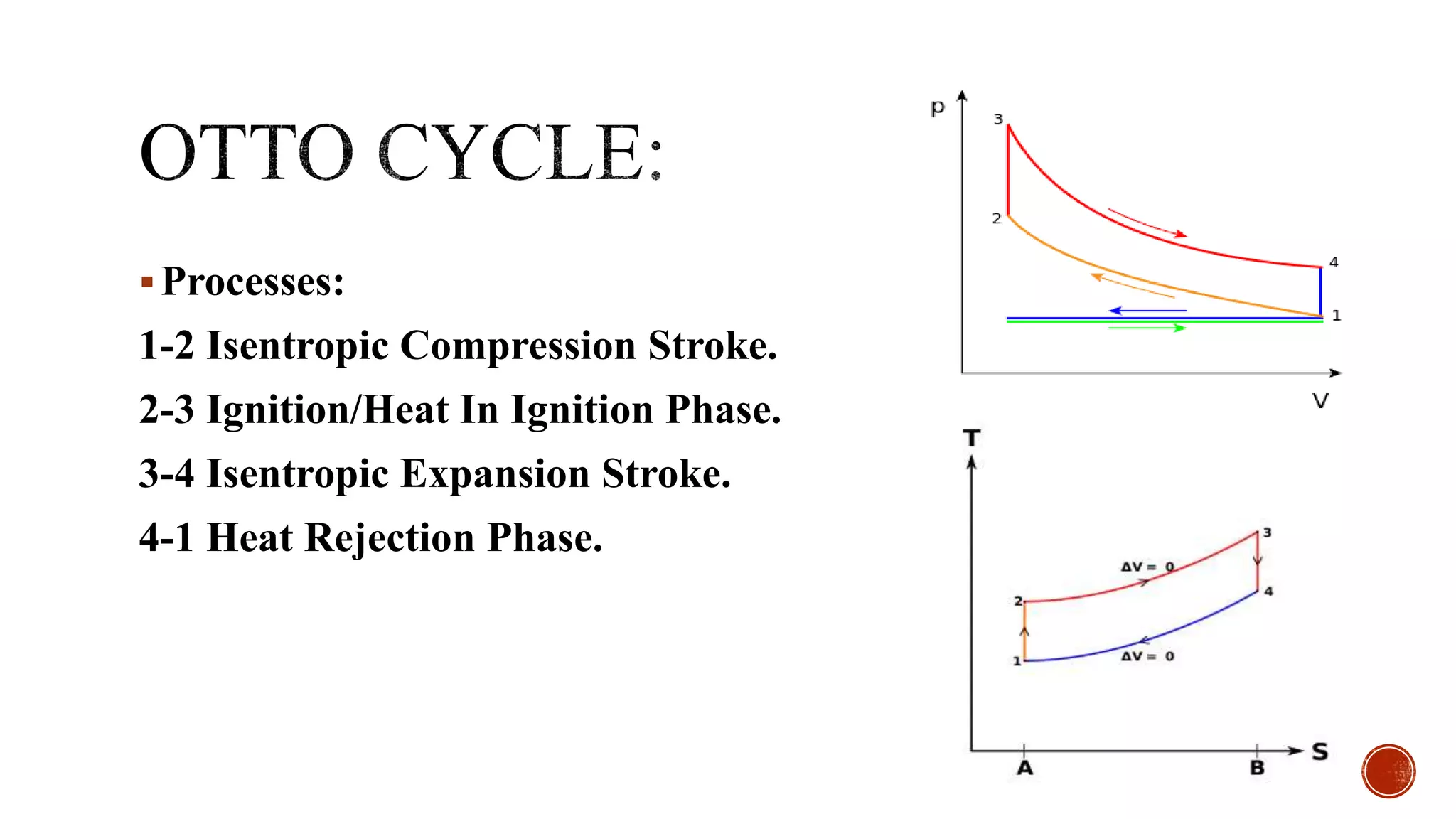
Processes:
1-2 Isentropic Compression Stroke.
2-3 Ignition/Heat In Ignition Phase.
3-4 Isentropic Expansion Stroke.
4-1 Heat Rejection Phase.
Presented by Gulshair
Invented by Rudolph Diesel in 1893.
Also known as constant pressure cycle.
high thermal efficiency and compression ratio (11:1 to 22:1)as
compared with Otto cycle
Diesel is used as fuel in this cycle.
 Diesel cycle is used where more power is needed with less amount
of fuel.
 Mainly used in two stroke and 4 stroke diesel engines.
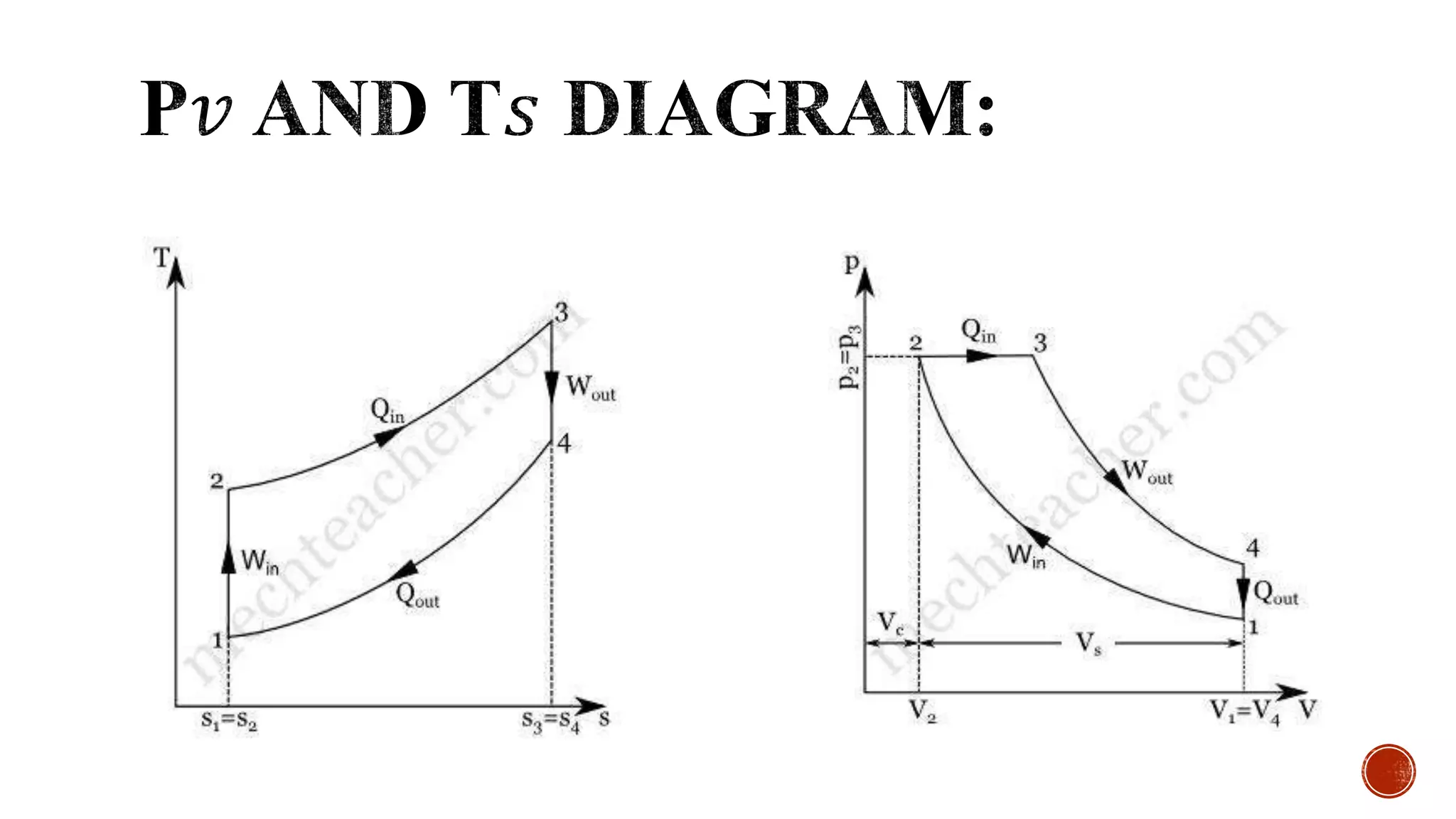
Processes
The 4 process are as follows:
Isentropic (reversible adiabatic) Compression
Constant pressure heat addition
Isentropic Expansion
Constant volume heat rejection
Presented by Noman Asghar
 Proposed by Nicolas Léonard Sadi Carnot in 1824.
 It is an ideal or imaginary cycle.
 It is a reversible cycle.
 ∆𝑆 = 0
 The Carnot cycle is composed of four reversible processes:
1. Isothermal Expansion
2. Adiabatic Expansion
3. Isothermal Compression
4. Adiabatic Compression
Isothermal Expansion Adiabatic Expansion Isothermal Compression Adiabatic compression
 Carnots theorem: No engine operating
between two heat reservoirs can be more
efficient than a Carnot engine operating
between those same reservoirs.
 Efficiency of carnot cycle:
𝑛 = 1 −
𝑇𝐶
𝑇 𝐻
 But Efficiency of heat engine always < 100%
 Heat cannot be completely converted into 100%
work in a cyclic process.
 From here search for second law begins.
• A major application area of thermodynamics is refrigeration, which
is the transfer of heat from a lower temperature region to a higher
temperature one. Devices that produce refrigeration are called
refrigerators, and the cycles on which they operate are called
refrigeration cycles.
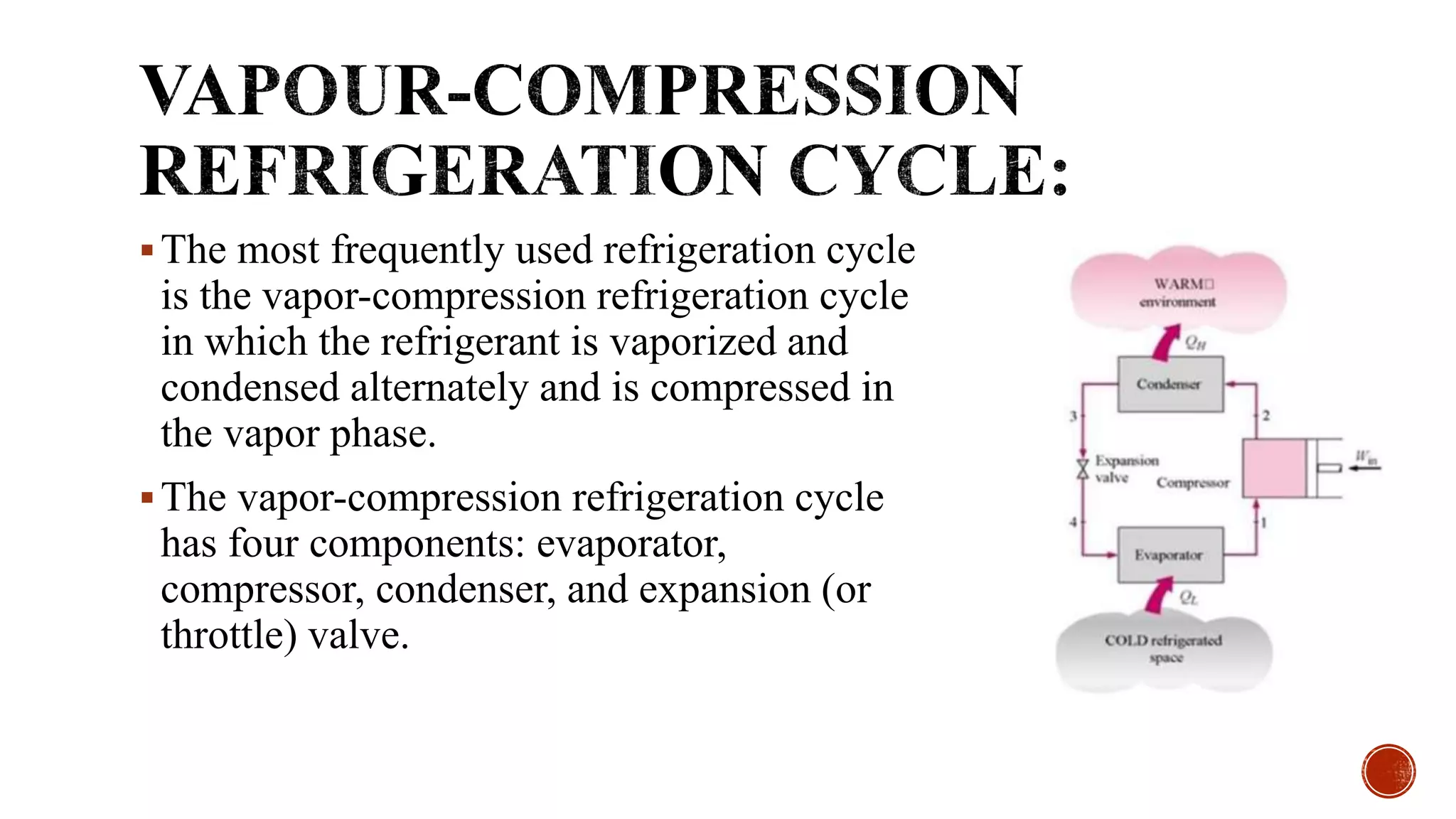
The most frequently used refrigeration cycle
is the vapor-compression refrigeration cycle
in which the refrigerant is vaporized and
condensed alternately and is compressed in
the vapor phase.
The vapor-compression refrigeration cycle
has four components: evaporator,
compressor, condenser, and expansion (or
throttle) valve.
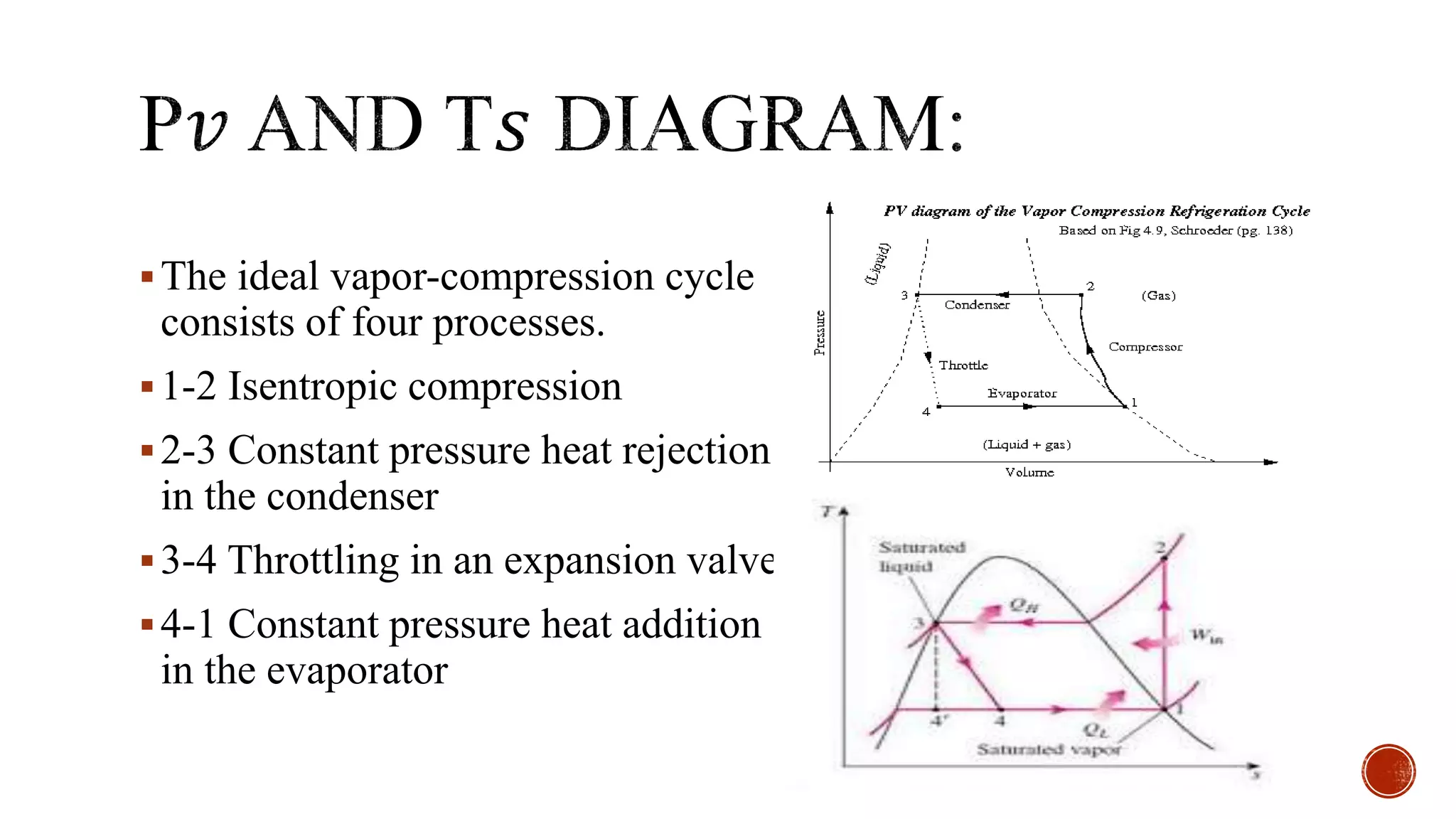
The ideal vapor-compression cycle
consists of four processes.
1-2 Isentropic compression
2-3 Constant pressure heat rejection
in the condenser
3-4 Throttling in an expansion valve
4-1 Constant pressure heat addition
in the evaporator
Presented by Azeem Sarwar
Brayton cycle is named after George Brayton whose describes
working of heat engines.
The original Brayton engine used a piston compressor and piston
expander.
It was constant pressure two-stroke engine.
 A Brayton engine consists of three components: a compressor, a
mixing chamber and expander.
1-2 Adiabatic Process – Compression
2-3 Isobaric Process – Heat Addition
3-4 Adiabatic Process – Expansion
4-1 Isobaric Process – Heat Rejection
 Thermodynamics, an engineering approach by YUNUS A. ÇENGEL and
MICHAEL A. BOLES 8th edition
 https://www.youtube.com/watch?v=2s-zQZ93Lu8
 wikipedia
Thermodynamics cycles

Thermodynamics cycles

  • 1.
  • 2.
  • 3.
  • 4.
    First four-stroke enginewas patented by Alphonse Beau de Rochas in 1861. First working four-stroke engine was built by German engineer Nikolaus Otto. Otto Cycle consist of two isentropic processes and two constant volume processes.  It is an idealized cycle that describes functioning of spark ignition engines. Commonly used in automobile engines
  • 5.
    Processes: 1-2 Isentropic CompressionStroke. 2-3 Ignition/Heat In Ignition Phase. 3-4 Isentropic Expansion Stroke. 4-1 Heat Rejection Phase.
  • 6.
  • 7.
    Invented by RudolphDiesel in 1893. Also known as constant pressure cycle. high thermal efficiency and compression ratio (11:1 to 22:1)as compared with Otto cycle Diesel is used as fuel in this cycle.  Diesel cycle is used where more power is needed with less amount of fuel.  Mainly used in two stroke and 4 stroke diesel engines.
  • 8.
    Processes The 4 processare as follows: Isentropic (reversible adiabatic) Compression Constant pressure heat addition Isentropic Expansion Constant volume heat rejection
  • 10.
  • 11.
     Proposed byNicolas Léonard Sadi Carnot in 1824.  It is an ideal or imaginary cycle.  It is a reversible cycle.  ∆𝑆 = 0  The Carnot cycle is composed of four reversible processes: 1. Isothermal Expansion 2. Adiabatic Expansion 3. Isothermal Compression 4. Adiabatic Compression
  • 12.
    Isothermal Expansion AdiabaticExpansion Isothermal Compression Adiabatic compression
  • 13.
     Carnots theorem:No engine operating between two heat reservoirs can be more efficient than a Carnot engine operating between those same reservoirs.  Efficiency of carnot cycle: 𝑛 = 1 − 𝑇𝐶 𝑇 𝐻  But Efficiency of heat engine always < 100%  Heat cannot be completely converted into 100% work in a cyclic process.  From here search for second law begins.
  • 15.
    • A majorapplication area of thermodynamics is refrigeration, which is the transfer of heat from a lower temperature region to a higher temperature one. Devices that produce refrigeration are called refrigerators, and the cycles on which they operate are called refrigeration cycles.
  • 16.
    The most frequentlyused refrigeration cycle is the vapor-compression refrigeration cycle in which the refrigerant is vaporized and condensed alternately and is compressed in the vapor phase. The vapor-compression refrigeration cycle has four components: evaporator, compressor, condenser, and expansion (or throttle) valve.
  • 17.
    The ideal vapor-compressioncycle consists of four processes. 1-2 Isentropic compression 2-3 Constant pressure heat rejection in the condenser 3-4 Throttling in an expansion valve 4-1 Constant pressure heat addition in the evaporator
  • 18.
  • 19.
    Brayton cycle isnamed after George Brayton whose describes working of heat engines. The original Brayton engine used a piston compressor and piston expander. It was constant pressure two-stroke engine.  A Brayton engine consists of three components: a compressor, a mixing chamber and expander.
  • 20.
    1-2 Adiabatic Process– Compression 2-3 Isobaric Process – Heat Addition 3-4 Adiabatic Process – Expansion 4-1 Isobaric Process – Heat Rejection
  • 21.
     Thermodynamics, anengineering approach by YUNUS A. ÇENGEL and MICHAEL A. BOLES 8th edition  https://www.youtube.com/watch?v=2s-zQZ93Lu8  wikipedia