L.D. COLLEGE OF
ENGINEERING
HEAT ENGINE
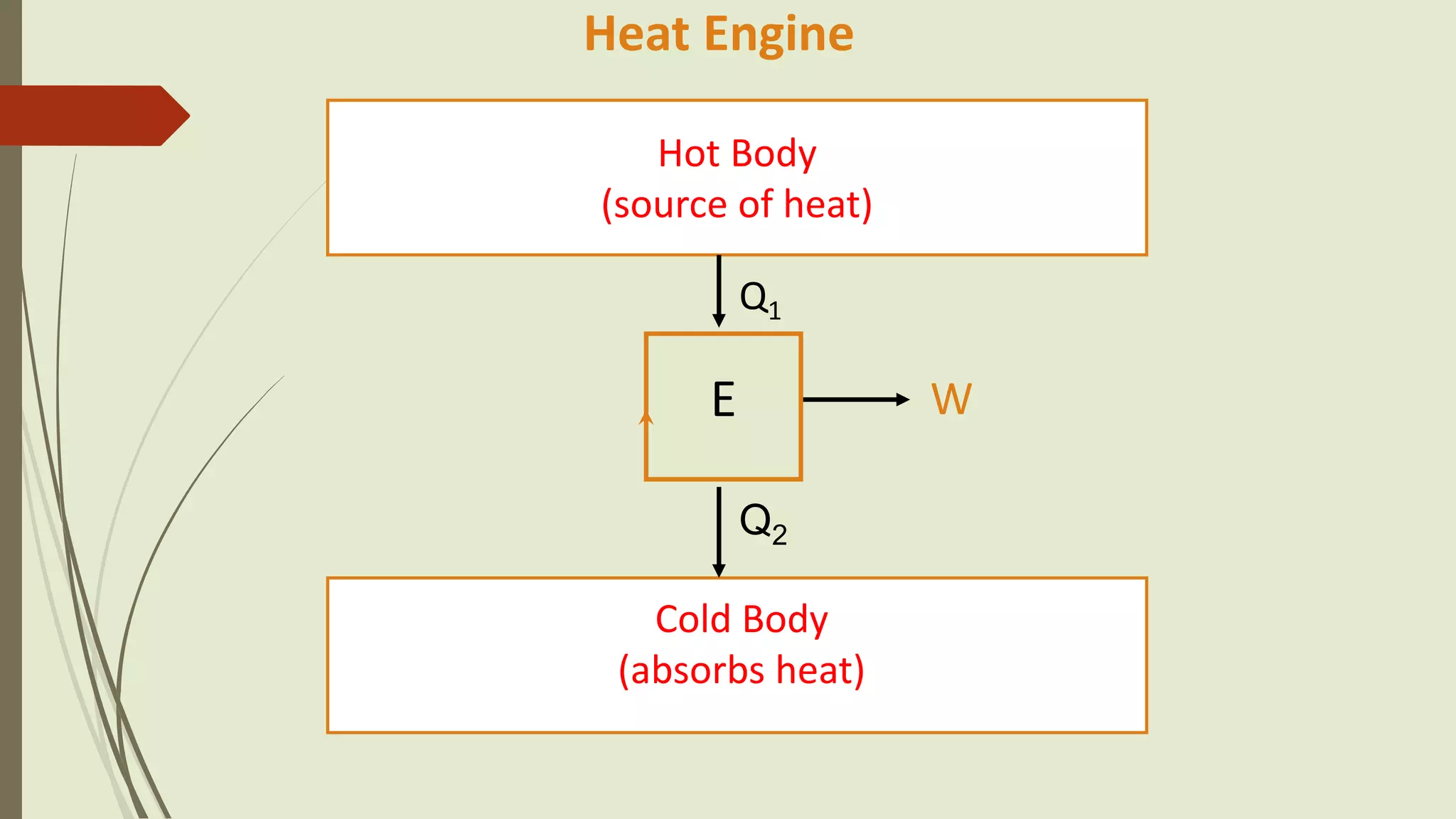
Heat Engine
• A heat engine is a device that absorbs heat (Q) and uses it to
do useful work (W) on the surroundings when operating in a
cycle.
• Sources of heat include the combustion of coal, petroleum or
carbohydrates and nuclear reactions.
• Working substance: the matter inside the heat engine that
undergoes addition or rejection of heat and that does work on
the surroundings. Examples include air and water vapour
(steam).
• In a cycle, the working substance is in the same
thermodynamic state at the end as at the start.
Heat Engine
E
Hot Body
(source of heat)
Q1
Cold Body
(absorbs heat)
Q2
W
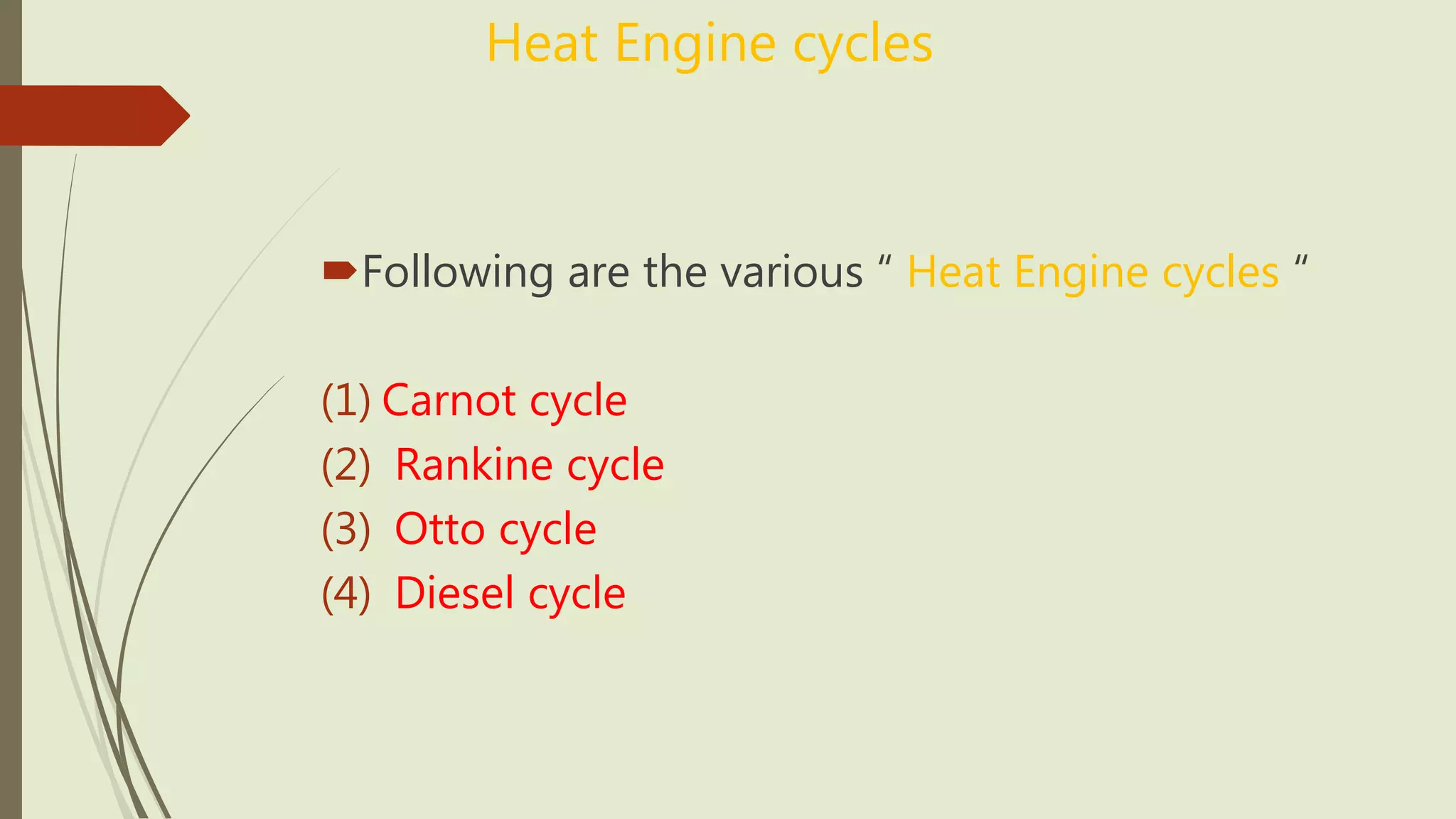
Heat Engine cycles
Following are the various “ Heat Engine cycles “
(1) Carnot cycle
(2) Rankine cycle
(3) Otto cycle
(4) Diesel cycle
 Nicolas Leonard Sadi Carnot in 1824 first proposed
the concept of heat engine working on reversible
cycle called Carnot cycle.
 According to carnot theorem “ No cycle can be
more efficient than a reversible cycle operating
between the same temperature limits. ”
 Carnot cycle is useful to compare the efficiency of
any cycle under condsideration with the efficiency
of a reversible cycle operating between the same
temperatures.
Carnot cycle
Carnot Cycle
Hot Reservoir
T1
Cold Reservoir
T2
C
Q1
Q2
W
Volume
Pressure
•
•
1
2
•
4
T1
Q1
Carnot Cycle
Q2
V
nRT
P 1
=

V
const
P
.
=
T2•3
Q=0
Q=0
V
nRT
P 2
=
W
Isothermal expansion
Adiabatic expansion
Isothermal compression
Adiabatic compression
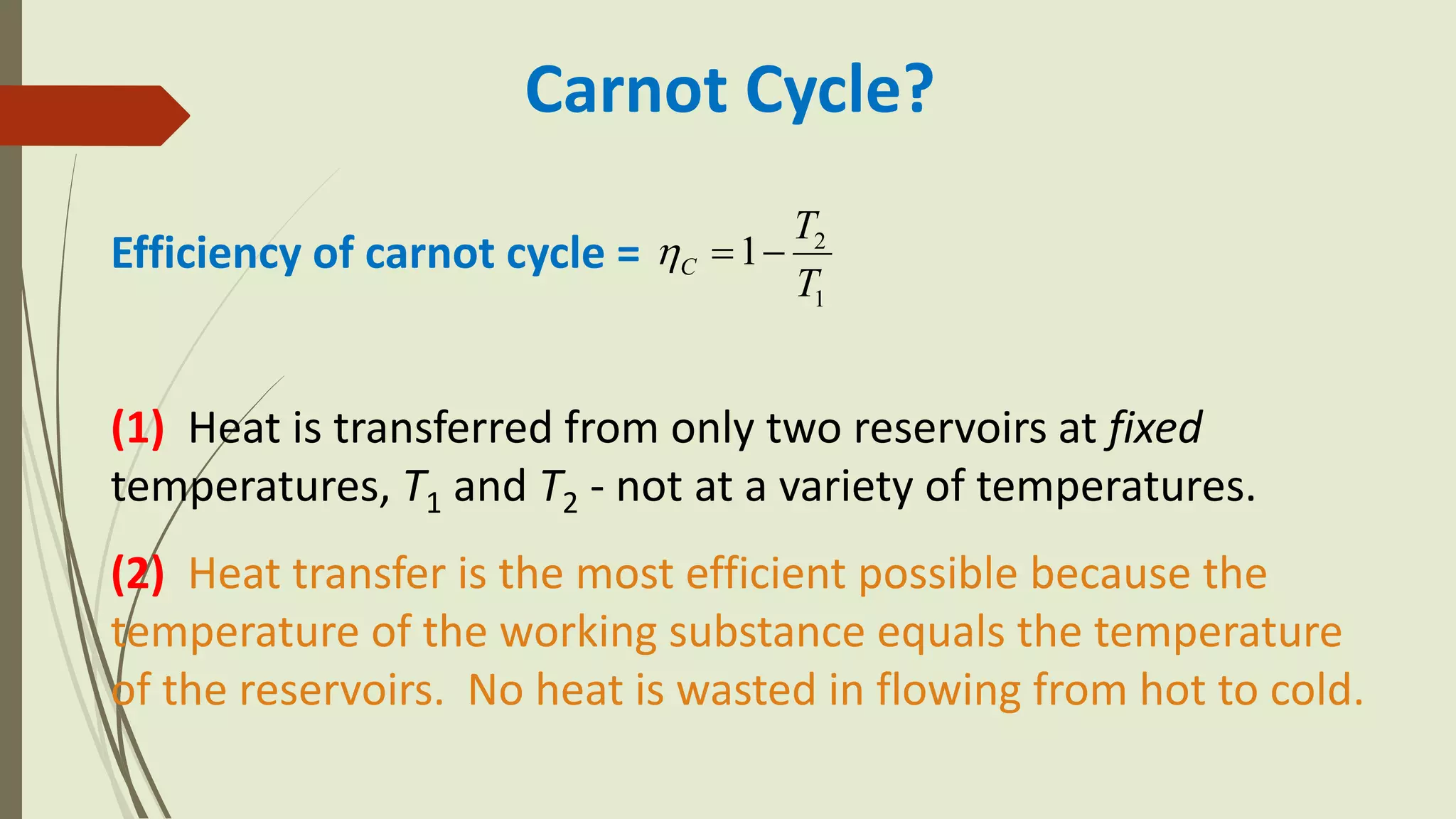
Carnot Cycle?
Efficiency of carnot cycle =
(1) Heat is transferred from only two reservoirs at fixed
temperatures, T1 and T2 - not at a variety of temperatures.
(2) Heat transfer is the most efficient possible because the
temperature of the working substance equals the temperature
of the reservoirs. No heat is wasted in flowing from hot to cold.
1
2
1
T
T
C 
Diesel cycle
This cycle was discovered by a German
engineer Dr. Rudolph Diesel
Diesel cycle is also known as constant
pressure heat addition cycle
The ideal diesel cycle consists of two
reversible adiabatic process, a constant
pressure process and constant volume
process
1
2
34
Pressure
Volume
Qs
QR
Adiabatic process
Diesel cycle
Constant volume process
Constant pressure process
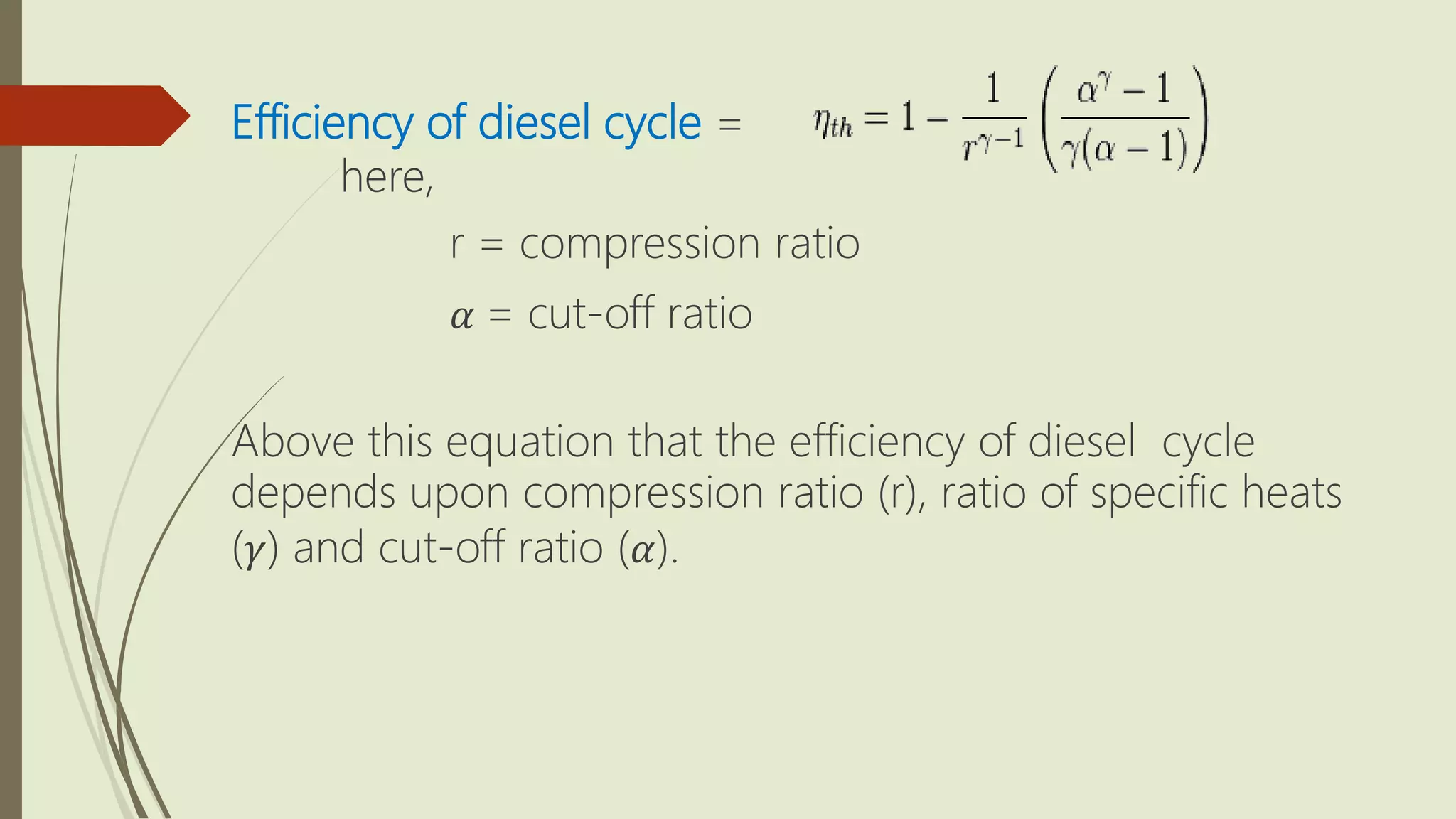
Efficiency of diesel cycle =
here,
r = compression ratio
𝛼 = cut-off ratio
Above this equation that the efficiency of diesel cycle
depends upon compression ratio (r), ratio of specific heats
(𝛾) and cut-off ratio (𝛼).
Otto cycle
Nicholas-A-Otto, A German engineer
developed the first successful engine
working on this cycle in 1876.
This cycle is also known as constant
volume cycle because heat is
supplied and rejected at constant
volume.
Efficiency of otto cycle =
Here,
r = compression ratio
𝛾 = ratio of specific heats
Above this equation that the efficiency of otto cycle
depends upon compression ratio only.
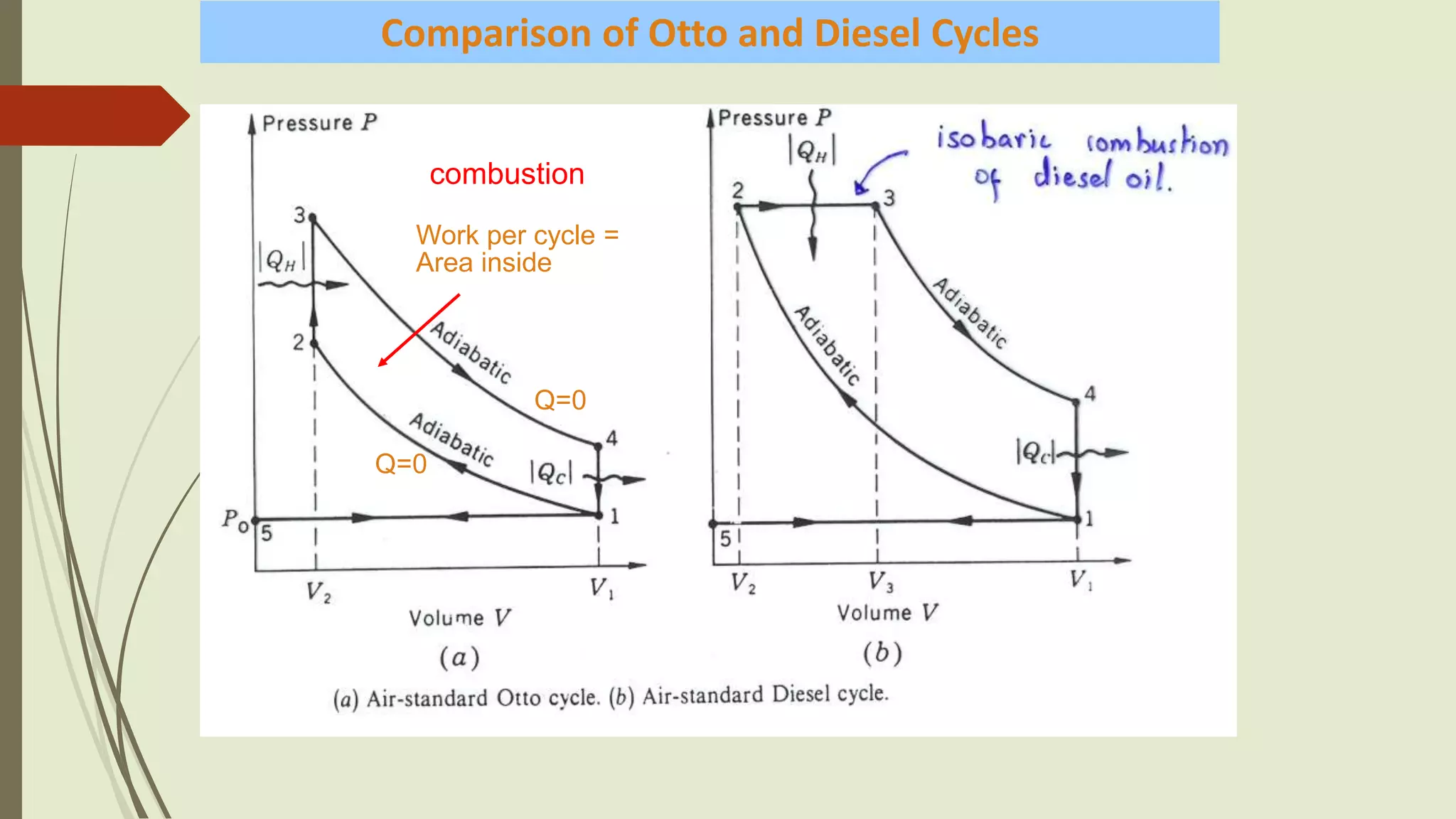
Comparison of Otto and Diesel Cycles
combustion
Q=0
Q=0
Work per cycle =
Area inside
Rankine cycle
It is very difficult to pump mixture of vapour and liquid as
incase of carnot vapour cycle.
This difficulty is eliminated in rankine cycle by complete
condensation of vapour in condenser and then pumping
the water isentropically to the boiler at boiler pressure.
Rankine cycle
Heat engine

Heat engine

  • 1.
  • 2.
  • 3.
    Heat Engine • Aheat engine is a device that absorbs heat (Q) and uses it to do useful work (W) on the surroundings when operating in a cycle. • Sources of heat include the combustion of coal, petroleum or carbohydrates and nuclear reactions. • Working substance: the matter inside the heat engine that undergoes addition or rejection of heat and that does work on the surroundings. Examples include air and water vapour (steam). • In a cycle, the working substance is in the same thermodynamic state at the end as at the start.
  • 4.
    Heat Engine E Hot Body (sourceof heat) Q1 Cold Body (absorbs heat) Q2 W
  • 5.
    Heat Engine cycles Followingare the various “ Heat Engine cycles “ (1) Carnot cycle (2) Rankine cycle (3) Otto cycle (4) Diesel cycle
  • 6.
     Nicolas LeonardSadi Carnot in 1824 first proposed the concept of heat engine working on reversible cycle called Carnot cycle.  According to carnot theorem “ No cycle can be more efficient than a reversible cycle operating between the same temperature limits. ”  Carnot cycle is useful to compare the efficiency of any cycle under condsideration with the efficiency of a reversible cycle operating between the same temperatures. Carnot cycle
  • 7.
    Carnot Cycle Hot Reservoir T1 ColdReservoir T2 C Q1 Q2 W
  • 8.
    Volume Pressure • • 1 2 • 4 T1 Q1 Carnot Cycle Q2 V nRT P 1 =  V const P . = T2•3 Q=0 Q=0 V nRT P2 = W Isothermal expansion Adiabatic expansion Isothermal compression Adiabatic compression
  • 9.
    Carnot Cycle? Efficiency ofcarnot cycle = (1) Heat is transferred from only two reservoirs at fixed temperatures, T1 and T2 - not at a variety of temperatures. (2) Heat transfer is the most efficient possible because the temperature of the working substance equals the temperature of the reservoirs. No heat is wasted in flowing from hot to cold. 1 2 1 T T C 
  • 10.
    Diesel cycle This cyclewas discovered by a German engineer Dr. Rudolph Diesel Diesel cycle is also known as constant pressure heat addition cycle The ideal diesel cycle consists of two reversible adiabatic process, a constant pressure process and constant volume process
  • 11.
  • 12.
    Efficiency of dieselcycle = here, r = compression ratio 𝛼 = cut-off ratio Above this equation that the efficiency of diesel cycle depends upon compression ratio (r), ratio of specific heats (𝛾) and cut-off ratio (𝛼).
  • 13.
    Otto cycle Nicholas-A-Otto, AGerman engineer developed the first successful engine working on this cycle in 1876. This cycle is also known as constant volume cycle because heat is supplied and rejected at constant volume.
  • 15.
    Efficiency of ottocycle = Here, r = compression ratio 𝛾 = ratio of specific heats Above this equation that the efficiency of otto cycle depends upon compression ratio only.
  • 16.
    Comparison of Ottoand Diesel Cycles combustion Q=0 Q=0 Work per cycle = Area inside
  • 17.
    Rankine cycle It isvery difficult to pump mixture of vapour and liquid as incase of carnot vapour cycle. This difficulty is eliminated in rankine cycle by complete condensation of vapour in condenser and then pumping the water isentropically to the boiler at boiler pressure.
  • 18.