Theorizing Digital CulturesGrant Bollmer
download
https://ebookbell.com/product/theorizing-digital-cultures-grant-
bollmer-10472836
Explore and download more ebooks at ebookbell.com
2.
Here are somerecommended products that we believe you will be
interested in. You can click the link to download.
Theorizing Digital Cultural Heritage A Critical Discourse 1st Edition
Fiona Cameron
https://ebookbell.com/product/theorizing-digital-cultural-heritage-a-
critical-discourse-1st-edition-fiona-cameron-56401318
Digital Media Culture And Education Theorising Third Space Literacies
1st Edition John Potter
https://ebookbell.com/product/digital-media-culture-and-education-
theorising-third-space-literacies-1st-edition-john-potter-5887406
Theorizing Digital Divides Massimo Ragnedda Glenn W Muschert
https://ebookbell.com/product/theorizing-digital-divides-massimo-
ragnedda-glenn-w-muschert-33625672
Digital Gambling Theorizing Gambleplay Media Csar Albarrntorres
https://ebookbell.com/product/digital-gambling-theorizing-gambleplay-
media-csar-albarrntorres-46223584
3.
Theorizing Stem EducationIn The 21st Century Kehdinga George Fomunyam
https://ebookbell.com/product/theorizing-stem-education-in-the-21st-
century-kehdinga-george-fomunyam-44992644
Theorizing Sexual Violence 1st Edition Rene J Heberle Editor
https://ebookbell.com/product/theorizing-sexual-violence-1st-edition-
rene-j-heberle-editor-46163554
Theorizing Teaching Current Status And Open Issues Annakatharina
Praetorius
https://ebookbell.com/product/theorizing-teaching-current-status-and-
open-issues-annakatharina-praetorius-48474110
Theorizing Pedagogical Interaction Insights From Conversation Analysis
1st Edition Hansun Zhang Waring
https://ebookbell.com/product/theorizing-pedagogical-interaction-
insights-from-conversation-analysis-1st-edition-hansun-zhang-
waring-48704462
Theorizing In Organization Studies Insights From Key Thinkers Anne
Vorre Hansen
https://ebookbell.com/product/theorizing-in-organization-studies-
insights-from-key-thinkers-anne-vorre-hansen-49833182
Marketing manager: LuciaSweet
Cover design: Lisa Harper-Wells
Typeset by: C&M Digitals (P) Ltd, Chennai, India
Printed in the UK
11.
Contents
About the Author
Acknowledgements
Introduction:Why Theorize Digital Cultures?
Part I Defining Digital Cultures
1. What are Digital Cultures?
2. Culture and Technique
3. Digital and Analogue
Part II Histories, Concepts, and Debates
4. Cybernetics and Posthumanism
5. Identities and Performances
6. Bodies and Extensions
7. Aesthetics and Affects
8. Forms and Judgements
9. Infrastructures and Ecologies
Afterword: What Comes after Digital Cultures?
Glossary
References
12.
About the Author
GrantBollmer’s
research examines the history and theory of digital media. He is the author
of the book Inhuman Networks: Social Media and the Archaeology of
Connection (2016) and has published numerous articles and essays about
digital culture. He has taught in the United States, Australia, and New
Zealand, and is currently an Assistant Professor of Communication at North
Carolina State University and an Honorary Associate of the Department of
Media and Communications at the University of Sydney.
13.
Acknowledgements
There are anumber of people without whom this book would not exist. The
initial idea came from conversations with Chris Rojek. Michael Ainsley and
John Nightingale have helped shepherd it through to its completion. I thank them
all, along with everyone else at SAGE for the work they have done. I began this
book while a lecturer in the University of Sydney’s Digital Cultures programme,
and many of the themes and topics it covers came from discussions with other
lecturers, professors, and graduate students in Digital Cultures and in the Media
and Communications department, particularly Chris Chesher, Kathy Cleland,
Gerard Goggin, Jonathon Hutchinson, César Albarrán Torres, Chris Rodley, and
Kyle Moore. My colleagues at North Carolina State University also deserve
mention, especially Steve Wiley, Nick Taylor, and JeongHyun Lee, along with
my undergraduate students, both at Sydney and at NC State. Katherine Guinness
has read through this manuscript time and again, and, above all, remains an
endless source of new ideas, repeatedly expanding my intellectual world. I’d
also like to acknowledge the undergraduates at NC State and the University of
North Carolina at Chapel Hill who tried out drafts of some of these chapters in
their classes.
14.
Introduction Why TheorizeDigital Cultures?
Theorizing Digital Cultures begins by making a case for the
importance of theory for the study of digital culture. This chapter
claims that theories should be linked to material infrastructures and
physical practices, and also suggests that a major focus of any
analysis of media and technology should be to historicize the present
in order to figure out what is, in fact, new or specific about the
contemporary moment.
TERMS: culture; digital; dominant; emergent; Global South;
infrastructures; materiality; residual
THEORISTS: Marcel Mauss, Raymond Williams
EXAMPLES: Corning’s ‘A Day Made of Glass’; lighting in
photography and biometrics; read receipts; virtual reality
Our daily practices have been remade and reimagined by a wide range of digital
technologies. This refers to the many computational devices that exist around us
– devices that operate through calculation and mathematical processing, be they
smartphones, laptops, or even cars and refrigerators. When we talk of digital
media, we often discuss how computers have transformed the ways we
communicate, create, and relate to one another. Yet, not all computers are digital,
and digital does not only refer to computers. At the same time, the effects of
digital media are not just about human practices and human relations. Digital
media shape a much wider ecology, one in which human beings are only one
part. What does it mean to claim that digital media have transformed our world?
What are these changes? How can we understand their significance? And what
can we do about them?
Theorizing Digital Cultures introduces many key claims about how digital media
relate to the thing we call culture. It explains how digital media – in providing a
material, infrastructural basis for practices and interactions – affect identities,
bodies, social relations, the arts, and the environment. These effects are neither
neutral, nor are they inevitable. Rather, the relationship between digital media
and culture is political. Digital media create differences and oppositions that
must be negotiated. They involve power relations that shape what human bodies
are and do and legitimate these relations as neutral or natural. This book is
designed to provoke questions about our current technological reality, not merely
to understand, but to think about how best to change ourselves and our
technologies – hopefully for the better, in ways that encourage a more
egalitarian, democratic, and just world.
15.
It may bebest to begin with a concrete example, working our way out to some of
these more abstract issues. The name of glass manufacturer Corning may be
familiar because of consumer kitchen products like CorningWare and Pyrex. Yet
Corning has sold off these well-known brands to focus their attention elsewhere.
Instead of cookware, Corning now makes glass for digital technologies – from
computer and television screens, to touchscreens and fibre optic cables. Notably,
Corning produces the glass touchscreens for Apple products (Apple 2017).
These technologies are already ubiquitous. Yet Corning imagines that our near
future will be filled with even more screens. In 2011, they released a
promotional video entitled ‘A Day Made of Glass’. This ad depicts a world filled
with interactive glass touchscreens inserted into bathroom mirrors and desks at
school. For Corning, a refrigerator is not only an appliance for the storage of
food, or a place to display photos. The image reproduced here, for instance,
depicts a kitchen counter as a digital screen, with video and weather streaming
live as one prepares breakfast on the same surface (Figure I.1). A fridge, in
Corning’s future, is a screen for digital information, replacing magnets and paper
with interactive images. The fridge, like the mirror and countertop, is a place for
social networking and website browsing. Corning’s goal with these videos is to
emphasize glass as an interface for digital media. The slogan that appears in
these videos, ‘Enabling a future of communication, collaboration, and
connectivity’, suggests that Corning’s glass – which can conduct electricity and
detect human touch – is an essential mediator linking physical space and a
seemingly immaterial, computational world of digital data.
Figure I.1 Corning’s ‘A Day Made of Glass’
Source: YouTube.
Often, the goal of interface design is to make technologies invisible, blending
into the everyday architecture of our lives. Yet we only interact with digital
media based on the physical qualities of our technologies. If you crack your
16.
iPhone screen, thejagged edges you run your finger across will remind you that
you’re not touching information – you are touching broken glass. The ability to
experience digital information depends on the material ways technologies like
glass have been reinvented to sense human touch, and software has been
designed to respond to tactile interactions. At the same time, our practices,
gestures, and bodies adjust depending on how we interact with digital media,
especially as new technologies gradually vanish from our conscious awareness.
Many of the innovations depicted in ‘A Day Made of Glass’ are variations on
digital media we already use. It does not depict a radically different future. It
shows us how our lives have already been shaped by digital interfaces. Who we
are, how we come to understand our identities and bodies, and how we relate to
others are all influenced by digital media. These relations are a product of the
physicality of technology. Our technological surfaces – be they an interactive
glass countertop or an iPad – obscure a large number of complex processes, in
which technologies are designed to respond and communicate throughout the
planet, collecting, storing, analyzing, and transmitting information at a speed that
seems instantaneous, all while withdrawing into the background of our world
and remaining an imperceptible part of the environment.
Think about the most basic aspects of your life, from communication between
friends and family, to shopping, to work, to exercise, to relaxing and enjoying
entertainment. Digital media have transformed each of these practices. It’s
difficult to find something that, in some way, hasn’t been affected by digital
media. Our lives have been shaped by the physical capacities of digital
technologies to record and analyze the data our bodies generate in daily life.
Data are used to suggest ideal or optimal ways of acting, guiding our conduct in
the name of efficiency. The ability to successfully navigate work and personal
life depends on effortlessly using digital media. Maintaining friendships and
relationships often requires the management of information. Getting – and
keeping – a job may depend on one’s ability to use social media and create an
individual brand that has value, in and of itself (Gregg 2011; Marwick 2013).
Even sleep is modified by technologies that manage time and the pace of our
body’s internal clock (Crary 2014; Sharma 2014). This extends from wearable
devices that quantify our movements (and track when we wake and when we fall
asleep), to apps that analyze how well we sleep throughout the night. Sleep
Cycle, an example of one of these apps available as I write, has you place your
phone on your bed next to your pillow. Using motion data recorded by an
iPhone, the app analyzes how well you sleep based on your movements in the
night, determining an optimum time for you to wake up. Another, SleepBot, in
addition to motion data, uses sound recording to note if you’re having breathing
17.
problems, or ifnoises in the night happen to be disturbing your rest.
At the same time, social media corporations assume you have, to paraphrase
Facebook CEO Mark Zuckerberg, one ‘authentic’ identity, which can be
understood and managed through uploaded data. The data you generate from the
mere use of digital media commodifies your body and identity. Your online
activities are tracked through ‘cookies’ – small pieces of data that are sent to
your computer while you browse the internet, designed to record your actions
and choices – and other innovative methods for capturing and knowing interests
and tastes, often without your awareness. These technologies are used to create
databases of consumer data, which are analyzed and interpreted (usually though
computational data analytics software) to predict and control future behaviour
(Andrejevic 2013; Turow 2011). The ‘big social data’ produced through digital
media (Coté 2014) are assumed to represent you and your abilities, to such an
extent that your Facebook account could eventually play a role in calculating
your credit score, determining whether or not you qualify for a credit card, loan,
or mortgage (Taylor & Sadowski 2015).
But we can neither limit the impact of digital media to personal identities or
individualized actions, nor can we restrict digital culture to the interactions we
have over social media. Digital technologies have fundamentally changed how
we approach ‘old’ media. Reading has proliferated with digital media, if in ways
that are vastly different from printed books (Hayles 2012). Netflix and other
online streaming services have changed how film and television are distributed,
consumed, and produced, reinventing how we share and talk about the shows we
watch, along with the industrial context of media production and media
ownership (Lotz 2014). Even more broadly, creative expression often employs a
‘postdigital’ style that reflects on the limits and potentials of digital technology
(Berry & Dieter 2015), reliant on software packages like Autodesk Maya,
Ableton Live, and Adobe Photoshop, which are often distributed through
informal, piracy-based economies via peer to peer digital sharing, as are many
songs, books, and videos made today (cf. Borschke 2017). Software plays a
massive role in shaping culture, transforming almost all previous forms of media
and technology, and yet is rarely thought about at all (Manovich 2013).
The enduring legacy of digital media is to imagine what we see on the screen of
a computer as an ‘immaterial’ space permeated by the free flow of information
and communication, untethered from the ‘real’, physical world, enabling all sorts
of ‘virtual’ possibilities. The internet, we have been led to believe, is a network
that spans the totality of the globe, transcending distance and accelerating time
to perpetual instantaneity. The perfectly reasonable question, ‘Where is the
internet?’, has often been mocked as something only the most technically
18.
illiterate could possiblyask. The claim that the internet is ‘a series of tubes’, a
phrase coined in 1996 by United States Senator Ted Stevens, a Republican from
Alaska, has routinely been ridiculed, even though, in many ways, the internet
can be described as a series of tubes (Blum 2012).
We often understand the internet as a placeless, ephemeral ‘thing’, best
embodied by the popularity of the ‘cloud’ metaphor to describe data storage. But
these beliefs are seriously misguided. In spite of these popular claims about
virtuality and ‘clouds’, the above changes are all an effect of the materiality of
digital media. They result from what digital media do at an infrastructural level.
Material infrastructures – the screens, wires, servers, protocols, and software of
digital media – guide the global circulation of capital, communication, and
transportation, underwritten by algorithms that sort, control, and manage bodies
and commodities.
Our lives rely on these digital infrastructures. Our cities and houses are
becoming ‘smart’, just as our phones already have, by adding sensors and
software into buildings, streets, and public spaces. Our environment is
permeated with cameras and computers that are on and connected, gathering data
and responding to changes in real time. Our appliances, from our refrigerators to
our cars, increasingly depend on software updates managed through wireless
connectivity, becoming part of ‘the internet of things’ – a connected network of
everyday objects linked to the internet that enables the management and transfer
of data by things like lightbulbs, thermostats, and ovens. This global system of
consumer devices requires the proliferation of routers and relays, connected to
distant server farms that are themselves connected through a surprisingly small
number of undersea cables (Starosielski 2015).
Digital media consume a massive amount of energy, create an ever-expanding
amount of toxic waste, devour a staggering quantity of the world’s raw materials,
produce a class of labourers whose livelihoods depend on scavenging waste in
the Global South, and rely on supply chains that exploit workers to produce
massively expensive yet ultimately disposable technological devices (Maxwell
& Miller 2012; Parikka 2015). Digital media influence a wide range of social
and cultural relations, from daily interactions to the reshaping of the
environment and labour throughout the world. So how can we possibly
understand these changes? How might we have an impact in doing something
about them?
‘Theory’ for Digital Cultures
Digital media infrastructures require theory to explain their significance and
their politics. There are many explanations for the changing relationship between
19.
the digital andthe ‘whole way of life’ we refer to as culture (Williams 1983a:
xvi). This book is an introduction to some of the arguments about these changes.
It approaches theory as a set of tools we can use to understand ordinary practices
and beliefs, with the specific intent of intervening in or changing the everyday
world around us (cf. Nealon & Giroux 2012). This book attempts to think
theoretically about a series of issues and problems provoked by digital media.
Different problems, after all, require different theoretical approaches. This book
is designed to give you the materials for thinking about and transforming your
own daily life, and hopefully the lives of others, especially as the most
fundamental, basic facts of your existence are permeated by digital media. In this
book, theory is not something divorced from practical reality. Theory is not an
intellectual activity that has little relevance beyond the walls of a university.
Instead, theory is a way to understand the world and intervene in it.
In many ways, you are already engaged in the practice of doing theory. Everyone
does theory in some way or another. You have a number of ideas about how the
world works, of how people think, of what’s right or wrong, of what’s good or
bad. These beliefs are all theories about your world and how you relate to others.
Your beliefs are tied to how you behave and act, although they may also
contradict how you act. Often, many of these beliefs are not things you
recognize consciously but are what you understand as common sense. Even
more subtly, they are built into the actions you perform when you train your
body to do something, regardless of any conscious awareness of this ‘theory’.
This way of defining theory may seem strange, because it emphasizes how
thought cannot be distinct from a set of practices.
A way of framing this can be seen with how, in French, there’s a distinction
between two kinds of knowledge: savoir and connaissance. Connaissance refers
to ‘knowledge of’, as in ‘I know about you’ or ‘I know about philosophy’. Most
of the time, in English, this is what we mean by theory or knowledge, and is
what we mean when we talk about beliefs or thoughts. Savoir, on the other hand,
refers to knowledgeable practice, of knowing ‘how to’. Savoir is still knowledge,
and still about theory, even if it may not clearly be about ‘thought’. And, while
it’s important to differentiate between these kinds of knowledge, they are often
linked. ‘Knowledge of’ and ‘how-to’ are associated when we think of what
theory is and does.
If you’re an athlete or a musician, for instance, you’ve long practised a specific
way of performing a sport or playing a musical instrument. This is done with the
assumption that there is a best way to perform a specific act. I may ‘know of’
many different strategies for playing a game, for instance. But these strategies
only work if I also know ‘how to’ actually perform them. These different
20.
strategies are theories,and they aren’t always things you consciously
contemplate. You practise so you can perform without thinking about your
actions. But specific techniques change over time, even if significant changes
may not be noticeable in one’s own lifetime.
Many advances in the history of sport or music come from people challenging
assumptions, asking why we accept a specific practice or technique as best. Why
do we think of one way of running as better than another? Why do we assume
that a specific way of performing music sounds good whereas another way
sounds bad? The great anthropologist Marcel Mauss once talked of how he
learned to swim in the early twentieth century: ‘In my day, swimmers thought of
themselves as a kind of steamboat’, in that they’d swallow water and then spit it
out again (1992: 456). Clearly, we no longer swim like this. A different theory
now informs how we swim, which results in different practices. When a new,
improved way of swimming began to be taught in Mauss’s own lifetime, he
found it difficult, if not impossible to forget the way of swimming he had learned
in his youth. Today, the influence of technology on competitive swimming is
fairly obvious. Many Olympic records have been broken in recent years, in part
because of specific swimwear fabrics designed to reduce drag in the water. In
2016, Olympic swimmers like Michael Phelps engaged in the traditional Chinese
medicine therapy called ‘cupping’, which involves suctioning glass cups onto
one’s skin for several minutes for its supposed therapeutic and competitive
benefits, although cupping has been around for millennia and is regarded by
many as pseudoscience. The theory has changed, but that theory never exists
completely outside a performed, material act. What we think and what we do are
linked, even if they may contradict each other as well. We may know that a
different technique may be more efficient or safer, and yet we may still act
differently.
This is not to imply a kind of radical relativism, in which value depends merely
on individual judgement. Sometimes there are clear ways of making judgements.
One way of performing a specific sport can be judged according to who wins
and who loses a competition – and in terms of the physical effects on human
bodies. A method for running that consistently results in victories but
permanently damages a runner’s legs isn’t very good, although this would
involve ethical and moral questions about the value of a human body in relation
to competition. Mauss’s old method for breathing underwater would result in
much slower swimming, along with the unpleasant potential of accidentally
inhaling water. Our practices change, along with the theories that inform our
practices. The ways we have of evaluating these practices and theories also
change over time. In understanding our present, we should think historically,
21.
questioning where ourtheories came from, and what assumptions we’re making
if we take them as natural.
Things are rarely clear when we turn to judging politics and the arts. What
differentiates ‘high culture’ from ‘low culture’? Is it about specific kinds of
technical mastery? Is ‘good art’ a result of the skill of the artist, their command
of the paintbrush or camera? Or is ‘good art’ about creative originality? About
how a specific idea has never been expressed before? Or is it about popularity?
Is ‘good art’ merely what’s the most popular? Is it simply about the tastes rich
people happen to have, when compared to the tastes other people happen to
have? Where did these ideas about high and low culture, or good and bad art
come from? The way we judge art often relates to abstract ideas we have about
what ‘good’ art is and what it is supposed to do. What do these judgements do in
terms of shaping practices and politics today? What if a different way of
understanding the social and political function of art was better, or merely
different?
We can think about our practices with digital media in a similar way. Theories
inform how we interact online, even if we may not consciously recognize them.
For instance, if you send a message with Facebook’s Messenger app, it will tell
you if and when it is seen by the recipient. This is called a ‘read receipt’, and
most forms of digital messaging, from email to Snapchat, have the capability to
generate read receipts even if few do this in practice. What does it mean if a
recipient doesn’t respond immediately, even if Facebook tells you that they’ve
seen your message? Your assumptions are informed by theory, in that they are
guided by abstract beliefs about how people use Facebook to communicate, and
what it means when people use Messenger in a specific way. This theory may
also affect how you respond to incoming messages over Facebook. Maybe you
stop looking at Messenger until you’re ready to respond, because you know full
well that in looking at a message, the other person will then know that you’ve
seen it and may make assumptions about why you haven’t responded
immediately.
Our practices, be they playing a sport or using Facebook, are all bound together
with theories, which are themselves bound together with techniques and
technologies that mediate relations. Practices are ways of acting that express
larger, abstract beliefs about the world. This means that theory is not just
something you have in your mind. Theory is a model for action, of how to
understand and make sense of the world in which you live. To change these
practices – to question reality, to invent new techniques, to merely create
something different – means looking towards theory with the goal of doing and
changing things. So, to give a concise definition, in this book theory is a
22.
process. It isan abstraction that informs habits and practices. And, most
importantly, theory changes based on context. Critically evaluating theory
enables us to modify our old habits and practices, or even produce new ones.
This does not mean that we can think of ourselves as autonomous individuals,
where our interventions end at a mere change of personal behaviour, or that
personal beliefs about the world are good enough to explain and intervene in
what’s actually happening around us. Theories should attempt to explain and
intervene in larger contexts. They are based on evidence that can generalize
beyond a single person’s experience. They have an explanatory force that
differentiates them from beliefs. The power of a good theory is found in how it
explains and provides a new way of thinking about a range of everyday
practices, often with the political intent of reinventing those practices. Theory is
neither a description nor a subjective judgement. Theory comes from an
examination of a broader context, and attempts to invent a way of reframing how
we understand and act within that context.
Today, this means directly engaging with a context defined by technology. As
the philosopher Avital Ronell once remarked, ‘There is no off switch to the
technological’ (1989: xv). The influence of digital media does not disappear if
we happen to turn off our smartphone and place it in a drawer, out of sight.
Infrastructure may mostly be invisible, but just because we don’t see it doesn’t
mean it’s not there. The internet does not stop shaping how we think of ourselves
and others whenever we may be ‘disconnected’. There is no ‘digital detox’ that
comes from taking a break from our devices. Our technologies still shape the
larger context in which this break may occur. Unless we’re willing to go
completely ‘off the grid’ and live a truly alternative lifestyle detached from the
rest of society (which is always a possibility, I might add, if one that requires the
maintenance of specific boundaries that may not be clearly marked), we
inevitably return to a world shaped and defined by digital media. Even then,
planetary transformations associated with global warming are directly
intertwined with our use of digital media, the energy it uses, and the waste it
produces. The air around us is filled with radio waves and wireless signals, even
if we never use a mobile phone or Wi-Fi.
Once we get to a scale that moves beyond individual behaviour and awareness,
there is no complete escape from digital media. Thus, we must turn to theory to
understand the specific influence of digital media on our lives today beyond a
simplistic view that treats technologies as objects humans use, subject to human
will. We must move beyond a narrow perspective that treats our own individual
efforts in controlling and managing the influence of technology as good enough
to mitigate against the effects of technology throughout society. The world is
23.
much larger thanwhat we observe and know from individual experience, and
any intervention must occur at a scale beyond that of the individual – and any
attempt at theorizing must move beyond individual behaviours, beliefs, and
feelings.
This book claims that theorizing digital cultures is a necessary task in
understanding both the specific and general effects of digital media. To theorize
is to look out at our world, at what appears to be empirically given and true, and
ask: How did this world come to be? What assumptions am I making when I
accept something as common sense? To theorize is to understand the historical
processes that created our world, the implicit understandings that guide what
appears as normal or natural, and to demand: How could this world be different?
What would need to happen to make it different? Theory is a necessary detour in
asking these questions, a detour through abstraction that is directed towards
understanding the concrete reality of the world and how to change it (cf. Hall
2003).
This means understanding technologies not as neutral objects, but as sites of
political power. It means examining how technologies treat different bodies
differently, positioning some in authority and some to be controlled and
managed. This is the case for even the most seemingly neutral aspects of media
and technology. You might not think that lighting in photography and film, for
instance, has any political valence. Yet lighting has long privileged white bodies
over black ones, a bias that emerges from the physical quality of film stock, the
techniques used in cinematography, and assumptions that then guide practices
devoted to realism in photography and cinema. As Richard Dyer has elaborated:
‘The photographic media and, a fortiori, movie lighting assume, privilege and
construct whiteness. The apparatus was developed with white people in mind
and habitual use and instruction continue in the same vein, so much so that
photographing non-white people is typically construed as a problem’ (1997: 89).
Practices in photography and cinema are a combination of the material, physical
qualities of media (film stock, lighting, the physical reflectance of skin, the way
the medium stores light, etc.) and beliefs that inform the way media is employed
(typically, racist beliefs that position white bodies as more significant than black
ones, where, consequentially, the medium obscures black bodies through the use
of lighting in photography and film).
These biases continue in the development of digital biometric identification
technologies used in both airport security and social media, which likewise
privilege some bodies over others in how technologies are designed. They are
designed to recognize white faces, while the faces of those who are not white
may not be clearly identified. Given how systems are programmed, this may
24.
mark a non-whitebody as ‘risky’ simply because the technologies in use cannot
properly identify the features of that body (Gates 2011; Magnet 2011).
This is not limited to race, or even traditional understandings of surveillance and
control. For instance, software designed to detect pornographic images (usually
to automate censorship on social media) is programmed with a specific model of
what pornography is in the first place, which tends to reproduce the beliefs and
desires of those designing the software. ‘Computer scientists, an
overwhelmingly straight male population, are creating algorithms to identify a
narrow, conservative, straight male conception of pornography’ (Gehl, Moyer-
Horner & Yeo 2017: 531). The way that software and hardware are designed
records bodies differently based on a combination of the physical properties of
media and culturally normative values perpetuated and enforced by media.
Technologies emphasize some acts, behaviours, and bodies while discouraging
or punishing others. Digital media destroy the environment while suggesting our
data are somewhere in the cloud and our devices must be shiny, new, and cool to
be of value. And, too often, the inevitability of technological progress is
assumed to be so natural that there is no alternative to more devices, more
media, and more information. To understand our current context requires a
serious look at how technologies enable or prohibit specific acts, how they
transform identities and bodies, how they reshape creative expression. Where did
these practices come from? What do they do? How can we change them, without
making the incorrect assumption that technologies are neutral?
The Importance of Dated Examples
The concepts in this book are explained through examples, many of which are
either recent or are only a few years old at the time I write this. Some of these
examples may strike you as dated. Even if they do not now, in just a few years
they will be. This is inevitable whenever we talk about digital media. What
seems to be significant now will become something obscure in mere months. So
why should we be concerned with dated examples?
Dated things give us an historical perspective on current events. As the
renowned literary critic Fredric Jameson once proposed, ‘Always historicize!’
should be an imperative for any attempt at cultural analysis (1981: 9).
Understanding our present requires thinking about the past, which allows us to
better discern what’s new about our current moment. What might be genuinely
new may not appear to be very flashy or interesting, and thus may be difficult to
notice as our attention is drawn towards something that appears particularly
strange but is in fact quite common in the history of media and culture.
For instance, the fact that there are people who have died and have active
25.
Facebook accounts currentlyseems weird and new. Yet, one of the uses of
recording technologies going back to the nineteenth century has been to record
and communicate with the deceased (see Bollmer 2016: 115–133; also see
Andriopolous 2013; Peters 1999; Sconce 2000). Throughout the history of
technology, one function of media has been to make someone who died reappear.
There’s a longstanding link between media, ghosts, and theological beliefs about
the afterlife (most obviously seen in how a medium is also someone who can
communicate with spirits). The strangeness of seeing someone who has died on
social media is not a particularly new feature of digital media. This example
demonstrates how we have to think of digital culture as a combination of the old
and the new.
One of the major figures who guided the development of cultural studies,
Raymond Williams, divided culture into the categories of dominant, residual,
and emergent. We can use these three categories to help us avoid mistaking
something that may be very old as new.
Dominant refers to that which is the commonly accepted logic at any one point
in time. Yet this dominant does not characterize everything (Williams 1977:
125). There are always points that escape this dominant, points that cross the old
and the new – the residual and the emergent.
Residual refers to that which ‘has been effectively formed in the past, but it is
still active in the cultural process, not only and not at all as an element of the
past, but as an effective element of the present’ (Williams 1977: 122). There are
two distinct kinds of history through which we can identify the continued effects
of these residual elements of culture (see Jameson 1981: 9).
First, we have a history of things and objects. This aspect of our history is
relatively simple. Many of the technologies we use are quite literally old. From
television and telephone wires to the internet, our present is made up of
infrastructures that extend back decades – if not centuries – into the past. Power
grids in the United States, for instance, are regularly criticized for relying on
ageing infrastructure, built as they are upon dated engineering ideas and obsolete
organizational structures. And even new trends are often reliant on old media.
People still fetishize vinyl records, and old typewriters seem to be interesting to
some. Our present is permeated with media and objects that are ‘residual’ (cf.
Ackland 2006).
Second, there are the narratives we tell about these media, which are also often
exceptionally old. We may decry how people are distracted by their
smartphones, disconnected and detached from the surrounding world. Fears of
distraction, however, date back to at least the late 1800s and early 1900s (see, for
instance, Crary 1999). These same fears characterized how people discussed, for
26.
instance, the kaleidoscope.The invention of the kaleidoscope coincided with
fears of distraction in a world of spectacular images, in which the kaleidoscope
was thought to be a rejection of reality (Farman 2015). Many of our beliefs
about the value of connectivity can be linked to changes around the same time
(Bollmer 2016; Otis 2001). Stories about the internet and how it transcends
space and time date back to Victorian-era claims about the telegraph (Carey
1989; Standage 1998). Worries that new technologies will destroy our memory
echo claims made in Ancient Greece, most notably by Socrates in the dialogue
Phaedrus, in which Plato complains of writing destroying memory.
Digital media are made up of many very old things, both through physical
infrastructures and larger belief systems. So, while we tend to celebrate the
newness of anything associated with digital media, there’s a lot of residual
aspects that shape digital culture. Understanding technology in the present
requires a view that looks towards the past, otherwise we mistake something as
new when it’s actually residual. It is only by looking towards the residual that we
can understand what Williams refers to as the emergent, the ‘new meanings and
values, new practices, new relationships and new kinds of relationships [that] are
continually being created’ (Williams 1977: 123). We can only understand what’s
new by looking at what’s old.
Also, the persistence of older technologies and narratives often transform –
somewhat surprisingly – something that was once residual into a newly emergent
paradigm. Until a few years ago, it was generally thought that the hype
surrounding virtual reality had died. The fantasy of being in a simulated body in
a simulated space, a fantasy that drove a lot of technological development in the
1990s, seemed to be a relic of that era. Yet, with the rise of the Oculus Rift, a
virtual reality headset initially designed for videogames, the promises of virtual
reality appear to be coming back into style. In 2014, Facebook purchased the
Oculus Rift, promising at their annual F8 conference that the future of social
media is intertwined with virtual reality. What once was thought to be dead and
gone has returned with a surprising vengeance. It is possible that the VR hype
that exists as I write this is little more than hype, however. The Oculus Rift has
not been nearly as popular as anticipated, and it seems that excitement about VR
may vanish yet again.
Virtual reality is not new. It is a product of a history of simulation that goes back
to Victorian-era toys, the stereoscope, and the flight simulator (see Hillis 1999).
Its promises repeat narratives of transcendence that have long characterized
discussions of new technologies – discussions we will review in the next
chapter. But to understand the persistence of virtual reality requires us to look
back to both the history of technology and the history of narratives told about
27.
technology. This meansthat we should not dismiss any example as merely dated,
but as part of our shared technological history – and looking back at that history
will reveal how many of our narratives recur over and over again, often with
subtle differences. Examining this history can disclose points in the past when a
different future was imagined, revealing ‘progress’ to be not a single line that
moves forward to the present, but a series of intersecting trajectories, the
movement of which is marked by contingency rather than certainty – our current
moment is, in many ways, based on an accumulation of accidents and errors.
Embracing this view opens up new pathways and ideas in the present, and new
ways to challenge the ‘naturalness’ of our digital culture (Parikka 2012; Zielinski
1996).
There is another, more simple reason to embrace dated examples. This book
serves as a document of the moment in which it was written. As such, this is a
way of recording information about the present and the beliefs and claims
through which we make sense of technology. The examples chosen are not
neutral but are part of the process of theorization that I am attempting to
describe. So, we should always embrace these ‘dated’ examples because, in
illustrating concepts, these examples serve to define just how our concepts make
sense of the world.
This book is divided into two parts. The first reimagines what we might mean by
the term ‘digital cultures’. Chapter 1 looks at how ‘digital culture’ has been
previously theorized and sketches how this book understands digital culture as
the intersection of material infrastructures, historical narratives, and possibilities
enacted by physical bodies. Chapter 2 defines ‘culture’, drawing on two different
traditions, that of Raymond Williams and British cultural studies, and that of
Bernhard Siegert and the German media theory of ‘cultural techniques’. Chapter
3 describes what we might mean by the term ‘digital’, expanding it far beyond
the simplistic and incorrect binary that contrasts digital with analogue.
Part II develops our definition of digital cultures to touch upon many of the key
theoretical debates that are important for understanding digital media today.
Chapter 4 looks back at the legacy of cybernetics and how it shapes what we
imagine technologies and bodies to do, especially in terms of the problematic
history of ‘posthumanism’ and the fascinating claims of second-order
cybernetics. Chapters 5 and 6 move from this history of cybernetics to examine
how digital media shape human identity and the capacities of biological bodies,
both in terms of online performances of self and in terms of the augmentation
and reinvention of human biology. Chapter 7 looks at the role of aesthetics,
sensation, and affect in digital culture, reviewing some of the major arguments of
classical aesthetic theory and how these claims have been reinvented or
28.
reimagined because ofthe possibilities of digital media, and Chapter 8 examines
specific judgements and forms that are often used to describe digital media.
Chapter 9 conceptualizes the role of infrastructure in shaping social relations,
with a specific focus on how digital media transform the state, political
economy, and the environment. We conclude with a brief speculation of what
comes after digital culture, given recent developments in quantum computing
and other changes that speak to a reinvention of ‘the digital’.
Let’s now turn to define in more depth ‘digital cultures’, along with some of the
historical implications this phrase carries with it.
1 What AreDigital Cultures?
This chapter reviews the legacy of the term ‘digital culture’, updating
it to provide a framework for thinking about digital media and its
cultural significance. This framework ties together narratives about
technology and its infrastructural materiality, alongside the physical
capacities of the body – human or otherwise. In providing this
framework, this chapter discusses the importance of materiality in
media studies, conjoined with attention to narrative.
TERMS: collective intelligence; cultural determinism; digital
dualism; epiphylogenesis; liminality; materiality; metaphysics;
metaphysics of presence; noosphere; print culture/oral culture;
technological determinism; technological Singularity; Web 2.0
THEORISTS: Tom Boellstorff, Jacques Derrida, Milad
Doueihi, Nathan Jurgenson, Pierre Lévy, Marshall McLuhan,
John Durham Peters, Bernard Stiegler
Throughout this book, I’m using ‘digital culture’ to refer to the general context
in which the changes mentioned in the introduction have taken place. This term
is, however, somewhat old, and its present use does not precisely follow the
claims with which it is commonly associated. Many current invocations of
digital culture refer to social media and smartphones in everyday life, along with
the practices performed by individuals online (e.g. Dobson 2015). This follows a
version of media studies that suggests our key focus should be on investigating
what people are doing with media (Couldry 2012). Given the sheer proliferation
of digital media, this means that we might say that the ‘digital’ in digital culture
is redundant. But I would advise against doing this. Concepts become less useful
as they become synonyms for nearly everything, and the digital does not touch
everything in the same way. The difference between digital media and culture is
a difference we should maintain.
The plural ‘digital cultures’ is better, as there is no one, singular digital culture.
Digital media are distributed unevenly across the globe, and the effects of digital
media are not uniform. Even if I use the singular ‘digital culture’ in this book, I
must stress that there are only digital cultures – the ways that digital media have
influenced culture are different in specific places and at specific times. Given the
vagueness of the term digital culture today, we’re going to review how it has
been defined in the past, and how that definition has changed over time. And
while using ‘digital culture’ to refer to what people do with digital media is
completely valid, there should also be more of an attempt to pin down what we
31.
mean by thisphrase. In fact, we should reject many of the associations that
characterized digital culture in the 1990s and early 2000s in favour of a more
complex understanding of both ‘digital’ and ‘culture’.
We’ll continue with this task of defining digital and culture as separate, if linked,
concepts in the next two chapters. In this chapter, I want to discuss historical
associations that have characterized digital culture – associations we should
question and challenge. In particular, we should refuse a theological way of
thinking of digital media as a metaphysical perfection of the human.
Technology has often been endowed with spiritual abilities, and many of the
ways we talk about digital media are remnants of religious beliefs that position
technology as a kind of god. Instead, I claim, we should think of digital culture
as made up of three elements, narratives about technology, material
infrastructures that shape communication, and the physical capacities of bodies,
human or otherwise, in their ability to move and perform specific acts. Digital
culture is found at the intersection of these three elements.
Past Ways of Defining Digital Culture
The Theology of Digital Culture
Throughout the 1990s and early 2000s, ‘digital culture’ was one of several
names used to describe the cultural impact of computational technologies. It
arrived alongside ‘technoculture’ (Penley & Ross 1991) and ‘cyberculture’ (Bell
2001). Digital media were (and by many, still are) thought of as ‘new media’
(Lister et al. 2009; Manovich 2001), representing a distinct historical and
cultural break.
These terms often referred to utopian, even theological technological potentials.
Media have regularly been imagined as technological gods that, through
communication, unite people across the planet, absorbing and fusing different
bodies into one. This is a metaphysical understanding of technology, where
media perfect some human essence that may otherwise be obscured in daily life.
For instance, human beings are imagined as fundamentally social and
communicative. The fact that we regularly misunderstand each other, then, is a
problem. The essence of the human, the theology of digital media suggests, will
be revealed once we can finally understand others, directly knowing and feeling
their experience – at least supposedly. We’ve long imagined how media will
correct for the fact that we do not have access to what another person is thinking
or feeling, and that we can unite different people through better technologies that
have higher resolution and less noise in the transmission (see Krämer 2015;
Peters 1999). This understanding of communication comes with spiritualist
beliefs about using media to talk to the deceased, be it through photography to
32.
visualize spirits, orby ‘resurrecting’ someone from the data they left behind,
having them ‘live’ forever as a hologram or robot.
This dream of spiritual unification through media has long influenced how we
imagine new technology, be it the telegraph, telephone, or the internet. In the
1990s it took a specific form. The online world was thought to be a ‘cyberspace’
of infinite potential, detached from physical geography. Communities were no
longer anchored by proximity, but through open and collaborative knowledge
production and sharing. Authorship belonged to no single individual, but a
collective body with a shared collective intelligence. Pierre Lévy, the French
theorist who came up with the concept of collective intelligence, imagined
digital culture to be a new stage in human evolution, leading to larger social
transformations from how we communicate (Lévy 1997: xix–xx). Lévy saw this
new moment as the invention of a noosphere, a space of pure information in
which individual minds would become synthesized into a collective brain, to be
contrasted with the ‘biosphere’ of biological life and the ‘atmosphere’ of the air
around us. Where ‘bios’ refers to the Greek word for life, and ‘atmos’ to vapour
or gases, ‘noosphere’ derives from the Greek word for mind, ‘nous’. Lévy
adapted this idea from the writings of Jesuit priest and paleontologist Pierre
Teilhard de Chardin (1959), who saw human evolution as gradually moving
away from physical matter and towards a world of ideas, in which all human
minds would become synthesized with god at a time he referred to as the
‘Omega Point’.
The theological vision of Teilhard de Chardin, where humans would leave their
bodies behind for a noosphere of communication, permeates many common
assumptions about digital technologies, which are often influenced by a desire to
transcend material reality (Hillis 1999). In early discussions of digital culture,
bodies seemed to vanish as social interaction migrated online. Identities were
thought to be fluid and flexible, with our physical bodies replaced with self-
fashioned avatars that reflected a playful and transgressive approach to
embodiment and identity (e.g. Stone 1995; Turkle 1995). The means of
production for creative work no longer belonged to an elitist culture industry but
were placed in the hands of any fan with the desire and time to produce,
consume and share online, collaborating in an online democracy of creativity
(Jenkins 2006). States would disappear as the internet would replace federal
governments, and national boundaries would be rewritten in the name of global
flows of information (Castells 2010; cf. Dean 2009). The distinction between
human and computer would wane away, and we would become posthuman
cyborgs, synthesized with digital media (Hayles 1999).
These beliefs can be found in numerous examples of science fiction from the
33.
past several decades.The Matrix (1999) has probably been the most popular and
influential depiction of these ideas, but they also inform television shows like
Chuck (2007–2012), Mr. Robot (2015–), Battlestar Galactica (2004–2009), and
the dystopian visions of Black Mirror (2011–), the videogame Watch Dogs
(2014), the Johnny Depp bomb Transcendence (2014), and countless others.
Maybe you’ve heard echoes of these ideas in the words of Silicon Valley elites
when they speak of the promises of digital media yet to come, and how the
connection and collaboration of social media will enable true democracy and
justice, without the regulation of federal governments (see Morozov 2013).
Beliefs associated with the technological Singularity (Kurzweil 2005), which
have informed both science fiction and research on artificial intelligence and
robotics, are almost identical to Teilhard de Chardin’s ‘Omega Point’. Instead of
synthesis with god, however, those awaiting the technological Singularity
believe that humans and technology will converge around 2040, when it’s
predicted that computer processing and storage capacity will become advanced
enough to simulate a human brain. As a result, ‘Singulatarians’ believe that we
will leave our corporeal bodies and live forever in a computer simulation, or
perhaps inhabiting a robot body. Beliefs associated with digital culture in the
1990s, we can see, have informed popular representations of digital media for
some time.
There is a reason for this. These arguments do describe the promises of digital
media, which are grounded in everyday uses of social media and the internet.
You may have personally felt the impact of some of these effects, especially if
you have ever used software to write a story or song or video and then shared it
online, or if you have contributed to Wikipedia (as your authorship becomes part
of a collective project of world knowledge). Many forms of participatory Web
2.0 technologies change how we understand authorship and sharing. It’s easy to
imagine the internet as a collaborative space, immaterial, and detached from
much of daily life. These utopian, theological beliefs combine longstanding
views about the ability of technology to achieve metaphysical perfection with
the everyday experiences of collaboration fostered by networked media.
We must acknowledge that these beliefs are wrong, partial, or misguided. They
reflect very old ideas associated with theology and religion, not the physical or
social effects of new technologies. But the theological perspective we often
bring to new technologies is responsible for shaping many of our uses of digital
media, and directly informs predictions about the future of humanity and
technological progress. An early advocate for digital literacy in contemporary
culture, Milad Doueihi, has claimed, ‘digital culture is the only rival to religion
as a universal practice … [digital culture is] a world religion with its prophets
34.
and priesthood, itsinstitutions and sects and believers, its dissenters and
schismatics’ (2011: 3).
Many of these early beliefs about digital media have little to do with what’s
happened in the past several decades. With social media, identities have become
more rigid. You only have one identity on Facebook, at least supposedly. Even if
you do perform multiple identities online, data analytics companies attempt to
identify and control the ‘real you’ beyond your awareness and intention. There is
no immaterial cyberspace but rather a proliferation of connected, material
devices throughout the planet. Local community and the state, while certainly
transformed by digital media, have not been remade into a single, global village.
Rather, community has become fragmented, and governments are increasingly
building physical walls and detention camps to control migration to reaffirm the
power of state government (Brown 2010). There hasn’t been an embrace of
collective intelligence aside from Wikipedia and other forms of social media
deliberately designed to foster collaboration (although usually with the goal of
accumulating individuals’ user data and commodifying it in some way). Instead,
creativity in recent years can be characterized by an intense effort to use digital
media to maintain control of creative properties through intellectual property and
copyright law. Many of the remixing techniques that characterized hip-hop in the
1980s and 1990s, often celebrated as a major part of digital culture (cf. Deuze
2006), are now more intensely policed than ever in the name of the intellectual
property (see Katz 2010; Vaidhyanathan 2001). Laws now explicitly prohibit
forms of sharing and creative (mis)use we once had. In fact, with what we know
about digital media today, many of the theological beliefs associated with digital
media are not only false but have been damaging in terms of obscuring the
material, environmental, and social impact of our technologies. Many of these
effects continue to be hidden below a theological rhetoric that sees in new
technology a digital, communicative saviour for the ills that currently plague the
world.
Digital Culture and Print Culture
Not all historical beliefs associated with digital culture have been misguided or
incorrect. Digital culture has referred to changes associated with literacy,
juxtaposed with print culture. Since the work of the foundational media theorist
Marshall McLuhan (1962, 1964; also see Ong, 2002), it has been argued that the
physical qualities of a medium transform knowledge practices. McLuhan
claimed that there is a difference between societies organized around speech and
those organized around writing, which are themselves different from societies
organized around print.1
35.
What would happenif you only communicated through speech? How would
your life be different? How would you relate to others? How would you know
the past? With books, newspapers, and magazines, our knowledge is reproduced,
distributed, circulated, and archived in specific, technologically shaped ways.
It’s wrong to suggest that oral cultures have no way of storing information. But
the fact remains that practices of ritual and oral performance have a different
relationship to objectivity, truth, and memory than written documentation. It is
possible that writing transforms memory so individuals no longer possess an
ability to remember that they may have once had. (For instance, do you
remember any phone numbers? Or does your phone remember them for you?)
But this is not to suggest that one way of remembering – or one way of
communicating – is better than another, or that more technology makes us less
human, a point we’ll return to later. It is merely to suggest that the way we
communicate, in the physical form through which information is transmitted
between individuals, has a profound way of shaping how different people relate
to each other and to themselves.
Print culture emerges from the technologies we have for writing and reading,
producing specific senses of community and nation through the exchange of
printed materials (see, for instance, Anderson 2006; Warner 2002). Just as print
culture is different from oral culture, digital culture signifies a distinct series of
changes from print culture. Digital media transform practices of literacy, of
reading and writing, and changes in literacy are ultimately responsible for other
transformations in ‘identity, location, territory and jurisdiction, presence and
location, community and individuality, ownership, archives, and so on’ (Doueihi
2011: xv). These changes remake the knowledge of history and the jurisdiction
of law, potentially contributing to the shaping of democracy through the
distribution of knowledge (Davies & Razlogova 2013). But it’s quite difficult to
figure out what these changes are, to sort out what’s genuinely an effect of a new
technology or if something has actually characterized social relations for some
time.
So, What Should We Do about These Incorrect
Narratives?
The radical changes thought to be produced by digital technology in the 1990s
and early 2000s never arrived. Instead, we have a history of media – in its
infrastructural materiality – and another history of beliefs about what media are
imagined to do. Many of the things people believe about new technologies are
not grounded in material reality. But this does not mean that we can simply
dismiss these beliefs as wrong, as if the vast majority of people are merely
36.
duped, ignorantly navigatinga world they do not understand. Both narratives
and materiality are important dimensions of media history.
John Durham Peters makes a similar point though an anecdote about the use of
the word ‘digital’ in Bangladesh:
Because the state has boosted the term so much, digital in Bangladeshi
slang has apparently come to attach itself to things that are newfangled or
modern, including the disposable toilet ‘Peepoo’ baggies distributed in
hopes of reducing the spread of disease and keeping the water clean. This
felicitous coinage has discerned a crucial truth: sometimes the digital just
collects the same old poop. (Peters 2015: 50)
We should be constantly vigilant about misleading narratives told about new
technologies and how these narratives are often handed down from history,
reflecting not the actuality of media and technology, but larger beliefs about
proper human bodies, well-managed social relations, and an ideal future. They
tell us not about something new but repeat the same stories people have been
saying about media for decades, if not centuries. But, at the same time, we
cannot dismiss these narratives as being merely incorrect, because, as wrong as
they may be, they nonetheless shape how people act with and use technology,
and they inform values as they are lived and felt.
A Different Way to Define Digital Cultures
We need a framework for theorizing digital cultures that can acknowledge three
separate elements. First, we must admit that many of the narratives told about
digital media are not about digital media, but nonetheless have cultural
significance. They are theoretical claims and inform how people believe and act
in relationship to technology. Second, we should still acknowledge that digital
media, in and of themselves, do things. They are infrastructural and provide the
grounds upon which human beings act and live. So, we must look for
infrastructures, even though they may be buried underneath narratives that may
actually obscure what media do. Third, we must embrace how human agency is
in dialogue with and shaped by media (Bollmer 2015). Our world only happens
at the intersection of narrative, infrastructure, and the capacities of the body
(human or otherwise). These three elements are not stable and unchanging.
Rather, they co-evolve over time. This leads us to a question that guides the
approach we’re going to take throughout this book: what does it mean to take a
materialist approach to digital media?
Materiality
The past decade or so has seen numerous scholars move away from many of the
traditional tools and methods of media studies – namely, the analysis of
37.
representations and themeanings people make from and with media – to focus
more specifically on infrastructure and materiality. Media, after all, have their
own material form and often act in ways that do not enter into human awareness.
Instead of solely reading representations, to acknowledge the role of media in
culture we have to stress that technologies exist beyond the human world of
meaning. Our technologies act as foundations for human activity that may be
invisible to the awareness of most individuals. To address the role of technology
requires us to investigate media beyond the meanings we find in images,
representations, and interpretations (cf. Hansen 2000: 4).
Why are we only making this move towards materiality now? Haven’t
technologies always been material? With the internet and network technology,
there appears to be, on one hand, a ‘dematerialization’ of technological objects in
favour of ephemeral, digital information. This has incorrectly led a massive
number of people to imagine the internet and computers as somehow less than
material (see Munster 2014). On the other hand, there has been the convergence
of a vast range of different devices into one (Miller 2011: 72–94). We no longer
have discrete, individualized boxes in our living rooms, each one for a different
form of media – a VCR, a videogame console, a cable box, a DVD player, a Blu-
Ray player, and so on. We now have computers that can run any form of media
through the same abstract, digital language (Ernst 2013; Manovich 2001).2 A
Playstation 4 or Xbox One, for instance, performs all of the functions that an
entire range of different devices used to do. So, we have a seemingly different
relationship to the materiality of media, in part because materiality appears to be
vanishing. We don’t need to own physical storage media anymore, for instance,
because we can just download or stream movies, music, and even videogames.
Near the beginning of his influential book Understanding Media, Marshall
McLuhan states, ‘In a culture like ours … it is sometimes a bit of a shock to be
reminded that, in operational and practical fact, the medium is the message’
(1964: 7, italics added). With this axiom, McLuhan proposes that any attempt to
understand a medium – say, television – requires the examination of the
physical, technological capacities of a TV rather than the content of a television
programme. Instead of the meaning of a specific television show, we should
examine the way a television reproduces images, the fidelity of its transmission,
and how it permits people across the globe to share in watching the same event
at the same time even while they are far apart from each other. If we neglect the
physical role the medium itself plays, we forget the essence of media: it is the
medium, in its materiality, that is the message communicated.
McLuhan defines technology as a means for extending the human body’s
capacities for sensation and communication. Radio enables a new way to hear
38.
others at adistance, for instance. Photography enables a new way to record
images and save them over time, changing how we see the past. Similar claims
can be made for each medium. Every medium extends the body in space and
time, albeit in different, medium-specific ways. Each transforms the sensory
capacities of human consciousness. In extending the body, every technology
dramatically changes the possibilities for how we experience the self, along with
how we relate to those around us, both close and distant. Following McLuhan,
one of the tasks of media studies is to compare different technologies to
investigate how specific forms of media result in differences in how people
understand their own bodies and their interactions with others.
In his own day, McLuhan was a massively popular intellectual figure. Yet, a
focus on materiality has often been on the margins of media studies. For
decades, it has been scorned as a reductive technological determinism. There
are reasons for rejections of technological determinism. Many versions of
technological determinism are misguided and should be avoided. It is wrong to
say that technology is the sole agent in historical change, as if our media emerge
out of nowhere and have clear and guaranteed outcomes. At the same time,
erroneous claims about technology’s determining agency often have less to do
with technology itself than they do with the narrative framing of technology’s
role in historical events. In making claims about materiality, analysts often
conflate ideologies about progress, human nature, or democracy with technology
itself, obscuring just what a technology may or may not be doing in the process.
We should never believe, for instance, that Facebook, Twitter, and blogging
directly cause democratic revolutions because they inherently democratize the
means of communication. This argument has characterized Western commentary
on political upheaval in the Middle East, from the so-called ‘Twitter Revolution’
in Iran during 2009 and 2010, through the events of the ‘Arab Spring’ between
2010 and 2013. Arguing that these events happened because of social media
leads to absurd claims that suggest Western technologies intrinsically promote
freedom because of their technological capacities for circulating information and
capital, as if history obeyed an equation that would read ‘dictatorship + social
media = democracy’. This conflates (human) narratives about freedom and
democracy with the material agency of the technological. It ignores the reality of
surveillance (Trottier 2012), the political economy of social media (Fuchs 2015),
and the difficulty in defining ‘freedom’ in any universal way (Rose 1999). But
there is an irony in dismissing these causal arguments as technological
determinism. If one argues that the material capacities of technology cause
liberal revolution, then one overlooks the materiality of technology, even when
speaking in the name of its material effects. The physical capacities of the
39.
technological are ignoredin the name of human narratives about freedom and
information.
In rejections of technological determinism, many scholars assume that human
beings are the primary, if only agents producing culture, and technologies are
merely tools to enact human desire (e.g. Brunton & Coleman 2014). The closer
one looks at materiality, these authors maintain, the more one simply finds
human practices and human acts. This argument, which we can term cultural
determinism, is just as misguided as ones that locate the force of all historical
change in technology, or those that assume technology to be a physical
manifestation of longstanding cultural narratives about progress or freedom. One
cannot understand the world as if it is entirely shaped by one kind of agency – be
it technological will or human will – even though many popular arguments about
the effects of technology simply vacillate between these two positions (see
Williams 1974: 5–6). Our technologies do things, and they often do them in
ways not intended by humans, with techniques invisible to human observation or
beyond human control. We have to take the objects around us on their own
terms, not merely as things that perpetuate human will (see Peters 2015: 88–91).
Any attempt to understand ‘culture’ requires an engagement with the physical
means through which humans engage with each other and the world, which also
means that we cannot assume technologies to be ‘unnatural’. The human body
and its capacities, for instance, are shaped through the technologies we use.
Many of us only have ‘properly functioning’ bodies because we wear glasses or
contact lenses, or because we use weight machines and exercise equipment. Yet
we don’t think of these technologies as perversions that transform our bodies
into something unnatural. Why is this? How do these boundaries and limits
change over time?
Additionally, technologies and objects do not necessarily need humans. While
McLuhan effectively positioned the human body and sensory experience as the
locus of his own understanding of media, our world seems to be increasingly run
by invisible, autonomous mechanisms that have led numerous theorists to
wonder if placing the human at the centre of our world is misguided, suggesting
that we should take technologies and objects as independent entities with a will
and agency that is far more important in shaping the world than the will and
agency of the human (e.g. Bennett 2010; Bogost 2012; Morton 2010).
We still must acknowledge that language, symbols, and narrative, as ‘immaterial’
as they may seem, are still important and can never be forgotten in our attention
to materiality. Narratives are material practices (cf. Barad 2007), and ‘meaning’
only happens through an intertwining of the materiality of technology and what
is and can be said. The philosophers Gilles Deleuze and Félix Guattari refer to
40.
this as ‘doublearticulation’, in which physical materiality and a symbolic order
are articulated at the same time (1987: 43). Like McLuhan, Deleuze and Guattari
argue against any separation of meaning or symbolic content from the physical
medium in which that content takes place. The medium is still, in a way, the
message.
Unlike McLuhan, Deleuze and Guattari do not give complete primacy to
materiality, or to human experience. Rather, the physical materiality of a medium
is always articulated with a symbolic structure, and this symbolic structure is not
inherently linguistic. Our machines read a ‘language’ that few humans are able to
understand. Our body movements and gestures are a non-linguistic ‘language’
that shape what a body is and how it communicates (Flusser 2014; Salazar Sutil
2015). There is a language to dance, one that permits expression through the
body’s movements and that cannot be reduced to linguistic meaning or sense.
Similarly, when using a Wii, Kinect, or other gestural interface (such as those on
the iPhone and iPad), there is a ‘language’ that comes from how your hands
physically move through space and manipulate a device. Pulling two fingers
apart or pushing them together to zoom in or out on an image is not an innate
way of understanding images and interfaces. It is learned, and it is part of the
‘language’ through which we manipulate our media today. Symbols, meaning,
and materiality are all necessary parts of understanding culture, and are all
articulated together. One does not precede another, with technology determining
culture or culture determining technology.
Digital Dualism and the Metaphysics of Presence
This emphasis on materiality can lead to some problems. The turn to materiality
often accompanies a rejection of language’s capacity to order and make sense of
reality. Rather than something that helps us make sense of the world around us,
language is reduced to a mere side effect of the materiality of bodies, brains, and
machines. We should avoid this understanding of materiality. It is a mistake to
disregard language or any other symbolic form, especially in how they organize
and contribute to making sense and legitimating specific behaviours and
practices. Our symbols are material, and speech and language have material
effects even if they may not seem to be things we can touch and hold in our
hands.
One of the most well-known versions of this mistake is an argument that we can
call ‘the critique of digital dualism’. It goes like this: once we acknowledge that
everything is material, we must admit that there is only one world, and the
distinctions that people make with the words ‘online’ and ‘offline’ are distortions
or errors. This distinction is merely symbolic; it does not reflect how the reality
41.
of our worldis so thoroughly permeated by digital media that any distinction
between online and offline is simply false.
This argument sounds very good. The ‘online’ is not somehow a false, virtual
world that exists detached from the rest of our lives, to be sure. Yet, the critique
of digital dualism has many problems. To understand digital culture involves
taking everything as being equally real and material but acknowledging that the
categories and distinctions people make still matter in producing behaviours and
relations.
The critique of digital dualism was proposed by sociologist Nathan Jurgenson. In
an essay Jurgenson wrote for the popular journal The New Inquiry, he claims:
we have been taught to mistakenly view online as meaning not offline. The
notion of the offline as real and authentic is a recent invention,
corresponding with the rise of the online. If we can fix this false separation
and view the digital and physical as enmeshed, we will understand that
what we do while connected is inseparable from what we do when
disconnected. That is, disconnection from the smartphone and social media
isn’t really disconnection at all: The logic of social media follows us long
after we log out. There was and is no offline. … Digital information has
long been portrayed as an elsewhere, a new and different cyberspace, a
tendency I have coined the term ‘digital dualism’ to describe: the habit of
viewing the online and offline as largely distinct. The common
(mis)understanding is experience is zero-sum: time spent online means less
spent offline. We are either jacked into the Matrix or not; we are either
looking at our devices or not. When camping, I have service or not, and
when out to eat, my friend is either texting or not. The smartphone has
come to be ‘the perfect symbol’ of leaving the here and now for something
digital, some other, cyber, space. (Jurgenson 2012)
There’s a lot here that we should agree with. Digital media are ‘enmeshed’ with
the rest of the world, and the distinction between online and offline is not zero-
sum. Yet, against Jurgenson, we must claim that the time spent online and time
offline are different, and the way these distinctions are produced and maintained
rely on a massive and intertwined set of technologies and practices.
Acknowledging that both online and offline are material and real does not
require the erasure of difference between the two. And just because it’s difficult
to separate online and offline when smartphones and information seem to follow
us everywhere we go does not mean that this distinction is a mistake to make.
The anthropologist Tom Boellstorff, in his classic ethnography of the virtual
world Second Life, gives many examples of how online, virtual spaces are real,
but must be thought of as different from what is referred to as ‘the real world’.
42.
‘What makes thesevirtual worlds real’, he states, ‘is that relationships, romance,
economic transactions, and community take place within them’ (2008: 245).
These elements and experiences within virtual worlds have real effects, with real
emotions and personal investments at stake. The same can be stated for social
media today, or any other online space. They are real because they mobilize real
emotions. They are material, in that they relate to real bodies that only exist in a
physical space, even if that physical space is one that relies on networked servers
throughout the world, accessed only through keyboards, screens, and software
(which, of course, is itself physical, if mostly invisible to immediate experience).
At the same time, many of the people Boellstorff interviewed were quick to note
distinctions between Second Life and other parts of their daily lives. There was a
‘gap’ between online and offline, one that was regularly transgressed or blurred,
but a gap regardless. Second Life was something else, not bound by the same
rules as other parts of daily life. It was differentiated, if not fully disarticulated,
from other spheres of existence. This gap between Second Life and offline life
was central to how users of Second Life made sense of their world and their own
interactions. Boellstorff, drawing on countless examples from the history of
anthropology, argues that these kinds of gaps have long been central to cultural
practices, with boundaries set for any number of purposes – although these
boundaries are often transgressed. In cultural anthropology, the concept
liminality (or of the liminal or liminoid), as discussed by Victor Turner,
explicitly refers to these kinds of boundaries. A liminal space is marked off as
different, with a boundary. This boundary may be completely symbolic – it may
be little more than a circle drawn on a floor, or a verbal statement. Yet crossing a
liminal boundary effects a change in whoever ventures over it. According to
Turner (1982), rituals of liminality involve a transition between two states of
identity, such as rites of passage.
Today, these liminal rituals have been replaced or reinvented through games,
ceremonies, and other virtual spaces. In a sense, something like a graduation
ceremony or an initiation perpetuates this history of liminal spaces. We enter,
and when we exit something has changed. A videogame can be thought of as a
liminal space – the rules inside the game are different from those outside it
(many theorists of videogames argue that games are bound by a ‘magic circle’,
following anthropologists like Turner). We’re nonetheless transformed through
our participation in the game, even if we still grasp the lines that differentiate a
game from ‘real life’. These distinctions are essential for any collective, cultural
understanding of how specific behaviours are appropriate – or inappropriate – in
specific contexts. This transformation is not ‘false’ because the boundary is
agreed upon by convention and the shared knowledge of the participants in the
43.
ritual. It isvery real, but there is a distinction, and that distinction is material
because it makes a difference in how people perform and relate to each other,
even if it may never take a permanent form.
We must always begin by assuming that all practices are material and real. The
words we use to describe things – even fictions – are also material and real
because they have material and real effects. They shape practices, and they help
us make sense of our world and ourselves. At the same time, the distinctions we
make – online and offline, fictional and real – are not merely errors. Rather, they
mark boundaries that matter. The technologies we use contribute to maintaining
boundaries, or potentially challenging them. It’s easy to make a distinction
between a game and ‘real life’. It’s not as easy to make a distinction between
online and offline when it comes to social media, especially since Facebook and
other social media corporations clearly want us to think of the totality of our
lives and identities as being on Facebook. But what isn’t on Facebook? What
can’t you communicate over Snapchat? There are many things. There are always
limitations and boundaries. To suggest that there’s no real difference, and that
acknowledging this difference is digital dualism, is to actually miss the very real,
material effects of technology. Instead, the critique of digital dualism is a
perpetuation of the ideology advanced by social media corporations – especially
Facebook – in the suggestion that your Facebook profile is really you, when it is
a selected and edited version of you for the consumption of others, based on the
data Facebook is able to record, store, and analyze.
A better way to acknowledge the distinction between online and offline is
through a concept derived from the philosopher Jacques Derrida, the
metaphysics of presence, which also allows us to question larger distinctions
between the human and technology. In his book Of Grammatology (1997),
Derrida argues that several undercurrents characterize the entire history of
Western philosophy, undercurrents that relate to the distinction between speech
and writing. We have historically placed truth in the spoken word, because
speech is linked to the presence of the body of the speaker. In learning to write,
Western philosophy suggests, something is lost. The presence between speakers
found in spoken dialogue is removed when people start writing things down. For
Derrida, ‘logocentrism’ names how writing becomes thought of as a lesser
‘supplement’ to the full presence of speech, as something that obscures and
cannot be fully real.
But, at the same time as it privileges the presence of speech, Western philosophy
ironically suggests that the cultivation of writing enables the advancement of
culture and civilization through literacy, while those who only speak are,
supposedly, uncultured barbarians. Learning to write is thought to enable the
44.
distinction between natureand culture that suggests that only educated, literate
people are no longer ‘savages’, even if ‘savages’ are closer to nature because of
the ‘presence’ that comes from not writing. The metaphysics of presence
produces this contradiction – that we are simultaneously more developed, and
yet more debased, than the others we define ourselves against. And,
significantly, this distinction can only be made by those who write – in thinking
about human development, we often posit a mythic past that is both lesser and
‘more full’.
The work of Jacques Derrida is exceptionally complex, and the metaphysics of
presence refers to an entire strategy in philosophy where, in any binary
opposition, one of the terms in a specific pair is privileged as more ‘full’ or more
‘original’, while the other is secondary or degraded. I’m using Derrida to make a
simple point – one similar to claims made by Jurgensen about digital dualism but
with quite different implications. Like those who decry a loss of presence with
writing, we can only claim the online as being less than real because much of our
lives are spent online. Here, Derrida and Jurgensen are making similar points.
But, and here’s where they differ, it is not as if we can then say that writing and
speech are literally no different, and that distinguishing between them is a
mistake. Speech and writing are different, as is online and offline. The error is to
privilege one as being more present than another, as more or less real. This
hierarchical distinction is a mistake, not the ability to make the distinction.
So, we must not defer to claims that online interactions are somehow less than
real, that online spaces are immaterial and that behaviours on the internet do not
matter because the internet isn’t ‘real life’. This kind of distinction is empirically
and theoretically false and can be used to legitimate violence against another.
After all, a regular excuse internet trolls invoke in attacking and harassing others
is that the internet is less than real. But, at the same time, the differences
between how interactions are mediated do, in fact, matter. Speaking is different
from texting. Writing by hand is different from typing. And just because social
media appear to have permeated all facets of daily life does not mean that we
should accept there to be no real distinction between talking face to face and
sending pictures over Snapchat. At the same time, we nevertheless need to take
seriously the narratives – as wrong as they may be – that suggest that online
relations ‘aren’t real’ if we want to understand how theory informs acts and
behaviours online.
This same idea can be extended to discuss technology in general. Bernard
Stiegler, a philosopher influenced by Derrida, makes this point when he suggests
that the human has no real ‘nature’ that exists outside the techniques and
technologies used to order life and culture. Life is, Stiegler suggests, a ‘process
45.
of exteriorization’, anda ‘pursuit of life by means other than life’ (1998: 17).
Stiegler refers to this process as epiphylogenesis (1998: 135). He argues that we
must begin by acknowledging that human life is inherently linked to a wide
range of technologies and techniques, from speech to telling time. Rejections of
a technology because it perverts human nature do not make sense. We are
naturally technological beings. Instead, we have to evaluate technologies on their
specific functions, and how they remake social relations in specific contexts. We
should remove overarching claims about human nature when we evaluate the
politics and implications of any new form of media. When we turn to this
‘nature’, we too easily drift back towards beliefs about wholeness, suggesting
that technology inevitably degrades human life.
Conclusion
This chapter was intended to do two things. First, to review how digital culture
has been defined in the past, discussing assumptions that have long characterized
discussions of digital media. We should reject many of these claims. But we
should retain distinctions made between oral culture, print culture, and digital
culture. Second, this chapter proposed a different model for defining digital
culture, one that brings together the materiality of communication, the narratives
told about media (as correct or incorrect as they may be), and the practices and
actions of bodies as they use and are reimagined through new technologies.
We’ll continue drawing out the implications of this model in the next two
chapters, as we define in more detail both ‘culture’ and ‘digital’ as key terms for
understanding media today.
Notes
1. McLuhan also believed in the theological capacities of media when he argued
that television would bring about a ‘global village’, restoring communal aspects
of oral cultures lost through print and literacy. McLuhan invented the term
‘global village’ and is responsible for advancing a large number of theological
myths about technology.
2. Accounting for the material specificity of computers also requires
understanding the differences between programming languages, operating
systems, file formats, and how they relate to ways of managing information at a
physical, infrastructural level (see Berry 2011; Kittler 2013: 219–229).
46.
2 Culture andTechnique
This chapter reviews definitions of culture, focusing specifically on
the work of Raymond Williams and the concept of ‘cultural
techniques’ in the German media theory of Bernhard Siegert. In
bringing together these two traditions, it proposes a way of defining
culture that can serve to help understand the influence of digital
media.
TERMS: base and superstructure; cultural techniques; culture;
economic determinism; structure of feeling; technique
THEORISTS: Matthew Arnold, Judith Butler, Friedrich A.
Kittler, Marcel Mauss, Bernhard Siegert, E. P. Thompson,
Raymond Williams
EXAMPLES: Benjamin Grosser’s ‘Facebook Demetricator’;
Facebook’s ‘Like’ Button
In the last chapter, I suggested that ‘digital culture’ was a vaguely defined term,
and I attempted to propose a framework that positions digital culture at the
intersection of narratives, infrastructures, and bodies. Yet, why should we refer
to this as digital culture? We still haven’t suggested why either digital or culture
are essential terms. Digital culture often refers to little more than what people
happen to be doing with digital media. While this is a perfectly acceptable way
of defining digital culture, one that has led to a number of politically productive
and sociologically stimulating investigations of digital media, there’s a lot more
to digital culture than people’s use of digital media. To understand this, however,
we have to go into detail defining both the word ‘culture’ and the word ‘digital’.
These words are more complex than most current discussions of digital culture
suggest. This chapter focuses on ‘culture’. In the next chapter, I turn to a
discussion of ‘digital’.
It shouldn’t be surprising that the culture of digital culture is poorly defined. As
Raymond Williams remarked in his book Keywords,
Culture is one of the two or three most complicated words in the English
language. This is so partly because of its intricate historical development, in
several European languages, but mainly because it has now come to be used
for important concepts in several distinct intellectual disciplines and in
several distinct and incompatible systems of thought. (1983b: 87)
I am not attempting to suggest a single, definitive definition of culture in this
section. Instead, I’ll review two different understandings of this word, one
influential for media and cultural studies in the Anglophone world – the
47.
understanding of cultureproposed by Williams – along with an emerging
paradigm associated with what is often referred to as ‘German media theory’,
which thinks of culture in explicit relationship to technology through the concept
of Kulturtechniken, or cultural techniques. These two traditions have often
been opposed as incompatible. Regardless, I suggest that they can be brought
together to addresses the specific function of technology in culture. I do not want
to imply that this synthesis of these two traditions is the singular definition of
culture. Rather, I’m bringing them together because they permit a way of
defining culture that does not exclude the determining role of media and
technology, but, at the same time, does not reduce everything to the effects of
media and technology.
First, we’ll review how Williams defined culture, and how this understanding
has influenced contemporary media and cultural studies.
Raymond Williams and Culture
Raymond Williams is one of the founding figures of cultural studies, along with
E. P. Thompson, Richard Hoggart, and Stuart Hall. In his classic book, Culture
& Society: 1780–1950, originally published in 1958, Williams argued that the
word ‘culture’ only achieved its contemporary definition around the time of the
Industrial Revolution, alongside transformations in other associated words:
industry, democracy, class, and art (1983a: ix). But this concept had a history,
one that Williams identified through three different, if interconnected,
definitions: ideal (or agricultural), documentary (or artistic), and social (or
anthropological).
The ideal definition of culture is related to the word’s initial relation to practices
of agriculture. Before the Industrial Revolution, culture referred to the ‘tending
of natural growth’, and later, ‘by analogy, a process of human training’ (1983a:
xvi). We can hear echoes of this understanding of culture when, in a biology
class, you refer to a sample of bacteria or fungi grown in a petri dish as a culture.
It is this way of defining culture that gives us the idea of ‘cultivating’ crops for
the best or most ideal growth. It is also the understanding of culture that has
given us ‘being cultured’ as a kind of intellectual and spiritual refinement.
Eventually, culture ceased to describe a process of agricultural cultivation, but
came to mean ‘a general state or habit of the mind’, a definition that itself was
generalized to mean a ‘state of intellectual development, in a society as a whole’
(1983a: xvi). Culture is an ideal, and through education we are guided and
shaped towards the pursuit of perfection and growth that leads to the
maintenance of ‘civilization’. The ideal definition of culture suggests that there
are universal forms of judgement and moral value, and, as farmers tend to their
48.
crops, to cultureis to tend, cultivate, and pacify minds.
Williams highlights the foundations of the ideal definition in the writings of
Matthew Arnold, an English poet, critic, and school inspector. Arnold, in his
book Culture and Anarchy (1993), first published from 1867 to 1868 as a series
of articles, suggests that his goal is to:
Recommend culture as the great help out of our present difficulties; culture
being a pursuit of our total perfection by means of getting to know, on all
the matters which most concern us, the best which has been thought and
said in the world. … Culture, which is the study of perfection, leads us …
to conceive of true human perfection as a harmonious perfection,
developing all sides of our humanity; and as a general perfection,
developing all parts of our society. (Quoted in Williams 1983a: 115,
original italics)
Culture is not merely the process of cultivation, but the achievement of a fully
cultivated state. Being cultured is to achieve perfection both within the body and
mind, through which an individual is perfectly located within society, which then
achieves perfection as a harmonious, unified whole all through the means of
knowing and learning ‘the best which has been thought and said in the world’,
which Arnold elsewhere referred to as ‘the sweetness and light of culture’.
Arnold contrasts culture with anarchy, which he defines as social disorder and
the inability of individuals to be managed. He often sees anarchy in the working
classes with their love of ‘their beer, their gin, and their fun’ (Arnold 1993: 236).
For Arnold, workers are, in their drunken raucousness, certainly not cultured.
Thus, culture is both a process towards perfection that will never truly be
obtained and an absolute state essential for proper governance, achieved through
the education of liberal arts and humanities. This cultivation pacifies and orders;
it governs and controls through the arts. The teaching of the arts and literature is
to transform anarchy into culture, guaranteeing civility and proper governance
through the care of the educator.
You may have encountered these ideas before, especially in disciplines such as
literature or art history. Many scholars in these fields uphold a tradition that goes
back to Arnold. What you learn is deemed to be ‘the best’, and the reason you
learn about ‘the best’ is because knowledge of this subject matter supposedly
makes you a better person: cultivated, refined, cultured. Since the 1960s and
1970s the ideal definition of culture has regularly been challenged by those
contesting the literary and arts canon taught in high schools, colleges, and
universities. As Williams and many of those following him have pointed out,
these judgements of ‘the best’ are often bound together with assumptions that
reproduce classism, sexism, racism, homophobia, and more. The literature and
49.
art thought tobe ‘the best’ has a noticeable bias towards specific identity
categories which reflect the interests of those who get to define ‘the best’, often
disguised by seemingly neutral value judgements such as ‘beautiful’.
Conversely, the judgement of ‘boring’ or ‘ugly’ often has little relation to any
specific artistic quality, but because they represent identities that aren’t of those
in power and, thus, do not get to define what is ‘beautiful’ or ‘the best’ (Guinness
n.d.; cf. Ngai 2012). Regardless, humanities programmes still legitimate
themselves with a logic that descends from Arnold and the ideal definition of
culture. You learn about art and literature because it makes you a better, more
well-rounded person. It allows you to become ‘civilized’ and a worthwhile part
of Western ‘civilization’. Through education in the arts, you become
knowledgeable of what is ‘best’ and can make judgements of what is ‘best’.
These ideas about culture and its link to the ideals of civilization are
foundational for the history of British imperialism and continue to shape certain
ideas that connect ‘civilization’ with cultural practices, which often legitimate
discrimination in the name of ‘culture’. A one-time slogan for the multinational
corporation Unilever was ‘Soap is civilization’. In soap advertising from the
Victorian era, hygiene was something that differentiated black and white bodies,
and the consumer good of soap enabled proper care and cultivation of a
‘civilized’ body (Figure 2.1). British soap advertising would regularly employ a
trope in which soap, through its power to clean the body, would change black
bodies into white ones (McClintock 1995: 207–231). Practices of hygiene were,
like the educational practices taught by Arnold, thought to elevate a specific
body from anarchy to culture, pacifying ‘uncivilized’ bodies through techniques
that were designed to clean and manage, which were additionally used to
legitimate British colonial power in countries like India and elsewhere.
These associations continued even into the 1990s and 2000s. In the 1990s, a
series of commercials and ads in the United States for Right Guard deodorant
featured professional basketball player Charles Barkley, known for his
belligerent antics on and off the basketball court, dressed up as an archaeologist,
or on horseback for a stereotypically British foxhunt, stating that ‘anything less
would be uncivilized’ than the use of Right Guard deodorant. While one could
argue that these commercials were clearly ironic, parodying classical
associations between cleanliness and culture, a Nivia for Men ad that appeared
in the September 2011 issue of Esquire was not so satirical. It featured a clean-
cut black man preparing to throw away what appears to be the head of another
black man with a beard and afro hairstyle, all positioned under the tag ‘Re-
Civilize Yourself’. In all of these ads certain practices – be they hygiene,
education, or the enjoyment of fine arts – transform a body into a properly
50.
governed, ‘cultured’ individual.And, in these ads at least, this process of
‘civilizing’ is clearly linked with imperialism and racial discrimination.
Figure 2.1 An advertisement for Pears’ Soap from the 1880s.
Source: Wellcome Library, London – Ephemera Collection, reproduced
51.
under a CreativeCommons CC-BY-4.0 licence.
The second definition of culture is closely related to the first. The documentary
definition of culture refers to ‘the body of intellectual and imaginative work, in
which, in a detailed way, human thought and experience are variously recorded’
(Williams 2001: 57), or ‘the general body of the arts’ (Williams 1983a: xvi).
Here, culture refers not only to literature, painting, or theatre, but television,
film, and popular culture. In fact, Williams treated this category broadly as
referring to any practice that could be thought to produce meaning. The
importance of this category does not inherently follow from the ideal definition
of culture, even though the ideal definition is often reliant on the arts. The arts
do not merely serve as a record of the ‘best’ that has been thought and said.
Rather, the arts document ‘specific evidence about the whole organization within
which it was expressed’ (Williams 2001: 62). Placing art and literature into
context allows us to approach ‘meanings and values as they are actively lived
and felt’, something Williams referred to as the structure of feeling (1977: 132).
It is in the arts that the structure of feeling is ‘likely to be expressed; often not
consciously’ (2001: 65), simply because documentation becomes the only way
we know and understand our history and our place within it. Documentary
culture expresses the past ‘to us in direct terms, when the living witnesses are
silent’ (2001: 65).
Thus, anything that appears to be about shared ‘meaning’ can be a document
about culture – not just art and literature, but popular culture more broadly,
which could include comic books, folk songs, and, today, memes and other
examples of user-generated content shared over social media. The analysis of
culture, for Williams, ceases to be about the judgement of ‘the best’, but the use
of documentation to understand the past, which permits us to understand and
intervene in our present. This use of culture, which becomes even more overtly
political in the writings of a number of Williams’ followers, understands art,
literature, and popular culture as forms that document a specific way people
experience, know, and make sense of the world in which they live. But this
definition of culture begins to strain the closer one looks at the ways people have
of documenting the structure of feeling and producing culture. Is there anything
that cannot express how it feels to live at a specific place and time? If ‘we look
at the whole period, we recognize that its creative activities are to be found, not
only in art but, following the main lines of the society, in industry and
engineering, and, questioning the society, in new kinds of social institution’
(Williams 2001: 88).
Culture becomes about a vast range of human practices, of ways of documenting
existence and shaping and reinventing the larger environment. This also turns us
52.
towards technology andmedia, as ‘culture’ begins to refer to the making and
usage of things and the creation of institutions, which are, according to John
Durham Peters, ‘the domain of media studies. We are conditioned by conditions
we condition. We, the created creators, shape tools that shape us. We live by our
crafts and conditions’ (2015: 51). This may not involve ‘meaning’ in ways we
tend to think of it, which is why I’ve been placing it in scare quotes, as the
‘meaning’ of a building or a device is often found in physical practices rather
than the symbolic interpretation of its significance (though this is not to say that
these things are not made or designed with symbolic significance – any Apple
product, for instance, is loaded with a massive amount of symbolic meaning). As
well, it should always be noted that documentation depends on what can be
written down and stored over time. This understanding of culture points towards
the material specificity of what media enable to be recorded, circulated, and
accessed, which may mean that a conscious, cognitive sense of ‘meaning’ is
secondary to the physical relationship we have to media.
Williams’ third and final definition of culture is the social, or anthropological
understanding of culture. As ‘the best’ leads to more general questions about the
arts, reframing the arts as the general crafting of things also leads us to a more
general understanding of culture. The social definition of culture refers to ‘a
description of a particular way of life, which expresses certain meanings and
values not only in art and learning but also in institutions and ordinary
behaviour’ (Williams 2001: 57). Culture becomes a ‘whole way of life, material,
intellectual and spiritual’ (1983a: xvi). Probably most clearly associated with the
use of ‘culture’ in anthropology, this final definition is also the broadest and least
specific of the three discussed by Williams. Nonetheless, it signifies an emphasis
on everyday life, on the daily existence of people as they make, contest, and
reimagine the possibilities for culture. To use the words of Stuart Hall,
‘“Culture” is not a practice; nor is it simply the descriptive sum of the “mores
and folkways” of all societies – as it tended to become in certain kinds of
anthropology. It is threaded through all social practices, and is the sum of their
inter-relationship’ (1980: 60).
A way to clarify this final definition is through Williams’ interpretation of the
classical Marxist distinction between base and superstructure. In many
versions of Marxism, there is a common belief that the ‘base’, or the material
mode of production (capitalism, feudalism, socialism, communism, etc.)
determines the ‘superstructure’, which is used to refer to ‘all cultural and
ideological activities’ (Williams 1980: 32).1 The economic structure of a specific
society is thought to shape everything that could be thought of as culture. This is
economic determinism, as the economic mode of production determines
53.
everything else thatexists as a singular, causal force. This mentality, in which
the mode of production determines all, is referred to as ‘vulgar Marxism’.
Williams, however, challenges this version of the base and superstructure
distinction, noting that the base cannot and should not be thought of as some
abstract form that goes by the name of capitalism or socialism. Rather,
‘The base’ is the real social existence of man. ‘The base’ is the real relations
of production corresponding to a stage of development of the material
productive forces. … So we have to say that when we talk of ‘the base’, we
are talking of a process and not a state. And we cannot ascribe to that
process certain fixed properties for subsequent translation to the variable
processes of the superstructure. … We have to revalue ‘superstructure’
towards a related range of cultural practices, and away from a reflected,
reproduced or specifically dependent context. And, crucially, we have to
revalue ‘the base’ away from the notion of a fixed economic or
technological abstraction, and towards the specific activities of men in real
social and economic relationships, containing fundamental contradictions
and variations and therefore always in a state of dynamic process. (Williams
1980: 34, italics added)
Williams, rather than accept a division that suggests culture is an immaterial
reflection, determined by economics, reframes the base as what people do. The
base becomes the acts that people perform in social and economic relationships,
and the superstructure is made of specific representational and creative practices
that are often about understanding, organizing, or making sense of the everyday
acts that comprise the base. This defines the base as activities of human beings
as they make the world in which they live, which includes the technological
tools they use and the processes they perform, while the superstructure becomes
the symbolic and creative methods people use to make sense of their own bodies,
identities, and their place within a larger society. In emphasizing that the base is
a process, Williams also shows us how these relations are constantly changing,
and the signifying practices of culture, while they may be distinct from the base,
cannot be said to be detached from (or fully determined by) these everyday acts
and processes. Culture becomes the way that the everyday acts of specific people
are expressed and made comprehensible and ordered in daily life, and how these
acts become shared beyond the mind and activities of a solitary individual,
which serves to organize and make sensible the everyday relations of production
in which we engage. This, as well, makes culture a potential location for political
struggle and social change, as culture serves to legitimate the relations that are
the base.
E. P. Thompson, a Marxist historian who was also massively influential for the
54.
early development ofcultural studies, was quite critical of what he saw in some
of Williams’ theories, and one of his criticisms is particularly important to
remember. As we already mentioned, many of Williams’ claims, especially as
culture becomes a ‘whole way of life’, have a tendency to transform anything
and everything into culture. Yet, as Thompson noted, Williams tended to focus
on popular culture and leisure activities, which limited culture in specific ways
(1961: 33). Thompson wanted Williams to stress issues of power far more than
personal tastes and interests, emphasizing that culture is a field in which classes
exert control over others, and in which those marginalized or exploited by
dominant interests resist, confront, or challenge those in power. This would,
Thompson noted, transform the analysis of culture from an examination of a
‘whole way of life’ to ‘“the study of relationships between elements in a whole
way of conflict”’ (1961: 33). I happen to agree with Thompson. We should
always be sure to stress issues of power, and we should acknowledge how
culture is a ‘whole way of life’ that emerges from struggle. We should not reduce
literally everything to culture. We should not merely accept culture to be how
people live and get by. We must emphasize that culture is always permeated by
power, difference, and inequality – that culture matters most when it is a field for
conflict and control.
Culture has multiple meanings, and what we mean by ‘digital culture’ is a blend
of a number of these meanings, usually referring to some mixture of the arts and
a ‘whole way of life’ influenced by practices surrounding digital media. I think
Thompson’s reframing of the social definition of culture is important. We should
understand digital media as having an effect on the struggles involved over
structures of inequality and power. Williams’ own view of technology (1974)
suggests that one must understand media as embedded in larger social
formations. Technology is neither a pure cause nor a pure effect; it is neither
something that fully determines all history nor something only determined by
human interests. Instead, technology is a consequence of and a contributor to a
larger social and historical context. It exists as part of the broader context that is
‘the base’. Additionally, as media and technology participate in this space
alongside human beings and their acts, they are built to legitimate specific forms
of social organization as being natural and immutable. In their use, they justify
specific ways of relating as fixed. As technologies exist materially, they shape
social relations at a level that is somewhat independent of direct human intention
and awareness, and the study of technology can then reveal much about the
larger assumptions built into how social relations and culture are structured (cf.
Harvey 2010: 192–193). While I believe that this way of understanding the
relationship between technology and culture is present in Williams, it overtly
«Je sais qu'ilne m'aime pas, dit madame de Staël, et pourtant,
que veut-il de plus que ce qu'il trouve en moi? Jamais je n'admirai
un homme comme je l'admire. C'est, selon moi, l'homme non-
seulement des siècles, mais des temps.
M. DE VALENCE.
Oui... vous avez bien raison... ma tante pense de même et moi
aussi.
MADAME DE STAËL.
Mais que lui ai-je fait? Pourquoi tous les jours me menacer de ce
malheureux exil?...
M. DE VALENCE.
Ah! pourquoi!...
MADAME DE STAËL, vivement.
Vous le savez?...
M. DE VALENCE.
Mais...
MADAME DE STAËL impérativement.
Oui... oui... vous le savez et vous allez me le dire.
M. DE VALENCE.
C'est que vous voyez beaucoup trop les gens de tous les partis.
MADAME DE STAËL.
Comment!... Que voulez-vous dire?...
57.
MADAME DE MONTESSON,après avoir lancé un coup d'œil de reproche à
M. de Valence.
Ma belle, M. de Valence vous a dit légèrement une chose dont il
n'est pas sûr. C'est pourquoi le premier Consul est fâché contre vous.
Personne ne le peut dire... qui le sait?...
M. DE VALENCE, d'un ton piqué.
Ma tante, je vous affirme et je répète que le premier Consul est
mécontent de ce que madame de Staël reçoit indifféremment tous
les partis.
MADAME DE STAËL, riant.
Eh bien, tant mieux! du même œil il les peut observer tous, et du
même filet les prendre en un moment.
M. DE VALENCE.
Oui, si vous les receviez tous indifféremment et le même jour. Mais
vous en avez un pour chacun, et le premier Consul prétend..., et...
peut-être avec raison, que vous devenez alors, avec votre esprit
supérieur, le chef de tous les partis contre lui.
MADAME DE STAËL, avec noblesse.
Voilà ce qu'on m'avait dit et ce que je ne voulais pas croire!
Comment peut-il ajouter foi à des rapports mensongers aussi
absurdes!... Ah!.. si je pouvais le voir un moment... un seul
moment!... Mais je ne puis lui demander une audience que, peut-
être, il me refuserait.
MADAME DE MONTESSON, sans paraître comprendre le regard de madame
de Staël.
58.
Vous voyez tropsouvent aussi, ma belle petite, des hommes qui
font profession d'être ses ennemis... Je ne dis pas dans votre salon,
lorsque vous recevez cent personnes, mais intimement... et peut-
être...
MADAME DE STAËL, sans paraître à son tour entendre madame de
Montesson.
Oui, si je pouvais voir le premier Consul, je suis certaine qu'il
serait bientôt convaincu de mon innocence... Une grande vérité doit
lui être caution ensuite de mon dévouement au gouvernement: c'est
mon désir ardent de demeurer à Paris... Oh! s'il m'entendait!
Et la femme éloquente souriait d'elle-même devant les belles
paroles qui surgissaient en foule de sa pensée, et qu'elle adressait
dans son âme à celui qui pouvait tout et ne voulait rien faire pour
elle.
—Ne vient-il pas quelquefois chez vous? dit-elle enfin à madame
de Montesson.
Celle-ci, fort embarrassée, répondit en balbutiant. Madame de
Staël sourit avec dédain et fut prendre une fleur dans un vase,
qu'elle effeuilla brin à brin, en paraissant réfléchir avec distraction
relativement aux personnes qui étaient dans la même chambre
qu'elle. Puis, tout à coup, prenant congé de madame de Montesson,
elle sortit rapidement. M. de Valence courut après elle, mais elle
l'avait devancé; il arriva pour voir le domestique refermer la portière,
et aperçut la main de madame de Staël qui lui disait adieu en agitant
son mouchoir.
—Quelle singulière femme! dit M. de Valence en remontant chez
madame de Montesson. Pourquoi donc ne pas l'avoir engagée pour
le déjeuner de demain? demanda-t-il à sa tante, en s'asseyant de
l'air le plus dégagé dans une vaste bergère; c'était une belle
occasion de la faire parler au premier Consul.
59.
—Est-ce que vousêtes fou! Comment, vous qui me connaissez,
vous me demandez pourquoi je ne donne pas au premier homme du
royaume une personne qui lui déplaît!... (En souriant.) Je me
rappelle encore assez de mon code de courtisan pour ne le pas
faire...
—Avez-vous ma belle-mère[20]?
—Pas davantage. Je ne crois pourtant pas qu'elle lui soit
désagréable et surtout importune comme madame de Staël, mais
n'importe; votre belle-mère, mon cher Valence, est un peu
ennuyeuse, nous pouvons dire cela entre nous, et je veux que le
premier Consul s'amuse chez moi. Il aime les jolies femmes, et les
femmes simples et agréables: votre belle-mère et madame de Staël
ne sont rien de tout cela... Parlez-moi de Pulchérie[21]... à la bonne
heure.
Le lendemain matin, dix heures étaient à peine sonnées que
l'hôtel de madame de Montesson était prêt à recevoir, même un roi.
—Écoutez donc, lui dit M. de Cabre, il ne s'en faut pas de
beaucoup...
Tout était préparé avec la plus grande élégance, et il y avait en
même temps beaucoup de luxe, mais ce luxe était si bien réparti,
tellement bien entendu, que rien ne paraissait superflu de cette
quantité d'objets d'orfèvrerie, de vermeil, et de superbes porcelaines
qui garnissaient la table. Le plus beau linge de Saxe, aux armes
d'Orléans[22] et parfaitement cylindré, était sur cette table, et
paraissait éclatant sous les assiettes de porcelaine de Sèvres, à la
bordure et aux écussons d'or; de magnifiques cristaux, des fleurs en
profusion: tout cet ensemble était vraiment charmant et imposant en
même temps, parce que cette profusion était entourée de ce qui
constate l'habitude de s'en servir.
Vers midi et demi les femmes invitées commencèrent à arriver:
madame Récamier, madame de Rémusat, madame Maret, madame
60.
la princesse deGuémené, madame de Boufflers, madame de
Custine, cette belle et ravissante personne, cette jeune femme à
l'enveloppe d'ange, au cœur de feu, à la volonté de fer, et tout cela
embelli par des talents[23] qui auraient fait la fortune d'un artiste;...
madame Bernadotte, plus tard reine de Suède, madame de Valence,
et plusieurs autres femmes de la société de madame de Montesson
à cette époque, et de la cour consulaire.
Heureuse comme une maîtresse de maison qui voit arriver tous
ses convives, et dont les préparatifs sont achevés, madame de
Montesson souriait à chacune des femmes annoncées avec une
grâce bienveillante, qui redoublait à mesure que l'heure s'avançait.
Tout à coup un nom qui retentit dans le salon la fit tressaillir... le
valet de chambre venait d'annoncer madame la baronne de Staël!...
Quelque polie que fût madame de Montesson, elle ne dissimula pas
son mécontentement, et madame de Staël put s'apercevoir que,
certes, son couvert n'avait pas été compris dans le nombre de ceux
ordonnés... Madame de Montesson espéra que le premier Consul ne
viendrait pas. Il y avait une revue au Champ-de-Mars, Junot venait
de se faire excuser pour ce motif. Le premier Consul pouvait donc
être également retenu. Quoi qu'il en fût, madame de Montesson prit
sur elle pour ne pas témoigner son mécontentement à madame de
Staël, dont la démarche était au fait assez extraordinaire, et elle la
reçut très-froidement, sans ajouter un mot aux paroles d'usage.
Joséphine aimait beaucoup ce genre de fête du matin; elle y était,
comme partout dès lors, la première; et pourtant cette heure de la
journée excluait toute pensée d'une gêne plus grande que celle
qu'impose toujours le grand monde; et puis on évitait l'ennui que
donne la durée d'une fête du soir. Après le déjeuner, lorsque le
temps le permettait, tout le monde allait au bois de Boulogne; mais,
chez madame de Montesson, cela n'arrivait jamais, quelque temps
qu'il fît, parce qu'elle avait toujours soin de remplir les heures de
manière à les faire oublier.
61.
Une élégante d'aujourd'huitrouverait sans doute étrange une
toilette de cette époque, comme nos petites-filles trouveront
certainement celles de nos jours ridicules pour un déjeuner-dîner
comme celui de madame de Montesson. Les plus attentives à suivre
la mode d'alors portaient une longue jupe de percale des Indes
d'une extrême finesse, ayant une demi-queue, et brodée tout autour.
Les dessins les plus employés par mademoiselle Lolive[24] étaient
des guirlandes de pampres, de chêne, de jasmins, de capucines, etc.
Le corsage de cette jupe était détaché; il était fait en manière de
spencer: cela s'appelait un canezou. Mais celui-là était à manches
amadices, et montant au col; le tour et le bout des manches étaient
également brodés. Le col avait pour garniture ordinairement du point
à l'aiguille ou de très-belles malines: nous ne connaissions pas alors
le luxe des tulles de coton, non plus que la magnificence des fausses
pierreries!... ce qui peut se traduire ainsi: Luxe et pauvreté!... deux
mots qui, joints ensemble, forment la plus terrible satire d'un temps
et d'un peuple!... Sur la tête on avait une toque de velours noir, avec
deux plumes blanches; sur les épaules un très-beau châle de
cachemire de couleur tranchante. Quelquefois on attachait un beau
voile de point d'Angleterre, rejeté sur le côté, à la toque de velours
noir, et la toilette était alors aussi élégante que possible, et ne
pouvait être imitée par votre femme de chambre; d'autant que la
femme ainsi habillée portait au cou, suspendue par une longue
chaîne du Mexique, une de ces montres de Leroy que toutes les
mariées, dans une grande position, trouvaient toujours dans leur
corbeille; on avait donc ainsi une toilette toute simple et qui
pourtant, avec la robe, le cachemire, la toque et la montre, se
montait encore à une somme très-élevée[25]. D'autres toilettes
étaient encore remarquées. On voyait des robes de cachemire, des
redingotes de mousseline de l'Inde brodées à jour et doublées de
soie de couleur; en général, on portait peu, et même point d'étoffes
de soie le matin.
Madame Bonaparte arriva vers une heure; sa toilette était
charmante. Elle portait une robe de mousseline de l'Inde doublée de
marceline jaune-clair, et brodée en plein d'un semé de petites étoiles
62.
à jour; lebas de la robe était une guirlande de chêne; son chapeau
était en paille de riz, blanche, avec des rubans jaunes et un bouquet
de violettes: elle était charmante mise ainsi. Elle était suivie de
madame Talouet, de madame de Lauriston et de madame Maret. La
cour consulaire se formait déjà.
—Je vous annonce une visite, dit-elle en riant à madame de
Montesson... J'osais à peine y compter ce matin; Bonaparte m'a fait
dire[26] tout à l'heure de le précéder, et qu'il me suivait dans un
quart d'heure... Mais qu'avez-vous? demanda-t-elle plus bas à
madame de Montesson en lui voyant un air abattu, contrastant avec
son air et son état de contentement à elle-même, et les préparatifs
de fête qui donnaient un aspect joyeux à toute la maison.
—Ah! rien absolument, dit madame de Montesson... rien du tout
qu'une grande joie de vous voir... et que redouble la nouvelle que
vous venez de m'apprendre...
—Bonaparte est allé au Champ-de-Mars pour y passer la revue
d'un régiment qui part demain de Paris..., mais il ne tardera pas...
Madame de Montesson ne répondait qu'avec distraction à tout ce
que lui disait madame Bonaparte, ses yeux se portaient avec
inquiétude vers un groupe qui était à l'extrémité du salon et d'où
sortaient parfois des éclats d'une voix retentissante, mais cependant
si harmonieusement accentuée qu'elle avait le pouvoir d'émouvoir
l'âme..., et vivement... M. de Valence était dans le groupe, formé
seulement par plusieurs hommes qui, après avoir salué madame
Bonaparte, écoutaient la personne qui parlait sans modérer le ton de
sa voix. C'était une singularité déjà à cette époque, car on
commençait à ne s'asseoir et à parler devant tout ce qui venait des
Tuileries qu'avec la permission donnée... Madame Bonaparte en fut
frappée...
—Je connais cette voix, dit-elle à madame de Montesson... oui!...
c'est elle!...
63.
—Ah! ne m'enparlez pas! répondit la désolée maîtresse de la
maison... Sans doute c'est elle...; c'est madame de Staël!...
—Mais, dit Joséphine avec l'accent d'un doux reproche qu'elle ne
put retenir, vous savez que Bonaparte ne l'aime pas, et je vous avais
dit que peut-être il viendrait!...
—Eh! sans doute je le sais... mais que puis-je à cela?... Demandez
à M. de Valence ce qui s'est passé hier!... elle était chez moi, et
témoigna le plus vif désir de voir le premier Consul; je gardai le
silence; elle me demanda s'il ne venait pas souvent chez moi. Je
répondis laconiquement oui, sans ajouter autre chose, dans la
crainte qu'elle ne me demandât trop directement de venir ce
matin...; mais il paraît qu'elle n'avait pas besoin d'invitation... Je l'ai
reçue très-froidement, et, contre mon habitude, j'ai même été
presque impolie. Si vous m'en croyez, vous serez également peu
prévenante avec elle. C'est la seule manière de lui faire comprendre
qu'elle est de trop ici.
Quelque bonne que fût Joséphine, c'était une cire molle prenant
toutes les formes; dans cette circonstance, d'ailleurs, elle comprit
que le premier Consul serait, ou fâché de trouver là madame de
Staël, ou bien dominé par elle, et alors exclusivement enlevé à tout
le monde, parce que madame de Staël était prestigieuse et
magicienne aussitôt qu'on voulait l'écouter dix minutes. Aussi
Joséphine la redoutait-elle plus que la femme la plus jeune et la plus
jolie de toutes celles qui l'entouraient.
Quand la brillante péroraison fut terminée, le groupe s'ouvrit, et
madame de Staël s'avança vers madame Bonaparte, qui la reçut
avec une telle sécheresse d'accueil, que madame de Staël, peu
accoutumée à de semblables façons, elle toujours l'objet d'un culte
et d'une admiration mérités au reste, fut tellement ébouriffée de ce
qui lui arrivait, qu'elle recula aussitôt de quelques pas et fut s'asseoir
à l'extrémité du salon... En un moment son expressive physionomie,
son œil de flamme exprimèrent une généreuse indignation...; un
64.
sourire de dédainplissa les coins de sa bouche; et une minute ne
s'était pas écoulée, qu'elle se trouvait élevée de cent pieds au-
dessus de celles qui voulaient l'humilier et ne savaient pas qu'elle
était, non pas leur égale, mais leur supérieure d'âme et de cœur
comme elle l'était de toutes par l'esprit.
—Bonaparte tarde bien longtemps, dit Joséphine... Un grand bruit
de chevaux se fit entendre au même instant... c'était lui!...
Il descendit de cheval et monta rapidement...; en moins de
quelques secondes il fut au milieu du salon, salua madame de
Montesson, s'approcha de la cheminée, jeta un coup d'œil vif et
prompt autour de l'appartement, puis, s'approchant de Joséphine, il
passa un bras autour de sa taille, si élégante alors, et l'attirant à lui il
allait l'embrasser; mais une pensée le frappa, sans doute, et il
l'entraîna dans la pièce suivante en disant à madame de Montesson:
—Cette maison est-elle à vous, madame?
Madame de Montesson courut après lui pour lui répondre, mais
sans que personne suivît, et tout le monde demeura dans le salon.
Pour comprendre la scène qui va suivre, il faut se rappeler qu'un
moment avant, madame de Staël avait été au-devant de madame
Bonaparte et en avait été fort mal reçue. Dans sa première surprise,
elle avait été s'asseoir sur un fauteuil tellement éloigné de la partie
habitée du salon qu'elle paraissait, dans cette position, être là
comme pour montrer une personne en pénitence. À l'autre
extrémité, vingt jeunes femmes très-parées, jolies, gaies, et portées
naturellement à se railler de ce qu'elles ont l'habitude de craindre
aussitôt que la possibilité leur en est offerte; derrière elles des
groupes d'hommes parlant bas, témoignant de l'intérêt en apparence
pour la position pénible d'une femme...; mais... ce mot était répété
avec intention..., tandis que d'autres disaient, avec le rire de la
sottise:
65.
—Une femme!... Oh!non sans doute!... demandez-le lui à elle-
même; elle vous dira qu'elle est un homme, tant son âme a de
force!... Oh! je ne suis pas étonné que le premier Consul ne l'aime
pas.
Madame de Staël comprenait ces discours sans les entendre; mais
elle voyait chaque parole se traduire sur la physionomie de ce
monde né méchant et que sa nouvelle vie sociale rendait plus
méchant encore. Son œil d'aigle avait percé sans peine la nuit
profonde de l'insuffisance de tout ce qui souriait à une position
pénible, qui pourtant pouvait en un moment devenir celle de l'un
d'eux.
Mais cependant, quelque forte qu'elle fût sur elle-même, madame
de Staël ressentit bientôt l'effet magnétique de tous ces yeux dirigés
sur elle. C'était un cauchemar pénible dont elle voulut rompre le
charme: elle se souleva, mais ne put accomplir sa volonté et
retomba sur sa chaise.
En ce moment, on vit une apparition presque fantastique traverser
l'immense salon à la vue de tous. C'était une jeune femme
charmante et belle, une Malvina aux blonds cheveux, aux yeux bleu
foncé, aux formes pures et gracieuses. Elle traversa légèrement le
salon et fut s'asseoir à côté de la pauvre délaissée. Cette démarche,
dans un moment où tout le monde demeurait immobile et
l'abandonnait, toucha vivement madame de Staël.
—Vous êtes bonne autant que belle, dit-elle à la jeune femme.
Cette jeune femme était madame de Custine[27]. Son esprit était
charmant comme sa personne; elle connaissait peu madame de
Staël, mais elle comprenait tout ce qui était supérieur, et madame de
Staël était pour elle un être représentant tout ce que ce siècle devait
produire de grand. Lorsque sa pensée s'arrêtait sur ces grandes
choses que pouvait produire sa patrie, alors, artiste par le cœur
comme elle l'était par l'esprit, on voyait flamboyer son œil toujours si
66.
doux et sivelouté, sa bouche rosée ne s'ouvrait plus que rarement,
et son ensemble était poétique. En voyant la plus belle de nos
gloires littéraires recevoir un coup de pied comme une impuissante
démonstration de l'inimitié envieuse, elle sentit au cœur une
indignation profonde, et sur-le-champ elle alla s'asseoir à côté de
madame de Staël.
—Oui, lui répéta celle-ci, vous êtes bonne autant que belle...
—Pourquoi? demanda madame de Custine en rougissant; car sa
simplicité habituelle l'éloignait toujours de ce qui faisait effet.
—Pourquoi? répondit vivement madame de Staël... Comment!
vous me demandez pourquoi je vous dis que vous êtes bonne? Mais
c'est pour être venue auprès de moi, pour avoir traversé cet
immense salon au bout duquel je suis venue m'asseoir comme une
sotte... Vraiment, vous êtes plus courageuse que moi.
Madame de Custine rougit de nouveau jusqu'au front, et devint
comme une rose.
—Et cependant, dit-elle d'une voix dont le timbre ressemblait à
une cloche d'argent, cependant je suis d'une telle timidité, que je ne
saurais vous en raconter des effets, car vous vous moqueriez de
moi.
—Me moquer de vous! dit madame de Staël, d'une voix attendrie
et en lui pressant la main... ah! jamais! À compter de ce jour, vous
avez une sœur.
Et ses beaux yeux humides s'arrêtaient avec complaisance sur la
ravissante figure de madame de Custine, pour achever de s'instruire
dans la connaissance de cette charmante femme... Dans ce moment,
madame de Staël avait complètement oublié où elle était, le premier
Consul, madame de Montesson, madame Bonaparte et son salut
presque froid...
67.
—Comment vous nommez-vous?demanda-t-elle à madame de
Custine.
—Delphine.
—Delphine!... Oh! le joli nom! J'en suis ravie!... Delphine... C'est
que cela ira à merveille!...
Madame de Custine ne concevait pas pourquoi son nom inspirait
tant de contentement à madame de Staël...
Celle-ci la comprit.
—Je vais faire paraître un roman, ma belle petite; et ce roman, je
veux qu'il s'appelle comme vous..... Je lui aurais donné votre nom,
même s'il eût été différent... Oui, il sera votre filleul, ajouta-t-elle en
riant..... et il y aura aussi quelque chose qui vous rappellera cette
journée[28].
Dans ce moment, le premier Consul rentra dans le salon. En
voyant madame de Staël, dont madame de Montesson n'avait pas
osé lui parler non plus que Joséphine, il alla vers elle, et lui parla
longtemps; il ne fut pas gracieux, mais poli, et même plus qu'il ne
l'avait été jusque-là avec madame de Staël... Elle était au ciel. Ceux
qui l'ont connue savent comme elle était impressionnable, et avec
quelle facilité on la ramenait à soi. La bonté de son cœur était si
admirable qu'elle lui donnait une bonhomie toute niaise de crédulité;
ce qui, avec son beau génie, formait un de ces contrastes qu'on
admire.
—Ah! général, que vous êtes grand! dit-elle au premier Consul.....
Faites que je dise que vous êtes bon avec la même conviction.
—Que faut-il pour cela?
—Ne jamais parler de m'exiler.
68.
—Cela dépend devous..... et puis dans tous les cas vous ne seriez
pas exilée; les exils et les lettres de cachet ont été abolis par la
Révolution.
—Ah! dit madame de Staël d'un air étonné... et qu'est-ce donc que
le 18 fructidor?.... Une promenade à Sinnamari... Le lieu était mal
choisi, car l'air y est mauvais!...
Le premier Consul fronça le sourcil..... Il n'aimait pas que madame
de Staël parlât politique, et surtout avec lui. Il s'éloigna sur-le-
champ.
Madame de Staël comprit aussitôt sa faute, ou plutôt sa bêtise,
comme elle-même le dit le soir à M. de Narbonne, qu'elle rencontra
chez le marquis de Luchesini.
—Je suis toujours la même, lui dit-elle; j'ai parfois un peu plus
d'esprit qu'une autre, et puis dans d'autres moments je suis aussi
niaise que la plus bête... Aller lui parler du 18 fructidor!... à lui!.. lui
qui peut-être bien l'a dirigé[29], quoiqu'il fût de l'autre côté des
Alpes... mais qui de toute manière doit au fond du cœur aimer une
révolution qui lui a permis de faire, lui chef militaire, une autre
révolution avec des baïonnettes, puisque les magistrats du peuple,
les Directeurs, en avaient agi ainsi avec les représentants de la
nation.....
Le premier Consul ne voulut cependant montrer aucune humeur
de cette conversation, qui, toute rapide qu'elle avait été, avait pu
être entendue par les personnes qui étaient près de lui. Il s'approcha
de madame de Montesson, causa avec elle sur une foule de sujets,
et finit par lui demander s'il était vrai que M. le duc d'Orléans[30]
jouât très-bien la comédie.
—Très-bien les rôles de rondeur et de gaieté. M. le duc d'Orléans
n'aurait pas bien joué les rôles de Fleury, ni ceux de Molé; son
physique d'ailleurs s'y opposait[31]; mais les rôles dans le genre de
ceux que je viens de citer étaient aussi bien et même peut-être
69.
mieux remplis parlui qu'ils ne l'étaient souvent à la Comédie
Française. On jouait souvent dans ses châteaux, car il aimait fort ce
divertissement; aussi avait-il un théâtre dans presque toutes ses
habitations. Nous avions beaucoup de théâtres particuliers dans les
châteaux de nos princes et même à Paris. Outre celui de Sainte-
Assise, il y en avait un à Chantilly, où madame la duchesse de
Bourbon et M. le prince de Condé jouaient admirablement. Il y en
avait aussi un à l'Île-Adam, chez M. le prince de Conti; mais là je ne
crois pas, malgré le soin que le prince mettait à ce que sa maison fût
une des plus agréables de France, que la partie dramatique fût aussi
soignée que le reste.
—Qu'est-ce donc qu'un théâtre sur lequel le duc d'Orléans aurait
joué la comédie avec les comédiens français?... Ce n'est pas Sainte-
Assise.
—Ah! vous avez raison, général..... c'était sur un théâtre que M. le
duc d'Orléans avait fait construire, ou au moins réparer, dans sa
maison de Bagnolet. On y joua pour la première fois la Partie de
chasse d'Henri IV, par Collé. Ce fut Grandval qui fit Henri IV, et, je
dois le dire, M. le duc d'Orléans qui remplit le rôle de Michaud.
Le premier Consul sourit avec cette malice qui rendait son sourire
charmant, lorsqu'il était de bonne humeur. Il avait voulu amener
madame de Montesson à dire que le duc d'Orléans jouait avec
Grandval; mais c'était une époque où l'on était peu soigneux des
convenances de rang, et où le Roi s'appelait La France[32].
Madame de Montesson vit le sourire... Elle ne dit rien..., mais une
minute après elle appela Garat, qui était à l'autre bout du salon, et
lui dit, avec cette grâce charmante qu'elle mettait toujours dans une
demande pour faire de la musique chez elle ou bien une lecture:
—Qu'allez-vous nous chanter, Garat?... avez-vous ici quelqu'un de
force à chanter un duo de Gluck avec vous?
70.
Garat sortit unmoment sa tête de l'immense pièce de mousseline
dans laquelle il était enseveli et qui lui servait de cravate; puis il prit
un lorgnon qui ressemblait à une loupe, et promena longtemps ses
regards sur l'assemblée avant de répondre; probablement que
l'examen ne fut pas favorable, car il secoua tristement la tête et
laissa tomber lentement cette parole:
—Personne.
—J'en suis fâchée, dit madame de Montesson; vous auriez chanté
ce beau duo que vous avez dit souvent avec la Reine... car vous
chantiez souvent avec elle, n'est-ce pas?
Garat souleva la tête une seconde fois, cligna de l'œil, et joignant
ses petites mains, dont l'une était estropiée, comme on sait, il dit
avec un accent profondément touché et toujours admiratif:
—Oh! oui!... Pauvre princesse!... comme elle chantait faux!
Madame de Montesson sourit aussi à son tour, mais d'une manière
imperceptible, car elle était avant tout la femme du monde et celle
des excellentes manières. Elle avait voulu prouver au premier Consul
que le duc d'Orléans n'était pas le seul prince qui eût joué avec des
artistes, puisque la reine de France chantait dans un concert devant
cinquante personnes avec un homme qui se faisait entendre dans un
concert payant.
Napoléon n'aimait pas Garat. Cependant comme il aimait le chant,
et que Garat avait vraiment un admirable talent, il l'écouta avec plus
d'attention qu'il ne l'avait fait jusque-là, et même il lui fit répéter une
romance que Garat chantait admirablement et dont la musique est
de Plantade!
Le jour se lève, amour m'inspire,
J'ai vu Chloé dans mon sommeil;
Je l'ai vue, et je prends ma lyre, etc.
71.
Mais le Consuln'eut pas la même patience pour Steibelt. Celui-ci
arrivait à Paris et désirait vivement se faire entendre de l'homme
dont le nom remplissait non-seulement l'Europe, mais le monde
habité. Madame de Montesson lui demanda de venir à l'un de ses
déjeuners, et ce même jour il y était venu. Ce fut donc avec une
grande joie qu'il se mit au piano. Il joua d'abord une introduction
improvisée admirable, qui à elle seule était une pièce entière; mais il
tomba dans sa faute ordinaire; il entreprit toute une partition; il
commença la belle sonate à madame Bonaparte, une de ses plus
belles compositions, sans doute, mais qui ne finit pas. Le premier
Consul fit assez bonne contenance pendant l'introduction et la
première partie de la sonate; mais à la reprise de la seconde, il n'y
put tenir. Il se leva brusquement, prit congé de madame de
Montesson en lui baisant la main, ce qui était rare pour lui, murmura
quelques mots sur ses occupations, et sortit saluant légèrement à
droite et à gauche, en entraînant Joséphine, qui le suivait en mettant
ses gants, rajustant son châle et disant adieu en courant à madame
de Montesson.
—Il est charmant, s'écria madame de Montesson toute ravie du
baisement de main. N'est-ce pas, Steibelt, qu'il est charmant?
—Charmant? dit le Prussien furieux!... charmant? dites plutôt que
c'est un Vandale!... demandez à Garat.
Mais Garat avait été écouté; on lui avait même redemandé sa
romance, et il dit non-seulement comme les autres:—Il est
charmant...; mais il ajouta, avec cette expression importante que
nous lui avons tous connue, et qui rendait si drôle sa figure de
singe:
C'est un grand homme!
Mais où madame de Montesson eut une maison peut-être encore
plus agréable qu'à Paris, ce fut à Romainville. Elle s'ennuya bientôt
de Paris; elle y eut quelques désagréments. On ne peut servir tout le
72.
monde, quelque créditqu'on ait; et ceux qui ne réussissent pas par
votre moyen sont mécontents et vous accusent: ce fut ce qui arriva
à madame de Montesson. Elle eut de plus des cabales de théâtre qui
vinrent lui donner de l'ennui.
Mademoiselle Duchesnois voulut débuter aux Français[33].
Chaptal, qui prétendait se connaître en figures, prononça qu'un aussi
laid visage ne pourrait jamais réussir, et refusa ou du moins éluda
l'ordre de début. On en parla à madame de Montesson; elle avait
joué la comédie trop souvent et trop bien pour ne pas porter intérêt
à une jeune personne qui annonçait du talent, car elle promettait
alors ce qu'elle n'a pas donné, tandis que mademoiselle Georges a
été depuis, comme alors, bien au-dessus d'elle.
Quoi qu'il en soit, madame de Montesson se passionna pour le
talent de mademoiselle Duchesnois, qui était laide à renverser. Le
moyen, quelque esprit qu'elle eût, de se douter que c'était M. de
Valence qui lui imposait mademoiselle Duchesnois!... Comme elle
était loin de cette pensée, elle voulut, à son tour, employer son
crédit pour imposer mademoiselle Duchesnois aux Parisiens. Elle fit
donc promettre à madame Bonaparte de venir entendre
mademoiselle Duchesnois en petit comité. On invita cent cinquante
personnes, plus de deux cents s'y trouvèrent. Chaptal était du
nombre. Il pensait comme beaucoup de gens qu'un beau ou un joli
physique est une condition, sinon première, au moins très-
importante pour réussir sur le théâtre. C'était un homme d'esprit sur
lequel on faisait des mots qu'on croyait bons et qui n'étaient que de
pauvres sottises. Il avait de la science et de la bonté, et, en surplus
de sa science, il avait de l'esprit. Mademoiselle Duchesnois, avec sa
grande bouche, sa maigreur osseuse, car alors elle était maigre et
sans forme, avec sa laideur enfin, lui parut avoir raison lorsqu'elle
disait:
Soleil, je viens te voir pour la dernière fois.
73.
et il jugeainutile de la faire mentir en la faisant revenir pour le
répéter. En conséquence, il lui refusa un ordre de début. Voilà
pourquoi madame de Montesson sollicita madame Bonaparte
d'entendre la jeune débutante chez elle, et fit prier par elle M.
Chaptal d'y venir. Le moyen de refuser la reine de France, car
Joséphine l'était déjà!... Chaptal vint donc chez madame de
Montesson, où nous entendîmes mademoiselle Duchesnois dans
Phèdre, et, je crois, dans Clytemnestre et dans Didon...
—Que ferez-vous? dis-je à Chaptal, lorsque après avoir écouté la
débutante on se mêla pour causer.
Il me regarda en souriant.
—Je parie que vous m'avez deviné, me dit-il.
—Mais non... J'ai fort bonne opinion de votre fermeté...
—Vraiment!... mais le moyen!... mettez-vous à ma place... tenez,
voyez plutôt.
En effet, nous vîmes s'avancer vers nous madame Bonaparte,
donnant le bras à madame de Montesson, qui, pour cette grande
attaque, avait quitté son canapé et son tabouret[34], et, tenant
mademoiselle Duchesnois par la main, venait solliciter le fameux
ordre de début...
—Et la protégée de madame Louis Bonaparte? dis-je à Chaptal...
—Oh! qu'elle est belle! s'écria-t-il comme transporté à ce seul
souvenir!
—Et comme elle est bonne dans les moments de force de son
rôle! vous ne pouvez pas la refuser si celle-ci débute.
—Vous avez raison... Eh bien! toutes deux débuteront.
74.
Ces dames arrivèrentalors auprès de nous... Madame de
Montesson demanda, madame Bonaparte appuya et Chaptal accorda
ce qu'il ne pouvait au fait pas refuser à madame Bonaparte, qui, par
instinct, n'aimait pas mademoiselle Georges, rivale de mademoiselle
Duchesnois, que mademoiselle Raucourt avait amenée chez madame
Louis, où je l'admirai le lendemain de la soirée de madame de
Montesson.
—N'est-ce pas, me dit mademoiselle Raucourt avec son accent de
Léontine dans Héraclius, ou de Cléopâtre dans Rodogune, n'est-ce
pas que voilà un bel outil de tragédie?...
Le fait est qu'elle était superbe, et que son talent, très-beau dans
cette première époque de sa vie, est devenu un des plus
remarquables de notre temps: c'est le dernier soupir de la bonne
tragédie. Mademoiselle Raucourt lui avait donné les bonnes
traditions, et elle les a conservées...
Madame de Montesson voulut quitter Paris, et comme sa fortune
lui permettait d'avoir une maison à elle, elle en acheta une
charmante à Romainville; mais elle était trop petite, il fallut
l'agrandir. Elle fit bâtir, et ce qu'elle ordonna fut d'un goût si parfait,
que tout le monde voulut connaître cette charmante chaumière ou
moulin, comme elle l'appelait, et bientôt elle eut plus de monde qu'à
Paris.
J'ai déjà dit qu'elle peignait admirablement les fleurs; elle voulut
en élever d'aussi belles que celles du Jardin des Plantes, pour lui
servir de modèles. Elle fit donc construire une serre à Romainville:
cette serre servit ensuite de modèle pour celle de la Malmaison[35];
elle communiquait à la chambre à coucher de madame de
Montesson par une glace sans tain. Au milieu, était une rotonde
dans laquelle on déjeunait tous les matins. Il y avait souvent des
personnes qui ne pouvaient pas venir plus tard et venaient déjeuner
à Romainville, et puis l'entourage de madame de Montesson était
fort nombreux. Elle avait ses deux nièces, dont l'une, madame de
75.
Valence, était encorecharmante, et jolie, et gracieuse, autant que
femme peut l'être...; l'autre, madame Ducrest, chantait à merveille.
On faisait d'excellente musique à Romainville; madame Robadet,
dame de compagnie de madame de Montesson, était très-forte sur
le piano et l'une des premières élèves de Steibelt. Dès qu'il fut arrivé
à Paris, il fut attiré dans cette maison et contribua à l'agrément du
salon de madame de Montesson. C'était une aimable femme que
madame Robadet[36]; elle formait, avec la famille nombreuse de
madame de Montesson, le fond et le noyau de la société qu'on était
toujours sûr de trouver à Romainville. Tout cela se groupait autour
de la maîtresse de la maison, sans chercher à faire un effet exclusif,
et pour l'aider seulement à rendre sa maison plus agréable[37],
quoique parmi elles il y en eût qui pouvaient le faire avec certitude
de succès; mais la pensée n'en venait pas... Il y avait donc à
Romainville madame de Valence, encore jolie à faire tourner une
tête, et madame Ducrest, nièces toutes deux de madame de
Montesson; les deux filles de madame de Valence[38], parfaitement
élevées, polies, et faisant déjà présumer ce qu'elles sont devenues,
des femmes parfaites; mademoiselle Ducrest (Georgette), jolie
comme un ange et fraîche comme un bouton de rose... Voilà ce qui
formait le fond de la société habituelle de madame de Montesson; il
faut y ajouter les dames de La Tour[39], amies malheureuses pour
qui elle fut une providence... Les plus habituées ensuite étaient
madame Récamier, madame Regnault de Saint-Jean-d'Angély...
Madame Bonaparte y allait aussi souvent qu'elle le pouvait, ainsi que
la princesse Borghèse. J'y allais aussi, mais je fus à Arras alors, ce
qui me rendit moins assidue. On y voyait aussi presque toujours
madame de Fontanges[40], fille de M. de Pont; et puis encore
madame de Custine, mademoiselle de Sabran, cette belle et
ravissante personne, dont le dévouement, aussi grand que son
courage et sa beauté, fit impression sur un peuple en délire, et ne
put toucher des juges qui, pour la satisfaire, n'avaient qu'à écouter
la justice!...
On voyait encore chez madame de Montesson toutes les
étrangères ayant une spécialité de fortune, de rang ou de beauté: la
76.
marquise de Luchesini[41],la marquise de Gallo[42], madame
Visconti, la duchesse de Courlande, madame Divoff, madame
Demidoff, la princesse Dolgorouki et la belle madame Zamoïska[43],
et une foule de Françaises et d'étrangères dont les noms
m'échappent.
J'ai dit que madame de Montesson ne sortait pas. Sa santé,
presque détruite, en était encore plus la cause que l'étiquette, contre
laquelle plusieurs personnes se révoltaient. À l'époque dont je parle
surtout (en 1804), elle souffrait cruellement de douleurs aiguës qui
lui ôtaient presque ses facultés. Un jour cependant, quelles que
fussent ses souffrances, elle prouva combien madame de Genlis
avait tort en l'accusant de manquer de cœur[44]. Elle était plus
accablée que de coutume, et retirée dans l'intérieur de son
appartement; elle était entourée de ses femmes, qui empêchaient le
moindre bruit de parvenir à elle... Tout à coup, elle entend la voix de
madame de La Tour, de son amie, qui, au milieu de sanglots
étouffés, suppliait la femme de chambre de garde auprès de la
malade de la laisser entrer... Madame de Montesson, émue de ce
qu'elle entend, sonne, et donne l'ordre de laisser entrer madame de
La Tour.
—Ah! mon amie, ma seule amie, venez à notre secours! s'écrie
madame de La Tour, en tombant à genoux près de son lit... Mes
neveux vont périr si vous ne les secourez pas!... Vous seule le
pouvez; car vous avez tout pouvoir sur madame Bonaparte, et
madame Bonaparte peut tout à son tour sur le général
Bonaparte[45].
Et madame de La Tour apprend à son amie ce qu'elle ignorait,
n'ayant lu aucun journal depuis le matin, la conspiration de Georges
et le danger de MM. de Polignac.
Madame de Montesson, dont l'esprit rapide comprit sur-le-champ
le danger des accusés, ne perd pas un moment à délibérer; elle
sonne, donne l'ordre de mettre ses chevaux et demande une robe.
77.
—Mais vous êtesmalade, mon amie!... vous souffrez
cruellement... vous ne pouvez aller à Paris... Je ne vous demandais
qu'un billet pour madame Bonaparte!
—Un billet n'est point assez éloquent lorsqu'il s'agit de la vie d'un
homme, lui répondit madame de Montesson... Il faut que je voie
non-seulement Joséphine, mais l'Empereur!...
—Mais vous avez la fièvre! s'écrie madame de La Tour, qui venait
de serrer sa main.
—Eh bien! je n'en parlerai que mieux et plus vivement, dit-elle en
souriant et en montrant des dents encore superbes...
Et une demi-heure n'était pas encore écoulée depuis l'entrée de
madame de La Tour dans sa chambre, qu'elle était sur le chemin de
Saint-Cloud.
En arrivant, elle fut aussitôt introduite auprès de Joséphine; elle
lui demanda avec instance, avec larmes, la grâce de MM. de Polignac
et de M. de Rivière[46].
—Hélas! répondit Joséphine, que puis-je pour eux?
—Tout! dit avec force madame de Montesson; car vous avez un
motif puissant pour exiger de l'Empereur qu'il vous accorde les trois
têtes qu'il veut faire tomber. C'est sa propre gloire que vous voulez
sauver avec elles!... Que veut-il?... être roi!... Eh bien! veut-il aussi
que nos vœux, qui seront toujours pour lui, soient refoulés dans nos
cœurs par cet acte de cruauté?... Veut-il que les marches du trône
où il monte soient teintes du sang innocent?...
—Mais ils sont coupables! dit doucement Joséphine.
—Non, ils ne sont pas coupables! dit madame de Montesson, avec
une force que lui donnait la fièvre qu'elle avait et l'émotion de son
âme. Non, ils ne sont pas coupables!... Quels serments ont-ils
78.
prêtés?... quelle estla foi jurée qu'ils ont violée?... Toujours fidèles à
leur souverain, ils sont rentrés en France pour ses intérêts; c'est
vrai... Eh bien! qu'on les surveille... qu'on les enferme... Mais pas de
mort!... pas de sang versé!... Mon Dieu! la France n'en a-t-elle pas
assez vu couler?...
Et, tout épuisée de l'effort qu'elle venait de faire, elle retomba sur
le canapé d'où elle s'était levée, entraînée par son agitation.
—Calmez-vous, lui dit Joséphine en l'embrassant, vous me faites
rougir de mes craintes. Je parlerai... Bonaparte m'entendra... et je
vous jure qu'il faudra qu'il me donne la grâce de MM. de Polignac, ou
je n'aurai plus d'affection pour lui. Vous m'ouvrez les yeux!... Sans
doute, ils ne sont pas aussi coupables que ce Moreau!...
—Oh! lui, je vous l'abandonne!... quoiqu'à vrai dire, il faudrait que
la première action de votre héros, dans la route nouvelle que sa
gloire lui a frayée, fût tout entière grande et généreuse. Ah!
Joséphine! la clémence est si belle dans un souverain!...
—Je vous promets de faire tout ce que je ferais pour sauver mon
frère... Reposez-vous sur moi.
—Ne pourrais-je le voir? demanda madame de Montesson.
—Je vais le savoir, dit Joséphine avec empressement, et peut-être
charmée d'avoir un auxiliaire aussi puissant avec elle.
Elle revint au bout de quelques minutes l'air tout abattu.—Je ne
puis le voir moi-même, dit-elle... Partez; mais comptez sur moi.
Madame de Montesson revint à Romainville dans un état digne de
pitié. Sa fièvre avait redoublé par la crainte de ne pas réussir, et de
rapporter une parole de mort dans cette famille désolée[47], au lieu
de la joie qu'elle lui avait promise... En arrivant, elle vit accourir
madame de La Tour et sa fille.—Espérez!...«leur cria-t-elle du plus
79.
loin qu'elle putse faire entendre. Il lui semblait que cette espérance
ne serait pas vaine...
On a dit une foule de versions sur cette affaire de MM. de
Polignac; le fait réel est celui que je raconte. On a mis sur le compte
de Murat, de Savary, de l'impératrice, le salut des accusés. Ce fut
madame de Montesson, ce fut elle qui sauva M. de Polignac, M. de
Rivière et M. d'Hozier[48]. Murat, qui alors était gouverneur de Paris,
dit seulement à l'Empereur: Soyez clément, et vous sèmerez pour
recueillir.
Mais ces paroles furent dites pour tous les accusés, et même pour
Moreau, Coster de Saint-Victor, M. d'Hozier et les autres. Quant à
Savary, ce qu'il fit fut pour plaire à sa femme et satisfaire son
amour-propre, parce qu'il était allié de très-près, par madame
Savary, aux Polignac; mais quand il vit se froncer le sourcil impérial,
il se retira au fond de sa coquille pour s'y tenir tranquille. Ce fut, je
le répète, madame de Montesson qui sauva MM. de Polignac et de
Rivière.
L'espérance que madame de Montesson avait rapportée à ses
amies ne fut pas d'abord réalisée... La condamnation fut
prononcée... En l'apprenant, madame de Montesson oublia de
nouveau toutes ses souffrances; elle ne sentit plus qu'une seule
douleur, celle de ces femmes qui pleuraient et sanglotaient dans ses
bras, l'appelant à leur aide et lui criant qu'elles n'espéraient qu'en
elle.
—Mon Dieu! mon Dieu! disait madame de Montesson tandis que
sa voiture roulait rapidement vers Saint-Cloud, prêtez-moi un accent
qui le persuade; car ce n'est que de lui seul que j'attends quelque
pitié.
Elle avait raison; elle savait qu'autour des rois, et Napoléon l'était
déjà par le fait[49], il n'y a que trop de gens perfides dont la volonté
d'exécution outre-passe toujours l'intention de punir du maître.
80.
—J'ai parlé, luidit Joséphine aussitôt qu'elle l'aperçut, mais j'ai
peu d'espoir... Il est plus irrité cette fois que je ne l'ai vu encore pour
des conspirations, même celle de la machine infernale, où, sans ce
pauvre Rapp, Hortense et moi nous sautions en l'air, sans compter
madame Murat[50]... Je lui ai parlé avec l'intérêt que je devais
mettre à une aussi importante affaire, et je crains...
—Mais je veux le voir! s'écria madame de Montesson... Joséphine,
faites que je le voie, et vous serez un ange.
—Vous le verrez, mon amie!... vous le verrez, calmez-vous... mais,
au nom de vous-même, si vous voulez parvenir à son âme, ne me
faites pas craindre ce qu'il appelle des scènes. Je le connais, et je
sais que c'est le moyen de n'arriver à rien... calmez-vous.
—Eh! puis-je être calme!... si vous saviez quelle douleur, quelle
désolation j'ai laissée derrière moi...
—Mais soyez tranquille, au moins en apparence... Attendez-moi...
je reviens dans un moment.
Et Joséphine partit en courant... À cette époque elle était svelte
encore, et sa taille avait ce charme qu'elle a conservé si longtemps.
Quelques minutes après, elle revint précipitamment;... sa figure,
toujours bonne et gracieuse, était ravissante en ce moment.
—Venez, venez! s'écria-t-elle en offrant son bras à madame de
Montesson et l'entraînant vers le cabinet de l'Empereur; il veut bien
vous voir!... c'est d'un heureux augure.
Madame de Montesson le pensait aussi, et cette pensée lui donna
des forces pour parcourir l'espace assez grand qu'il y avait entre la
chambre de Joséphine et le cabinet de Napoléon; mais à peine fut-
elle entrée dans ce cabinet et eut-elle regardé Napoléon, que tout
espoir s'évanouit de nouveau, et ce ne fut qu'en tremblant qu'elle
entra dans l'appartement... Napoléon se promenait rapidement dans
81.
la chambre, ayantencore son chapeau sur sa tête, qu'il n'ôta même
pas à l'entrée de madame de Montesson.
—Eh bien, madame, lui dit-il assez brusquement... vous aussi vous
vous liguez avec mes ennemis!... vous venez me demander leur vie
quand ils ne rêvent que ma mort!... quand ils la cherchent et veulent
me la faire trouver jusque dans l'air que je respire!... Ils me rendent
craintif... moi!... oui... ils m'empêchent de sortir, parce que je
redoute que la moitié de Paris ne soit victime de leur barbarie... ce
sont des monstres!...
Madame de Montesson ne répondit rien... l'Empereur s'irrita de
son silence:
—Vous n'êtes pas de mon avis, à ce qu'il paraît, madame?... dit-il
avec amertume.
Elle baissa les yeux.
NAPOLÉON.
Vous ne voulez pas me faire l'honneur de me répondre?
MADAME DE MONTESSON.
Que puis-je vous dire, Sire?... vous êtes ému, vous êtes surtout
offensé... et vous ne m'entendriez pas. Ce que je puis seulement
vous affirmer, c'est que j'ai l'horreur du sang, même de celui d'un
coupable!... Jugez ce que je pense de ceux qui veulent faire couler le
vôtre!!!...
NAPOLÉON, se rapprochant d'elle.
Pourquoi donc alors, si vous avez de l'amitié pour moi, venez-vous
intercéder pour des hommes qui me tueront demain, si tout à
l'heure je leur fais grâce?...
82.
MADAME DE MONTESSON.
Non,Sire; on vous a trompé. MM. de Polignac peuvent avoir une
pensée unique, absolue, qui régit leur vie et les guide dans tout ce
qu'ils font et ce qu'ils disent. Ils veulent le retour des princes,
comme le général Berthier, le général Junot voudraient le vôtre en
pareille circonstance; mais ils ne sont pas assassins. Ils ont pu
employer un homme à qui tous les moyens sont bons; mais eux, ils
sont incapables d'imaginer et encore moins d'exécuter une infamie.
JOSÉPHINE allant à lui et l'embrassant sur le front.
Que t'ai-je dit, mon ami?... tu vois que madame de Montesson te
parle comme moi!... Que t'ai-je dit encore? que MM. de Polignac
seraient à l'avenir liés par la reconnaissance s'ils te doivent leur vie!
MADAME DE MONTESSON.
Ajoutez à cette considération, qui est immense, que vous êtes
dans un moment, Sire, où vous devez marquer par votre clémence
plus que par la sévérité... Cette époque à laquelle vous êtes
parvenu, vous savez que je vous l'ai presque prédite[51]; en faveur
de cette prédiction... soyez toujours mon héros!... soyez plus, soyez
l'ange protecteur de la France!... qu'on dise de vous seul ce qu'on
n'a dit encore d'aucun souverain:—Il fut vaillant comme Alexandre et
César, et bon comme Louis XII.
NAPOLÉON, d'une voix plus douce.
Mais je ne suis pas roi!... je ne suis, comme empereur, que le
premier magistrat de la république.
MADAME DE MONTESSON, souriant.
Vous êtes tout ce que vous voulez et vous serez aussi tout ce que
vous voudrez... Enfin, comme premier magistrat de votre république,
comme vous l'appelez, vous pouvez faire grâce, et il faut la faire.
É
83.
NAPOLÉON.
Et qui megarantira non-seulement ma vie, mais celle de tout ce
qui m'entoure, si je fais grâce?
MADAME DE MONTESSON.
La parole d'honneur des condamnés qu'ils ne violeront jamais, j'en
suis garant.
NAPOLÉON.
Vous connaissez mal ceux dont vous répondez, madame, à ce qu'il
me paraît; MM. de Polignac sont des hommes d'honneur, sans doute,
mais ils regarderont la parole donnée comme un serment prêté sous
les verrous, et ils s'en feront relever par le pape.
JOSÉPHINE.
Eh bien! si tu crains qu'ils ne soient pas assez forts contre leur
volonté dominante, garde-les sous des verrous; mais pas de mort,
mon ami..., pas de mort!
MADAME DE MONTESSON se levant et allant à lui en lui prenant la main.
Sire!... que faut-il faire? Faut-il vous conjurer à genoux?... Sauvez
M. de Polignac... sauvez les accusés; sauvez-les tous!... oh! je vous
supplie!...
Et elle plia le genou au point de toucher la terre; Napoléon la
releva précipitamment et la contraignit presque de se rasseoir.
NAPOLÉON.
Vous m'affligez... car, en vérité, je ne puis vous accorder la vie de
tous ces hommes, pour qui le repos de la France n'est rien, et qui se
jouent du sang de ses fils comme de celui d'une peuplade sauvage.
É
84.
JOSÉPHINE.
Bonaparte[52], je t'aidéjà bien prié... je te prierai tant qu'il y aura
de l'espoir... mais, si tu me refuses, je ne t'aimerai plus...
NAPOLÉON l'embrassant.
Mais puisque tu m'aimes, comment peux-tu me demander la grâce
de ces hommes qui non-seulement, je le répète, veulent ma mort,
mais le bouleversement de la France?
MADAME DE MONTESSON avec douceur.
Ce n'est pas ce qu'ils veulent.
NAPOLÉON.
Eh! madame, peuvent-ils espérer autre chose? L'agitation
révolutionnaire que j'ai tant de peine moi-même à contenir se
soumettrait-elle à une main inhabile? On n'improvise pas un
gouvernement, madame, et les passions populaires ne répondraient
plus aujourd'hui à leur colère royaliste contre la Révolution et la
République... Cependant, tout en accusant MM. de Polignac et de
Rivière de ramener des troubles peut-être plus sanglants que ceux
de 93, je les trouve moins coupables que des généraux
républicains... des hommes comme Moreau (sa voix devint
tremblante), Pichegru!... qui vont serrer la main, comme frères, au
chouan Georges!...
Il se laissa aller sur un canapé... Il était pâle et semblait avoir le
frisson; ses lèvres étaient blêmes et toute sa physionomie
bouleversée. Madame de Montesson fut alarmée et fit un
mouvement; mais Joséphine lui fit signe de demeurer tranquille, et,
s'approchant de Napoléon, elle lui prit les mains, les serra dans les
siennes, puis elle l'embrassa, lui parla bas longtemps, et peu à peu
le calme revint sur la belle physionomie de l'Empereur. Mais madame
de Montesson dit ensuite qu'elle avait eu peur lorsque ses yeux
85.
s'étaient fermés etqu'il était tombé sur le canapé. Oui, reprit-il en se
levant et marchant très-vite, en partie dans la chambre et en partie
dans le jardin[53]... ces hommes de la France sont plus coupables
que des serviteurs de la famille de Louis XVI, de ce malheureux
Louis XVI!... Mais Moreau... le vainqueur d'Hohenlinden!... lui,
devenir un conspirateur!... Il me croit jaloux[54] de lui! et pourquoi,
grand Dieu!... Ma portion de renommée est assez belle; je n'ai
besoin de nulle autre pour la rendre plus brillante... Et si Dieu me
prend en faveur, j'espère bien en mériter une aussi élevée qu'il y en
a sous le ciel!...
—Eh bien! donc, dirent les deux femmes en même temps en se
mettant presque à genoux, soyez clément pour MM. de Polignac...
commuez la peine... mais pas de mort!... Oh! pas de mort!...
—Demain tu viendras me parler pour Moreau, dit Napoléon à
Joséphine!... Croiriez-vous, dit-il ensuite à madame de Montesson,
qu'après avoir été le but des impertinences de la femme pendant
quatre ans, elle a été plus qu'importune pour obtenir la grâce entière
du mari?... Elle est vraiment bonne, ma Joséphine. Et l'attirant à lui,
il l'embrassa avec une profonde émotion.
—Et moi, dit madame de Montesson, il me faut aussi vous
embrasser pour vous remercier.
NAPOLÉON étonné, mais souriant.
Me remercier! et de quoi?
MADAME DE MONTESSON.
Mais de la grâce de mes amis! Ne venez-vous pas de le dire?...
N'avez-vous pas reconnu que Moreau était plus coupable qu'eux?...
NAPOLÉON.
Sans doute.
86.
MADAME DE MONTESSON.
Ehbien! s'il en est ainsi, vous ne pouvez pas condamner les uns
quand vous faites grâce au plus criminel...
NAPOLÉON la regardant.
Eh! qui vous dit, madame, que je ferai grâce à quelqu'un?
MADAME DE MONTESSON.
Mon cœur qui vous connaît et qui m'assure que vous ne voulez
pas faire condamner Moreau... Il ne le sera pas.
JOSÉPHINE.
Mon ami... grâce!... grâce!...
MADAME DE MONTESSON.
Allons, dites ce mot-là!... il vous fera du bien.
NAPOLÉON.
Mais je ne puis la faire entière cette grâce..... il me faut une
garantie, et je ne puis l'avoir que dans la liberté de ces messieurs.....
MADAME DE MONTESSON l'embrassant avec affection[55].
Ah! merci! merci!.... vous êtes bon! vous êtes aussi bon que vous
êtes grand!....
JOSÉPHINE l'embrassant aussi très-émue.
Merci, mon ami!.... merci!.... Voilà une belle journée!.... elle doit
aussi être belle pour toi!...
NAPOLÉON.
87.
Welcome to ourwebsite – the perfect destination for book lovers and
knowledge seekers. We believe that every book holds a new world,
offering opportunities for learning, discovery, and personal growth.
That’s why we are dedicated to bringing you a diverse collection of
books, ranging from classic literature and specialized publications to
self-development guides and children's books.
More than just a book-buying platform, we strive to be a bridge
connecting you with timeless cultural and intellectual values. With an
elegant, user-friendly interface and a smart search system, you can
quickly find the books that best suit your interests. Additionally,
our special promotions and home delivery services help you save time
and fully enjoy the joy of reading.
Join us on a journey of knowledge exploration, passion nurturing, and
personal growth every day!
ebookbell.com




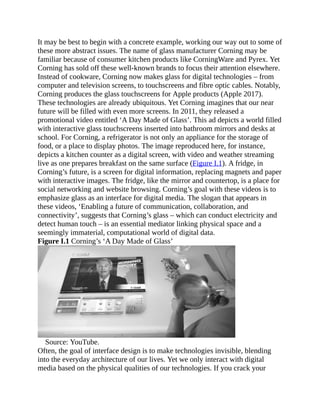

![instance, the kaleidoscope. The invention of the kaleidoscope coincided with
fears of distraction in a world of spectacular images, in which the kaleidoscope
was thought to be a rejection of reality (Farman 2015). Many of our beliefs
about the value of connectivity can be linked to changes around the same time
(Bollmer 2016; Otis 2001). Stories about the internet and how it transcends
space and time date back to Victorian-era claims about the telegraph (Carey
1989; Standage 1998). Worries that new technologies will destroy our memory
echo claims made in Ancient Greece, most notably by Socrates in the dialogue
Phaedrus, in which Plato complains of writing destroying memory.
Digital media are made up of many very old things, both through physical
infrastructures and larger belief systems. So, while we tend to celebrate the
newness of anything associated with digital media, there’s a lot of residual
aspects that shape digital culture. Understanding technology in the present
requires a view that looks towards the past, otherwise we mistake something as
new when it’s actually residual. It is only by looking towards the residual that we
can understand what Williams refers to as the emergent, the ‘new meanings and
values, new practices, new relationships and new kinds of relationships [that] are
continually being created’ (Williams 1977: 123). We can only understand what’s
new by looking at what’s old.
Also, the persistence of older technologies and narratives often transform –
somewhat surprisingly – something that was once residual into a newly emergent
paradigm. Until a few years ago, it was generally thought that the hype
surrounding virtual reality had died. The fantasy of being in a simulated body in
a simulated space, a fantasy that drove a lot of technological development in the
1990s, seemed to be a relic of that era. Yet, with the rise of the Oculus Rift, a
virtual reality headset initially designed for videogames, the promises of virtual
reality appear to be coming back into style. In 2014, Facebook purchased the
Oculus Rift, promising at their annual F8 conference that the future of social
media is intertwined with virtual reality. What once was thought to be dead and
gone has returned with a surprising vengeance. It is possible that the VR hype
that exists as I write this is little more than hype, however. The Oculus Rift has
not been nearly as popular as anticipated, and it seems that excitement about VR
may vanish yet again.
Virtual reality is not new. It is a product of a history of simulation that goes back
to Victorian-era toys, the stereoscope, and the flight simulator (see Hillis 1999).
Its promises repeat narratives of transcendence that have long characterized
discussions of new technologies – discussions we will review in the next
chapter. But to understand the persistence of virtual reality requires us to look
back to both the history of technology and the history of narratives told about](https://image.slidesharecdn.com/5236418-250606184055-d029e4c8/85/Theorizing-Digital-Cultures-Grant-Bollmer-26-320.jpg)


![past several decades. The Matrix (1999) has probably been the most popular and
influential depiction of these ideas, but they also inform television shows like
Chuck (2007–2012), Mr. Robot (2015–), Battlestar Galactica (2004–2009), and
the dystopian visions of Black Mirror (2011–), the videogame Watch Dogs
(2014), the Johnny Depp bomb Transcendence (2014), and countless others.
Maybe you’ve heard echoes of these ideas in the words of Silicon Valley elites
when they speak of the promises of digital media yet to come, and how the
connection and collaboration of social media will enable true democracy and
justice, without the regulation of federal governments (see Morozov 2013).
Beliefs associated with the technological Singularity (Kurzweil 2005), which
have informed both science fiction and research on artificial intelligence and
robotics, are almost identical to Teilhard de Chardin’s ‘Omega Point’. Instead of
synthesis with god, however, those awaiting the technological Singularity
believe that humans and technology will converge around 2040, when it’s
predicted that computer processing and storage capacity will become advanced
enough to simulate a human brain. As a result, ‘Singulatarians’ believe that we
will leave our corporeal bodies and live forever in a computer simulation, or
perhaps inhabiting a robot body. Beliefs associated with digital culture in the
1990s, we can see, have informed popular representations of digital media for
some time.
There is a reason for this. These arguments do describe the promises of digital
media, which are grounded in everyday uses of social media and the internet.
You may have personally felt the impact of some of these effects, especially if
you have ever used software to write a story or song or video and then shared it
online, or if you have contributed to Wikipedia (as your authorship becomes part
of a collective project of world knowledge). Many forms of participatory Web
2.0 technologies change how we understand authorship and sharing. It’s easy to
imagine the internet as a collaborative space, immaterial, and detached from
much of daily life. These utopian, theological beliefs combine longstanding
views about the ability of technology to achieve metaphysical perfection with
the everyday experiences of collaboration fostered by networked media.
We must acknowledge that these beliefs are wrong, partial, or misguided. They
reflect very old ideas associated with theology and religion, not the physical or
social effects of new technologies. But the theological perspective we often
bring to new technologies is responsible for shaping many of our uses of digital
media, and directly informs predictions about the future of humanity and
technological progress. An early advocate for digital literacy in contemporary
culture, Milad Doueihi, has claimed, ‘digital culture is the only rival to religion
as a universal practice … [digital culture is] a world religion with its prophets](https://image.slidesharecdn.com/5236418-250606184055-d029e4c8/85/Theorizing-Digital-Cultures-Grant-Bollmer-33-320.jpg)


![—Est-ce que vous êtes fou! Comment, vous qui me connaissez,
vous me demandez pourquoi je ne donne pas au premier homme du
royaume une personne qui lui déplaît!... (En souriant.) Je me
rappelle encore assez de mon code de courtisan pour ne le pas
faire...
—Avez-vous ma belle-mère[20]?
—Pas davantage. Je ne crois pourtant pas qu'elle lui soit
désagréable et surtout importune comme madame de Staël, mais
n'importe; votre belle-mère, mon cher Valence, est un peu
ennuyeuse, nous pouvons dire cela entre nous, et je veux que le
premier Consul s'amuse chez moi. Il aime les jolies femmes, et les
femmes simples et agréables: votre belle-mère et madame de Staël
ne sont rien de tout cela... Parlez-moi de Pulchérie[21]... à la bonne
heure.
Le lendemain matin, dix heures étaient à peine sonnées que
l'hôtel de madame de Montesson était prêt à recevoir, même un roi.
—Écoutez donc, lui dit M. de Cabre, il ne s'en faut pas de
beaucoup...
Tout était préparé avec la plus grande élégance, et il y avait en
même temps beaucoup de luxe, mais ce luxe était si bien réparti,
tellement bien entendu, que rien ne paraissait superflu de cette
quantité d'objets d'orfèvrerie, de vermeil, et de superbes porcelaines
qui garnissaient la table. Le plus beau linge de Saxe, aux armes
d'Orléans[22] et parfaitement cylindré, était sur cette table, et
paraissait éclatant sous les assiettes de porcelaine de Sèvres, à la
bordure et aux écussons d'or; de magnifiques cristaux, des fleurs en
profusion: tout cet ensemble était vraiment charmant et imposant en
même temps, parce que cette profusion était entourée de ce qui
constate l'habitude de s'en servir.
Vers midi et demi les femmes invitées commencèrent à arriver:
madame Récamier, madame de Rémusat, madame Maret, madame](https://image.slidesharecdn.com/5236418-250606184055-d029e4c8/85/Theorizing-Digital-Cultures-Grant-Bollmer-59-320.jpg)
![la princesse de Guémené, madame de Boufflers, madame de
Custine, cette belle et ravissante personne, cette jeune femme à
l'enveloppe d'ange, au cœur de feu, à la volonté de fer, et tout cela
embelli par des talents[23] qui auraient fait la fortune d'un artiste;...
madame Bernadotte, plus tard reine de Suède, madame de Valence,
et plusieurs autres femmes de la société de madame de Montesson
à cette époque, et de la cour consulaire.
Heureuse comme une maîtresse de maison qui voit arriver tous
ses convives, et dont les préparatifs sont achevés, madame de
Montesson souriait à chacune des femmes annoncées avec une
grâce bienveillante, qui redoublait à mesure que l'heure s'avançait.
Tout à coup un nom qui retentit dans le salon la fit tressaillir... le
valet de chambre venait d'annoncer madame la baronne de Staël!...
Quelque polie que fût madame de Montesson, elle ne dissimula pas
son mécontentement, et madame de Staël put s'apercevoir que,
certes, son couvert n'avait pas été compris dans le nombre de ceux
ordonnés... Madame de Montesson espéra que le premier Consul ne
viendrait pas. Il y avait une revue au Champ-de-Mars, Junot venait
de se faire excuser pour ce motif. Le premier Consul pouvait donc
être également retenu. Quoi qu'il en fût, madame de Montesson prit
sur elle pour ne pas témoigner son mécontentement à madame de
Staël, dont la démarche était au fait assez extraordinaire, et elle la
reçut très-froidement, sans ajouter un mot aux paroles d'usage.
Joséphine aimait beaucoup ce genre de fête du matin; elle y était,
comme partout dès lors, la première; et pourtant cette heure de la
journée excluait toute pensée d'une gêne plus grande que celle
qu'impose toujours le grand monde; et puis on évitait l'ennui que
donne la durée d'une fête du soir. Après le déjeuner, lorsque le
temps le permettait, tout le monde allait au bois de Boulogne; mais,
chez madame de Montesson, cela n'arrivait jamais, quelque temps
qu'il fît, parce qu'elle avait toujours soin de remplir les heures de
manière à les faire oublier.](https://image.slidesharecdn.com/5236418-250606184055-d029e4c8/85/Theorizing-Digital-Cultures-Grant-Bollmer-60-320.jpg)
![Une élégante d'aujourd'hui trouverait sans doute étrange une
toilette de cette époque, comme nos petites-filles trouveront
certainement celles de nos jours ridicules pour un déjeuner-dîner
comme celui de madame de Montesson. Les plus attentives à suivre
la mode d'alors portaient une longue jupe de percale des Indes
d'une extrême finesse, ayant une demi-queue, et brodée tout autour.
Les dessins les plus employés par mademoiselle Lolive[24] étaient
des guirlandes de pampres, de chêne, de jasmins, de capucines, etc.
Le corsage de cette jupe était détaché; il était fait en manière de
spencer: cela s'appelait un canezou. Mais celui-là était à manches
amadices, et montant au col; le tour et le bout des manches étaient
également brodés. Le col avait pour garniture ordinairement du point
à l'aiguille ou de très-belles malines: nous ne connaissions pas alors
le luxe des tulles de coton, non plus que la magnificence des fausses
pierreries!... ce qui peut se traduire ainsi: Luxe et pauvreté!... deux
mots qui, joints ensemble, forment la plus terrible satire d'un temps
et d'un peuple!... Sur la tête on avait une toque de velours noir, avec
deux plumes blanches; sur les épaules un très-beau châle de
cachemire de couleur tranchante. Quelquefois on attachait un beau
voile de point d'Angleterre, rejeté sur le côté, à la toque de velours
noir, et la toilette était alors aussi élégante que possible, et ne
pouvait être imitée par votre femme de chambre; d'autant que la
femme ainsi habillée portait au cou, suspendue par une longue
chaîne du Mexique, une de ces montres de Leroy que toutes les
mariées, dans une grande position, trouvaient toujours dans leur
corbeille; on avait donc ainsi une toilette toute simple et qui
pourtant, avec la robe, le cachemire, la toque et la montre, se
montait encore à une somme très-élevée[25]. D'autres toilettes
étaient encore remarquées. On voyait des robes de cachemire, des
redingotes de mousseline de l'Inde brodées à jour et doublées de
soie de couleur; en général, on portait peu, et même point d'étoffes
de soie le matin.
Madame Bonaparte arriva vers une heure; sa toilette était
charmante. Elle portait une robe de mousseline de l'Inde doublée de
marceline jaune-clair, et brodée en plein d'un semé de petites étoiles](https://image.slidesharecdn.com/5236418-250606184055-d029e4c8/85/Theorizing-Digital-Cultures-Grant-Bollmer-61-320.jpg)
![à jour; le bas de la robe était une guirlande de chêne; son chapeau
était en paille de riz, blanche, avec des rubans jaunes et un bouquet
de violettes: elle était charmante mise ainsi. Elle était suivie de
madame Talouet, de madame de Lauriston et de madame Maret. La
cour consulaire se formait déjà.
—Je vous annonce une visite, dit-elle en riant à madame de
Montesson... J'osais à peine y compter ce matin; Bonaparte m'a fait
dire[26] tout à l'heure de le précéder, et qu'il me suivait dans un
quart d'heure... Mais qu'avez-vous? demanda-t-elle plus bas à
madame de Montesson en lui voyant un air abattu, contrastant avec
son air et son état de contentement à elle-même, et les préparatifs
de fête qui donnaient un aspect joyeux à toute la maison.
—Ah! rien absolument, dit madame de Montesson... rien du tout
qu'une grande joie de vous voir... et que redouble la nouvelle que
vous venez de m'apprendre...
—Bonaparte est allé au Champ-de-Mars pour y passer la revue
d'un régiment qui part demain de Paris..., mais il ne tardera pas...
Madame de Montesson ne répondait qu'avec distraction à tout ce
que lui disait madame Bonaparte, ses yeux se portaient avec
inquiétude vers un groupe qui était à l'extrémité du salon et d'où
sortaient parfois des éclats d'une voix retentissante, mais cependant
si harmonieusement accentuée qu'elle avait le pouvoir d'émouvoir
l'âme..., et vivement... M. de Valence était dans le groupe, formé
seulement par plusieurs hommes qui, après avoir salué madame
Bonaparte, écoutaient la personne qui parlait sans modérer le ton de
sa voix. C'était une singularité déjà à cette époque, car on
commençait à ne s'asseoir et à parler devant tout ce qui venait des
Tuileries qu'avec la permission donnée... Madame Bonaparte en fut
frappée...
—Je connais cette voix, dit-elle à madame de Montesson... oui!...
c'est elle!...](https://image.slidesharecdn.com/5236418-250606184055-d029e4c8/85/Theorizing-Digital-Cultures-Grant-Bollmer-62-320.jpg)
![—Une femme!... Oh! non sans doute!... demandez-le lui à elle-
même; elle vous dira qu'elle est un homme, tant son âme a de
force!... Oh! je ne suis pas étonné que le premier Consul ne l'aime
pas.
Madame de Staël comprenait ces discours sans les entendre; mais
elle voyait chaque parole se traduire sur la physionomie de ce
monde né méchant et que sa nouvelle vie sociale rendait plus
méchant encore. Son œil d'aigle avait percé sans peine la nuit
profonde de l'insuffisance de tout ce qui souriait à une position
pénible, qui pourtant pouvait en un moment devenir celle de l'un
d'eux.
Mais cependant, quelque forte qu'elle fût sur elle-même, madame
de Staël ressentit bientôt l'effet magnétique de tous ces yeux dirigés
sur elle. C'était un cauchemar pénible dont elle voulut rompre le
charme: elle se souleva, mais ne put accomplir sa volonté et
retomba sur sa chaise.
En ce moment, on vit une apparition presque fantastique traverser
l'immense salon à la vue de tous. C'était une jeune femme
charmante et belle, une Malvina aux blonds cheveux, aux yeux bleu
foncé, aux formes pures et gracieuses. Elle traversa légèrement le
salon et fut s'asseoir à côté de la pauvre délaissée. Cette démarche,
dans un moment où tout le monde demeurait immobile et
l'abandonnait, toucha vivement madame de Staël.
—Vous êtes bonne autant que belle, dit-elle à la jeune femme.
Cette jeune femme était madame de Custine[27]. Son esprit était
charmant comme sa personne; elle connaissait peu madame de
Staël, mais elle comprenait tout ce qui était supérieur, et madame de
Staël était pour elle un être représentant tout ce que ce siècle devait
produire de grand. Lorsque sa pensée s'arrêtait sur ces grandes
choses que pouvait produire sa patrie, alors, artiste par le cœur
comme elle l'était par l'esprit, on voyait flamboyer son œil toujours si](https://image.slidesharecdn.com/5236418-250606184055-d029e4c8/85/Theorizing-Digital-Cultures-Grant-Bollmer-65-320.jpg)
![—Comment vous nommez-vous? demanda-t-elle à madame de
Custine.
—Delphine.
—Delphine!... Oh! le joli nom! J'en suis ravie!... Delphine... C'est
que cela ira à merveille!...
Madame de Custine ne concevait pas pourquoi son nom inspirait
tant de contentement à madame de Staël...
Celle-ci la comprit.
—Je vais faire paraître un roman, ma belle petite; et ce roman, je
veux qu'il s'appelle comme vous..... Je lui aurais donné votre nom,
même s'il eût été différent... Oui, il sera votre filleul, ajouta-t-elle en
riant..... et il y aura aussi quelque chose qui vous rappellera cette
journée[28].
Dans ce moment, le premier Consul rentra dans le salon. En
voyant madame de Staël, dont madame de Montesson n'avait pas
osé lui parler non plus que Joséphine, il alla vers elle, et lui parla
longtemps; il ne fut pas gracieux, mais poli, et même plus qu'il ne
l'avait été jusque-là avec madame de Staël... Elle était au ciel. Ceux
qui l'ont connue savent comme elle était impressionnable, et avec
quelle facilité on la ramenait à soi. La bonté de son cœur était si
admirable qu'elle lui donnait une bonhomie toute niaise de crédulité;
ce qui, avec son beau génie, formait un de ces contrastes qu'on
admire.
—Ah! général, que vous êtes grand! dit-elle au premier Consul.....
Faites que je dise que vous êtes bon avec la même conviction.
—Que faut-il pour cela?
—Ne jamais parler de m'exiler.](https://image.slidesharecdn.com/5236418-250606184055-d029e4c8/85/Theorizing-Digital-Cultures-Grant-Bollmer-67-320.jpg)
![—Cela dépend de vous..... et puis dans tous les cas vous ne seriez
pas exilée; les exils et les lettres de cachet ont été abolis par la
Révolution.
—Ah! dit madame de Staël d'un air étonné... et qu'est-ce donc que
le 18 fructidor?.... Une promenade à Sinnamari... Le lieu était mal
choisi, car l'air y est mauvais!...
Le premier Consul fronça le sourcil..... Il n'aimait pas que madame
de Staël parlât politique, et surtout avec lui. Il s'éloigna sur-le-
champ.
Madame de Staël comprit aussitôt sa faute, ou plutôt sa bêtise,
comme elle-même le dit le soir à M. de Narbonne, qu'elle rencontra
chez le marquis de Luchesini.
—Je suis toujours la même, lui dit-elle; j'ai parfois un peu plus
d'esprit qu'une autre, et puis dans d'autres moments je suis aussi
niaise que la plus bête... Aller lui parler du 18 fructidor!... à lui!.. lui
qui peut-être bien l'a dirigé[29], quoiqu'il fût de l'autre côté des
Alpes... mais qui de toute manière doit au fond du cœur aimer une
révolution qui lui a permis de faire, lui chef militaire, une autre
révolution avec des baïonnettes, puisque les magistrats du peuple,
les Directeurs, en avaient agi ainsi avec les représentants de la
nation.....
Le premier Consul ne voulut cependant montrer aucune humeur
de cette conversation, qui, toute rapide qu'elle avait été, avait pu
être entendue par les personnes qui étaient près de lui. Il s'approcha
de madame de Montesson, causa avec elle sur une foule de sujets,
et finit par lui demander s'il était vrai que M. le duc d'Orléans[30]
jouât très-bien la comédie.
—Très-bien les rôles de rondeur et de gaieté. M. le duc d'Orléans
n'aurait pas bien joué les rôles de Fleury, ni ceux de Molé; son
physique d'ailleurs s'y opposait[31]; mais les rôles dans le genre de
ceux que je viens de citer étaient aussi bien et même peut-être](https://image.slidesharecdn.com/5236418-250606184055-d029e4c8/85/Theorizing-Digital-Cultures-Grant-Bollmer-68-320.jpg)
![mieux remplis par lui qu'ils ne l'étaient souvent à la Comédie
Française. On jouait souvent dans ses châteaux, car il aimait fort ce
divertissement; aussi avait-il un théâtre dans presque toutes ses
habitations. Nous avions beaucoup de théâtres particuliers dans les
châteaux de nos princes et même à Paris. Outre celui de Sainte-
Assise, il y en avait un à Chantilly, où madame la duchesse de
Bourbon et M. le prince de Condé jouaient admirablement. Il y en
avait aussi un à l'Île-Adam, chez M. le prince de Conti; mais là je ne
crois pas, malgré le soin que le prince mettait à ce que sa maison fût
une des plus agréables de France, que la partie dramatique fût aussi
soignée que le reste.
—Qu'est-ce donc qu'un théâtre sur lequel le duc d'Orléans aurait
joué la comédie avec les comédiens français?... Ce n'est pas Sainte-
Assise.
—Ah! vous avez raison, général..... c'était sur un théâtre que M. le
duc d'Orléans avait fait construire, ou au moins réparer, dans sa
maison de Bagnolet. On y joua pour la première fois la Partie de
chasse d'Henri IV, par Collé. Ce fut Grandval qui fit Henri IV, et, je
dois le dire, M. le duc d'Orléans qui remplit le rôle de Michaud.
Le premier Consul sourit avec cette malice qui rendait son sourire
charmant, lorsqu'il était de bonne humeur. Il avait voulu amener
madame de Montesson à dire que le duc d'Orléans jouait avec
Grandval; mais c'était une époque où l'on était peu soigneux des
convenances de rang, et où le Roi s'appelait La France[32].
Madame de Montesson vit le sourire... Elle ne dit rien..., mais une
minute après elle appela Garat, qui était à l'autre bout du salon, et
lui dit, avec cette grâce charmante qu'elle mettait toujours dans une
demande pour faire de la musique chez elle ou bien une lecture:
—Qu'allez-vous nous chanter, Garat?... avez-vous ici quelqu'un de
force à chanter un duo de Gluck avec vous?](https://image.slidesharecdn.com/5236418-250606184055-d029e4c8/85/Theorizing-Digital-Cultures-Grant-Bollmer-69-320.jpg)
![monde, quelque crédit qu'on ait; et ceux qui ne réussissent pas par
votre moyen sont mécontents et vous accusent: ce fut ce qui arriva
à madame de Montesson. Elle eut de plus des cabales de théâtre qui
vinrent lui donner de l'ennui.
Mademoiselle Duchesnois voulut débuter aux Français[33].
Chaptal, qui prétendait se connaître en figures, prononça qu'un aussi
laid visage ne pourrait jamais réussir, et refusa ou du moins éluda
l'ordre de début. On en parla à madame de Montesson; elle avait
joué la comédie trop souvent et trop bien pour ne pas porter intérêt
à une jeune personne qui annonçait du talent, car elle promettait
alors ce qu'elle n'a pas donné, tandis que mademoiselle Georges a
été depuis, comme alors, bien au-dessus d'elle.
Quoi qu'il en soit, madame de Montesson se passionna pour le
talent de mademoiselle Duchesnois, qui était laide à renverser. Le
moyen, quelque esprit qu'elle eût, de se douter que c'était M. de
Valence qui lui imposait mademoiselle Duchesnois!... Comme elle
était loin de cette pensée, elle voulut, à son tour, employer son
crédit pour imposer mademoiselle Duchesnois aux Parisiens. Elle fit
donc promettre à madame Bonaparte de venir entendre
mademoiselle Duchesnois en petit comité. On invita cent cinquante
personnes, plus de deux cents s'y trouvèrent. Chaptal était du
nombre. Il pensait comme beaucoup de gens qu'un beau ou un joli
physique est une condition, sinon première, au moins très-
importante pour réussir sur le théâtre. C'était un homme d'esprit sur
lequel on faisait des mots qu'on croyait bons et qui n'étaient que de
pauvres sottises. Il avait de la science et de la bonté, et, en surplus
de sa science, il avait de l'esprit. Mademoiselle Duchesnois, avec sa
grande bouche, sa maigreur osseuse, car alors elle était maigre et
sans forme, avec sa laideur enfin, lui parut avoir raison lorsqu'elle
disait:
Soleil, je viens te voir pour la dernière fois.](https://image.slidesharecdn.com/5236418-250606184055-d029e4c8/85/Theorizing-Digital-Cultures-Grant-Bollmer-72-320.jpg)
![et il jugea inutile de la faire mentir en la faisant revenir pour le
répéter. En conséquence, il lui refusa un ordre de début. Voilà
pourquoi madame de Montesson sollicita madame Bonaparte
d'entendre la jeune débutante chez elle, et fit prier par elle M.
Chaptal d'y venir. Le moyen de refuser la reine de France, car
Joséphine l'était déjà!... Chaptal vint donc chez madame de
Montesson, où nous entendîmes mademoiselle Duchesnois dans
Phèdre, et, je crois, dans Clytemnestre et dans Didon...
—Que ferez-vous? dis-je à Chaptal, lorsque après avoir écouté la
débutante on se mêla pour causer.
Il me regarda en souriant.
—Je parie que vous m'avez deviné, me dit-il.
—Mais non... J'ai fort bonne opinion de votre fermeté...
—Vraiment!... mais le moyen!... mettez-vous à ma place... tenez,
voyez plutôt.
En effet, nous vîmes s'avancer vers nous madame Bonaparte,
donnant le bras à madame de Montesson, qui, pour cette grande
attaque, avait quitté son canapé et son tabouret[34], et, tenant
mademoiselle Duchesnois par la main, venait solliciter le fameux
ordre de début...
—Et la protégée de madame Louis Bonaparte? dis-je à Chaptal...
—Oh! qu'elle est belle! s'écria-t-il comme transporté à ce seul
souvenir!
—Et comme elle est bonne dans les moments de force de son
rôle! vous ne pouvez pas la refuser si celle-ci débute.
—Vous avez raison... Eh bien! toutes deux débuteront.](https://image.slidesharecdn.com/5236418-250606184055-d029e4c8/85/Theorizing-Digital-Cultures-Grant-Bollmer-73-320.jpg)
![Ces dames arrivèrent alors auprès de nous... Madame de
Montesson demanda, madame Bonaparte appuya et Chaptal accorda
ce qu'il ne pouvait au fait pas refuser à madame Bonaparte, qui, par
instinct, n'aimait pas mademoiselle Georges, rivale de mademoiselle
Duchesnois, que mademoiselle Raucourt avait amenée chez madame
Louis, où je l'admirai le lendemain de la soirée de madame de
Montesson.
—N'est-ce pas, me dit mademoiselle Raucourt avec son accent de
Léontine dans Héraclius, ou de Cléopâtre dans Rodogune, n'est-ce
pas que voilà un bel outil de tragédie?...
Le fait est qu'elle était superbe, et que son talent, très-beau dans
cette première époque de sa vie, est devenu un des plus
remarquables de notre temps: c'est le dernier soupir de la bonne
tragédie. Mademoiselle Raucourt lui avait donné les bonnes
traditions, et elle les a conservées...
Madame de Montesson voulut quitter Paris, et comme sa fortune
lui permettait d'avoir une maison à elle, elle en acheta une
charmante à Romainville; mais elle était trop petite, il fallut
l'agrandir. Elle fit bâtir, et ce qu'elle ordonna fut d'un goût si parfait,
que tout le monde voulut connaître cette charmante chaumière ou
moulin, comme elle l'appelait, et bientôt elle eut plus de monde qu'à
Paris.
J'ai déjà dit qu'elle peignait admirablement les fleurs; elle voulut
en élever d'aussi belles que celles du Jardin des Plantes, pour lui
servir de modèles. Elle fit donc construire une serre à Romainville:
cette serre servit ensuite de modèle pour celle de la Malmaison[35];
elle communiquait à la chambre à coucher de madame de
Montesson par une glace sans tain. Au milieu, était une rotonde
dans laquelle on déjeunait tous les matins. Il y avait souvent des
personnes qui ne pouvaient pas venir plus tard et venaient déjeuner
à Romainville, et puis l'entourage de madame de Montesson était
fort nombreux. Elle avait ses deux nièces, dont l'une, madame de](https://image.slidesharecdn.com/5236418-250606184055-d029e4c8/85/Theorizing-Digital-Cultures-Grant-Bollmer-74-320.jpg)
![Valence, était encore charmante, et jolie, et gracieuse, autant que
femme peut l'être...; l'autre, madame Ducrest, chantait à merveille.
On faisait d'excellente musique à Romainville; madame Robadet,
dame de compagnie de madame de Montesson, était très-forte sur
le piano et l'une des premières élèves de Steibelt. Dès qu'il fut arrivé
à Paris, il fut attiré dans cette maison et contribua à l'agrément du
salon de madame de Montesson. C'était une aimable femme que
madame Robadet[36]; elle formait, avec la famille nombreuse de
madame de Montesson, le fond et le noyau de la société qu'on était
toujours sûr de trouver à Romainville. Tout cela se groupait autour
de la maîtresse de la maison, sans chercher à faire un effet exclusif,
et pour l'aider seulement à rendre sa maison plus agréable[37],
quoique parmi elles il y en eût qui pouvaient le faire avec certitude
de succès; mais la pensée n'en venait pas... Il y avait donc à
Romainville madame de Valence, encore jolie à faire tourner une
tête, et madame Ducrest, nièces toutes deux de madame de
Montesson; les deux filles de madame de Valence[38], parfaitement
élevées, polies, et faisant déjà présumer ce qu'elles sont devenues,
des femmes parfaites; mademoiselle Ducrest (Georgette), jolie
comme un ange et fraîche comme un bouton de rose... Voilà ce qui
formait le fond de la société habituelle de madame de Montesson; il
faut y ajouter les dames de La Tour[39], amies malheureuses pour
qui elle fut une providence... Les plus habituées ensuite étaient
madame Récamier, madame Regnault de Saint-Jean-d'Angély...
Madame Bonaparte y allait aussi souvent qu'elle le pouvait, ainsi que
la princesse Borghèse. J'y allais aussi, mais je fus à Arras alors, ce
qui me rendit moins assidue. On y voyait aussi presque toujours
madame de Fontanges[40], fille de M. de Pont; et puis encore
madame de Custine, mademoiselle de Sabran, cette belle et
ravissante personne, dont le dévouement, aussi grand que son
courage et sa beauté, fit impression sur un peuple en délire, et ne
put toucher des juges qui, pour la satisfaire, n'avaient qu'à écouter
la justice!...
On voyait encore chez madame de Montesson toutes les
étrangères ayant une spécialité de fortune, de rang ou de beauté: la](https://image.slidesharecdn.com/5236418-250606184055-d029e4c8/85/Theorizing-Digital-Cultures-Grant-Bollmer-75-320.jpg)
![marquise de Luchesini[41], la marquise de Gallo[42], madame
Visconti, la duchesse de Courlande, madame Divoff, madame
Demidoff, la princesse Dolgorouki et la belle madame Zamoïska[43],
et une foule de Françaises et d'étrangères dont les noms
m'échappent.
J'ai dit que madame de Montesson ne sortait pas. Sa santé,
presque détruite, en était encore plus la cause que l'étiquette, contre
laquelle plusieurs personnes se révoltaient. À l'époque dont je parle
surtout (en 1804), elle souffrait cruellement de douleurs aiguës qui
lui ôtaient presque ses facultés. Un jour cependant, quelles que
fussent ses souffrances, elle prouva combien madame de Genlis
avait tort en l'accusant de manquer de cœur[44]. Elle était plus
accablée que de coutume, et retirée dans l'intérieur de son
appartement; elle était entourée de ses femmes, qui empêchaient le
moindre bruit de parvenir à elle... Tout à coup, elle entend la voix de
madame de La Tour, de son amie, qui, au milieu de sanglots
étouffés, suppliait la femme de chambre de garde auprès de la
malade de la laisser entrer... Madame de Montesson, émue de ce
qu'elle entend, sonne, et donne l'ordre de laisser entrer madame de
La Tour.
—Ah! mon amie, ma seule amie, venez à notre secours! s'écrie
madame de La Tour, en tombant à genoux près de son lit... Mes
neveux vont périr si vous ne les secourez pas!... Vous seule le
pouvez; car vous avez tout pouvoir sur madame Bonaparte, et
madame Bonaparte peut tout à son tour sur le général
Bonaparte[45].
Et madame de La Tour apprend à son amie ce qu'elle ignorait,
n'ayant lu aucun journal depuis le matin, la conspiration de Georges
et le danger de MM. de Polignac.
Madame de Montesson, dont l'esprit rapide comprit sur-le-champ
le danger des accusés, ne perd pas un moment à délibérer; elle
sonne, donne l'ordre de mettre ses chevaux et demande une robe.](https://image.slidesharecdn.com/5236418-250606184055-d029e4c8/85/Theorizing-Digital-Cultures-Grant-Bollmer-76-320.jpg)
![—Mais vous êtes malade, mon amie!... vous souffrez
cruellement... vous ne pouvez aller à Paris... Je ne vous demandais
qu'un billet pour madame Bonaparte!
—Un billet n'est point assez éloquent lorsqu'il s'agit de la vie d'un
homme, lui répondit madame de Montesson... Il faut que je voie
non-seulement Joséphine, mais l'Empereur!...
—Mais vous avez la fièvre! s'écrie madame de La Tour, qui venait
de serrer sa main.
—Eh bien! je n'en parlerai que mieux et plus vivement, dit-elle en
souriant et en montrant des dents encore superbes...
Et une demi-heure n'était pas encore écoulée depuis l'entrée de
madame de La Tour dans sa chambre, qu'elle était sur le chemin de
Saint-Cloud.
En arrivant, elle fut aussitôt introduite auprès de Joséphine; elle
lui demanda avec instance, avec larmes, la grâce de MM. de Polignac
et de M. de Rivière[46].
—Hélas! répondit Joséphine, que puis-je pour eux?
—Tout! dit avec force madame de Montesson; car vous avez un
motif puissant pour exiger de l'Empereur qu'il vous accorde les trois
têtes qu'il veut faire tomber. C'est sa propre gloire que vous voulez
sauver avec elles!... Que veut-il?... être roi!... Eh bien! veut-il aussi
que nos vœux, qui seront toujours pour lui, soient refoulés dans nos
cœurs par cet acte de cruauté?... Veut-il que les marches du trône
où il monte soient teintes du sang innocent?...
—Mais ils sont coupables! dit doucement Joséphine.
—Non, ils ne sont pas coupables! dit madame de Montesson, avec
une force que lui donnait la fièvre qu'elle avait et l'émotion de son
âme. Non, ils ne sont pas coupables!... Quels serments ont-ils](https://image.slidesharecdn.com/5236418-250606184055-d029e4c8/85/Theorizing-Digital-Cultures-Grant-Bollmer-77-320.jpg)
![prêtés?... quelle est la foi jurée qu'ils ont violée?... Toujours fidèles à
leur souverain, ils sont rentrés en France pour ses intérêts; c'est
vrai... Eh bien! qu'on les surveille... qu'on les enferme... Mais pas de
mort!... pas de sang versé!... Mon Dieu! la France n'en a-t-elle pas
assez vu couler?...
Et, tout épuisée de l'effort qu'elle venait de faire, elle retomba sur
le canapé d'où elle s'était levée, entraînée par son agitation.
—Calmez-vous, lui dit Joséphine en l'embrassant, vous me faites
rougir de mes craintes. Je parlerai... Bonaparte m'entendra... et je
vous jure qu'il faudra qu'il me donne la grâce de MM. de Polignac, ou
je n'aurai plus d'affection pour lui. Vous m'ouvrez les yeux!... Sans
doute, ils ne sont pas aussi coupables que ce Moreau!...
—Oh! lui, je vous l'abandonne!... quoiqu'à vrai dire, il faudrait que
la première action de votre héros, dans la route nouvelle que sa
gloire lui a frayée, fût tout entière grande et généreuse. Ah!
Joséphine! la clémence est si belle dans un souverain!...
—Je vous promets de faire tout ce que je ferais pour sauver mon
frère... Reposez-vous sur moi.
—Ne pourrais-je le voir? demanda madame de Montesson.
—Je vais le savoir, dit Joséphine avec empressement, et peut-être
charmée d'avoir un auxiliaire aussi puissant avec elle.
Elle revint au bout de quelques minutes l'air tout abattu.—Je ne
puis le voir moi-même, dit-elle... Partez; mais comptez sur moi.
Madame de Montesson revint à Romainville dans un état digne de
pitié. Sa fièvre avait redoublé par la crainte de ne pas réussir, et de
rapporter une parole de mort dans cette famille désolée[47], au lieu
de la joie qu'elle lui avait promise... En arrivant, elle vit accourir
madame de La Tour et sa fille.—Espérez!...«leur cria-t-elle du plus](https://image.slidesharecdn.com/5236418-250606184055-d029e4c8/85/Theorizing-Digital-Cultures-Grant-Bollmer-78-320.jpg)
![loin qu'elle put se faire entendre. Il lui semblait que cette espérance
ne serait pas vaine...
On a dit une foule de versions sur cette affaire de MM. de
Polignac; le fait réel est celui que je raconte. On a mis sur le compte
de Murat, de Savary, de l'impératrice, le salut des accusés. Ce fut
madame de Montesson, ce fut elle qui sauva M. de Polignac, M. de
Rivière et M. d'Hozier[48]. Murat, qui alors était gouverneur de Paris,
dit seulement à l'Empereur: Soyez clément, et vous sèmerez pour
recueillir.
Mais ces paroles furent dites pour tous les accusés, et même pour
Moreau, Coster de Saint-Victor, M. d'Hozier et les autres. Quant à
Savary, ce qu'il fit fut pour plaire à sa femme et satisfaire son
amour-propre, parce qu'il était allié de très-près, par madame
Savary, aux Polignac; mais quand il vit se froncer le sourcil impérial,
il se retira au fond de sa coquille pour s'y tenir tranquille. Ce fut, je
le répète, madame de Montesson qui sauva MM. de Polignac et de
Rivière.
L'espérance que madame de Montesson avait rapportée à ses
amies ne fut pas d'abord réalisée... La condamnation fut
prononcée... En l'apprenant, madame de Montesson oublia de
nouveau toutes ses souffrances; elle ne sentit plus qu'une seule
douleur, celle de ces femmes qui pleuraient et sanglotaient dans ses
bras, l'appelant à leur aide et lui criant qu'elles n'espéraient qu'en
elle.
—Mon Dieu! mon Dieu! disait madame de Montesson tandis que
sa voiture roulait rapidement vers Saint-Cloud, prêtez-moi un accent
qui le persuade; car ce n'est que de lui seul que j'attends quelque
pitié.
Elle avait raison; elle savait qu'autour des rois, et Napoléon l'était
déjà par le fait[49], il n'y a que trop de gens perfides dont la volonté
d'exécution outre-passe toujours l'intention de punir du maître.](https://image.slidesharecdn.com/5236418-250606184055-d029e4c8/85/Theorizing-Digital-Cultures-Grant-Bollmer-79-320.jpg)
![—J'ai parlé, lui dit Joséphine aussitôt qu'elle l'aperçut, mais j'ai
peu d'espoir... Il est plus irrité cette fois que je ne l'ai vu encore pour
des conspirations, même celle de la machine infernale, où, sans ce
pauvre Rapp, Hortense et moi nous sautions en l'air, sans compter
madame Murat[50]... Je lui ai parlé avec l'intérêt que je devais
mettre à une aussi importante affaire, et je crains...
—Mais je veux le voir! s'écria madame de Montesson... Joséphine,
faites que je le voie, et vous serez un ange.
—Vous le verrez, mon amie!... vous le verrez, calmez-vous... mais,
au nom de vous-même, si vous voulez parvenir à son âme, ne me
faites pas craindre ce qu'il appelle des scènes. Je le connais, et je
sais que c'est le moyen de n'arriver à rien... calmez-vous.
—Eh! puis-je être calme!... si vous saviez quelle douleur, quelle
désolation j'ai laissée derrière moi...
—Mais soyez tranquille, au moins en apparence... Attendez-moi...
je reviens dans un moment.
Et Joséphine partit en courant... À cette époque elle était svelte
encore, et sa taille avait ce charme qu'elle a conservé si longtemps.
Quelques minutes après, elle revint précipitamment;... sa figure,
toujours bonne et gracieuse, était ravissante en ce moment.
—Venez, venez! s'écria-t-elle en offrant son bras à madame de
Montesson et l'entraînant vers le cabinet de l'Empereur; il veut bien
vous voir!... c'est d'un heureux augure.
Madame de Montesson le pensait aussi, et cette pensée lui donna
des forces pour parcourir l'espace assez grand qu'il y avait entre la
chambre de Joséphine et le cabinet de Napoléon; mais à peine fut-
elle entrée dans ce cabinet et eut-elle regardé Napoléon, que tout
espoir s'évanouit de nouveau, et ce ne fut qu'en tremblant qu'elle
entra dans l'appartement... Napoléon se promenait rapidement dans](https://image.slidesharecdn.com/5236418-250606184055-d029e4c8/85/Theorizing-Digital-Cultures-Grant-Bollmer-80-320.jpg)

![MADAME DE MONTESSON.
Non, Sire; on vous a trompé. MM. de Polignac peuvent avoir une
pensée unique, absolue, qui régit leur vie et les guide dans tout ce
qu'ils font et ce qu'ils disent. Ils veulent le retour des princes,
comme le général Berthier, le général Junot voudraient le vôtre en
pareille circonstance; mais ils ne sont pas assassins. Ils ont pu
employer un homme à qui tous les moyens sont bons; mais eux, ils
sont incapables d'imaginer et encore moins d'exécuter une infamie.
JOSÉPHINE allant à lui et l'embrassant sur le front.
Que t'ai-je dit, mon ami?... tu vois que madame de Montesson te
parle comme moi!... Que t'ai-je dit encore? que MM. de Polignac
seraient à l'avenir liés par la reconnaissance s'ils te doivent leur vie!
MADAME DE MONTESSON.
Ajoutez à cette considération, qui est immense, que vous êtes
dans un moment, Sire, où vous devez marquer par votre clémence
plus que par la sévérité... Cette époque à laquelle vous êtes
parvenu, vous savez que je vous l'ai presque prédite[51]; en faveur
de cette prédiction... soyez toujours mon héros!... soyez plus, soyez
l'ange protecteur de la France!... qu'on dise de vous seul ce qu'on
n'a dit encore d'aucun souverain:—Il fut vaillant comme Alexandre et
César, et bon comme Louis XII.
NAPOLÉON, d'une voix plus douce.
Mais je ne suis pas roi!... je ne suis, comme empereur, que le
premier magistrat de la république.
MADAME DE MONTESSON, souriant.
Vous êtes tout ce que vous voulez et vous serez aussi tout ce que
vous voudrez... Enfin, comme premier magistrat de votre république,
comme vous l'appelez, vous pouvez faire grâce, et il faut la faire.
É](https://image.slidesharecdn.com/5236418-250606184055-d029e4c8/85/Theorizing-Digital-Cultures-Grant-Bollmer-82-320.jpg)
![JOSÉPHINE.
Bonaparte[52], je t'ai déjà bien prié... je te prierai tant qu'il y aura
de l'espoir... mais, si tu me refuses, je ne t'aimerai plus...
NAPOLÉON l'embrassant.
Mais puisque tu m'aimes, comment peux-tu me demander la grâce
de ces hommes qui non-seulement, je le répète, veulent ma mort,
mais le bouleversement de la France?
MADAME DE MONTESSON avec douceur.
Ce n'est pas ce qu'ils veulent.
NAPOLÉON.
Eh! madame, peuvent-ils espérer autre chose? L'agitation
révolutionnaire que j'ai tant de peine moi-même à contenir se
soumettrait-elle à une main inhabile? On n'improvise pas un
gouvernement, madame, et les passions populaires ne répondraient
plus aujourd'hui à leur colère royaliste contre la Révolution et la
République... Cependant, tout en accusant MM. de Polignac et de
Rivière de ramener des troubles peut-être plus sanglants que ceux
de 93, je les trouve moins coupables que des généraux
républicains... des hommes comme Moreau (sa voix devint
tremblante), Pichegru!... qui vont serrer la main, comme frères, au
chouan Georges!...
Il se laissa aller sur un canapé... Il était pâle et semblait avoir le
frisson; ses lèvres étaient blêmes et toute sa physionomie
bouleversée. Madame de Montesson fut alarmée et fit un
mouvement; mais Joséphine lui fit signe de demeurer tranquille, et,
s'approchant de Napoléon, elle lui prit les mains, les serra dans les
siennes, puis elle l'embrassa, lui parla bas longtemps, et peu à peu
le calme revint sur la belle physionomie de l'Empereur. Mais madame
de Montesson dit ensuite qu'elle avait eu peur lorsque ses yeux](https://image.slidesharecdn.com/5236418-250606184055-d029e4c8/85/Theorizing-Digital-Cultures-Grant-Bollmer-84-320.jpg)
![s'étaient fermés et qu'il était tombé sur le canapé. Oui, reprit-il en se
levant et marchant très-vite, en partie dans la chambre et en partie
dans le jardin[53]... ces hommes de la France sont plus coupables
que des serviteurs de la famille de Louis XVI, de ce malheureux
Louis XVI!... Mais Moreau... le vainqueur d'Hohenlinden!... lui,
devenir un conspirateur!... Il me croit jaloux[54] de lui! et pourquoi,
grand Dieu!... Ma portion de renommée est assez belle; je n'ai
besoin de nulle autre pour la rendre plus brillante... Et si Dieu me
prend en faveur, j'espère bien en mériter une aussi élevée qu'il y en
a sous le ciel!...
—Eh bien! donc, dirent les deux femmes en même temps en se
mettant presque à genoux, soyez clément pour MM. de Polignac...
commuez la peine... mais pas de mort!... Oh! pas de mort!...
—Demain tu viendras me parler pour Moreau, dit Napoléon à
Joséphine!... Croiriez-vous, dit-il ensuite à madame de Montesson,
qu'après avoir été le but des impertinences de la femme pendant
quatre ans, elle a été plus qu'importune pour obtenir la grâce entière
du mari?... Elle est vraiment bonne, ma Joséphine. Et l'attirant à lui,
il l'embrassa avec une profonde émotion.
—Et moi, dit madame de Montesson, il me faut aussi vous
embrasser pour vous remercier.
NAPOLÉON étonné, mais souriant.
Me remercier! et de quoi?
MADAME DE MONTESSON.
Mais de la grâce de mes amis! Ne venez-vous pas de le dire?...
N'avez-vous pas reconnu que Moreau était plus coupable qu'eux?...
NAPOLÉON.
Sans doute.](https://image.slidesharecdn.com/5236418-250606184055-d029e4c8/85/Theorizing-Digital-Cultures-Grant-Bollmer-85-320.jpg)
![MADAME DE MONTESSON.
Eh bien! s'il en est ainsi, vous ne pouvez pas condamner les uns
quand vous faites grâce au plus criminel...
NAPOLÉON la regardant.
Eh! qui vous dit, madame, que je ferai grâce à quelqu'un?
MADAME DE MONTESSON.
Mon cœur qui vous connaît et qui m'assure que vous ne voulez
pas faire condamner Moreau... Il ne le sera pas.
JOSÉPHINE.
Mon ami... grâce!... grâce!...
MADAME DE MONTESSON.
Allons, dites ce mot-là!... il vous fera du bien.
NAPOLÉON.
Mais je ne puis la faire entière cette grâce..... il me faut une
garantie, et je ne puis l'avoir que dans la liberté de ces messieurs.....
MADAME DE MONTESSON l'embrassant avec affection[55].
Ah! merci! merci!.... vous êtes bon! vous êtes aussi bon que vous
êtes grand!....
JOSÉPHINE l'embrassant aussi très-émue.
Merci, mon ami!.... merci!.... Voilà une belle journée!.... elle doit
aussi être belle pour toi!...
NAPOLÉON.](https://image.slidesharecdn.com/5236418-250606184055-d029e4c8/85/Theorizing-Digital-Cultures-Grant-Bollmer-86-320.jpg)