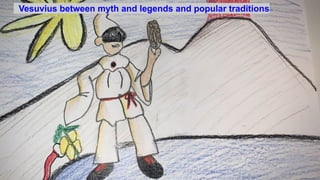
Vesuvius between myth and legends and popular traditions
The origin of the mask of Pulcinella
Vesuvius is certainly the emblem of Naples which for centuries has aroused the
curiosity and popular imagination of myth, legends and local traditions.
Following the terrible eruption of 79 AD. that buried Pompeii and Herculaneum
Vesuvius was identified as the mouth of Hell, the dwelling of the Devil, fire as
tongues in flames, a symbol of evil. From this combination of Vesuvius and Hell,
many popular legends of a fantastic genre were born, handed down through oral
stories, including the legend of the origin of Pulcinella, the carnival and theatrical
mask emblem of Naples. According to the story of 1700, Pulcinella would have been
born from the shell of a magical egg, which appeared on the summit of Vesuvius by
the will of Pluto, the God of the Underworld and the Dead, following the request of
two Neapolitan sorcerers, who would have prepared the dough magical because
they wanted to receive a character who would overcome situations of injustice and
oppression that weighed so much on the city.

The_origin_of_Pulcinella_IT.pdf

  • 1.
    Vesuvius between mythand legends and popular traditions
  • 2.
    The origin ofthe mask of Pulcinella Vesuvius is certainly the emblem of Naples which for centuries has aroused the curiosity and popular imagination of myth, legends and local traditions. Following the terrible eruption of 79 AD. that buried Pompeii and Herculaneum Vesuvius was identified as the mouth of Hell, the dwelling of the Devil, fire as tongues in flames, a symbol of evil. From this combination of Vesuvius and Hell, many popular legends of a fantastic genre were born, handed down through oral stories, including the legend of the origin of Pulcinella, the carnival and theatrical mask emblem of Naples. According to the story of 1700, Pulcinella would have been born from the shell of a magical egg, which appeared on the summit of Vesuvius by the will of Pluto, the God of the Underworld and the Dead, following the request of two Neapolitan sorcerers, who would have prepared the dough magical because they wanted to receive a character who would overcome situations of injustice and oppression that weighed so much on the city.