Divine Dialogues:
Unraveling the Tapestry of
Theology and Its Branches
Introduction to
Divine Dialogues
Theology is the study of the divine
and its relationship with humanity.
This presentation aims to unravel
the intricate tapestry of theology
and its diverse branches, exploring
how they interact and influence our
understanding of the sacred.
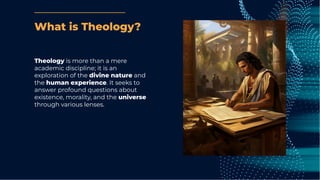
What is Theology?
Theology is more than a mere
academic discipline; it is an
exploration of the divine nature and
the human experience. It seeks to
answer profound questions about
existence, morality, and the universe
through various lenses.
Branches of Theology
Theology encompasses several branches, including
systematic, historical, biblical, and practical theology. Each
branch provides a unique perspective and methodology for
understanding the divine and its implications for life.
Systematic theology organizes
theological concepts into a coherent
framework. It addresses topics such as
God, salvation, and eschatology, aiming to
provide a comprehensive understanding
of the faith.
Systematic
Theology
Historical theology examines the
development of theological ideas
through history. It studies key figures,
movements, and events that have
shaped doctrines and beliefs over time.
Historical
Theology
Biblical Theology
Biblical theology focuses on the interpretation of
scripture. It seeks to understand the theological themes
within the Bible and how they relate to the overall
narrative of salvation.
Practical theology bridges the gap
between theory and practice. It
explores how theological insights can
be applied in ministry, ethics, and
everyday life, fostering a living faith.
Practical
Theology
Comparative Theology
Comparative theology studies and contrasts different
religious traditions. By exploring similarities and
differences, it fosters dialogue and understanding
among diverse faith communities.
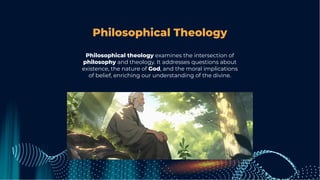
Philosophical Theology
Philosophical theology examines the intersection of
philosophy and theology. It addresses questions about
existence, the nature of God, and the moral implications
of belief, enriching our understanding of the divine.
Faith is a central theme in theology,
acting as a lens through which
individuals perceive the divine. It
influences beliefs, practices, and the
overall spiritual journey of a person.
The Role of
Faith
Theology often intersects with sociology,
psychology, and history. These
interdisciplinary approaches enrich
theological study, offering diverse
perspectives and enhancing our grasp of
the divine.
Interdisciplinar
y Approaches
Conclusion: The
Tapestry of Theology
In conclusion, the tapestry of theology is
vibrant and intricate, woven from various
branches that each contribute to our
understanding of the divine. Embracing this
complexity allows for a richer spiritual journey.
Thanks!
Do you have any questions?
addyouremail@freepik.com
+91 620 421 838
yourcompany.com

Theology by professor Morrison. .pdf

  • 1.
    Divine Dialogues: Unraveling theTapestry of Theology and Its Branches
  • 2.
    Introduction to Divine Dialogues Theologyis the study of the divine and its relationship with humanity. This presentation aims to unravel the intricate tapestry of theology and its diverse branches, exploring how they interact and influence our understanding of the sacred.
  • 3.
    What is Theology? Theologyis more than a mere academic discipline; it is an exploration of the divine nature and the human experience. It seeks to answer profound questions about existence, morality, and the universe through various lenses.
  • 4.
    Branches of Theology Theologyencompasses several branches, including systematic, historical, biblical, and practical theology. Each branch provides a unique perspective and methodology for understanding the divine and its implications for life.
  • 5.
    Systematic theology organizes theologicalconcepts into a coherent framework. It addresses topics such as God, salvation, and eschatology, aiming to provide a comprehensive understanding of the faith. Systematic Theology
  • 6.
    Historical theology examinesthe development of theological ideas through history. It studies key figures, movements, and events that have shaped doctrines and beliefs over time. Historical Theology
  • 7.
    Biblical Theology Biblical theologyfocuses on the interpretation of scripture. It seeks to understand the theological themes within the Bible and how they relate to the overall narrative of salvation.
  • 8.
    Practical theology bridgesthe gap between theory and practice. It explores how theological insights can be applied in ministry, ethics, and everyday life, fostering a living faith. Practical Theology
  • 9.
    Comparative Theology Comparative theologystudies and contrasts different religious traditions. By exploring similarities and differences, it fosters dialogue and understanding among diverse faith communities.
  • 10.
    Philosophical Theology Philosophical theologyexamines the intersection of philosophy and theology. It addresses questions about existence, the nature of God, and the moral implications of belief, enriching our understanding of the divine.
  • 11.
    Faith is acentral theme in theology, acting as a lens through which individuals perceive the divine. It influences beliefs, practices, and the overall spiritual journey of a person. The Role of Faith
  • 12.
    Theology often intersectswith sociology, psychology, and history. These interdisciplinary approaches enrich theological study, offering diverse perspectives and enhancing our grasp of the divine. Interdisciplinar y Approaches
  • 13.
    Conclusion: The Tapestry ofTheology In conclusion, the tapestry of theology is vibrant and intricate, woven from various branches that each contribute to our understanding of the divine. Embracing this complexity allows for a richer spiritual journey.
  • 14.
    Thanks! Do you haveany questions? addyouremail@freepik.com +91 620 421 838 yourcompany.com