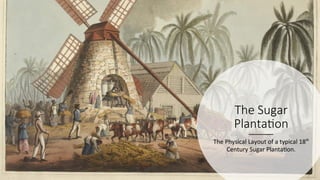
The Sugar
Plantation
The Physical Layout of a typical 18th
Century Sugar Plantation.
Objectives of the lesson
1. List all the areas which comprise a sugar plantation.
2. State the purpose of each area listed.
3. Discuss why each area was located in close proximity to each other.
The Physical Layout of an 18th
Century Sugar
Plantation
• Land on a Sugar Plantation was used for three (3) purposes.
These include:
1. Agriculture: Cane fields, woodlands and provision grounds
2. Buildings: Factory, workshops and hospital
3. Living Quarters: Great House, Overseer's house and slave huts
Main areas of activity on a sugar plantation
1. The Great House
2. The Fields
3. The Mill
4. The Boiling House
5. The Slave Huts
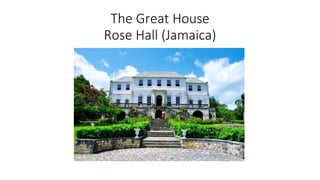
The Great House
Rose Hall (Jamaica)
The Great House (cont’d)
• It was the main residence of the Planter (owner of the plantation)
and his family.
• It was usually located on a hill so that:
1. The planter can have a clear view of the plantation;
2. It showed his wealth and status
3. The planter could see if slaves were coming to attack him.
NB: Not all Great Houses could be located on a hill.
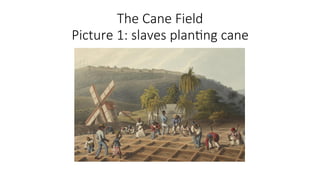
The Cane Field
Picture 1: slaves planting cane
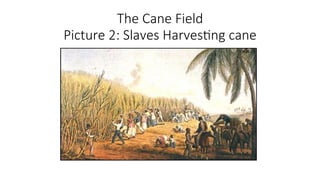
The Cane Field
Picture 2: Slaves Harvesting cane
The Cane Field (cont’d)
• This was where the sugar can was cultivated and harvested.
• Slaves carried out their duties in three gangs.
• They were supervised by another slave called a slave driver.
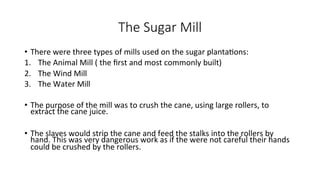
The Sugar Mill
• There were three types of mills used on the sugar plantations:
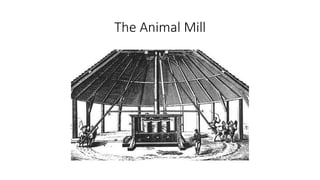
1. The Animal Mill ( the first and most commonly built)
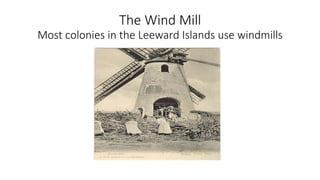
2. The Wind Mill
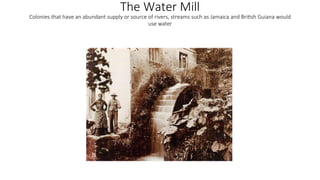
3. The Water Mill
• The purpose of the mill was to crush the cane, using large rollers, to
extract the cane juice.
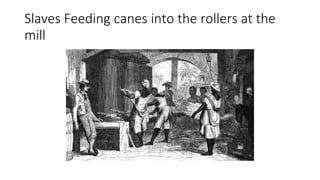
• The slaves would strip the cane and feed the stalks into the rollers by
hand. This was very dangerous work as if the were not careful their hands
could be crushed by the rollers.
The Animal Mill
The Wind Mill
Most colonies in the Leeward Islands use windmills
The Water Mill
Colonies that have an abundant supply or source of rivers, streams such as Jamaica and British Guiana would
use water
Slaves Feeding canes into the rollers at the
mill
The Boiling House
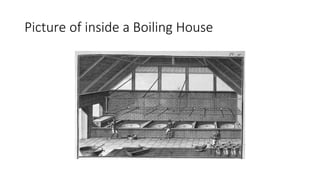
• It was located close to the mills.
• This was where the cane juice extracted at the mill was taken.
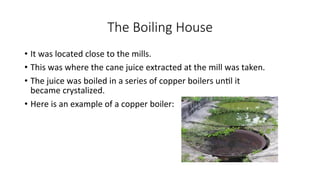
• The juice was boiled in a series of copper boilers until it
became crystalized.
• Here is an example of a copper boiler:
Picture of inside a Boiling House
The Slave Huts
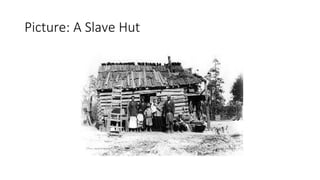
• This was the residence of the slaves.
• They were built by the slaves themselves, and arranged in rows.
• They had the bare earth as the floor.
• They were usually located downwards from the Great House.
• They were located close to the cane fields and the mill so that
time would not be lost moving from one location to the other.
Picture: A Slave Hut
Other Areas of a Plantation
• These included:
1. The Trash House
2. The Curing House
3. The Distillery
4. The Workshops
5. The Overseer’s House
6. The Provision Grounds
7. The Stables (animal pens)
8. The Woodland/forest area
9. Pasture land
The Trash House
• This was where the stripped outer layer and the husk of the
crushed cane was taken to be stored.
• This trash could be used in the following ways:
1. When dried, it can be used as fuel for the boilers and the
Great House;
2. It was used as manure for the fields;
3. It can be used as animal bedding.
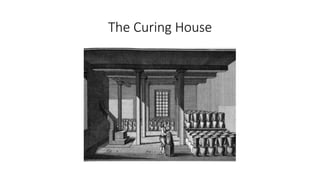
The Curing House
The Curing House (Cont’d)
• This was where the Hogsheads (barrels with holes) were stored
to allow the molasses to drain from the sugar crystals.
• It was also where rum was allowed to age.
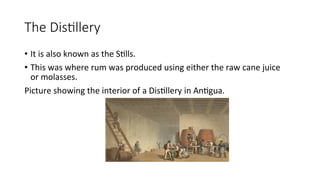
The Distillery
• It is also known as the Stills.
• This was where rum was produced using either the raw cane juice
or molasses.
Picture showing the interior of a Distillery in Antigua.
The Workshops
• These were located in the factory area.
• This is where the skilled slaves (carpenters, masons,
wheelwrights, etc) worked.
• It was where new tools were made, or where repairs took place.
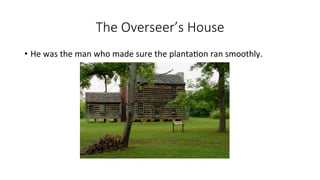
The Overseer’s House
• He was the man who made sure the plantation ran smoothly.
The Provision Grounds
• These were lands not being used by the plantation owner.
• Slaves were allowed to grow their own food here during their
free time and on Sundays.
• It was allowed because the planters to spend less money to
import food to feed the slaves.
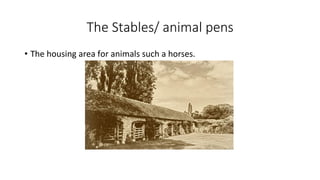
The Stables/ animal pens
• The housing area for animals such a horses.
The Woodlands or Forest Area
• Fuel for the Great House and boilers were sourced from here.
• Timber for the construction of buildings, furniture and carts were
also obtained from here.
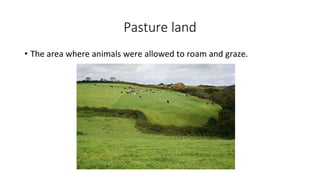
Pasture land
• The area where animals were allowed to roam and graze.

The Sugar Plantation (Form 2 Presentation).doc

  • 1.
    The Sugar Plantation The PhysicalLayout of a typical 18th Century Sugar Plantation.
  • 2.
    Objectives of thelesson 1. List all the areas which comprise a sugar plantation. 2. State the purpose of each area listed. 3. Discuss why each area was located in close proximity to each other.
  • 3.
    The Physical Layoutof an 18th Century Sugar Plantation • Land on a Sugar Plantation was used for three (3) purposes. These include: 1. Agriculture: Cane fields, woodlands and provision grounds 2. Buildings: Factory, workshops and hospital 3. Living Quarters: Great House, Overseer's house and slave huts
  • 4.
    Main areas ofactivity on a sugar plantation 1. The Great House 2. The Fields 3. The Mill 4. The Boiling House 5. The Slave Huts
  • 5.
    The Great House RoseHall (Jamaica)
  • 6.
    The Great House(cont’d) • It was the main residence of the Planter (owner of the plantation) and his family. • It was usually located on a hill so that: 1. The planter can have a clear view of the plantation; 2. It showed his wealth and status 3. The planter could see if slaves were coming to attack him. NB: Not all Great Houses could be located on a hill.
  • 7.
    The Cane Field Picture1: slaves planting cane
  • 8.
    The Cane Field Picture2: Slaves Harvesting cane
  • 9.
    The Cane Field(cont’d) • This was where the sugar can was cultivated and harvested. • Slaves carried out their duties in three gangs. • They were supervised by another slave called a slave driver.
  • 10.
    The Sugar Mill •There were three types of mills used on the sugar plantations: 1. The Animal Mill ( the first and most commonly built) 2. The Wind Mill 3. The Water Mill • The purpose of the mill was to crush the cane, using large rollers, to extract the cane juice. • The slaves would strip the cane and feed the stalks into the rollers by hand. This was very dangerous work as if the were not careful their hands could be crushed by the rollers.
  • 11.
  • 12.
    The Wind Mill Mostcolonies in the Leeward Islands use windmills
  • 13.
    The Water Mill Coloniesthat have an abundant supply or source of rivers, streams such as Jamaica and British Guiana would use water
  • 14.
    Slaves Feeding canesinto the rollers at the mill
  • 15.
    The Boiling House •It was located close to the mills. • This was where the cane juice extracted at the mill was taken. • The juice was boiled in a series of copper boilers until it became crystalized. • Here is an example of a copper boiler:
  • 16.
    Picture of insidea Boiling House
  • 17.
    The Slave Huts •This was the residence of the slaves. • They were built by the slaves themselves, and arranged in rows. • They had the bare earth as the floor. • They were usually located downwards from the Great House. • They were located close to the cane fields and the mill so that time would not be lost moving from one location to the other.
  • 18.
  • 19.
    Other Areas ofa Plantation • These included: 1. The Trash House 2. The Curing House 3. The Distillery 4. The Workshops 5. The Overseer’s House 6. The Provision Grounds 7. The Stables (animal pens) 8. The Woodland/forest area 9. Pasture land
  • 20.
    The Trash House •This was where the stripped outer layer and the husk of the crushed cane was taken to be stored. • This trash could be used in the following ways: 1. When dried, it can be used as fuel for the boilers and the Great House; 2. It was used as manure for the fields; 3. It can be used as animal bedding.
  • 21.
  • 22.
    The Curing House(Cont’d) • This was where the Hogsheads (barrels with holes) were stored to allow the molasses to drain from the sugar crystals. • It was also where rum was allowed to age.
  • 23.
    The Distillery • Itis also known as the Stills. • This was where rum was produced using either the raw cane juice or molasses. Picture showing the interior of a Distillery in Antigua.
  • 24.
    The Workshops • Thesewere located in the factory area. • This is where the skilled slaves (carpenters, masons, wheelwrights, etc) worked. • It was where new tools were made, or where repairs took place.
  • 25.
    The Overseer’s House •He was the man who made sure the plantation ran smoothly.
  • 26.
    The Provision Grounds •These were lands not being used by the plantation owner. • Slaves were allowed to grow their own food here during their free time and on Sundays. • It was allowed because the planters to spend less money to import food to feed the slaves.
  • 27.
    The Stables/ animalpens • The housing area for animals such a horses.
  • 28.
    The Woodlands orForest Area • Fuel for the Great House and boilers were sourced from here. • Timber for the construction of buildings, furniture and carts were also obtained from here.
  • 29.
    Pasture land • Thearea where animals were allowed to roam and graze.